
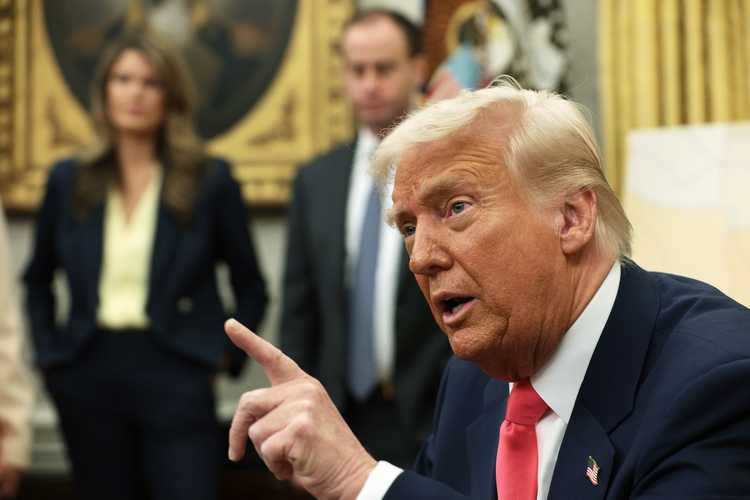
U.S. President Donald Trump has urged Israel not to carry out further attacks on Iran’s energy infrastructure, as escalating strikes on key facilities have sent global energy prices sharply higher.
The warning comes amid intensifying conflict between the U.S., Israel, and Iran, which began on February 28following the collapse of talks over Tehran’s nuclear programme. The war has since killed thousands, spread to neighbouring countries, and disrupted the global economy.
Trump said he personally advised Israeli Prime Minister Benjamin Netanyahu against targeting such infrastructure.
“I told him, ‘Don’t do that,’ and he won’t do that,” Trump told reporters at the White House.
The remarks followed a major escalation in the energy sector, after Iran retaliated for an الإسرائيلي strike on a key gas field by targeting Qatar’s Ras Laffan Industrial City, a facility responsible for about 20% of the world’s liquefied natural gas (LNG). The damage is expected to take years to repair.
Meanwhile, Saudi Arabia’s main Red Sea port was also attacked, highlighting the widening scope of the conflict and raising concerns over global oil and gas supply routes, particularly the Strait of Hormuz, through which roughly one-fifth of the world’s oil passes.
Despite reports that the U.S. is considering deploying additional troops to the region, Trump said he has no plans to send ground forces.
“I’m not putting troops anywhere,” he said.
Prime Minister Netanyahu confirmed that Israel had acted alone in striking Iran’s South Pars gas field, and acknowledged Trump’s request to avoid similar attacks in the future.
As fighting continues, Israel reported carrying out over 130 airstrikes in Iran within 24 hours, targeting missile launchers, drones and air defence systems. Iran, in turn, launched a new wave of missiles toward Israel.
Iranian officials warned that attacks on its energy facilities have triggered “a new stage in the war,” threatening further strikes on energy infrastructure linked to the U.S. and its allies.
The conflict has sparked growing fears of a global energy crisis, with several major economies—including Britain, France, Germany, Japan and Canada—pledging readiness to help ensure safe passage through critical shipping routes and stabilise markets.
Analysts warn that prolonged disruptions could lead to a significant oil shock, with already rising fuel prices becoming a major political and economic concern worldwide.