
By: Staff Writer
March 22, Colombo (LNW): Sri Lanka’s recent vehicle import data presents a mixed picture of recovery, revealing both renewed market activity and persistent economic fragilities. Beneath the surface of rising numbers lies a set of policy tradeoffs that could shape the country’s financial stability in the coming years.
Following a prolonged import ban during the height of the economic crisis, authorities have cautiously reopened the market. The result has been a surge in vehicle imports, driven largely by deferred demand. Consumers and businesses that postponed purchases are now re-entering the market, contributing to a rapid increase in import volumes.
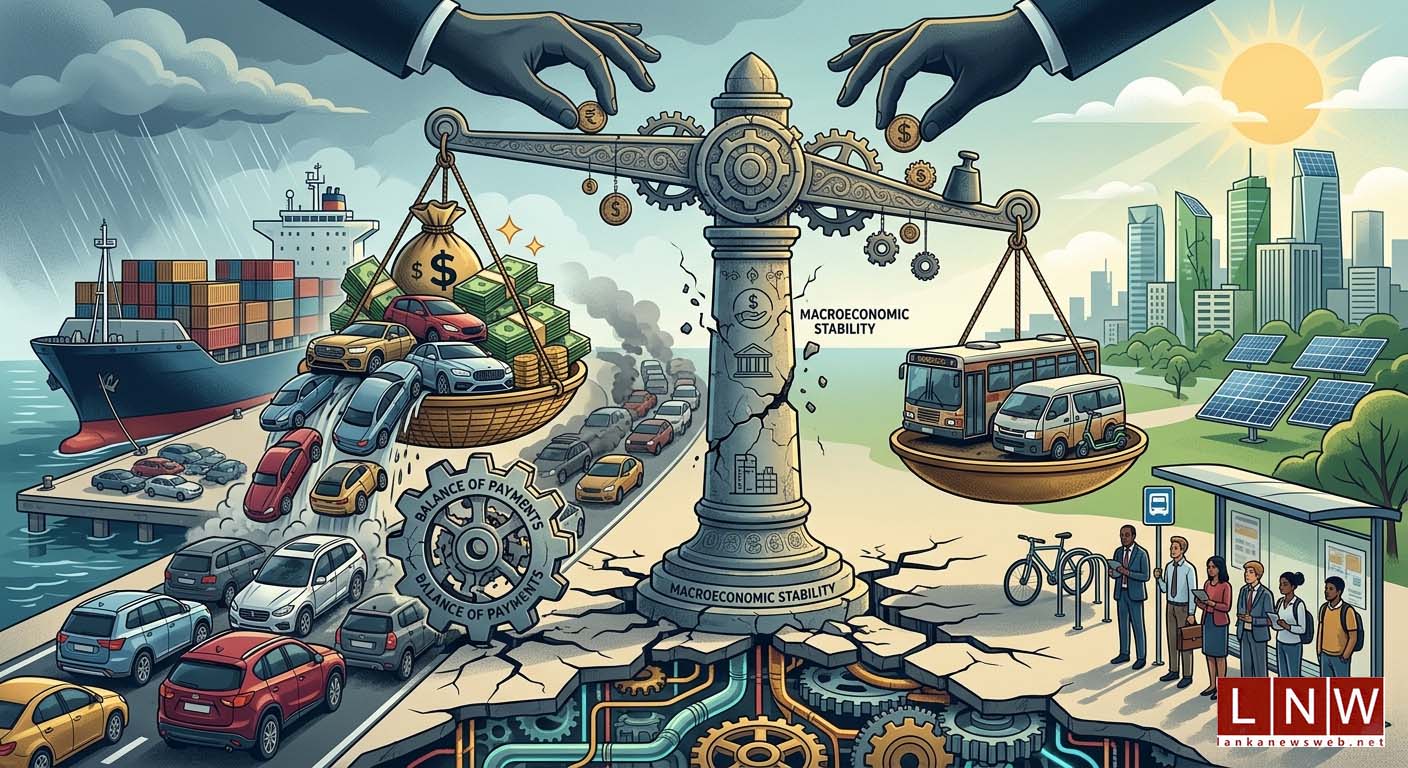
However, the structure of these imports warrants scrutiny. A significant portion of the inflow consists of private vehicles, many of which fall into mid- to high-price categories. In contrast, the growth in imports of buses, vans, and other public or shared transport vehicles has been comparatively modest. This trend raises questions about whether current policies are aligned with broader economic and social priorities.
One key issue is the impact on the balance of payments. Vehicle imports require substantial foreign currency expenditure, and a sustained increase could strain reserves. While Sri Lanka has made progress in stabilising its external sector, including improvements in tourism and remittances, the margin for error remains limited. A surge in imports without matching export growth risks reversing these gains.
The fiscal dimension is equally significant. Vehicle imports are a major source of government revenue through duties and taxes. The recent increase has likely boosted short-term fiscal inflows. However, reliance on such revenue can create policy dilemmas, as authorities must balance income generation against the need to control import volumes.
Industry observers also highlight the role of policy predictability. Changes in tax rates, import quotas, and eligibility criteria have created an environment of uncertainty. Businesses involved in vehicle imports and distribution face challenges in forecasting demand and managing inventory. This unpredictability can dampen investment and distort market behaviour.
Infrastructure constraints further complicate the picture. Sri Lanka’s road network, particularly in urban areas, is already under pressure. An influx of private vehicles could worsen congestion, increase travel times, and elevate fuel consumption. Without parallel investments in public transport and traffic management, these issues are likely to intensify.
There is also a technological dimension to consider. The global automotive industry is rapidly shifting toward electric mobility, yet Sri Lanka’s import mix remains dominated by conventional fuel-powered vehicles. Limited incentives for cleaner technologies may delay the country’s transition to more sustainable transport systems.
The government’s challenge is to strike a balance between facilitating economic activity and safeguarding macroeconomic stability. The latest vehicle import statistics serve as a reminder that recovery is not merely about growth in numbers but about the quality and direction of that growth.
As Sri Lanka navigates its post-crisis path, the decisions made today on imports, taxation, and regulation will have lasting consequences. The current trends offer both an opportunity and a warning highlighting the need for coherent, forward-looking policy frameworks.