
By: Staff Writer
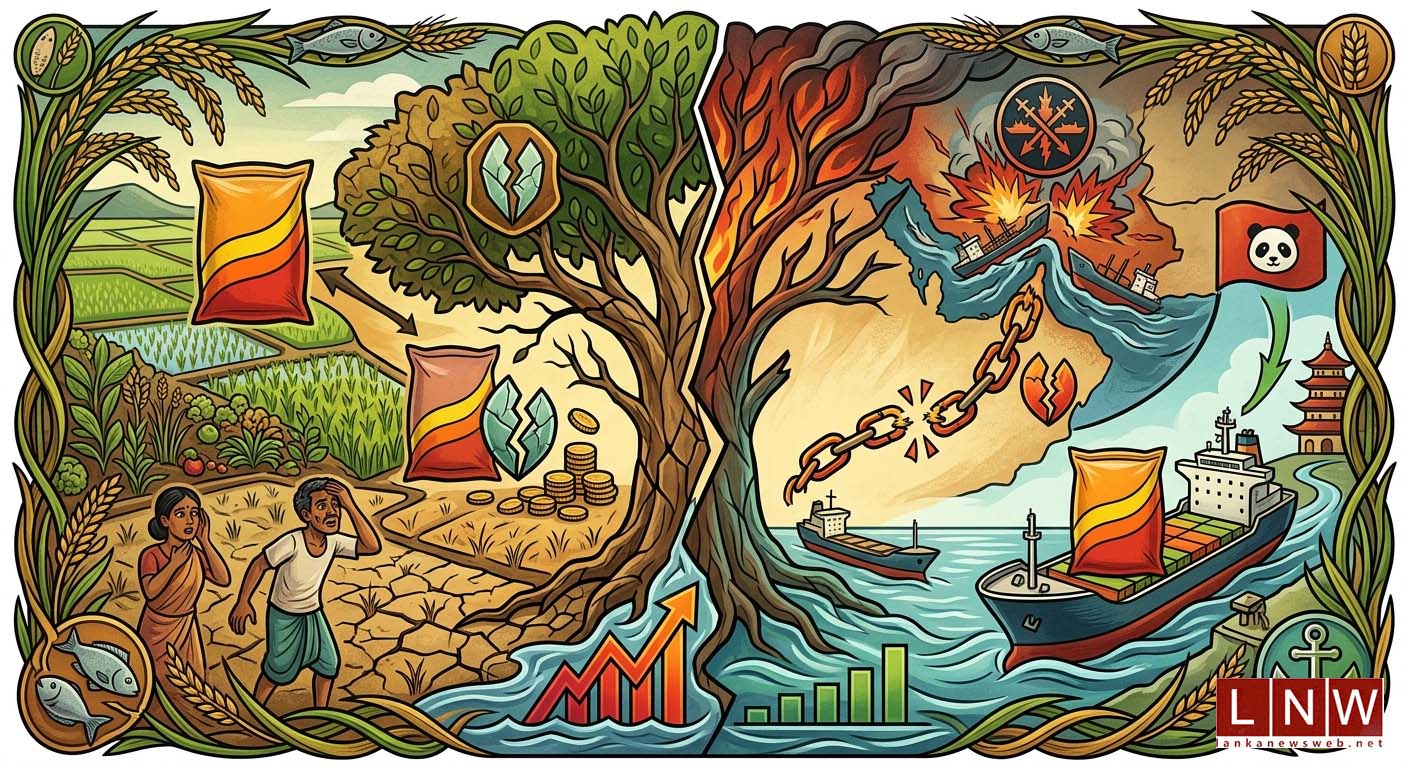
March 24, Colombo (LNW): Sri Lanka is confronting a deepening agricultural and food supply crisis as global tensions disrupt vital import routes. The closure and instability around the Strait of Hormuz triggered by the escalating US–Israel conflict with Iran have severely impacted the country’s access to fertilizer and food imports.
A recent report by UN Trade and Development warns that nations heavily dependent on this route face significant risks, with Sri Lanka among the most exposed. Around 36% of its fertilizer imports pass through the chokepoint, making supply chains highly vulnerable to disruption.
In response, the Ministry of Agriculture Sri Lanka is scrambling to secure alternatives, including emergency urea imports from China to bypass Middle Eastern shipping lanes. However, global markets remain volatile. Urea prices have surged sharply from about $470 to over $584 per tonne in early March 2026, with spikes reaching $720 in some regions. Locally, this could push a 50kg fertilizer bag to between Rs. 15,000 and Rs. 20,000, a steep rise from earlier prices near Rs. 9,200.
Despite government assurances that supplies are sufficient for the current Yala season, farmer groups are unconvinced. The National Agrarian Union has raised concerns about deteriorating storage conditions and delays in procurement for the upcoming Maha season. Its president, Anuradha Tennakoon, has publicly challenged official claims of long-term stock security, disputing statements by Deputy Agriculture Minister Namal Karunarathne.
Beyond fertilizer, Sri Lanka’s broader food security is also at risk. The country imports nearly all of its fertilizer and relies heavily on foreign food supplies, including approximately 1.6 million tonnes of cereals annually. With food imports exceeding $1.8 billion each year, any disruption to global production or trade could trigger domestic shortages and price shocks.
Experts warn that if fertilizer scarcity affects major agricultural exporters, global grain prices may surge, compounding Sri Lanka’s vulnerability. Meanwhile, soaring shipping insurance costs—reportedly up over 1,000% are further inflating import expenses.
International agencies such as the Food and Agriculture Organization and the World Food Programme are closely monitoring the situation, with calls already emerging for emergency funding to support farmers. As uncertainty grows, Sri Lanka faces a critical test: securing its agricultural backbone before supply shocks cascade into a full-scale food crisis.a