
By: Staff Writer
March 24, Colombo (LNW): Mounting global uncertainties are exposing deep structural vulnerabilities in Sri Lanka’s economy, with former Central Bank Deputy Governor Dr. W.A. Wijewardena warning of rising risks to growth, stability, and macroeconomic balance.
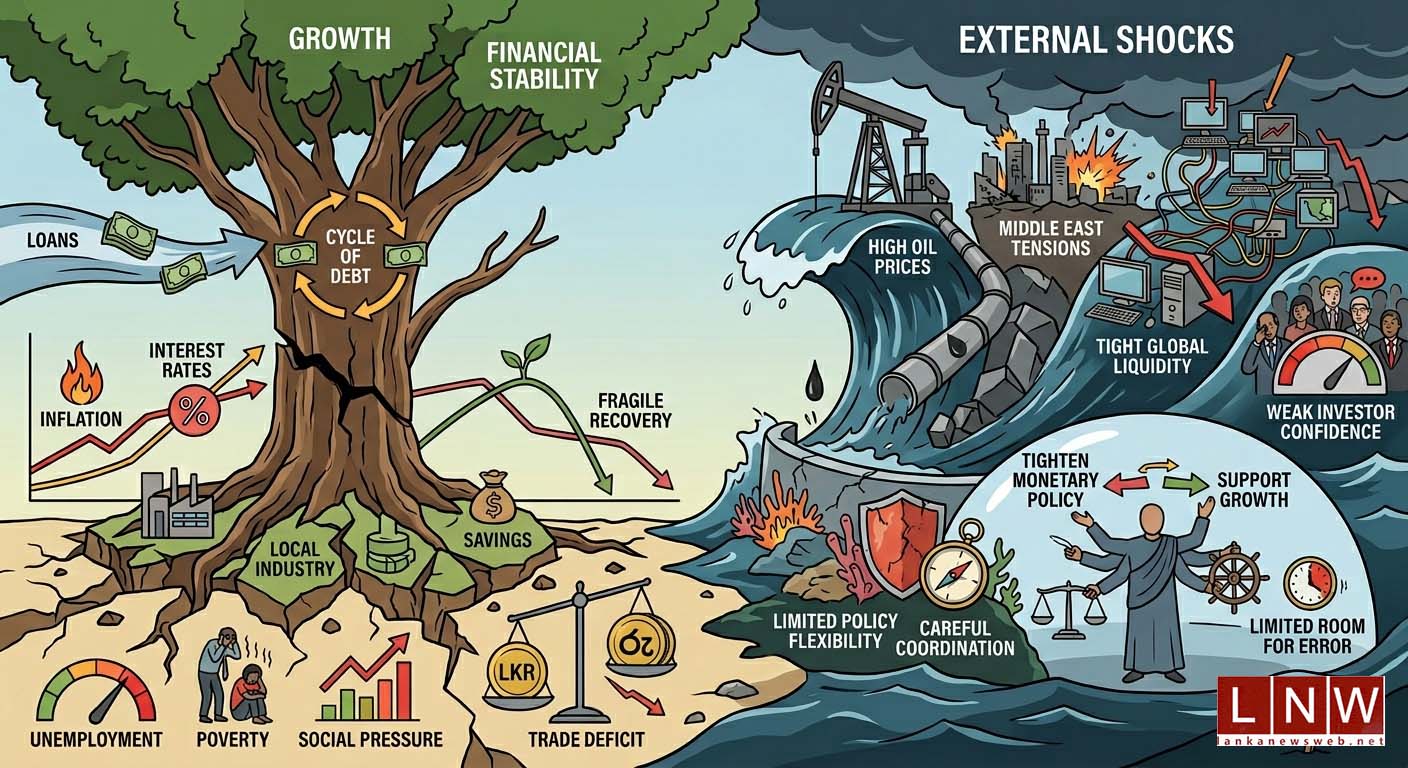
At the core of his concern is Sri Lanka’s dependence on external financing. The country must continuously borrow not only to fund its budget but also to refinance maturing debt, creating a cycle that leaves it highly vulnerable to global financial conditions.
Dr. Wijewardena emphasizes that while current revenues are sufficient to cover interest payments, the real risk lies in refinancing obligations. If global liquidity tightens or investor confidence weakens particularly amid Middle East tensions Sri Lanka may face difficulties in accessing affordable funding.
The situation is further complicated by the outlook for interest rates. If inflation rises beyond the Central Bank’s target ceiling of 7%, monetary authorities will be forced to increase rates. This would directly raise Government borrowing costs and potentially disrupt the fragile recovery built on low interest rates.
Inflation, which has fallen dramatically from crisis levels in 2023 to below the Central Bank’s target band, may now begin to rise again due to external pressures. Higher global oil prices are a key concern, as they increase import costs and feed into domestic price levels.
Dr. Wijewardena notes that this could create a dangerous policy dilemma. While the Central Bank may need to tighten monetary policy to control inflation, such actions could simultaneously slow economic growth especially in a context where fiscal policy has limited flexibility.
This dynamic raises the risk of stagflation, where inflation rises even as economic activity weakens. In such a scenario, unemployment could increase, poverty levels may worsen, and social pressures could intensify.
Exchange rate pressures are another key concern. With rising import costs, declining foreign inflows, and increased demand for foreign currency, the Sri Lankan rupee is expected to weaken. Depreciation would further increase the cost of servicing foreign debt and exacerbate inflationary pressures.
On the external front, Sri Lanka faces a dual challenge: managing its current account deficit while refinancing external debt obligations. Both depend heavily on stable global financial conditions, which are now under threat due to geopolitical developments.
Dr. Wijewardena identifies energy prices as a critical transmission channel for these risks. Higher oil prices not only widen the trade deficit but also strain both fiscal and external balances, amplifying existing vulnerabilities.
He concludes that Sri Lanka is entering a more constrained macroeconomic environment, where policy missteps could have significant consequences. Managing this phase will require careful coordination across fiscal, monetary, and external sectors, with limited room for error in an increasingly uncertain global landscape.