LISTEN TO INTERVIEW
WATCH STORY
By: Isuru Parakrama
March 26, Colombo (LNW): When the cargo vessel MV X-Press Pearl sank off Sri Lanka’s western coast back in 2021, the ripple effects the tragedy sent across the island nation beyond just the waters were exaggerative. This was seen as a manageable hazard, but it had evolved into one of the worst environmental incidents in Sri Lanka’s maritime history.
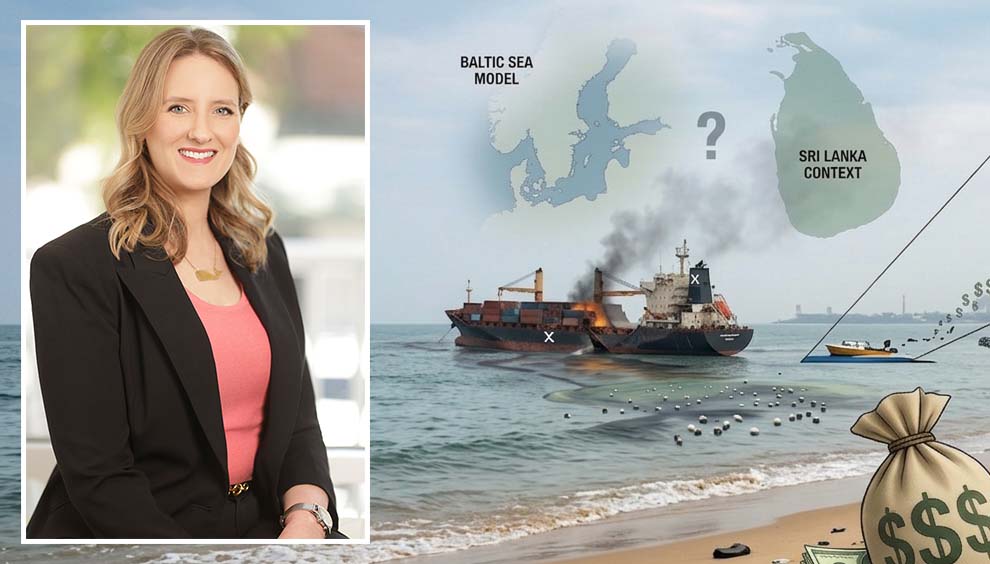
Dr. Amelia Wenger, a distinguished Conservation Scientist and Water Pollution Programme Lead with the Wildlife Conservation Society (WCS), has delivered a forensic independent assessment of the MV X-Press Pearl maritime disaster. In an exclusive interview with journalist Erdem Koch on behalf of LNW, following her review of the Marine Environment Protection Authority’s (MEPA) second interim report, Dr. Wenger highlighted significant technical errors and methodological gaps in how the environmental and economic fallout of the 2021 incident was quantified.
While confirming the profound environmental harm caused by the vessel’s fire and subsequent sinking off Colombo, Dr. Wenger’s findings suggest that many of the official cost estimates are unsupported by transparent data or appropriate scientific rigour.
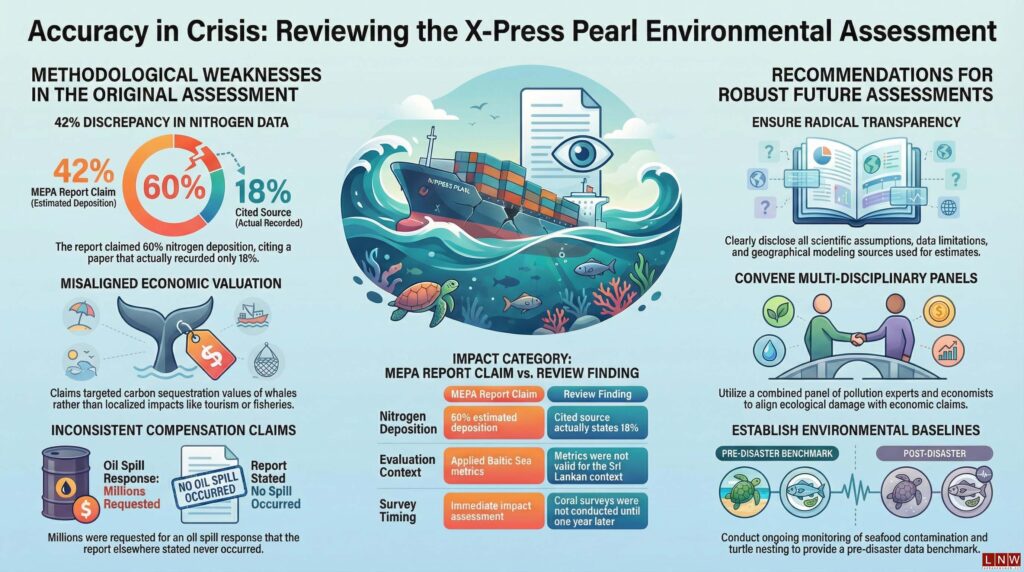
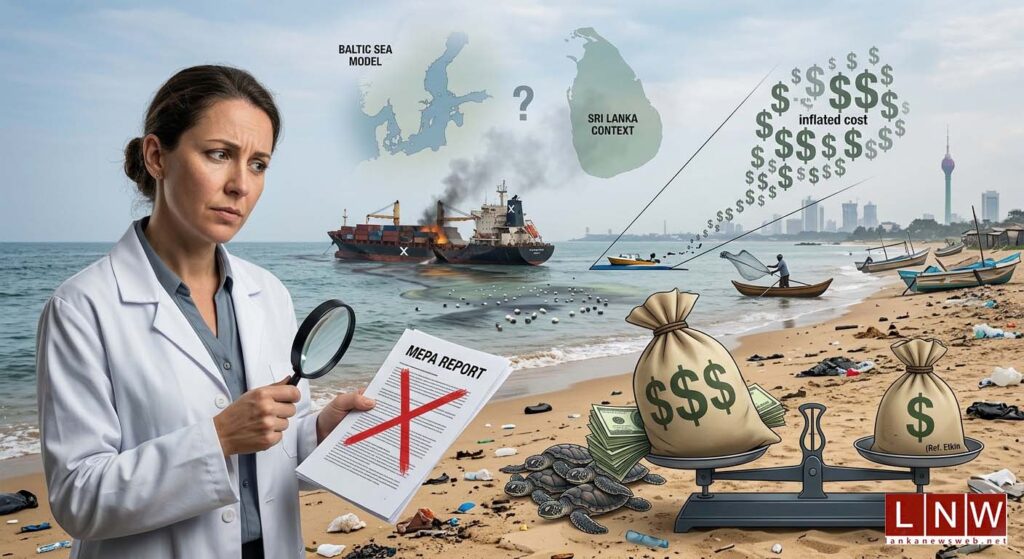
She identifies major methodological discrepancies where the official report misquoted scientific data to inflate or justify specific economic compensation claims. Wenger highlights instances where the authorities requested millions of dollars for actions, such as oil spill responses, that their own records state never took place. She argues that the assessment lacked transparency and failed to use appropriate regional baselines, such as applying Baltic Sea economic models to the Sri Lankan context.
Discrepancies in Oil Spill Management and Costs
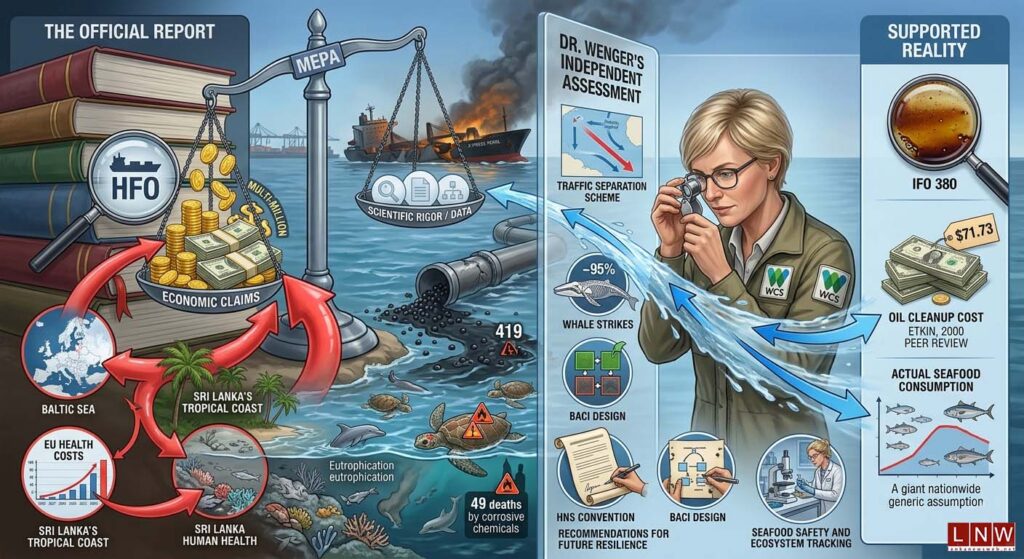
One of the most glaring technical errors identified by Dr. Wenger involves the classification and costing of the oil spill. Although laboratory analysis confirmed the presence of Intermediate Fuel Oil 380 (IFO 380), the MEPA report incorrectly categorised the substance as Heavy Fuel Oil (HFO) in its calculations.
Furthermore, Dr. Wenger challenged the financial modelling used to estimate response costs:
Inflated Rates: MEPA utilised a per-gallon response cost of $410, a figure for which Dr. Wenger could find no supporting citation in established literature.
Global Standards: Peer-reviewed studies, such as those by Etkin (2000), suggest a significantly lower maximum cleanup cost of approximately $71.73 per gallon for similar oil types.
Lack of Actual Expenditure: The assessment noted that since the oil was largely allowed to disperse naturally with no active response strategy employed, the basis for accruing multi-million dollar “response costs” remains unclear.
Methodological Overreach in Environmental Valuation
Dr. Wenger expressed concern over the “unclear assumptions” used to calculate the broader environmental impact. Specifically, she criticised the use of data from the Baltic Sea to estimate the costs of eutrophication (nutrient pollution) in Sri Lankan waters.
“The MEPA report states that the use of these figures was justifiable because the Sri Lankan ocean is considered a nitrogen dead zone,” the assessment notes, yet Dr. Wenger found little local literature to support such a sweeping characterisation of the entire coastal area. Similarly, human health impact estimates were based on European Union healthcare costs, which may not accurately reflect the socioeconomic reality of Sri Lanka.
Wildlife and Fisheries: Strong Evidence, Weak Analysis
The disaster resulted in harrowing wildlife mortality, including the deaths of over 419 sea turtles. While Dr. Wenger acknowledges the severity of these losses—linking 49 deaths directly to corrosive chemicals—she took issue with MEPA’s valuation methods.
Generational Losses: MEPA’s report extrapolates unsupported generational losses, such as predicting the impact of 1,375 female turtles over a 110-year period.
Fisheries Assumptions: While the impact on fisheries was undeniable, with incomes halving and debt surging, Dr. Wenger argued that MEPA overreached by applying nationwide fish consumption assumptions and unverified 2 per cent losses over a century.
Recommendations for Future Resilience
Beyond the critique, Dr. Wenger offered a suite of technical recommendations to improve Sri Lanka’s maritime safety and monitoring capabilities:
Traffic Separation Scheme (TSS): Relocating the TSS further south of Sri Lanka could reduce whale strikes by up to 95 per cent.
BACI Monitoring: Implementing ‘Before-After-Control-Impact’ (BACI) monitoring designs to ensure more scientifically sound data collection following future incidents.
HNS Convention: Urging Sri Lanka to ratify the International Convention on Liability and Compensation for Damage in Connection with the Carriage of Hazardous and Noxious Substances by Sea.
Seafood Safety: Establishing clear standards for seafood safety and long-term ecosystem tracking, including coral cover and turtle strandings.
Dr. Wenger’s review did not challenge the competence of Sri Lankan scientists, but acknowledged that their work was conducted under extreme pressure, including tight deadlines and restrictions imposed by the Covid-19 pandemic. She pointed out that these conditions limited opportunities for long-term monitoring and comprehensive data collection. She went on emphasising that renewed scrutiny of how environmental damage estimates were prepared and presented before the Supreme Court is of importance.
Ultimately, Dr. Wenger’s assessment serves as a call for greater transparency and the standardisation of scientific methods in disaster response. For Sri Lanka, the lessons of the X-Press Pearl must be rooted in rigorous, verifiable data if the nation is to effectively manage the rising risks within its busy maritime corridors.
Related Stories:
https://lankanewsweb.net/archives/176301/a-strategic-reset-understanding-the-supreme-courts-shift-in-the-x-press-pearl-case/
https://lankanewsweb.net/archives/172475/the-x-press-pearl-crisis-technical-failures-in-handling-not-blame/
https://lankanewsweb.net/archives/169482/key-x-press-pearl-experts-left-out-of-government-review-process/
https://lankanewsweb.net/archives/164330/after-x-press-pearl-why-sri-lanka-cannot-rely-on-port-discretion-to-prevent-maritime-disasters/
https://lankanewsweb.net/archives/158999/x-press-pearl-disaster-law-risk-and-the-limits-of-accountability/
https://lankanewsweb.net/archives/153413/why-singapore-resists-paying-compensation-for-the-mv-x-press-pearl-disaster/