
By: Staff Writer
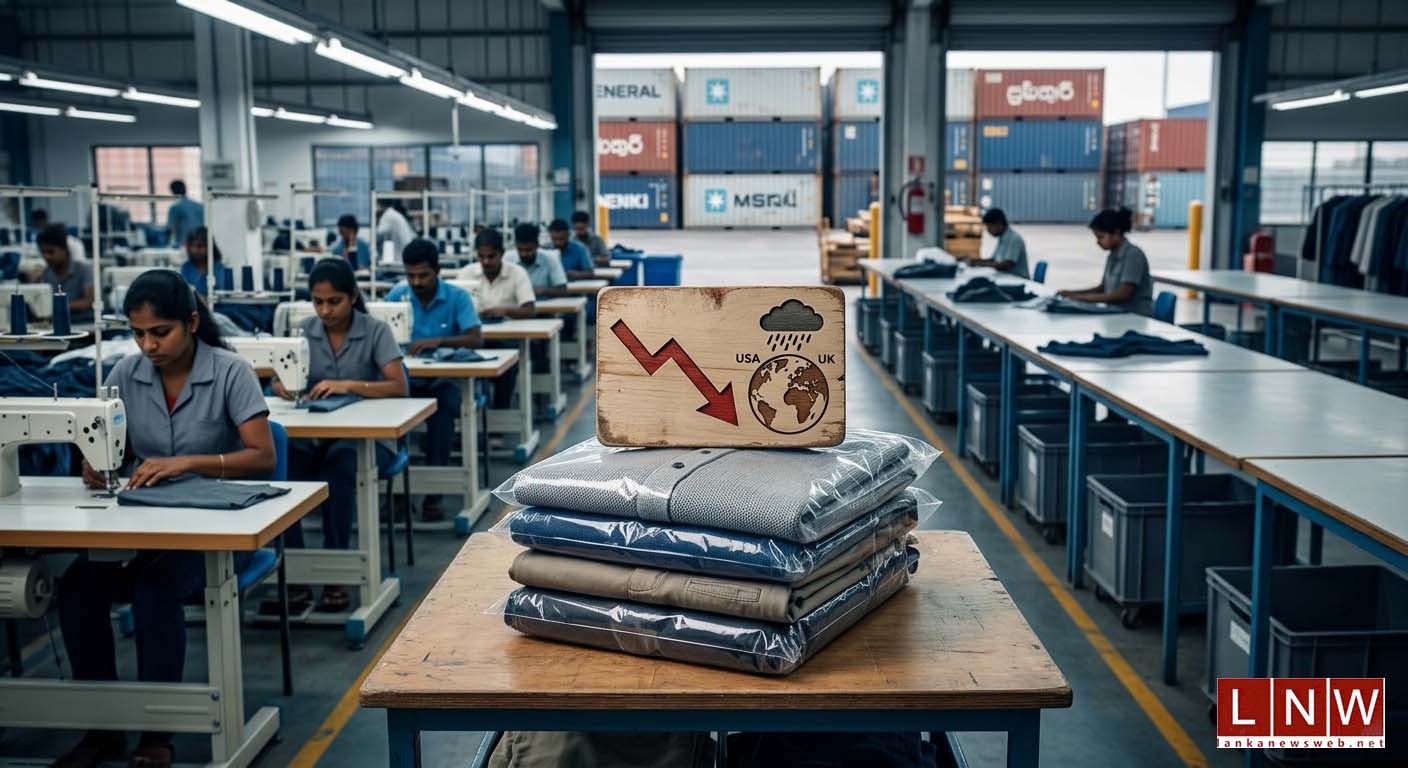
March 29, Colombo (LNW): Sri Lanka’s apparel industry is facing a sharp downturn, with February 2026 export earnings dropping by over 11% year-on-year, exposing the sector’s vulnerability to weakening global demand and shifting market dynamics.
Data released by the Joint Apparel Association Forum (JAAF) shows exports fell to $361.2 million, with declines recorded across all major markets. The steepest contraction came from the European Union, where exports plunged by nearly 20%, while shipments to the United States and United Kingdom also declined, albeit at a slower pace.
This broad-based slowdown signals more than a temporary dip. Cumulative exports for the first two months of 2026 are down nearly 7%, indicating that the sector is entering a sustained period of demand compression. Europe, a key destination for Sri Lankan garments, appears to be at the centre of this decline, reflecting weaker consumer spending and economic uncertainty in the region.
However, industry analysts stress that the issue is not unique to Sri Lanka. Competing exporters such as Bangladesh have reported even sharper drops in shipments to Europe, suggesting a wider correction in global apparel demand rather than a loss of competitiveness for any single country.
Despite this, Sri Lanka’s structural challenges are becoming more visible. High operating costs, logistical inefficiencies, and longer lead times are placing local manufacturers at a disadvantage in an increasingly competitive global sourcing environment. As buyers tighten margins and demand faster delivery, these domestic constraints risk eroding Sri Lanka’s position in global supply chains.
The current situation highlights a deeper issue: while external demand shocks affect all exporting nations, the ability to adapt varies significantly. Countries with lower costs and more efficient production systems are better positioned to weather downturns, leaving higher-cost producers like Sri Lanka under greater pressure.
Industry stakeholders argue that improving logistics, reducing production costs, and enhancing trade facilitation are now urgent priorities. Without these reforms, the sector could struggle not only to recover lost ground but also to retain existing market share.
In the short term, the outlook remains uncertain. With global demand still subdued, particularly in Europe, export performance is likely to remain under pressure in the coming months.
Ultimately, the current downturn serves as a stress test for Sri Lanka’s apparel industry. While the global slowdown provides context, it also underscores the need for structural reforms at home. The sector’s resilience will depend not just on external recovery, but on how quickly and effectively it can address its internal weaknesses and reposition itself in an increasingly competitive global market.