
By: Staff Writer
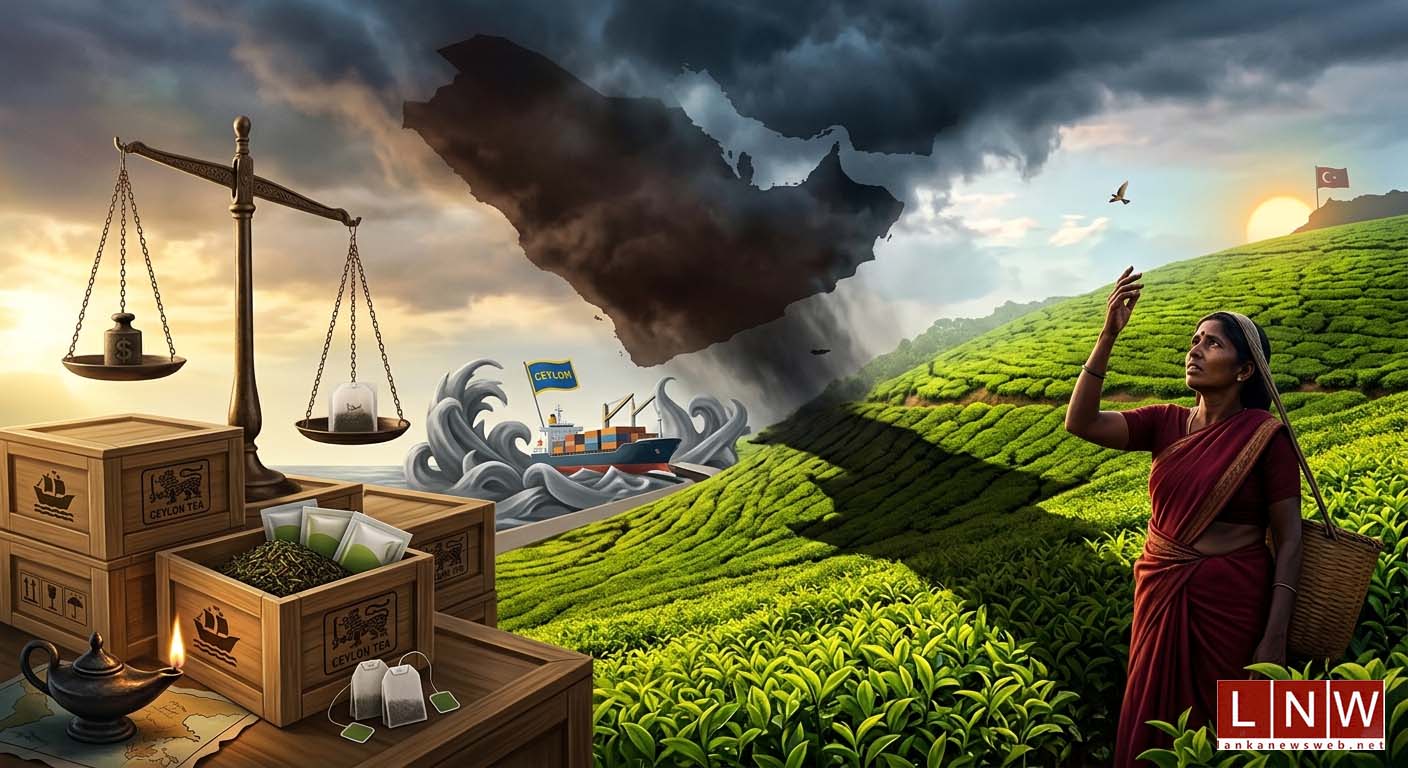
March 29, Colombo (LNW): Sri Lanka’s tea industry, one of its most vital foreign exchange earners, is entering a period of uncertainty as geopolitical tensions in the Middle East threaten to disrupt key export markets and reshape global demand patterns.
Recent data from Forbes & Walker Research shows that tea export volumes in February 2026 dipped slightly to 19.92 million kilograms, down from 20.40 million kilograms a year earlier. The decline was largely driven by weaker performance in bulk tea, tea bags, and green tea, although value-added segments such as tea packets and instant tea posted modest gains.
Despite the drop in volumes, the sector recorded improved rupee earnings, with the average Free on Board (FOB) value rising year-on-year. However, in dollar terms, earnings weakened highlighting the growing impact of currency fluctuations and global pricing pressures.
At first glance, the broader trend appears stable. Cumulative exports for the first two months of 2026 show a modest increase, indicating underlying resilience. Yet, beneath this surface stability lies a more fragile reality: Sri Lanka’s heavy dependence on Middle Eastern markets.
Countries such as Iraq, the United Arab Emirates, and Saudi Arabia remain among the largest buyers of Ceylon Tea. Any escalation in the Gulf crisis could disrupt trade flows, weaken consumer demand, and complicate payment and logistics channels. Rising oil prices and regional instability may also affect purchasing power in these markets, directly impacting tea imports.
Encouragingly, some diversification is underway. Türkiye and Azerbaijan have emerged as fast-growing markets, with Türkiye recording a dramatic surge in imports. These gains have helped offset declining demand from traditional buyers such as Russia and the UAE, signalling a gradual shift in trade dynamics.
However, analysts warn that short-term risks remain elevated. The Gulf crisis could lead to shipping disruptions, higher freight costs, and currency volatility all of which would pressure export margins. For an industry already grappling with declining dollar returns, this could prove challenging.
The immediate future will likely depend on how effectively exporters can pivot. Strengthening footholds in emerging markets, maintaining price competitiveness, and expanding value-added product lines will be critical strategies.
In this uncertain environment, resilience alone may not be enough. The tea sector must adapt quickly to changing global conditions while safeguarding its core markets. As geopolitical tensions continue to evolve, Sri Lanka’s tea exports face a decisive moment one that could define the industry’s trajectory in the months ahead.