
By: Staff Writer
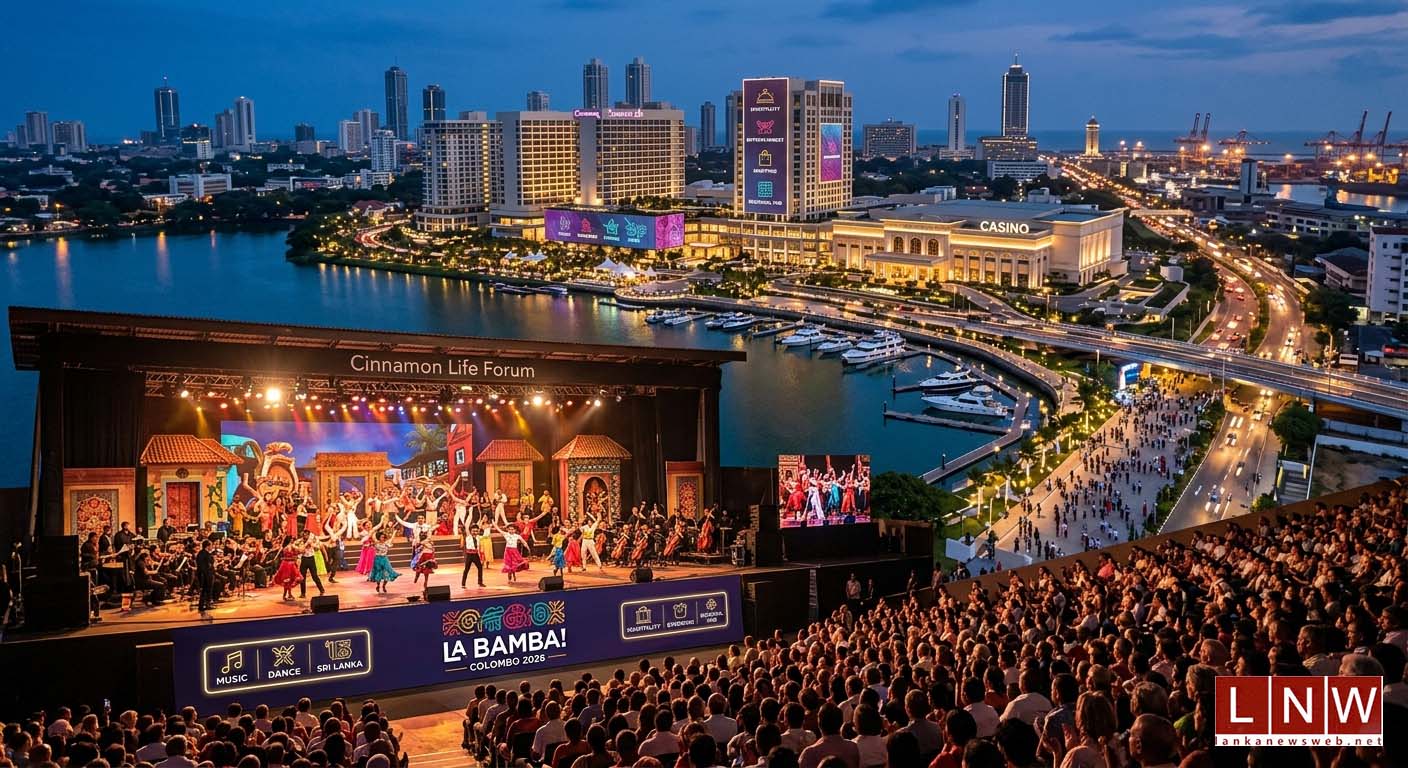
March 30, Colombo (LNW): Colombo is taking a calculated step toward redefining itself as a South Asian entertainment hub, with the staging of La Bamba! – The Song of Veracruz at the City of Dreams Sri Lanka this April. The initiative, driven by John Keells Holdings through its Cinnamon Life project, reflects a broader strategy to reposition the city as a destination for high-end tourism, entertainment, and integrated resort living.
Running from April 24 to 28, 2026, the West End–licensed production marks the first international musical of its scale to be hosted at the purpose-built 900-seat Cinnamon Life Forum. Featuring 19 performers from the UK, Europe, and North America alongside Sri Lankan talent selected through auditions, the show is supported by six live musicians and a technical and creative crew exceeding 40 members.
Directed by London-based producer Paul Morrissey and produced with the John Keells Foundation, the performance blends Latin music, storytelling, and high-energy choreography.
Organizers describe the production as more than entertainment it is a “strategic step” toward building Colombo’s global cultural credentials. The effort aligns with a $1.2 billion integrated resort vision under City of Dreams, combining casino gaming, hospitality, residential developments, and large-scale entertainment.
The potential benefits are significant. First, capacity building: collaboration between international and local artists is expected to raise performance standards and transfer expertise, enabling Sri Lanka to host more world-class productions. Second, tourism development:
Colombo is targeting “soft-value” tourism high-spending visitors drawn by theatre, arts, and cultural experiences, particularly from India’s expanding middle and upper classes. Third, infrastructure validation: successfully hosting a technically demanding production demonstrates the city’s readiness for complex international events.
Economically, such initiatives could boost foreign exchange earnings and generate employment across sectors, from hospitality to creative industries. If sustained, this model could diversify Sri Lanka’s tourism offering beyond traditional beach and heritage attractions.
However, challenges remain. Critics question whether a single production or even a handful can sustain long-term transformation without a consistent calendar of international events and festivals.
There are also concerns about over-reliance on casino-driven tourism, which may bring social and regulatory complexities. Additionally, high-end developments risk catering primarily to affluent visitors, potentially limiting broader local economic inclusion.
Ultimately, La Bamba! represents both a milestone and a test case. Its success will depend not just on ticket sales, but on whether it sparks a continuous pipeline of global performances. Without that momentum, Colombo’s ambition to rival established entertainment hubs in Asia may remain aspirational rather than achievable.