
By: Staff Writer
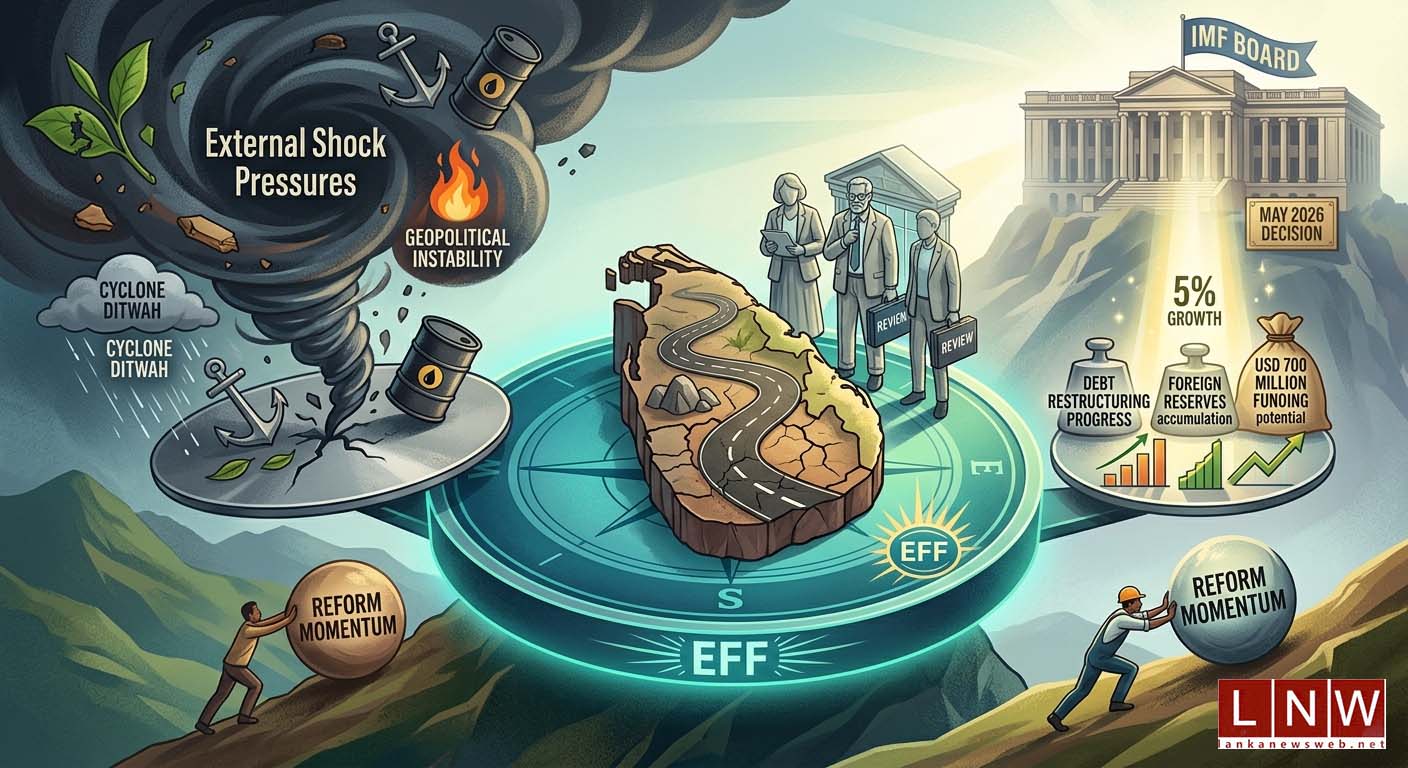
March 30, Colombo (LNW): Sri Lanka’s fragile economic recovery is under renewed scrutiny as a mission from the International Monetary Fund (IMF) conducts a crucial review of the country’s Extended Fund Facility (EFF) program between March 26 and April 9, 2026. The outcome could determine whether the island nation secures approximately US$700 million in much-needed funding, even as external and domestic pressures intensify.
The IMF delegation, led by Evan Papageorgiou, is combining the fifth and sixth program reviews, focusing on fiscal policy, monetary stability, and financial sector resilience. A key concern is the government’s response to Cyclone Ditwah, which has placed unexpected strain on public finances, alongside the broader economic fallout from the ongoing Middle East conflict.
The geopolitical crisis is already affecting Sri Lanka’s core economic lifelines tourism, trade, and remittances. With a significant portion of remittance inflows originating from Gulf countries, prolonged instability in the region could weaken foreign exchange earnings and undermine reserve accumulation.
Despite these challenges, the IMF has acknowledged notable progress. According to Julie Kozack, Sri Lanka achieved around 5 percent economic growth in 2025, while inflation fell sharply to 1.6 percent in early 2026. Debt restructuring is also described as “nearly complete,” and foreign reserves have been gradually rebuilt.
Program performance has largely been rated “strong,” with key benchmarks met in 2025. These include cost-recovery energy pricing, automatic tariff adjustments, and most quantitative fiscal targets, with only minor deviations such as expenditure arrears. The government is also expected to achieve a primary surplus of 2.3 percent of GDP by mid-2026 and raise revenue-to-GDP above 15 percent.
However, the IMF continues to classify the economy as “fragile.” The dual shocks of a natural disaster and geopolitical uncertainty have complicated projections, prompting discussions about recalibrating program targets. Officials indicate the IMF is open to flexibility, but such adjustments will depend on credible policy responses.
The broader question is whether Sri Lanka can maintain reform momentum. While macroeconomic indicators suggest stabilization, structural vulnerabilities persist, including high debt levels and exposure to external shocks. The success of the IMF program hinges not only on meeting technical benchmarks but also on sustaining policy consistency.
Critically, the review comes at a time when political dynamics could influence economic governance. Any perception of policy drift or weakened reform commitment may raise concerns among international lenders.
The anticipated IMF Board decision in May 2026 will therefore be pivotal. Approval would signal continued confidence in Sri Lanka’s recovery trajectory, unlocking vital financing. Conversely, delays or conditions could expose lingering doubts about the country’s ability to navigate a complex mix of domestic and global challenges.