
By: Staff Writer
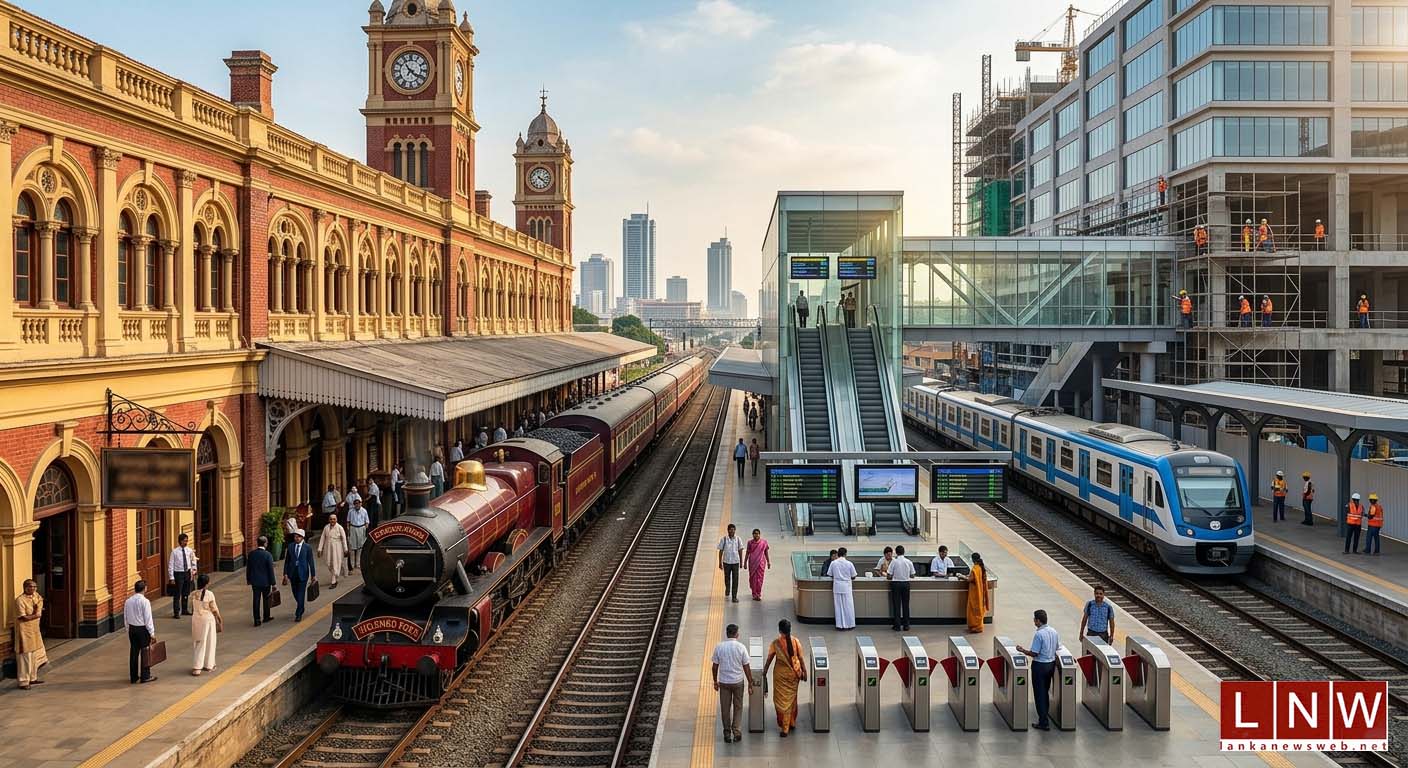
March 30, Colombo (LNW): The historic Colombo Fort Railway Station inspired by Manchester Victoria station is undergoing its most ambitious transformation since its construction in 1917 under British colonial rule. More than a century later, the station stands at the center of a long-overdue debate: can Sri Lanka modernize its railway system without erasing its colonial heritage?
Sri Lanka’s railway network itself is a legacy of the British Empire, initially developed in the 19th century to transport tea, rubber, and coffee from plantations to ports. While the system laid the foundation for national connectivity, critics argue that its design prioritized colonial economic extraction rather than long-term domestic mobility. Today, much of that infrastructure remains in use aged, strained, and increasingly inadequate.
The current redevelopment of Colombo Fort Station, funded by the Asian Development Bank, represents a significant shift. With an investment exceeding Rs 2.16 billion, the project aims to blend preservation with progress—retaining colonial architectural elements while introducing modern amenities and technologies.
Transport authorities describe the project as the first comprehensive modernization effort since the station’s inception. Plans include improved passenger facilities, digital ticketing systems, and LTE-based communication networks to enhance operational efficiency. However, these upgrades come amid persistent concerns about delays, transparency, and accountability.
The construction contract—awarded to MAGA Engineering (Pvt) Ltd covers new passenger bridges, ticket counters, and a multi-storey service building. While the company has a strong track record in infrastructure projects, its repeated selection for major railway contracts has raised questions among industry observers about competitive fairness.
Further complicating matters, some urgent track repairs in late 2025 were carried out internally by the Railway Department, bypassing external contractors. This has sparked debate about whether institutional capacity is being underutilized or whether procurement processes are being selectively applied.
In January 2026, Transport Minister Bimal Rathnayake publicly warned that corruption linked to the project would not go unpunished. His statement reflects growing public scrutiny over large-scale infrastructure spending, especially in a country grappling with economic recovery.
Despite these concerns, the redevelopment underscores an undeniable reality: Sri Lanka’s railway system must evolve. With increasing urban congestion and rising commuter demand, the need for efficient, accessible rail transport has never been greater.
The challenge lies in striking a balance honoring a colonial past while building a system fit for the future.