
By: Staff Writer
April 01, Colombo (LNW): Sri Lanka’s fragile economic recovery faces a new challenge as electricity tariffs rise across key sectors, raising alarm among industry leaders and economic analysts.
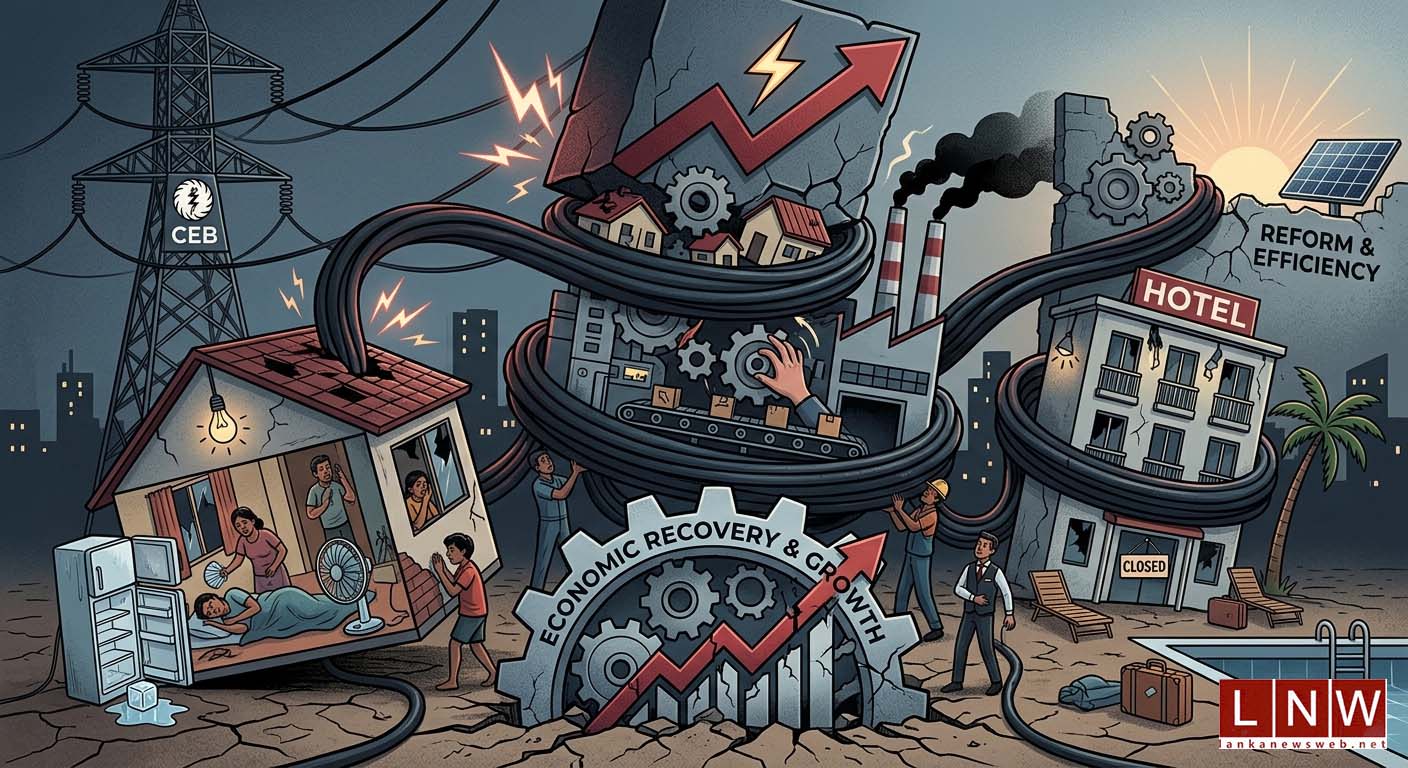
The recent increase approved by the Public Utilities Commission of Sri Lanka affects not just households but also industries, hotels, and general-purpose businesses the very engines expected to drive post-crisis growth.
The revised tariff system introduces a tiered structure, with lower users seeing marginal increases. But this cushioning effect fades rapidly as consumption rises especially during extreme heat, when fans, air conditioners, and refrigeration become necessities rather than luxuries.
Households consuming over 180 units now face a steep 25% increase, a move that disproportionately affects the urban middle class already grappling with inflation and stagnant wages.
Industrial electricity tariffs have risen by 8.7%, while hotels face a 9.9% increase and general-purpose users 8%. Government institutions bear the steepest hike at 14.4%.
Though these figures may appear moderate in isolation, their cumulative impact on production costs, service pricing, and competitiveness is significant.
For export-oriented industries, already struggling with high input costs and currency volatility, the tariff hike adds another layer of pressure.
Manufacturing sectors reliant on continuous power such as apparel, rubber, and food processing face shrinking margins and difficult choices: absorb costs, reduce output, or pass expenses onto consumers. None of these options bode well for economic stability.
The tourism sector, still recovering from years of setbacks, is also at risk. Higher electricity costs for hotels could translate into increased room rates, potentially undermining Sri Lanka’s competitiveness as a destination in a price-sensitive global market.
At the heart of the issue lies a deeper structural concern: the apparent transfer of operational inefficiencies from the Ceylon Electricity Board to the broader economy.
Critics argue that instead of addressing internal inefficiencies, losses, and questionable procurement practices including allegations surrounding substandard coal imports authorities continue to rely on tariff hikes as a default solution.
This approach risks creating a cycle where rising energy costs suppress economic activity, which in turn limits growth and reduces the ability of businesses to invest and expand.
The introduction of time-of-use tariffs and proposed concessions on Sundays and public holidays may offer some relief, but these measures are unlikely to offset the broader cost burden.
Moreover, the lack of transparency surrounding cost calculations raises concerns about governance. If procurement inefficiencies or corruption contribute to higher generation costs, passing these expenses onto industries effectively penalizes productivity and innovation.
Energy policy should ideally support economic growth, not constrain it. In the current context, however, the tariff hike may do the opposite slowing recovery, discouraging investment, and weakening Sri Lanka’s competitive edge.
As the country navigates a delicate economic path, the need for reform in the energy sector becomes increasingly urgent.
Without addressing root causes ranging from procurement practices to operational inefficiencies tariff increases risk becoming a recurring obstacle to sustainable development rather than a tool for stability.