
By: Staff Writer
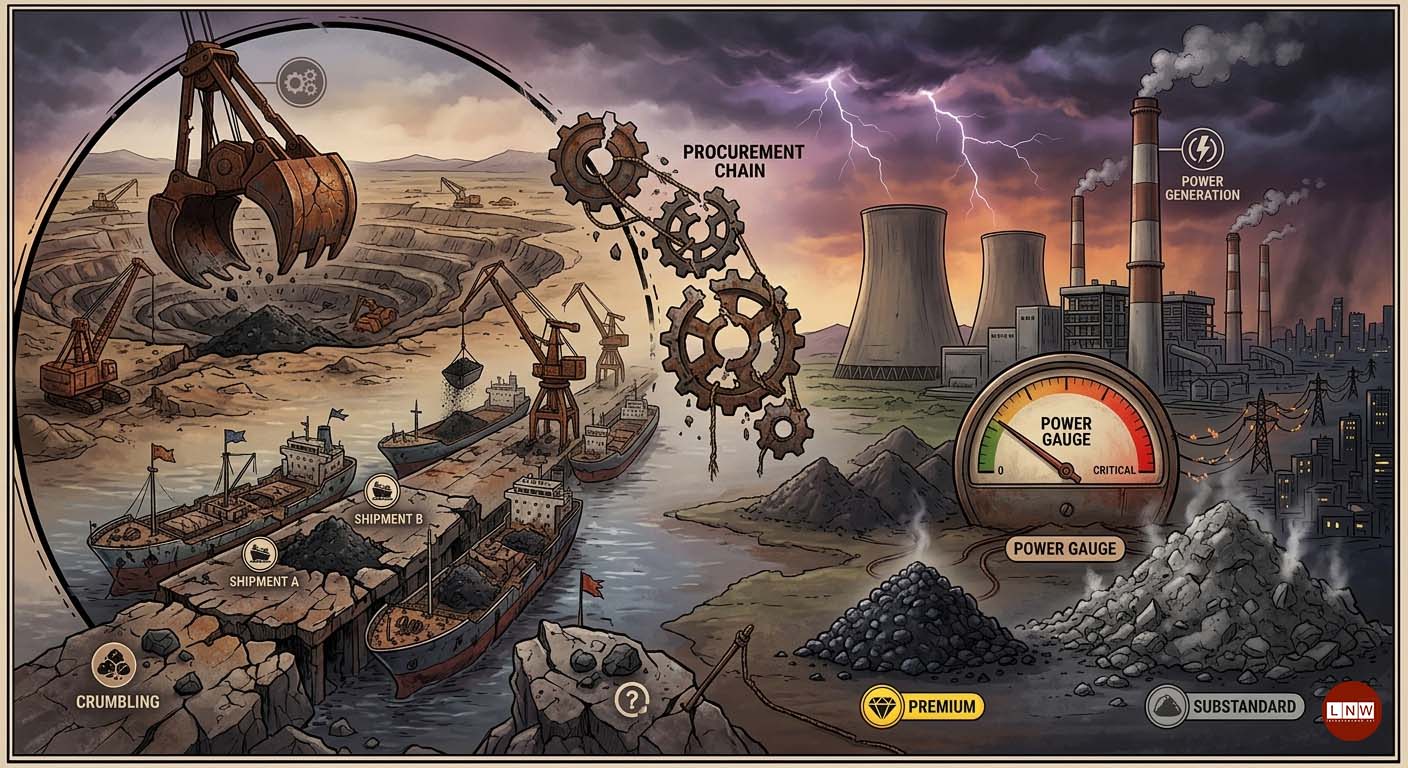
April 07, Colombo (LNW): Sri Lanka’s power sector is once again under strain as ongoing issues in coal procurement threaten electricity generation in the coming months. The state-owned Lanka Coal Company (LCC), responsible for supplying coal to the Norochcholai power plant, is attempting to recover from a controversial procurement cycle that resulted in the delivery of substandard coal. The consequences of that failure are now unfolding, with concerns mounting over potential power cuts as the country approaches periods of higher electricity demand.
The Norochcholai coal power plant, which contributes a significant share of the national grid’s base load, depends heavily on consistent, high-quality coal supplies. However, the previous tender process allowed relatively inexperienced suppliers to participate, with lenient eligibility criteria that required only 500,000 metric tonnes (MT) of supply experience and minimal exposure to higher-grade coal. This opened the door to quality inconsistencies, ultimately leading to shipments that did not meet required calorific standards.
Coal quality, measured by Gross Calorific Value (GCV), is critical for efficient power generation. When coal falls below the expected GCV threshold, more fuel is required to produce the same amount of electricity, increasing operational costs and reducing plant efficiency. In severe cases, poor-quality coal can damage equipment or force temporary shutdowns, directly affecting power supply stability.
The current situation suggests that Sri Lanka may face electricity shortages within the coming months if supply disruptions persist. With coal deliveries already impacted by earlier procurement missteps, the power sector has limited buffer capacity. Hydropower output remains uncertain due to fluctuating weather conditions, while thermal alternatives are both expensive and logistically constrained.
In response, LCC has introduced a new tender for 2.28 million MT of coal for the 2026–27 season, aiming to restore credibility and ensure supply reliability. However, this corrective action comes at a critical time, as immediate shortages cannot be quickly resolved through long-term procurement adjustments. The gap between policy reform and actual delivery may leave the country vulnerable in the short term.
Energy analysts warn that unless contingency measures are implemented such as securing emergency fuel supplies or optimizing existing generation scheduled power cuts may become unavoidable. The situation highlights systemic weaknesses in procurement oversight, contract enforcement, and risk management within Sri Lanka’s energy sector.
Ultimately, the coal procurement crisis is not just a logistical issue but a governance challenge. Ensuring transparency, accountability, and technical rigor in future tenders will be essential to prevent a repeat of the current predicament. As the country braces for potential power disruptions, the urgency of reform has never been clearer.