
By : Nalinda Indatissa (President Council)
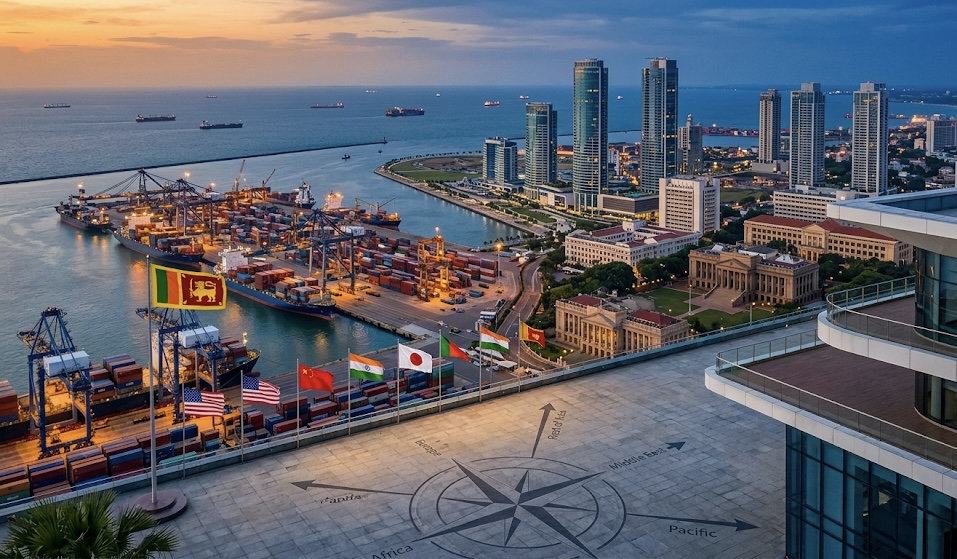
April 10, LNW (Colombo): Sri Lanka stands today at a decisive moment in its economic and geopolitical journey. Though small in size, the island occupies a position of immense strategic importance in the Indian Ocean, sitting astride some of the world’s busiest maritime trade routes. This unique location has long attracted the attention and engagement of major global powers, making it essential for Sri Lanka to pursue a foreign policy grounded in balance, pragmatism, and long-term national interest.
A central pillar of this approach is the careful management of relationships with key global actors. Engagement with the United States remains vital, particularly as it continues to serve as a major export destination for Sri Lankan goods such as apparel and as an important gateway to global financial systems, technology, and investment. At the same time, Sri Lanka’s relationship with China has brought significant infrastructure development and investment, especially in ports, logistics, and industrial zones. The challenge lies not in choosing between these powers, but in ensuring that such partnerships are aligned with Sri Lanka’s long-term economic sustainability and sovereignty.
Equally important is Sri Lanka’s relationship with India, its closest neighbour. This relationship is multifaceted—rooted in geography, culture, trade, and security. India plays a critical role in regional stability, energy cooperation, and economic integration. Strengthening this partnership is not merely desirable but essential. Meanwhile, engagement with Iran offers Sri Lanka an avenue to diversify its energy partnerships and explore flexible trade arrangements in a volatile global energy market. Such diversification is key to building resilience in times of uncertainty.
However, a forward-looking foreign policy cannot remain confined to these traditional relationships.
Sri Lanka must actively expand its economic and diplomatic footprint into emerging and underexplored regions. The vast and dynamic markets of Africa present significant opportunities in trade, agriculture, construction, and services. As African economies continue to grow and urbanize, Sri Lanka has the potential to position itself as a trusted partner in this transformation.
Similarly, the United Arab Emirates and the wider Gulf region offer unparalleled advantages as global hubs of finance, logistics, and re-export trade. These economies provide access to capital, markets, and employment opportunities, making them crucial partners in Sri Lanka’s economic expansion strategy. Strengthening ties with Australia also holds promise, particularly in the fields of education, tourism, labour mobility, and investment. Beyond these, Southeast Asia and other emerging regions must be viewed as integral components of a diversified trade and investment strategy.
At its core, Sri Lanka’s path forward must be guided by a simple yet powerful principle: friendship with all, dependence on none. Overreliance on any single country or bloc exposes the nation to undue risk, whether economic or strategic. By contrast, a diversified network of partnerships enhances resilience, creates new opportunities, and strengthens national autonomy.
To achieve this, Sri Lanka must place economic diplomacy at the forefront of its foreign policy. Diplomatic missions abroad should evolve into active promoters of trade, investment, and market access. Trade agreements must be pursued strategically, targeting regions with high growth potential. At the same time, Sri Lanka must leverage its geographic advantage to position itself as a neutral and efficient maritime and logistics hub, connecting Asia, the Middle East, and Africa.
In conclusion, Sri Lanka’s future lies not in aligning exclusively with any one power, but in skillfully balancing relationships while expanding its global economic reach. By combining geopolitical balance with proactive economic engagement, Sri Lanka can transform itself from a vulnerable small state into a confident, connected, and strategically relevant nation in the Indian Ocean region.