
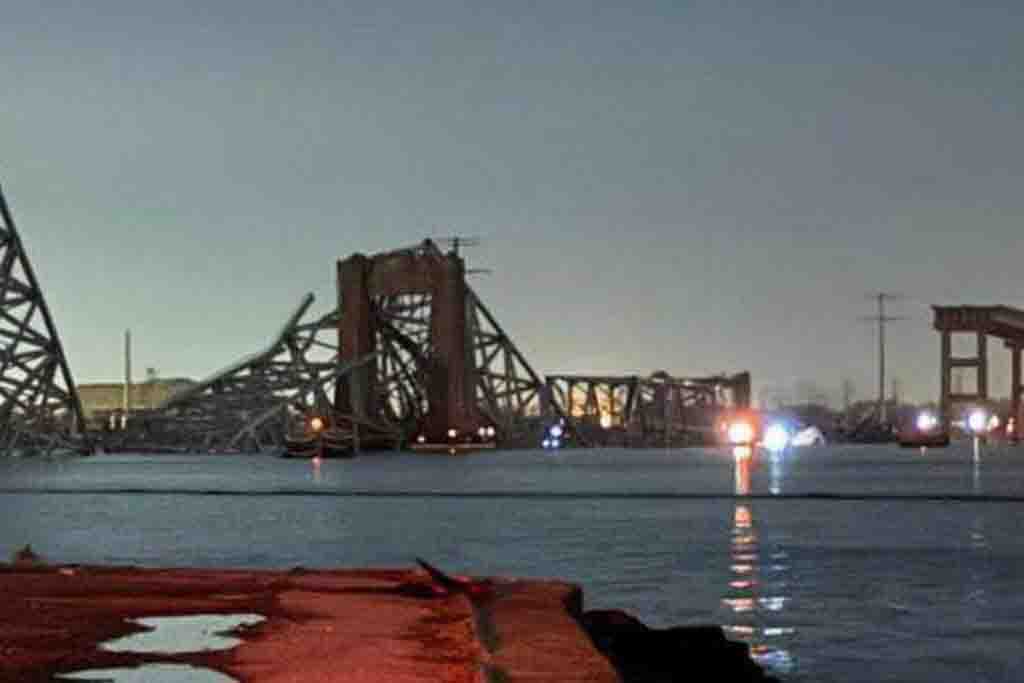
April 01, Colombo (LNW): The cargo ship responsible for the collapse of the bridge in Baltimore was transporting hazardous materials, the United States National Transportation Safety Board (NTSB) disclosed.
Among the cargo aboard the vessel, named MV Dali, were 56 containers containing corrosive substances, flammables, and lithium-ion batteries.
MV Dali, owned by Grace Ocean Private Ltd. and chartered by Maersk, was carrying a total of 764 tons of hazardous materials when it collided with the Baltimore Francis Scott Key Bridge on March 26, 2024.
The vessel was en route from Baltimore to Sri Lanka at the time of the incident.
This is not the first time the MV Dali has been involved in a maritime incident. In 2016, the same vessel was engaged in a collision while departing from the port of Antwerp, Belgium.
The incident occurred as the ship, with a length of 948 feet (290 metres) and a capacity of 10,000 containers, was maneuvering out of the container terminal.
It reportedly struck the quay, resulting in significant damage to several metres of the hull.
Although the ship was detained by authorities and docked in Deurganckdok, Belgium, there were no reported injuries or environmental contamination.
Weather conditions were reported to be favorable at the time of the collision, with the incident attributed to the actions of the ship’s master and onboard pilot, according to Vessel Finder.
