
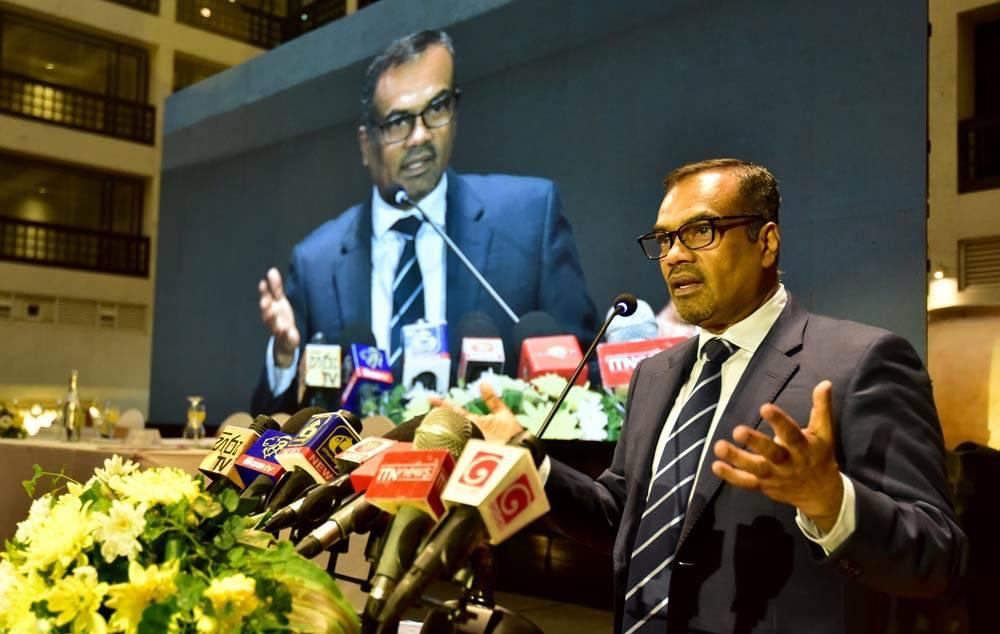
March 27, Colombo (LNW): Encouraging citizens to willingly pay taxes requires a shift in public perception and a transparent government free from corruption, Deputy Minister of Labour and Economic Development Prof. Anil Jayanta Fernando stated.
Speaking at the annual conference of the Inland Revenue Commissioners Association, he highlighted the importance of rebuilding trust in state institutions to foster a more cooperative approach to taxation.
Fernando pointed out that tax compliance has historically been low due to widespread scepticism about how government funds are managed. Many citizens, he noted, have been reluctant to contribute financially, fearing their hard-earned money would be misused through fraud and mismanagement.
This deep-rooted distrust has led to an environment where tax evasion is seen as justifiable resistance rather than an unlawful act.
“If a government operates with integrity, without corruption or theft, people will be more willing to pay their taxes because they will see it as a contribution to their own well-being and the development of the nation,” he explained. “However, as long as the perception of corruption persists, tax compliance will continue to be a challenge.”
The Deputy Minister further criticised the government’s approach of enforcing tax collection through stringent regulations rather than fostering voluntary compliance. He warned that reliance on coercion, rather than building public confidence, reflects systemic dysfunction and could ultimately prove counterproductive.
Fernando acknowledged that the public is slowly beginning to notice a shift under the current administration, with fewer allegations of financial misconduct than in previous governments.
This, he suggested, could pave the way for a more constructive tax culture, where citizens view taxation as a means of strengthening the nation rather than an unfair burden.
“A government that upholds transparency and remains free from corruption will create a stronger, more financially stable country,” he asserted. “People should feel that their taxes are being put to good use, funding essential services and national progress, rather than lining the pockets of the few.”
He concluded by reiterating that taxation policies should go hand in hand with accountability and ethical governance, as only a responsible administration can expect genuine cooperation from its citizens in matters of public finance.
