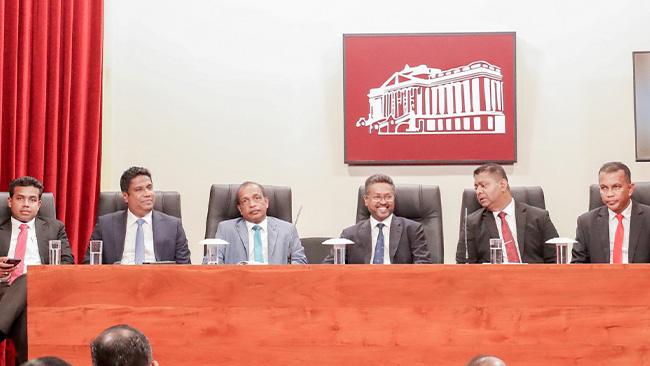
February 10, Colombo (LNW): The first ever district wise inter-religious coordination committee promoting conversations on the merits of Himalaya Declaration started today in Kurunegala.
Today, 9 February 2024, in Kurunegala, first of the five planned workshops has begun in training the proposed 150 interfaith clergy and civil society members, as co-ordinators. They will be the key resource persons who will facilitate the planned 25 districts conversations, in the coming months. These planned 5 workshops will all be two days workshops, spread around the country. Next one will be in Kandy, then in Batticaloa, Matara and Vavunia.
In each one of these workshops, persons from surrounding districts too will participate. Like in todays and tomorrows, although the workshop is held in Kurunagela, participants from Puttlam and Anuradhapura were also took part. In total today’s workshop had approximately 30 participants from these three districts and that comprised of clergy from Buddhist, Hindu, Muslim, Catholic and Christian religions and civil society members from each districts too.
From the Sangha for Better Sri Lanka (SBSL) participants included, Ven. Madampagama Assaji Tissa Thero, Ven. Prof. Pallekande Rathnasara Thero, Ven. Kithalagama Hemasara Nayake Thero and Ven. Siyambalagaswewa Wimalasara Thero and Global Tamil Forum (GTF) was represented by Dr Elias Jeyarajah from the United States. In addition to Visaka Dharmadasa and staff from Association for War Affected Women (AWAW), there were three excellent professional facilitators Mr Indika Perera, Dr. Dayani Panagoda, and Mr Nagaratnam Vijayskanthan who also provided translations.
Dr Elias said “It was wonderful to witness the continuation of the Nagarkot dialogue. Heard very favourable comments about Himalaya Declaration from most participants”
Each district will be represented by 5 inter-religious persons and a civil society member in total 6 per district. Therefore, from the 25 districts will be 150 coordinators. Once all 5 workshops are over, the national conversation will begin. That’s the current plan.
February 10, Colombo (LNW):Despite being denied entry into the exclusive economic zone of the Sea of Sri Lanka, a Chinese research vessel, Xiang Yang Hong 3, continues its scientific research and observation activities in the area. The vessel, observed sailing southward toward the Maldives, has triggered a fresh round of diplomatic discussions between India and China concerning Sri Lanka.
Expressing concern over repeated incursions of Chinese research ships into the Sea of Sri Lanka, India deems these actions a threat to its security. In response, the Sri Lankan government imposed a one-year ban on research vessels conducting research within its territorial waters. However, the Chinese government formally requested permission to deploy Xiang Yang Hong 3 for research activities in the Sea of Sri Lanka, leading to heightened tensions.
The ban was enforced when the Chinese vessel was ready to depart from its home port. Departing from Sanya port in China on the 16th of last month, the vessel altered its course towards the Maldives instead of heading directly to Sri Lanka.
As of yesterday, Xiang Yang Hong 3 remains in close proximity to the Sri Lankan sea border, engaged in undisclosed investigation or surveillance activities. The vessel’s actions skirt the limits of the Exclusive Economic Zone, which extends within 200 nautical miles from Sri Lanka’s southern coast.
The situation adds complexity with the arrival of an Indian navy submarine in Colombo last Saturday, welcomed with naval courtesies. India perceives this as a strategic victory, while Chinese media outlets counter India’s claim, asserting that India’s pressure on Sri Lanka is not a victory but rather a source of embarrassment. The ongoing developments underscore the delicate diplomatic dynamics in the region.
1.President Ranil Wickremesinghe addresses the 7th Indian Ocean Conference in Perth, on “Towards a Stable & Sustainable Indian Ocean”: highlights the critical need for enhanced “connectivity infrastructure” to accommodate the projected 8-fold increase in the GDP of countries like India & Indonesia by 2050: emphasizes the urgency of addressing the climate crisis, noting the Indian Ocean’s vulnerability to warming & rising sea levels.
2.SJB MP & leader of the United Republic Front Patali Champika Ranawaka underscores the impracticality of opening tax files for every citizen: highlights the considerable time & manpower required to do so: contends that prioritising the collection of unpaid taxes from the 1,272 tax defaulters should take precedence over opening new tax files for every individual.
3.Representatives from various SME sectors come together yet again to call on the Govt to address the pressing issues affecting SMEs, with parate execution, impact of new tax regime and higher electricity cost: also voice concerns regarding aggressive execution of parate law by banks: call for a more balanced approach on enforcement: also say their request to temporarily suspend the parate law has been misinterpreted by CB Governor Nandalal Weerasinghe.
4.Consumer Affairs Authority says 232 bakery & shop owners have been detected selling underweight loaves of bread & not displaying their prices: asserts legal action will be taken against them shortly.
5. Prominent US academic of SL origin Professor Siva Sivanathan calls upon SL expatriates to contribute a portion of their earnings to SL’s children & youth: says SL can be developed if all its expatriates contribute 5% of what they have earned for the future of SL children & youth.
6.Dissident SLPP MP Professor Charitha Herath says the Govt’s policy statement presented by President Ranil Wickremesinghe lacks coherent vision despite the grand rhetoric: also says it solely comprises of outdated IMF policies, which have failed.
7.SJB “Economic Guru” & MP Harsha de Silva re-appointed as Chairman of the Committee on Public Finance: following MPs have also been nominated to serve as Members of the Committee: Shehan Semasinghe, Dr (Mrs) Seetha Arambepola, Suren Raghavan, Anupa Pasqual, Johnston Fernando, Rauff Hakeem, Wajira Abeywardana, Vijitha Herath, Mahindananda Aluthgamage, Duminda Dissanayake, Chandima Weerakkody, Nalaka Godahewa, Nimal Lanza, M A Sumanthiran, Dr Kavinda Jayawardhana, Mayantha Dissanayake, Harshana Rajakaruna, U K Sumith Udukumbura, Major Pradeep Undugoda, Isuru Dodangoda, Premnath Dolawatte, Madhura Withanage, & M W D Sahan Pradeep Withana.
8.Sri J’pura University History & Archaeology Professor Karunasena Hettiarachchi says the largest inscription ever in SL has been found from the Dimbulagala Monastery grounds: says it belongs to the beginning of the 2nd centrury BC or earlier: explains that 60% of this inscription is unreadable.
9.State Energy Minister D V Chanaka says SL could reduce fuel prices after March’24 if there is no unpredictable events or sharp depreciation in the SL Rupee: also says the Govt was able to reduce the fuel prices across the board by about Rs.100 during the period around March’23.
10.SL beats Afghanistan by 42 runs in the 1st Cricket ODI in Pallekele: SL 381/3 in 50 overs: Pathum Nissanka 210, Avishka Fernando 88, Sadeera Samarawickrama 44: AFG 339/6 in 50 overs: Azmatullah Omarzai 149, Mohammad Nabi 136, Pramod Madushan 75/4: Pathum Nissanka breaks the record for the highest individual score in an ODI match by a SL player (189) established by Sanath Jayasuriya in 2000: Afghan batters Azmatullah Omarzai & Mohammad Nabi establish the 2nd-highest 5th-wicket stand in ODI history of 242 runs.
The first-ever district-wise inter-religious coordination committee promoting conversations on the merits of the Himalaya Declaration started yesterday in Kurunegala.
Yesterday, 9 February 2024, in Kurunegala, the first of the five planned workshops began in training the proposed 150 interfaith clergy and civil society members, as co-ordinators. They will be the key resource persons who will facilitate the planned 25 districts conversations, in the coming months. These planned 5 workshops will all be two-day workshops, spread around the country. The next one will be in Kandy, then in Batticaloa, Matara and Vavunia.
In each one of these workshops, persons from surrounding districts too will participate. In total today’s workshop had approximately 30 participants from these three districts and that comprised of clergy from Buddhist, Hindu, Muslim, Catholic and Christian religions and civil society members from each district too.
From the Sangha for Better Sri Lanka (SBSL) participants included, Ven. Madampagama Assaji Tissa Thero, Ven. Prof. Pallekande Rathnasara Thero, Ven. Kithalagama Hemasara Nayake Thero and Ven. Siyambalagaswewa Wimalasara Thero and Global Tamil Forum (GTF) was represented by Dr Elias Jeyarajah from the United States. In addition to Visaka Dharmadasa and staff from Association for War Affected Women (AWAW), three excellent professional facilitators, Mr Indika Perera, Dr. Dayani Panagoda, and Mr Nagaratnam Vijayskanthan, also provided translations.
Dr Elias said “It was wonderful to witness the continuation of the Nagarkot dialogue. Heard very favorable comments about Himalaya Declaration from most participants”
Each district will be represented by 5 inter-religious persons and a civil society member in total 6 per district. Therefore, from the 25 districts will be 150 coordinators. Once all 5 workshops are over, the national conversation will begin.
February 10, Colombo (LNW): Diplomatic negotiations between India and Sri Lanka have gained momentum as discussions revolve around a significant infrastructure project. The proposed multi-product oil pipeline is designed to connect India’s Nagapattinam to Sri Lanka’s Trincomalee Oil Tank Farm.
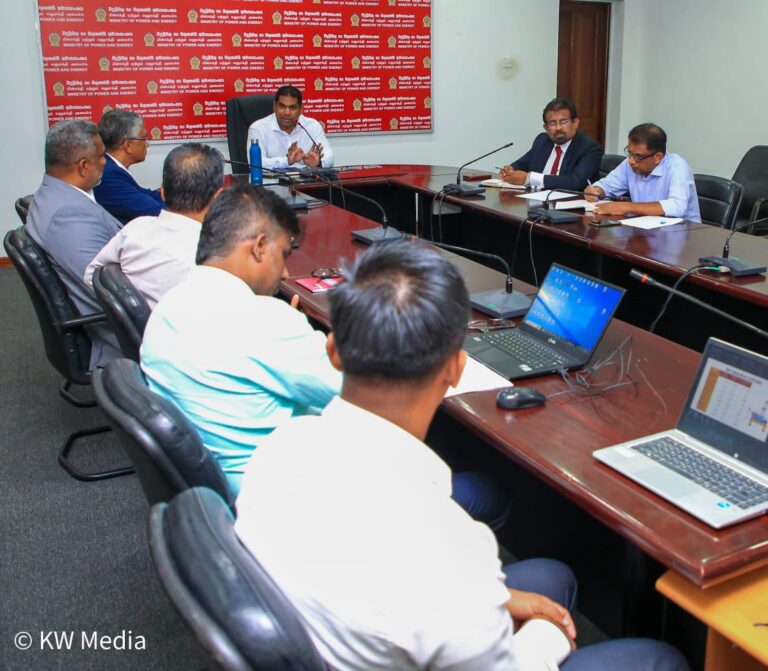
During a meeting on the sidelines of the India Energy Week, Sri Lanka’s Power and Energy Minister, Kanchana Wijesekera, engaged with the Indian Oil Company (IOC). The minister later shared insights on the discussions through X, stating that they deliberated on the Indian Government’s proposal, facilitated by IOC, for a multi-product oil pipeline linking Nagapattnam, Trincomalee Tank Farm, and Colombo.
Minister Wijesekera revealed that comprehensive assessments, including technical studies, demand market analysis, financial analysis, and business models, will be conducted to determine the project’s mechanism.
The discussions also encompassed investments and the expansion of projects under joint ventures involving Trincomalee Tank Farm, Ceylon Petroleum Storage Terminals Limited (CPSTL), and Lanka Indian Oil Corporation (LIOC) retail operations.
In addition to the oil pipeline, the progress of the Sampur Ground Mount Solar Project, a joint venture between NTPC of India and the Ceylon Electricity Board (CEB), was discussed during the India Energy Week. Minister Wijesekera mentioned that the Chairman of NTPC expressed interest in investing in wind and floating solar projects in Sri Lanka, indicating potential collaborations in the renewable energy sector between the two countries.
February 10, Colombo (LNW): President Ranil Wickremesinghe addressed the 7th Indian Ocean Conference in Perth, Australia, emphasizing the urgent need for Middle East peace and stability in the Indian Ocean Region. The President called for an early end to the Gaza war and proposed the establishment of an Independent Palestine State within the next 5 years, along with guarantees for the security of Israel.
During his keynote address on Friday (Feb. 09), President Wickremesinghe criticized the United States for supporting the Gaza war, warning that such actions would diminish its influence in the Indian Ocean region. He highlighted the growing influence of Russian, Chinese, and Iranian strategies, asserting that these nations are successfully challenging U.S. hegemony.
The President discussed geopolitical shifts, pointing out the increased strategic importance of the Western Indian Ocean due to recent developments, such as the Ukrainian war and Western sanctions on Russia. He highlighted Russia’s expanding influence in the region, including naval exercises with Indian Ocean countries.
President Wickremesinghe underscored the challenges to freedom of navigation, including recent attacks by Yemen-based Houthi rebels on commercial vessels. He also addressed the threats of Somali piracy, drug presence, human smuggling, and the need to refocus on the freedom of navigation in the Indian Ocean.
Connectivity was another key focus, with the President welcoming India’s initiatives for new connectivity corridors, including the India-Iran-Russia corridor and the India-Middle East-Europe corridor. He highlighted the importance of expanding port capacities to accommodate the anticipated economic growth in India, Indonesia, and other South and West Asian countries.
Turning to environmental concerns, President Wickremesinghe stressed the critical issue of the Climate Crisis affecting the Indian Ocean. He urged collective efforts to address rising sea levels, coastal erosion, and extreme sea disasters. The President proposed initiatives for sustainable exploitation of the ocean’s resources, emphasizing the potential for offshore wind, solar, and wave energy.
In conclusion, President Wickremesinghe called for unity among Indian Ocean Rim Association (IORA) countries to create an overarching regional architecture. He emphasized the need for a Code of Conduct on freedom of navigation and commerce, as well as guiding principles for addressing the climate crisis in the Indian Ocean.
The President’s full speech at the 7th Indian Ocean Conference can be read below:
“It is a great pleasure to be here in Perth for the 7th edition of the Indian Ocean Conference. I thank the Australian Government, for the hospitality afforded to all of us. I also thank the India Foundation for once again bringing us together. The theme of this Conference – “Towards a Stable and Sustainable Indian Ocean”- could not be timelier and more appropriate.
The Australasian continent is unique in that it has borders with both the Indian Ocean and the Pacific Oceans. Perth played a crucial role in the history of Sri Lanka – Australia relations. During World War II, Royal Canadian Air Force, Catalina Flying Boats, traversed the expanse of the Indian Ocean, connecting Perth with Koggala Air Base in Ceylon. The only air link between the Indian subcontinent and Australia. Known as flights of the double sunrise, they operated a non-stop route upto 32 hours in radio silence, to ensure the success of a critical air route during World War II for the Allies.
The Japanese attacks in April 1942 on the Indian Ocean specially Ceylon was described by Churchill as the most dangerous moment of the war highlighting the importance of the Indian Ocean to the British Empire. I was just talking with Dr. Balakrishnan and he said there were no carrier battles in the Indian Ocean for the simple reason that the Japanese sank the only British carrier.
Let me highlight a few important developments which I hope will make a contribution to your deliberations.
Firstly, historically speaking, the Indian Ocean is multipolar and has resisted domination by a single power. This multipolarity is a reflection of the essence of the Indian Ocean region and its people. As Asia emerged from colonialism the newly independent countries of Asia ie. Ceylon, India, Indonesia, Burma and Pakistan convened the Bandung Conference in 1955 to oppose colonialism in all its forms. The conference declaration to oppose big power rivalry in turn led to the Non Aligned Movement. Since then the Indian Ocean region has been influenced by the spirit of Bandung. It has never became a part of the US Hub and Spoke system.
The past two decades has seen the emergence of diverse framings of the Indian Ocean region and a flurry of diplomatic activity articulating various policy positions, tilts, and frameworks. What is clear is that no single, objective geopolitical construct has emerged, and we are left instead with a contested vision with multiple interpretations.
The key frameworks that have emerged include in addition to IORA, the Indo-Pacific, the BRI, the QUAD, and the BRICS. There are also regional organizations including ASEAN, ARF (ASEAN Regional Forum), ACD (Asia Cooperation Dialogue) BIMSTEC, SAARC, GCC, Arab League, OIC, SADC, EAC and SCO that have been established. Additionally, we have the operational arrangements that deal with specific areas of cooperation including RCEP, IONS, the Djibouti Code of Conduct, IOTC, Indian Ocean Commission (IOC), MASE, four regional Information Fusion Centres (Singapore, India, Seychelles and Madagascar), and the CGPCS (Contact Group on Piracy off the Coast of Somalia).
Along with these frameworks and groupings, we also see an increased militarization of the Indian Ocean which is redefining power balances and alliances. In the maritime space we see a building up in naval capabilities in India, and with USA, Australia, UAE, Saudi Arabia, and China all increasing their naval presence significantly. Therefore, balancing between the great power rivalries is becoming an increasingly more complex task. As a result, the space for manoeuvrability for littoral states is shrinking fast as this rivalry in the Indian Ocean region intensifies and spills over into decision-making on political, economic and security issues. The proverbial question to choose one over the other is perennially hanging over us.
Secondly, the geopolitical developments have resulted in an increase in the strategic importance of the Western Indian Ocean that was not foreseen four years ago. This in turn is shifting the geopolitical emphasis towards the Indian Ocean. The Ukrainian war, and the consequent Western sanctions on Russia has resulted in the resource-rich economy finding new markets in China and the Western Indian Ocean. For example, Russian Crude Oil is refined in the Gulf refineries. Dubai has replaced London as the financial centre for the oligarchs. Russia has developed a closer friendship with Iran, which is an important source of supply for drones. Russia is carrying on naval exercises with Indian Ocean countries, including Myanmar and South Africa.
China itself has played an active role in healing the rift between Iran and Saudi Arabia. Iran and its allies have become important players in West Asia. The Shanghai Cooperation Organisation, with India, Pakistan and Iran as members have the Western Indian Ocean as its outer limits.
The ill-advised judgment of the US in supporting the Gaza war will diminish its influence in the region. The hostility of the countries forming the Islamic Arch in the Indian Ocean will prevent any close rapprochement with the US for some time. The Russian, Chinese and Iranian strategies are successfully biting at the US hegemony thereby further weakening the US. The Indian Ocean stability requires an early end to the Gaza war followed by,
a. the establishment within 5 years of an Independent Palestine State and b. guarantees for the security of the state of Israel.
Thirdly, the recent attacks on commercial vessels by the Yemen-based Houthi rebels, is a challenge to the ‘Freedom of Navigation’. We have to ensure access and mobility in the Suez Canal, Red Sea, Bab-el-Mandeb and the Gulf of Aden. In addition, we also face the threat of Somali Pirates, once again. The safety of undersea cables and critical infrastructure are also facing additional threats. The presence of drugs in the Indian Ocean and Human Smuggling has increased. IUU fishing still takes place. These threats present challenges to the Freedom of Navigation. We need to refocus on the freedom of navigation in the Indian Ocean. Sri Lanka offers to recommence the discussions on the Freedom of Nation in the Indian Ocean.
Fourth, is expanding connectivity. According to estimates there will be an eight-fold increase in the GDP of India and Indonesia by 2050. Similar increases are expected in some of the other countries in South and West Asia. This requires additional port capacities and new transport routes. The Suez Canal may not be sufficient. In this regard India’s two new connectivity initiatives are welcome. Firstly, the India (Mumbai) – Iran – Russia corridor and secondly the India (Mumbai) – Middle East – Europe corridor. Similarly, there are connectivity initiatives taking place in the Bay of Bengal. Work has already commenced on the Chongqing – Kyaukphyu corridor giving access to Western China. Thailand is planning the Kra land bridge connecting the Gulf of Siam with the Bay of Bengal. India and Sri Lanka are commencing feasibility studies on land connectivity between the two countries making Sri Lanka a Regional Logistics Hub with Colombo and Trincomalee ports available to South India.
The Indian Ocean Conference theme this year “Towards a more stable and sustainable Indian Ocean” highlights the two key areas which require our focus. What I have outlined before, dealt primarily with pursuing stability of the region. There is an equally serious, more immediate and existential threat that looms and that is the Climate Crisis.
Experts have revealed that the Indian Ocean is warming at a higher rate than the other oceans around the world. The levels of warming are estimated to be three times higher than in the Pacific Ocean and coastal areas across the IOR will experience continuous rise in sea levels and face severe coastal erosion. The Indian Ocean is also rising at a level of 3.7 millimetres annually and extreme sea disasters are inevitable. The island states of the IOR are vulnerable and have to be provided with adequate resources to mitigate the effects of climate change. Changes at sea also affect monsoon patterns and in turn impact on agriculture and food security across the Indian Ocean region. They also impact on the biodiversity and in turn on food and livelihood of people of the littoral states.
The Indian Ocean presents opportunities in terms of ecology. Not only is it our biggest sink for Carbon, but it also provides potential for mitigating the climate crisis, through offshore wind, solar, and wave energy. Through seaweed farming and mangrove cultivation, we can increase the sequestration of Carbon. Sustainable exploitation of our Ocean’s resources is critical for our survival, as the Ocean provides for our future.
At COP 28 Sri Lanka proposed three key initiatives, (1) the Tropical Belt Initiative, including the Indian Ocean (2) The International Climate Change University and the Climate Justice Forum. As the current Chair of the Indian Ocean Rim Association (IORA) Sri Lanka is focusing on the interdependence between the Indian Ocean and climate change. The Climate Justice Forum aims to accelerate financing of losses and damages and includes debt justice as an essential component of the overall solution. Any proposals for mitigation and adaptation interventions must take into account the debt component faced by Climate-vulnerable and developing countries.
We are living in uncertain times. The stability we had taken for granted since the end of WWII and the Cold War is unravelling. Globalisation is being challenged as is multilateralism. The Climate Crisis is affecting prospects for trade and economic development around the world. It is impacting on food security, livelihoods, supply chains, biodiversity and maritime transportation. Either we can wait for global developments to dictate our fate or unite, so that we may chart our own course.
Creating a safer ocean environment by building confidence and predictability among users and enhancing ocean situational awareness will be key to maintaining peace and security in the Indian Ocean. The main platform that can undertake this important task is the Indian Ocean Rim Association (IORA). Ensuring a peaceful and secure Indian Ocean would facilitate sustainable use of oceans for the economic and social benefit of coastal and littoral states.
An overarching architecture for the Indian Ocean that deals with critical issues is required. The basis for such a structure is already in existence including the United Nations Convention on the Law of the Sea (1982) and the recently adopted BBNJ agreement in 2023 on the conservation and sustainable use of marine biological diversity of areas beyond national jurisdiction or the High Seas Treaty.
A Code of Conduct on freedom of navigation and over flight and unimpeded commerce and similar guiding principles on dealing with the climate crisis and the sustainable use of the Indian Ocean are a necessity. Only the leaders of the IORA countries can ensure that these measures are translated to the creation of an overarching regional architecture for the Indian Ocean region. Therefore the responsibility lies with us.
Macktiles Lanka Ltd., has achieved a monumental milestone as Sri Lankan tiles make their debut in the Indonesian market.
This historic accomplishment marks a significant shift in the global trade dynamics, with Sri Lanka transitioning from being a net importer to an exporter of premium-quality tiles. Macktiles is Sri Lanka’s largest manufacturer.
“For decades, Sri Lanka has relied on imports from Indonesia for its tile requirements. Today, we are immensely proud to announce that Macktiles Lanka has successfully exported Sri Lankan tiles to Indonesia for the first time,” said Macksons Holdings Managing Director Mizver Makeen.
“I believe Sri Lanka can do better in this global arena, and we, as a company, are proud of achieving that milestone exporting to a destination like Indonesia. Our dedicated team at Macktiles has worked tirelessly to provide best quality tiles to the market, and this achievement is a testament to their unwavering commitment,” he added.
Macktiles Lanka’s journey towards this historic feat has been marked by remarkable growth and expansion.
In 2023, the company invested Rs.12 billion in expanding its operations, culminating in the establishment of a cutting-edge tile manufacturing plant in Bandaragama.
This state-of-the-art facility has significantly augmented the company’s production capacity, enabling Macktiles to manufacture an impressive 44,000 square meters of tiles per day, translating to a staggering 15 million square meters annually.
The expansion not only ensures self-sufficiency in Sri Lanka’s tile manufacturing industry but also positions Macktiles to strategically penetrate international markets.
With exports to countries such as the Maldives, Dubai, and Kenya, Macktiles has been a vital contributor to Sri Lanka’s economic recovery, bolstering foreign currency earnings and fostering economic resilience.
Renowned for its unwavering commitment to excellence and innovation, and the exceptional strengths of design, quality, and customisation capability,
Macktiles has garnered accolades both locally and internationally, solidifying its reputation as one of Sri Lanka’s premier business entities.
The emergence of Sri Lankan tiles in the Indonesian market underscores the global recognition of Sri Lanka’s prowess in tile manufacturing.
With a stringent manufacturing process and the use of high-end materials, Sri Lankan tiles have earned a reputation for being premium products, resonating strongly with discerning customers worldwide.
As Macktiles continues to push boundaries and set new benchmarks in the tile manufacturing industry, it remains steadfast in its commitment to delivering exceptional quality and driving innovation, both locally and on the global stage.
Bill and Melinda Gates Foundation has stepped into set up a Program Support Unit within President’s Office
Cabinet approves move after considering President’s presentation on policy support from Bill and Melinda Gates Foundation
Global Health Strategies, by the Bill and Melinda Gates Foundation and its local partner Connect to Care Organisation, are to establish a Program Support Unit within the President’s Office.
“The Cabinet of Ministers deliberated on the issues presented by the President concerning the policy support envisioned by the Bill and Melinda Gates Foundation for the Presidential Secretariat.
Subsequently, approval was granted by the Cabinet of Ministers to proceed with the necessary steps in this regard,” Cabinet Co-Spokesman and Minister Bandula Gunawardena said last week.
Speaking at the post-Cabinet meeting media briefing he said that the President’s Office collaborates with multi-stakeholder organisations such as the International Monetary Fund (IMF), World Bank and Asian Development Bank, providing guidance on policy matters and monitoring Government initiatives.
To enhance these efforts, a Program Support Unit will be established through a partnership with Global Health Strategies, an organisation backed by the Bill and Melinda Gates Foundation and its local partner Connect to Care Organisation.
“This initiative aims to actively contribute to the Government’s objectives, with an appointed Executive Committee ensuring proper coordination for effective program implementation,” he pointed out.
Accordingly, an Executive Committee consisting of senior officials will be appointed to ensure proper coordination for the implementation of the various programs being implemented by the Bill and Melinda Gates Foundation.
Local partners involved in the project is Connect to Care Organisation. Its main purpose is to provide purpose driven boutique consultancy, focusing on delivering mutual benefit for corporates, non profits and government partners through the strategic deployment of social impact initiatives working with Bill & Melinda Gates Foundation, PATH, Global Health Strategies, Sarvodaya, Roshan Mahanama Trust & Mithuru Mithuro
Connect to Care Consulting is a charitable consulting firm limited by guarantee in Sri Lanka, registered under Sec. 34 of the Companies Act No. 07 of 2007
Chandita Samaranayake Chairman/Founder of the local non governmental organization committed to delivering purpose driven boutique consultancy services.
With a strong focus on creating mutual benefit for corporates, non-profits, and government partners, Chandita has dedicated his career to harnessing the power of strategic social impact initiatives.
February 09, Colombo (LNW): Sri Lanka is preparing for the first ever textile and apparel roadshow in UK, the third biggest market for the sector with the aim to boost exports to $ 1 billion in two years from around $ 600 million at present.
The landmark roadshow is a joint initiative by the Sri Lanka Export Development Board (EDB), in collaboration with the Sri Lanka Apparel Sourcing Association (SLASA), Sri Lanka High Commission in UK, and the Joint Apparel Association Forum (JAAF).
Titled ‘Sourced Sri Lanka – Textile & Apparel Roadshow’ the event is scheduled to take place June 2024 in London.
EDB said this event, set to take place in early June in the city of London, will feature 50 exhibitors and is expected to attract a diverse audience of a 1000 foreign buyers and Sri Lankan trade visitors.
The collaboration aims to establish new connections and strengthen existing ties with UK buyers in order to reach a historic milestone for Sri Lanka’s apparel export industry.
Sri Lanka’s apparel export sector has faced challenges, including declining demand in high-end markets like the United States, United Kingdom, and European countries over the past two years. In response, the ‘Sourced Sri Lanka – Textile & Apparel Roadshow’ is a strategic initiative to identify new markets and build relationships with new buyers.
This roadshow is particularly significant as Sri Lanka has not had a stand-alone show in any country for over two decades to promote exports starting in the UK in 2024; the plan is to expand the roadshow to Germany, Japan, USA and Australia in the coming years.
The ambitious goal is to increase apparel exports to the UK to $ 1 billion by 2026, leveraging the benefits of the UK Developing Countries Trading Scheme (DCTS). In 2023, apparel exports to the UK amounted to $ 626.74, down by 13% from the previous year. Exports to the UK accounted for 14% of the total in 2023.
The roadshow provides a unique platform for Sri Lankan apparel manufacturers to exhibit their products, emphasising the unique blend of craftsmanship, creativity, and sustainability that sets them apart.
Direct interactions between Sri Lankan businesses and potential UK buyers, retailers, and distributors are expected to build trust and collaboration, aiming to establish strong ties in the UK market.
Exports in December amounted to $ 415.6 million as per provisional data from the Joint Apparel Association (JAAF).
The December 2023 figure is the highest since December 2022’s tally of $ 451 million. Exports to the UK market saw a welcome but marginal increase of 1.7% $ 54.4 million. In November too exports to the UK improved by 20% year on year to $ 48 million.
February 09, Colombo (LNW): Consequent to the significant increase in Indian tourist arrivals into the island, Sri Lanka is likely to extend visa exemption status for India after March to keep this momentum and encourage repeat visits, Tourism Minister Harin Fernando disclosed. .
“India is our number one source market and tourists from India helped our country on its path of recovery from the recent crisis we faced,” Fernando said.
Sri Lanka Tourism is experiencing a promising start to February, with over 43,000 tourists visited in the first six days of the month, pushing the cumulative figure for tourist arrivals to 252,035.
The surge in tourist arrivals is accompanied by an improved daily average of 7,297 visitors this month, compared to 6,718 in January, mainly boosted by Russian and Indian travellers.
During the first six days of February, Sri Lanka saw 43,782 tourists arriving, setting a strong foundation for the month and the ongoing winter season, which extends till the end of March 2024.
Sri Lanka Tourism Development Authority (SLTDA) has set an ambitious monthly target of 238,614. Russia emerged as the leading source market, accounting for 14% of total arrivals with 6,289 visitors, followed closely by India with 6,007 arrivals and the United Kingdom with 4,011 tourists.
Sri Lanka facilitated visa-free entry for Indian travellers from December 2023 to March. “We are working on extending it beyond March. We want to make Sri Lanka an easily accessible destination for Indians, who can just walk into our country for a hassle free holiday,” tourism minister said.
By offering visa exemption to Indians, Sri Lanka will attract more footfalls, especially those who make last-minute plans and find visa process a hindrance, he added. .
“In the time of more options, we have to ease the travel process to encourage more tourists from India and repeat footfalls,” he added.
Industry analysts attribute the favourable uptick in arrival figures to the resumption of many new international airlines and charter flights, coupled with the heightened global attention on Sri Lanka as a tourist destination.
India maintains its position as the top tourist source market for Sri Lanka year-to-date (YTD), with a cumulative total of 40,406 arrivals, followed by Russia with 37,448, the UK with 20,676, and Germany with 16,980 and China with 14,512 arrivals.
Cathay Pacific, the largest carrier in Hong Kong, resumed flights to Sri Lanka after a four-year hiatus due to the COVID-19 pandemic. The inaugural flight of Cathay Pacific Airways landed on 1 February at Bandaranaike International Airport, carrying 253 passengers.
As the industry continues to rebound, stakeholders remain optimistic about the prospects for sustained growth and recovery in the months ahead.