Home Blog Page 1038

IGP Position Issue to be Resolved by Constitutional Council, Says Education Minister

0

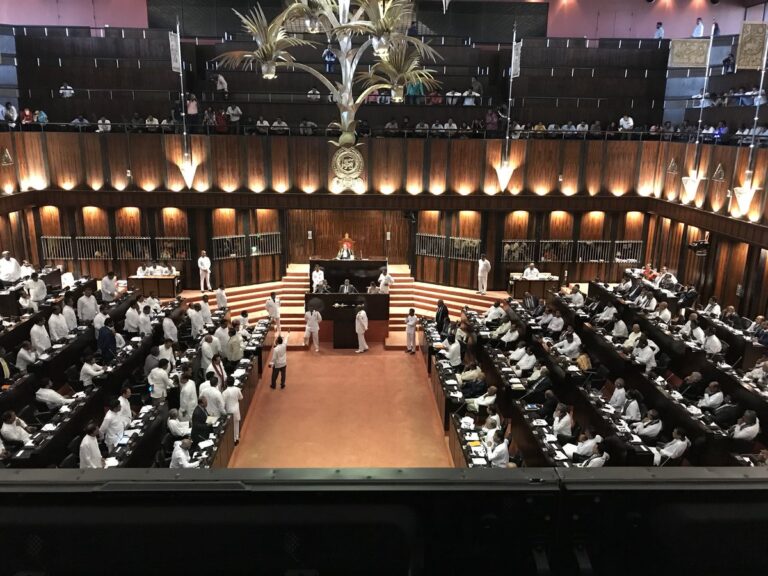
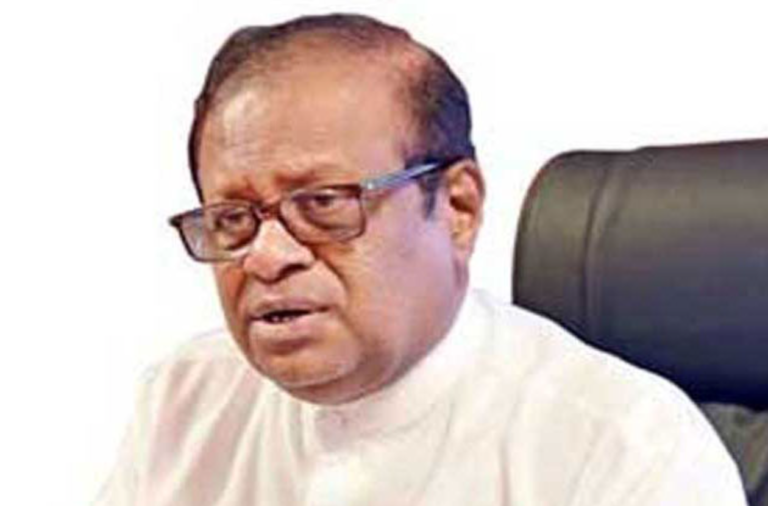
July 27, Colombo (LNW): Leader of the House and Education Minister Dr. Susil Premajayantha told Parliament yesterday (26) that resolving the current issue regarding the position of Inspector General of Police (IGP) falls under the responsibilities of the Constitutional Council.

He made this statement while clarifying the interim order issued by the Supreme Court concerning the IGP’s position. The Leader of the House further elaborated, “The role of a Leader of the House is to support the operations of the House, which is what I am attempting to do. I explained the principle of separation of powers. The Speaker is the head of the Constitutional Council. The Constitutional Council confirms the names for positions mentioned in the schedule of the Constitution, which the President nominates.

“We can discuss the decision in a case. Otherwise, we cannot learn or teach the law. The Supreme Court can issue an interim order to suspend the IGP. According to Article 126, this is correct. As a lawyer, I agree with it. The suspension does not vacate the position but stops the function.

“Can an order be given to vacate the position? When taken as an argument, if it is an executive part, it should be referred back to the appointing body, and beyond that, the responsibility falls on Parliament. According to this process, the question is whether the IGP position is vacant or not. How can an acting appointment be made if the position is not vacant? The issue arises whether another person can be appointed to act when there is someone in the position. I suggest that this issue should be referred back to the Speaker.

“Accordingly, it is up to the Constitutional Council to decide whether to convene or not, and if the position is vacant, to appoint an acting official. If the position is not vacant, how can an acting official be appointed? There is no constitutional provision for appointing acting ministers when ministers travel abroad. However, appointments and other matters under Article 7(a) of the Constitution are different and fundamental to the Constitution. Therefore, the acting minister position when a minister travels abroad and the positions in this process are different. It is constitutional and cannot be violated.”

Dr. Premajayantha clarified these points to address the queries raised about the current situation regarding the IGP position in Parliament.


Showers will occur at times in Sabaragamuwa province and in Kandy and Nuwara-Eliya districts.

0

July 27, Colombo (LNW): Several spells of showers will occur in Western and North-western provinces and in Galle and Matara districts.

Strong winds of about (50-55) kmph can be expected at times over Western slopes of the central hills and in Northern, North-central and North-western provinces and in Trincomalee, Monaragala and Hambantota districts.

Fairly strong winds about (30-40) kmph can be expected at times elsewhere of the island.

Palm oil import causes significant foreign currency outflows from Sri Lanka

0

By: Staff Writer

July 26, Colombo (LNW): A significant financial impact has been exerted on Sri Lanka economy by Palm oil imports in to the country, recent discussions at an international conference in Colombo highlighted.

There is a substantial drain on the country’s finances as millions of rupees are binged on palm oil imports in Sri Lanka, experts recently pointed out at an international conference.

Experts revealed that the country’s high dependency on palm oil—used in 90% of food processing and found in over 60% of supermarket products—necessitates a reevaluation of the current ban on palm oil.

The “Sustainable Futures” workshop, hosted by the Nucleus Foundation at Cosmic by Citrus, Lotus Tower, was attended by key figures from the Agriculture Ministry, Plantation Industries, and international partners including the Malaysian High Commission,

Indonesian Embassy, and Solidaridad. The event emphasized the potential economic and environmental benefits of palm oil, drawing parallels to Sri Lanka’s successful tea industry.

Dr. Shatadru Chattopadhayay from Solidaridad Asia argued that palm oil could offer similar benefits. Unlike other vegetable oils, palm oil yields both palm oil and palm kernel oil, making it a more land-efficient option. Palm oil cultivation also creates jobs and supports industrialization, which is crucial for addressing Sri Lanka’s trade deficit.

Chattopadhayay pointed out that neighboring countries like Pakistan and Bangladesh present trade opportunities for palm oil, highlighting the global dominance of palm oil producers like Indonesia, Malaysia, and Thailand, which together account for over 90% of global production.

Asian Palm Oil Alliance Chairman Atul Chaturvedi addressed common misconceptions about palm oil. He noted that despite misinformation, palm oil is a critical component of the edible oil market due to its versatility and affordability.

As Sri Lanka’s economy grows, its reliance on palm oil imports will persist unless the ban on oil palm cultivation is reconsidered. He compared Sri Lanka’s situation to India’s, where reliance on imported edible oil is substantial. India spends approximately $1.37 billion annually on promoting palm oil and plans to expand local cultivation to reduce its import bill.

Dr. Suresh Motwani from Solidaridad Asia emphasized the development of sustainable palm oil standards, such as IPOS in India and the proposed SRI POS for Sri Lanka. Implementing such frameworks can help address sustainability concerns.

Dr. B.V. Mehta from the Solvent Extractors Association India highlighted palm oil’s widespread use in consumer products and its critical role in Sri Lanka’s economy. He noted that local palm oil cultivation covers only about 12,000 hectares, a small fraction of the agricultural land, and that expanding coconut oil production is neither feasible nor sufficient to meet the demand.

Overall, the workshop underscored the economic and social benefits of palm oil, including job creation and contributions to sustainable development. The palm oil industry supports food security and economic growth in producing countries, reflecting its vital role in the Asian economy.

Sri Lanka urged to prioritize quality over expanding investment zones

0

By: Staff Writer

July 26, Colombo (LNW): The Verité Research Economic Policy Group has raised concerns about the expansion of investment zones proposed under the Economic Transformation Bill (ETB) in Sri Lanka.

They argue that enhancing the quality of these zones, rather than increasing their number, is key to boosting the country’s competitiveness. In their recent research note, they suggest three strategies for improving investment zones:

Legislative Framework: Implement dedicated, overarching legislation for governing investment zones. This approach, used by other countries, ensures clarity, consistency, and transparency in investment rules.

Quality Standards: Improve zone quality by setting minimum standards and criteria for selecting investors to develop and manage these zones.

Private Sector Involvement: Encourage private sector participation by clearly separating the roles of regulators, developers, and operators, creating a level playing field. Private sector-managed zones have often outperformed public ones in terms of economic yield, market access, and amenities.

These recommendations address three main issues hindering Sri Lanka’s progress compared to regional peers:Under-Investment: Both the quantity and quality of zones have been insufficient.

The country has relied exclusively on the public sector for building and managing zones.: There is a lack of a proper regulatory framework to attract private investment and improve zone performance.

The note underscores the necessity of a stronger regulatory framework than what is proposed in the ETB, which was gazetted on 14 May and will be discussed in Parliament on 25 July. Given the scarcity of land and intense competition for foreign investments in Asia, Sri Lanka needs to adopt quality improvement measures to enhance its competitiveness.

The Verité Research Economic Policy Group has reiterated that Sri Lanka needs to prioritize quality over quantity regarding investment zones, which are set to expand under the Economic Transformation Bill (ETB).

They argue that merely increasing the number of investment zones will not solve the country’s competitiveness issues. Instead, improving the quality of zones to overcome current constraints and encouraging private sector initiatives is the path to attracting investment.

Their recommendations for improving investment zones include enacting separate, overarching legislation to govern zones, enhancing the quality of zones by mandating minimum standards, and encouraging private sector participation by separating the roles and responsibilities of regulators, developers, and operators.

In contexts where the private sector manages investment zones, these zones have typically outperformed their public counterparts in terms of economic yield, market access, and quality of amenities.

The research note addresses three critical problems that have hindered Sri Lanka’s progress compared to regional peers. 

First, there has been under-investment in both the quantity and quality of zones. Second, the country has exclusively depended on the public sector to build and manage zones. 

Third, there is a lack of an appropriate regulatory framework to attract private sector investment and enhance the quality and performance of zones.The note emphasizes that a more robust regulatory framework than what is proposed in the ETB is necessary due to the scarcity of land and intense competition for foreign investments in Asia. The ETB was gazetted on 14 May and is expected to be discussed in Parliament on 25 July.

Government to implement National Agenda for Anti-Corruption

0

By: Staff Writer

July 26, Colombo (LNW): The government is set to implement the “National Agenda for Anti-Corruption” following the Cabinet of Ministers’ approval of President Ranil Wickremesinghe’s Memorandum. This initiative aligns with the International Monetary Fund’s (IMF) governance diagnostics and technical assistance report, aiming to strengthen legal, organizational, and strategic anti-corruption measures.

Key actions in the National Anti-Corruption Framework include:Implementation of Anti-Corruption Legislation: The anti-corruption legislation passed in 2023 will be comprehensively implemented. This includes developing an effective action plan, conducting semi-annual progress reviews, and ensuring sufficient budget allocations. A national anti-corruption strategy for 2025-2029 will also be created.

 A significant amendment to the National Audit Act (No. 19 of 2018) is proposed. This will expand the Auditor General’s authority to present comprehensive investigative audit reports to Parliament and authorize criminal investigations into fraud and corruption. The Auditor General will be empowered to hold senior officials accountable, including levying surcharges for failures in financial oversight and accountability.

: The framework includes regulations for conflict-of-interest rules and asset disclosure procedures. This involves defining conflicts of interest, mandating public disclosure, providing management guidelines, enforcing penalties for non-compliance, and requiring performance reporting. A dedicated website will be established for senior public officials to disclose their assets, with semi-annual and annual progress reviews.

Developing national strategies and policies for asset recovery from crime and money laundering is a critical component. This aims to support the effective functioning of the Commission to Investigate Allegations of Bribery or Corruption (CIABOC) and ensure proper handling of investigations and prosecutions, especially concerning Politically Exposed Persons (PEPs).

Plans include creating a comprehensive beneficial ownership register for transparency in company ownership and implementing a law requiring the publication of procurement contracts exceeding one billion rupees. Publicizing tax exemptions for all companies and temporarily suspending the Strategic Development Project Act until a proper evaluation process is established are also emphasized.

The agenda emphasizes public enterprise reforms to create trained and independent staff. Short-term anti-corruption measures by the Department of Government Revenue and new management functions for the Employee Provident Fund are included. The Central Bank of Sri Lanka’s direct management will be removed, and corporate controls in government-owned banks will be strengthened by improving the selection process for executive and board members and enforcing standards for the Judicial Service Commission.

Enhancing the right to information for greater transparency and accountability is also a priority.

The agenda incorporates recommendations from the IMF’s second review of the Extended Fund Facility, published on May 29, 2024. These recommendations aim to enhance the effectiveness of current anti-corruption efforts by focusing on supporting CIABOC, improving state revenue management, strengthening financial oversight and management of state assets, and preventing money laundering and terrorism financing.

The comprehensive framework aims to bolster anti-corruption measures through legislation, strategic planning, and international cooperation, ensuring accountability, transparency, and effective management of public resources.

22% of Sri Lankan households in debt due to economic crisis – survey

0

By: Staff Writer

July 26, Colombo (LNW): Sri Lanka has seen over one-fifth of its households pushed into debt due to the man-made economic crisis, according to a state survey report.

Approximately 22% of household units are currently in debt, as revealed by the Department of Census and Statistics. Additionally, the average monthly income for 60.5% of the total household units has decreased.

The 2023 report from the ‘Household Survey on the Impact of the Economic Crisis’ outlines that 54.9% of people aged 3 to 21 have been affected by the crisis, with 93.5% adopting strategies to mitigate its impact.

 Furthermore, 14.2% of people over the age of 15 have lost their jobs since March 2022, with job losses higher among males compared to females.

During economic crises, household indebtedness rises due to income reductions, job losses, and financial uncertainties. This often forces households to borrow more to cover essential expenses, leading to increased debt burdens.

Repayment challenges emerge, resulting in late payments, defaults, or reliance on credit. High household debt levels cause stress and financial strain, affecting mental well-being and potentially leading to foreclosures or bankruptcy.

Managing this situation involves policies aimed at debt relief, financial education, and economic stimulus measures to support households and economic recovery.

The survey findings indicate that currently, 54.9% of households in Sri Lanka are indebted, highlighting significant financial obligations or outstanding debts.

 This indebtedness impacts household finances, budgeting, and financial stability, especially during economic challenges.

The survey also provides a percentage distribution of indebted households based on different lending sources.

The highest proportion of debt arises from mortgage matters (31.0%), followed by banks (21.9%) and money lenders (9.7%). Notably, 22.3% of indebtedness arises from loans taken to meet daily food needs, indicating severe financial constraints in fulfilling basic necessities.

 Additionally, 17.0% of indebted households acquired loans for constructing or repairing residences. Understanding these factors is crucial for policymakers and financial institutions to address these challenges and create interventions to ease economic burdens.

In 2023, the average monthly expenditure of 91% of the total household units in Sri Lanka increased, and 7% of the population changed their health treatment system, according to the Department of Census and Statistics.

The economic crisis has influenced household spending patterns, leading to variations in expenditure categorized as increases, decreases, or no changes. The primary reason reported by households for reducing their average monthly expenditure, accounting for 77% of responses, was to align expenses with the decrease in income. Households adjusted their spending habits to match the reduction in overall income.

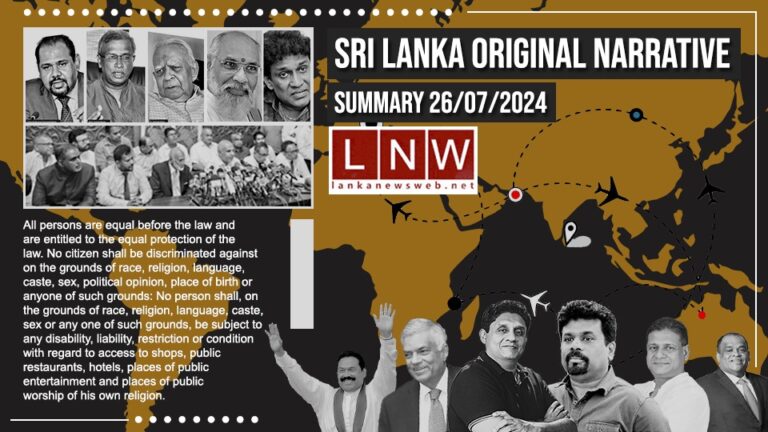
Sri Lanka Original Narrative Summary: 26/07

0

  1. A Cabinet Sub-Committee report on improving the Revenue Administration Management Information System (RAMIS) was delivered to President Ranil Wickremesinghe: The report, chaired by Minister Kanchana Wijesekera, recommends, Initiating an Expression of Interest (EOI) process; Creating a takeover plan before the current contract ends; Clearing the system backlog; Using the National Identity Card for tax identification; Integrating RAMIS with other government institutions; Enhancing the user portal; Amending laws for tax policy changes.
  2. Tensions in Parliament rise after Speaker Mahinda Yapa Abeywardena affirmed the legitimacy of IGP Deshabandu Tennakoon’s appointment, despite a Supreme Court injunction barring him from serving in the post: The government maintained the appointment’s validity, which the Opposition deemed contempt of court: Opposition Leader Sajith Premadasa demanded President Ranil Wickremesinghe appoint an Acting IGP as per the Court’s order, criticising the President for not fulfilling his constitutional duties.
  3. In response to the upcoming Presidential Election on September 21, the National People’s Power (NPP) establishes an Election Monitoring Centre, appointing an eight-member operational committee: This committee includes former ministerial secretaries Ashoka Peiris, Tissa Warnasuriya, K.G. Leelananda, Attorney-at-Law Akalanka Ukwatta, and retired senior police officers SDIG Ravi Seneviratne, SDIG Gamini Navaratne, DIG J.A.K. Mark, and DIG D. Gajasinghe.
  4. The Election Commission announces the deposit window for the 2024 Presidential Election, open from 8:30 am today until 12 noon on 14 August: Recognised political party candidates must deposit Rs. 50,000, while others need Rs. 75,000: Deposits can be made at the Election Commission Office: The election is set for 21 September 2024, with nominations on 15 August.
  5. Political sources claim the Sri Lanka Podujana Peramuna (SLPP) will announce its choice for the 2024 Presidential Election on 29 July: The Election Commission has set the election for 21 September 2024, with nominations starting from 15 August: President’s Counsel Ronald Perera has submitted bonds for President Ranil Wickremesinghe to run as an independent candidate.
  6. The Ceylon Chamber of Commerce (CCC) urges the Government to reassess the e-Visa system’s pricing model to better support tourism growth, highlighting ongoing cost and procedure concerns: calls for collaboration between the Government, private sector, and stakeholders to enhance marketing efforts and improve the overall tourism experience.
  7. The All-Ceylon Bakery Owners’ Association has announced that the price of a 450g loaf of bread will be reduced by Rs. 10, effective from midnight tonight (26).
  8. Sri Lanka’s delegation to the Seventh Round of Bilateral Political Consultations with Pakistan, led by Foreign Secretary Aruni Wijewardane, will meet in Islamabad on 30 July 2024: Co-chaired by Pakistan’s Foreign Secretary Muhammad Syrus Sajjad Qazi, the meeting will review bilateral cooperation across various sectors: Wijewardane will also meet Pakistan’s Deputy Prime Minister and Foreign Affairs Minister Muhammad Ishaq Dar.
  9. The Chief Magistrate of Anuradhapura directs the Assistant Director of Wildlife Conservation to capture and relocate the wild elephant Agbo from Thirappane to a forest reserve: This decision, following a police report, aims to protect both Agbo and local residents from potential harm: Additionally orders charges against an individual who used a drone to photograph the elephant.
  10. Sri Lanka faces Pakistan in the Asia Cup T20 semi-final today at 7 pm, while India will play Bangladesh at 2 pm: Both Sri Lanka and India topped their groups unbeaten: Sri Lanka’s captain, Chamari Athapaththu, highlights the team’s readiness and strategic adjustments for the semi-final: India’s Shafali Verma and Bangladesh’s Mushida Kautan lead the tournament’s run charts, with top bowlers like Deepthi Sharma and Rabeya Khan also in form.

Sri Lanka to participate in bilateral talks with Pakistan in Islamabad

0

July 26, Colombo (LNW): Sri Lanka’s delegation to the Seventh Round of Bilateral Political Consultations with Pakistan will be led by Foreign Secretary Aruni Wijewardane in Islamabad on 30 July 2024, according to the Ministry of Foreign Affairs.

The meeting, co-chaired by Wijewardane and Pakistan’s Foreign Secretary Muhammad Syrus Sajjad Qazi, aims to assess the current bilateral relationship and the progress in various areas of cooperation, including economic and trade, defence, education, culture, media, sports, consular matters, agriculture, and technology.

Wijewardane is also scheduled to meet with Pakistan’s Deputy Prime Minister and Foreign Affairs Minister, Muhammad Ishaq Dar.

The Sri Lankan delegation will include High Commissioner to Pakistan Admiral Ravindra C. Wijegunaratne and senior officials from both the Ministry of Foreign Affairs and the High Commission in Islamabad.

The previous round of these consultations was held virtually in December 2020.

SLPP to decide Presidential Candidate as Election dates confirmed

0

July 26, Colombo (LNW): The Sri Lanka Podujana Peramuna (SLPP) is set to announce its choice for the 2024 Presidential Election on Monday, 29 July, sources within the Party asserted.

The Election Commission of Sri Lanka has also released a Gazette notification detailing the election timeline: the vote is scheduled for 21 September 2024, with nominations accepted from 15 August 2024.

Additionally, President’s Counsel Ronald Perera has submitted bonds for President Ranil Wickremesinghe to run as an independent candidate in the upcoming election.

Tensions arise over SC ruling on IGP: Opposition Leader demands President’s resignation

0

July 26, Colombo (LNW): Tensions arose in Parliament following the declaration of Speaker Mahinda Yapa Abeywardena asserting the legitimacy of the appointment of Inspector General of Police (IGP) Deshabandu Tennakoon, against whom an interim injunction order by the Supreme Court is now in rule.

Despite the Supreme Court ruling, the government went on asserting that the appointment of the IGP is legitimate and therefore, valid, sparking controversy in what the Opposition described as contempt of court.

Opposition Leader Sajith Premadasa called on President Ranil Wickremesinghe to resign if he fails to appoint an Acting IGP as mandated by the Supreme Court.

Speaking in Parliament, Premadasa insisted that the President must honour the Court’s order and fulfil his duty to appoint an Acting IGP.

He criticised the President for attempting to evade this responsibility, asserting that the role of President entails upholding constitutional obligations regardless of candidacy status.

Premadasa argued that if the President is unable to meet this requirement, he should step down to allow the Acting President to assume lawful duties.