U.S. President Donald Trump has announced an extension of the ceasefire with Iran, citing a request from Pakistan’s military chief General Asim Munir and Prime Minister Shehbaz Sharif.
In a statement, Trump said the decision was made amid concerns that Iran’s government is “seriously fractured” and requires additional time to present a unified proposal.
He added that the United States will continue to maintain a blockade while keeping its military forces on standby during the extended ceasefire period.
According to Trump, the ceasefire will remain in effect until Iranian representatives submit their proposal and negotiations are concluded.
The internationally recognised “Walk for Peace” will commence today (April 22) from Dambulla, with arrangements in place to continue the event until April 28 under state patronage.
The peace march is scheduled to begin at 6:30 a.m., featuring a spiritual procession carrying a sacred Bodhi sapling from the Jaya Sri Maha Bodhi, symbolising unity, compassion, and harmony.
The initiative follows a previous 110-day peace walk undertaken by over 200 Buddhist monks across the United States, from Texas to Washington, which drew global attention.
Organised as the “Ehipassiko Walk for Peace,” the Sri Lankan leg will see participation from an international delegation of monks led by Venerable Pannakara Thero of Vietnam, who arrived in the country yesterday. A dog named “Aloka,” known for accompanying the monks, is also part of the journey.
According to the schedule, the march will proceed from Dambulla to Matale on the opening day, before reaching Kandy tomorrow. On Thursday, it will resume from the Temple of the Sacred Tooth Relic in Kandy.
The procession will then travel through Kegalle, Yakkala, and Mahara, concluding at the Kelaniya Raja Maha Viharaya on April 27. The final day, April 28, will feature a public gathering in Kelaniya, followed by a ceremony at Independence Square under the patronage of President Anura Kumara Dissanayake.
The visiting monks are expected to remain in Sri Lanka until May 1, after which the sacred relics and Bodhi sapling will be taken to the United States.
Showers or thundershowers will occur at most places of the island after 1.00 pm.
Fairly heavy falls above 75 mm are likely at some places in Western, Sabaragamuwa, Central, Uva and Southern provinces and in Ampara and Kurunegala districts.
Showers may occur in Batticaloa, Ampara and Hambantota districts during the morning too.
Misty conditions can be expected at some places in Central, Sabaragamuwa, North-central and Uva provinces and in Galle, Matara, Kaluthara, Vavuniya and Kurunegala districts during the early hours of the morning.
The general public is kindly requested to take adequate precautions to minimize damages caused by temporary localized strong winds and lightning during thundershowers.
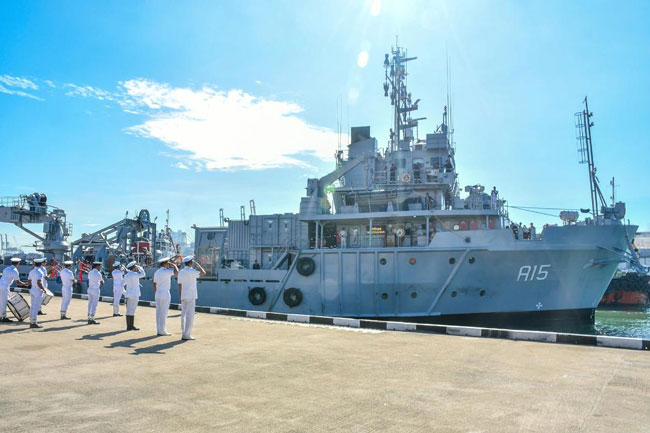
April 21, Colombo (LNW): A specialised vessel from the Indian Navy, INS Nireekshak, arrived in Sri Lanka on Tuesday for a brief operational stopover combined with joint training activities.
The ship was formally received at the Port of Colombo by the Sri Lanka Navy, following established naval customs that mark such visits between regional partners.
Under the command of Commander Sailesh Kumar Tyagi, the vessel—designed to support deep-sea diving and underwater operations—is expected to engage closely with Sri Lankan naval divers. The visit will include practical exercises, knowledge-sharing sessions, and demonstrations aimed at strengthening technical expertise and operational coordination between the two navies.
In addition to its training role, the crew is set to take part in a series of goodwill events arranged by the host navy. These engagements are intended to foster closer ties and cultural exchange, with sailors also given the opportunity to explore notable sites across the island during their stay.
The visit reflects the growing maritime cooperation between the two neighbouring countries, particularly in areas such as search-and-rescue operations and underwater capabilities, which are increasingly vital in the region.
The recent call by the National Joint Committee for a “zone of peace” and compensation following the sinking of the IRIS Dena by a US submarine may resonate. But as policy, it risks placing Sri Lanka back on a path that has already proven reputationally damaging, costly and ineffective.
We have been here before — with the X-Press Pearl incident. And the lesson from that experience is not that Sri Lanka should escalate claims more quickly, but that it must consider, assess and evidence them more carefully.
What the NJC proposes looks less like a strategy grounded in law and science but the sadly more familiar pattern of act first and try to substantiate later.
Opportunism over strategy
The NJC’s intervention seems to be driven by timing more than thought or substance. Promoting the idea of a “zone of peace,” elevates this maritime incident into a broader political issue and statement.
There is naturally nothing inherently wrong with asserting national interests. But when legal claims are framed through political opportunity rather than cold evidential and legal review, the result too often is symbolism without substance.
Sri Lanka saw this dynamic unfold in the aftermath of X-Press Pearl, where public demands catalyzed by political opportunism surged ahead of the scientific and technical groundwork required to sustain ambitious claims.
The scientific challenge
The most important — and perhaps least discussed — weakness in Sri Lanka’s X-Press Peal approach was scientific.
Independent analysis, including work by marine ecologist Amelia Wenger, has highlighted real gaps in how environmental damage was assessed after X-Press Pearl. She reported limited baseline data, unclear methodologies and significant difficulties in proving causation to international standards.
This matters because compensation claims are not won on feelings of being wronged or outrage, they are won on clear, cogent and persuasive evidence.
Without robust and transparent science, genuine environmental harm can become legally fragile. If Sri Lanka moves quickly toward compensation demands in another complex incident without first seeking to address these deficiencies, we risk repeating the same error — perhaps this time with politically higher stakes by pointing the finger at a US administration sensitive to challenge and criticism.
The interim miscalculation
Another lesson from X-Press Pearl is the danger of relying on interim claims. Interim frameworks create the appearance of action and outcomes but often signal uncertainty in evidence and weakness in the basis of decision making. Challenge, delay and renegotiation become inevitable as the real picture becomes clear, and often years on, compensation remains contested, uncertain and incomplete.
Yet the NJC’s proposal promotes a similar flawed logic which may satisfy the need to talk tough and be seen to act decisively. But it rarely if ever produces credible and enforceable outcomes.
The reality of enforcement
Perhaps the most serious flaw bites hard on the question of enforceability. Even in the X-Press Pearl case — involving a commercial vessel and the potential to use established maritime liability regimes — the process has been slow and difficult.
The IRIS Dena context is much more complex. Any claim touching on US military action raises issues of sovereign immunity, jurisdiction and geopolitics. To suggest otherwise once again risks creating expectations that cannot be met.
A cycle of grievance
The pattern is becoming familiar: expansive claims, limited evidentiary grounding, rising public expectations, legal and diplomatic pushback, and prolonged, inconclusive outcomes.
The net result is not one of accountability, but one of frustration — and a sense of grievance that outlives the incident itself. Sri Lanka cannot afford to keep repeating this cycle.
A better path
The real lesson of X-Press Pearl is not that Sri Lanka should claim more. It is that it must claim better.
That means investing in internationally recognized and rigorous scientific assessment before public escalation, aligning legal strategy with enforceability from the outset, and distinguishing clearly between political advocacy and litigation.
Until those necessary foundations are in place, calls like the NJC’s risk being less a solution than a rerun.
Sri Lanka deserves accountability when harm is done to its environment and coastal waters. But accountability is not achieved through declarations. It is built — patiently, methodically and credibly. Anything less is not strategy. It is little more than grandstanding and theatre.
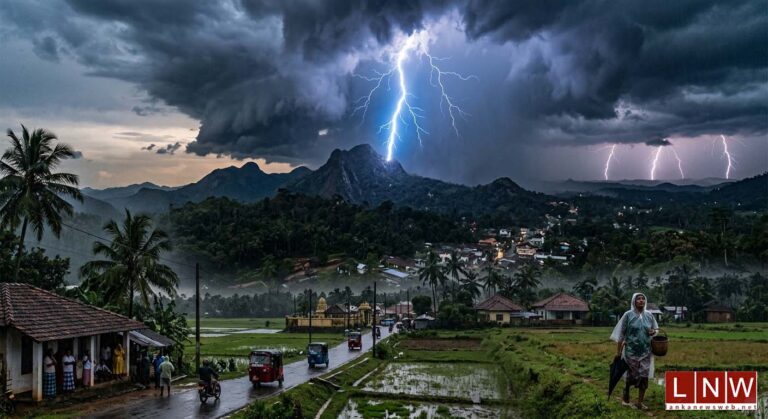
April 21, Colombo (LNW): Authorities have sounded an ‘Amber’ warning for intense lightning activity expected to affect large parts of Sri Lanka, urging residents to remain vigilant throughout the day and into the night.
The advisory, released around midday by the Department of Meteorology, is set to remain in force until 11.30 p.m. It covers several provinces, including Western, Sabaragamuwa, Central, North-Western, North-Central, Southern and Uva, along with the districts of Mannar, Vavuniya, Ampara and Batticaloa.
Forecasters indicate that thunderstorms are likely to develop during the afternoon hours, with lightning activity expected to intensify after 1.00 p.m. in particular areas. These conditions may be accompanied by sudden gusts of wind, raising the risk of minor structural damage, falling branches, and disruptions to outdoor activities.
Residents have been encouraged to exercise caution, especially those travelling or working outdoors during storm periods. Officials also advise taking simple protective measures, such as seeking shelter indoors, avoiding open fields, and unplugging electrical appliances where possible.
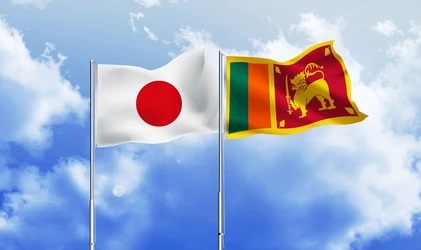
April 21, Colombo (LNW): Japan has renewed its support for Sri Lanka’s development agenda by unveiling two new initiatives under its supplementary budget, targeting climate resilience and gender empowerment in some of the country’s most vulnerable regions.
The programmes, developed in collaboration with the Sri Lankan Government and implemented alongside the United Nations Development Programme, are designed to strengthen long-term recovery efforts while promoting inclusive and sustainable growth.
One of the flagship efforts focuses on transforming the dairy sector through a climate-conscious approach. The initiative introduces an integrated system that blends environmentally friendly technologies, modern farming techniques, and market-oriented strategies. Its aim is to cut emissions, improve productivity, and help rural communities better adapt to climate-related challenges.
Working in coordination with key ministries, the project is expected to directly assist hundreds of small-scale farmers while indirectly benefiting thousands more, including young agricultural entrepreneurs and professionals linked to the dairy industry.
Special attention is being given to districts such as Kilinochchi and Nuwara Eliya, where climate vulnerability remains a pressing concern. Backed by funding of approximately 1.5 million US dollars, the programme builds upon earlier successes in introducing renewable energy solutions to rural economies.
The second initiative centres on strengthening the role of women in mine clearance operations across the Northern and Eastern Provinces. With a budget exceeding 1 million US dollars, the project seeks to enhance both the technical capacity and operational efficiency of female deminers, particularly in areas like Kilinochchi and Mullaitivu, which continue to face high levels of socio-economic vulnerability.
By equipping these teams with advanced technologies and improved training, the programme aims to accelerate land clearance efforts, making it safer and more efficient. This, in turn, is expected to support the resettlement of displaced communities and revive local livelihoods in regions still grappling with the legacy of conflict and economic hardship.
Beyond their immediate objectives, both initiatives reflect a broader commitment to sustainable development. They aim not only to address environmental and social challenges but also to create opportunities for marginalised groups, particularly women and rural farmers, to play a more active role in the country’s economic future.
Collectively, these efforts mark another step in strengthening Sri Lanka’s path towards a greener, more inclusive economy, while reinforcing international partnerships that prioritise resilience, equality, and long-term prosperity.
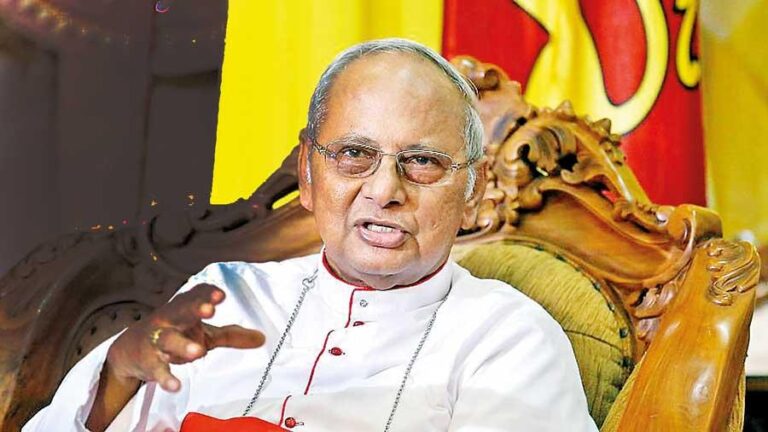
April 21, Colombo (LNW): The Archbishop of Colombo, His Eminence Cardinal Malcolm Ranjith, has voiced renewed concerns over possible interference in the investigation into the 2019 Easter Sunday bombings, which took away more than 270 lives, suggesting that certain officials may be working behind the scenes to derail efforts to uncover the full truth.
Speaking at a commemorative service held today (21) to mark seven years since the devastating attacks, the Cardinal acknowledged what he described as a constructive stance by the current administration. However, he warned that elements within the state apparatus appeared to be hindering progress, raising questions about their motives.
He went on to suggest that if there were no hidden interests at play, there would be little reason for repeated delays and barriers in the investigative process. He further hinted at the possibility that individuals with political connections could have had prior knowledge of, or links to, the attack.
Referring to findings from the Presidential Commission of Inquiry, the Archbishop pointed out that the body itself had admitted limitations in examining certain critical areas. In particular, he stressed the importance of identifying a shadowy figure known as “Abu Hind,” believed to have had associations with Zahran Hashim.
According to the Cardinal, law enforcement authorities, including the Criminal Investigation Department (CID), had previously informed the Commission that efforts were underway to establish the true identity of this person. He argued that pursuing this line of inquiry could prove crucial in piecing together the broader network behind the attacks.
He also drew attention to testimony suggesting that key digital records linked to former intelligence chief Nilantha Jayawardena had been erased, including data from electronic devices. Such developments, he implied, raise troubling questions about whether evidence may have been deliberately removed.
Concluding his remarks, the Cardinal called for transparency and accountability, asking why, if there is nothing to hide, such apparent obstructions and irregularities continue to surface in the ongoing investigation.
April 21, Colombo (LNW): Premalal Jayasekara, widely recognised by his nickname “Choka Malli,” has been taken into police custody by officers in Nuwara Eliya following a tense altercation.
Authorities report that the arrest stems from accusations of criminal intimidation after he allegedly brandished a firearm and threatened several individuals during a confrontation between two rival groups.
Further inquiries are underway to determine the full circumstances surrounding the clash and any additional legal breaches.
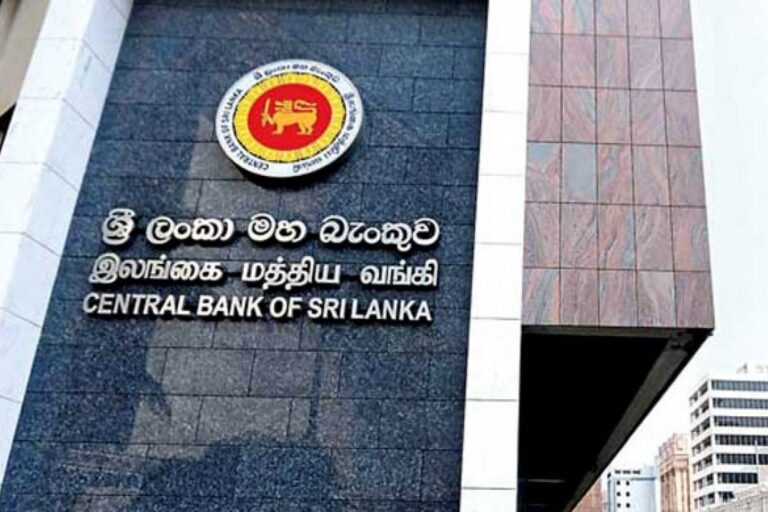
April 21, Colombo (LNW): Sri Lanka’s banking sector was jolted by the Rs. 13.2 billion internal fraud at National Development Bank PLC (NDB), prompting the Central Bank of Sri Lanka (CBSL) to issue its third official statement last Friday, seeking to calm public fears and reinforce systemic stability. The regulator emphasized that, despite the scale of the fraud, there is no evidence that other banks or financial institutions have been affected.
CBSL confirmed that a leading international audit firm, supported by overseas experts, will shortly begin a comprehensive forensic audit into the incident. This audit will not only investigate the mechanics of the fraud itself but will also scrutinize deeper systemic failures. According to the Central Bank, the review will “fully address and assess any failures on compliance with regulatory requirements on control, oversight, and governance” during the period when the fraudulent transactions occurred.
The audit’s findings both interim and final will be reported directly to the CBSL, which will maintain active engagement with auditors throughout the process. This signals an unusually hands-on regulatory approach aimed at ensuring transparency and accountability at every stage.
Parallel to the forensic investigation, the CBSL has directed NDB to urgently strengthen its internal controls and governance structures. The bank is also required to commission an independent third-party review of its policies, procedures, systems, and risk controls to identify and close loopholes that enabled the fraud.
Despite the crisis, CBSL reiterated that NDB continues to meet all regulatory capital and liquidity requirements. As a further safeguard, the Central Bank has publicly committed to providing emergency liquidity support if necessary, ensuring the bank can meet any surge in withdrawal demands. Additionally, the suspension of dividends has been highlighted as a measure to preserve capital and maintain regulatory buffers.
The fraud itself has raised serious concerns about governance failures within NDB. Financial disclosures show that “Other Financial Assets Gross” surged to Rs. 12.22 billion in 2025, nearly four times the previous year’s figure and far above historical norms. Allegations suggest that an insider exploited the Common Electronic Fund Transfer (CEFT) system to siphon funds, bypassing internal red-flag mechanisms.
Governance activists argue that this reflects a breakdown across multiple layers of oversight, including internal audit, finance functions, senior management, and board-level risk and audit committees. These failures are now central to the ongoing investigations.
CBSL continues to monitor developments on a daily basis while maintaining close engagement with NDB’s board, management, and other stakeholders. The regulator has also urged the public not to be misled by speculation or misinformation circulating in various forums.
While the fraud represents approximately 1.3% of NDB’s total assets, authorities stress that the bank remains operational and stable. However, the coming weeks will be critical as forensic audits commence and structural reforms begin to take shape, determining whether confidence in one of Sri Lanka’s key financial institutions can be fully restored.