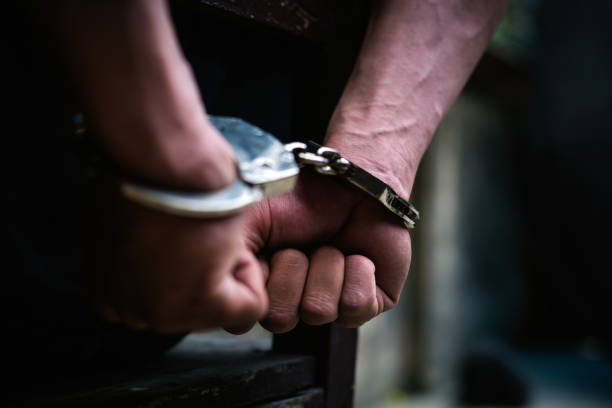
October 13, Colombo (LNW): A police constable who was taken into custody in connection with an alleged assault on a legal practitioner within the precincts of the Mount Lavinia Magistrate’s Court has been released on bail.
The incident is said to have occurred on Friday (10), and the officer appeared before the court again today (13) where he was granted bail under strict conditions.
The bail was granted on the basis of two sureties, each valued at Rs. 100,000. The magistrate’s decision to release the constable comes amid ongoing investigations into the altercation, which reportedly unfolded in a public area of the courthouse.
In an additional report submitted to the court—commonly referred to as a ‘B report’—police indicated that the attorney involved, identified as Gunaratne Wanninayake, had allegedly used abusive and provocative language towards the constable prior to the incident. This development has added a layer of complexity to the case, raising questions about the circumstances that led to the confrontation.
According to police, Mr Wanninayake has neither presented himself before the court nor provided an official statement to investigators thus far. His absence has prompted concerns over the completeness of the available evidence and the impartiality of witness accounts.
Police Officer Released on Bail Following Alleged Assault of Lawyer at Mount Lavinia Court
Sri Lanka’s Phoenix Moment: Anura Kumara Dissanayake Among the Greats
By: Roger Srivasan
To the people of Sri Lanka, who endured betrayal yet never lost hope.
Introduction: The Weight of Endemic Corruption
Corruption was once so endemic in Sri Lanka that it seeped into every corner of national life. Bribes greased the wheels of bureaucracy. Nepotism determined who rose in public office. The public coffers, meant for schools, hospitals, and development, too often became personal treasuries for the powerful. For seventy-six years after independence, the dream of freedom soured as politics became a byword for betrayal. The people watched helplessly as a nation of promise was looted. They had almost come to believe that corruption was our destiny.
Global Parallels: Nations That Defied Corruption
History, however, proves otherwise. Nations as corrupt, as broken, and as disillusioned as ours have risen — because strong, selfless leaders chose to defy the rot. –
– Singapore under Lee Kuan Yew: Once a struggling, corruption-ridden port, it became a model city-state through uncompromising integrity and a relentless clean-up of public life.
– Rwanda under Paul Kagame: Rising from the ashes of genocide, it embraced zero tolerance for graft and rebuilt trust in governance. –
– Georgia under Mikheil Saakashvili: Infamous for bribery and mafia networks, it stunned the world by firing its entire traffic police force and reinventing its institutions.
– Botswana under Seretse Khama: Where diamonds might have cursed the nation with greed, Khama ensured transparency and turned mineral wealth into a blessing for all. These leaders proved that corruption, no matter how deep, is not irreversible.
Sri Lanka at the Threshold
For decades, reform was promised but never delivered. Each election brought hope, but hope
dissolved into cynicism. The cancer of graft seemed permanent. What made it worse was the
betrayal of principle. The once-bitterly divided opposition parties, who had long hurled invective at each other as mortal enemies, became indistinguishable. Former rulers tergiversated to the opposition when it suited them — only to rejoin the ruling camp when financial inducements and perks beckoned. The revolving door of betrayal spun endlessly, while the very people who had placed their trust in them were abandoned and deceived. The tragedy was not only corruption, but the collapse of trust: politics reduced to a barter of loyalty for lucre. And yet, against this backdrop of cynicism, a new dawn is breaking.
The Phoenix Rises
The people recognise in Anura Kumara Dissanayake, a leader cut from the cloth of history’s great reformers. Like Lee Kuan Yew, he is no-nonsense and incorruptible. Like Kagame, he is unafraid to wield the scalpel against entrenched rot. Like Saakashvili, he speaks of rebuilding institutions from the ground up. Like Khama, he sees national wealth as a trust for the people, not a prize for the elite. The metaphor could not be clearer: Sri Lanka is the phoenix, rising from the ashes of corruption and despair. This rebirth is not merely political.
It is moral, cultural, and national. For the first time in decades, the people dare to imagine a Sri Lanka where: – Justice is blind, not bought. – Merit, not patronage, determines success. – Leaders serve, rather than plunder. Anura Kumara Dissanayake embodies this possibility. His mission is not to patch the old order, but to bury it and build anew.
Conclusion: Among the Greats
In the chronicles of history, certain names shine brighter than others — because they chose
principle over privilege, service over self, and justice over compromise. – Lee Kuan Yew reclaimed Singapore. – Paul Kagame reclaimed Rwanda. – Mikheil Saakashvili reclaimed Georgia. – Seretse Khama reclaimed Botswana. And now, Anura Kumara Dissanayake stands poised to reclaim SriLanka. When future generations speak of leaders who defeated corruption and restored dignity to their nations, they will list AKD among the greats — as the man who turned the page on seventy-six wasted years, and gave his people back their country.
Even when a nation is ravaged and pillaged by rapacious rulers, history proves that its rebirth is never beyond reach. From the ashes of plunder and despair, there arises the Phoenix of renewal – led by a selfless statesman who turns back the clock on corruption, and rekindles justice, and transforms the wounded land into a realm of harmony, equity and prosperity.
‘To the men who ran the world, I was just a photo op’: Malala Yousafzai on growing up, getting cynical – and how getting high nearly broke her
The Guardian : The global icon of women’s education is ready to tell the full story of her turbulent recent life, from arguing with her parents to being ghosted by the statesmen who were once desperate to be seen with her
- How smoking a bong brought back the trauma of the Taliban’s attack – an exclusive extract from Malala Yousafzai’s memoir
Iam at the shed where Nobel laureate Malala Yousafzai smoked her first bong. No, there’s no punchline – it’s not that kind of anecdote. “My life has changed for ever,” Yousafzai says sadly, as we gaze at the semi-derelict structure. “Everything changed for ever, after that [night].”
The shed is tucked away at the back of Lady Margaret Hall, away from the prying eyes of Oxford’s college life. You have to know how to find it. Yousafzai leads me through quadrangles and out into a hidden garden. Inside are dusty pint glasses and spiderwebs, and board games with the pieces missing.
We are meeting on a bright summer afternoon, ahead of the release of her memoir, Finding My Way, a sequel to her 2013 bestseller I Am Malala. Dressed in a blue shirt, jeans and a headscarf, Yousafzai is accompanied, at a discreet distance, by two close-protection officers. The college is quiet – it’s the summer holidays – and Yousafzai attracts no attention from the few students who remain as she tramps across the grass.

This is not our first interview. Our last conversation sparked days of negative headlines for Yousafzai, back home in her native Pakistan. As we gaze at the bong-shed, I fear that round two may lead to more of the same.
In 2021, I profiled a then-23-year-old Yousafzai for the cover of British Vogue. The world’s youngest Nobel laureate – she received the award at 17, for her activism for girls’ education – had recently graduated from university and was about to launch her adult life.
Yousafzai began campaigning at the age of 11. Her father, Ziauddin, is an education activist and she followed in his footsteps, writing a blog for BBC Urdu about her life as the Taliban shut down girls’ schools across Pakistan’s Swat valley where she lived. When a Taliban gunman shot her in the head on her school bus when she was just 15 years old, Yousafzai was airlifted to the UK and made a remarkable recovery, resettling with her family in Birmingham, where she attended secondary school, all the while campaigning for the rights of girls around the world to receive an education.

When I met Yousafzai in April 2021, she had just got a 2.1 from Oxford in politics, philosophy and economics, and signed a deal with Apple TV+ to develop and produce her own slate of TV and films. (The deal has now ended.) We did an interview at a hotel in London before walking around a Covid-era St James’s Park. When I asked her if she had a romantic partner, she blanched. “I would say that I have come across people who have been great, and I hope that I do find someone,” she stuttered, visibly embarrassed.
Later, she mused on marriage. “I still don’t understand why people have to get married,” she told me. “If you want to have a person in your life, why do you have to sign marriage papers, why can’t it just be a partnership?”
Her comments seemed unexceptional. I was more concerned that the fact she’d told me that she frequented pubs could create controversy, given that Yousafzai is Muslim, and so when I wrote up the interview I was careful to specify that she did not drink alcohol.
The article came out. Yousafzai shared it, and sent me a message of thanks. The following day, logging on to Twitter (now X), I saw that #shameonMalala was trending in Pakistan. Her comments had been widely misinterpreted to mean that she was denouncing nikah, the Islamic institution of marriage, and implicitly to suggest that she condoned premarital sex.
She led Pakistan’s national news for days. Online commentators accused Yousafzai of betraying her religion as a result of western indoctrination. An influential cleric tagged her father on Twitter, asking him to explain his daughter’s un-Islamic remarks. (He responded, saying they had been taken out of context.) Parliamentarians in an assembly in north-west Pakistan even debated her comments.
Yousafzai maintained a dignified silence. And then, in November 2021, she announced her surprise wedding to Pakistani cricket manager Asser Malik. Many, including myself, struggled to make sense of it.

“Malala, what happened?!” I ask now as she walks, alone, into an empty conference room and greets me with a hug.
She smiles sheepishly. “When you asked that question [about meeting someone],” she says, “I felt like I was caught. It was like, wait a second, does she know anything? I was like, no, no, no, you know, I just don’t want to get married.”
In Finding My Way, Yousafzai reveals that, by the time of the Vogue interview, she and Malik were already dating. In other words, Yousafzai over-corrected to throw me off the scent.
But she was sincere in having her doubts about marriage. Growing up in Pakistan, she says, it represented “a future without any opportunity, where your husband determines your life”.

After the furore, her parents, but particularly her mother, were distraught. “She was so mad at me,” Yousafzai says. Family and friends kept texting articles. An imam from her village called to lecture her parents on the phone. “I was facing a lot of pressure,” she says, “from my dad, especially, and my mum, to issue a statement to clarify what my thoughts were on marriage, and I found this absurd.”
And then there was Malik. Yousafzai’s parents had met him, but she hadn’t felt ready to make the relationship public. She felt guilty for disavowing him publicly, but Malik didn’t blame her, and instead stepped in to help mediate with her parents. Over the following months, Yousafzai began to interrogate her views on marriage. She asked Malik about his thoughts on women and equality, and liked what she heard. “I’m supposed to be an advocate for girls and women, and even I was limiting my own self in how I perceived marriage,” Yousafzai says.
But there were other pressures, familiar to any immigrant child who has butted up against their parents’ cultural expectations. When Malik and Yousafzai left the house together, her mother would urge them to “maintain, like, a 10-foot distance”, she says.
It seems from reading Finding My Way that she would not have married so young were it not for her parents. She nods. “I felt like I was sort of giving up,” she says. Refusing to marry would have led to not only interfamilial, but international, conflict. “Am I willing to fight my mum and my dad? Am I willing to start a new debate on people living together without these ceremonies and traditions?” Yousafzai realised that she couldn’t live with Malik “without getting married in the traditional way, in the religious way”.
She could dig her heels in, but it would cause immense pain to her parents. And, besides, she was in love. “He’s so charming, he’s so smart, and I just could not stop thinking about him.” So she relented. On 9 November 2021, at her parents’ house in Birmingham, in an Islamic ceremony, Yousafzai married.
After marriage, Yousafzai realised that “things feel sort of the same. They’re not that different.” She lives with Malik in a riverside apartment in London. They split the chores; neither cooks, instead eating out or using a meal delivery service. (Yousafzai’s mother thinks this is “a disaster. She says, ‘Your house is the only house where there’s a fridge with no vegetables!’”)
It has been only four years since we met, but Yousafzai is much changed. The woman I met before appeared girlish, even a little gauche. She was visibly mortified when we spoke about relationships. Now, she is grounded and at ease. She also looks subtly different, having undergone surgery to improve the facial paralysis she suffered after the attack.
At university, Yousafzai experienced the sweetness of independent adult life for the first time. When we met in 2021, she described a whirl of college balls, societies and essay crises. Now she’s more willing to share the unvarnished reality of her university experience.
I thought nothing could scare me, nothing. And then I was scared of small things, and that just broke me

In Finding My Way, Yousafzai writes of the pressures of having to travel internationally, maintaining the relationships critical to the Malala Fund, which supports girls’ education projects around the world, in addition to paid speaking gigs. She is the breadwinner not only for her parents and two brothers, but also for her extended family back home in Pakistan, and even family friends. (At one point, she was paying for two family friends to attend college, in the US and Canada.)
Did she feel resentful of these financial obligations? “It was difficult to manage,” Yousafzai says. She “hated the experience of thinking about our expenses for the next year and [thinking], OK, I have to do this event, because otherwise we won’t be able to cover these costs.”

Her studies suffered. Yousafzai got a 2.2 in her first-year exams and had to seek additional support from specialist tutors, a humbling experience for the most famous education activist in the world. “I felt like an impostor,” she laughs. “I felt ashamed.” She asked her tutor to write a letter to her parents explaining that she was forbidden from working during term time because she was failing her degree. Why didn’t she tell her parents herself? “I had talked to my family many times about the pressure,” she says, “and how difficult it was to manage.”
She writes of how, at home in Birmingham, “my dad treated our house like an art museum, and me like the signature piece in the collection”. She would be summoned downstairs to meet visitors keen to gawp at a Nobel laureate up close. “My dad is a very generous person,” she says, “a giving person, and he always understood what other people wanted … in his heart, he knew that they wanted to meet me.”
Have there been times, I ask, where he’s pushed you too much?
“Oh,” she laughs, “he has physically pushed me.” When meeting well-wishers or guests at family events, Ziauddin has given her the odd shove. “You know when you have a little kid, and you sort of push the kid [to] say hello to this person? I’m, like, it’s fine when they’re little kids, you know.” But even when she’s grouching, it’s clear Yousafzai has tremendous love and respect for the man who, however inadvertently, propelled her on to the world stage. “My dad has always been supportive,” she says. “Whenever I explain something to him, he completely understands it. He is one of those cool dads, who never disagrees with me.”
But I fear even the world’s most down-to-earth father may have concerns about what Yousafzai – whose new book is likely to be a bestseller (her first memoir sold nearly 2m copies) – is about to put in the public domain.
And so to the bong incident. What happened that night: Yousafzai tried to walk back to her room, but she blacked out en route. A girlfriend carried her back instead. She couldn’t sleep. Her brain endlessly replayed a loop of the day the Taliban attempted to murder her. The gun. The bloodspray. Her body being carried through crowds to an ambulance.
She had always thought she couldn’t remember being shot. But the bong unlocked long-submerged memories, of the attack and also of a childhood growing up under the spectre of Taliban violence. “I had never felt so close to the attack as then, in that moment,” she tells me. “I felt like I was reliving all of it, and there was a time when I just thought I was in the afterlife.” She felt she was dying, or already dead. “It’s easier to laugh about it now,” she says, with a small, tight smile.
Listening to her speak, I feel deep compassion for all she went through as a young child. “I was nine or 10 when the Taliban took over control in our valley,” she says, “and they would bomb schools, they would kill or slaughter people and hang their bodies upside down.”
After the bong, Yousafzai developed anxiety. “I felt numb … I couldn’t recognise myself in the mirror,” she says. The sweetness of college life fell away. She told her parents in general terms about the incident, but “they were a bit dismissive”, she says. She struggled to tell them how much it had affected her mental health. “I just could not explain to them that things are not the same any more.”
Optimism is the only way you can keep going, because there’s no other option
Friends were worried about her. (Maria, her personal assistant, who lives in London, was so concerned she drove up to be with her immediately after the incident.) Yousafzai lied and told them things were fine. “I’m the girl who was shot … I’m supposed to be a brave girl,” she says. Until she couldn’t pretend any longer. “I’d be sweating and shaking and I could hear my heart beat. Then I started getting panic attacks.” She saw a therapist, and realised that her childhood, the attempted murder and exam stress were overwhelming her mental health. In the book, Yousafzai writes a list of her symptoms at the time: a racing heart, finding it hard to breathe, struggles sleeping, brain fog and a constant fear of someone she loved dying. “Normal people don’t have lists like this,” she writes, adding, “Something is wrong with me.”
“I survived an attack,” she says, “and nothing happened to me, and I laughed it off. I thought nothing could scare me, nothing. My heart was so strong. And then I was scared of small things, and that just broke me. But, you know, in this journey I realised what it means to be actually brave. When you can not only fight the real threats out there, but fight within.”
Has becoming famous so young also had an impact? “Yes,” Yousafzai says, nodding emphatically. She talks about how young she was when she started winning awards, and what it was like to go to ceremonies and see activists there who had spent decades fighting for a cause. It made her feel as if she needed to “spend the rest of my life campaigning for girls’ education” to show she was worthy.
But no matter how many leaders she lobbied, or projects she helped to fund – Yousafzai glows when she talks about the girls’ school she opened back home – she felt it was not enough. There was “always this feeling … could I do more?” Her youthful idealism began to flake and peel off in patches, and then rub clean away. “As I was getting older,” she says, “I was realising that things are not as straightforward. Things are more complex.”
As a teen, Yousafzai had seen the world as a biddable place. She would reason with world leaders! Show them girls’ education was important! As she got older, she began to see the world as it really is.
You became cynical? I ask.
“Yeah,” she says, “for sure.” She gives a bitter, clipped laugh. “100%.”
In April 2021, the US announced it was withdrawing from Afghanistan in August of that year. Within days of them leaving, the Taliban took over the country. “We had calls with the Afghan activists who the Malala Fund were supporting,” she says, “and it was just unbelievable. Some of them knew the worst was coming. Some of them still had faith.”
Afghanistan is now the only country in the world where girls cannot go to secondary school or higher education, with the only option available being madrasas that promote an extreme interpretation of Islam. The Malala Fund continues to do what it can. “We are providing funding for alternative education right now,” she says. “There are underground schools, there are radio and television education programmes.”
Yousafzai is heartbroken at what has come to pass. “I feel the world has forgotten about the women in Afghanistan,” she says. What stings is that “people were willing to trust the Taliban more than Afghan women”. Which people, I ask? “World leaders,” she says, “decision makers.”
Yousafzai writes of emailing politicians, begging for their assistance in evacuating her Afghan partners to safety before the Taliban took over. “For years, I’d smiled in pictures with these leaders, shaken their hands and stood next to them at podiums – but not one of them picked up the phone, or replied to my messages. To the men who ran the world, I was just a photo op.”
Who didn’t take her calls? She mentions Biden. Johnson. Macron. Trudeau. She notes, pointedly, that female politicians did. Erna Solberg, the then Norwegian prime minister, former secretary of state Hillary Clinton and Lolwah Al-Khater, assistant foreign minister of Qatar at the time, stepped in to help evacuate her Afghan partners to safe countries, in some instances without passports.
For many years, Yousafzai pioneered a model of professional activism: cautious, consensus-driven, willing to work with institutions, rather than calling them out; one that used the photo op and the handshake, rather than the megaphone and the protest. Her detractors said she was too corporate, but Yousafzai sincerely believed it was better to work with people and make incremental change. And then Afghanistan happened. Did she feel duped?

“I do feel like I’m more cynical,” she says. “But, at the same time, I do my work. I know that optimism is the only way you can keep going, because there’s no other option.”
There is a perception on social media that, as one of the most prominent Muslim activists in the world today, Yousafzai has not done enough to speak out on Gaza. This perception is not entirely fair. Through the Malala Fund, and personally, Yousafzai has donated hundreds of thousands of pounds to organisations that support children and schools in Gaza. She first called for a ceasefire on 10 October 2023.
Today, it is Yousafzai who brings up Gaza. “Israel has to stop this indiscriminate bombing,” she says. Humanitarian aid must be allowed in, she adds, characterising the starvation of civilians as “deliberate”. But, still, the perception lingers. Her critics, she says, “completely are dismissing or ignoring the actual work that I’m doing”.
Yousafzai describes what is happening in Gaza as “a genocide”. “You look at the evidence, you look at what’s happening, you look at how they’re [the IDF] committing these actions, and it’s very clear if they’re targeting people for collecting aid, or getting water. Everyone knows children are unarmed.” She also calls for the release of the surviving hostages being held by Hamas in Gaza in appalling conditions. “I’ve been very consistent in saying that the hostages should be freed … I don’t believe in using violence for resistance.”
Does she think she has done enough? “I wish I lived in a world where I could do a tweet and the world would stop the war.” After we meet, Yousafzai travels to Egypt to meet injured Palestinian child refugees, and announces a $100,000 grant from the Malala Fund to support their medical treatment and education.
“There isn’t a night where I don’t think about what I can do,” she says.
Throughout the 2010s, Yousafzai was the most prominent of a wave of child activists – such as the climate-change campaigners Greta Thunberg and Vanessa Nakate, or gun-control advocate Emma González (now X González) – feted by world leaders, invited to events, on the covers of magazines, writing bestselling memoirs, delivering speeches to adoring audiences. This cultural moment has now passed. The celebrity activist feels like a relic of a different era. Many question what these activists achieved.
The Malala Fund supports girls’ education projects in six countries. In order to maintain the funding streams, Yousafzai has to cultivate relationships with funders and world leaders, inevitably leading to accusations of selling out. Most of the people who slam her online will never achieve a fraction of what she has done for girls around the world. But it can at times be jarring to see Yousafzai enjoying an international jet-set lifestyle – days out at Formula One and at Taylor Swift concerts – interspersed with posts about Gaza or the plight of Afghan girls.
She is often compared unfavourably by her critics, particularly those on the left, with Thunberg, who is willing to put herself in physical danger, boarding the Freedom Flotilla and setting sail for Gaza. “I really look up to Greta,” says Yousafzai, adding she checked in with her after she was detained by Israeli authorities.
In April 2024, Yousafzai attended the opening night of Suffs, a Broadway musical about the suffragettes that she executive produced. Also in attendance was Hillary Clinton, a fellow executive producer. Online commentators flamed Yousafzai for being associated with the hawkish former secretary of state. In reality, Yousafzai says, she didn’t realise that Clinton was an executive producer on the project until after she had been brought on, and they did not work together on it.
“People say, ‘Oh, you’re at the Suffs premiere, you are an executive producer, oh, Hillary Clinton has these views, therefore you support these views, therefore you are also complicit.”
Being photographed at the same star-studded premiere as Clinton, rightly or wrongly, reinforces a persistent criticism of Yousafzai in Pakistan: that she is in the pocket of western powers; there are even longstanding rumours that she is an intelligence asset. When I ask her about this, she pushes back. “Pakistan is a part of me,” she says, “and so I get defensive when I’m asked this question. I say, no, no, no, Pakistan doesn’t hate me.”
She fears that by giving succour to the view that she is unpopular in Pakistan, she feeds into broader anti-Muslim sentiment: the idea that Pakistan is a country full of backwards people who instinctively hate educated women. “I believe,” she says, “and it is deliberate, on my side, that I have a lot more love and support in Pakistan.” But, equally, she says, “I’m not going to deny there isn’t any hint [of hatred] at all. There is. There have been these campaigns from when I was, like, 12 years old.
“The criticism is not against me,” she adds. “It’s more criticism against the west, criticism against these bigger narratives, and political conversations, but I am sort of attached to it.”
Still, it’s clear to see it wears on her. “I do find it sad,” she admits, “that I sometimes have to read everything 10 times before I post it, because I’m, like, what is it that will get people’s attention?
It is difficult. I do wish for more freedom in expressing myself.”

After I wrap up the section of the interview on politics, Yousafzai exhales with relief and stretches her arms out in front of her, as if we are colleagues who have just finished a difficult task and can now relax with a cup of tea and a biscuit. By contrast, when it comes to talking about her family and her relationship with Malik, she speaks freely, laughing often. She is happiest when talking about her plans for Recess, an investment fund with a focus on women’s sports that she recently launched with Malik.
Recess isn’t a non-profit, as I initially assumed. It’s a business, with the aim of increasing participation in women’s sports. Malik helped Yousafzai find her love of exercise. The fact that Malik is a cricket manager was part of his initial appeal, says the cricket-mad Yousafzai, even if her husband refuses to let her watch him play. “He says,” Yousafzai says, with an eye roll, “‘I used to work in cricket management! I was not a professional cricketer!’ I’m, like, uh-huh. He did not explain that before marriage.” She hopes that Recess will “create more opportunities for women in sports” and help women “get a say in sports at all levels, whether that’s from the field to the owner’s box”.
Before we leave, I ask Yousafzai if her parents have read Finding My Way. She says she has given them the gist of it, but they have not read it. “I have told them, ‘You will read it when it’s released, and you can pick it up from any bookshelf in any bookstore, and feel free to read it, but then you cannot make any changes.’”
I understand the logic, familiar to many first- and second-generation immigrant children, including myself. Ask for forgiveness, not permission. But I’m also floored. Because Yousafzai is a global figure: the bong story will, inevitably, unleash a maelstrom of negative publicity back home.
She is ready. “I am very prepared for that,” Yousafzai says, absolutely calm. “I don’t think I’m going to get defensive about it at all. I’m not going to issue any statement. If anybody has any confusion, they can read my book and decide for themselves.”
It strikes me as I walk away from our interview that she never chose any of this. To be shot as a child, to be airlifted to the UK, to win the Nobel peace prize. Yousafzai seems to be someone who consistently puts others before herself, whether it’s accommodating her parents’ cultural expectations around marriage, supporting her family back home, or dedicating her life to advancing girls’ education. “I’m working so hard to learn how to say no,” she says, “and to be more direct … I do sort of overthink about other people’s feelings sometimes.”
If the story of her teens and early 20s was of service to others, her late 20s are about Yousafzai choosing happiness for herself. I think she deserves it.
Sri Lanka Positions Itself as Strategic Investment Gateway Ahead of Landmark Economic Summit
October 13, Colombo (LNW): Sri Lanka is preparing to host a pivotal international investment forum in December, as government officials and business leaders rally diplomatic support and global interest for what is being described as a turning point in the country’s economic revival.
The “Sri Lanka Economic and Investment Summit 2025” is scheduled to take place in Colombo on the 2nd and 3rd of December, with the aim of deepening international commercial ties and positioning the nation as a compelling destination for long-term, high-value investment.
At a hybrid briefing held on 10th October, Deputy Minister of Foreign Affairs and Foreign Employment, Arun Hemachandra, made a clear appeal to the international diplomatic community to engage actively in the lead-up to the Summit. The session, jointly convened by the Ministry of Foreign Affairs, Foreign Employment & Tourism and the Ceylon Chamber of Commerce, brought together representatives from foreign embassies and consulates, both physically and virtually, including missions accredited to Sri Lanka.
Deputy Minister Hemachandra underscored the significance of the upcoming Summit in the context of Sri Lanka’s ongoing economic transformation. Citing tangible improvements in macroeconomic indicators—such as stronger foreign reserves, consistent growth, and decisive structural reforms—he invited foreign partners to explore collaborative ventures across key sectors including manufacturing, renewable energy, digital services, and tourism.
He described Sri Lanka as a resilient and strategically located economic partner in South Asia, now emerging from crisis with renewed focus and institutional stability. “This is an ideal moment for global investors to engage with a country that has not only stabilised but is now reforming with purpose and vision,” he said.
Ceylon Chamber of Commerce Chairman Krishan Balendra echoed this sentiment, calling the December Summit a high-impact platform for frank dialogue and opportunity mapping between global investors, policy-makers, and the Sri Lankan private sector. He urged diplomatic missions to help mobilise foreign investor delegations and to spotlight Sri Lanka’s potential as Asia’s next dynamic investment frontier.
The Chamber’s Secretary General, Buwanekabahu Perera, described the Summit as a “confidence-building milestone,” emphasising that it would serve as a conduit between reform-driven government policy and the readiness of the local business sector to welcome international capital and expertise.
The Ministry and the Chamber highlighted that this initiative is part of a wider collaborative strategy involving Sri Lanka’s missions overseas and international partner chambers affiliated with the Ceylon Chamber. These efforts, they noted, are essential in shaping meaningful international engagement and ensuring the Summit delivers real-world investment outcomes.
With planning well underway, both the government and the Chamber are preparing to welcome a wide array of business delegations, institutional investors, and trade envoys to Colombo in December. The event is expected to feature sector-focused sessions, bilateral investment meetings, and policy dialogues aimed at fostering long-term partnerships that contribute to sustainable and inclusive growth.
Organisers see the Summit not just as a showcase of opportunity, but as a vital step towards reintroducing Sri Lanka to the world—not as a country recovering from difficulty, but as one confidently forging a path towards economic modernisation and regional leadership.
Filmfare Awards 2025 winners: Who took home the big trophies? Full list inside
India Today : ‘Laapataa Ladies’, starring Pratibha Ranta and Nitanshi Goel, clinched the majority of awards at the 71st Filmfare Awards 2025. The star-studded ceremony was held in Ahmedabad.
The 70th Filmfare Awards 2025 was held in Ahmedabad on Saturday. Actor Shah Rukh Khan and film-maker Karan Johar turned hosts for the star-studded award ceremony. ‘Laapataa Ladies’ won big by clinching the majority of awards.
The unmatched legacy of Dilip Kumar, Nutan and Meena Kumari was celebrated at the event. Veteran actor Zeenat Aman won the Lifetime Achievement Award, whereas newcomers Nitanshi Goel and Lakshya were recognised for their impressive performances in ‘Laapataa Ladies’ and ‘Kill’, respectively, by winning the Best Debut award. The late filmmaker Shyam Benegal was also awarded the Lifetime Achievement Award posthumously.
The star-studded night also witnessed high-octane dance performances by Akshay Kumar, Ananya Panday and Maniesh Paul.
Check out the full winners list of Filmfare Awards 2025 here:
Best Actor in Leading Role Male–Abhishek Bachchan (I Want To Talk) and Kartik Aaryan (Chandu Champion)
Best Actor in Leading Role Female–Alia Bhatt (Jigra)
Critics’ Awards for Best Actor Male–Rajkummar Rao (Srikanth)
Critics’ Awards for Best Actor Female–Pratibha Rannta (Laapataa Ladies)
Best Supporting Actor Female–Chhaya Kadam (Laapataa Ladies)
Best Supporting Actor Male–Ravi Kishan (Laapataa Ladies)
Critics’ Award for Best Film–Shoojit Sircar (I Want To Talk)
Best Debut Actor Female–Nitanshi Goel (Laapataa Ladies)
Best Debut Actor Male–Lakshya (Kill)
Best Debut Director–Kunal Kemmu (Madgaon Express), Aditya Suhas Jambhale (Article 370)
Best Action–Seayoung Oh and Parvez Shaikh (Kill)
Best Screenplay–Sneha Desai (Laapataa Ladies)
Best Story–Aditya Dhar and Monal Thakkar (Article 370)
Best Dialogue–Sneha Desai (Laapataa Ladies)
Best Music Album–Ram Sampath (Laapataa Ladies)
Best Lyrics–Prashant Pandey (Laapataa Ladies)
Best Playback Singer Male–Arijit Singh (Laapataa Ladies)
Best Playback Singer Female–Madhubanti Bagchi (Stree 2)
Best Adapted Screenplay–Ritesh Shah and Tushar Sheetal Jain (I Want To Talk)
Best Film–Laapataa Ladies
Best Director–Kiran Rao (Laapataa Ladies)
Critics’ award for best film–I Want to Talk (Shoojit Sircar)
Best sound design–Subash Sahoo (Kill)
Best Background Score–Ram Sampath (Laapataa Ladies)
Best VFX–Redefine (Munjya)
Best Choreography– Bosco-Caesar (Tauba Tauba from Bad Newz)
Best editing-Shivkumar V. Panicker (Kill)
Best costume–Darshan Jalan (Laapataa Ladies)
Best Production design–Mayur Sharma (Kill)
Best cinematography–Rafey Mehmood (Kill)
Special Awards:
Lifetime Achievement Award–Zeenat Aman and Shyam Benegal (Posthumously)
RD Burman award for upcoming talent in music–Achint Thakkar (Jigra, Mr & Mrs Mahi)
Congratulations to the winners!
Regional Health Summit Opens in Colombo with Global and Regional Leaders in Attendance
October 13, Colombo (LNW): A major regional gathering of health leaders has commenced in Colombo today, as Sri Lanka hosts the 78th session of the World Health Organisation’s (WHO) Regional Committee for South-East Asia.
The high-level meeting brings together policymakers, international experts, and public health officials for critical discussions on the future of health and well-being across the region.
Among the key figures present is Dr Tedros Adhanom Ghebreyesus, Director-General of the WHO, who will serve as the event’s chief guest. Dr Tedros arrived in the country yesterday and was received at Bandaranaike International Airport by Dr Anil Jasinghe, Secretary to Sri Lanka’s Ministry of Health and Mass Media.
Also taking part in the multi-day conference is Dr Catharina Boehme, the WHO’s Regional Director for South-East Asia, along with several senior WHO advisors and technical experts. Representatives from eight nations are in attendance, including Health Ministers, senior civil servants, and delegates from across South and South-East Asia.
The gathering is focused on shaping regional health strategies and identifying solutions to shared challenges. Central to the agenda are efforts to enhance primary healthcare systems—particularly in light of ageing populations—and to strengthen regional cooperation on tobacco control and public health emergencies.
Another key area of concern is antimicrobial resistance, which continues to pose a growing threat to global health. Member states are expected to commit to a renewed framework of action that prioritises surveillance, responsible antibiotic use, and investment in new treatments and technologies.
Delegates will also engage in discussions aimed at reinforcing the region’s collective capacity to respond to health crises. Plans to expand the South-East Asia Regional Health Emergency Fund are being examined as part of wider efforts to build resilience in the face of future pandemics, climate-related health threats, and humanitarian emergencies.
Over the course of the conference, participants will consider and adopt a number of formal resolutions on pressing health issues, while revisiting progress made on key targets outlined under the health-related Sustainable Development Goals (SDGs). The aim is to revitalise regional commitments to universal health coverage and to ensure that no one is left behind in access to essential services.
The Colombo meeting, set to run until October 15, is seen as an important opportunity for countries in the region to align their priorities and share best practices, especially at a time when public health systems are under increased strain from both emerging and longstanding challenges.
With Sri Lanka serving as host, the summit also offers the country a platform to showcase its own public health efforts and deepen its collaboration with global health partners.
Overseas Remittances See Strong Growth, Bolstering Sri Lanka’s Economy in 2025
October 13, Colombo (LNW): Sri Lanka has seen a notable surge in income from overseas remittances this year, with the latest figures indicating a steady upward trend in inflows from its global workforce—an encouraging sign for the country’s foreign exchange position.
According to newly released figures from the Central Bank of Sri Lanka (CBSL), the total amount received from Sri Lankan migrant workers in September 2025 reached USD 695.7 million. This reflects a sharp rise compared to the USD 555.6 million sent home during the same period in 2024, marking a year-on-year increase of nearly 25 per cent.
When looking at the broader picture, remittances received during the first nine months of 2025 have amounted to USD 5.81 billion. This represents a significant improvement over the USD 4.84 billion recorded between January and September last year—a nearly 20 per cent growth in earnings from overseas labour.
These inflows, largely sent by Sri Lankans employed in the Middle East, Europe, and Asia-Pacific regions, have long served as a financial lifeline for the island nation, particularly during times of economic uncertainty.
WHO Chief Arrives in Sri Lanka Ahead of Major Regional Health Summit
October 13, Colombo (LNW): Director-General of the World Health Organisation (WHO) Dr Tedros Adhanom Ghebreyesus touched down in Sri Lanka this morning for a key international health gathering set to bring together top-level policymakers and medical experts from across South and South-East Asia.
Arriving aboard Qatar Airways flight QR 660 from Doha, Dr Tedros landed at Bandaranaike International Airport at 9:40 a.m., where he was warmly welcomed by Dr Anil Jasinghe, Secretary to the Ministry of Health and Mass Media.
His visit marks a significant moment for Sri Lanka as it prepares to host the 78th session of the WHO South-East Asia Regional Health Conference.
Dr Tedros will attend the conference as the Chief Guest, underscoring the importance the WHO places on strengthening health systems and regional cooperation in the wake of global challenges such as pandemics, climate-related health threats, and rising non-communicable diseases.
The conference, which begins tomorrow (14) and runs through to October 15, is expected to draw Health Ministers and senior officials from across the region. The agenda will focus on public health priorities, including post-pandemic resilience, health equity, disease prevention, and access to essential healthcare services.
Legal Action Looms Over Senior Lawyer Amid Mount Lavinia Courtroom Clash
October 13, Colombo (LNW): The Sri Lankan government has signalled its intent to pursue legal proceedings against prominent legal practitioner Gunaratne Wanninayake, following a confrontation within the Mount Lavinia Court complex that has raised questions about professional conduct and law enforcement accountability.
Public Security Minister Ananda Wijepala announced that Wanninayake’s behaviour within the courthouse will be addressed through formal legal channels, characterising his actions as amounting to contempt of court—a grave charge within the judicial system.
The incident, which unfolded during a dispute involving the relocation of a vehicle within court grounds, has sparked a broader investigation into the conduct of both police officers and legal professionals.
Efforts to contact Wanninayake intensified yesterday (12) when officers visited his residence, though he was reportedly not present at the time. The lawyer had earlier been requested to present himself for questioning, but according to reports, he has indicated that he will only engage with the process after seeking guidance from the Bar Association of Sri Lanka (BASL).
Meanwhile, Inspector General of Police Priyantha Weerasooriya confirmed that the Attorney General’s Department has been consulted regarding the arrest of a police constable implicated in the alleged assault of a lawyer during the altercation. A state counsel is expected to appear in court on behalf of the detained officer as proceedings resume.
The constable, who was taken into custody after accusations that he physically attacked a lawyer during the disagreement, remains on remand until October 13. The Mount Lavinia Additional Magistrate has ordered a thorough examination of CCTV footage from the scene as part of the inquiry, and the Special Investigation Unit (SIU) has been tasked with evaluating the conduct of police personnel involved in the incident.
The altercation, which occurred on October 10, has ignited debate within both legal and law enforcement circles. In addition to the claims of assault, further allegations have emerged suggesting that Wanninayake, who was accompanying the assaulted lawyer, may have attempted to threaten or interfere with the duties of the police officer involved. This aspect of the incident is now subject to a separate police investigation.
Sri Lanka Companies Act amendment marks a cultural shift: Panel
Economy Next: Deloitte Sri Lanka hosted a webinar “Reforming Today for a Resilient Tomorrow: Understanding the Companies (Amendment) Act No. 12 of 2025” following the enactment of the landmark amendment to the Companies Act No. 7 of 2007 on 4th August 2025.
This amendment marks a significant step in strengthening Sri Lanka’s regulatory framework for corporates, with beneficial ownership disclosure as its key feature.
This webinar brought together corporate law experts, regulators, and Deloitte professionals to discuss how these reforms will reshape business practices, governance, and compliance.
Delivering the keynote, Dr. Harsha Cabral, President’s Counsel and Chairman of National Savings Bank, outlined the evolution of corporate law in Sri Lanka and the growing importance of transparency.
He highlighted that global bodies such as the Financial Action Task Force (FATF), World Bank, and United Nations Office on Drugs and Crime (UNODC) have long called for identifying the real owners of corporate entities to prevent misuse of company structures for money laundering, tax evasion, and other illicit activities.
Many countries, including Sri Lanka, began introducing beneficial ownership declarations as early as 2018 through financial institutions, and with this new amendment Act these obligations are now formally mandated under corporate law.
Dr Cabral emphasised that this represents not just a legal update but a cultural shift, placing clear duties on directors, secretaries, and shareholders to ensure accountability and transparency.
Shivandini Liyanage, Senior Vice President – Legal Enforcement & Compliance at the Colombo Stock Exchange (CSE), explained how the CSE is preparing to align its rules with the new requirements.
She noted that although regulations and prescribed forms are still to be finalised, the Central Depository Systems (CDS) must begin preparing now by establishing internal systems, issuing guidelines, and working closely with brokers and custodians to identify and report beneficial owners; particularly those holding 10% or more of shares.
Given the complexity of ownership structures, she stressed that both CDS and companies will need to strengthen due diligence processes, modernise data collection practices, and train staff to ensure compliance once the Act becomes fully operational.
From the regulatory perspective, Shyama Harshani, Registrar at the Registrar of Companies, detailed how the ROC will implement the new beneficial ownership disclosure regime.
She explained that companies will be required to file seven (7) key Beneficial Ownership (BO) forms (B01 to B07) on the eROC portal within prescribed timelines and with applicable fees, as to be set out in the upcoming regulations.
She ensured that all information will be stored in a centralised registry accessible to regulators and, with certain restrictions, to the public, reinforcing both transparency and compliance with anti-money laundering and corporate governance laws.
Harshani underlined that to avoid penalties, companies must keep pace with regulatory updates, submit reports on time, and maintain accurate BO records.
This session also introduced Deloitte’s Green BO Flow, a SharePoint-based automation process that digitalises and streamlines the collection of beneficial ownership details and securely maintains a beneficial ownership register.
By reducing manual effort and embedding ESG principles such as paperless processes and data privacy, Deloitte perceives compliance as a transparent and sustainable practice through Green BO Flow.
Moderating the panel discussion, Disna Perera, Director – Corporate Secretarial at Deloitte Sri Lanka, shared Deloitte’s perspective on turning compliance into an opportunity for stronger governance. She further emphasised “The message is clear – the bar for governance requirements has been raised.
Companies must quickly adapt to these changes and leverage technology effectively.
This is crucial not only to mitigate risks but also to ensure compliance with the evolving regulatory landscape”.
The webinar reaffirmed Deloitte’s role in helping corporates navigate regulatory reforms with confidence, providing practical insights and proactive tools to align compliance with long-term resilience.