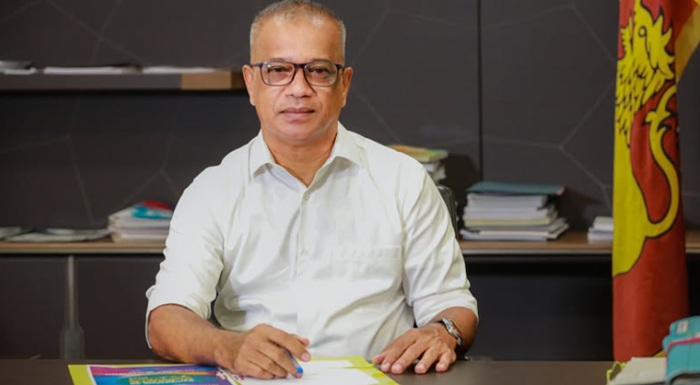
April 19, Colombo (LNW): A television network has acknowledged a significant reporting error concerning the declared assets of Minister K.D. Lalkantha, admitting that earlier figures aired were the result of a miscalculation.
In a formal correction released over the weekend, the channel clarified that it had substantially overstated the value of the minister’s financial holdings. The initial report had suggested that his securities were worth tens of crores of rupees and that his overall assets exceeded Rs. 46 crore.
However, revised figures indicate that the securities amount to just over Rs. 140,000, with the minister’s total declared wealth standing closer to Rs. 8 crore.
The broadcaster stated that the mistake came to light following a legal notice issued by the minister’s legal representatives, who challenged the accuracy of the reported data. In response, the channel conducted a review and issued a public correction, expressing regret for the error and any distress caused.
The controversy stems from a report aired earlier in the week, which allegedly misrepresented details from the minister’s 2025 declaration of assets and liabilities. According to the complaint, the inaccuracies included an exaggerated valuation of shares held under a family member’s name.
Legal sources indicate that the minister has demanded substantial compensation, reportedly amounting to billions of rupees, and has warned of further legal proceedings if the matter is not resolved satisfactorily.
Broadcaster Issues Apology After Inflating Minister’s Asset Figures
The Sri Lankan developing AI powered technology to protect elephants from train strikes

When a passenger train struck a herd of elephants near Habarana in February 2025, the footage that followed made international headlines. One elephant was filmed standing guard over an injured youngster lying beside the tracks, the tips of their trunks curled together. Three calves were among the six killed. For Damsith Wimalasena, a Sri Lankan technologist and University of Cambridge graduate, it was a confirmation of what he had been working to prevent.
Damsith, who was described by his college as an “extraordinary student” of the University of Cambridge, is the founder of the Coexist Initiative, an AI-powered collision avoidance platform being developed to stop trains killing elephants on Sri Lanka’s rail network. Still in its early stages, the system is being designed to mount LiDAR sensors onto locomotive cockpits, with the goal of detecting elephants at distances of up to 500 metres and giving operators the critical seconds needed to brake. The platform plans to use machine learning algorithms to classify animals in real time, while the movement data captured would help wildlife authorities map elephant crossing corridors and shape conservation planning.
The core insight, according to Damsith, is that this technology does not need to be invented from scratch. The sensor and software architectures he is drawing on have already been validated at scale by car manufacturers for automotive collision avoidance. Adapting them for the railway context would significantly reduce both cost and development time.
The problem he is trying to solve is vast. Sri Lanka records the highest annual elephant mortality of any country in Asia, with an average of 370 elephants and 125 people killed each year due to the broader human-elephant conflict. Since 2010, nearly 5,000 elephants have been killed across the island. The Sri Lankan elephant population has declined by almost 65 per cent since the nineteenth century, and the subspecies is classified as endangered by the IUCN. Railway collisions represent a small but deeply significant share of those losses. Train-related fatalities account for roughly five per cent of all elephant deaths, yet they draw disproportionate public attention because they are considered almost entirely preventable. The annual toll continues to fluctuate, with 24 elephants killed on the tracks in 2023 and 9 in 2024.
It is a recognition that Damsith arrived at early. Beyond Coexist, he has been consistently involved in the AI/ML space, building and ideating across multiple ventures. His broader ambition is to bridge the gap between cutting-edge AI and machine learning and on-the-ground impact, particularly as the technology approaches a point of singularity. His selection as a United Nations Millennium Fellow placed him among roughly five per cent of more than 52,000 applicants from 170 countries. He serves as a World Economic Forum Global Shaper and formerly led Cambridge University Entrepreneurs, one of Europe’s largest student-run entrepreneurship communities. Lucy Cavendish College featured his work in an official college profile and in the College’s Annual Review.
A 2024 census estimated Sri Lanka’s wild elephant population at between 6,000 and 7,000, and 386 elephants were killed that same year. Conservationists warn that at current rates; a sustainable breeding population may not survive. For Damsith, the Coexist Initiative is an attempt to intervene at the point where the crisis is at a critical juncture.
Written By
Asiri Sameera Fernando
University of Wayamba
Adani Edges Ahead of Ambani in Race for Asia’s Top Fortune
By: Isuru Parakrama
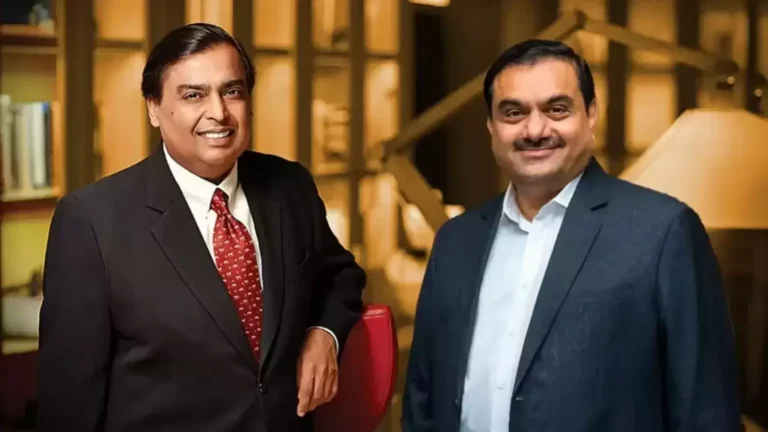
April 19, World (LNW): Indian industrialist Gautam Adani has moved ahead of fellow billionaire Mukesh Ambani to become the wealthiest individual in Asia, marking a notable reshuffle among the region’s financial elite.
Recent figures from the Bloomberg Billionaires Index indicate that Adani, who heads the sprawling Adani Group, has climbed to 19th place globally with an estimated fortune of around $92.6 billion. Ambani, the long-time leader of Reliance Industries, now follows closely behind in 20th position, with wealth assessed at roughly $90.8 billion.
The shift appears to have been driven by a sharp rise in the valuation of Adani-linked companies, reflecting renewed investor confidence and expansion across key sectors. Market analysts suggest the change highlights the increasingly competitive nature of India’s corporate landscape, where large conglomerates are rapidly diversifying and scaling up.
On the global stage, technology entrepreneurs continue to dominate the upper ranks of wealth. Elon Musk retains a commanding lead at the top, followed by figures such as Larry Page and Jeff Bezos, underscoring the enduring influence of the tech sector in shaping modern fortunes. Other high-profile names, including Mark Zuckerberg and Larry Ellison, also remain firmly positioned among the world’s richest.
Meanwhile, the Adani Group has continued to broaden its reach beyond its traditional infrastructure base. Its operations now span energy, transport, airports, digital services, and consumer-facing ventures, signalling a strategic shift towards more diversified revenue streams.
The conglomerate has also drawn attention for its large-scale commitments to social initiatives, including substantial funding aimed at improving rural healthcare, education, and sustainable energy development in India.
Observers note that the rivalry between Adani and Ambani reflects a wider transformation in Asia’s economic power centres, with both business leaders playing influential roles in shaping the region’s industrial and investment landscape.
Media Watchdog Flags CID Inquiry into Journalist’s Energy Crisis Report

April 19, Colombo (LNW): Sri Lanka’s Free Media Movement (FMM) has voiced unease over what it describes as a troubling development involving journalist Sulochana Ramaiyamohan, who has reportedly come under the attention of the Criminal Investigation Department (CID) following a recent article on the country’s energy sector challenges.
In a statement, the FMM said the CID had approached the social media platform X, seeking details linked to the journalist’s account. Ramaiyamohan had used the platform to share a piece she wrote for a local publication examining delays and administrative issues within the Power Ministry amid the ongoing energy crunch.
According to the organisation, the platform alerted the journalist via email about the request, indicating that authorities believe the content in question could breach domestic legal provisions. However, the FMM noted that its own review of both the published article and the accompanying post found nothing that would warrant such action.
The group has questioned the rationale behind the inquiry, pointing out that no clear justification has been offered for potentially restricting access to the post or pursuing further measures against the account. It warned that such steps, if left unchecked, could have a chilling effect on independent reporting.
Describing the situation as a matter of serious concern, the FMM said it plans to engage with both local authorities and international media rights organisations to seek clarification. It also indicated that it would continue monitoring the case closely.
The organisation further highlighted potential risks faced by the journalist, noting that her reporting touches on the sensitive issue of the energy crisis, which has increasingly drawn public scrutiny and allegations of mismanagement and corruption.
Indian Vice President Touches Down in Colombo for High-Level Talks
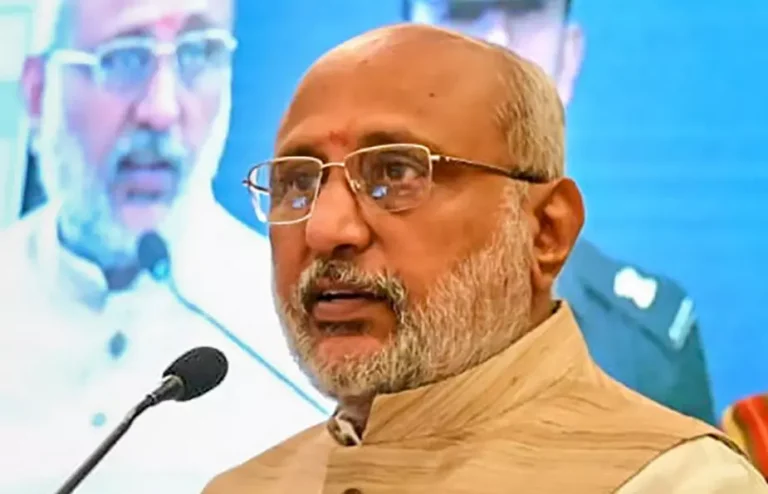
April 19, Colombo (LNW): India’s Vice President C. P. Radhakrishnan arrived in Sri Lanka earlier today (19) for a brief but significant official visit aimed at strengthening bilateral ties.
He was accompanied by a sizeable delegation of nearly 50 representatives, who landed at Bandaranaike International Airport (BIA) at approximately 9:30 a.m. The visiting party was formally welcomed by several Sri Lankan dignitaries, including Minister of Sports Sunil Kumara Gamage, at a reception held in the airport’s VIP lounge.
The Vice President is scheduled to remain in the country until tomorrow, during which time he is expected to engage in a series of high-level discussions with President Anura Kumara Dissanayake and Prime Minister Harini Amarasuriya.
These meetings are seen as part of a broader effort to reinforce diplomatic and economic cooperation between the two neighbouring nations.
Officials from the Ministry of Foreign Affairs indicated that the visit will feature multiple engagements beyond formal talks, including interactions with political representatives and community figures.
Several agreements are also anticipated to be finalised, with a particular emphasis on development initiatives and joint efforts linked to recovery work following the recent impact of Cyclone Ditwah.
NTC Cracks Down on Fare Gouging During Festive Travel Surge
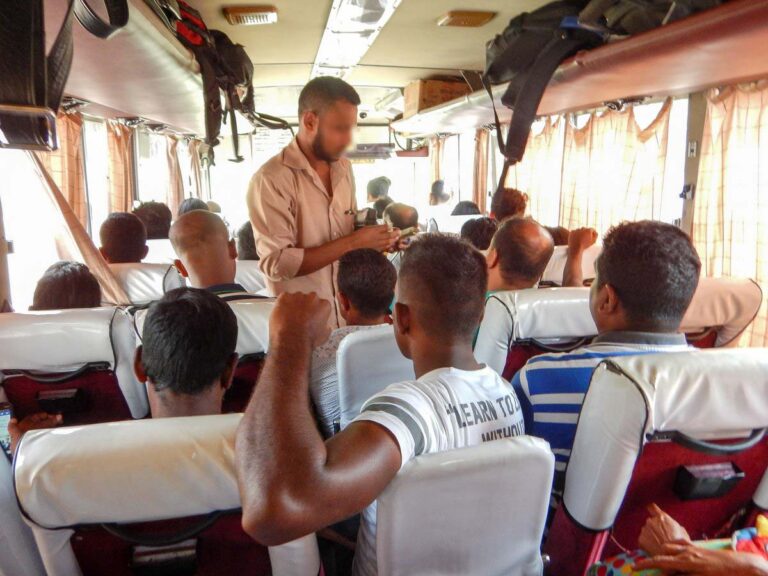
April 19, Colombo (LNW): Sri Lanka’s National Transport Commission (NTC) has stepped up enforcement measures after uncovering widespread fare irregularities during the busy Sinhala and Tamil New Year travel period.
Between April 08 and 18, inspection teams examined around 680 buses operating across key routes. Officials reported that 80 of these vehicles had charged passengers more than the approved fares, prompting immediate corrective action. The Commission ensured that affected travellers were reimbursed on the spot, while operators responsible for the violations were issued financial penalties.
Rohana Wattage, who heads the NTC’s Mobile Bus Inspection Unit, noted that enforcement efforts intensified as holiday travel peaked. On April 18 alone, nearly 150 buses were checked, with a dozen found to be in breach of fare regulations.
Authorities indicated that these inspections form part of a broader effort to protect commuters during high-demand periods, when instances of overcharging tend to rise. Monitoring operations are set to continue until April 21, with additional spot checks being carried out in high-traffic corridors.
One such operation took place along the High-Level Road between Hanwella and Kalugala, where inspectors focused on buses serving long-distance holiday travellers. Officials have signalled that similar crackdowns may be expanded in future to ensure fair pricing and maintain public confidence in the transport system.
Atmospheric conditions favourable for afternoon showers in most parts of SL (April 19)

April 19, Colombo (LNW): Atmospheric conditions will be favourable for afternoon thundershowers in most parts of the island from tomorrow (20), the Department of Meteorology said in its daily weather forecast today (19).
Showers or thundershowers will occur at several places in Western, Central, Sabaragamuwa, Uva, North-western, North-central and Southern provinces after 1.00 pm.
Fairly heavy falls about 50 mm are likely at some places in Western and Sabaragamuwa provinces and in Galle and Matara districts.
Mainly dry weather will prevail over the other parts of the island.
Misty conditions can be expected at some places in Western, Central, Sabaragamuwa and Uva provinces and in Galle and Matara districts during the early hours of the morning.
The general public is kindly requested to take adequate precautions to minimise damages caused by temporary localised strong winds and lightning during thundershowers.
Marine Weather:
Condition of Rain:
Showers or thundershowers are likely at a few places in the sea areas off the coast extending from Mannar to Hambantota via Colombo and Galle.
Winds:
Winds will be south-easterly or variable. Wind speed will be (20-30) kmph.
State of Sea:
The sea areas around the island will be slight.
Temporarily strong gusty winds and very rough seas can be expected during thundershowers.
Social Media Cannot Seize or Forfeit Illicit Wealth—But the Police and Bribery Commission Can Under Anti-Corruption Law

Nalinda Indatissa
President’s Counsel
Public outrage over corruption today often finds its loudest expression on social media. Allegations are shared, names are circulated, and images of wealth are dissected in real time. While such discourse may raise awareness, it is important to recognise a fundamental limitation: social media cannot seize, freeze, or forfeit unlawfully acquired assets. That power lies exclusively within the framework of the law, exercised by duly authorised institutions such as the Police and the Bribery Commission under the Anti-Corruption law.
Modern anti-corruption legislation, reinforced by proceeds of crime provisions, has introduced a significant shift in how illicit enrichment is addressed. The law now permits action not only after a criminal conviction, but also in situations where assets are demonstrably disproportionate to lawful income and cannot be satisfactorily explained. In such cases, the focus is not confined to proving criminal guilt beyond reasonable doubt; rather, it extends to examining whether the property itself has a legitimate origin.
Where a public officer or a politician is found to possess substantial wealth that is inconsistent with known sources of income, and fails to provide a credible explanation, the law can be invoked. The Police and the Bribery Commission are empowered to investigate, trace financial flows, and move court to freeze and seize assets at an early stage. This prevents the dissipation or concealment of property while inquiries are ongoing. Thereafter, through due legal process and judicial oversight, such assets may be forfeited if it is established that they are more likely than not derived from unlawful activity.
This is not merely a theoretical construct. The Bribery Commission has already exercised these powers in respect of sitting public officers, demonstrating that the law is both operational and effective when properly utilised. Importantly, the reach of these provisions is not limited to those currently in office. If applied with consistency and impartiality, they are equally capable of being used against retired officials as well as former and sitting politicians. The law draws no distinction based on status or timing; its concern is whether the wealth in question can be lawfully justified.
The contrast with social media is therefore stark. Public commentary, however forceful, cannot substitute for lawful action. Allegations made online do not freeze bank accounts, nor do they result in the recovery of illicit assets. Only structured investigations, supported by evidence and conducted within the legal framework, can achieve that result. This underscores the importance of strong institutions and the responsible exercise of statutory powers.
At the same time, the use of these powers must be guided by fairness and due process. Individuals must be given a proper opportunity to explain their assets, and courts must ensure that enforcement does not become arbitrary or selective. The strength of the law lies not only in its reach, but in its credibility.
Now that the Anti-Corruption law provides a clear pathway for non-conviction based seizure and forfeiture, the responsibility rests with law enforcement agencies to act. Where there is credible evidence of unexplained wealth, the Police and the Bribery Commission have both the authority and the duty to proceed—firmly, fairly, and without fear or favour. In doing so, they affirm a simple but essential principle: public office cannot be used as a gateway to unexplained wealth, and where such wealth exists, the law—not public opinion—will ultimately determine its fate.
From Rhetoric to Responsibility: When Leaders Finally Walk the Talk
By Roger Srivasan
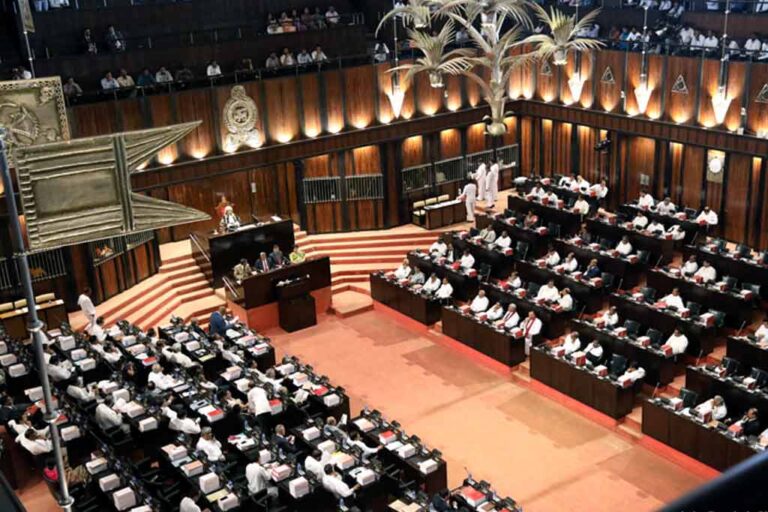
At the outset, it must be stated without equivocation: both the Minister and the personal secretary deserve commendation for taking the correct and honourable course of action. Their decision to step aside while investigations are ongoing is not merely procedurally sound—it is symbolically significant. It reflects, at least in this instance, a willingness to align conduct with principle, to walk the talk in a political culture where such congruence has long been in short supply.
For decades, Sri Lankan public life has been marked by a troubling dissonance between rhetoric and reality. Politicians waxed eloquent on codes of practice, their words often cloaked in a veneer of verisimilitude, yet seldom translated into action. The language of governance was elevated; the practice of it, less so. In such an environment, the act of stepping aside—pending inquiry, without the compulsion of a court order or the finality of proven guilt—was almost unheard of
It is against this historical backdrop that the present resignations assume their full significance.
Predictably, however, a strain of cynicism has emerged in public discourse. Some argue that these resignations were not voluntary, but compelled—forced by pressure, threatened exposure, or the crescendo of public criticism. This line of reasoning, though superficially plausible, does not withstand scrutiny when viewed through the lens of our recent political history.
For in the living memory of this nation, no quantum of criticism—however egregious, sustained, or even justified—has typically succeeded in extracting resignations from those in positions of power. Ministers have weathered storms of scandal, stood firm amid grave allegations, and continued in office with an air of studied indifference. Public outrage, far from being a catalyst for accountability, has often been treated as background noise—loud, perhaps, but ultimately inconsequential.
Indeed, the political tradition we have inherited has too often been characterised by a refusal to yield. Obfuscation, deflection, and denial have formed the first line of defence; contrition, where it appeared at all, was usually belated and reluctant. It would be neither unfair nor imprecise to describe this tradition as one tainted by rapacity, avarice, and a deeply entrenched venality. In such a climate, the notion that mere criticism—even when accompanied by credible allegations—could precipitate a resignation would have been dismissed as fanciful.
That is precisely why the present development must be recognised for what it is: unprecedented.
These resignations mark a subtle yet meaningful departure from an entrenched political instinct—the instinct to cling to office at all costs. They suggest, however tentatively, that a different calculus may be emerging: one in which the preservation of institutional integrity is accorded greater weight than the preservation of personal position.
It is important, however, to properly frame what these resignations do—and do not—signify. Stepping aside pending investigation is not, and should not be construed as, an admission of guilt. Rather, it is an acknowledgment of a higher principle: that the offices of state must remain unsullied by even the appearance of impropriety while due process takes its course.
In mature democracies, this principle is well understood. Public office is not treated as a personal entitlement to be defended at all costs, but as a trust to be relinquished, at least temporarily, when circumstances demand. The legitimacy of governance depends not only on the absence of wrongdoing, but on the perception of integrity. It is this distinction—subtle yet profound—that has often eluded our political culture.
The phrase “walk the talk” captures this ethos with elegant simplicity. It is easy to speak of accountability; far more difficult to embody it. It is one thing to proclaim adherence to democratic norms; quite another to submit oneself to them when they prove inconvenient. The true measure of leadership lies not in the eloquence of its declarations, but in the consistency of its conduct.
Whether these resignations were influenced by internal counsel, political prudence, or an evolving sensitivity to public expectation is, in many respects, secondary. What matters is the precedent they establish. For perhaps the first time in recent memory, stepping aside has been normalised—not as an act of weakness, but as an act of responsibility.
If this precedent takes root, its implications could be far-reaching. It could recalibrate public expectations, redefine political norms, and gradually erode the culture of impunity that has long plagued our institutions. It could signal to future office-holders that accountability is not optional—that the standards to which they will be held are no longer negotiable.
Yet caution is warranted. One swallow does not make a summer, and one instance of accountability does not, in itself, transform a political culture. The durability of this shift will depend on consistency. If such actions are to be more than episodic, they must be replicated—across administrations, across parties, and across circumstances.
For now, however, it would be churlish to dismiss what has occurred. In a nation where resignation has too often been synonymous with defeat, we are witnessing—however modestly—the emergence of a different understanding: that stepping aside, when done in deference to due process, is not a capitulation, but a contribution to the integrity of public life.
In the final analysis, the significance of this moment lies not in the individuals concerned, but in the principle affirmed. For a polity long accustomed to leaders who spoke of virtue while practising expedience, even a single instance of alignment between word and deed carries weight.
It is, in the truest sense, a moment where rhetoric has yielded—however briefly—to responsibility.
And if sustained, it may yet mark the beginning of a political culture where leaders do not merely speak of standards, but live by them—where they do not merely talk the talk, but unmistakably, and without equivocation, walk the talk.
Sri Lanka Fertiliser Crisis Deepens As Global Supply Chains Collapse
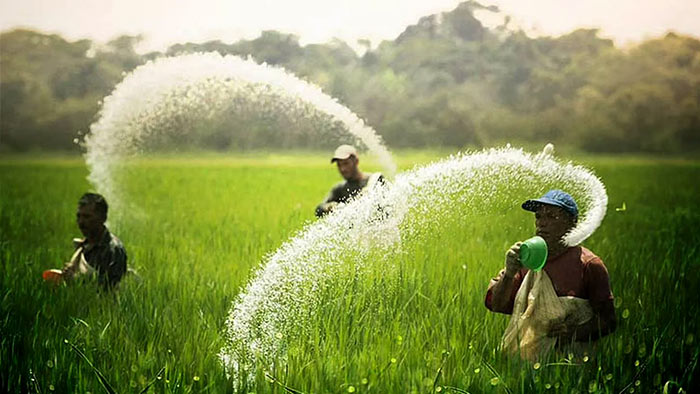
Sri Lanka’s plantation sector is once again facing a looming as global fertiliser supply disruptions triggered by escalating tensions in the Middle East begin to ripple through the local economy.
The Planters’ Association of Ceylon has raised alarm over soaring fertiliser prices and tightening supplies, warning that the situation could significantly undermine agricultural output and economic stability. At the heart of the disruption lies the closure of the Strait of Hormuz—a critical artery through which roughly one-third of global fertiliser raw materials are transported.
Shipping traffic through this strategic route has reportedly plunged by 90%, sending shockwaves across global supply chains. The situation is further compounded by the role of Iran, one of the world’s largest urea suppliers, whose exports have been affected by the regional instability.
For Sri Lanka, which depends heavily on imported fertiliser, the implications are immediate and severe. Plantation crops—tea, rubber, and coconut require consistent nutrient inputs, and any disruption during the next two to four months could directly impact annual yields. Industry analysts warn that reduced output may translate into lower export earnings, placing additional strain on the country’s already fragile Balance of Payments.
The Government has responded by increasing fertiliser subsidies to as much as Rs. 18,000 for additional crops, a move welcomed by industry stakeholders. However, the Association cautions that such measures may not fully offset the structural challenges posed by global shortages and rising costs.
The crisis also revives painful memories of the 2021 fertiliser ban, which devastated agricultural productivity and took years to recover from. Just as the sector was regaining stability, it now faces a new external shock—this time beyond domestic control.
According to insights linked to the Food and Agriculture Organization, the Gulf region accounts for up to 35% of global urea exports. Continued disruption could push fertiliser prices 15–20% higher in early 2026, with yield impacts extending into 2027.
Already, global urea prices have surged sharply, while major suppliers like China have restricted exports to secure domestic supply. Sri Lanka is now exploring alternative sourcing options, including negotiations with Russia and India, though these nations may prioritise their own food security needs.
At the ground level, Regional Plantation Companies and smallholders are bearing the brunt. Rising input costs, coupled with limited availability, are squeezing margins and threatening livelihoods.
In essence, this fertiliser crisis is not merely an agricultural issue it is an economic one. Without swift and effective mitigation, Sri Lanka risks a chain reaction impacting exports, inflation, and overall economic resilience.