Home Blog Page 1089

Sri Lankans credit card spending and card base continue down fall

0

By: Staff Writer

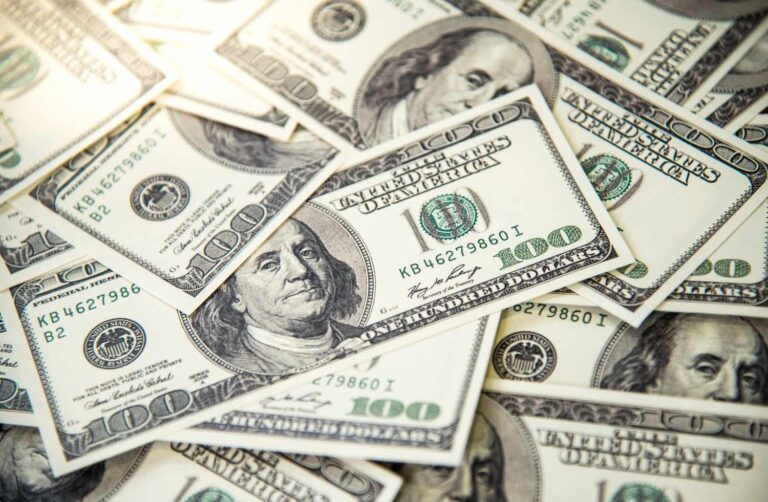
January 10, Colombo (LNW): In what appears to be a distinctive development in the financial sector, the spending via credit cards has continued to narrow and so has the consumer base holding a credit card, as the numbers have continued to shrink.

There could be two reasons. The first one is people do not have the purchasing power due to lower disposable income. So, they might be cancelling their credit cards,” a financial analyst, said.

“The second one is a sudden increase in migration with many professionals who have been using credit cards are leaving the country and they might have cancelled their cards.

According to the data available through October, the total outstanding credit card balance has continued to shrink by another Rs.309.0 million from a month earlier, after falling by Rs.169.0 million in September.

The persistent monthly decline has put the total outstanding credit card balance at Rs.143,992 million by the end of the first 10 months of last year, only slightly changed from Rs.143,098 million at the start of 2023.

It becomes idiosyncratic, as private sector credit has continued to expand at a modestly healthy clip for five consecutive months through October, since the interest rates started easing.

And specially on credit cards, the Central Bank capped the maximum rate at 28.0 percent, cutting the rate by seven percentage points, effective from September, as part of its targeted monetary policy measures to speed up the policy pass through.

However, 28.0 percent remains still very much elevated and doesn’t really encourage the card holders to spend from their card.

As the rates have further declined from the September levels at a faster pace, it is expected that the Central Bank could further slash the ceiling rate in cards and select other products, at an upcoming policy meeting.

Meanwhile, as inflation has cooled to mid-single digit levels, there are expectations for the consumer spending to pick up gradually, although the recent increase in the Value Added Tax could dampen the effects for a certain degree.

Cards are a distant proxy for consumer spending in Sri Lanka, as still a large section of the population transacts in cash and operates with no credit cards or access to a card.

For instance, Sri Lanka had a total of 1,913,858 active cards by the end of October, which had also shrunk from both September levels and at the start of the year.

At the beginning of the year, there were 1,952,991 active cards but the base came gradually down, as the banks tightened the eligibility criteria as part of their broader credit tightening policy and many people on average to high-paying jobs, who were using cards, migrated en masse.

The last two years alone saw Sri Lanka losing about 650,000 people from both blue and white collar types for countries that can offer them better income and living conditions.

Bangladesh ruling party supporters use violence to obstruct reporters during elections

0

Reporters Without Borders (RSF) condemns unacceptable violence against journalists during Bangladesh’s general elections on 7 January, when at least 12 reporters were attacked and expelled or denied entry to voting stations, in most cases by supporters of the ruling Awami League.

 
Bangladesh’s general elections were marred by unacceptable violence against journalists. Ruling party supporters attacked reporters covering cases of electoral fraud. We call on the relevant authorities to launch an independent investigation so that those responsible are brought to justice. Furthermore, in a context of stifled media freedom, muzzled by governmental suppression of all criticism, we urge the newly reelected authorities to finally adopt strong measures to safeguard unrestricted Internet access and protect the freedom of the press enshrined in Bangladesh’s constitution and freedom of expression, which is being obstructed by the draconian new Cyber Security Act. The government’s toxic control over news and information must end.”

South Asia desk
Reporters Without Borders
 
On a polling day marked by tension – with the main opposition party, the Bangladesh Nationalist Party, boycotting the election – many journalists were physically attacked or were subjected to harassment and intimidation, and were either expelled from or were denied entry to voting stations. Most of the harassment and violence was the work of ruling Awami League supporters targeting reporters trying to cover irregularities and cases of fraud.
 
Physical and verbal attacks against journalists
 
When three journalists with the independent Daily Star newspaper – Arafat Rahaman, Dipan Nandy and Sirajul Islam Rubel – went to the Segunbagicha high school voting station in the capital, Dhaka, to confirm reports of “fake voters,” Awami League henchmen locked them in a room to prevent them investigating. Police eventually freed them.
 
At the voting station at the Nasirabad high school for boys in the eastern city of Chattogram, Awami League supporters snatched the phone of Mosarraf Shah, a reporter for the Prothom Alo daily newspaper, and deleted the photos and videos he had taken showing vote rigging.
 
When Mohiuddin Modhu, a reporter for privately-owned Jamuna Television, tried to investigate attempted voter fraud in the Dhaka district of Nawabganj, Awami League supporters chased him away and threw bricks at him as he fled, injuring him.
 
Awami League activists also threatened and expelled journalists from polling stations in the Dhaka-8 and Dhaka-12 voting districts. This was reported by Muktadir Rashid, the correspondent of the English-language daily New Age, and his photographer, Sourav Laskar, and by fellow New Age journalists Nasir Uz Zaman and Tanzil Rahaman.
 
In the northern district of Lalmonirhat, correspondent of Ananda TV Abdur Rahim and camera crew Masud Babu and Minhaz were attacked, sustaining damage to their cameras, when they went to the voting station at Purba Sardubi primary school to cover independent candidate Ataur Rahman’s abduction by Awami League supporters.
 
News sites blocked, foreign reporters denied visas
 
In another serious violation of the right to report, access to the website of the Daily Manab Zamin newspaper, one of the one of the government’s leading media critics, was blocked on 6 January, the eve of election day. The newspaper stressed that it had no internal technical issues when it reported the ongoing access problem in a Facebook message on 6 January. And one of its reporters, Tarique Choyon, said in a post on X (the former Twitter): “Our newspaper Daily Manab Zamin’s online edition is inaccessible in many places of Bangladesh. We have no technical flaws at all.
 
Finally, the Bangladeshi authorities refused to issue visas to journalists from the headquarters of many leading international media outlets, including BBC News, The New York Times, Bloomberg, Agence France-Presse, Reuters and Al Jazeera. Most of the foreign reporters who managed to obtain visas were those based in the Indian capital, New Delhi. Some foreign reporters were also asked to sign a statement accepting that their photos and video footage would have to be approved by the Bangladeshi authorities before being sent, and could not harm the “national image.”

REPORTERS SANS FRONTIÈRES/ REPORTERS WITHOUT BORDERS

SriLankan Airlines’ launches Agents Portal starting direct connections with India

0

By: Staff Writer

January 10, Colombo (LNW): SriLankan Airlines has begun the global roll out of its New Distribution Capability (NDC) agents booking portal SriLankan Direct Connect starting with India enabling travel agents, convenient direct access to the airline’s reservation system and an array of other benefits.

The NDC platform is a breakthrough travel industry-supported program by the International Air Transport Association (IATA) that sets the pace to digitally transform the journey for airline distribution.

Adopting the technology via SriLankan Direct Connect allows SriLankan Airlines to form a powerful, direct retail and communication channel with agents and bypass traditional, intermediary Global Distribution Systems to provide richer content, ancillary services and personalised offers.

“We are excited to become one of the first airlines in South Asia to introduce IATA’s NDC technology and enhance the overall booking experience for our agents.

SriLankan Direct Connect is an intuitive application that will strengthen our direct distribution channel and bring value to travel agents and empower them to provide a superior service to our passengers,” stated Chief Executive Officer of SriLankan Airlines, Richard Nuttall.

“The launch of SriLankan Direct Connect is a milestone moment, qualifying SriLankan Airlines for the prestigious Airline Retailing Maturity Certification by IATA.

SriLankan Direct Connect will help us expand our distribution network and optimize savings and efficiency and transform the way in which we do business all at the same time,” added Head of Worldwide Sales & Distribution of SriLankan Airlines, Dimuthu Tennakoon.

Agents who register for SriLankan Direct Connect will have at their fingertips, private fares, guaranteed lowest fares, fare families and other promotional fares; ancillary products; free date changes; and an incentive scheme for flown segments among other exclusive benefits.

First launched in Sri Lanka in August 2023, SriLankan Airlines will be progressively extending SriLankan Direct Connect across its network in the coming months following the global kick off in India.

Agents can sign up for SriLankan Direct Connect using the Agent Registration link on the home page of www.srilankan.com

SriLankan Airlines is set to celebrate the reopening of Indian skies on 27 March 2022 by doubling up to 88 weekly flights to India to match pre-COVID-19 levels.

Consequently, customers too would be doubly rewarded by SriLankan expanding its flight frequencies at the same time that India does away with air travel bubble limitations this upcoming summer season.

Coupled together, it will effectively provide SriLankan Airlines’ passengers enhanced flight options and connectivity between India and destinations in the Maldives; the Far East; Oceania; Europe; and the Middle East.

Govt to set up Science & Tech University in partnership with US counterpart

0

By: Staff Writer

January 10, Colombo (LNW): Sri Lanka’s cabinet of ministers has approved a proposal by President Ranil Wickremesinghe to establish a University of Science & Technology through a public private partnership with a United States university.

A statement from the Government Information Department said on Tuesday January 09 that one of several US universities will be selected for the project as a partner university, including UC Berkeley, UC Riverside, UC Davis and University of Michigan.

Such a university will provide the opportunity to utilise modern methodologies, foster global academic linkages and create an enabling environment for research and development,” the statement said.

Private university education is a contentious topic in Sri Lanka, with many left-leaning parties and academics historically opposed to the opening of private higher education institutes, particularly in the field of medicine.

Student unions representing state universities routinely protest the establishment of private degree-awarding institutes in the country.

Education Minister Susil Premajayantha said in December 2023 that Sri Lanka will set minimum standards for private university degrees like for state universities through a unit of proposed new education commission to ensure high quality while encouraging private investments.

Starting private universities is strongly opposed by undergraduate unions in state universities and left minded political parties. They say the move will drain the best academics from the state universities to private universities.

They also argue such private universities could sell degrees for money and the move is seen as encouraging unqualified students to earn degrees for money.

Starting private universities is strongly opposed by undergraduate unions in state universities and left minded political parties. They say the move will drain the best academics from the state universities to private universities.

They also argue such private universities could sell degrees for money and the move is seen as encouraging unqualified students to earn degrees for money.

The 2024 budget has spelt out plans for Sri Lanka to allow any recognized educational institution in the world to establish universities in Sri Lanka “once a set of powerful rules and regulations for the regulation of non-state universities are put in place”.

The move is to attract more foreign investment into education as well as to reduce foreign outflow from those who send their children for higher studies in foreign universities.

The government’s initiatives will include the evaluation of underperforming Science and Technology Research Institutes and the setting up of a Technology and Innovation Council (TIC) and a Digital Transformation Agency (DTA).

“Educated manpower well-equipped with knowledge and technological know-how is essential for the smooth flow of transformations which will lubricate the development and catching up process in developing nations,” the minister said.

Sri Lanka to embrace nuclear energy with France expressing interest

0

By: Staff Writer

January 10, Colombo (LNW): Sri Lanka is seriously considering the possibility of using nuclear energy moving away from its current reliance on fossil fuels (10 TWh) and hydropower (5 TWh), with small contributions from wind and solar.

France has emerged recently as one of the strongest contenders including Russia, US, India, Denmark ,China,and Canada to build nuclear power plants in Sri Lanka.

The island nation has been struggling to meet its energy demand given it is mostly relying on fossil fuel and coal. A dollar shortage has already hit the imports of fuel which had led to power cuts.

Electricity De France, the French power utility, had made a proposal on nuclear energy to Sri Lanka, Power and Energy Minister Kanchana Wijesekera said following a meeting with the French envoy to discuss potential energy sector investments.

“We also discussed regarding a proposal by EDF (Electricity De France) on nuclear energy and possible partnerships in the future,” Wijesekera said on X (twitter), after meeting the French ambassador to Colombo Jean-Francois Pactet.

EDF will construct the new plants with tens of billions in public financing and chief executive Luc Rémont said his company aims to build roughly one 1.6GW reactor a year.

Minister Wijesekera had also briefed the ambassador on Sri Lanka’s nuclear energy integration plans, policy on renewable energy, smart grid development and energy efficiency plans, he said.

In 2022, a team of International Atomic Energy Agency (IAEA) experts assessed Sri Lanka’s readiness for a nuclear power programme through an Integrated Nuclear Infrastructure Review.

Sri Lanka currently imports most of its energy needs, including oil, coal and hydrocarbons. To ease the economic burden, the island nation aims to generate 70% of its electricity from renewable sources by 2030.

Russia has emerged as one of the strongest contenders to build nuclear power plants in Sri Lanka.

A high-level delegation from Russia recently visited the island nation and discussed proposed cooperation in the nuclear energy sector with the Sri Lankan authorities.

Chairman of the Sri Lanka Atomic Energy Authority (SLAEA) Prof. S.R.D. Rosa briefed the Russian delegation on the status of Moscow’s proposal to develop an offshore or onshore nuclear power plant in Sri Lanka.

He said his office had in principle given its approval for nuclear power to enhance Sri Lanka’s energy mix and it had been sent to the Ministry of Foreign Affairs for approval

India in February 2015 sealed a nuclear energy agreement with Sri Lanka as the oldest contender to offer nuclear energy support and under the deal, India was to help Sri Lanka to build its nuclear energy infrastructure, including training of personnel.

It was also planned that India could sell light small-scale nuclear reactors to Sri Lanka which had been wanting to establish 600 MW of nuclear capacity by 2030. However, the project did not take off so far.

Minister Wijesekera said that Sri Lanka is assessing nuclear power plant offers from Russia, France and other countries at present without confirming the deals.

Speaker Reveals Maximum Penalty for Breach of Parliament Privilege

0

Speaker Mahinda Yapa Abeywardena disclosed in Parliament the maximum penalty applicable for a breach of privilege by Members of the Sri Lankan Parliament. Addressing the assembly on Tuesday, he outlined the stipulations for imposing penalties in cases where a Member of Parliament faces multiple charges from the Committee on Ethics and Privileges.

The Speaker clarified that if a charge-sheet contains multiple charges for separate offenses against a Member of Parliament and the said member is found guilty of more than one charge, the maximum penalty comes into effect.

In seeking guidance on the permissible punishment under Section 28 of the Parliament (Powers and Privileges) Act No. 21 of 1953, the Speaker consulted the Attorney General. The Attorney General’s assessment, considering various constitutional provisions and legislative acts, concluded that the suspension of a Member of Parliament’s service for over a month, up to a maximum of three months, is feasible for convictions involving two or more separate offenses within a single incident.

COPF Directs VAT Guidelines for Local Software Companies

0

MP Harsha de Silva, Chairman of the Committee on Public Finance (COPF), disclosed directives issued to the Department of Inland Revenue (IRD) concerning Value Added Tax (VAT) regulations for local software enterprises. Speaking to ‘X’, he highlighted pivotal discussions addressing VAT applicability for both local and foreign software and digital service providers.

MP Harsha de Silva emphasized that during discussions, the IRD recognized the necessity for VAT to be applied based on the consumption of services, not solely on the location of businesses.

Despite anticipated administrative challenges, the COPF has instructed the IRD to devise a comprehensive plan within a week, aimed at establishing an equitable environment for all stakeholders.

The MP expressed pride in advocating for fairness in the treatment of local software companies like PickMe compared to their foreign counterparts such as Uber.

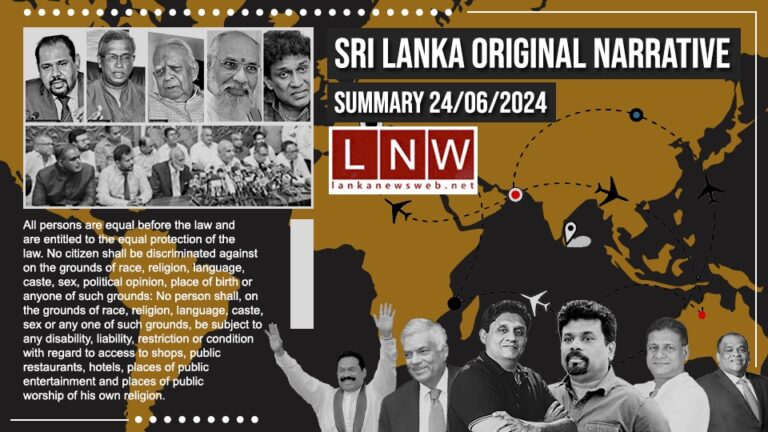
Sri Lanka Original Narrative Summary: 10/01

0
  1. Treasury Secretary Mahinda Siriwardene testifies before the Parliamentary Committee to look into the matter of Financial Bankruptcy: says he did not declare a financial bankruptcy on 12th April ’22, and only announced the inability to pay some debts: asserts that therefore, the “financial bankruptcy” is a misinterpretation.
  2. United Entrepreneurs’ Forum President Tanya Abeysundera claims there were nearly a million SMEs in this country, but that the economic management of President Ranil Wickramasinghe & CB Governor Nandalal Weerasinghe has caused that number to collapse to just about 300,000.
  3. Japan stresses urgency of finalizing a Memorandum of Understanding on Debt Re-structuring between the Official Creditor Committee and the SL Govt: highlights the need for transparency & comparability in agreements with all Creditors.
  4. SJB Badulla District MP Chaminda Wijesiri resigns as an MP: Nayana Wasalathilaka fills the Parliamentary seat thereby falling vacant.
  5. GMOA & FUTA welcome the Govt’s recent decision to double the “Disturbance, Availability & Transport” allowance paid for Govt doctors and the 25% increase in the study allowance given to university teachers.
  6. UK’s Princess Anne and spouse Vice Admiral Sir Timothy Laurence visit SL: the visit to mark 75 years of diplomatic relations between UK & SL: SL had been colonised by Portugal, Netherlands & UK for 443 years from 1505 to 1948.
  7. Plantation Industries Minister Mahinda Amaraweera says there are around 20,000 private zoos in China, and many have expressed hopes of acquiring SL toque macaque monkeys for exhibition in their zoos.
  8. Cabinet grants approval to a proposal to enhance 1,500km of roads under the 100,000km Roads Programme, where work had been inaugurated but suspended.
  9. National Construction Assn Chairman Susantha Liyanaarachchi says the country’s business community is prepared to confront any potential measures of suppression by the Govt: his comments likely to be in response to a recent statement by Presidential Chief of Staff Sagala Ratnayaka that the Govt would take action against “individuals spreading misinformation regarding the recent increase in VAT”.
  10. Afghanistan Cricket Board says Afghanistan will undertake an all-formats tour of SL in February’24: will play a one-off Test followed by 3 ODIs and 3 T20Is.

Murder Suspect Apprehended at Airport in Connection to Kahathuduwa Killing

0

January 10, Colombo (LNW): Following the brutal murder of a 41-year-old woman near the Kahathuduwa interchange of the Southern Expressway, a significant breakthrough occurred as police apprehended a suspect at the Bandaranaike International Airport (BIA) in Katunayake.

The victim, an employee of the Civil Aviation Authority, fell victim to a heinous hacking incident in the Kahathuduwa area on the evening of January 9. SSP Nihal Thalduwa, the police spokesman, confirmed the arrest of a 45-year-old man believed to be responsible for the murder. He was intercepted at the airport while attempting to flee the country.

Residing in Madapatha, Piliyandala, the victim was en route home from work when the tragic incident occurred near the Kahathuduwa entrance to the expressway. Law enforcement authorities suspect the motive behind the murder to be related to an illicit affair.

Further investigation revealed that the arrested suspect had recently returned to the country after spending several years overseas, adding a layer of complexity to the case.

Investigative journalist Shangguan Yunkai sentenced to 15 years in prison on trumped-up charges

0

Reporters Without Borders (RSF) condemns the sentencing of Shangguan Yunkai to 15 years in prison on trumped-up charges. The investigative journalist known for his probes into the corruption of the Chinese officials must be released immediately.

On 5 January 2024, Chinese investigative journalist Shangguan Yunkai was sentenced to 15 years in prison and fined 380,000 Chinese yuan (around 50,000 euros) by court, in China’s central city of Ezhou, on five charges, including “picking quarrels and provoking trouble” as well as “selling fake medicines”.

Known for his investigations on the corruption of Chinese officials, Shangguan was detained on 20 April 2023. He had just published a report in a series of articles in which he revealed the wrongdoings of several officials and law enforcement in the city of Ezhou.

“This incredibly severe sentence, based on obviously trumped-up charges, clearly comes as a retribution against Shangguan Yunkai’s investigations on corruption. We urge the international community to build up pressure on the Chinese authorities to secure his release alongside all other journalists and press freedom defenders detained in the country.”

Cedric Alviani
RSF Asia-Pacific Bureau Director

Shangguan, who is a former leading reporter of the state-run newspaper Legal Daily, in recent years ran several groups on WeChat, the leading social media in China, in which he shared evidence of hundreds of officials’ and criminals’ violations of discipline and law. In the 1990s, his investigations had already revealed the corrupt practices of Xu Penghang, then vice-governor of Hubei province, in central China, and contributed to the official’s dismissal.

Since 2012, in line with Chinese leader Xi Jinping’s crusade against the right to information, the Beijing’s regime has stepped up its crackdown on investigative journalists, such as Huang Qi, a seasoned Chinese journalist and the founder of independent media 64 Tianwang sentenced to 12 years in prison in 2019 for “leaking state secrets” and “providing state secrets abroad”, as well as Huang Xueqin, a figure of China’s #MeToo movement, who has been detained since September 2021 and who faces a 15 years jail sentence for “inciting subversion of state power”.

Ranked 179th out of 180 countries and territories in the 2023 RSF World Press Freedom Index, China is the world’s largest jailer of journalists and press freedom defenders, with at least 121 currently detained.

REPORTERS SANS FRONTIÈRES / REPORTERS WITHOUT BORDERS (RSF)
Aleksandra Bielakowska
Chargée de plaidoyer du Bureau Asie-Pacifique / Advocacy officer, Asia-Pacific Bureau
CS 90247 75083 Paris Cedex 02