Home Blog Page 1094

TRCSL warns people of buying non-registered mobile phones

0

By: Staff Writer

January 07, Colombo (LNW): The Telecommunications Regulatory Commission of Sri Lanka (TRCSL) has announced that people should only buy mobile phones that have been approved by the Commission.

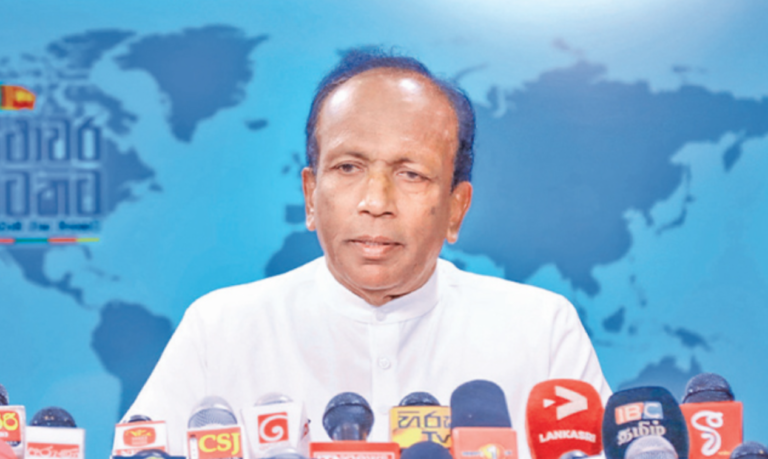
Addressing the media TRCSL Deputy Director of Compliance, Ms. M. Pathirana, requested consumers check the IMEI number to verify the phone they are hoping to buy has TRCSL approval.

The IMEI number is displayed on the cover of the mobile phone box. People can check the validity of the IMEI number by sending an SMS to 1909 (IMEI (space) 15-digit number and sending it to 1909). An instant reply message will be received stating whether the mobile phone is registered or not.

She requested that consumers buy only TRCSL-approved phones to prevent falling into trouble.

The TRCSL has announced that unregistered telecommunication devices equipped with a SIM card will be deactivated within the Cellular Mobile Telephone Operator’s Network.

The public is strongly advised to avail services exclusively from dealers who possess a vendor license issued by the TRCSL.

In accordance with the directives of the Telecommunications Regulatory Commission of Sri Lanka (TRCSL), it is crucial for consumers to choose mobile phones that have received approval from the commission.

TRCSL emphasises the necessity of verifying the IMEI number before making a purchase.

This can be accomplished by sending a SMS to 1909 with the format “IMEI (space) 15-digit number.”

An instant reply message will confirm the registration status of the mobile phone. In a non-approved TRCSL phone, the dealer who sells unauthorised devices becomes unauthorised importer who has not paid any tax and the customer of such devices is likely, to be held responsible for relevant government taxes in case of any issues.

Failure to select a TRCSL-approved smartphone may result in various consequences for consumers.

These include the inability to claim warranties from suppliers, difficulties in obtaining one-to-one replacements, a shortage of spare parts for specific phone models, and, most critically, network and connection issues from telecommunications companies.

Such issues encompass frequency problems, bandwidth and coverage issues, as well as network connection losses.

Abans is a TRCSL licenced vendor, serving as the Authorised National Distributor for Motorola and OPPO brands, in addition to being distributors for VIVO and Techno, as well as the authorised reseller for Apple iPhones in Sri Lanka, assures customers that all its smartphones are imported only after obtaining TRCSL certifications.

The entire range of Apple, Motorola, and OPPO mobile phones imported by Abans undergoes rigorous testing by TRCSL to ensure network compatibility.

Facets 2024 promotes Sri Lanka as a treasure trove of gemstones

0

By: Staff Writer

January 07, Colombo (LNW): Sri Lanka has earned worldwide recognition as a veritable treasure trove of gemstones, renowned for producing some of the finest specimens in the world.

As the oldest source country for coloured gemstones, Sri Lanka boasts a unique and vibrant selection of gemstones, complemented by exquisitely crafted jewellery that seamlessly blends international trends with elements of local culture.

Sri Lanka’s gem exports is around US$ 500 million whilst sales to tourists is around $ 1 billion. The livelihood of over 600,000 persons and their families is dependent on the industry as well. President Ranil Wickremesinghe last year said there was potential to boost exports to $ 2 billion.

Sri Lanka’s gems and jewellery industry opened 3-day Facets exhibition on Sararday 06 at the Cinnamon Grand, Colombo amidst fresh challenges arising from the new VAT regime, industry sources said.

Staged for the 30th year, Facets 2024, aims to make a bigger impact with the introduction of several new dedicated pavilions for the first time.

They include Sustainable Pavilion, Sapphire Masterpiece Pavilion, and Rough Stone Pavilion, Gem Lab Pavilion.

The 2024 event will also feature a special ‘Reminisce of the Past’ Event. These are in addition to the customary Premier Gem Pavilion, Premier Jewellery Pavilion and NGJA SME Pavilion.

The show of excellence is organised by the industry beacon Sri Lanka Gem and Jewellery Association (SLGJA) in partnership with the National Gem and Jewellery Authority (NGJA) and the Export Development Board (EDB). Facets has been positioned as Asia›s premier gem and jewellery exhibition.

Organisers expect to draw over 8,000 trade visitors including from overseas to Facets 2024 at the Atrium Lobby of the Cinnamon Grand.

There will be over 150 booths. Sri Lanka is home for around 70 varieties of gemstones and world renowned for its Blue Sapphires.

“Facets has always emphasised that this show is for Sri Lanka, showcasing our rich heritage of gems and jewels to the world. We aim to bring in reputed buyers from all over the globe with participants, sharing our exquisite gems and jewellery,” said Facets Sri Lanka Chairman Altaf Iqbal expressed his enthusiasm for the upcoming event.

Facets will serve as a much looked-forward meeting point for the global gem and jewellery sector, attracting prominent traders, gemstone and jewellery wholesalers, exporters, manufacturers, lapidaries, retailers, and collectors from across the globe.

The show is timely and industry hopes there will be bigger success as it grapples to deal with the impact of being brought under 18% Value Added Tax (VAT) for the first time.

A fortnight ago the industry warned that the Government’s decision to bring it under VAT would pose serious challenges. It will impact exports as 70% of value added exports is dependent on rough stones import for commercial reasons.

National audit office exposes Fisheries Corporation’s marketing irregularities

0

By: Staff Writer

January 07, Colombo (LNW): Although 12 years had passed since the commencement of fish operations the Fish Market Complex Management Trust had not been legislated through an Act of Parliament at the end of the year 2022-22/2023 under review.

Although the management trust should be introduced the necessary guidelines and rules to ensure that the fish food handled in the fish market complex is handled in a healthy manner, to ensure that the health and quality of the traded fish food is maintained at a proper standard, but the management trust had not done so till the end of the year under review.

Also, at the end of the year 2022 an arrears amount of Rs.81 million had to be recovered from the shop owners and of that amount Rs.55 million was dues that had not been paid for more than 03 years but sufficient actions had not been taken to recover the arrears.

The Peliyagoda Fish Market Complex Management Trust was established by the Trust deed dated on 10th of August 2010 and started operations in 2011 with the value of fixed assets Rs.1,694 million.

It is consisting of facilities including wholesale market with 148 units, retail market with 128 units, cold storage, and ice plant for the benefit of wholesale fish traders, fish producers and consumers so that fish can be handled healthily and in accordance with international standards.

Meanwhile, Ceylon Fisheries Corporation has been selling fish on credit contrary to internal circular instructions of the Corporation, Auditor General’s recent report revealed.

According to the internal circular instructions of the corporation, although instructions had been given to immediately suspend the sale of fish on credit, the total fish sales value to be collected on 31st of December 2021 was Rs.29 million.

But there was an unpaid balance of Rs.17 million due from the sale of fish to the employees and from the hospital’s outstanding, the report indicated.

However, the action has not been taken against the officers who sold fish on credit against the circular, audit inspection unearthed.

The Fisheries Corporation was engaging in fishing operations outside the “Resource Zone” related to the fisheries sector.

The corporation has been carrying out these activities in accordance with accepted international rules.

It is also engaged in fish processing, fish selling in foreign and local markets,and certain activities of import and export of fish and fish products when deemed necessary, entering into joint venture agreements with domestic and foreign investors.

These investors are representing local and foreign producers and distributors to carry out any of the above activities that were constitutionally assigned to the corporation, but the Corporation had been done only the activities of fish processing and wholesale or retail sale or distribution of fish, AG ‘s report disclosed.

‘Yukthiya’ Operation: Police utilise special sticker to enhance vehicle inspection efficiency

0

January 07, Colombo (LNW): Deputy Inspector General (DIG) in charge of Traffic Indika Hapugoda elaborated on the objectives of the ‘Yukthiya’ (Justice) operation, a special traffic initiative undertaken by the Sri Lanka police.

Deputy Inspector General Hapugoda clarified that the primary focus of vehicle checks within this operation is to curb narcotics smuggling, particularly beyond the boundaries of Colombo.

The initiative aims to prevent the illicit transportation of drugs from Colombo to other areas and to apprehend any wanted suspects attempting to flee from Colombo.

To facilitate efficient enforcement, DIG Hapugoda outlined a distinctive feature of the operation. Police officers will utilise a special sticker, affixed to the left side of the windscreen of checked vehicles.

This measure ensures that vehicles which have undergone inspection are easily identifiable at subsequent checkpoints, streamlining the overall monitoring process, he emphasised.

The ‘Yukthiya’ operation reflects a strategic effort by the Police to enhance traffic management, combat narcotics-related activities, and apprehend individuals with legal implications attempting to evade authorities by traversing from Colombo to other regions.

Nandalal’s Banking knowledge questioned by Public

0

OPINION by Adolf:

Opposition Leader Sajith Premadasa recently urged the government to suspend the Parate execution law considering the economic situation in the country. He Claimed that more than 400 properties of small and medium-scale industrialists have been seized under the Parate execution law within the first four months of 2023. Premadasa also said leasing companies were illegally seizing vehicles with defaulted leasing installments and added that it was an obstacle to the SMEs to carry on with their business.

Today small and medium-scale enterprises are facing a huge crisis today. This is due to 3 big reasons.

  1. The senseless Easter Sunday attacks
  2. The long COVID Shutdowns of Gotabaya Rajapaksa government
  3. The craziest interest hike 10% – 36% in the history of Sri Lanka . And the subsequent interest penalties imposed by banks..

    All this resulted in businesses that were once viable becoming totally unviable.
  4. Long delays in the debt restructuring.

Government

State Minister of Finance Shehan Semasinghe said the government was looking into the matter and added that it should be done in consultation with commercial banks along with the Central Bank. The parate law, which has a history of 30 years, should be reformed according several business houses to ensure that the action is used sensibly by banks in the future. Given that the industrialists should be provided with some relief to recover from the crisis. Several Parliamentarians called on the Central Bank to issue a circular to suspend the Parate law without amending the law which would take time. In fact they argued such circulars in the past where used where the parate law was suspended by the CB for six months to small and medium scale rice millers through a circular.

CBSL Governor

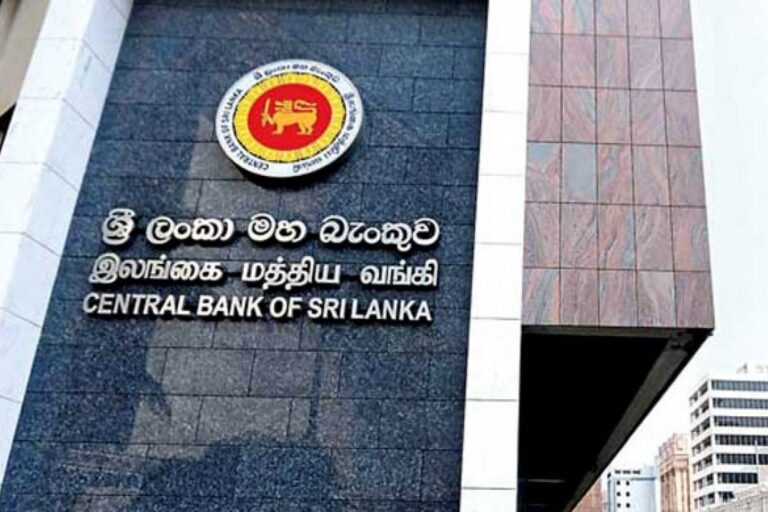
However the CBSL Governor on the 1 st of January showed scant interest to protect the SMEs. He said no one must be allowed to play with the bank deposits. Critics after January 1 st poorly planed interview of the governor said the governor must first learn both banking and central banking. First, banks lend in book entries by creating deposits, not lending out of deposits received. Second, central bank’s responsibility is not the protection of depositors. He is trying to create an unnecessary depositor panic by misleading the public.  The Central Bank governor also said Public funds would only be utilised as the last resort to meet the recapitalisation requirements of the banking sector to ensure stability within the financial system. They pointed out that a Bank’s shareholders should be doing that in the first place. It is not the tax payers. That clearly showed the CBSL governor lacked the basic understanding of how banks are financed as the regulator of the banking system. Furthermore they pointed out the Central bank should be a monetary organization and not be a organization working on behalf of banks. If central bank is working for banks, they should get their salaries from banks. Not use the tax money and talk on behalf of banks.

Public Opinion

Tania Abeysundara Head of the SME Organization stated that the CBSL Governor had orchestrated a scenario leading to the country’s declaration of bankruptcy unilaterally , hindering the functioning of businesses. She further accused the Governor of now blaming entrepreneurs for colluding. “There are Rs. 1.2 trillion non-performing loans solely due to the dire situation created by the CBSL Governor pushing interest to record levels.” she accused. The Chairperson remarked that the rise in taxes will only guarantee an escalation of non-performing loans to Rs. 2 trillion in the coming days. “Will these loans not come under the Parate Law? Who will be held responsible?” she asked. She argued that the Parate Law does not safeguard the interests of the people but rather serves to protect the banks. However according to bankers If the Parate Rights are taken away, banks will be extremely selective in lending and the availability of finance will be to a narrowing segment of entrepreneurs, resulting in credit to the private sector shrinking. So it is up to the independent Central Bank to act sensibly and perform their role in the best interest of the country .

Eastern Province makes history with inaugural Jallikattu during early Pongal celebration

0

January 07, Colombo (LNW): The harvest festival of Pongal, traditionally celebrated by Tamils worldwide, unfolded a week early this year in Sri Lanka’s Eastern Province, India’s Karnataka-based Deccan Herald reported.

The region made history by hosting its inaugural Jallikattu, a bull-taming sport, marking a significant departure from its roots in Tamil Nadu.

Eastern Province Governor Senthil Tondaman and the Tourism Bureau orchestrated the event, drawing the participation of over 200 bulls and 100 bull tamers.

Enthusiasts began queuing up at Trincomalee’s Sambur public playground as early as 7 am to witness the spectacle firsthand.

Thondaman inaugurated the event, where a temple bull was the first to charge through the vaadivaasal into the arena, prompting a flurry of young men attempting to tame it.

More than 200 adorned bulls, including those raised by Tondaman’s family, were successively released, with victorious tamers rewarded with household appliances such as mixer grinders, rice cookers, and ceiling fans.

Vaadivaasal, the narrow passage through which bulls enter for taming, facilitated the smooth progression of the event.

Although ethnic and plantation Tamils celebrate Pongal annually, Jallikattu has not traditionally been part of the harvest festival. This marked the first occurrence of the sport in Sri Lanka.

P Mathan, Chairman of the Eastern Province Tourism Bureau, revealed that over 5,000 participants engaged in the historic Jallikattu event.

Experts from Tamil Nadu and members of the Jallikattu Protection Committee collaborated with local organisers, ensuring the event’s successful execution, with the Animal Husbandry department overseeing the bulls’ fitness for participation.

Jallikattu, celebrated with fervor in various Tamil Nadu districts during the Tamil month of Thai (mid-January to mid-February), took on a novel dimension in Sri Lanka’s Eastern Province this year.

SL welcomes over 25k tourists in first four days of 2024: Russian, Indian visitors lead influx

0

January 07, Colombo (LNW): During the initial four days of this year, Sri Lanka experienced an influx of more than 25,000 tourists, the Sri Lanka Tourism Development Authority (SLTDA) announced.

From January 1st to the 4th, a total of 25,619 tourists visited the country, with the largest contingent of 5,060 arriving from Russia, followed by 3,333 from India.

The SLTDA further noted a considerable number of tourists arriving from diverse countries, including Germany, Britain, Australia, China, France, Netherlands, and the United States.

It’s worth highlighting that, in the preceding year, Sri Lanka recorded a total of 1,487,303 tourist arrivals.

This data illustrates the ongoing global interest in Sri Lanka as a tourist destination, contributing significantly to the country’s tourism sector.

SL cricketers transition to roles in Police, appointed as Chief and Police Inspectors

0

January 07, Colombo (LNW): Four Sri Lankan cricketers have transitioned to roles within the Sri Lanka Police after their stint with the Police Cricket Club since the previous year.

Notably, Kusal Janith Perera and Chamara Silva have assumed positions as Chief Police Inspectors, while Ashen Bandara and Nuwan Pradeep have taken on roles as Police Inspectors.

These cricketers, who were part of the Sri Lanka Police Cricket team that achieved joint champion status in the recent Sri Lanka Cricket first-class competition, were officially appointed to their new roles.

Public Security Minister Tiran Alles presented the official appointment letters to the four players, with the ceremony witnessed by Acting IGP Deshabandu Tennakoon.

Government vows swift resolution of business community challenges in Northern Province

0

PMD: President Ranil Wickremesinghe assured on Saturday (06) that comprehensive solutions will be presented to tackle the challenges faced by businessmen in the Northern Province within the next two months.

He emphasised that officials from pertinent Ministries will conduct visits to the Northern Province in the coming two weeks to evaluate the situation. The government plans to establish a dynamic agency specifically dedicated to addressing the issues encountered by the business community in the province.

President Wickremesinghe conveyed these statements during a discussion held earlier today at the Jaffna District Secretariat, where he engaged with industrialists, fishermen, and farmers of the Jaffna District.

Approximately 300 representatives from the industrial, fishing and farming sectors in the Northern Province are actively engaged in this event, wherein they presented their challenges and proposed new ideas related to their respective industries to President Ranil Wickremesinghe.

President Wickremesinghe, attentively addressing the concerns raised, promptly initiated actions to provide solutions to certain issues.

Notably, the industrialists have appealed to the President for the establishment of an industrial zone in the Northern Province. In response, the President has directed officials to explore suitable land areas for this purpose.

Additionally, President Ranil Wickremesinghe has directed officials to expedite the establishment of a Provincial Business Promotion Centre in the Northern Province.

Acknowledging the crucial role of business development in the province’s active contribution to the national economy, the President has instructed officials to swiftly address the challenges hindering this progress.

Simultaneously, President Ranil Wickremesinghe engaged in a meeting with the academic staff of Jaffna University at the Jaffna District Secretariat, today (06).

Jaffna University Vice-Chancellor, Prof. S. Srisatkunarajah, along with the academic staff, including senior lecturers of the university, was in attendance. During the meeting, a comprehensive development plan outlining transformative changes for Jaffna University was presented to President Ranil Wickremesinghe.

President Ranil Wickremesinghe proposed a comprehensive redesign of the university system, particularly emphasising technological advancements. He urged the implementation of diverse approaches to ensure English proficiency among all university students, advocating for the use of distance learning methods.

Acknowledging the challenge of human resources, the President suggested tapping into the diaspora, including retired individuals, and welcoming foreign lecturers who express interest. Support, such as tickets and residential options, would be provided based on individual preferences.

The President stressed the importance of understanding the expectations of those willing to contribute, and measures have already been introduced to facilitate their involvement. He encouraged clear communication of specific requirements to ensure a seamless process.

To address the human resource shortage, the President proposed exploring the option of attracting non-diaspora lecturers, possibly from Sri Lanka or other countries like India (Bangalore) or the United States. External lecturers would be engaged for a defined period, with Jaffna leading the initiative for other universities to follow.

The President also suggested considering agreements with other universities, allowing them to provide lecturers as needed. This collaborative effort would rely on the commitment of each university to implement these measures successfully. In terms of foreign students, universities were encouraged to decide on enrolment targets based on their willingness and capacity.

Bangladesh: general elections put journalists at risk

0

With the general elections taking place on 7 January, Reporters Without Borders (RSF) condemns the lack of measures to protect Bangladeshi reporters and presents its recommendations so that they can work in safety.

RSF is concerned about the safety of journalists in a particularly tense climate, as some 120 million Bangladeshis are called to the polls on Sunday 7 January to elect new members of parliament. In recent months, attacks against journalists have multiplied, fostering a climate of terror favourable to the regime in power: some have been murdered, others imprisoned and dozens of reporters brutalised while reporting.

The government is preparing for a tense election, with the army deployed since 3 January for a period of at least a week to ensure, according to the authorities, that the elections are “free”, “fair”, “impartial” and “peaceful”. The main opposition party, the Bangladesh Nationalist Party (BNP) – 20,000 of whose activists have been arrested and 88,000 others are facing legal action – decided to boycott the event in view of what it considers to be “another electoral sham”. RSF has made a number of recommendations to journalists to prepare themselves against the risk of violence.
 

“The current government is ending its term of office as it began five years ago. By almost systematically censoring all critical information, turning a blind eye to violence against journalists and making abundant use of propaganda, it is confirming that it has lost all credibility when it comes to democracy. RSF calls on Prime Minister Sheikh Hasina and her party to end their harmful grip on information. We recommend that journalists take several steps to cover these elections in the safest possible way.”

South Asia desk
Reporters Without Borders
 

Since its controversial victory in the last elections, the government of Sheikh Hasina (of the Awami League, the centre-left party in power since 2009) has paid no heed to the repeated warnings of numerous press freedom organisations and associations. Sheikh Hasina has been listed by RSF as one of the 37 press freedom predators in 2021

In 2023, three journalists were murdered with total impunity. Six media professionals are still in prison in the country, while dozens of others have been the victims of violence, particularly after publishing articles on government corruption or certain local potentates.  

In recent months, election candidates, militias and student wings of the ruling party, as well as radical religious groups, have also stepped up their attacks on journalists, while the government looks on. During an opposition demonstration that degenerated on 28 October, around thirty journalists were attacked by demonstrators, both opponents and supporters of the government, as well as by the police.  

The reign of fear

Few journalists still believe in a positive future for press freedom in the country, as Zulkarnain Saer Khan, a Bangladeshi journalist living in exile in London, told RSF: Journalists bringing forth the wrongdoings of the current kleptocratic, autocratic government are never safe. When there is no press freedom, when anyone can be apprehended on trumped-up charges, […] there really isn’t much hope.” In March 2023, in retaliation for one of his articles denouncing corruption in the Prime Minister’s entourage, his own brother, who had remained in Bangladesh, was brutally beaten in front of his house by four unidentified individuals.

Another major threat to journalists is online censorship. Last September, the Bangladeshi authorities adopted a new cybersecurity law (CSA) that makes it possible to prosecute journalists and bloggers who criticise the government online. RSF also fears that communication networks will be cut off, as the government did during the previous elections at the end of 2018.

Security measures and recommendations

Given the lack of security measures for journalists wishing to cover the elections, RSF advises them to follow the following recommendations:
 

  • If you are in the field, call your family members at regular intervals and let them know where you are.
  • In the event of a check, clearly identify yourself and present a valid press card or letter of accreditation.
  • If possible, activate and use: a tracking device such as an Airtag hidden in your clothes or the “Google activity” feature by giving a trusted third party access to your Google account. In the event of an abduction, these tracking devices will make it possible to identify your location.
  • As far as possible, equip yourself with safety helmets, protective glasses, bullet-proof waistcoats and gas masks. A medical kit is also recommended.
  • Identify the nearest emergency medical services in advance, so that you can obtain rapid treatment in the event of injury.
  • To anticipate the loss, theft or seizure of your equipment, remember to use a password manager and activate double authentication (2FA) if possible on all your accounts. If you suspect that your devices are being spied on, don’t hesitate to ask for help from RSF’s Digital Security Lab, which can be contacted at this address: [email protected]
  • Share the emergency contact details of RSF or other trusted organisations, as well as those of a lawyer, with members of your family so that they can contact them in an emergency.
     

To protect journalists in high-risk areas, RSF has also published a comprehensive Practical Guide to the Safety of Journalists, which can be consulted at this link.

REPORTERS SANS FRONTIÈRES/ REPORTERS WITHOUT BORDERS