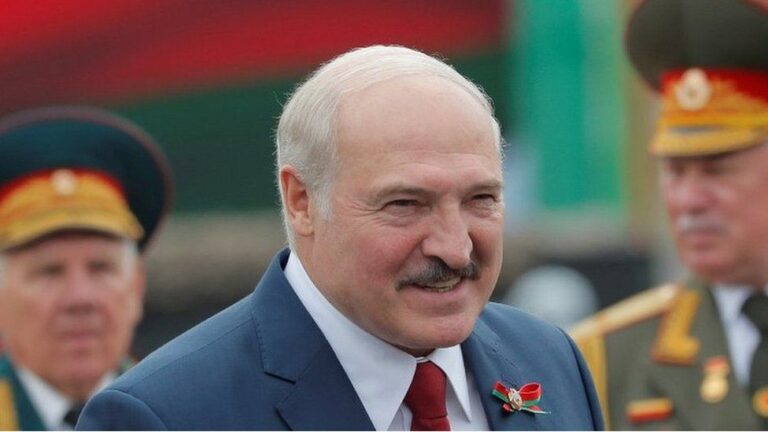
March 25, Colombo (LNW): Belarusian President Aleksandr Lukashenko conveyed warm wishes to President Ranil Wickremesinghe of Sri Lanka on the occasion of his 75th birthday, reported the press service of the Belarusian leader.
In his message, President Lukashenko commended Sri Lanka’s ongoing economic reforms aimed at enhancing the well-being of its citizens, affirming Belarus’s steadfast support for these endeavors.
Acknowledging the existing potential for bilateral cooperation, President Lukashenko expressed confidence in elevating Belarusian-Sri Lankan relations to greater heights.
He highlighted Belarus’s expertise across various sectors, including mechanical engineering, metallurgy, wood processing, electric power, petrochemicals, and pharmaceuticals.
President Lukashenko underscored Belarus’s readiness to collaborate with Sri Lanka in bolstering food security, providing agricultural machinery, and sharing technological advancements.
The congratulatory message underscores the mutual commitment of both nations to strengthen ties and explore new avenues for cooperation, reflecting a shared vision for sustainable development and prosperity.
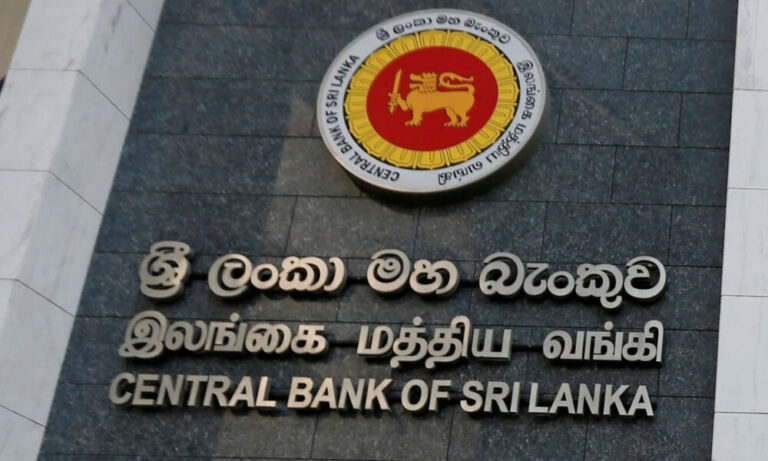
March 25, Colombo (LNW): The Central Bank (CB) is set to reevaluate the regulatory sandbox framework, considering adjustments to ease certain stringent regulations, following a lack of significant engagement from fintech players over the past four years.
Manisha Wimalasuriya, Additional Director of the CB Payments and Settlements Department, revealed that the CB has received approximately six applications thus far, with the most recent one focusing on artificial intelligence (AI).
Speaking at the BankTech Asia 2024: Colombo Series event last week, Wimalasuriya highlighted challenges faced by fintech firms, noting that the requirement for an audit report posed financial burdens.
Fintechs were hesitant to invest in costly audits without certainty of market release for their products.
The CB initially introduced the regulatory sandbox as a platform for fintech experimentation, aiming to facilitate innovative financial solutions that could be deployed to the market after thorough testing and approval.
Objectives included fostering efficient financial intermediation, enhancing financial inclusion, promoting digitisation to reduce cash reliance, improving accessibility and security of financial services, and mitigating regulatory uncertainties for fintech firms.
Acknowledging that certain requirements, such as third-party audit reports, hindered fintech participation, Wimalasuriya emphasised the need for adjustments to encourage experimentation in the sandbox.
Participants are presently mandated to provide verification of test results conducted by a reputable independent third-party auditor alongside their sandbox application.
This requirement ensures that the proposed solutions have undergone comprehensive testing.
Considering alternative approaches, Wimalasuriya mentioned India’s Reserve Bank (RBI), which only necessitates Proof of Concept (POC) from participants.
She suggested that the CB may consider a similar approach, taking cues from India’s successful emergence as a hub for fintech innovation and entrepreneurship facilitated by its FinTech Sandbox in recent years.
March 25, Colombo (LNW): Sri Lanka’s official unemployment rate fell to 4.3 per cent in the final quarter of last year, down from 4.7 per cent in the preceding quarter, as the economy experienced growth during the last three months of the year, according to data released by the Census and Statistics Department.
The fourth-quarter growth rate, expanding at roughly three times the pace of the third quarter, marked a significant rebound for Sri Lanka’s Gross Domestic Product (GDP). GDP grew by 4.5 per cent in the final quarter of last year, compared to a modest 1.6 per cent growth in the third quarter.
This upturn followed a period of economic strain exacerbated by a foreign currency shortage reaching critical levels in early 2022.
With the country now generating $825 million monthly from both remittances and tourism, signs of recovery suggest that the worst of the economic crisis may be behind.
Individuals who had remained on the sidelines due to pandemic-induced economic disruptions and subsequent financial challenges over the past two years are beginning to find opportunities in the labour market.
Many companies, which had either downsized their workforce or halted hiring activities during the recent crises, are now resuming recruitment efforts as economic conditions improve.
However, over the past two years, Sri Lanka experienced significant emigration, particularly among professional categories, a trend not as pronounced before the economic crisis of 2022.
Consequently, companies restarting their hiring processes may encounter a talent shortage in the job market.
An official unemployment rate of 4.3 per cent indicates near full employment and suggests tight labor market conditions.
Additionally, the Labour Force Participation Rate (LFPR), representing the proportion of people employed or actively seeking work relative to the working-age population, declined further to 47.1 per cent by the end of the fourth quarter of last year, down from 48.8 per cent in the third quarter and 49.8 per cent in 2022.
Comparatively, in the Organisation for Economic Co-operation and Development (OECD), the Labour Force Participation Rate (LFPR) stands above 60 per cent.
March 25, Colombo (LNW): In a significant development, the Justice Minister has issued an extraordinary gazette notification authorising the use of the English language for all record-keeping and proceedings within the Commercial High Courts.
This decision, which has received approval from the Cabinet of Ministers and is in line with Article 24(4) of the Constitution, was announced by Justice Minister Wijeyadasa Rajapakshe through the gazette notification.
It grants permission for all legal matters, including those related to commerce, companies, admiralty, and arbitration, to be conducted in English within the Commercial High Court.
The decision was made in consideration of the predominant use of the English language in commercial activities and transactions, as noted by the Cabinet.
Recognising the significant costs and time associated with translating commercial content into Sinhala, this move aims to streamline proceedings and enhance efficiency within the Commercial High Courts.
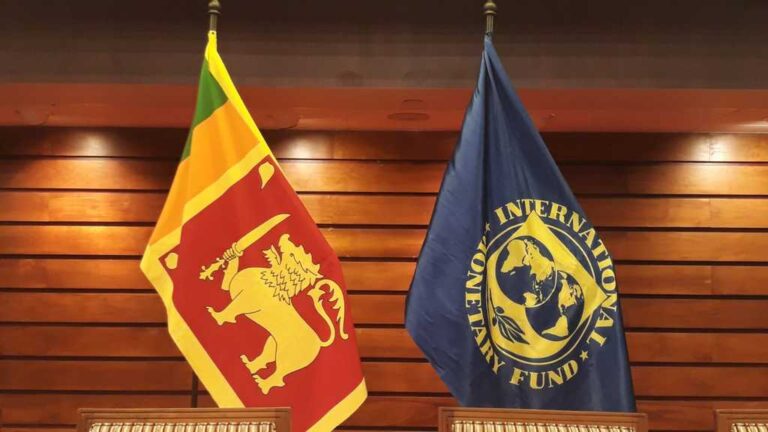
March 25, Colombo (LNW): In response to concerns regarding the potential disruption of the current programme with the International Monetary Fund (IMF) in the event of a change in government, officials are devising a strategy to enact an economic transformation law.
This legislative measure aims to safeguard the sustainability of the project despite any political transitions, as stated by a minister.
The international community, notably Western nations, has stressed the significance of maintaining continuity with the economic reform programme supported by a 4-year Extended Fund Facility (EFF) arrangement.
Approved by the IMF Executive Board on March 20, 2023, the EFF arrangement entails a total allocation of US$3 billion.
In its latest assessment, the IMF, which conducted a mission, acknowledged the authorities’ commendable progress in implementing an ambitious reform agenda under the EFF.
This progress has yielded notable outcomes, including rapid disinflation, robust reserve accumulation, and initial signs of economic growth, all while preserving financial system stability.
However, the two primary opposition parties, the National People’s Power (NPP) and the Samagi Jana Balawegaya (SJB), have pledged to renegotiate the IMF agreement if they secure power in future elections.
With the Presidential election scheduled for later this year and ongoing discussions about a possible snap general election, there is heightened political uncertainty.
State Minister of Finance Shehan Semasinghe disclosed plans to introduce the new bill to Parliament in May of this year.
Describing it as an economic transformation law, Semasinghe emphasised that its enactment would provide legal backing to the programme, ensuring its sustainability.
Once enacted, the law would be binding on any ruling party, mandating its implementation regardless of political changes.
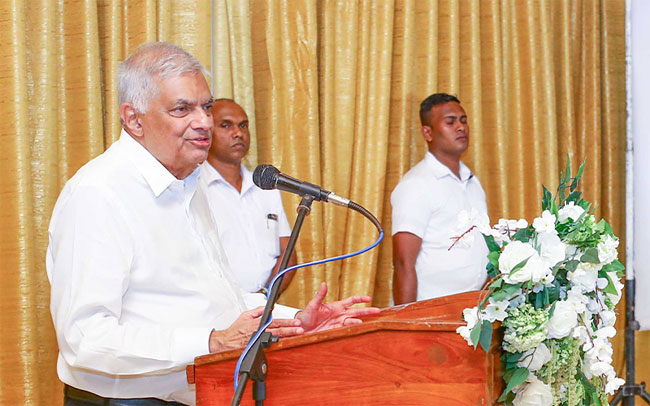
March 25, Colombo (LNW): President Ranil Wickremesinghe articulated his commitment to fostering comprehensive discussions on advancements in healthcare services, underscoring the importance of integrating modern technology to elevate medical facilities.
Addressing the Government Medical Officers Association (GMOA), the President reaffirmed the government’s dedication to empowering individuals for societal progress, with healthcare playing a pivotal role.
He encouraged active participation from medical professionals to shape a forward-looking healthcare framework and expressed readiness for further dialogues on leadership and government involvement.
The President made these remarks during a meeting with the GMOA held at the Sudu Araliya Hotel in Polonnaruwa, coinciding with the association’s one-day workshop on “Leadership and Skills Development” on Saturday (23).
Following an impromptu invitation from the association during his nearby official engagement, the President promptly joined the workshop venue for a cordial exchange, reported the President’s Media Division (PMD).
During the interaction, President Wickremesinghe delved into the historical evolution of Sri Lanka’s free healthcare system, tracing its origins from colonial to post-colonial eras.
He expressed concern about its adaptability to modern medical advancements and evolving societal needs, stressing the importance of strategic planning to shape the healthcare landscape for the foreseeable future.
Highlighting the intersection of economic development and resource allocation, the President underscored healthcare as a top priority, particularly amidst technological transformations.
He raised questions about hospitals’ preparedness to embrace innovations such as Artificial Intelligence and adapt to changing healthcare paradigms.
President Wickremesinghe reiterated the government’s unwavering commitment to ensuring universal access to quality healthcare, calling for pragmatic discussions devoid of political agendas.
He advocated for collaborative efforts aimed at enhancing healthcare accessibility and quality.
The event was attended by Senior Advisor to the President on National Security and Chief of Presidential Staff Sagala Ratnayaka, Secretary of the Government Medical Officers’ Association Dr. Haritha Aluthge, and other prominent members.
March 25, Colombo (LNW): Several spells of showers may occur in Eastern and Uva provinces and in Polonnaruwa district, with showers or thundershowers being expected at several places in Western, Sabaragamuwa, Southern and Central provinces during the afternoon or night, the Department of Meteorology said in its daily weather forecast today (25).
Misty conditions can be expected at some places in Central, Sabaragamuwa and Uva provinces and in Kalutara, Galle and Matara districts during the morning, the statement added.
General public is kindly requested to take adequate precautions to minimise damages caused by temporary localised strong winds and lightning during thundershowers.
Marine Weather:
Condition of Rain:
Showers or thundershowers will occur at a few places in the sea areas off the coast extending from Trincomalee to Hambantota via Batticaloa. Showers or thundershowers may occur at a few places in the sea areas off the coast extending from Colombo to Hambantota via Galle during the afternoon or night.
Winds:
Winds will be Northeasterly and wind speed will be (20-30)kmph. Wind speed may increase up to 40 kmph at times in the sea areas off the coasts extending from Puttalam to Kankasanthurai via Mannar.
State of Sea:
The sea areas off the coasts extending from Puttalam to Kankasanthurai via Mannar can be moderate. Other sea areas around the island will be slight. Temporarily strong gusty winds and very rough seas can be expected during thundershowers.
Meanwhile, heat index, the temperature felt on human body is expected to increase up to ‘Caution level’ at some places in Western, North-western, Southern provinces and Mannar, Vavuniya and Anuradhapura districts, the Department’s Natural Hazards Early Warning Centre said.
The public is urged to stay hydrated and take breaks in the shade as often as possible, check up on the elderly and the sick, never leave children unattended, limit strenuous outdoor activities, find shade and stay hydrated, and wear lightweight and white or light-colored clothing.
March 24, Colombo (LNW): In the face of widespread public pressure including parliamentarians and civil society activists, the Central Bank senior management has decided to revisit recent salary revision
The recent salary revision for the period 2024-2026 made by the Central Bank of Sri Lanka (CBSL), post the collective agreement between the Governing Board and the employee representatives, created much discourse among the public.
In response to this situation, a majority of the senior management and professionals of CBSL madea collective decision to consider a revision to their salaries.
This decision was communicated to the Committee on Public Finance (COPF) on 16th March 2024, prior to and independent of the recommendations made by COPF.
The COPF Chairman has meantime recommended that the collective agreement to increase salaries of CBSL staff be reviewed by an independent committee, entailing revisions across all employee categories of CBSL.
The CBSL, as the apex financial institution in the country, functions autonomously using the powers vested to it, previously under the Monetary Law Act, No. 58 of 1949 and now under theCBSL Act, No. 16 of 2023.
The CBSL is held accountable in achieving and maintaining domestic price stability and securing stability of the country’s financial system.
To achieve this critical National mandate, the CBSL employs many experienced and professional staff under its wing and the recent salary revision was made with the intention to retain itsexperienced staff in order to function at its full capacity
The Committee on Public Finance (CoPF) Chairman Dr. Harsha de Silva said the Central Bank informed the Committee that it accepts all recommendations in the CoPF report on the salary revisions.
The CoPF requested President Ranil Wickremesinghe to appoint a Committee to review the CBSL salaries, until which the salary increases will be deferred for next month.
In a statement released today, the CBSL emphasized its commitment to transparency and accountability in its operations.
The Governing Board of the CBSL, at a meeting held on 21.02.2024, directed the Governor to formally request an opportunity to address Members of Parliament through an appropriate parliamentary committee.
This request, made in accordance with Section 80 (2) (b) of the Central Bank of Sri Lanka Act No. 16 of 2023, aims to provide clarity on the process and rationale behind the recent remuneration revision, which was approved under the triennial Collective Agreement with Trade Unions covering the period 2024-2026.
On 22.02.2024, the Governor of CBSL submitted a written request to the President, who also serves as the Minister of Finance and acts as the conduit through which CBSL communicates with Parliament.
March 24, Colombo (LNW): The Sri Lanka Association of Software and Service Companies (SLASSCOM) recently concluded its much-anticipated Compensation and Benefits Survey 2023, shedding light on critical HR trends and issues within the Sri Lankan IT/ BPM industry.
By examining various job positions and their corresponding compensation structures, the survey aims to equip companies with valuable insights to attract and retain top talent in a competitive market.
The report provides a comprehensive analysis of employee retention strategies, and salary structures, adopted by companies in these sectors, across various roles within the industry.
Furthermore, the survey widens its lens with a comprehensive Benefit Analysis, and the diverse range of perks and advantages provided to employees.
This section goes beyond the traditional scope of salary considerations, offering a holistic view of the incentives that contribute to employee satisfaction and retention in the dynamic landscape of the Sri Lankan IT and BPM industries.
In addition to these core topics, the survey includes appendices with detailed analysis and lists of participant organizations, offering a broader perspective on HR practices and compensation structures in the Sri Lankan IT and BPM industries. Key findings of the survey highlights a growing emphasis on flexible benefits and wellness initiatives, signalling a shift in workforce priorities in the post-pandemic era.
The report emphasizes the significance of adapting to these trends for businesses looking to maintain a motivated and engaged workforce.
One of the primary benefits of the survey is its provision of detailed statistical data, including market mean, median, and percentiles for various job positions in the IT / BPM sectors, as well as support functions.
This data will be essential for companies to benchmark their compensation practices against industry standards, ultimately aiding in informed decision-making.
Exclusive access to the survey report at a special rate is offered to SLASSCOM members, while both local and international companies can avail themselves of this valuable resource. The report is compiled by Deloitte Advisory Services (Private) Limited.
The SLASSCOM Compensation and Benefits Survey 2023 serves as a vital resource for companies seeking to navigate the IT/BPM landscape in terms of talent management, providing actionable insights to foster a competitive edge in the industry.