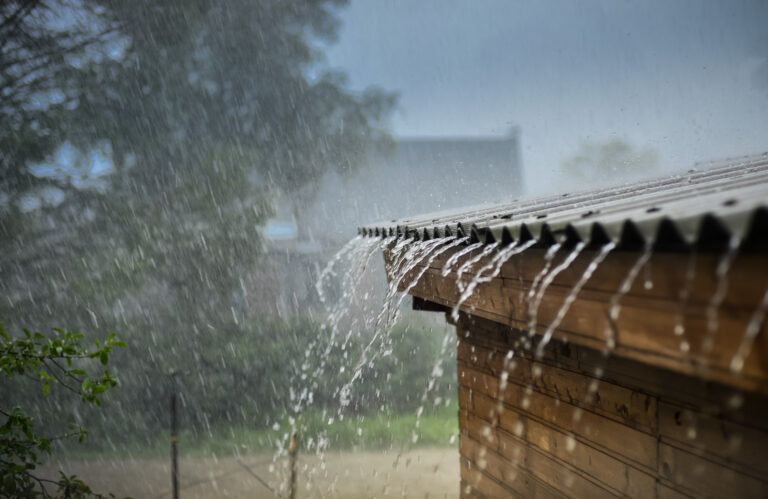
March 11, Colombo (LNW): A few showers are likely in Eastern province and in Hambantota district, and showers or thundershowers may occur at a few places in Ratnapura, Kalutara, Galle and Matara districts in the evening or night, the Department of Meteorology said in its daily weather forecast today (11).
Mainly dry weather will prevail in the other areas of the island, the statement added.
Misty conditions can be expected at some places in Western, Sabaragamuwa and Uva provinces and in Galle and Matara districts during the morning.
Marine Weather:
Condition of Rain:
Showers or thundershowers may occur at a few places in the sea areas extending from Hambantota to Batticaloa via Pottuvil.
Winds:
Winds will be north-easterly and wind speed will be (20-30)kmph. Wind speed may increase up to (40-45) kmph at times in the sea areas off the coasts extending from Colombo to Kankasanthurai via Puttalam and Mannar and from Matara to Pottuvil via Hambantota.
State of Sea:
The sea areas off the coasts extending from Colombo to Kankasanthurai via Puttalam and Mannar and from Matara to Pottuvil via Hambantota can be fairly rough at times.
This deflection flies in the face of the facts. As Reuters reported in the first six weeks of the war, hospital morgues sent figures to the health centre which were then collated. Excel spreadsheets were used to keep track of names, ages and ID numbers, which were then transmitted to the Palestinian health ministry in Ramallah. As the aerial devastation continues it has become harder to keep track as vital infrastructure has been destroyed and health workers have been killed by the indiscriminate and sometimes targeted bombing.[i] It should be noted that the figures that were collated after earlier aerial bombardments were seen as accurate. In fact, the current figures could be a gross underestimate, as identifying bodies buried under tons of rubble has now become almost impossible.
Oxfam estimates that the Zionist military machine is killing 250 Palestinians a day with many more prone to hunger disease and cold, which could like in Lanka could kill many civilians. It is estimated that this carpet bombing of civilians is the highest daily figure for wars anywhere in the world in the last 24 years. Even the horrific Syrian conflict (96 deaths per day) Sudan (51.6) Iraq (50.8). It is considerably greater than the carnage in Ukraine (43.9) and trouble plagued Yemen (15.8)[ii]
Amnesty International early in the conflict began collating and analysing data from satellite imagery, verified photos, and investigated air bombardment carried out by the Zionist forces between October 7 to 12 and investigated five cases of bombing which wiped out whole families. It came to the conclusion in each of these cases internal international humanitarian law was violated by a failure to distinguish between civilian and military targets.
In their stated intent to use all means to destroy Hamas, Israeli forces have shown a shocking disregard for civilian lives. They have pulverised street after street of residential buildings killing civilians on a mass scale and destroying essential infrastructure, while new restrictions mean Gaza is fast running out of water, medicine, and electricity.
It has decimated whole families, leaving only memories and rubble in its wake.[iii] At the time of writing the death toll is over 26,000, with around 60,000 wounded and the vast majority facing starvation and lack of water, medicine and shelter. This continual pressure and the lack of a political and economic solution makes the possibility of a non-violent response fade by the day.
What makes a person join the LTTE or Hamas? In Jaffna, which was under the control of the Sinhalese military, a mother of a female member of their elite Black Tiger Unit observed: ‘We could not separate ourselves from the war. We lived inside it’.[iv].
For many there is an intergenerational perspective on whether to just survive or fight back. As the mother of the cadre said: ‘When a child experiences too much sadness it can feel no more. We tolerate and bear everything. Not all children accept suffering.’ Her daughter: ‘Father was killed in the middle of Jaffna town. He is going to work in the post office, he was a peon. If I did not join, people will be pushed into slavery.’
Critics can dispassionately point out that at the time she made the statement there had been well over 300 suicide missions. These missions caused deaths and terror and hardened opposing opinion. But what good would such a hectoring, patronising and rarified tone achieve? Instead of labelling her a terrorist and a fanatic, we must first try and empathise with her very real sorrow, pain and sense of injustice and lack of rights. Like the millions of people around the world who march in solidarity with the Palestinians all one can do is listen to the sorrow, pain, her very real sense of injustice and lack of rights. These are important matters which we must first deal with, instead of imposing labels on the marginalised and the dispossessed. To do so the respective unitarist states of Lanka and Israel must be democratised from the “river to the sea” with equal rights for all. If this is not done the vicious cycles of brutal discrimination, atrocities and horrific counter offenses becomes the norm. Context is everything and the above narrative begs the question who are the real terrorists?
Conclusion
The International Court of Justice (ICJ) in a judgement of 15 to 2 against the Zionist state stated that there is a plausible case for genocide against Palestinians. The targeting of civilians, hospitals, schools, UN compounds, mosques, universities buttress the case. The ICJ also argued that statements made by the current Israeli president and members of cabinet, combined with the actions of the military, can be construed as genocidal intent. The beleaguered prime minister Netanyahu then let the cat out of the bag and unequivocally stated that from the river to the sea the land is for Jewish Zionists only. Both these statements have put the Zionist project in Palestine under a critical microscope. Miraculously, after this expose, the Zionist state came up with evidence that twelve workers from United Nations Relief and Works Agency for Palestine Refugees in the Near East (UNWRA) were involved in the October 7 attacks. Immediately, and without assessing the evidence, Australia, Britain, and the US withdrew aid, taking no account of the fact that UNWRA has sacked nine of the accused and has started an investigation. As mentioned, around 80 per cent of the population of Gaza are facing imminent starvation and their principal food source is UNWRA. The fact is that many of the claims that Israel has made about Palestinians are demonstrably false, not to mention the fact that it makes no sense to attack an organisation that employs around 13,000 people because of the alleged crimes of twelve of their workers. Barely mentioned is the fact that settler fanatics are trying to block vital food going to Gaza.[v] The Zionist state is yet to provide evidence to support their claims and the western countries who have withdrawn funding seem in no hurry to get the evidence unlike the UN.
Sadly, the majority of Israelis, if opinion polls are anything to go by, support the crushing of the Palestinians. But cracks in the “rules-based order” are starting to appear. Many senior bureaucrats and journalists in the West have signed a letter deploring their countries’ double standards when it comes to Israel.[vi]
In Sri Lanka, in 2022, it was clear that the economy was collapsing. The government had to go cap in hand to the International Monetary Fund to bail out the country. For many Lankans this was an eye-opener, as they discovered that the existential threat of the Tamils was not the cause of their misery. It was a combination of political and bureaucratic incompetence combined with corruption. Since being granted independence in 1948 the country has never been able to pay for its imports or expand its industrial base to a degree that could make the country economically viable. Instead, the politicians kept on borrowing, resulting in periodic crisis.
This time a group of young people coalesced in loose affiliations demanding the resignation of the government and structural change. This became known as the Aragalaya (the struggle in Sinhalese). It morphed into a mass protest movement and toppled the then President, forcing him to flee the country. This mass movement was open to all, but its loose structure was not a match for the state. Parliament appointed as an interim President a wily operator who had decades of experience in quelling protest and shifting the gaze of the populace to manufactured enemies. This he gradually did again, with arrests, imprisonment, and thuggery, aided by the legislative, administrative, and constitutional armoury built over decades to evade scrutiny and accountability. This suite of powers had been traditionally used against Tamils, left wing parties, journalists, civil rights activists, and trade unionists. It was now being used on ordinary people who might have in the past supported measures against what they presumed to be the ‘other’. An election will be held later this year and the disgraced political elite are preparing to return to power, blaming foreigners, minorities, and progressive political formations for the crisis which they themselves clearly caused. They seem to be clawing back some of their supporters, though whether they will succeed is still an open political question. [vii]
With regard to both the Zionist and the Lankan state, the international community has, for strategic, commercial, and political reasons, been lax and gullible. Neither the Zionist nor the Lankan state has ever been prevailed upon to change its behaviour. For how long is the international community[viii] going to accept their assurances (extending over decades) that they are democratic states and their enemies are the terrorists? For killing of the ‘others’ on an industrial scale and herding them into ghettos, the Zionist and Lankan states should both be in the dock.
10 March 2024
[i] Sawafta, Ali and Fick, Maggie, ‘How many Palestinians have died in Gaza? Death Toll explained’. Published December 9, 2023. Retrieved: https:// www.reuters.com/world/middle-east/how-many-palestinians–have-died-gaza-war-how-will-counting-continue.
[ii] ‘Daily Death Rate in Gaza higher than any other major 21st century conflict.’ Oxfam Press Release, 11 January 2024. Retrieved: https://www.oxfam.org/en/press-releases/daily-death-rate-gaza-higher-any-other-major-21st-century-conflict-oxfam
[iii] ‘Damning Evidence of war crimes as Israeli attacks wipe out entire families in Gaza.’ Amnesty, October 2023. Retrieved: https:// www.amnesty.org.latest news, 2023.10
[iv] All the conversations are from the documentary, Arnestad, B. and Daae, M. (2007) My daughter the terrorist. Snitt film Production.
[vi] ‘Grave Violations’: Western officials in unprecedented Gaza protest. The New Daily, February 2, 2024.
[vii] For a good overview see Dr Lionel Bopage’s recent interview on 3CR with Green Left Weekley Radio. The podcast is available at: https://www.3cr.org.au/greenleftweekleyradio/episode/behind-weapons-industry-australia-economic-crisis-sri-lanka-sovereignty.
[viii] It should be noted that the main backer of the Lankan state is China. In the UN the main countries blocking any change also include Russia, Cuba, and Venezuela. On the opposite camp are the ardent supporters of the Zionist state, Australia, Britain and the United States.
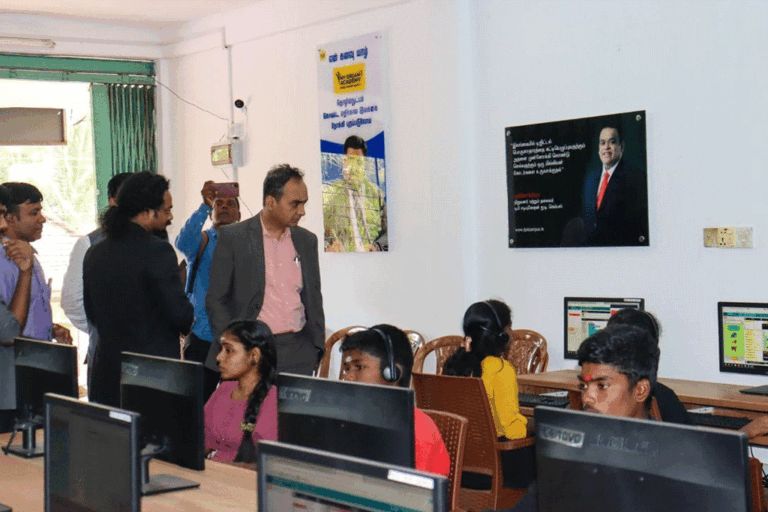
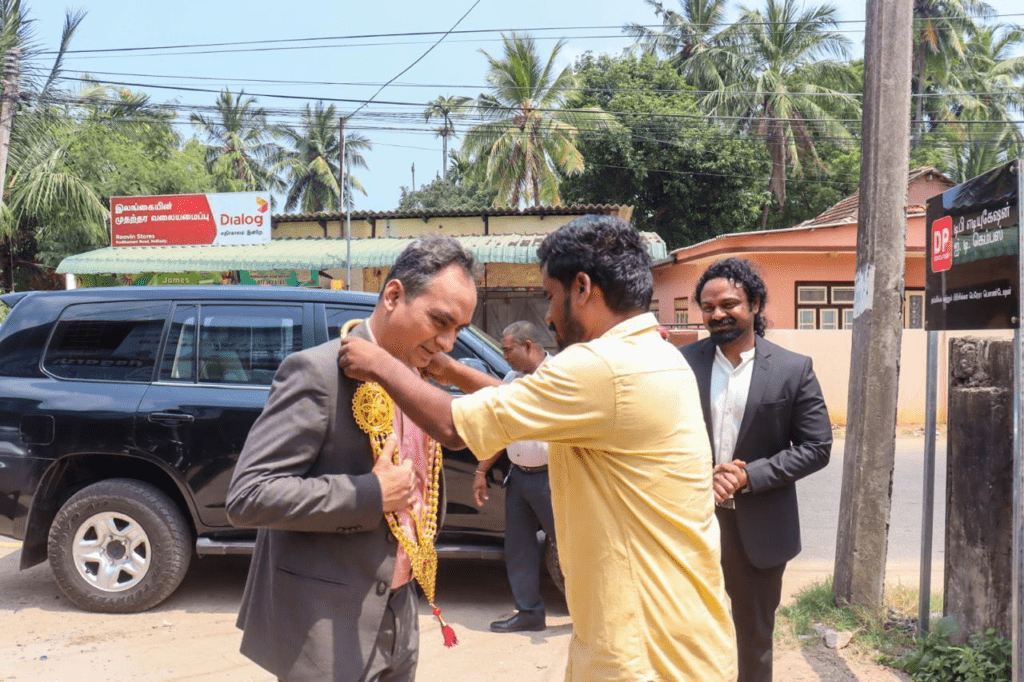
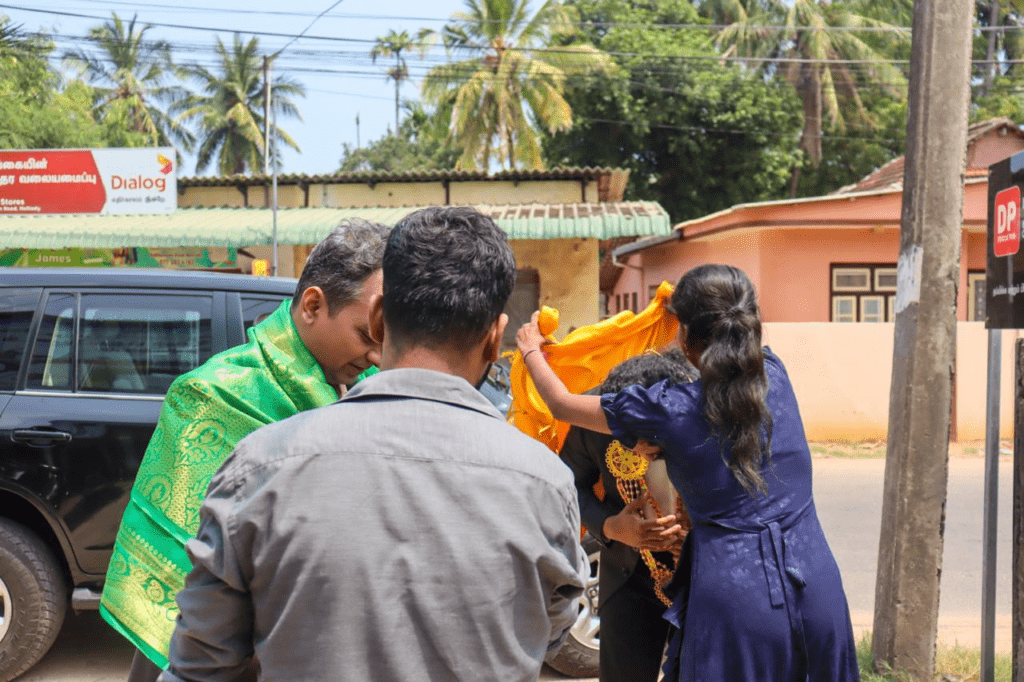
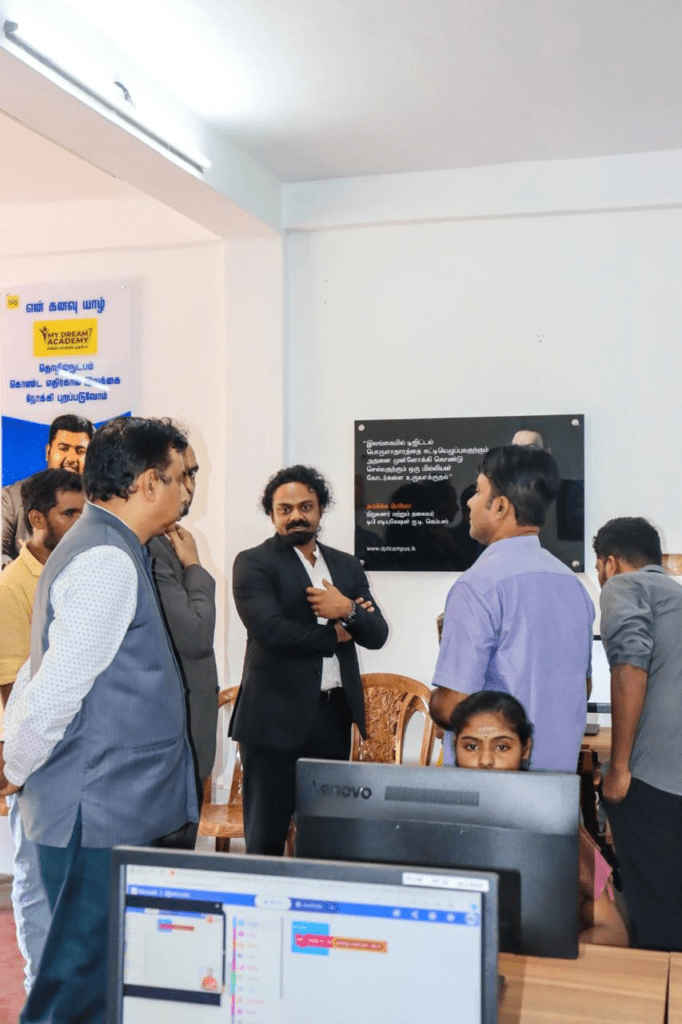
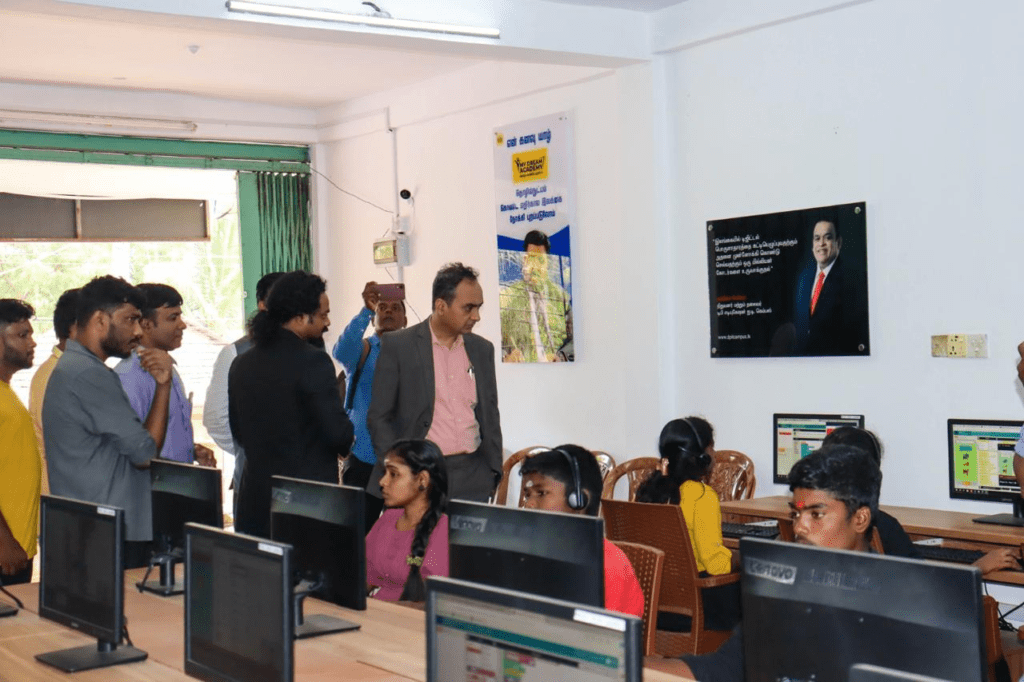
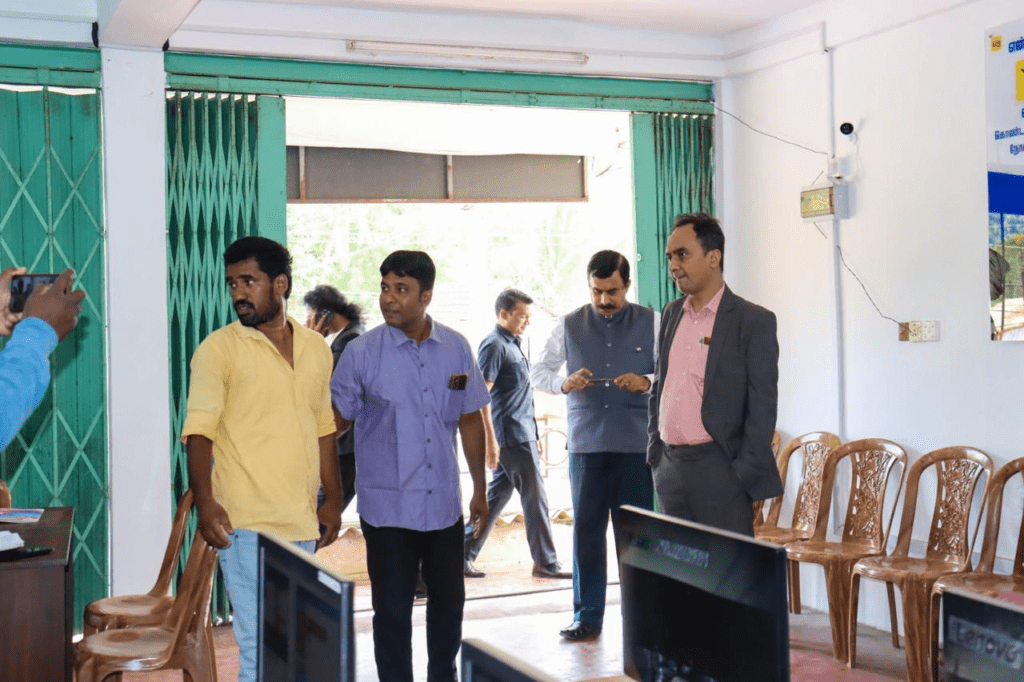
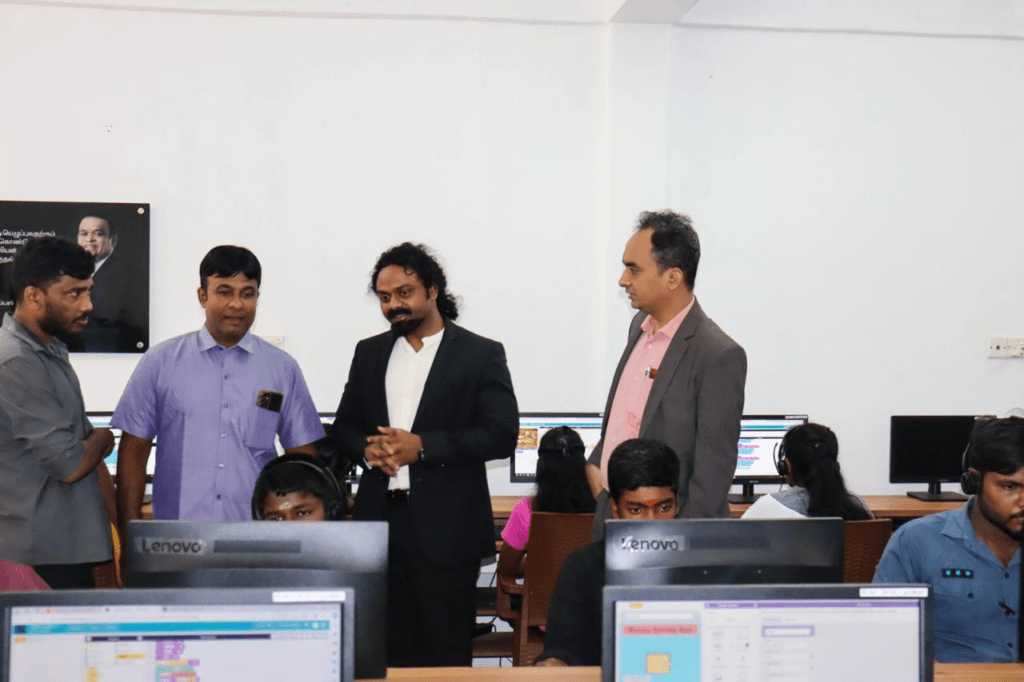
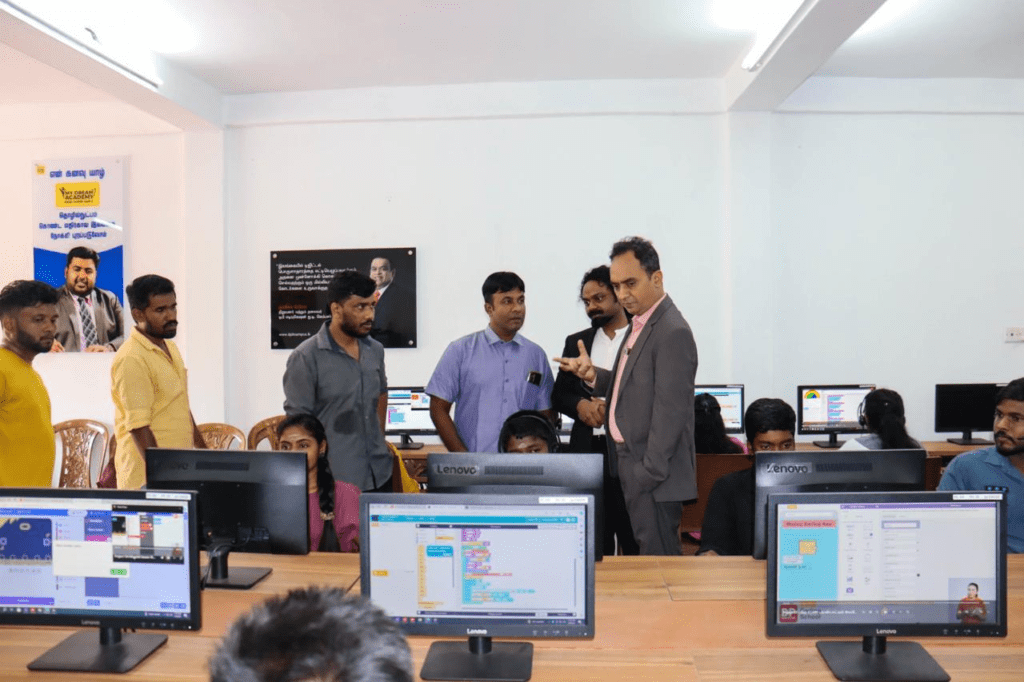
March 10, Jaffna (LNW): Sevithi Sai Murali, the Deputy High Commissioner of India in Sri Lanka, undertook a visit to the “DP Education IT Campus” branch situated in Nelliadi, Jaffna, on the 9th of the current month.
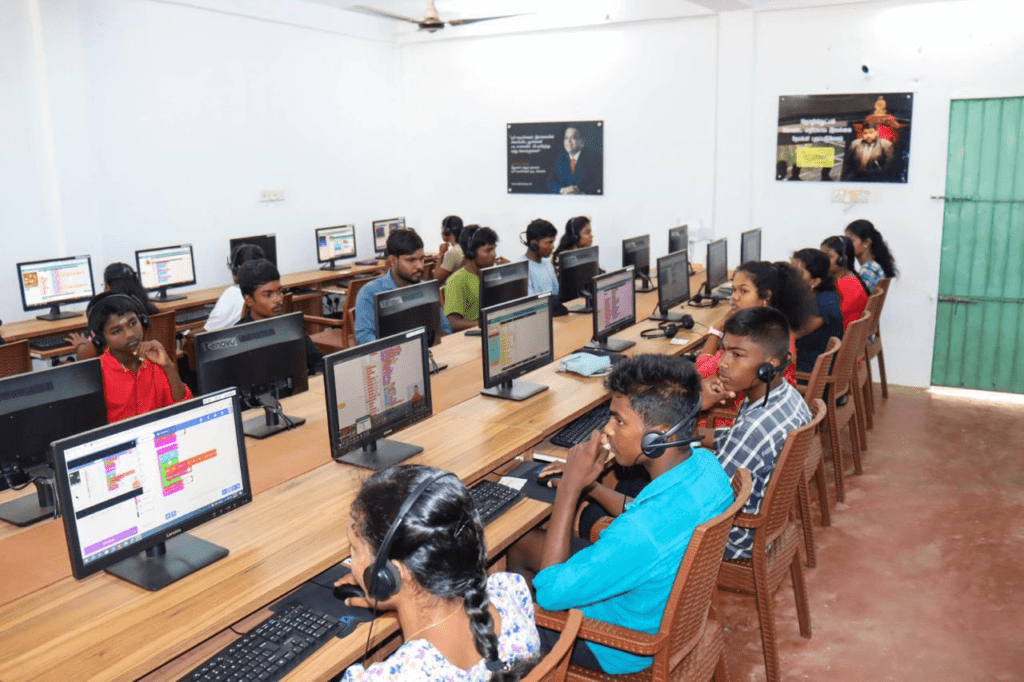
This branch currently facilitates computer language education for 600 students.
The Jaffna district is served by a total of nine DP Education IT campus centres, with operational branches located in Nelliadi, Udupitti, Nallur, Vadukottai, and Thellipalai.
Additionally, branches in Velanai, Chavakachcheri, Kopai, and Uduvil are currently under construction and are slated to commence operations shortly.
These nine DP Education IT Campus centers in the Jaffna District are established through a collaboration between the “My Dream Academy” programme led by the Deputy Chairman of Parliament and Jaffna District MP, Angajan Ramanathan, and DP Education.
High Commissioner of India, H.E Santosh Jha became the first Indian High Commissioner in recent times to undertake a standalone visit to Southern Province, as he held diverse engagements in Galle, Matara and Hambantota Districts on 6-7 March 2024.
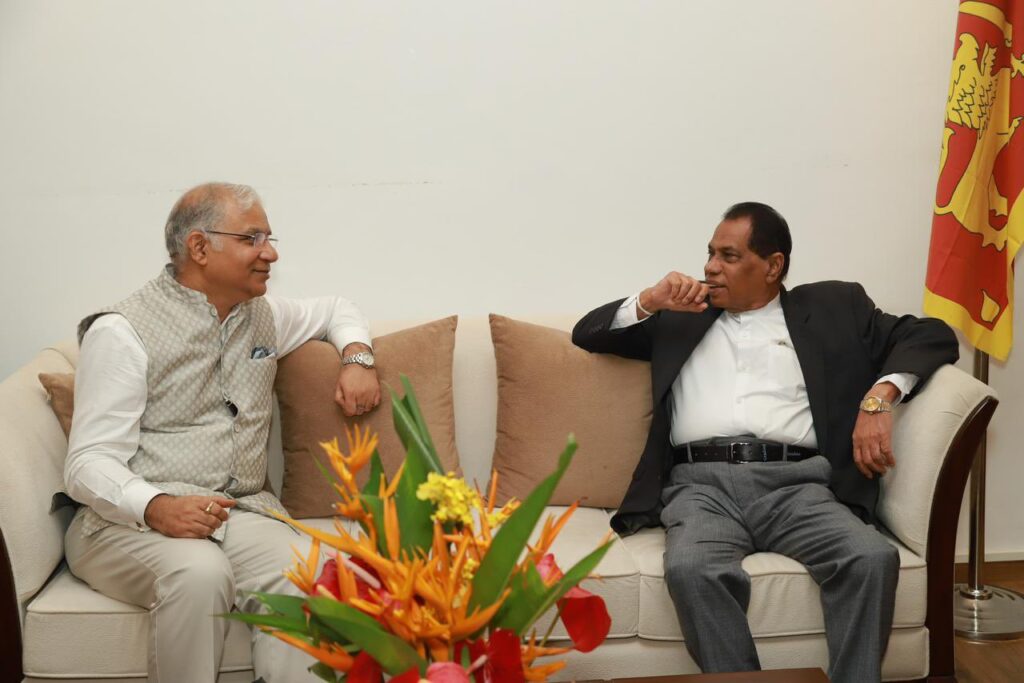
2. High Commissioner met Governor of the Province, Hon. Dr. Willie Gamage on 6 March 2024 and highlighted several projects undertaken by Government of India (GOI) in the region. High Commissioner also expressed willingness to carry out more projects for the benefit of the people in the Province through grant assistance as well as investments. Hon. Governor thanked the High Commissioner for GOI’s diverse initiatives.
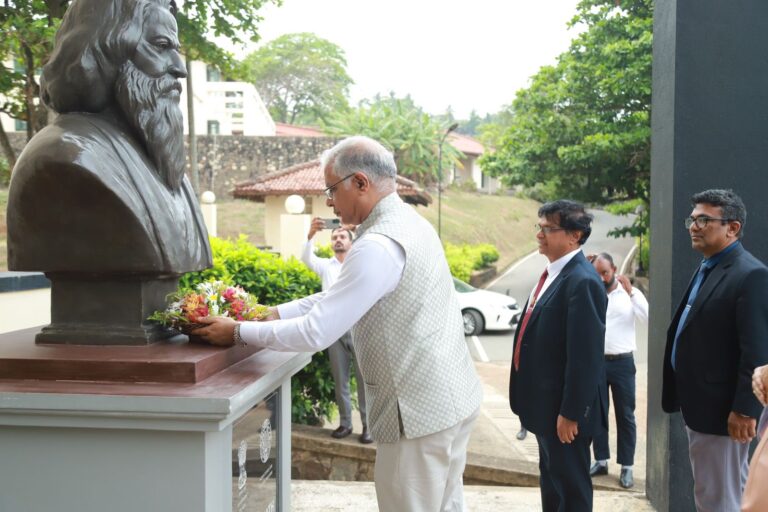
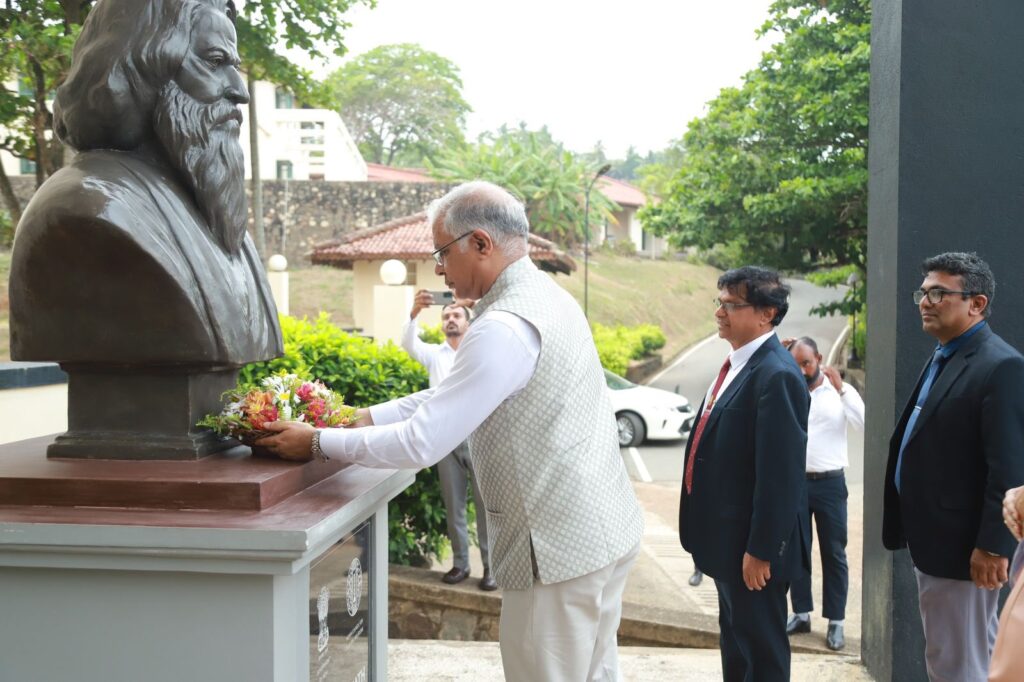
3. High Commissioner paid floral tributes at the bust of Rabindranath Tagore, installed in the auditorium named after Gurudev Tagore in University of Ruhuna. With a seating capacity of 1500 people, this is the largest auditorium in any Sri Lankan University. It may be recalled this facility, built through GOI grant assistance, was inaugurated in 2018. During an interactive session with the Vice Chancellor and faculty heads of the University, High Commissioner expressed interest in closer educational collaborations and conveyed willingness to further support the University in multiple ways.
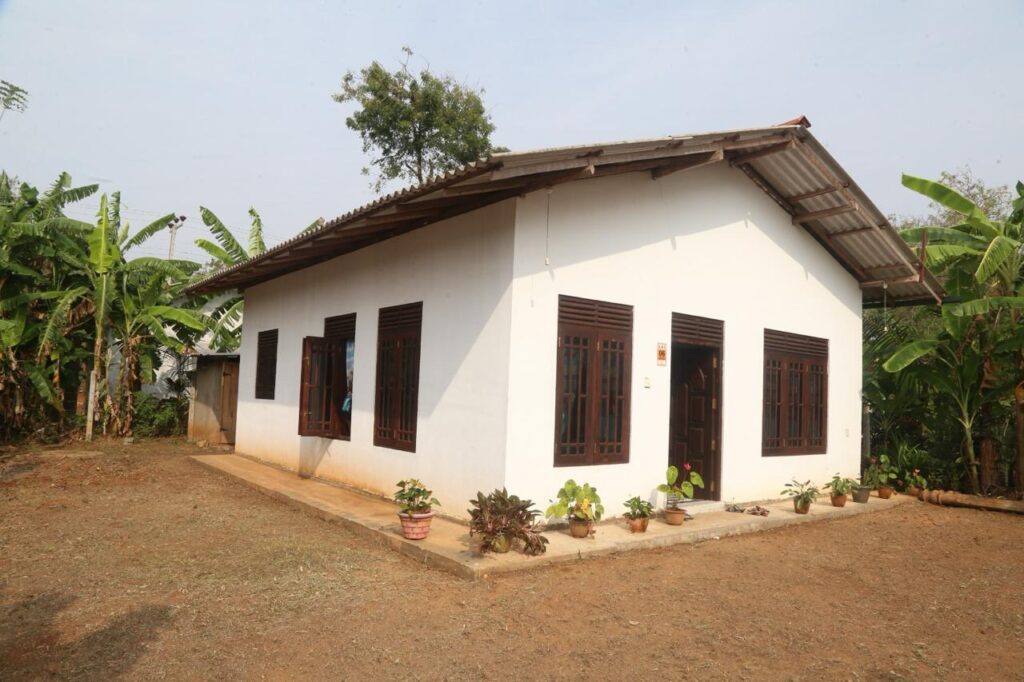
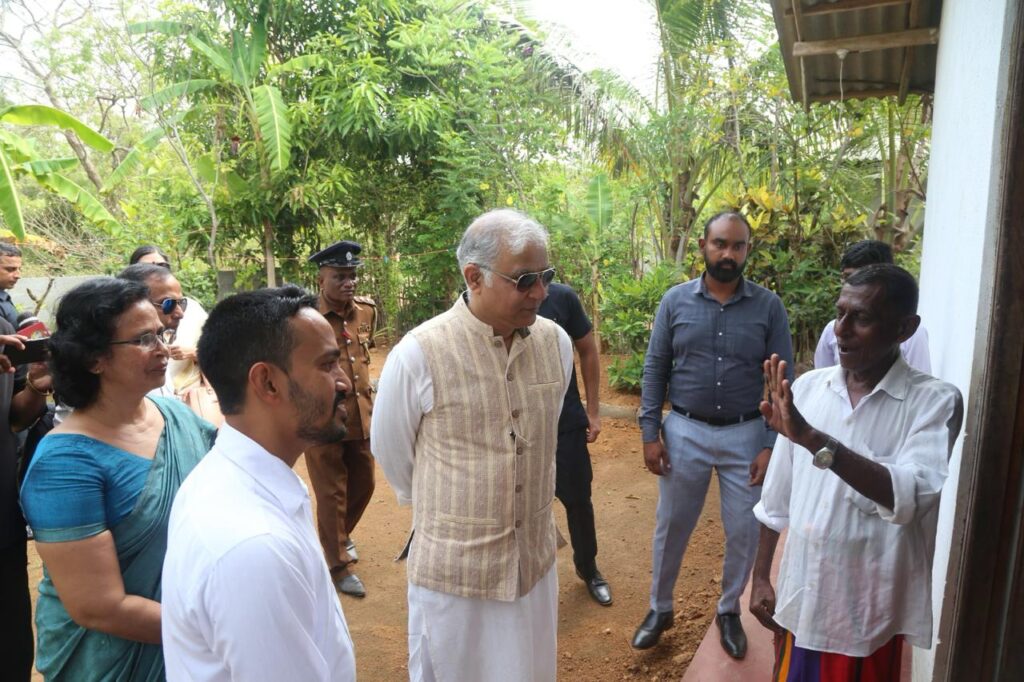
4. GOI is currently implementing two dedicated housing projects, covering around 50 villages in Galle, Matara and Hambantota Districts. GOI has committed to build 1200 housing units for the homeless, landless and low-income people under these two projects. High Commissioner visited two villages in Hambantota District to take stock of progress of these two project sites.
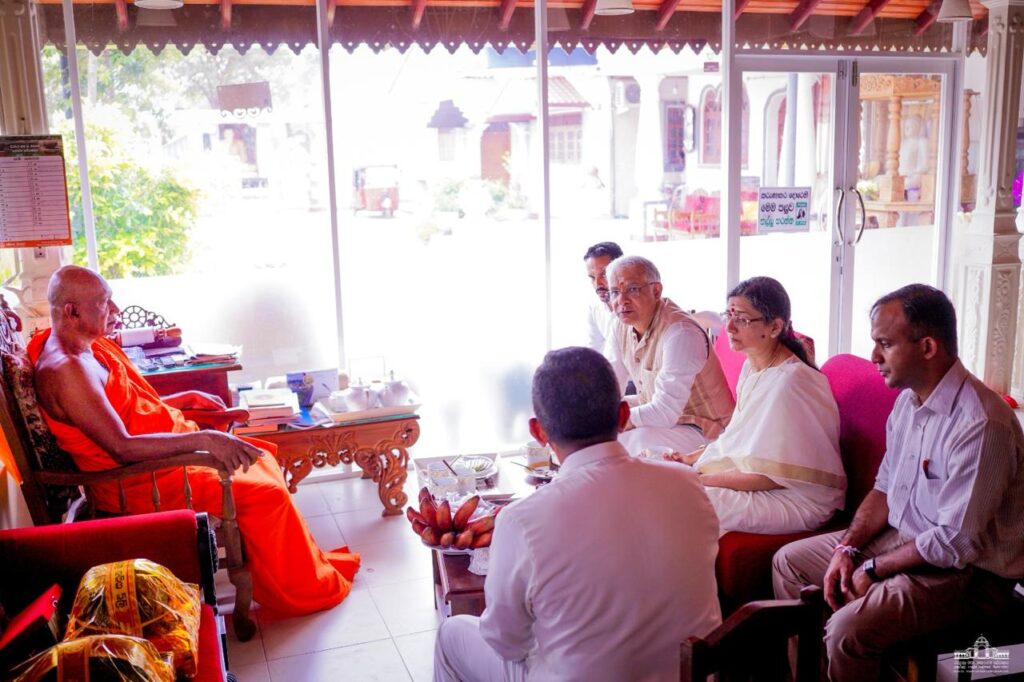
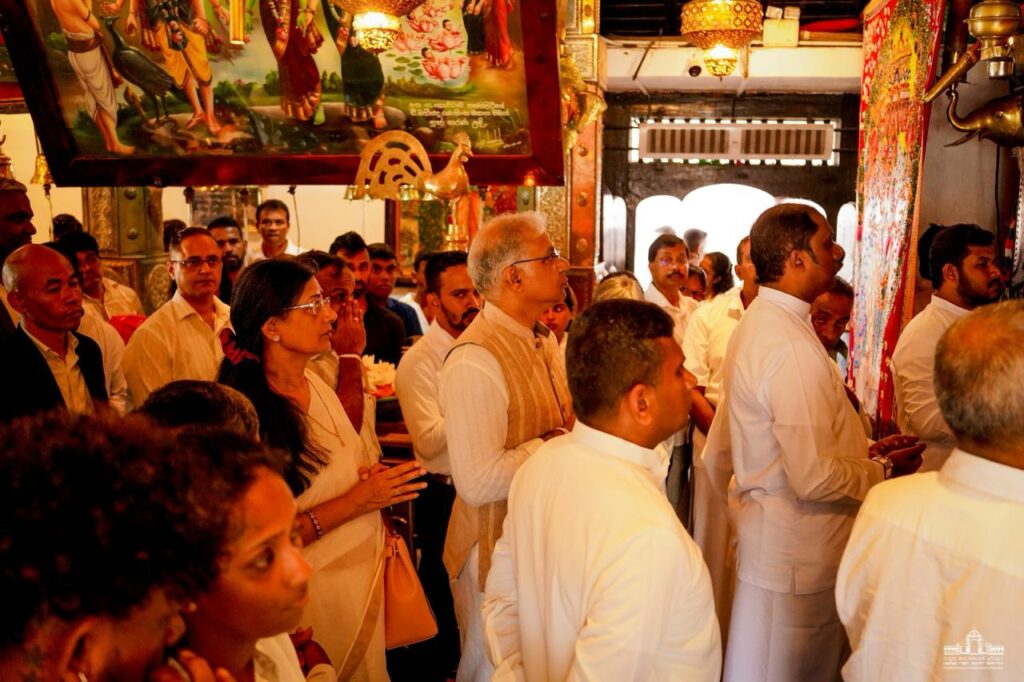
5. High Commissioner’s visit to Southern Province underscored the enduring cultural linkages between India and Sri Lanka. High Commissioner sought the blessings of Lord Buddha at the sacred Dondra, Katragama and Tissamaharama Temples and prayed for further strengthening of ties between the people of India and Sri Lanka.
Education State Minister Arvindh Kumar emphasises the importance of the “Presidential Scholarship” programme proposed by President Ranil Wickremesinghe: highlights that this initiative, geared towards supporting one hundred thousand students during the 2024/2025 academic year, holds immense potential to provide crucial assistance to economically disadvantaged students.
Opposition Leader Sajith Premadasa says regardless of the claim that the country has returned to normalcy, the electricity bill has increased by 500 – 600%, the water bill has soared, cost of living has surged, people are losing their jobs, and factories are being closed: laments the President’s ‘new normal’ is the norm of creating sorrows for the people.
President Ranil Wickremesinghe’s first mass rally is scheduled to be held today at Kuliyapitiya Municipal Council: Organised by the former UNP General Secretary Akila Kariyawasam, the event is the first propaganda rally for the party aiming the upcoming elections.
The Inland Revenue Department launches a ‘High Wealth Individuals Unit’ (HWIU) at the Large Taxpayer Office to enforce tax compliance among wealthy individuals: The unit will provide support to ensure accurate tax filings and conduct audits on high-risk cases.
Deputy Director of the National Hospital and GMOF president Dr. Rukshan Bellana criticises recent police arrests of fresh medical graduates assisting registered doctors, contrasting with the lack of action against unlicensed quack doctors: highlights the importance of supervised practice for new graduates and urges authorities to target actual quacks, not aspiring doctors gaining experience.
Health authorities warn of a rising rabies risk due to the lack of a proper programme to control the country’s free-roaming dog population: With over six million stray dogs nationwide and crippled sterilisation efforts, authorities fear a health and social crisis: Sixteen deaths from dog bites last year underscore the urgency for effective control measures.
The government amends the Declaration of Assets and Liabilities Law to enhance transparency and combat corruption: High-ranking officials, judges, military personnel, election officials, and others are now required to disclose their financial information: A central electronic system to facilitate the declaration process: Revised declaration forms are available on the Bribery or Corruption Allegations Investigation Commission’s website, and officials must submit their declarations promptly.
SLIC transfers its insurance operation to two new subsidiaries, SLIC General Limited and SLIC Life Limited, becoming a holding company: Alvarez & Marsal, along with Capital Alliance, will advise on the divestiture of the government’s shareholding in SLIC as part of Sri Lanka’s reform program: Five bidders, including local and global firms, respond to the Request for Qualification (RfQ) for the sale of SLIC’s life and general insurance businesses: Evaluation will follow guidelines approved by the Cabinet of Ministers.
Residents of Ottawa and the local Sri Lankan community hold a solemn vigil on Saturday to honour the victims of a tragic mass killing, one of the city’s worst in recent memory: Attendees, including Mayor Mark Sutcliffe and the Sri Lankan High Commissioner, pay tribute to a mother, her four children, and a family friend who lost their lives: A 19-year-old Sri Lankan national faces charges related to the deaths.
Sri Lanka wins T20i series against Bangladesh by 2-1.
March 10, Colombo (LNW): The Government has implemented a new amendment to the Declaration of Assets and Liabilities Law No. 01 of 1975, enacted via Act No. 74 of 1988, expanding the range of individuals required to disclose their assets and liabilities.
The amendment, introduced under Section 80 of the Anti-Corruption Act No. 09 of 2023, underscores the importance of transparency and accountability in public service and aims to promote transparency, combat corruption and encourage good governance in the country.
The updated legislation now requires a broader range of officials and categories of individuals to disclose their financial information.
Notably, this includes high-ranking Government officials such as the President, Prime Minister, Members of Parliament, Provincial Governors, and Provincial Council Members. Additionally, officers of the Provincial Public Service, elected representatives, and officers of Local Government bodies are also subject to these disclosure requirements.
Furthermore, judges, Government officials appointed by the President, members and officers of ministries and Government departments, and individuals appointed under Article 41A(1)(e) of the Constitution must adhere to the new disclosure provisions.
The mandate extends to various commissions, including those outlined in the Schedule to Article 41B of the Constitution, as well as staff officers of the Central Bank of Sri Lanka and State Banks. Independent commissions, regulatory bodies, supervisory commissions, and personnel boards established under statutes are also covered.
In addition, the requirement encompasses military personnel, election officials, office-bearers of political parties and trade unions, candidates nominated for elections, and individuals associated with media companies, newspapers, and telecommunications.
To facilitate the declaration process, the legislation mandates the establishment of a centralised electronic system. Until the electronic system is fully operational, amendments have been introduced to streamline the declaration process in line with the provisions of the new Act.
In compliance with the Anti-Corruption Act No. 09 of 2023, the Bribery or Corruption Allegations Investigation Commission has issued a circular outlining the procedures for declaring assets and liabilities. Revised declaration forms are available for download on their website (www.ciaboc.gov.lk) starting from 1 March 2024.
The Commission urges all concerned officials to promptly submit their asset and liability declarations as per the guidelines provided in the circular, until further instructions are provided.
March 10, Colombo (LNW): SLIC transferred its insurance operation to two new fully owned subsidiaries – Sri Lanka Insurance Corporation General Limited and Sri Lanka Insurance Corporation Life Limited – on 1 February 2024.
SLIC is now a holding company with no direct insurance operations, while the two new subsidiaries will be regulated by the Insurance Regulatory Commission of Sri Lanka
Leading global professional services firm Alvarez & Marsal (A&M) has been appointed by the Government of Sri Lanka’s State-Owned Enterprise Restructuring Unit (SRU) to advise on the divestiture of the Government’s shareholding in the state-owned Sri Lanka Insurance Corporation (SLIC).
A&M has been mandated in partnership with Capital Alliance (CAL), the Colombo-headquartered investment bank, to manage the divestment of all, or part of, the shareholding of SLIC, one of seven state-owned enterprises currently being targeted for divestiture of government ownership by the SRU.
The mandate is part of the government’s overall reform program to enhance competitiveness, productivity and efficiency across the economy and to assist in the country’s socio-economic development and fiscal consolidation efforts.
The Request for Qualification (RfQ) for the sale of the segregated life and general insurance business of Sri Lanka Insurance Corporation (SLIC) has attracted five bidders, four of which are local firms.
For Sri Lanka Insurance Corporation Life Ltd., those who responded to RfQ are LIC (Lanka) Ltd., Union Assurance PLC and Asiri Hospital Holdings PLC.
For Sri Lanka Insurance Corporation General Ltd., the respondents are Fairfirst Insurance Ltd., and Euro Exim Bank Ltd., a global financial institution with Head Office in St. Lucia and Representative Office in London.
The Government on 26 January, via international and local media called for RfQ from potential investors for the divestiture of its shares in the two insurance entities. The deadline for submission of proposals was on Wednesday.
The RfQs received were considered by the Opening Committee appointed by the Special Cabinet Appointed Negotiation Committee. The SOE Restructuring Unit said the RfQs will be evaluated as per the Special Guidelines on Divestiture of State-Owned Enterprises approved by the Cabinet of Ministers in July 2023.
March 10, Colombo (LNW): The ITC Hotel, opposite Galle Face Green in Colombo, a flagship BOI project, is expected to add to the city’s skyline and boost its appeal as a destination for both business and leisure travelers.
Investment Ministry Secretary M.M. Nayeemudeen and Board of Investment Chairman Dinesh Weerakkody visited the ITC Hotel, on an inspection visit recently.
ITC subsidiary WelcomHotels Lanka Ltd., Managing Director Subi Kishore George and General Manager Sujeet Kumar welcomed the delegation.
Official sources said the Indian government has approved ITC Ltd’s plan of investment in the Sri Lankan hotel sector as it hopes that the presence of ITC in Sri Lanka will be a significant contribution towards promoting Foreign Direct Investment and tourism in the country.
A senior government official said that the conglomerate which has assets from tobacco to hotels will invest US$ 300 million to build an up-market luxury hotel with the world-renowned Sheraton brand name on land that was earlier assigned to CATIC from China.
Wide-ranging tax incentives and the proposed tax exemptions will be issued to ITC after receiving the full payment of US$75 million, he said
ITC Colombo One Hotel and Residences was a new luxury development in the heart of the capital city Colombo, the hotel is poised to become a landmark in the city, attracting foreign visitors and contributing to the economic development of the country..
A Kolkata-based Indian public conglomerate, ITC Limited begins the construction work of a multi-faceted mixed use development project in a prime land in the Sri Lankan capital Colombo, a top official said.
The Welcome Hotels Lanka (Pvt) Ltd, a newly incorporated ITC unit in Sri Lanka has paid US$ 73.5 million an up front payment for a 99 lease of a 5 acre block state land near Colombo’s main Galle Face beachfront.
ITC Limited ha spledged to invest US$ 140 million to build the proposed complex consisting of luxury hotels, high quality residencies and shopping malls at a block of land of the property of former Army Headquarters premises facing the Gall Face Green in Colombo,
The Cabinet of ministers has granted this project a Strategic Development Project status providing necessary tax exemptions.
The firm has been given a 10 year tax holiday starting from the first year of profits or three years after operations, the gazette notification revealed.
The firm will also get a tax concession of 6 percent or half the rate of tax for hotels (whichever is lower)within the next fifteen years.Up to 20 expatriate staff will be exempted from Pay As You Earn tax for five years .
Interest on foreign loans taken for capital expenses, technical fees to consultants, management fees up to 3 percent of revenues, royalty and marketing fees up to 1.5 percent of revenue will be exempt from withholding tax.
ITC is a diversified conglomerate that has a presence in Fast Moving Consumer Goods (FMCG) and Hotels among other businesses.The Company is the second largest hotel chain in India with over 100 hotel.
March 09, Colombo (LNW): Many people in Sri Lanka are experts at pawning the reputation of others at abroad to reach their goals. Such people who put the country second and want to appear first, they also attempt to silence Those who try to unmask them with the help of their influential connections. It is not wrong to say that Colombo Zahira is the main school for Muslim boys in this country.
It is a respectable college where even a Sinhala child who is a minority studying there has no obstacle to reach the top of his ability. In a place as clean and smooth as milk, when dung is close, its dirt is not visible from a distance. The dung can also be deceptively with its white color. However, the ultimate consequence is that the milk pot itself becomes rendered useless.
Zahira started as far back as 1892. It is 100 years since the game of rugby itself. It is sad how those who try to invade that golden moment in another way and get on the horn and get ready to eat the ear.
We are aware that the Asia Rugby President is entangled in a personal conflict with the former President of the current administration. While it may seem personal on the surface, it is actually a gesture made for the country.
It is an intervention made especially for the preservation of the independent personality of the Rugby Administration in Sri Lanka.
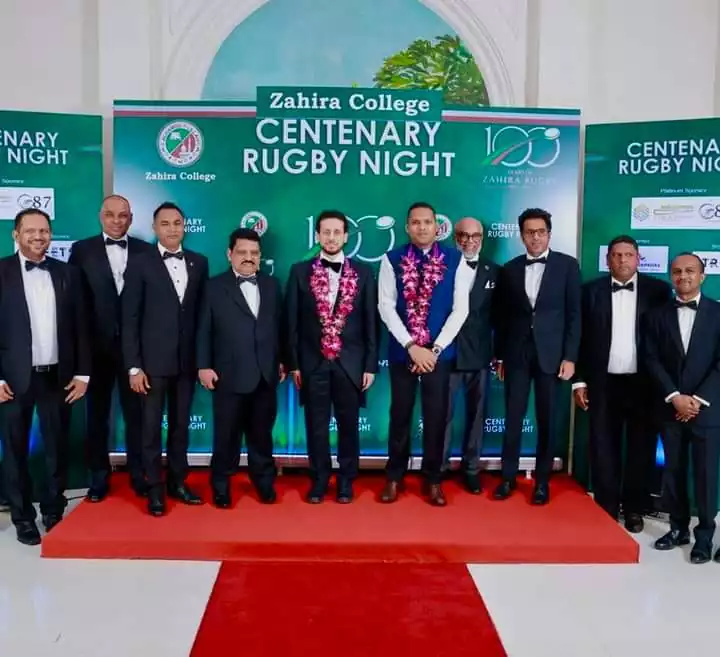
The Asia President assumed that position with a frustrated by the state of Sri Lankan rugby. Sri Lanka was not his Partisan country. That’s because he did not secure the vote of Lasitha Gunaratne, who was the president of Sri Lanka Rugby at that time. But it did not harm the Sri Lankan named Asanga Senaviratne in this photo and the friendship with Asia President Qais Al Dalai.
He already holding the position of the head of the tournament committee at Asia Rugby. In the meantime, when Namal Rajapaksa came to the ministerial chair, Asanga had made a path to infiltrate the rugby administration without the prestige he had lost in Sri Lanka Rugby.
Accordingly, Namal and the Asia President connected and tried to make decisions about rugby in Sri Lanka, and Asanka took the ministerial favor of the rugby administration and gave up.
The then Sports Director General Amal Edirisuriya carefully matched the letters to say that the letter was based on the knowledge of the Sports Minister and the Asia President.
The friendship between Namal and Asanga is also not small. During Namal’s tenure as the head, Asanga served as the President of Sri Lanka Rugby. The most amazing thing that happened at that time was that players from other countries were caught playing in Sri Lanka as Sri Lankan citizens.
Therefore, Sri Lanka Rugby is already paying a fine of 50,000 pounds.
At that time, the government under Mahinda Rajapaksa wanted to win, not how to win, and had no shame in using its eminence to somehow make his son a winner. Hence, things like writing the infamous law exam, the victory written in front of their names was more important than the shame added to history.
Due to this circumstance, and with Sri Lanka Rugby’s accounts depleted and burdened with debt, despite Namal exerting political influence to create an environment where Asanga Rugby could not rely on support, Illyas, the president at the time, resisted allowing the then-politician, let alone the President of Asia, to exert influence on Sri Lanka Rugby beyond acceptable limits.
Namal knew that he was not a person who could be bent on anything. because he and Namal Rajapaksa were entrusted with the big responsibilities of running Carlton Rugby. So it was important for Namal to infiltrate him as Asanga was the right person to make the game a political pawn.
Since then, many steps have been taken to bring down the behavior of Sri Lanka Rugby players with political power and the glory of the blessings of the Asia President. At least the Asia Tournament President did not go to tell his President that it was wrong to take revenge on the Sri Lanka Rugby for the sake of taking revenge on the Sri Lanka President. Asanga, who attempted to exclude the Sri Lankan team from the Asian Games by challenging the Olympic Council of Asia, is ironically part of the same association.
The end result was the removal of the hood of the president of Asia Rugby, who went to blow the snake hood to the Olympic Council of Asia. Sri Lanka participated in the Asian Games with the scars of sports politics, lacking adequate training and preparation.
The ultimate outcome was a withering and collapse of Sri Lanka’s reputation among Asia rugby in history, as the home country of the Asia President emerged with a significant lead over Sri Lanka.
For personal interests, Asanga has quietly facilitated the ascent of the Asia President’s country over his own homeland. It doesn’t matter if it happens only through the tournament. It is a tragedy that Sri Lanka is being handcuffed and wasting the training time. In a sense, it amounts to a betrayal of one’s own birth country.
Asanga imposed a fine of £50,000 on Sri Lanka Rugby, burdening it with substantial debt. The subsequent chairman, faced with the challenge of clearing the path for Sri Lanka Rugby, further increased the financial burden. Meanwhile, the people who banned rugby due to the various misconducts of the officially appointed rugby administration, and in order to find a way to reduce the distrust of the people due to the existing voting system, are now trying to make a loophole in the Sri Lanka constitution where they can enter.
There, an amendment is being spying with the aim of tapping the franchise used at the regional level and giving more power to the votes of the sports clubs. Asanga has also secured the blessings of the Asia President. Through Zahira, he is gearing up to make his debut in the arena, showcasing the prestige and influence he has cultivated at the Asian level.
While the Asian president of a sport claims it to be an honor for a school, the associated fame brings with it the individual who elevated his country’s rugby to the pinnacle in Asia but simultaneously tarnished the image of Sri Lanka Rugby.
Also, Asanga Senaviratne, who sat in his arms silently or more and more and supported the Asia President to crush Sri Lanka Rugby as he wished, and who wanted to take revenge on Sri Lanka Rugby for the appointment of the Minister of Sports who had fulfilled his ambitions, considered the selfishness bigger than the motherland.
On the one hand, Asanga Rugby has used Zahira to get close enough to give a kiss to sports clubs belonging to the elite club. In its second step, the aspiration is to amend the constitution in a way that significant victories can only be achieved through the decisions of those sports clubs. For this purpose, the purpose of these discussions may be for the sports minister to get the points he wants from Zahira’s century by taking the opportunity to talk with the Sri Lanka Rugby club, who are of two minds at the moment. This may have been a moment to approach the Asian chairman and tell the minister the same thing.
The shape of Sri Lanka’s rugby system is changing, and local leaders are gaining power, based on the development and expansion of rugby in Sri Lanka. It is also prepared by a New Zealander. Under this system, had Sri Lanka Rugby invested more authority in the development of regional rugby and formalized a decentralized approach to promote and establish the game, it is conceivable that more sports clubs could have emerged, surpassing the current ones vying for prominence.
Otherwise, the power of rugby should not be taken away from the village unless the arrangement of space is regularized. The major sports clubs do not field a B team for B division matches.
Some clubs do not have the talent they can field in both the league and knockout stages.
Some sports clubs do not play at all. It is crafty to propose closing that space at the lower level if the necessary space is widened to look for talented young players and refer them to sports clubs of that group without depending only on the talent coming from rugby schools.
A program should be devised to nurture players, allowing them to progress step by step until they reach a top sports club.
With this tricky, they are trying to stop the activities necessary to come to power, the wide of the country’s sports. In some way in history there were tribal characteristics of reserving administrative space for a certain group for their elitism among the classes. But this situation, for the sake of the power of an advanced social system, is a disgraceful way of making room for the guilty and the unbelievers who fail to win over the majority of the society.
Despite Namal Rajapaksa establishing sports clubs in the name of Hambantota and formulating business plans for sports, they did not build rugby players in Hambantota. Roshan Ranasinghe reminisced about what people were saying shortly after a president emerged from Polonnaruwa. The person who came out of the ground said that the whole Polonnaruwa should be concreted to prevent another one from coming out of the ground. Roshan Ranasinghe matched the game and Polonnaruwa in the same way. Harin Fernando also lifted Uva more confidently than there. Uva has a history of rugby. The white imperialists had also fostered their own sports within their estates. But the blacks and whites made the facilities Colombo and left the difficulties in the village. Today or tomorrow, that tradition will change and it should be related to the village to find the talent of the village and develop them to the national level.
It seems that Harin is suffering from some thirst to give his blessing as the Minister of Sports to develop the game in the village in a new way by securing the existing model of the rugby game. Harin, who has a lot of political goals in sight, is doing it for the political game. In spite of that, it is doubtful whether Harin will be trapped by the anesthetic injection of Asanga Senaviratnala, who is trying to make a path for his needs from Zahira.
But now Harin, who currently prefers to hand over the work to the rugby management, has the ability to discuss these two ideas and understand its national value as the sports authority, collect his own legal advisors and the facts on the ground and talk to the World Rugby.
Here, the World Rugby has no legal or moral right to suggest to a country that only these guys are allowed to stay in power and play rugby and remove people from other parts of the country from this game. Harin has no problem talking about it.
But it is not easy to deal with Asanga’s tackls. We will wait and see if it works. Harin also has a responsibility to prevent Rugby from declining.
Also, attempts to make some changes in the present due to the events of history create nightmares about the future. If you can prove that the facts, we say about this history are wrong, you have the right to write about it. For example, if the £50,000 fine we’re levying is false and we’ve mis-stated when it happened, we’ll give you the opportunity to correct it and send it to us in writing. If there is any mistake in this article written based on the data we have, you can refer to us with the relevant data.
March 10, Colombo (LNW): The United States is committed to supporting women entrepreneurs in Sri Lanka, Dennis Wesner, Deputy Director of the United States Agency for International Development (USAID) Office of Economic Growth said.
USAID and the Women’s Development Federation (WDF) marked the successful culmination of the “Capacity Building Program on Trade and Market Access for Women Entrepreneurs” by honoring forty resilient women entrepreneurs from Sri Lanka’s southern districts, including Hambantota, Galle, Matara, and Monaragala, at a ceremony in Weerawila.
These women entrepreneurs have completed a year-long journey, during which they received training and mentorship from USAID and WDF, equipping them with essential skills to effectively manage their micro and small businesses.
Moreover, they have gained invaluable insights into expanding their market reach and accessing both domestic and international trade opportunities.
This program, supported by the United States, stands as a significant milestone in empowering women-led and women-owned enterprises and driving socio-economic development in the region.
The United States support for the collaboration through USAID’s Partnership for Accelerating Results in Trade, National Expenditure, and Revenue (PARTNER) initiative and WDF underscores a shared commitment to fostering inclusive economic growth and empowering women in Sri Lanka’s growing SME sector.
Dennis Wesner, Deputy Director of USAID’s Office of Economic Growth, reiterated the United States’ commitment to supporting women entrepreneurs, emphasizing the pivotal role they play in advancing Sri Lanka’s economic agenda.
“Successful entrepreneurs take advantage of all available resources and support. This is where the linkages you gained through this program, including peer support, will assist you through hard times,” noted Wesner.
Sriyani Mangalika, Managing Director of WDF, commended the perseverance and dedication exhibited by these women entrepreneurs, acknowledging the challenges they have overcome on their entrepreneurial journey.
“Running a small business is not easy, demands unwavering commitment and resilience, especially for women entrepreneurs juggling multiple responsibilities,” remarked Mangalika.
“We applaud their tenacity and remain confident in their ability to achieve their aspirations while serving as catalysts for positive change in their communities.”