Home Blog Page 1263

Victoria Dam Set to Emerge as a Premier Tourist Destination

0

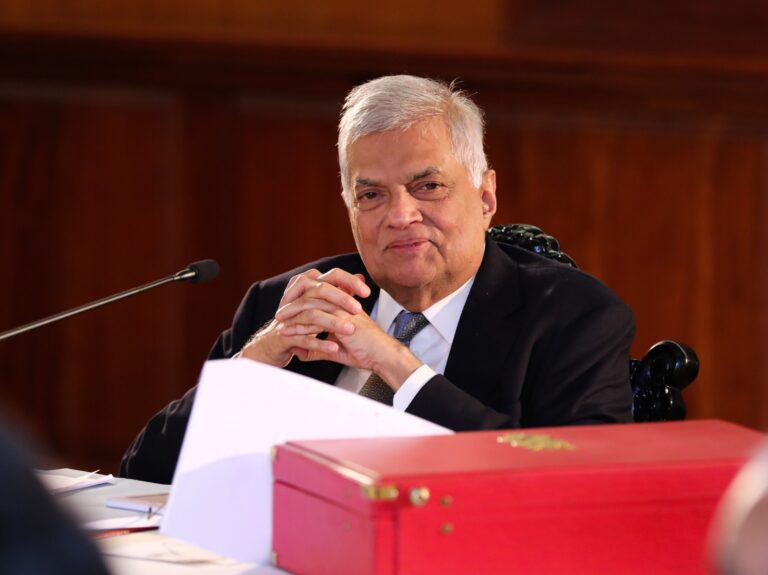
January 05, Colombo (LNW): President Ranil Wickremesinghe has proposed an ambitious plan to transform the Victoria Dam in Kandy and its surrounding area into a prominent tourist destination, marking a significant leap in the region’s tourism landscape.

Recognized as the tallest dam in the country, the Victoria Dam stands as a cornerstone achievement of the accelerated Mahaweli development project. Commissioned in 1985 and named after Queen Victoria, the dam’s inauguration was presided over by President J.R. Jayewardene and Prime Minister Margaret Thatcher.

As part of the new development initiative, plans are underway to erect a statue of Queen Victoria in close proximity to the dam, commemorating its namesake and historical significance.

The development project is currently in progress, with Central Province Governor Lalith Gamage conducting an inspection of the site’s advancements on the 4th of this month. Governor Gamage emphasized that further enhancements aimed at positioning this area as a prime attraction for both local and international tourists will pave the way for new income opportunities for local residents.

The envisioned transformation of the Victoria Dam area into a tourist hotspot not only celebrates its engineering marvel but also promises to offer visitors an enriched experience while creating economic prospects for the local community.

Sigiriya/Dambulla and Trincomalee Set for Revitalization

0

January 05, Colombo (LNW): The Urban Development Authority (UDA), in collaboration with the Asian Development Bank, is poised to inject over Rs. one billion into transforming Sigiriya/Dambulla and Trincomalee into thriving tourism hubs.

Minister Prasanna Ranatunga highlighted that this pivotal project faced setbacks due to the COVID-19 pandemic and subsequent economic challenges. However, the government aims to kickstart this initiative by allocating an initial investment of Rs. 320 million this year. The primary objective is to convert specific locations within Sigiriya/Dambulla and Trincomalee cities into designated tourism zones while facilitating necessary infrastructure development.

Besides enhancing infrastructure, the project emphasizes the preservation and development of historically significant sites. “Creation of new car parks and similar initiatives will significantly bolster tourism revenue, particularly benefiting stakeholders in these regions,” Minister Ranatunga stated, adding that consultations with regional provincial councils and relevant ministries have been initiated to gather diverse perspectives for this project’s success.

The Trincomalee segment of the project encompasses six sub-projects aimed at comprehensive development. These include plans for Dutch Bay and Back Bay Beach Development, preservation and enhancement of Fort Frederick, the establishment of public facilities for hot springs, construction of floating restaurants, and the creation of eco-parks.

Furthermore, the project outlines strategies for improving Powder Island and Crow Island Areas, modernizing Colonial Buildings, including the Trincomalee Port Head Office Premises, to uplift the aesthetic and functional appeal of these locations.

Sri Lanka’s Automobile Sector Accelerates: Local Assembly and Export Surge

0

January 05, Colombo (LNW): Sri Lanka’s automotive industry is experiencing a remarkable upswing, with more than 108 varieties of locally assembled vehicles dominating the nation’s roads. This diverse lineup includes luxury cars, trucks, military vehicles, three-wheelers, and motorcycles, reflecting a burgeoning local manufacturing landscape.

Thilaka Jayasundara, Secretary of the Ministry of Industries, highlighted the sector’s progress, emphasizing the increasing prominence of the automobile component manufacturing industry. “It’s not just a revenue generator; it’s becoming a significant contributor to our FOREX reserves,” Jayasundara stated.

Key players like VEGA INNOVATIONS, Mahendra, and Micro Car have significantly contributed to this momentum. VEGA INNOVATIONS has ventured into crafting luxury vehicles, while Mahendra and Micro Car have introduced various vehicles to the Sri Lankan market. The government is actively encouraging these manufacturers to pivot towards assembling electric vehicles, a shift that is gaining traction.

Jayasundara underlined the industry’s global impact, noting that local component manufacturers are now exporting to major companies like Toyota and Tesla, diversifying Sri Lanka’s export portfolio. The implementation of the Standard Operating Procedure (SOP) for local vehicle assembly and component manufacturing, initiated by the Ministry of Industries four years ago, has been pivotal in fostering a thriving ecosystem. With over 100 local manufacturers now operating, this SOP has not only generated export revenues but has also led to substantial savings, estimated to exceed Rs. 200 billion annually from reduced vehicle and spare parts imports.

Furthermore, the SOP has empowered existing local manufacturers, such as tire, battery, exhaust component, rubber part, and cushion makers, by securing larger orders and improved prices. The government’s strategic plan includes establishing a specialized automobile component manufacturing zone in Katana, earmarking 100 plots of land to attract foreign companies for joint ventures, streamlining logistics for industrial operations.

Addressing the need for industrial land allocation, Jayasundara emphasized plans to increase it from less than 0.4% to 1% by 2025, facilitating industry growth.

Highlighting additional government initiatives, Jayasundara discussed President Ranil Wickremesinghe’s Green initiatives. The goal is to introduce environmentally friendly practices to 1,000 SMEs in the industry. She also shed light on the industry’s heavy reliance on foreign raw materials, citing special measures taken during economic crises to ensure the continuity of imports through the Indian credit line. Efforts were made to address temporary restrictions on over 1,000 items, easing the burden on local industries amidst dollar scarcity.

Dollar rate in Sri Lanka (Jan 05)

0

January 05, Colombo (LNW): The Sri Lankan Rupee demonstrated stability against the US Dollar at commercial banks across Sri Lanka today (Jan 05), maintaining its position compared to Thursday’s rates.

At Peoples Bank, there’s been no alteration in the buying and selling rates of the US Dollar, standing firm at Rs. 316.77 and Rs. 327.81, correspondingly.

Similarly, Commercial Bank reported unchanged figures, with the buying rate of the US Dollar holding at Rs. 316.41 and the selling rate remaining constant at Rs. 326.50.

Sampath Bank also echoed this trend, sustaining stability with no fluctuations in the buying and selling rates of the US Dollar, maintaining Rs. 318 and Rs. 327, respectively.

Regulatory Framework for Microfinance Sector

0

January 05, Colombo (LNW): The Sri Lankan government is on the brink of unveiling a game-changing regulatory landscape for moneylending and microfinance enterprises with the imminent introduction of the Microfinance & Credit Regulatory Authority Bill. Anticipated to make its debut in parliament next week, this legislation is poised to revolutionize the financial sector’s approach to microfinance.

This forthcoming bill holds the pivotal objective of shielding consumers from exploitative practices prevalent in the industry, concurrently fostering a culture of responsible lending among financial institutions.

One of the significant moves underlying this legislative endeavor involves the proposed annulment of the existing Microfinance Act of 2016.

Licensed Finance Company sector contracted during Q3 of 2023.

0

By: Staff Writer

January 05, Colombo (LNW): The loans and advances portfolio of the Licensed Finance Companies (LFCs) sector contracted significantly during the year ending Q3 of 2023, particularly due to the restrictions on vehicle imports which affected leasing and hire purchase activities.

Amidst the decline in the core business, the LFCs sector diversified its activities particularly towards pawning/gold loan facilities which heightened the sector’s risk to fluctuations in global gold prices.

The asset quality of the sector also deteriorated as indicated by the increase in stage 3 loans to total loans ratio.

Meanwhile, overall liquidity of the sector remained at an acceptable level while few companies faced difficulties in meeting liquidity requirements. Exposure of the LFCs sector to the sovereign also increased amidst rising investments in Government securities.

Moreover, the sector recorded an increase in profit, driven by higher revenue from interest income and other operating income along with reduced new impairment charges while capital adequacy also improved, with higher growth in regulatory capital compared to subdued growth in risk weighted assets, mainly due to the contraction of loans and advances amidst higher exposure to pawning/gold loans advances and increase in risk-free investments.

Successful implementation of the Masterplan for Consolidation of Non-Bank Financial Institutions (NBFIs) introduced by the Central Bank in the latter part of 2020 helped to build the confidence of the sector. However, the continued need for consolidation exists in the LFCs sector to ensure resilience

The Financial Sector Safety Net Project is designed to boost the financial and institutional capacity of the Sri Lanka Deposit Insurance Scheme (SLDIS), which is managed by the Central Bank of Sri Lanka.

The financing will help boost reserves of SLDIS which could be used towards the payout to insured depositors of banks and licensed finance companies.

In parallel, the project will support institutional strengthening of the SLDIS in line with international good practices for effective deposit insurance schemes.

“Strengthening the financial sector safety net is crucial for maintaining financial stability during a macro-debt crisis,” said Alexander Pankov, Lead Financial Sector Specialist and the Task Team Leader for the project.

“A robust deposit insurance system, along with enhanced supervision and resolution frameworks, will safeguard public confidence in the financial system and protect people’s savings.”

The SLDIS was established in 2010 and has conducted several payouts for failed licensed finance companies in recent years.

Currently, the SLDIS guarantees the deposits of households and enterprises up to LKR 1,100,000, which covers more than 90 percent of deposit accounts in Sri Lanka.

The legal framework for deposit insurance in Sri Lanka was upgraded earlier this year through the approval by Parliament of Banking Special Provisions Act.

SLDIS should now be strengthened institutionally and financially for it to be able to effectively fulfill its legal mandate of protecting the financial sector stability.

Sri Lanka expedites efforts to promote E-mobility this year.

0

By: Staff Writer

January 05, Colombo (LNW): The government has been exploring opportunities for shifting from fossil fuel-based transport towards energy based transport system

The Cabinet has approved the preparation of a policy framework and then a strategic plan with a road map to create the direction needed to promote the use of electric vehicles, Transport Minister Bandula Gunawardena said.

He noted that the Sri Lankan government, in the past, has been exploring opportunities for shifting from fossil fuel-based transport towards energy based transport systems.

“Various initiatives in the form of policies and strategies have been formulated along with studies and research to determine the feasibility of initiating electric mobility in Sri Lanka.

Initiatives taken by the Government of Sri Lanka to date include electric vehicle registration, defining standards and processes for electric vehicle manufacturing and assembling, development of charging infrastructure, and subsidy plan for Electric Vehicles, but a comprehensive long-term vision for Electric Vehicle Policy was lacking and required.

Mr Madan Regmi, from UN ESCAP, has agreed to support Sri Lanka in drafting a policy framework for accelerating the Transition to Electric Mobility for Public Transport in Sri Lanka.

The policy at national level will show the way forward to all the initiatives across the country and it will help to integrate the standalone efforts to a collaborative initiative.

The year 2024 will be declared as E-mobility entry year in Sri Lanka. Transport Ministry is looking forward to taking this policy to the implementation phase with the support of all related Government and private sector stakeholders, and it is very important that everyone collaborate and partner to create a difference, he said. .

In March 2024 government is planning to have an EV exhibition and a conference to discuss and have a dialogue among us to agree on the collaboration between ourselves, exchange global ideas and showcase all initiatives within our country and also for investors to partner and scale up national enterprises in this domain, he added .

This will be a global initiative aimed at promoting sustainable and efficient public transportation systems.

This will emphasize the importance of decarbonization in transport, reducing individual vehicle usage, minimizing traffic congestion, and curbing the environmental impact of transportation.

Sri Lanka Original Narrative Summary: 05/01

0

1.Import of gold coins and the supply of locally manufactured jewellery subject to 18% VAT after 1st Jan’24.

2.President Ranil Wickremesinghe says the issue of resettling displaced persons can’t continue indefinitely, and that there should not be any “displaced persons” by 2025.

3.Sectoral Oversight Committee on Environment, Natural Resources & Sustainable Development Chairman Ajith Mannapperuma MP says payment of compensation to fishermen hit by the damage caused by the fire-ravaged freight ship X-Press Pearl has been affected due to the lack of coordination among the Marine Environment Protection Authority, Fisheries Ministry and Attorney General’s Dept.

4.President Ranil Wickremesinghe says SL will send a Navy ship to the Red Sea to counter the Houthi attacks.

5.Health authorities decide to administer an additional vaccination dose against measles to infants aged between 6 – 9 months: accordingly, an MMR (measles-mumps-rubella) Supplementary Immunization Activity scheduled on 6th Jan’24 at all immunization clinics in 9 high-risk health districts.

6.Bakery Owners’ Assn says it is yet undecided on increasing prices of bakery products even though the cost of transportation has increased with the recent increase in VAT.

7.Young SL inventors present solutions to waste problems to potential investors: EcoSort from the University of Sri J’pura, wins the competition with their “smart dust-bin” for waste segregation.

8.Fort Magistrate’s Court issues order preventing CEB Trade union leader Ranjan Jayalal and others from entering the Presidential Secretariat, President’s House, Finance Ministry premises, Central Bank and the Galle Face premises.

9.Homagama Base Hospital suspends all major surgeries due to the lack of surgeons.

10.Ceylon Electricity Board announces intention to cut the electricity tariff by 50% by the end of Jan’24.

Online Safety Bill set for presentation in Parliament on January 23rd

0

January 05, Colombo (LNW): Public Security Minister Tiran Alas revealed today that the long-debated Online Safety Bill is set for presentation in Parliament on January 23rd.

During the inauguration of a new police unit in Colombo, Minister Alas acknowledged the potential for additional proposals and amendments to the bill. Despite this, he stressed the urgency of its presentation, citing the pressing need to address online abuse.

Highlighting concerning statistics, Alas pointed out that a significant portion of the 8,000 complaints filed for child safety issues in 2023 were linked to social media platforms, totaling around 3,000 cases. These alarming figures were identified as a key impetus behind the government’s initiative to introduce the Online Safety Bill.

“We are introducing the Online Safety Bill for this reason,” declared Alas. “However, international organizations and missions have raised objections. An ambassador approached me this morning to halt this initiative. I have conveyed that we will proceed.”

Amid international concerns, Minister Alas stood firm, underscoring the importance of striking a balance between valid apprehensions and the imperative to safeguard children online. He announced the bill’s scheduled presentation on January 23rd, while inviting public submissions until January 8th to allow for potential amendments and the inclusion of feedback.

“On January 23rd, I will present it, and until January 8th, anyone can submit their suggestions,” affirmed Alas. “We will then consider incorporating those submissions into the bill. Our efforts are geared towards protecting the women and children of our nation.”

Uncollected Taxes Cast Shadow on SL’s Financial Outlook

0

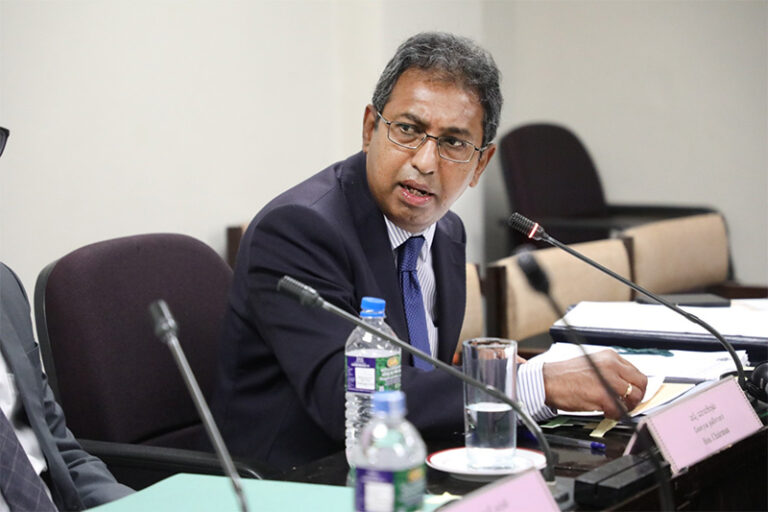
January 05, Colombo (LNW): A significant session unfolded in Parliament, presided over by Dr. Wijeyadasa Rajapakshe, Minister of Justice, Prisons Affairs, and Constitutional Reforms, aimed at brainstorming legal modifications to augment state revenue. The focus revolved around potential amendments to regulate the Inland Revenue Department, Sri Lanka Customs, and Excise Department.

During the meeting, Mahindananda Aluthgamage, Chair of the Sectoral Oversight Committee on National Economic and Physical Plans, highlighted issues encountered with the Inland Revenue Department. Notably, he brought attention to instances where individuals managed to evade taxes for up to 15 years, shedding light on systemic challenges.

One prominent issue highlighted was the prolonged duration within the Inland Revenue Department, where tax files linger for over 54 months, including the subsequent appeal processes. Officials revealed staggering figures, indicating 943 billion rupees in arrears tax revenue, with 767 billion rupees remaining unrecoverable due to assorted reasons, while 175 billion rupees were identified as recoverable.

Officials elucidated the hindrances faced during the tax assessment process, citing deliberate delays by taxpayers in providing necessary information. In response, discussions veered toward amending the existing Act, proposing changes that would require taxpayers to pay 50% of the assessed amount upon appealing to the Tax Commission.

The committee examined the timeframe allotted for various stages in the appeals process, expressing the need for expedited resolutions. Suggestions were made to streamline the process, reducing the Commissioner’s appeal hearing duration from 2 years to 6 months, with provisions for assumed finality if decisions exceeded the stipulated period.

Emphasis was placed on empowering the Tax Appeals Commission to focus solely on existing assessment calculations, relegating fundamental issues to the Court of Appeal. Further deliberations endorsed the establishment of a specialized court complex within the judicial system dedicated to hearing tax appeals.

Consequently, the committee proposed amendments to the Inland Revenue Department Act, incorporating the discussed reforms. These amendments, to be drafted by the Attorney General and the legal draftsman, are set to be reviewed in the Parliament’s upcoming meeting.