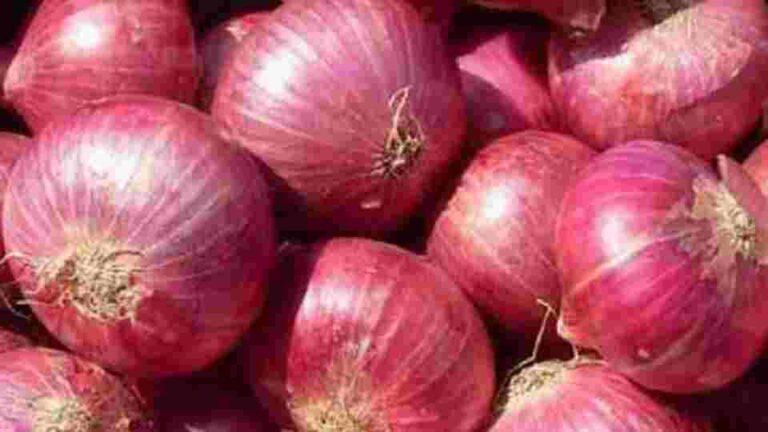
February 14, Colombo (LNW): In a move aimed at supporting local farmers, the Agriculture Ministry of Sri Lanka announced on Monday (12) its decision to provide free insurance coverage for red onion cultivation. This initiative is part of the Agricultural and Agrarian Insurance Board’s ongoing efforts to safeguard the interests of farmers by offering free insurance for various crops.
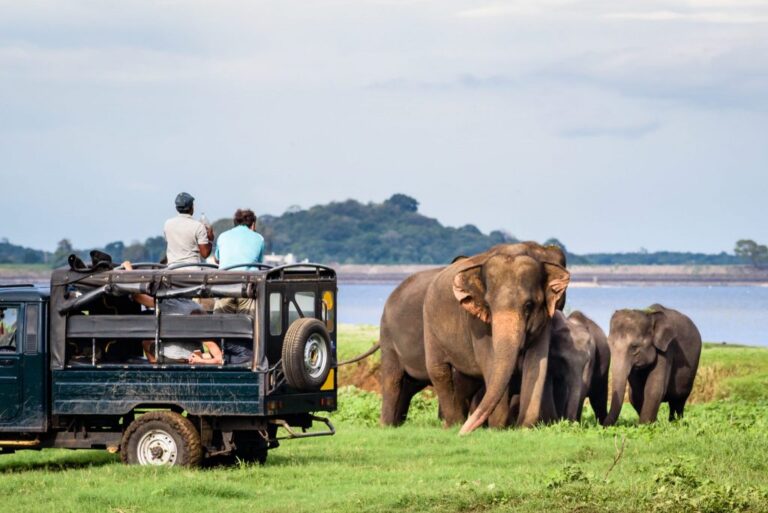
Currently, the Agricultural and Agrarian Insurance Board already provides free agricultural insurance coverage for six types of crops, including paddy, chillies, big onions, potatoes, maize, and soya. The coverage extends to protect against crop damage caused by factors such as wild elephants, drought, and heavy rain.
With a renewed focus on expanding red onion cultivation in Sri Lanka this year, Agriculture and Plantation Industries Minister Mahinda Amaraweera directed the Agricultural and Agrarian Insurance Board to include red onion cultivation in the list of crops eligible for free insurance coverage. This decision aims to provide compensation to farmers in case of crop damage resulting from the specified factors.
The Agricultural and Agrarian Insurance Board has taken proactive steps to offer compensation, with an allocation of Rs. 40,000 per acre and Rs. 100,000 for one hectare of red onion cultivation. Minister Amaraweera emphasized the importance of promptly providing this compensation to farmers facing losses due to crop damage.
The announcement was made during a discussion held at the Agriculture Ministry on Monday, where Minister Amaraweera engaged with officials from the Agrarian Development Department and the Agriculture Ministry.
February 14, 2024: ikman, Sri Lanka’s foremost online marketplace, recently announced the launch of its latest enhancement, the Ad View Count feature.
This innovative addition marks a significant milestone in ikman’s journey, reaffirming its commitment to transparency and user-centricity while empowering sellers with valuable insights into their ad performance.
The Ad View Count feature, now available to all ikman users, revolutionizes the selling experience by providing sellers with real-time visibility into the number of views their advertisements receive.
By offering transparency and actionable data analytics, ikman aims to optimize user interactions and foster a more engaged and informed online community.
Prominently, users can now get a glimpse into the lifetime view count of all Shop pages on ikman, enabling listed businesses to further reinforce their brand loyalty and prominence.
Elmo Shanmugam, Senior Marketing Manager at ikman, shared his enthusiasm for the launch, stating: “I’m thrilled to introduce our latest feature enhancement, the Ad View Count. This addition is more than just a new functionality; it’s a testament to our unwavering commitment towards creating a transparent and efficient marketplace for our users.”
“By empowering our sellers with the ability to track how many views their ads receive, we’re not only enhancing their selling experience but also fostering a more informed and engaged buyer community. At ikman, we’re continuously innovating to meet the evolving needs of our users, ensuring that every interaction on our platform is straightforward, trustworthy, and effective,” he said.
With the Ad View Count feature, sellers gain valuable insights into viewer interest and potential demand, enabling them to optimize their listings for better results. This dedication to enhancing user experience and platform functionality further solidifies ikman’s position as the leading online marketplace in Sri Lanka.
The Ad View Count is only made available on the detailed ad view mode, and isn’t visible on the Search Engine Results Pages (SERPs). Furthermore, the Ad View Counts will be made visible after a period of 24 hours, for all new ads.
ikman invites users to visit its website at ikman.lk or the ikman App, to explore and utilize the new Ad View Count feature, empowering them to elevate their selling strategies and maximize their potential on the platform.
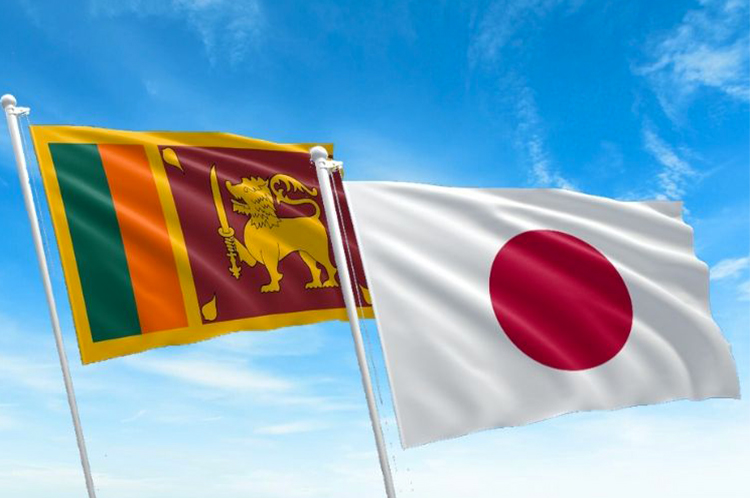
February 14, Colombo (LNW): In a significant step towards addressing Sri Lanka’s socio-economic crisis, Japanese Ambassador Mizukoshi Hideaki and Azusa Kubota, Resident Representative of the United Nations Development Programme (UNDP) in Sri Lanka, officially launched the project titled ‘The Project for Promoting Economic Governance through Anti-corruption Policy Support’ in Colombo. The official signing ceremony, held yesterday and attended by senior government officials, marked the initiation of a collaborative effort to combat corruption and revive the country’s economic prospects.
The ongoing socio-economic crisis in Sri Lanka has led to a reversal of development gains, with transparency and accountability gaps identified as key contributors to the economic downturn. The new project aims to strengthen the anti-corruption ecosystem in Sri Lanka through time-bound, costed national policy reform, inter-stakeholder collaboration, and enhanced institutional capacity. The ultimate goal is to provide a roadmap for the country to transition from fragility to a resilient economy and a trusted democracy.
Supported by the Government of Japan through the Japanese Supplementary Budget (JSB) with a funding of 137 million JPY (approximately US$ 931,000), the project will be implemented by the Government of Sri Lanka and UNDP in Sri Lanka. The project focuses on strengthening legal and policy frameworks, improving coordination among institutions combating financial and tax crimes, and enhancing strategic skills and capacities to combat corruption.
Ambassador Mizukoshi highlighted Japan’s commitment to supporting Sri Lanka, stating, “Anti-corruption measures are conducive to a more business-friendly environment for foreign investors. Japan would like to support improvement in this sense and expects to see the expansion of our business relationship.”
The project’s targeted, time-bound capacity development within the anti-corruption ecosystem aims to ensure a comprehensive approach to combating corruption through prevention, investigation, and prosecution. This, in turn, is expected to contribute to efficient public service delivery, upholding the rule of law as a defense against corruption, and encouraging foreign direct investment crucial to Sri Lanka’s recovery.
UNDP’s Azusa Kubota emphasized the importance of accountable and transparent systems for effective reforms and economic restoration. She expressed gratitude to the Government of Japan, stating that the JSB support will serve as a catalyst for enhancing both individual and collective capacities in the fight against corruption.
The project’s interventions align with the achievement of Goal 16 of the Sustainable Development Goals (SDG16), promoting peaceful and inclusive societies for sustainable development and building effective, accountable, and inclusive institutions at all levels.
February 14, Colombo (LNW): The Sectoral Oversight Committee, chaired by MP Gamini Waleboda, convened in Parliament to address the repercussions of the economic crisis resulting from the microfinance turmoil in Sri Lanka.
During the recent committee meeting, representatives from organizations in Sri Lanka, advocating for those affected by microfinance loans, were summoned. Key stakeholders including officials from the Central Bank of Sri Lanka, Ministry of Finance, Economic Stabilization and National Policy, Department of Prosperity, Women, Child Affairs and Social Empowerment Ministry, and the Department of Registrar of Companies were present to discuss strategies for alleviating the impact of the crisis.
In a compelling revelation, Sri Lankan organizations representing the adversely affected individuals emphasized that a staggering 2.8 million rural persons, of which 2.4 million are women, have suffered due to the microfinance crisis. These findings, dating back to a 2018 survey, underscore the dire consequences faced by rural communities. Despite the loans being of a relatively small amount, the inability of rural borrowers to repay them, coupled with exorbitant interest rates of 38% to 48%, has plunged the lives of many rural women into misery. Additionally, the crisis has forced more rural women to seek employment in domestic roles in Middle Eastern countries.
The committee disclosed that the microfinance crisis primarily affected the largest group, which had obtained loans from six major non-banking financial companies under the Central Bank’s supervision. These institutions accounted for 80% of the total microfinance loans amounting to 84,000 million rupees. Disturbingly, it was revealed that the properties of those who obtained loans had already been seized, exacerbating the challenges faced by the aggrieved parties.
Despite the gravity of the situation, representatives of the affected parties pointed out that the proposed Bill fails to adequately address their concerns, leaving them to grapple with even more challenges in the aftermath of the microfinance crisis.
February 14, Colombo (LNW):Today, on February 14, the Sri Lankan Rupee has shown a slight appreciation against the US Dollar in commercial banks across the country compared to Tuesday’s rates.
According to Peoples Bank, there is a reduction in both buying and selling rates of the US Dollar. The buying rate has decreased from Rs. 308.18 to Rs. 307.69, while the selling rate has dropped from Rs. 318.92 to Rs. 318.41.
Similarly, at Commercial Bank, the buying rate for the US Dollar has been adjusted from Rs. 307.49 to Rs. 306.99, and the selling rate has seen a decrease from Rs. 317.50 to Rs. 317.
At Sampath Bank, the trend continues with a decrease in both buying and selling rates of the US Dollar. The buying rate has gone down from Rs. 309 to Rs. 308.50, and the selling rate has dropped from Rs. 318 to Rs. 317.50.
This slight appreciation of the Sri Lankan Rupee against the US Dollar reflects the dynamic nature of foreign exchange markets and may be influenced by various economic factors and market conditions.
February 14, Colombo (LNW): In the ever-changing landscape of our world, marked by both conveniences and challenges, the International Olympic Committee (IOC) assumes a complex role in preserving the essence of sports amidst political and social transformations. The IOC’s responsibility extends beyond promoting fair play and competition; it involves adapting to societal shifts while upholding the integrity of sports.
As the world witnesses scientific advancements and evolving definitions of diversity, the IOC steps in to champion the rights of athletes, ensuring they can participate authentically. An example of this commitment is evident in the case of Laurel Hubbard, who made history as the first trans woman to represent women’s weightlifting at the Tokyo Olympics. The IOC’s recognition of scientific realities and its dedication to fairness shine through such decisions.
Moreover, the IOC addresses crises related to the advantages gained by female athletes with male hormone levels. In cases of transition, the committee advocates for scientific solutions, such as administering hormones to balance hormonal levels. This approach allows athletes like Caster Semenya to compete authentically without suppressing their abilities, showcasing the IOC’s commitment to managing sports human resources with sensitivity.
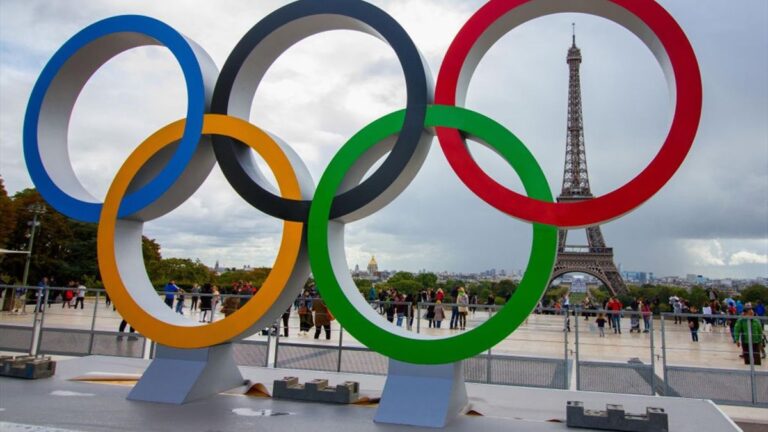
Crucially, the IOC represents a global community, transcending borders and ethnicities. The establishment of the Refugee Olympic Team, in collaboration with the United Nations High Commissioner for Refugees, exemplifies the IOC’s dedication to inclusivity. By providing a platform for athletes facing political or social disasters, the IOC reinforces the Olympic symbol of unity represented by the five rings.
Caster Semenya
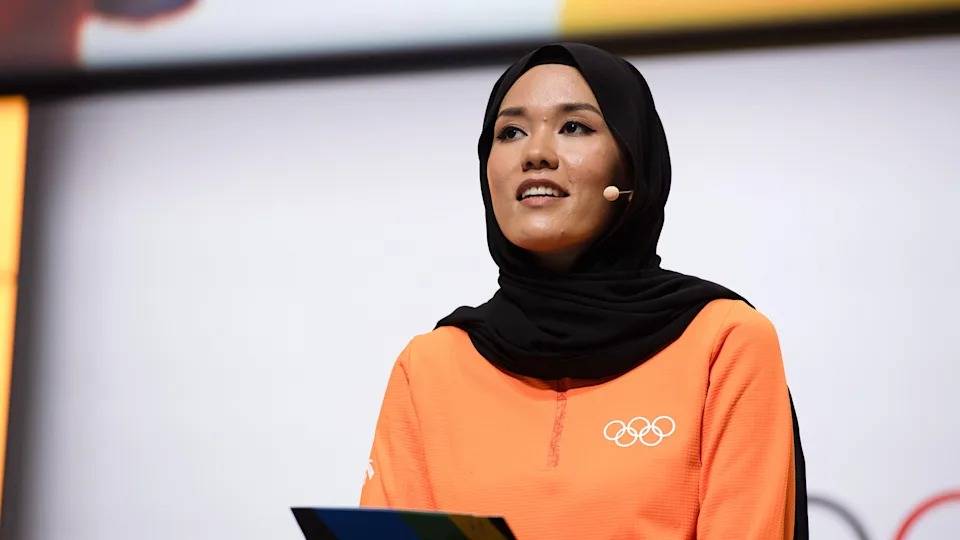
In preparation for the Paris 2024 Olympics, a team of 66 athletes, representing 12 sports, will carry the Olympic flag as the Refugee Team. The team leader, Masomah Ali Zada from Afghanistan, symbolizes resilience and embodies the spirit of overcoming challenges.
Masomah Ali Zada
Beyond refugee athletes, the IOC navigates complex geopolitical scenarios, allowing athletes from countries facing political transitions, international sanctions, or suspensions to compete under the Olympic flag. Notable instances include athletes from Kuwait and the Federal Republic of Yugoslavia participating under the Olympic flag during bans or UN sanctions.
Fehaid Al-Deehani
Despite geopolitical tensions, the IOC continues to prioritize humanitarian aid, extending support to refugee camps and welfare facilities. In response to the Russian attacks in Ukraine, the IOC has provided significant humanitarian aid, demonstrating a commitment that goes beyond the realm of sports.
In a recent decision, the IOC approved the participation of Russian and Belarusian athletes in the Olympics, despite protests, showcasing a delicate balance between sports and geopolitical crises. This decision is not an endorsement of war but an invitation to athletes to remain engaged in sports despite challenging circumstances.
In the face of global challenges and crises, the IOC stands as a beacon of humanity, making decisions that prioritize the rights of athletes, inclusivity, and a commitment to a world united through sports.
President Ranil Wickremesinghe issues a Gazette declaring all service, work or labour, of any description whatsoever, necessary or required to be done in connection with the maintenance, and the reception, care feeding, and treatment, of patients in hospitals, nursing homes, dispensaries, and other similar institutions, as Essential Services.
The President’s Media Division confirms that the presidential election will be held within the mandated period and according to the current timeline: added that the general election will be held next year and financial provisions will be provided for in the 2025 budget.
The government expects the Sri Lankan Rupee to strengthen against the US Dollar, dropping to as low as Rs. 280, Cabinet Spokesman Minister Bandula Gunawardena said.
The Government appoints a committee to review Memorandums of Understanding (MoUs) between foreign and local institutes, to check compliance with national interest. State Minister for Defence Premitha Bandara Tennakoon said that the move was in response to growing concerns over the adequacy of existing MoUs between foreign and local institutes.
The proposal to introduce courses on artificial intelligence to the education system receives Cabinet approval. As a part of the strategic plan, a pilot project is designed to introduce artificial intelligence courses to general education.
International Bhagavad Gita Festival 2024 or ‘International Gita Mahotsav’ will be held in Sri Lanka. The International Gita Mahotsav is conducted by the Kurukshetra Development Board (KDB) in Haryana State in India to pay tribute to the sacred ‘Bhagavad Gita’ along with the series of religious activities related to sacred Bhagavad Gita.
The Cabinet gives its approval for the creation of a National Hospital and a Children’s Hospital in the Biyagama region of Gampaha. The government cites the significant population growth and industrialization of the Gampaha District, making it a crucial hub for service delivery.
The Ceylon Electricity Board (CEB) assured the Supreme Court that it is prepared to pay interest for the year 2023 on security deposits collected from consumers for new service connections. The statement was made during the hearing of a fundamental rights petition filed by the Electricity and Renewable Energy Consumers’ Association before a three-member bench.
Sri Lanka has been honored as a UN World Restoration Flagship for its significant contributions to rebuilding and restoring mangrove ecosystems. This recognition, awarded at the United Nations Environmental Assembly on February 27, 2024, applauds the nation’s impactful and sustainable efforts to preserve ecosystems crucial for countless lives and livelihoods.
Sri Lanka plans to test new combinations in the final match on Wednesday at the ODI series against Afghanistan. Notable changes may include resting key spinners Wanindu Hasaranga and Maheesh Theekshana, providing opportunities for Dunith Wellalage and Akila Dhananjaya. While the batting lineup is likely to remain unchanged, Avishka Fernando is expected to rejoin the squad after a brief absence for the birth of his child.
February 14, Colombo (LNW): There are reports of a significant objection being raised through the Sri Lanka Rugby Executive Committee concerning the upcoming Colombo International Rugby 11’s Tournament scheduled to take place in Colombo. Multiple members of the executive committee informed us that the current acting president participated in the press conference and granted approval for it without the appropriate consent from the executive committee.
It is also alleged that Lasitha Gunaratne, a former president, voiced criticism face to face within the executive council against the current acting president for lifting the ban on the Kandy Sports Club and allowing its participation in the Clifford Cup tournament. An executive committee member objecting to this pointed out that the responsibility of conducting such a tournament is given to the Sri Lanka Rugby, where an officer appointed by Sri Lanka Rugby is responsible to the superintendence etc.
Also, Dilroy Fernando, who is working to lead the tournament, was named as unfit for a sports administration in 2013, according to a decision taken by the Rugby administration represented by Lasitha Gunaratne, Kiran Athapattu, etc., on the advice of the Sports Ministry. Also, as a reason behind all this, the executive committee member pointed out that among the reasons for imposing the ban on Dilroy, who has been banned from joining rugby by his school, is his sports organization that he is using to manage this tournament.
The executive committee member emphasized that the objection regarding the acting president granting permission to such a individual to organize a rugby tournament without adhering to proper procedures is intended to be formally communicated to the Ministry of Sports, the Minister of Sports, and the Director General of Sports. He further stated that legally, members of the executive committee have initiated discussions to seek a court order in order to obtain a censor for this tournament. The executive committee member who shows that he has the power to remove or request the removal of the Acting President by acting with a person of no good identity in relation to financial matters, betraying the authority of Sri Lanka Rugby, this will be done by the Rugby administration. It is a matter of handing over a large financial profit to a competition organization by illegally obtaining permission to be obtained from it.
“Sometimes it is possible to break the beehive and not lick the hand’”
This executive member pointed out that it is completely doubtful that a person who participated in spreading slander against the current Acting President through social media, to work in a financial environment and hand over the will of the association to a single individual without considering the constitutional matters of the association.
“This should have been accomplished through communication with Sri Lanka Rugby and presenting a comprehensive plan that ensures our district associations also benefit financially. It is utterly inappropriate for Sri Lanka Rugby to unknowingly permit the unconditional execution of such work by an organization with questionable credibility and an individual barred from assuming responsibilities.”
He is the Acting President and not someone who was elected as President by the Sri Lanka Rugby, the executive member further states. The executive committee member who points out that it is shameless for a person who has been given to look after the work until a president is appointed for Sri Lanka Rugby in this way, like many other executive committee members about this tournament and the participation of Acting President Nalin De Silva, and the permission of Sri Lanka Rugby. The member mentioned got to know of the situation through media reports. “They lack the expertise on how to get the huge amount of money that we should be receiving from international rugby. They have made quite a mess by going to spend sponsor money. In addition, when there is a tournament that can generate more income for the Sri Lanka Rugby Fund, they appointed a man who has been accused and banned by the administration is allowed to do it secretly without paying attention to it.”
Based on all these facts, the executive committee member points out that the majority of the executive committee members have agreed to present matters not only to the Minister of Sports, the Director General of Sports, but also to the law. He said that Rizly Illiyas, who was a president who fought not only for politicians but also for the international community, to protect the independence of Sri Lankan Rugby, had the wrong idea that such a person is suitable for work.
“Many people supported Nalin due to their admiration for Illiyas. Or Nalin, the president who did not oppose Asanga’s work and was fined 50,000 pounds. Now it seems that Nalin is the zombie who sent the people who opposed Illyas away from Illyas’ control.”
He says that Nalin de Silva, who was in the Rugby administration led by Rizly Illyas, showed a completely different behavior to that administration and betrayed the conscience of the Rugby executive council. According to him, Nalin de Silva’s current demeanor is likened to a lizard adorned with gold on its back.
February 14, Colombo (LNW): Several spells of showers will occur in Eastern and Uva provinces and in Polonnaruwa, Matale and Nuwara-Eliya districts.
A few showers may occur in Hambantota and Anuradhapura districts.
Showers or thundershowers may occur at a few places in Western and Sabaragamuwa provinces and in Galle and Matara districts after 2.00 p.m.
Fairly strong winds about (30-40) kmph can be expected at times in eastern slopes of the central hills and in Northern, North-Central, Southern,North-western, Uvaand Easternprovinces.
Misty conditions can be expected at some places in Western and Sabaragamuwa provinces and in Galle and Matara districts during the morning.
February 13, Colombo (LNW): In a promising sign for Sri Lanka’s economy, tourism earnings soared to a pre-pandemic peak of US$ 341.8 million in January 2024 tourism ministry announced. .
This resurgence indicates a significant recovery for the industry, which faced a prolonged downturn since the onset of the pandemic four years ago.
This milestone marks the first time since February 2020, when earnings reached US$ 391.1 million.
The industry was then rebounding from the aftermath of the 2019 Easter attacks and bracing itself just weeks before the country reported its first locally transmitted Covid-19 case, triggering nationwide lockdowns.
In the recent past, Sri Lanka experienced a surge in arrivals, grabbing daily headlines and signaling a promising outlook for the tourism industry in 2024.
This expansion, potentially leading to the highest number of arrivals and trade earnings since the record highs of 2018, is a notable development.
Thai Airways resumes direct flights to Colombo with MAC Holdings as sales agent.
Expanding its subcontinent profile, Thailand’s national carrier Thai Airways has announced resumption of direct flights to Colombo, connecting the Far-east and Southwest Pacific towards Sri Lanka.
Thai Airways International has also signed the General Sales Agency (GSA) Agreement with MAC Holdings Ltd. MAC to be the Airline’s forefront as their General Sales Agent within the region for Sri Lanka and Maldives.
Thailand as a famous leisure destination in the region with Bangkok its capital city is well known for night life, excellent cuisine and an oasis of history and culture. Bangkok being a vital hub is not only popular for tourism but also for religious, economic and trade activities.
The operation of Thai Airways marks its re-entry to the Sri Lankan market after three years of absence due to the COVID-19 pandemic and brief 20-day operation, due to the Sri Lankan economic issue during May last year and the lack of fuel.
Nevertheless, throughout the pandemic Thai Airways continued to play a pivotal role in maintaining essential air cargo services with P2C charter flights to Sri Lanka.