Home Blog Page 1270

Dollar rate at commercial banks today (Jan 02)

0

January 02, Colombo (LNW): The Sri Lankan Rupee (LKR) has largely appreciated against the US Dollar today (02) in comparison to yesterday as revealed by leading commercial banks in the country.

At Peoples Bank, the buying price of the US Dollar has dropped to Rs. 315.79 from Rs. 318.14, and the selling price to Rs. 326.79 from Rs. 329.23.

At Commercial Bank, the buying price of the US Dollar has dropped to Rs. 314.55 from Rs. 317.89, and the selling price to Rs. 325 from Rs. 328.

At Sampath Bank, the buying price of the US Dollar has dropped to Rs. 316 from Rs. 318.5, and the selling price to Rs. 325 from Rs. 327.5.

State Minister unveils economic progress and ambitious targets, asserts increase in state revenue to 15% of GDP by 2026

0

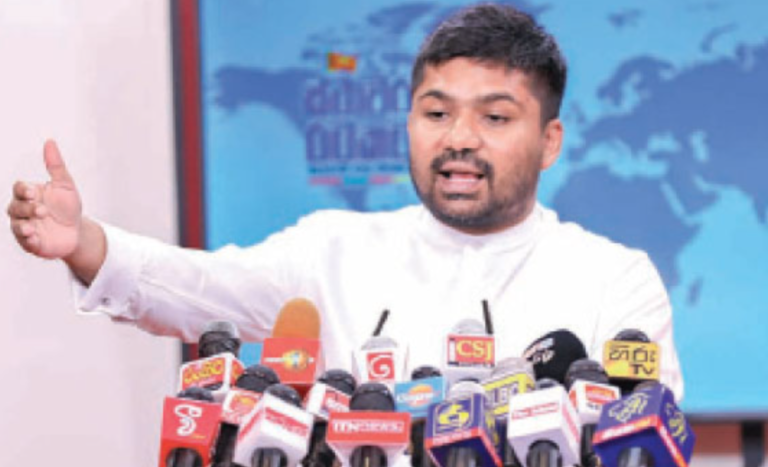
January 02, Colombo (LNW): Finance State Minister Shehan Semasinghe highlighted the positive impact of sustained single-digit inflation on business confidence during a press conference at the Presidential Media Centre titled ‘Collective Path to a Stable Country’ yesterday (01).

In the session, the State Minister revealed that state revenue constituted 11.2 per cent of the Gross Domestic Product (GDP) in 2023, with projections foreseeing an increase to 15 per cent by 2026.

Discussing the economic landscape, Semasinghe indicated an anticipated 1.7 per cent economic growth in the third quarter of 2023, emphasising the significant recovery expected in 2023, projecting an overall economic growth of approximately -3 per cent, a marked improvement from the -11 per cent recorded in 2022.

The primary account balance, negative at Rs. 895 billion in 2022, has now turned positive, standing at Rs. 333 billion as of November 2023, he added.

Semasinghe also shared that the receipt of the second tranche from the International Monetary Fund (IMF) is expected to boost foreign reserves to surpass US$ 4 billion, with the inclusion of contributions from the IMF, Asian Development Bank (ADB), and World Bank (WB).

Maintaining single-digit inflation has played a pivotal role in fostering business confidence, notably reducing from 70 per cent in 2022 to an expected 5 per cent in 2024. This accomplishment is crucial for building trust in the country’s business environment, he emphasised.

In terms of state income, an anticipated Rs. 3110 billion in 2023 is expected to surpass the revised estimate of Rs. 2850 billion, representing 11.2 per cent of GDP. The government ambitiously aims for a 15 per cent growth by 2026.

The number of tax files has shown an upward trend, reflecting positive tax compliance. In 2022, the figure rebounded from 437,547 to a significant milestone of one million, showcasing success in policy implementation.

The government, addressing challenges inherited upon assuming office, effectively settled unpaid bills exceeding Rs. 350 billion. A principled commitment has been established to ensure that payments are not delayed by more than one month, starting from 2024.

In the upcoming year, the government plans to initiate the ‘Aswesuma’ application process at the end of January or the beginning of February 2024. The December instalment for 1,410,064 beneficiaries has already been disbursed, and the government aims to extend these benefits to a total of 2 million people, demonstrating a commitment to effective and targeted support through rigorous efforts to identify eligible recipients and rectify shortcomings observed in the benefits distribution process from the preceding year.

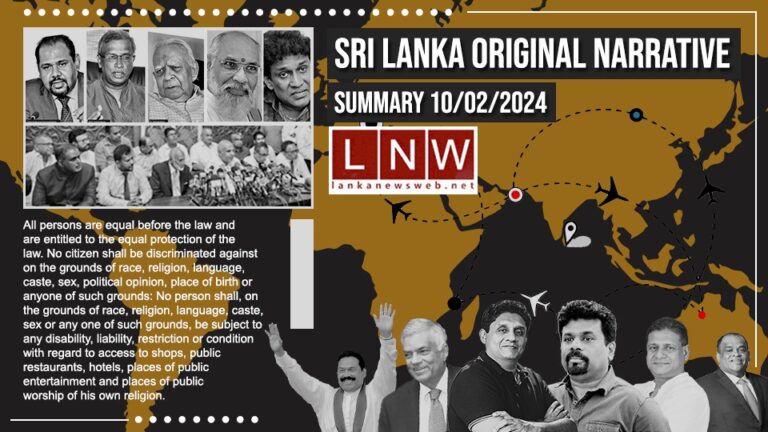
Sri Lanka Original Narrative Summary: 02/01

0

  1. Litro Gas Chairman Muditha Pieris says the price of a 12.5kg cylinder of Litro domestic LP gas has been increased with effect from 1st Jan’24 by Rs.685 to Rs. 4,250, 5kg by Rs.276 to Rs.1,707, and 2.3 kg by Rs.127 to Rs.795: the price of a 12.5kg cylinder in March’22 was Rs.2,675.
  2. National Transport Commission says bus fares will not be increased even though the price of diesel has been increased.
  3. SJB trade union leader Ananda Palitha says the Govt is continuing to charge Rs.50 on a litre of petrol and diesel “to recover losses” incurred by the state-owned Ceylon Petroleum Corporation, even after imposing 18% VAT on fuel from 1st Jan’24: analysts say LIOC & Sinopec make windfall profits as a result.
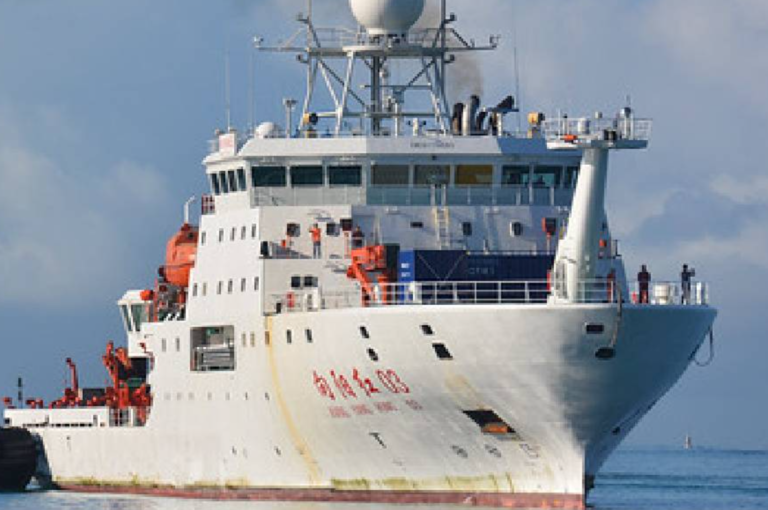
  4. Informed sources say SL has given an undertaking to India that it will not allow any Chinese research vessels to dock at its Ports or operate within its exclusive economic zone for 1 year: also say this means Chinese scientific research vessel “Xiang Yang Hong 3”, scheduled to conduct “deep water exploration” in the South Indian Ocean from 5th Jan’24 to late May, will not be granted clearance by SL authorities: in 2023, at least 25 Chinese ships including warships, submarines, ballistic missile trackers and research vessels have operated in the Indian Ocean Region.
  5. Tourism Development Authority says 210,352 tourists arrived in Dec’23, bringing the total tourist arrivals to 1,487,303 in the year 2023.
  6. Agriculture Minister Mahinda Amaraweera says a special programme has been launched to increase the local coconut production by 1 bn nuts in the next 3 years to achieve a total production of 5 bn nuts.
  7. SLPP MPs Professor G L Peiris & Dilan Perera declare that they will move to form a political alliance under the leadership of Opposition Leader in view of the Presidential Elections.
  8. Official data shows SL’s imports fell significantly in Nov’23 to USD 1,389mn from USD 1,610mn in Oct’23: worker remittances also drop drastically in Nov’23 to USD 384mn from USD 683mn in Oct’23.
  9. President’s Office State Revenue Unit Director General M J Gunasiri says Govt revenue has surpassed Rs.3,000bn in 2023 for the 1st time in history: says Govt collected Rs.3,115bn: also says the Govt’s tax revenues have been able to meet the expenses other than the interest expenses.
  10. Customs Senior Director Seevali Arukgoda says SL Customs has made its highest revenue generation of Rs.970bn in 2023: also says this achievement is 109% of the amended revenue target of Rs.893bn: the original revenue target set for Customs at the start of 2023 was Rs.1,217bn, but later reduced to Rs.893bn owing to the “unstable economic situation”.

President asserts responsibility for challenging policy decisions

0

January 02, Colombo (LNW): President Ranil Wickremesinghe attending the opening ceremony of the new Air Force Headquarters at Akuregoda, Battaramulla Military Headquarters expressed his hope for unity in the New Year and asserted that he bears responsibility for the challenging decisions made.

He called for collaboration among political parties to fulfil their collective responsibility in safeguarding the nation, deflecting attention from the ongoing criticism.

Despite facing backlash for the policy decisions implemented by the government, he defended them, claiming they were made in the best interest of the country.

As the Commander-in-Chief, President Wickremesinghe received military honours upon his arrival at the Air Force Headquarters, presenting this as a significant step in the nation’s commitment to modernise its defence infrastructure.

While inaugurating the new Air Force Headquarters, he participated in the observation of the parade organised by the Air Force, showcasing a symbolic display of Air Force planes soaring in the sky as a tribute to the President.

Full Statement:

Today marks a momentous occasion for the Air Force, commemorating 73 years of dedicated service. Throughout its history, the Air Force has played a pivotal role in rescuing citizens from the perils of terrorist wars, internal conflicts, and natural disasters. 

The inauguration of the modern Air Force Headquarters equipped with cutting-edge technology signifies a significant milestone, enabling the provision of technical expertise crucial for addressing future challenges.

The Air Force”s role in positioning Sri Lanka as a defence hub in the Indian Ocean is of immense significance. To fulfil this role effectively, our forces must advance with new knowledge and technology. 

The application of modern security knowledge not only aids in addressing domestic challenges but also empowers us to identify and resolve international issues.

The establishment of the Air Force Headquarters within the Army Headquarters today is viewed as an inaugural move towards the modernisation of our defence infrastructure. 

As part of a comprehensive plan, the previous Air Force Headquarters office is scheduled to be transferred to the Police Headquarters, optimising the use of existing facilities. Additionally, there are strategic intentions to dismantle the structures formerly housing the Police Headquarters and the Ministry of Foreign Affairs. 

This ambitious initiative envisions transforming the vacated area into a vibrant tourist zone, aligning with broader urban development objectives and promoting economic diversification.

The present challenge before us is the task of rebuilding the country’s economy, a responsibility that rests on the shoulders of all citizens. Upon assuming the presidency, I inherited a nation grappling with a complete economic collapse. 

Consequently, the onus to revive the country’s economy was entrusted to me. Faced with a critical decision, I deliberated with the cabinet on whether to engage in political exercises or directly focus on the formidable task of economic reconstruction.

Contemplating the economic hardships confronting Lebanon, where an economic programme encountered a two-year delay, and the extended recovery period of Greece lasting thirteen years due to political instability, I sought an alternative path. Unlike the extreme measures adopted by certain nations, like slashing public service wages by 50%, I was resolute in avoiding such severe actions. 

Recognising a decline in our Gross Domestic Product (GDP), we opted for a more calculated and direct strategy. Through the implementation of clear-cut decisions, our aim was to attain a specific level of economic resilience by the end of 2023.
To fortify the nation’s economy, timely and essential decisions must be made. 

Our aim is to attain a 3% economic growth rate this year, with a commitment to advancing even more rapidly. Several countries have expressed their support, raising inquiries about our ability to service the incurred debt in the future. To address this concern, it is imperative to diversify and create new sources of income, ensuring the sustainability of our economic recovery.

Last year, the government revenue reached Rs. 3.1 trillion, constituting 12% of our GDP. As part of our strategic vision, we aim to elevate the GDP to 15% by 2026. In the year 2024, we have set a target of achieving Rs. 4.2 trillion in government revenue, necessitating a revision of the Value Added Tax (VAT).

In our pursuit of fiscal responsibility, we anticipate a primary surplus of 8 decimals. However, it is essential to maintain a primary surplus at 2.3 until 2025 as we diligently work towards these objectives. Despite the inherent challenges, our commitment to a comprehensive programme aimed at strengthening the country’s economy remains unwavering. 

Acknowledging the inherent difficulty of the task at hand, I have carefully considered the challenges associated with the decisions we are making. It is not without recognising the complexities and obstacles that I have pondered these choices extensively. 

The weight of the responsibility lies in understanding that without taking these decisive measures, we risk facing a recurrence of the last economic crisis.
Conversely, implementing this programme represents an opportunity for the country to forge a path toward a better future. Despite the difficulties, the potential for positive transformation and sustained growth is significant. 

It is with a clear understanding of these considerations and a steadfast commitment to the well-being and prosperity of the nation that I have made these decisions for the country.

Assuming the role of the presidency was not driven by a desire for popularity but rather a commitment to nation-building and securing a prosperous future for citizens and their children. Consequently, challenging decisions must be made for the greater good. I have communicated these decisions to the Prime Minister and the Cabinet, who have concurred, and I express gratitude for their support.

Recognising the challenges associated with tax collection, we have sought assistance from the International Monetary Fund (IMF) to establish a new revenue authority. These collaborative efforts aim to elevate the country”s economy to approximately 5% by the fiscal year 2025-2026.

The current trajectory falls short of our aspiration for future generations, necessitating a growth target of 8%-9%. Deliberations are underway to chart a course towards achieving this ambitious goal.

In assuming the responsibility of making challenging decisions to fortify the nation’s economy, I bear the accountability for these choices. It is incumbent upon fellow politicians to recognise their duty in safeguarding the nation. 

Collaboration is imperative as we unite to bolster the country’s economic foundations. A collective effort is pivotal in ensuring swift development post-2024. I earnestly call upon everyone to contribute to this shared endeavour.

Present at this event were various individuals, including State Minister for Defence Mr. Premitha Bandara Tennakoon, Senior Adviser to the President on National Security and Chief of Staff to the President Mr. Sagala Ratnayaka, Secretary to the Ministry of Defence General Kamal Gunaratne (Retired), Governor of the Western Province Marshal of the Air Force Mr. Roshan Gunathilake, Chief of Defence Staff General Shavendra Silva, Air Force Commander Air Marshal Udeni Rajapaksa, Army Commander Lt. Gen. Vikum Liyanage, Navy Commander Vice Admiral Priyantha Perera, and a group of military officers, which also includes retired Air Force personnel.

Customs achieves historic fiscal milestone with revenue surpassing Rs. 900bn threshold

0

January 01, Colombo (LNW): Sri Lanka Customs in the fiscal year 2023 has realised a historic milestone by surpassing a revenue threshold exceeding Rs. 900 billion, Customs Spokesman Seevali Arukgoda disclosed.

Remarkably, the department’s revenue for the year reached Rs. 970 billion, establishing a new pinnacle and registering the highest annual total in its operational history.

This achievement reflects a substantial increase, with the revenue collected in 2023 standing at 138 per cent higher than that of the year before.

Initially, the Finance Ministry had set an ambitious revenue target of Rs. 1,217 billion for the year 2023. However, economic challenges necessitated a subsequent revision, restricting the target to Rs. 893 billion.

It is noteworthy that, despite the adjustment in the targeted revenue, the actual revenue collected in 2023 still represents the highest annual figure on record.

A historical perspective reveals that in 2018, Sri Lanka Customs had previously attained a significant revenue of Rs. 923 billion.

Showers, thundershowers forecasted in multiple regions: Cloudy skies to prevail in most parts of the island

0

By: Isuru Parakrama

January 02, Colombo (LNW): Cloudy skies will prevail in most parts of the island, with showers or thundershowers being expected at times in Eastern, Uva and Southern provinces and in Matale, Polonnaruwa and Nuwara-Eliya districts, the Department of Meteorology said in its daily weather forecast today (02).

A few showers are likely in Northern province and in Anuradhapura district, and showers or thundershowers may occur at several places elsewhere of the island after 2.00 p.m, the statement added.

Fairly heavy showers above 75 mm are likely at some places in Eastern, Uva, Western, Sabaragamuwa and Southern provinces.

Misty conditions can be expected at some places in Western, Sabaragamuwa and Central provinces during the morning.

The public is kindly requested to take adequate precautions to minimise damages caused by temporary localised strong winds and lightning during thundershowers.

Marine Weather:

Condition of Rain:
Showers or thundershowers will occur at times in the sea areas off the coast extending from Trincomalee to Galle via Pottuvil and Hambantota. Showers or thundershowers may occur at several places elsewhere in the sea areas around the island during the afternoon or night.
Winds:
Winds will be north-easterly and wind speed will be (25-35) kmph. Wind speed may increase up to (40-50) kmph at times in the sea areas off the coasts extending from Colombo to Kankasanthurai via Puttalam and Mannar and from Pottuvil to Galle via Hambantota.
State of Sea:
The sea areas off the coasts extending from Colombo to Kankasanthurai via Puttalam and Mannar and from Pottuvil to Galle via Hambantota will be fairly rough at times. The other sea areas around the island will be moderate. Temporarily strong gusty winds and very rough seas can be expected during thundershowers.

LAUGFS announces gas price hike

0

January 01, Colombo (LNW): Private LP gas vendor LAUGFS Gas today (01) announced a price hike on their domestic LP gas cylinders, in response to the revised value-added tax (VAT).

Accordingly, the price of a 12.5 kg domestic gas cylinder will soar by Rs. 755 to Rs. 4,740.

The price of a 5 kg domestic gas cylinder will soar by Rs. 305 to Rs. 1,900.

Major earthquake strikes Japan, triggering Tsunami alerts and causing widespread damage

0

January 01, World (LNW): Japan experienced a significant seismic event on Monday (01), as a potent earthquake with a magnitude of 7 on the local shindo scale rattled the nation, international reports claimed.

This marked the highest intensity on the scale, triggering tsunami alerts along the entire western coast.

Following the powerful shock, originating near Ishikawa Prefecture’s Noto Peninsula at approximately 4:10 p.m., tsunami waves swiftly reached some regions.

The earthquake, registering at a magnitude of 7.6, resulted in collapsed buildings trapping at least six individuals.

Reports from local authorities and fire departments indicated numerous houses collapsing in parts of Ishikawa, with approximately 32,500 homes losing power in the prefecture.

Wajima, Ishikawa, experienced a large-scale fire, according to local sources. Although injury figures were not immediately clear, NHK reported that several individuals were hospitalised in affected areas.

A major tsunami warning, the highest alert level, was issued for Ishikawa Prefecture’s Noto Peninsula, with the weather agency cautioning about potential 5-metre waves in the area.

Other regions along the Sea of Japan coast, spanning from Hokkaido to Nagasaki, were under tsunami warnings or advisories, predicting waves of up to 3 metres.

The warning for Ishikawa, Niigata, Toyama, and Yamagata urged residents to evacuate coastal areas promptly. By 4:21 p.m., waves exceeding 1.2 metres had reached the Noto Peninsula’s Wajima Port in Ishikawa. NHK emphasised that wave heights might vary based on specific locations.

The Meteorological Agency highlighted that a major tsunami warning of this magnitude had not been issued since the March 2011 Great East Japan Earthquake.

Areas experiencing strong shaking were cautioned about potential shindo 7 aftershocks over the following week, particularly in the next two to three days.

Prime Minister Fumio Kishida urged affected residents to remain vigilant in the face of potential aftershocks. He specifically called on coastal areas expecting tsunamis to evacuate promptly.

Is deferring parate rights a sensible option for the Govt.?

0

There is huge pressure on the Government to defer parate rights for 12 months to give some breathing space to the tourism sector and SMEs, largely due to the super high borrowing rates of 2022. For example, the hospitality sector debt as at April 2019 stood at $ 300 million. The amount has now nearly doubled to $ 700 million (mainly due to unrealistic interest rates and penalties) – which is simply not sustainable particularly as tourist arrivals are less than the 2018 figures and also the room rates are still less than 2018 rates. 

Whilst bankers say they need to hold the whip of “parate rights,” SMEs say banks shouldn’t be allowed to crack it irresponsibly. What has happened in the recent past they say is irresponsible cracking of the whip. But the whip is important for banks because there are wilful defaulters who piggy back on the current sentiment to exploit the banking system. So, there is a need to be extremely cautious when compromising on parate rights to prevent these elements to exploit banks and also affect the ratings of banks. The bigger issue is some of the banks have the minimal or no collateral for large ‘too big to fail’ exposures, this could have cataclysmic impacts to banks and country if they go down. 

When banks do further debt restructuring, the entire loan goes into stage 3 as per IFRS9

Therefore banks need serious skills at board level to manage these challenges. Of course legislation could be brought to ensure that the genuine entrepreneurs are protected. CBSL needs to reach out to the respective banks on individual/group cases and put pressure on them to provide relief to the genuine cases. Banks certainly need good businesses to lend. So it is in their interest to help them to ride over the current crisis largely caused by the mismanagement of the economy and the COVID wave of 20-21. 

 President Wickremesinghe terming the task of economic revival following bankruptcy a “formidable” one, recently noted, “Our country’s situation is now better than what it was a year ago. I am not saying that the economy has recovered completely. It has become comparatively better”  

Expectations from banks 

Banks are only expected to pursue parate after exhausting all revival and recovery options, (typically after around 3 to 4 years of efforts – moratoriums, restructures, concessionary rebates and WC loans, revival efforts, etc.). Any compromise of the parate rights should not strengthen the claims of wilful defaulters. There is an increasing trend of stay orders and opportunity for fair hearing by courts where businesses get 1-2 years further breathing space. Once a precedent is created to defer it will be politically difficult to reintroduce. This will create moral hazard as even good customers will resist servicing debt causing an increase impairment levels of banks to rise further, threatening the banking sector stability.

It will become more difficult for SMEs to borrow as banks will further tighten underwriting standards, this will stifle credit and GDP growth in 2024, weakening economic resurgence. If there is no economic resurgence in 2024 (following four consecutive years of negative growth) this will exacerbate youth and skilled migration, increase poverty levels and make it more difficult to attract FDIs. 80% of troubled SME businesses have revived with the current business environment, due to tourism and remittances rebounding in the last six months, but certainly there is a need for working capital requirements and debt payment support. 

President Wickremesinghe terming the task of economic revival following bankruptcy a “formidable” one, recently noted, “Our country’s situation is now better than what it was a year ago. I am not saying that the economy has recovered completely. It has become comparatively better.”


Options for the Government 

To address the challenges faced by SMEs under the current parate law, a more specialised and financial structure and financial engineering is necessary. The proposed amendments should aim at creating a balanced framework that protects the interests of both the banks and the SMEs. One credible option is to introduce a tiered recovery program. The parate law (which was introduced to prevent the undue law delays that gave undue advantage to borrowers) certainly needs serious reform. Therefore a good start would be to establish a structured tiered recovery program. This system would mandate banks to exhaust certain steps before resorting to parate action. These steps could include mandatory negotiation periods, structured repayment plans, and engagement with restructuring advisers. Such a system would ensure that parate execution is truly a last resort, especially for those businesses who were viable prior to COVID or before the interest rates went through the roof. 

Another proposal is the creation of a specialised SME/tourism restructuring board to ensure that both parties have fair representation. The tribunal could offer alternative solutions like loan restructuring, temporary moratoriums on payments, or even partial loan forgiveness in extreme cases. Another compromise could be to limit the forced sale to a certain percentage of the asset value, giving the SME time to recover and pay off the remaining debt. This would prevent complete asset seizure at the first stage of default. 

Also with the support of WB/IFC set up a mandatory financial counselling and support for SMEs. CBSL must mandate banks to provide financial counselling and support services to SMEs before initiating parate execution. This would include advice on financial management, assistance in restructuring businesses, HR solutions, governance and guidance on alternative financing options. With the support of the World Bank the Government should look to set up an insurance credit guarantee fund or a bad bank. This fund would act as a safety net, reducing the risk for banks and giving them more flexibility in dealing with loan defaults.  

Tax credits for banks supporting SMEs is also an option. This could include tax breaks for banks that restructure loans instead of resorting to parate execution. Broadly should be a tax rebate to banks on the interest cost on the restructured loans. One option is to consider granting exemption from FS VAT for interest income derived from lending to thrust sectors such as tourism, renewable energy sector, etc., so banks can consider lending at subsidised rates. 

In the final analysis given the role of tourism and SMEs in Sri Lanka, the Government needs to reach out to support them while also protecting the interests of the banking sector. The Government should not test the system beyond a point. Some push back with the IMF is required, but with the right human resources. Certainly not with half backed bureaucrats. It is therefore essential that any changes to parate law are carefully done to ensure a sustainable solution in the medium term for both SMEs and banks. Also not adversely impact their ratings. 

The proposed bad bank is a must (a bad bank is a bank set up to buy bad loans and illiquid assets of financial institutions. The institutions holding the nonperforming assets will sell these holdings to the bad bank at market price) and finally the realignment of the two former development banks (Govt. has significant stakes) to help the industry with long-term money. We can no longer be experimenting with poorly baked solutions. 

References:

https://www.pressreader.com/sri-lanka/daily-mirror-sri-lanka/20180720/282080572619387

http://island.lk/parate-execution-is-the-last-resort-to-protect-depositors-funds-slba/

Source: DailyFT

SINOPEC announces discount for petrol and diesel prices

0

January 01, Colombo (LNW): SINOPEC announced it will provide a discount of Rs. 3 per litre for 92 Octane Petrol and Auto Diesel, hours after the announcement of the private energy solution provider’s fuel price revision.

Earlier this morning (01), SINOPEC and Lanka Indian Oil Company (LIOC) increased the fuel prices tallying with that of the state-run Ceylon Petroleum Corporation (CEYPETCO).

However, SINOPEC asserted that this discount will be given for the aforementioned two types of fuel in celebration of the New Year.