Home Blog Page 130

Board of Investment Loopholes Fuel Tax Evasion, Dollar Drain

0

Sri Lanka is quietly hemorrhaging foreign exchange as a section of Board of Investment (BOI)-approved firms manipulate tax concessions and export regulations to profit from the domestic market rather than earn dollars, an investigation has revealed.

Spanning sectors from apparel and processed food to plastics and palm oil, these companies exploit BOI privileges to import machinery, accessories, and raw materials duty-free—benefits granted to attract export-oriented investment. Yet, instead of fulfilling their mandate to export 80 percent of output as required under Section 17 of the BOI Act, many divert bulk production to the domestic market.

This practice not only deprives the Treasury of millions in revenue but also drains foreign reserves while distorting competition for local manufacturers. “Legitimate businesses cannot compete with firms that use loopholes to evade taxes,” a senior Trade Ministry official told this newspaper.

Paper Exports, Real Profits

In the apparel sector, several BOI-licensed manufacturers allegedly declare shipments on paper while channeling large volumes of garments into the local market through subsidiary trading companies. By avoiding customs duties and value-added tax (VAT), they can undercut compliant producers by 20–30 percent.

“This is a systemic failure,” warned an economist specializing in export industries. “The BOI framework is designed to bring in foreign exchange, but loopholes mean the country loses both tax revenue and dollars every month.”

Palm Oil Racket Exposed

The palm oil industry offers perhaps the starkest example. Under the Indo-Sri Lanka Free Trade Agreement, BOI refiners receive quotas to export refined oil to India. Instead, many divert nearly their entire production to the domestic market while declaring fictitious exports.

Maintaining bonded warehouses and shell trading companies, these firms avoid the 18 percent VAT and other duties, giving them a cost advantage over compliant producers. Customs data shows Sri Lanka imports about 20,000 metric tonnes of edible oil monthly, costing $15–20 million in scarce foreign exchange. Analysts estimate this misuse drains $150–200 million annually.

“The palm oil racket illustrates how export incentives are hijacked for local profiteering,” said a trade expert. “Meanwhile, coconut oil producers and small edible oil refineries are pushed to the brink.”

Treasury Loses, Public Pays

The fallout is widespread. Local garment producers, edible oil refiners, and coconut growers face shrinking margins due to artificially cheap competition, while the Treasury loses vital revenue at a time when every rupee counts. For ordinary citizens, the hidden cost is higher taxes and reduced social spending to offset state losses.

Parliamentary committees have repeatedly raised the issue, but enforcement remains sporadic. Finance Ministry sources argue that stricter audits, continuous surveillance of bonded warehouses, and heavy penalties are urgently needed.

“If unchecked, Sri Lanka will continue subsidising tax evasion at the expense of ordinary taxpayers and genuine exporters,” one senior official warned.

The question now is whether the government has the political will to plug these holes—or whether vested interests will keep bleeding the economy dry.

Sri Lanka Unveils Hydrogen Roadmap to Power Green Energy Future

0

Sri Lanka has taken a major step towards reshaping its energy landscape, launching a National Renewable Hydrogen Policy and a Just Energy Transition (JET) Study with support from the United Nations Development Programme (UNDP). Officials say the twin initiatives are designed to position the island as a regional hub for renewable hydrogen while ensuring an equitable shift to clean energy.

Hydrogen Policy and Financing Framework

The hydrogen roadmap was presented at the recent Renewable Hydrogen Stakeholder Consultation Workshop: From Strategy to Actions, jointly organized by the Ministry of Energy, the Sri Lanka Sustainable Energy Authority (SLSEA), and UNDP. The event brought together policymakers, private investors, financiers, academics, and international experts to discuss how Sri Lanka could build a viable hydrogen economy.

According to the UNDP, Sri Lanka’s abundant renewable energy resources—particularly wind and solar offer the potential to produce hydrogen that can decarbonize power generation, heavy industry, and transport. The policy outlines measures to integrate hydrogen into the energy mix, establish safety standards, and attract foreign investment.

The government also launched the Integrated National Financing Framework (INFF) Strategy for the Energy Sector, which provides recommendations for mobilizing both domestic and international finance. The INFF aims to align public and private resources with Sri Lanka’s renewable energy goals, helping accelerate a fair and inclusive transition.

Just Energy Transition

The JET study, developed with UNDP technical expertise, highlights practical pathways for Sri Lanka to reduce dependence on fossil fuels without leaving vulnerable communities behind. It emphasizes job creation, energy affordability, and protecting workers affected by the shift to renewables.

“This study ensures people remain at the centre of the transformation,” said Marina Ten, Officer-in-Charge of UNDP in Sri Lanka. “Taken together, the hydrogen policy, INFF, and JET provide Sri Lanka with the tools to attract investment, drive innovation, and deliver a clean energy transition that leaves no one behind.”

Official Statements

Energy Secretary K. T. M. Udyanaga Hemapala described renewable hydrogen as a catalyst for both energy independence and industrial competitiveness. “By embracing renewable hydrogen, we are taking a decisive step towards climate resilience while securing our energy future,” he said.

SLSEA Chairman Wijendra J. Bandara stressed the importance of practical implementation. “Our responsibility is to ensure policy becomes action on the ground. From infrastructure to safety standards and governance, we are committed to building a robust ecosystem for hydrogen to thrive.”

A Game-Changer for Investment and Security

Analysts note that renewable hydrogen could transform Sri Lanka into a regional energy hub, attracting international investment at a time when the country is struggling to rebuild its economy. It is also expected to diversify energy sources and reduce exposure to fossil fuel price volatility, a key vulnerability highlighted during the island’s recent financial crisis.

UNDP officials said the INFF will help connect Sri Lanka’s ambitions with resources, enabling the government to unlock the financing needed to meet both national development goals and the UN’s Sustainable Development Goals (SDGs).

With global demand for clean hydrogen expected to surge in coming decades, Sri Lanka’s early move into this sector could position the nation as a strategic player in the Indian Ocean energy corridor provided the policy framework swiftly translates into concrete investments and projects.

Government to Introduce QR Code System for Tea Fertiliser Subsidy

0

The government will introduce a QR code system for the distribution of fertiliser subsidies, beginning with a scheme worth Rs. 200 million for tea cultivation, Plantation and Community Infrastructure Minister Samantha Vidyarathna told Parliament yesterday (23).

Responding to a question from NPP MP Ajantha Gammedage, the Minister said the QR code system is designed to prevent irregularities in the fertiliser subsidy process and ensure transparency in supporting tea farmers.

Cabinet approval has already been secured, and the first phase of the initiative will be rolled out on September 26 in the Mathugama area of Kalutara District.

“We have received Cabinet approval to adopt this new method of providing fertiliser. The Tea Board has allocated Rs. 2,000 million for the 2025 tea fertiliser subsidy. Around 75% of the beneficiaries are small tea estate owners, and our aim is to prioritise them,” Minister Vidyarathna said.

He added that farmers will be able to redeem their QR-based fertiliser subsidies from multiple fertiliser companies registered with the Fertiliser Secretariat, including government suppliers. The scheme will be formally launched in Itthapana, Mathugama, on September 26, 2025.

Sri Lanka’s Exports Rise 6.6% in First Eight Months of 2025, Topping $11.5 Billion

0

Sri Lanka’s export sector has continued its growth momentum in 2025, recording total earnings of US$ 11,554.32 millionin the first eight months of the year — a 6.61% increase compared to the same period in 2024, the Export Development Board (EDB) reported.

In August 2025 alone, combined merchandise and services exports reached US$ 1,607.58 million, reflecting a 2.57% year-on-year growth. The EDB said the performance underscores the effectiveness of strategies to expand market access and strengthen global competitiveness.

EDB Chairman and CEO Mangala Wijesinghe noted:

“This encouraging growth highlights Sri Lanka’s increasing integration into global trade and the success of our continued efforts to strengthen export competitiveness while diversifying market opportunities. Our exporters have once again demonstrated remarkable resilience and adaptability in navigating evolving global challenges.”

He added that cumulative earnings of over US$ 11.6 billion during January–August reflect the strength, determination, and innovation of exporters despite global uncertainties.

Merchandise exports grew by 5.13% year-on-year in August, reaching US$ 1,294.83 million, according to provisional Sri Lanka Customs data. For January–August 2025, merchandise exports totaled US$ 9,092.85 million, up 6.89%compared to the previous year.

Services exports also contributed significantly, with estimated earnings of US$ 312.75 million in August. Over the first eight months of 2025, services exports grew 5.57%, reaching US$ 2,461.46 million.

The EDB highlighted that ICT/BPM, Construction, Financial Services, and Transport & Logistics remain key drivers of services exports, underscoring the rising importance of Sri Lanka’s knowledge-based economy in diversifying the country’s export portfolio and creating high-value jobs.

Govt to Consult Attorney General After X-Press Pearl Owners Refuse $1 Billion Compensation Order

0

The Sri Lankan government on Tuesday said it will seek the advice of the Attorney General after the owning company of the MV X-Press Pearl refused to comply with a Supreme Court order to pay USD 1 billion in compensation for the 2021 marine disaster off Colombo.

The Singapore-flagged container vessel caught fire in May 2021 while carrying 81 containers of hazardous chemicals, including 25 tonnes of nitric acid. The fire raged for nearly two weeks, causing catastrophic marine pollution. Billions of plastic nurdles and toxic substances spilled into Sri Lankan waters, killing marine life and devastating coastal communities. Dead turtles, dolphins, and whales washed up on beaches for weeks following the disaster.

On July 24, 2025, the Supreme Court directed the ship’s owning and operating companies to pay USD 1 billion in compensation, with an initial tranche of USD 250 million due by September 23.

However, Cabinet Spokesman Dr. Nalinda Jayatissa told reporters that the Attorney General would advise the government on the next steps after reports indicated the owners were unwilling to comply.

Company CEO Shmuel Yaskovitz, quoted in foreign media, said the ruling undermined the principle of limitation of liability in maritime law, warning that compliance could set a “dangerous precedent” for future maritime incidents.

The Supreme Court described the X-Press Pearl fire as the worst marine chemical catastrophe in Indian Ocean history, ruling it a violation of Sri Lankan fisherfolk’s fundamental right to lawful occupation.

In parallel, Sri Lanka has also filed criminal proceedings against the ship’s captain, chief engineer, and chief officerover the disaster.

FR Petition Against Appointment of CIABOC Director General Withdrawn

0

The Fundamental Rights (FR) petition challenging the appointment of High Court Judge Ranga Dissanayake as the Director General of the Commission to Investigate Allegations of Bribery or Corruption (CIABOC) has been withdrawn before the Supreme Court today (23).

The petition was filed by a group including the Chief Incumbent of the Udawalawe Soma Viharaya, Ven. Wewelduwa Gnanaprabha Thero.

The case was taken up before a three-judge bench comprising Chief Justice Preethi Padman Surasena, Justice Mahinda Samayawardhena, and Justice Sampath Abeykoon.

During the hearing, the petitioner’s attorney sought permission to withdraw the application. The court accordingly granted permission and dismissed the petition.

Dr Manoharan, father of Trinco 5 victim, dies in exile without seeing justice

0

Dr Kasipillai Manoharan, the father of Ragihar Manoharan, one of five Tamil students summarily executed by Sri Lanka’s Special Task Force (STF) in Trincomalee in 2006, has died in exile at the age of 74, without ever seeing justice delivered for his son’s murder.

On 2 January 2006, Ragihar, aged 20, was on the Trincomalee beachfront with four friends when they were executed at point-blank range by STF officers. The killing, now known as the Trinco 5 massacre, sparked outrage across the North-East and international condemnation. 

To this day, no one has been held accountable.

Dr Manoharan was among the first to rush to the scene after hearing his son’s final desperate phone call – “Daddy, the forces are around me.” Stopped by soldiers and prevented from reaching his son, he later found Ragihar’s body in the mortuary, with a gunshot wound to his head. 

Despite threats, intimidation and bribes offered by senior Sri Lankan politicians, Dr Manoharan refused to be silenced.

In the weeks following his testimony to a magistrate, his family home was attacked, his practice forced shut, and his life repeatedly threatened. He was eventually forced into exile, where he spent nearly two decades campaigning tirelessly for justice, often addressing events at the UN Human Rights Council in Geneva and demanding an independent international investigation.

His activism made him a target. Successive Sri Lankan governments attempted to buy his silence, offering him housing in Colombo and promises of protection, but Dr Manoharan rejected every offer. “I will not rest till the people behind this crime are charged,” he declared in 2019.

International human rights organisations such as Amnesty International and Human Rights Watch repeatedly highlighted his courage. Amnesty’s Secretary General Salil Shetty said in 2012, “Of the crowd of people on the seafront that night, Ragihar’s father was the only one prepared to speak out. Others were too scared.”

The Trinco 5 case was listed by the UN High Commissioner for Human Rights in 2014 as one of four “emblematic cases” that epitomised Sri Lanka’s entrenched culture of impunity. It was also noted in leaked US diplomatic cables, where Basil Rajapaksa privately admitted that the STF was responsible for the murders. Yet despite arrests of STF officers in 2013, no prosecutions were ever brought.

In 2020, Dr Manoharan’s wife, who had stood by him through years of harassment, also died in exile. Now, with his passing, both parents of Ragihar have died without seeing those responsible held to account.

Civil society in Trincomalee continues to mark the killings each year with memorial events, but justice for the Trinco 5 remains elusive. 

For Tamils, Dr Manoharan’s death is another painful reminder of how Colombo’s refusal to prosecute perpetrators of mass atrocities leaves families waiting for decades, only to die without redress.

TAMIL GUARDIAN
 

President Anura Kumara Dissanayake Arrives in New York for UN General Assembly

0

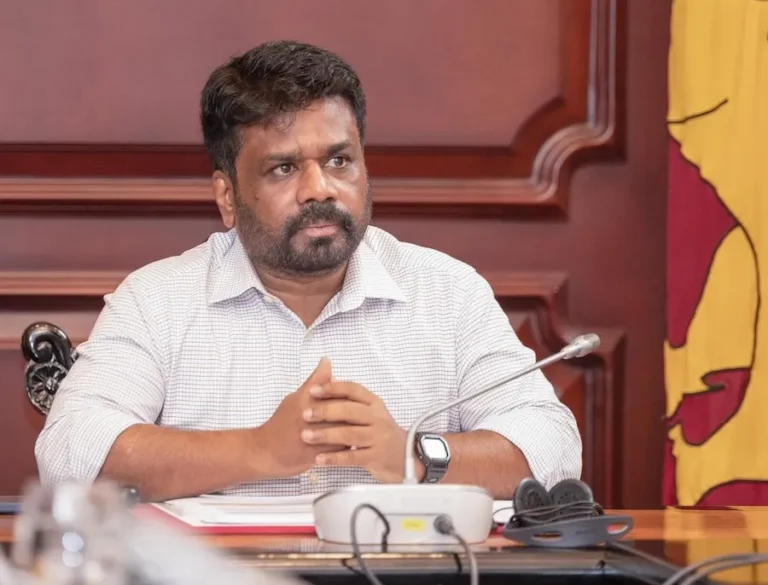
President Anura Kumara Dissanayake has arrived in New York to attend the 80th Session of the United Nations General Assembly (UNGA).

The President’s flight landed at John F. Kennedy International Airport at approximately 8:50 a.m. (US time).

On arrival, President Dissanayake was welcomed by Sri Lanka’s Permanent Representative to the United Nations, former Chief Justice and President’s Counsel Jayantha Jayasuriya, along with members of the Sri Lankan delegation.

The President is accompanied on this official visit by Minister of Foreign Affairs, Foreign Employment and Tourism Vijitha Herath.

Showers will occur at times in Western, Sabaragamuwa and North-western provinces

0

Showers will occur at times in Western, Sabaragamuwa and North-western provinces and in Galle, Matara, Kandy and Nuwara-Eliya districts. Fairly heavy falls of above 50 mm are likely at some places.Showers or thundershowers are likely at a few places in Uva province and in Ampara and Batticaloa districts after 2.00 p.m.

Fairly strong winds of about (30-40) kmph can be expected at times over Western slopes of the central hills and in Central, Northern, North-central and North-western provinces and in Trincomalee and Hambantota districts.

The general public is kindly requested to take adequate precautions to minimize damages caused by lightning and temporary localized strong winds during thundershowers.

Inter-School Tourism Club Competition in Anuradhapura Showcases Youth Talent for Sustainable Tourism

0

By: Nipuni Liyanage
September 23, Colombo (LNW) –
The Inter-School Tourism Club Competition of the North Central Province was held yesterday at the Sri Lanka Institute of Tourism & Hotel Management (SLITHM), Anuradhapura, as part of the World Tourism Day 2025 celebrations. The event brought together talented school students from across the province to showcase their creativity, leadership, and innovative ideas for promoting sustainable tourism.

The competition was jointly organized by the Alumni of ATEHM and the Sustainable Tourism Unit of the University of Colombo, with the aim of inspiring the younger generation to play an active role in shaping the future of Sri Lanka’s tourism industry. Students participated enthusiastically, presenting fresh perspectives on how tourism can contribute to cultural preservation, community empowerment, and environmental sustainability.

The event was graced by the presence of respected academics, tourism professionals, and education leaders. A special note of gratitude is extended to Professor DAC Suranga Silva, whose invaluable guidance and encouragement greatly contributed to the success of the program.

The organizers also expressed their sincere appreciation to Mr. Sumith, Mr. Nihal Muhandiram, Mr. Indika, Miss Dinuka, and Mr. Sujith Yamasinghe of SLITHM Anuradhapura, along with their hardworking team, for their unwavering support and dedication in making the competition a success.

Equally important was the cooperation of school principals, teachers, and zonal education officers, who ensured the active participation of students and motivated them to engage with the theme of sustainable tourism. Their commitment played a vital role in strengthening the collaboration between schools and the tourism sector.

The Inter-School Tourism Club Competition not only celebrated World Tourism Day but also emphasized the importance of youth engagement in building a sustainable and inclusive future for tourism in Sri Lanka.