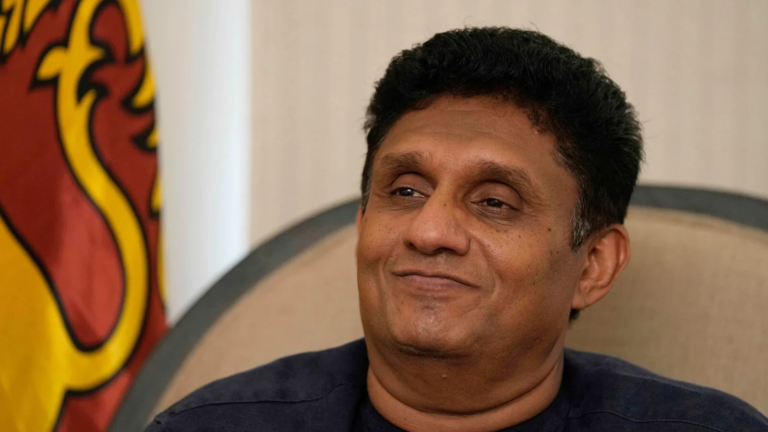
Colombo (LNW): President Ranil Wickremesinghe is currently in New York City, US to attend the 78th General Assembly of the United Nations, the President’s Media Division (PMD) said.
The UN’s 78th General Assembly will be held from September 18 to 21, 2023 and the Sri Lankan Head of State is set to deliver a special speech on the 21st.
Wickremesinghe left for the United States after concluding his attendance at the “G77 and China” Summit in Cuba.
Colombo (LNW): Senior Advisor to the President on National Security and Chief of the Presidential Staff Sagala Ratnayake revealing a significant government decision said that the government has resolved to undertake a comprehensive restructuring of the government institutions entrusted with environmental responsibilities.
Furthermore, Mr. Ratnayaka highlighted that a committee will be established to bolster environmental protection laws and facilitate the restructuring efforts.
Mr. Sagala Ratnayaka, also disclosed that President Ranil Wickremesinghe intends to establish a dedicated task force focused on preventing environmental pollution and safeguarding the environment. This task force will be responsible for formulating, implementing and monitoring environmental protection initiatives.
Senior Adviser to the President on National Security and Chief of the Presidential Staff Mr Sagala Ratnayaka made these remarks during his participation in a beach cleaning programme held at the Beach Plaza in the Port City on the occasion of the International Coastal Clean-up Day (ICCD) and the commencement of Marine Resources Conservation Week. These events will encompass cleanliness drives, awareness campaigns and seabed cleaning activities at 66 locations, targeting identified beaches and lagoon areas spanning all 14 coastal districts across the island. The programme, initiated by the Marine Environment Protection Authority, commenced at the Beach Plaza in the Port City. Mr. Sagala Ratnayaka actively participated in the beach cleaning activities.
Colombo (LNW): Several spells of showers may occur in Western and Sabaragamuwa provinces and in Galle and Matara districts, and showers or thundershowers will occur at several places in Eastern, Uva and Central provinces, and in Polonnaruwa and Mullaitivu district during the evening or night, the Department of Meteorology said in its daily weather forecast today (17).
A few showers may occur in Puttalam and Hambantota districts, the statement added.
General public is kindly requested to take adequate precautions to minimise damages caused by temporary localised strong winds and lightning during thundershowers.
Marine Weather:
Condition of Rain:
Showers are likely at a few places in the sea areas off the coast extending from Puttalam to Hambantota via Colombo, Galle and Matara.
Winds:
Winds will be south-westerly and speed will be (25-35) kmph. Wind speed can increase up to (50-55) kmph at times in the sea areas off the coast extending from Chilaw to Kankasanthurai via Mannar and from Hambantota to Batticaloa via Pottuvil.
State of Sea:
The sea areas off the coast extending from Chilaw to Kankasanthurai via Mannar and from Hambantota to Batticaloa via Pottuvil will be rough at times. Temporarily strong gusty winds and very rough seas can be expected during thundershowers.
The VOICE referendum which will be held on the 14th of October, is being unnecessarily politicized and wantonly turned into a divisive one. Originally, when the Australian Prime Minister made the proposition in July 2022, it was thought it would receive bipartisan support with overwhelming approval. By the time the referendum date was announced in August 2023, the political environment has become heavily polarised with many simplistic misrepresentations, false claims and imagined allegations being made.
The referendum is all about recognising the Indigenous Australians in the Constitution and empowering them to provide advice on issues affecting them to parliament and policymakers. Scrutinizing and debating that proposition is a good thing and it is essential for a healthy democracy. But this is not what is happening. The debate has been dominated by racially charged assertions based on unrelated matters. The attacks by the NO campaigners against the YES campaigners have increasingly become personal, and misunderstandings abounded. Any debate on such an important matter should be based on facts, not by making exaggerated claims or fearmongering. Otherwise, over 15 years of considered attempts for the journey towards reconciliation could become totally derailed.
The main issues raised against the YES campaign are:
1. The VOICE proposition causes division: It is increasingly apparent that, sadly, the NO campaigners are wilfully causing divisions. After patient and thoughtful discussions held over 15 years with hundreds of elders and leaders of the First Nations peoples, the YES campaigners have simply called for constitutional change and structural reform in order to address socioeconomic disparities – and make Australia stronger and more united. Constitutional law experts have pointed out that the proposed Constitution Alteration is not a racially based provision like the existing ‘races power’ – Section 51 (xxvi) – which the NO campaigners falsely claim to have been removed by the 1967 referendum. In fact, race is mentioned in two sections of the Constitution.
2. The VOICE proponents avoid providing details, and Australians have been asked to vote for something they “Don’t know” about: The referendum is about the principle of ‘Recognition through a Voice to Parliament’. The form and composition of this ‘advisory body’ will be legislated by the Parliament in consultation with the Indigenous communities and the broader public after the referendum. The process will be completely transparent. This is not buying a house without an inspection, or being asked to sign a blank cheque, as the NO campaigners claim. Rather, the Australians are making an informed choice to improve the lives of this country’s First Peoples by listening to their views first.
3. A leftwing conspiracy for power grab: This is completely wrong considering the history and evolution of the YES campaign. Scores of Indigenous and non-Indigenous people have contributed to this process, and many Labour, Liberal, Green, Independent, and Left politicians have been actively involved in lively discussions leading to the campaign. Several Liberal Party Shadow Ministers have resigned over this issue.
4. A constitutionally embedded voice would open the door for legal challenges: These concerns have been rebutted by many constitutional experts, and clear advice has been given by the Solicitor-General.
5. It will allow the VOICE to make representations on matters not directly relevant to Indigenous peoples: The consulting person or body can always verify the relevance on any such matter and disregard the representation. The Voice is all about advice, and will not have the power to veto laws or decisions. The Parliament and Government have the final say.
6. The VOICE would be a Canberra based elitist body that will not represent the genuine interests of the First Nations communities: This dubious assumption is all about gaining populist appeal. The Voice is a product of the ‘Uluru Statement from the Heart’ that has called for a representative body for the Aboriginal and Torres Strait Islander peoples “coming from all points of the southern sky”. It is proposed to use the already recognised 35 Local and Regional Voices as the Voice’s bottom tier. The National Voice will come out of this.
7. The VOICE will not properly address the issues of the Indigenous peoples and therefore it will be ineffective: Statistics show the existing representative bodies have not produced the desired outcomes for the Indigenous communities. Just 4 out of 19 ‘Closing the Gap’ targets are on track. By listening to the Voice of the people on the ground, well-coordinated and targeted services can be delivered more effectively and efficiently. The long-term solution, however, lies in a Treaty arrangement that accepts Black sovereignty.
8. Landowners will have to pay rent to Aboriginal Councils: This has nothing to do with the referendum in question. Even as some ‘progressive’ NO campaigners emphasize, the voice is an advisory body with no teeth to enforce such measures.
9. The possibility of vote rigging! This is the most ridiculous claim of all, like the Trump campaign did during the last US presidential elections. This assertion is totally rejected by the Australian Electoral Commission.
Despite all the false allegations, misrepresentations, and assumptions the NO campaigners are making, they have so far not made any plausible alternate proposal, except the Opposition Leader saying that he will have another referendum if the upcoming referendum fails. He appears to support recognition of the First Nations people, and no more. So, in essence, what the NO campaigners are saying is: No Voice, no consultation, no empowerment, and the lever of control has to remain permanently in the hands of ‘others’, not with the Indigenous peoples.
As we have experienced in Sri Lanka on numerous occasions, the NO campaign seems to be largely dependent on deception, confusion and distraction. As Australians from multicultural backgrounds, we have a duty and responsibility to vote for empowering the First Nations peoples to have a say on decisions that affect their future. It is a fundamental right and very much part and parcel of a participatory democracy.
This is not Labor’s Divisive Voice, as accused by some NO campaigners, but a call for the Australian people’s magnanimous response to improve the First Peoples’ lives. This is a concept advanced by ‘The Uluru Statement from the Heart’ so their “ancient sovereignty can shine through as a fuller expression of Australia’s nationhood”. The whole thing must be approached with love, understanding and tolerance.
When the Prime Minister announced the date for the referendum, he said, “When YES wins, all Australians will win. So, in a spirit of generosity and optimism, vote YES.”
Let us take this referendum as a historical opportunity and help deliver a fairer future for the First Nations people just as for all others.
Yours sincerely,
Signed,
Dr Lionel Bopage President Australian Advocacy for Good Governance in Sri Lanka (AAGGSL)
Mr Antony Gratian Secretary Australian Advocacy for Good Governance in Sri Lanka (AAGGSL)
Apple will update its iPhone 12 in France after fears about radiation, the country’s digital minister says.
Jean-Noel Barrot said Apple would deliver a software update for users in the country in the coming days.
Sales of iPhone 12 were halted in France after a regulator detected too much electromagnetic radiation. Apple was told to fix the issue.
The firm said the new update would only apply to users in France, where it said a specific testing protocol existed.
The American tech giant suggested the radiation findings were a result of that testing regime, and that it was “not a safety concern”.
The planned update raises questions over Apple’s plans for iPhone 12, which was released just three years ago, in other countries.
Mr Barrot said that the radio frequency regulator (ANFR) would test the new update to check its compliance before iPhone 12 is allowed back on sale in the country.
The World Health Organization has previously sought to allay fears about radiation emitted by mobile phones.
It says on its website there is no evidence to conclude that exposure to low level electromagnetic fields is harmful to humans.
In a statement sent to AFP news agency, Apple said the radiation finding in France was “related to a specific testing protocol used by French regulators and not a safety concern”.
It said the iPhone 12 complied with emissions rules worldwide, but it would “issue a software update for users in France to accommodate the protocol used by French regulators”.
The ANFR previously told Apple that if it could not resolve the issue via a software update, it would have to recall every iPhone 12 sold in the country.
The thoughts of one Moroccan schoolteacher immediately turned to her pupils when she felt the 6.8-magnitude earthquake strike a week ago.Nesreen Abu ElFadel was in Marrakesh – but Adaseel, the mountain village that was home to her school and pupils, was closer to the epicentre.
The Arabic- and French-language teacher returned to Adaseel where she went searching for the children.
She discovered that all 32 – ranging from six to 12 years old – had died.
“I went to the village and started asking about my kids: ‘Where is Somaya? Where is Youssef? Where is this girl? Where is that boy?’ The answer came hours later: ‘They are all dead.’
“I imagined holding my class’s attendance sheet and putting a line through one student’s name after another, until I had scratched off 32 names; they are all now dead,” she told the BBC.
Image caption,Ms ElFadel describes her lost students – seen here before the earthquake – as “angels”
They were among the almost-3,000 people killed by the strongest earthquake ever recorded in Morocco, which struck on the evening of 8 September.
The hardest-hit areas were those south of Marrakesh, where many mountain villages were completely destroyed. Adaseel was one of those places.
Ms ElFadel recalled how she heard about what happened to six-year-old Khadija.
Rescuers found the body of the child lying next to her brother Mohamed and her two sisters, Mena and Hanan. They had all been in their bed – probably asleep – during the quake, and they all went to Ms ElFadel’s school.
“Khadija was my favourite. She was very nice, smart, active and loved to sing. She used to come to my house, and I loved studying and talking to her.”
The language teacher described her students as “angels”, and respectful children who were eager to learn. Despite struggling with poverty and a crushing cost-of-living crisis, the children and their families thought of going to school as “the most important thing in the world”.
“Our last class was on Friday night, exactly five hours before the quake hit,” Ms ElFadel said.
“We were learning Morocco’s national anthem, and planned to sing it in front of the whole school on Monday morning.”
Image caption,The school where Ms ElFadel worked was badly damaged by the earthquake
Despite her calm voice, Ms ElFadel has been suffering with trauma. She still cannot process what happened to her students and to her school.
“I don’t sleep; I’m still in shock,” she said.
“People consider me one of the lucky ones, but I don’t know how I can continue living my life.”
Ms ElFadel loved teaching Arabic and French to children in a village populated by Amazigh – who mainly speak their own language, Tamazight.
“Arabic and French were very hard to learn, but the kids were very bright, and they were almost fluent in both languages,” she recalled.
She plans to continue her career in teaching, and hopes authorities will rebuild Adaseel’s school – which collapsed during the earthquake.
A total of 530 educational institutions have been damaged to varying degrees, including some of which have completely collapsed or suffered severe structural damage, according to official statements.
The Moroccan government has temporarily halted classes in the hardest-hit areas.
“Maybe one day when they rebuild the school and classes are back in session, we can commemorate those 32 kids and tell their story,” Ms ElFadel said.
President, Ranil Wickremesinghe, embarked on an official visit to Cuba ahead of his participation in the G77 plus China Summit in Havana on September 15-16, hosted by Cuba as the current Chair of the G77 plus China. During his visit, President Wickremesinghe engaged in bilateral discussions with Cuban President Miguel Díaz-Canel Bermudez, reinforcing the bonds of friendship and dialogue between the two nations.
President Wickremesinghe’s arrival in Cuba was marked by a warm welcome, as he received a Guard of Honour at the Palace of Revolution. President Díaz-Canel Bermudez expressed Cuba’s appreciation for the visit, emphasizing its significance during these challenging times globally. He praised Sri Lanka’s commitment to friendship with Cuba and to the vital role played by the G77 and China in representing the global South.
In their discussions, President Wickremesinghe recalled the history of bilateral cooperation between Sri Lanka and Cuba, particularly in multilateral forums. Both nations have supported each other on issues like lifting sanctions against Cuba and human rights matters. They identified areas of future cooperation, including public health, agriculture and sports.
President Díaz-Canel accepted President Wickremesinghe’s invitation to visit Sri Lanka in 2024, underscoring Cuba’s continued support for Sri Lanka. He also highlighted Cuba’s role in addressing North-South gaps in Science, Technology and Innovation, expressing willingness to share expertise, particularly in vaccine development.
The two leaders emphasized the importance of bolstering the relationship between their countries, focusing on collaboration in medicine, healthcare, sports training and coconut cultivation. President Wickremesinghe expressed Sri Lanka’s commitment to supporting Cuba in international forums, while President Díaz-Canel assured support for Sri Lanka regarding human rights resolutions.
This meeting represents a significant step forward in strengthening diplomatic ties between Sri Lanka and Cuba, with far-reaching implications for both nations and the broader global community. President Wickremesinghe was accompanied by key officials, including Secretary Foreign Affairs Ms. Aruni Wijewardane, the Ambassador of Sri Lanka to Cuba Mr. Lakshitha Ratnayake, the Director General of the United Nations and Multilateral Affairs Division of the Ministry of Foreign Affairs, Ms. Rekha Gunasekera and Private Secretary to the President Ms. Sandra Perera.
Manusha Nanayakkara, the Minister of Labour and Foreign Employment, confirmed that the existing 9% employee benefit related to the Employee Provident Fund will remain unchanged.
The Minister also emphasized that taxation is not levied on the funds held by members of the Employees’ Provident Fund. Instead, it is imposed as a percentage of 14 percent on the profits generated from the fund’s investments.
Minister Manusha Nanayakkara made these remarks during his participation in a press conference held today (15) at the Presidential Media Centre, on the theme of ‘Collective Path to a Stable Country.’
Expressing his views further he said;
In line with agreements made with the International Monetary Fund and our creditors, we have successfully completed the optimization of our foreign debt. However, it is crucial that we also direct our attention towards optimizing our domestic debt.
We initially resorted to foreign loans, recognizing that they are funded by the taxpayers of those respective countries. Unfortunately, our challenges in repaying these loans led us to explore options for local debt optimization. Subsequently, after achieving domestic debt optimization, we are prepared to undertake a restructuring of our foreign debt.
It’s worth noting that a significant portion of Sri Lanka’s loans are sourced from EPF-ETF funds, which has sparked some debate. Some have questioned why domestic credit optimization measures were not applied to banks. The rationale behind this decision is that banks will continue to be subject to a 30 percent tax rate, with no changes in taxation for other primary lenders.
As a government, we have secured approval from both Parliament and the Cabinet and we have made the decision to extend the 9 percent return for another four years. This means that individuals will continue to receive an annual benefit of 9 percent on their savings, without any additional 14 percent or 30 percent taxes. It’s important to clarify some misconceptions on this matter.
The 14 percent tax is exclusively applied to profits earned after investing money in the Employee Provident Fund (EPF), ensuring that individuals with substantial savings in the bank today, such as our 2.4 million workers, will not face any adverse impact. When they are ready to withdraw their savings, they will also receive the annual 9 percent return.
Statements like “EPF/ETF Fund will be in danger unless we restructure domestic debt” are largely rhetorical and lack a substantive plan. We trust that the Central Bank, as the custodian of the Employee Provident Fund, is an independent institution and will not be negatively affected. It’s important to emphasize that decisions regarding the fund will not be made through the Ministry of Labour.
Furthermore, we are planning to implement a digital data system at the beginning of the next year, which will strengthen our migrant labour policy. Additionally, we have completed the groundwork for digitalizing all data systems in the Labour Department and are actively working towards introducing an E-salary system.
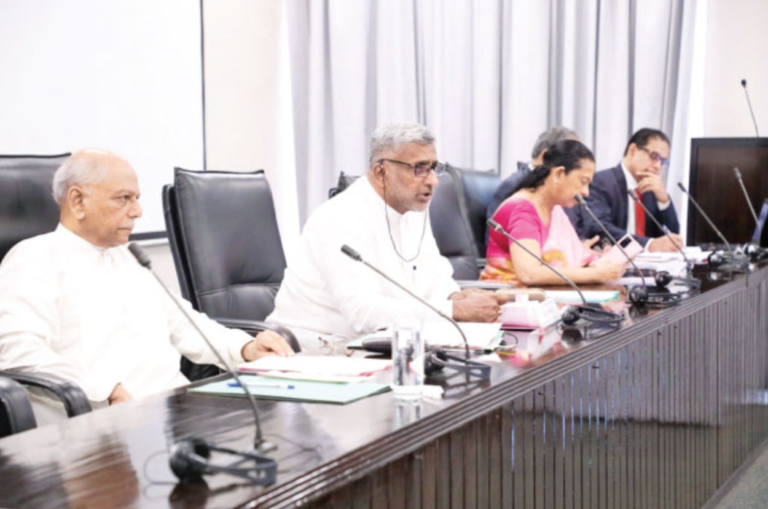
The Select Committee of Parliament tasked with urgently addressing and eradicating the escalating drug issue in the country has invited public proposals and opinions.
The establishment of this committee, formed to identify effective strategies for immediate control and elimination of the spreading drug problem, was initiated through a parliamentary motion passed on June 8, 2023, as disclosed by the Parliamentary Communications Department.
The committee, chaired by Minister of Public Security Tiran Allas and comprising 11 other Members of Parliament, was appointed by Speaker Mahinda Yapa Abeywardena. Hansa Abeyratne, the Assistant Secretary General of Parliament, serves as the committee’s secretary.
Interested organizations wishing to submit their recommendations and perspectives on the methods required to promptly address and eliminate the growing drug issue in the country may do so by sending their proposals and views to the following address: “The Secretary, The Select Committee of Parliament, Parliament of Sri Lanka, Sri Jayawardenepura Kotte,” or via email at [email protected].
The statement further outlined that all relevant views and proposals must be submitted on or before October 12, 2023.
Additionally, the committee expressed its intention to potentially hear oral testimonies from those submitting representations, where relevant parties and supporting documents would be summoned in due course for further examination.
In a compelling address delivered at the Summit of the Heads of State and Government of the G77 & China in Havana, Cuba, President Ranil Wickremesinghe emphasized the pivotal role of science, technology, and innovation in addressing the pressing development challenges faced by developing nations across the globe. The President’s Media Division reported on this remarkable speech.
Commencing his address, President Wickremesinghe commended Cuban President Miguel Diaz-Canel Bermudez for hosting the Group of 77 plus China (G77+China) Summit in Havana, acknowledging Cuba’s historical role as a champion for the concerns and aspirations of developing nations in various multilateral forums.
President Wickremesinghe shed light on the unprecedented challenges confronting the global South, including the ongoing pandemic, climate change, and crises related to food, fertilizer, and energy. These challenges not only threaten the achievement of Sustainable Development Goals (SDGs) but also exacerbate the global debt crisis.
Delving into the historical context of technological development, President Wickremesinghe highlighted how Europe’s advancements in the 15th century, such as gunpowder, cannons, and ocean-going ships, facilitated its conquest of other regions, ultimately leading to the technological disparities we observe today.
He emphasized that a new technological divide is emerging in the 21st century, necessitating the adoption of digitalization and cutting-edge technologies such as Big Data, IoT, AI, Blockchain, Biotechnology, and Genome Sequencing to bridge this gap.
President Wickremesinghe stressed the significance of an educated workforce equipped with knowledge and technological expertise to facilitate the much-needed transformations crucial for the development and progress of developing nations.
The President also outlined his government’s initiatives, including the evaluation of underperforming Science and Technology Research Institutes, the establishment of a Technology and Innovation Council, and a Digital Transformation Agency. Additionally, Sri Lanka plans to establish four new universities specializing in new technologies, with one resulting from technological collaboration between India and Sri Lanka—the International Climate University being the fifth.
Addressing the digital divide, President Wickremesinghe cited challenges such as limited access to expensive technology, inadequate digital skills and infrastructure, cultural and institutional barriers, and financial constraints. He called for effective cooperation mechanisms within the G77 and China, including the revitalization of the Consortium of Science & Technology & Innovation for the South (COSTIS) and member countries committing 1% of their GDP for R&D over a decade.
President Wickremesinghe underscored the importance of collaboration between governments and the private sector and proposed the creation of technological platforms in fields like digitalization, health, medication, AI, and renewable energy, taking inspiration from the European Union’s Technology & Innovation Platforms.
Highlighting the brain drain from the South to the North and the loss of educated manpower as a threat to the development of Science, Technology, and Innovation in the South, President Wickremesinghe called for compensation from the North for this loss. He also urged increased South-South cooperation and proposed a scheme akin to the Colombo Plan to enhance collaboration, exchange best practices, and develop policies harnessing the transformational potential of science, technology, and innovation.
In conclusion, President Wickremesinghe reaffirmed Sri Lanka’s commitment to supporting the new Havana Declaration and called for the collective voice of G77 and China to be heard in international forums. His address underscored the paramount importance of science, technology, and innovation in shaping the future of developing nations, marking a pivotal moment at the G77 and China Summit.