January 11, Colombo (LNW): Numerous train services have been temporarily halted owing to flooding caused by the intense rainfall witnessed today (11).
Two night-mail trains that were originally scheduled to operate between Batticaloa and Colombo on the current date have been cancelled, the Department of Railway announced.
Furthermore, the express train, Udaya Devi, which operates from Colombo-Fort to Trincomalee via Batticaloa, and the train scheduled from Batticaloa to Colombo on the upcoming day, January 12, have also been suspended due to the prevailing weather conditions.
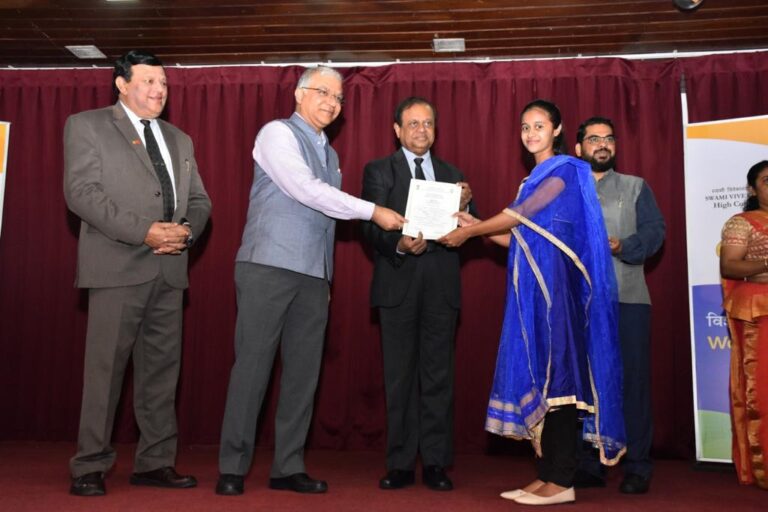
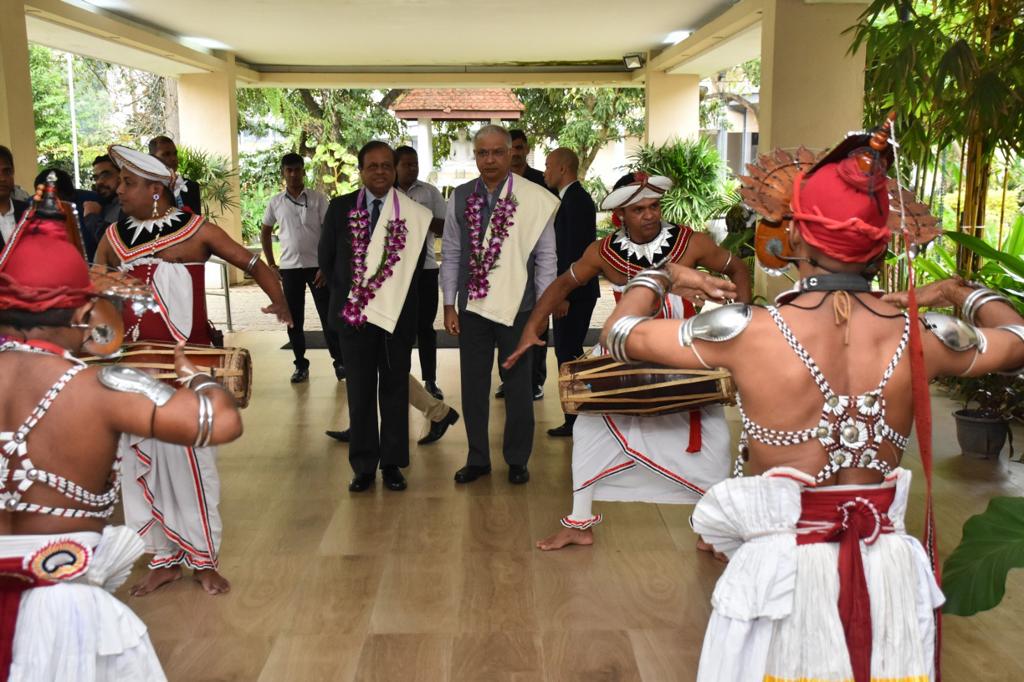
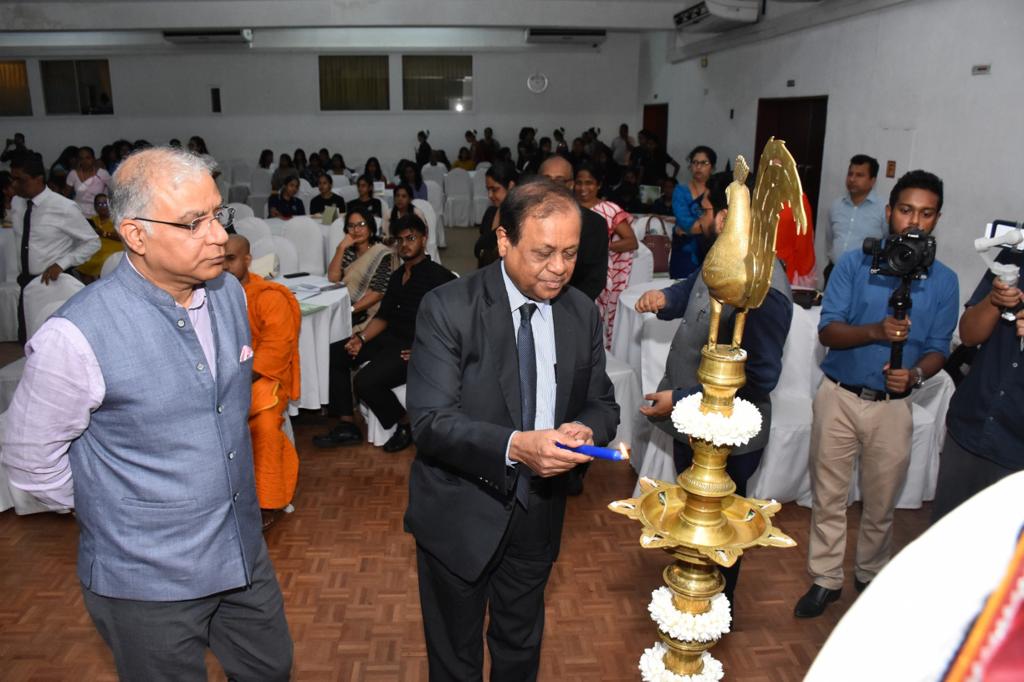
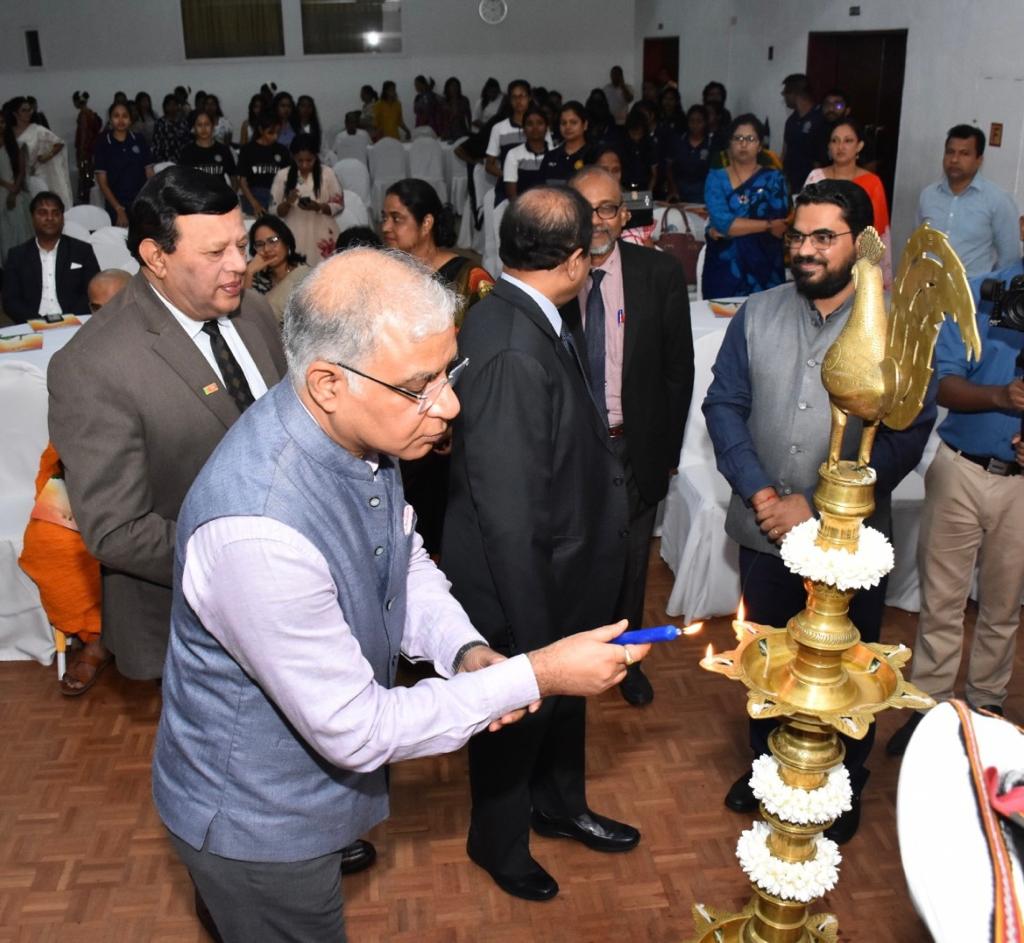
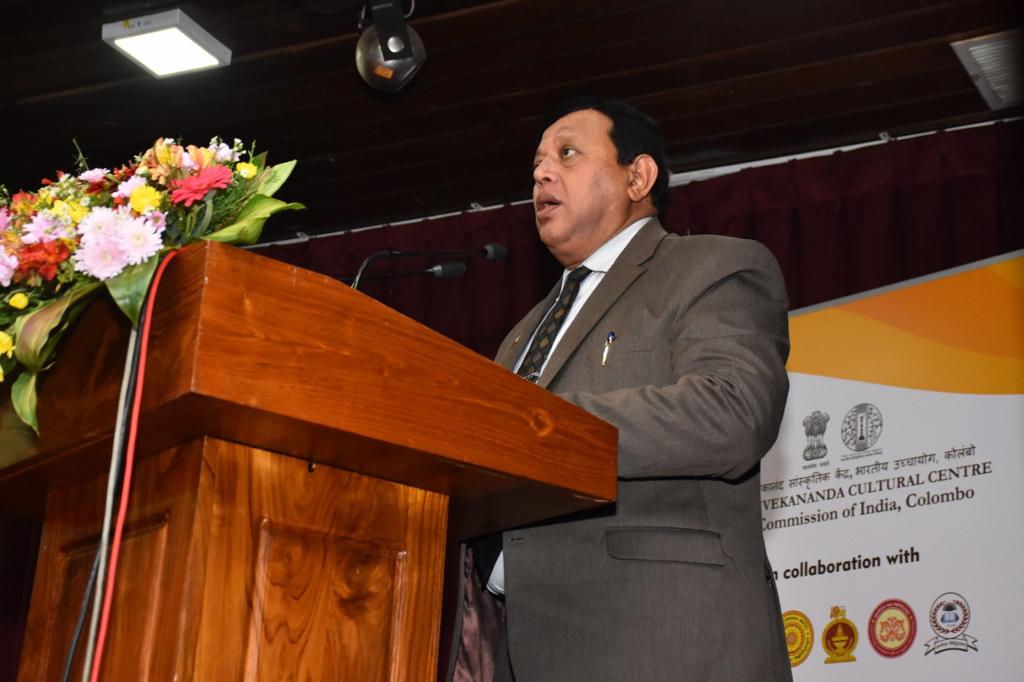
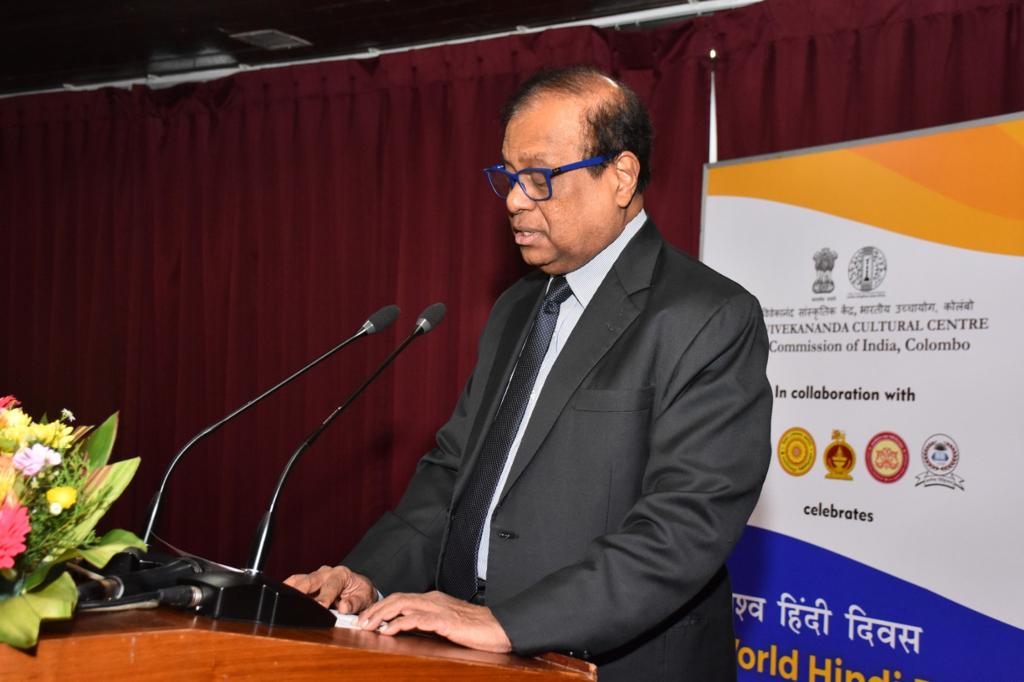
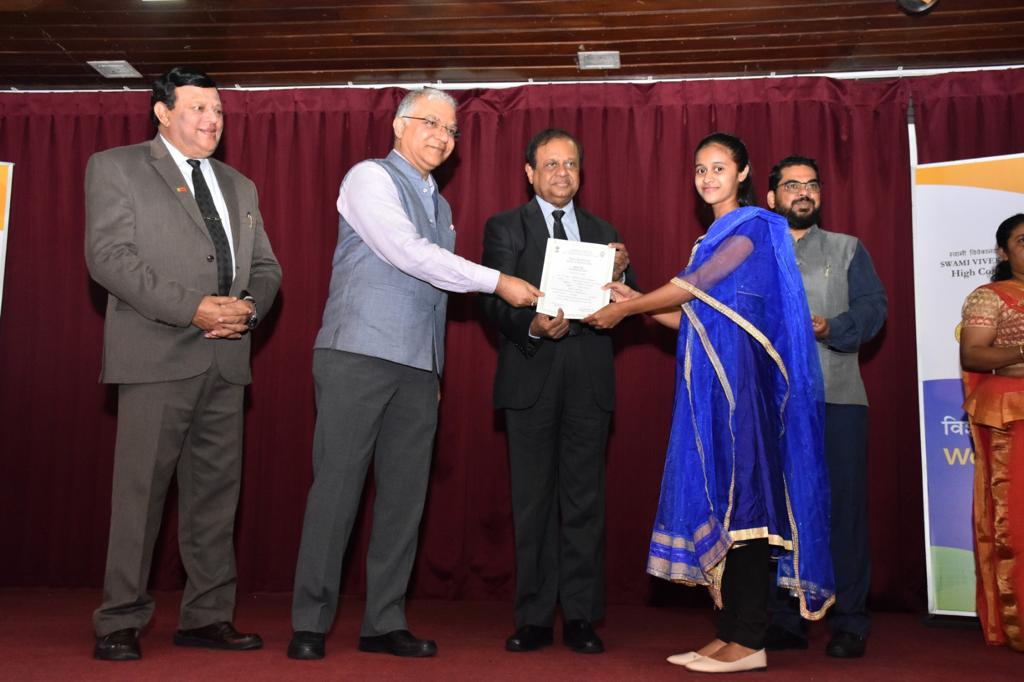
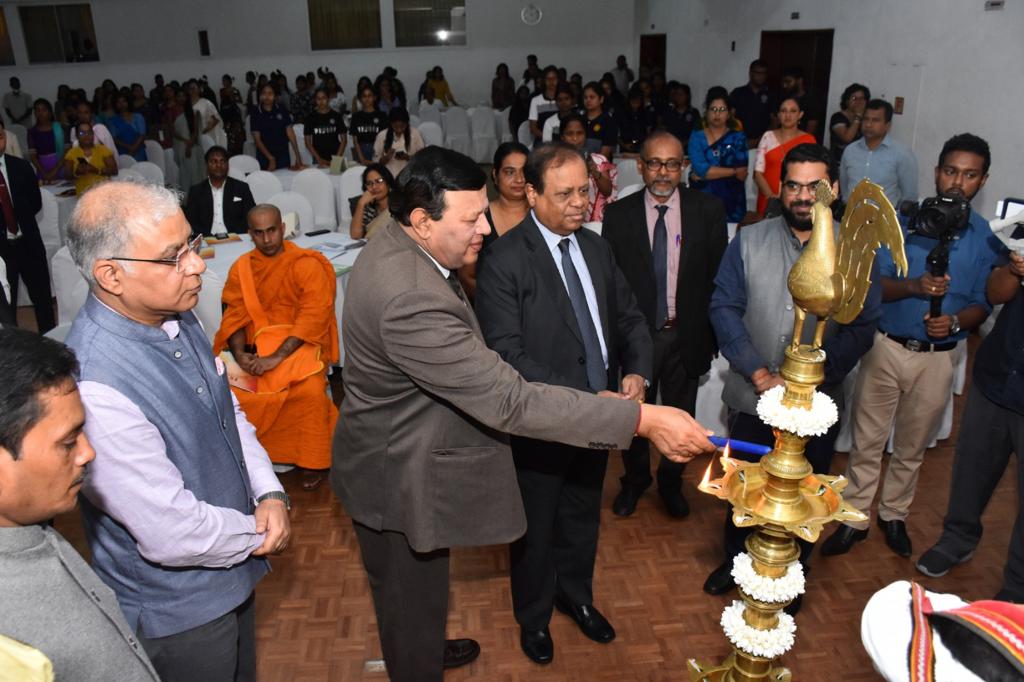
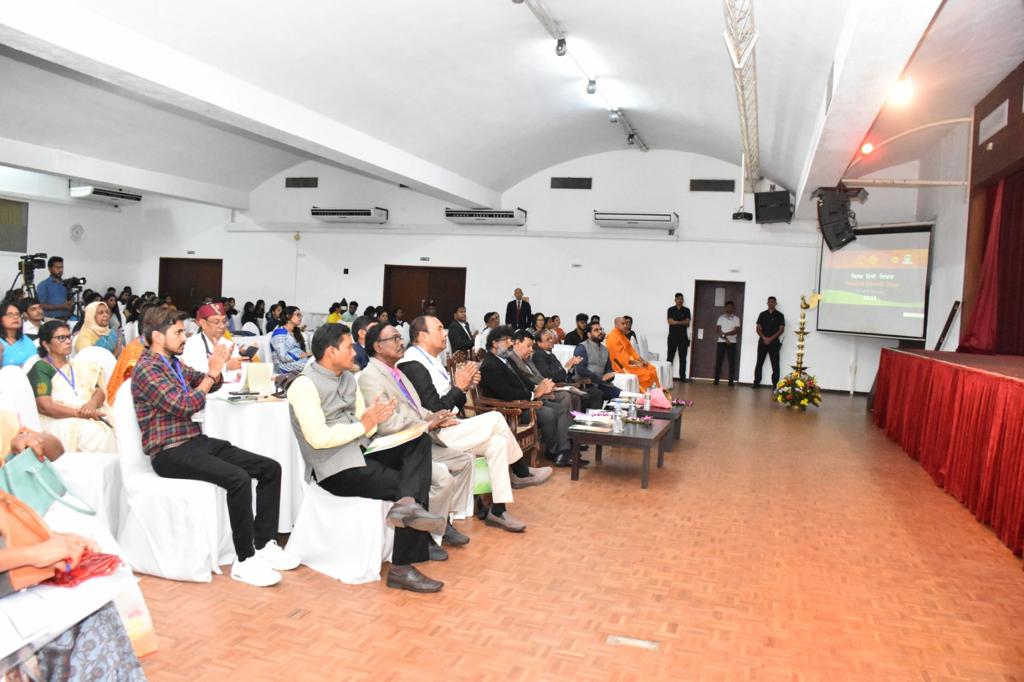
Swami Vivekananda Cultural Centre (SVCC), the cultural arm of the High Commission of India in Colombo, is organising the World Hindi Day in Colombo from 10-11 January 2024. The two-day event is being held at Sri Lanka Foundation and SVCC in collaboration with University of Kelaniya, University of Sri Jayewardenepura, Rajarata University, Visual and Performing Arts University of Sri Lanka and Karma Devi Memorial P G College of India.
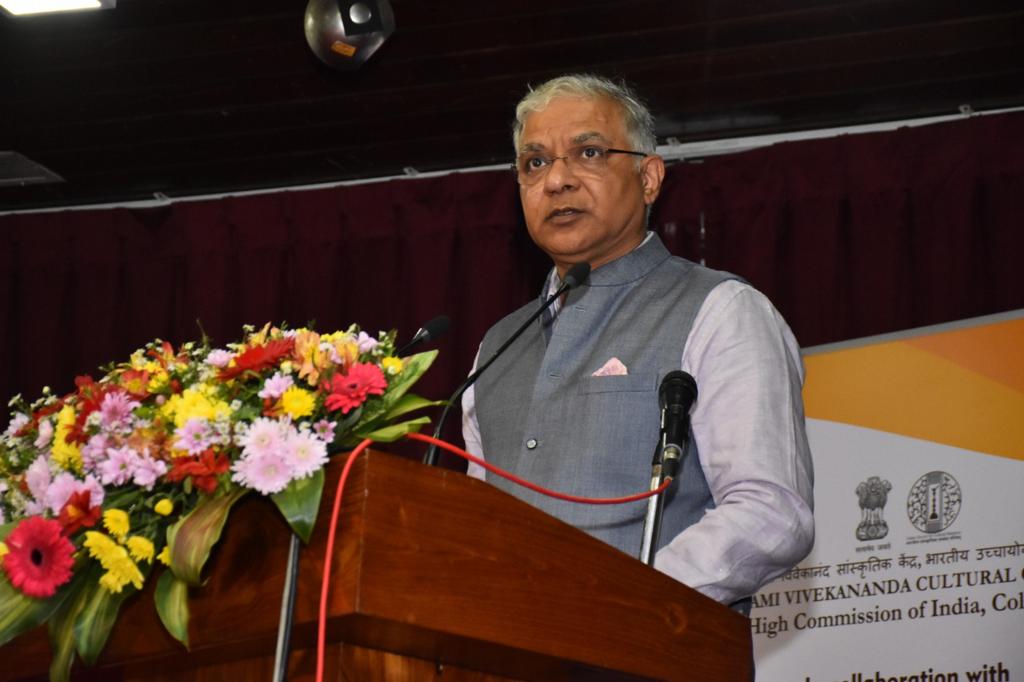
2. High Commissioner Shri Santosh Jha inaugurated the event today with Dr. Susil Premajayantha, Hon’ble Minister of Education who was the Chief Guest for the World Hindi Day. The State Minister of Education A. Aravind Kumar attended as the Guest of Honour.
3. During the inaugural speech, High Commissioner highlighted the growing importance of Hindi as an international language. Today, it is the third most widely spoken language in the world with about 600 million speakers globally. He also recalled SVCC’s activities for the promotion of the language over last year, including scholarships to Hindi students for study in India, assistance in Hindi language capacity building of professors and school teachers, etc. Appreciating the institutions and scholars of Hindi in Sri Lanka, he commended the attendees for embracing the language and thanked them for collaborating in the event.
4. The first day saw paper presentations in three plenary sessions by 25 Hindi scholars. Topics ranged from impact of Buddhism in Hindi literature to popularity of Hindi in Sri Lanka. More than 200 scholars and students participated on day one. Day two of the conference will have Deputy High Commissioner Dr. Satyanjal Pandey as the Chief Guest with nearly 20 research presentations by students of Hindi. Qualifying certificates of Hindi examinations organised by the Central Institute of Hindi, Govt. of India will also be distributed to the Sri Lankan students.
5. World Hindi Day is celebrated on January 10 every year to commemorate the day when Hindi was first spoken in the United Nations General Assembly in 1949. It was on this day in 1975 that the first ‘World Hindi Conference’ was organised. Hindi is taught as a foreign language in 88 schools and 7 public universities of Sri Lanka.
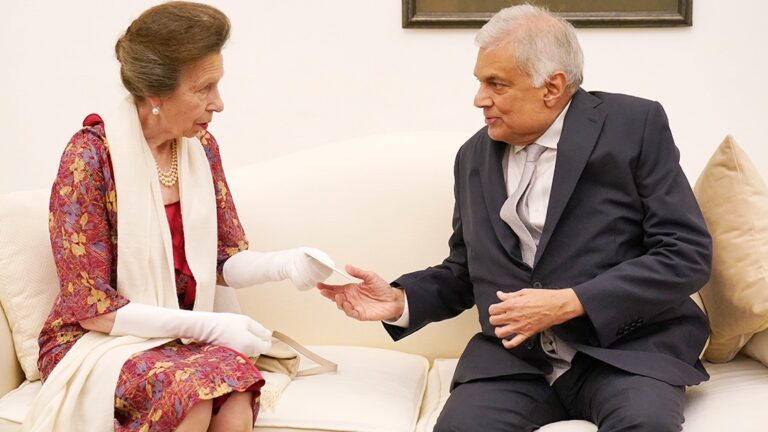
January 11, Colombo (LNW): Her Royal Highness Princess Anne, the Princess Royal of the United Kingdom accompanied by her spouse Vice Admiral Sir Timothy Laurence, who are on a three-day official visit to Sri Lanka, met with President Ranil Wickremesinghe at the President’s House yesterday
The Princess Royal and her spouse arrived in Sri Lanka yesterday afternoon for a three-day visit. The visit comes as Sri Lanka and the UK mark 75 years of diplomatic relations. During the visit, The Princess Royal is scheduled to undertake engagements in Colombo, Kandy and Jaffna.
Earlier yesterday , The Princess Royal toured the MAS Holdings Nirmaana facility and heard about their innovative excellence in product creation and development for strategic international partners, including British brands like Marks & Spencer.
As patron of Save the Children UK, The Princess Royal also met and thanked staff at the Save the Children offices in Colombo for the work they do to support humanitarian needs across Sri Lanka. She received a briefing on their work and celebrated their 50th year of operations in Sri Lanka.
Princess Anne last visited Sri Lanka nearly 30 years ago in 1995 as patron of Save the Children to see projects supported by the charity.
Princess Anne was welcomed to Sri Lanka today with a dazzling performance by traditional dancers as she walked down the plane’s steps at Bandaranaike International Airport in Katunayake.
She’s been joined by her husband Vice Admiral Sir Timothy Laurence, 68, for the start of a three-day visit celebrating the UK’s ties with the South Asian Island. The trip is the royal family’s first overseas tour of 2024.
A large group of dancers and musicians performed for the couple with drummers playing a hypnotic beat in the hot and humid conditions.
The princess is visiting the country at the request of the Foreign Office and will begin a whistle-stop tour to mark the UK’s bilateral relations with the nation, including a meeting with President Ranil Wickremesinghe and First Lady Maithree Wickremesinghe.
Sri Lanka’s Foreign Minister, Ali Sabry and British High Commissioner to Sri Lanka, Andrew Patrick were among the dignitaries who formally welcomed the princess at the airport.
January 11, Colombo (LNW): The World Bank forecasts the Sri Lankan economy to grow by 1.7 percent in 2024 and by 2.4 percent in 2025, according to its report on global economic prospects made available to the local press on Wednesday.
According to the World Bank, the country’s economy is estimated to have recorded a negative growth of 3.8 percent in 2023.
Although the output in Sri Lanka is also estimated to have declined in the 2022-2023 financial year, progress has been made in sovereign debt restructuring, said the World Bank.
However, it said the outlook for Sri Lanka remains uncertain amid debt restructuring negotiations, particularly with private creditors.
The growth in South Asia is estimated to have slowed slightly to 5.7 percent in 2023, yet it remains the fastest among emerging markets and developing economy regions, according to the World Bank.
Sri Lanka is aiming to strike an elusive balance between reviving economic growth to positive 1.7 percent from negative 3.8 percent, alleviating the hardships faced by ordinary citizens and maintaining fiscal discipline in the election year.
The Government will be strengthening social safety nets by properly implementing welfare benefits Act 2002 update the social registry system to cover all welfare benefit schemes
Measures will be taken to strengthen social protection institutions, delivery systems, and targeting expenditure allocations to promote the utilisation of skills of the elderly, differently abled and widows as household entrepreneurs,
Till the voters elect the next government or the president in the middle of 2024 as scheduled, or earlier every move of the present government is to be more election-oriented a deviation from economic recovery measures taken so far, several economic analysts claimed.
Against this back drop, Sri Lanka continues to face severe economic, social and governance challenges despite signs of macroeconomic stabilisation with inflation moderating, exchange rate stabilising, and the Central Bank and Finance Ministry’s rebuilding reserves and fiscal buffers, they pointed out.
Government measures to address the balance of payment crisis, including tax reforms and cost-recovery pricing in the energy sector, have raised the cost of living while continued shortages of essentials, have been led to popular discontent.
The authorities aim to raise revenue by almost 45 percent in 2024 to Rs 4.81 trillion in 2024 , aided by taxes on international trade taxes on domestic goods and services. License taxes and other taxes on income and profit along with non-tax revenue and grants, finance Ministry data shows.
The total expenditure is estimated at Rs 7.82 trillion consists of primary expenditure Rs5,176 billion, recurrent Rs3,971 bn capital Rs1,205 bn and interest Rs 2.651 bn.
January 11, Colombo (LNW): A group of Sri Lanka’s creditor nations and Colombo reached an agreement in principle on debt restructuring for the South Asian nation, Japanese top financial diplomat Masato Kanda said on Wednesday.
Japan co-chairs this group, together with France and India, which is comprised of 14 nations. China is Sri Lanka’s largest bilateral creditor and has not joined this group as a formal member.
Sri Lanka’s finance ministry said the agreement in principle covered approximately $5.9 billion of outstanding public debt and consisted of a mix of long-term maturity extension and reduction in interest rates.
Mired in its worst financial crisis in decades, Sri Lanka has been trying to reach restructuring deals with creditors since last year.
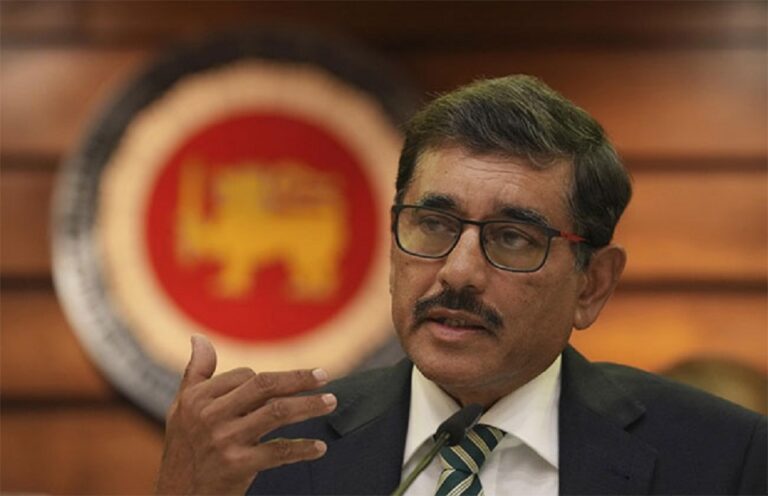
The governor of Central Bank of Sri Lanka (CBSL) says ‘good faith negotiations’ are in progress with commercial creditors to reach an in-principle agreement as soon as possible.
Addressing a special media briefing at the CBSL premises this morning (Jan.10), Nandalal Weerasinghe said the agreement is expected to reach within the next two months.
Sri Lanka reached in-principle agreements with China’s Export-Import (Exim) Bank and the Official Creditor Committee (OCC) in late 2023 on the financial terms of debt treatment.
The OCC was formally formed on May 09 with 17 countries to respond to the Sri Lankan authorities’ request for debt treatment.
It is co-chaired by India, Japan and France (as the chair of the Paris Club). It was established following the launch of a common platform in April 2023 for talks among bilateral creditors to coordinate restructuring of Sri Lanka’s debt.
Agreement with the Chinese Exim Bank was reached in October 2023, covering approximately USD 4.2 billion of outstanding debt. It was followed by the debt deal struck with the OCC which covers USD 5.9 billion of outstanding debt.
The International Monetary Fund (IMF) later said the two agreements are consistent with the 48-month Extended Fund Facility (EFF) arrangement provided to Sri Lanka.
The global lender in March 2023 had approved a USD 2.9 billion bailout package for the island nation to ride out its adverse economic situation.
IMF’s Executive Board completed its first review of the EFF program for Sri Lanka, paving the way for the disbursement of the much-anticipated second tranche of the loan which amounted to USD 337 million. This brought the total IMF financial support disbursed thus far to USD 670 million.
The in-principle deals with the Chinese Exim Bank and the OCC had set the scene for the IMF’s Executive Board to consider clearing the first review.
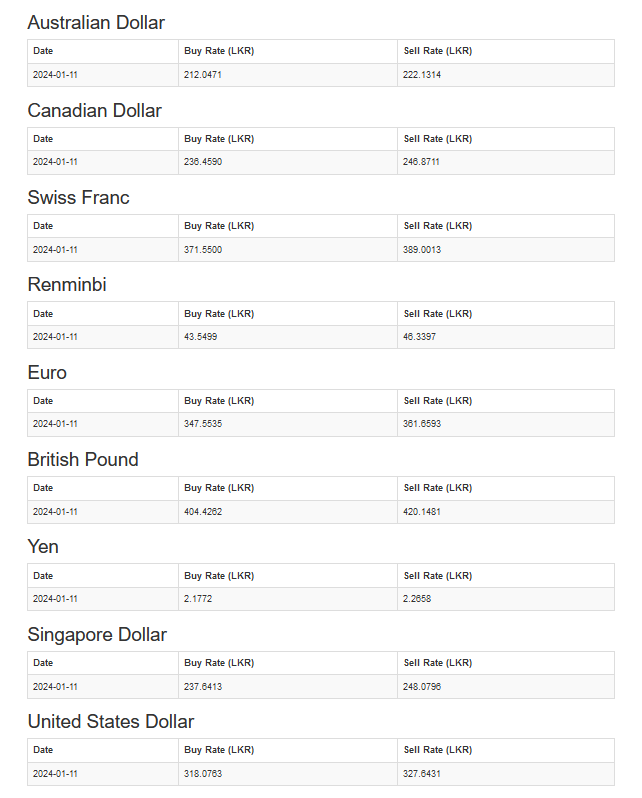
January 11, Colombo (LNW): The Sri Lankan Rupee (LKR) indicates depreciation against the US Dollar today (11) in comparison to yesterday, as per the official exchange rates list issued by the Central Bank of Sri Lanka (CBSL).
Accordingly, the buying price of the US Dollar has increased to Rs. 318.07 from Rs. 317.83, and the selling price to Rs. 327.64 from 327.54.
The Sri Lankan Rupee has also depreciated against several other foreign currencies.
January 11, Colombo (LNW): In presenting the Online Safety Bill, Sri Lanka’s Public Security Minister faced a torrent of criticism from across the aisle.
The Online Safety Bill has been rightfully criticised for its deliberate vagueness. The Bill purports to be safeguarding individuals “against damage caused by communication of false statements or threatening, alarming or distressing statements”.
The Asia Internet Coalition (AIC), representing major tech companies like Google, Meta, and Amazon, has voiced strong concerns about Sri Lanka’s draft Online Safety Bill, urging the government to make extensive revisions before passing the legislation.
In a letter to Public Security Minister Tiran Alles, the AIC warned that the bill, in its current form, poses several critical threats including the following:
The bill defines “prohibited statements” too broadly, potentially criminalizing legitimate online discourse.
In an era of misinformation and instant social media, a carefully considered move along those lines may be welcome. However, this bill is both blunt and menacing.
It fails to define what such statements may be and instead envisions a five-member Online Safety Commission which would establish these terms and would be directly appointed and dismissed by Sri Lanka’s president.
Commentators in the South of the island have rightfully noted Wickremesinghe’s track record of cracking down on anti-government demonstrators, trade union leaders, and student protesters.
The early weeks of his rule serve as painful reminders.What has often been unstated, however, is how this legislation will deliberately further entrench power for Sinhala Buddhist ideologues.
A key aspect of the bill is to criminalise “offense to religious feelings”. Yet on the island, only one religion continues to reign supreme.
Sri Lanka has already seen the detention of comedians, poets, authors and even tourists who were deemed to have criticised or even poked fun at Buddhism or its ideology.
This bill will grant authorities even more power to detain people over such perceived infarctions. The proposal of the legislation comes at an even more distressing period.
Tech Giants vehemently protests over Sri Lanka’s Online Safety Bill In presenting the Online Safety Bill, Sri Lanka’s Public Security Minister faced a torrent of criticism from across the aisle.
The Online Safety Bill has been rightfully criticised for its deliberate vagueness. The Bill purports to be safeguarding individuals “against damage caused by communication of false statements or threatening, alarming or distressing statements”.
In an era of misinformation and instant social media, a carefully considered move along those lines may be welcome. However, this bill is both blunt and menacing.
It fails to define what such statements may be and instead envisions a five-member Online Safety Commission which would establish these terms and would be directly appointed and dismissed by Sri Lanka’s president.
January 10, Colombo (LNW): The World Bank’s Global Economic Prospects Report reveals that the global economy is on track to record its slowest half-decade of GDP growth in 30 years by the end of 2024.
While the risk of a global recession has diminished due to the strength of the U.S. economy, rising geopolitical tensions pose fresh near-term hazards.
Developing economies face challenges with slowing growth, sluggish global trade, and tight financial conditions.
Global trade growth in 2024 is expected to be half the pre-pandemic decade average.
Developing economies’ borrowing costs, especially those with poor credit ratings, are likely to remain high.
Global growth is projected to slow for the third consecutive year, with developing economies growing only 3.9 per cent. Low-income countries are expected to grow 5.5 per cent, below previous estimates.
Despite the challenges, opportunities exist to turn the tide with accelerated investment and strengthened fiscal policy frameworks.
To meet climate and development goals by 2030, developing countries need a significant increase in investment, approximately $2.4 trillion per year, requiring comprehensive policy packages.
Developing economies can achieve transformation through sustained investment booms, leading to faster convergence with advanced economies, poverty reduction, and quadrupled productivity growth.
However, the report emphasises the need for hard work, including improving fiscal and monetary frameworks, enhancing the investment climate, and strengthening institutions.
The findings also highlight the importance of avoiding boom-and-bust cycles, especially for commodity-exporting developing economies.
Governments in these countries often adopt fiscal policies that exacerbate economic cycles, contributing to increased volatility.
To address this, implementing fiscal frameworks to discipline government spending, adopting flexible exchange-rate regimes, and avoiding capital movement restrictions can help reduce volatility and enhance growth prospects for commodity exporters.
January 11, Colombo (LNW): In a tragic incident, a 34-year-old man lost his life after being shot in the head by two unidentified individuals who impersonated Police Special Task Force (STF) officers.
The assailants arrived on a motorcycle at the victim’s residence in the Korathota area, Nawagamuwa, last night (January 10), Police said.
These assailants falsely identified themselves as STF officers.
After claiming to be law enforcement officials, the suspects left the house with the victim on the motorcycle. The victim was later found critically injured in the head near the Mahawela Canal in the area.
Family members, suspecting foul play, chased the motorcyclist and discovered the victim seriously injured by the side of the road.
Despite being rushed to Athurugiriya Hospital and subsequently transferred to Colombo National Hospital, the victim succumbed to injuries.
Initial police investigations indicate that the victim died from a gunshot, but the motive behind the shooting remains unclear.
The Nawagamuwa Police are actively conducting inquiries into this disturbing incident.
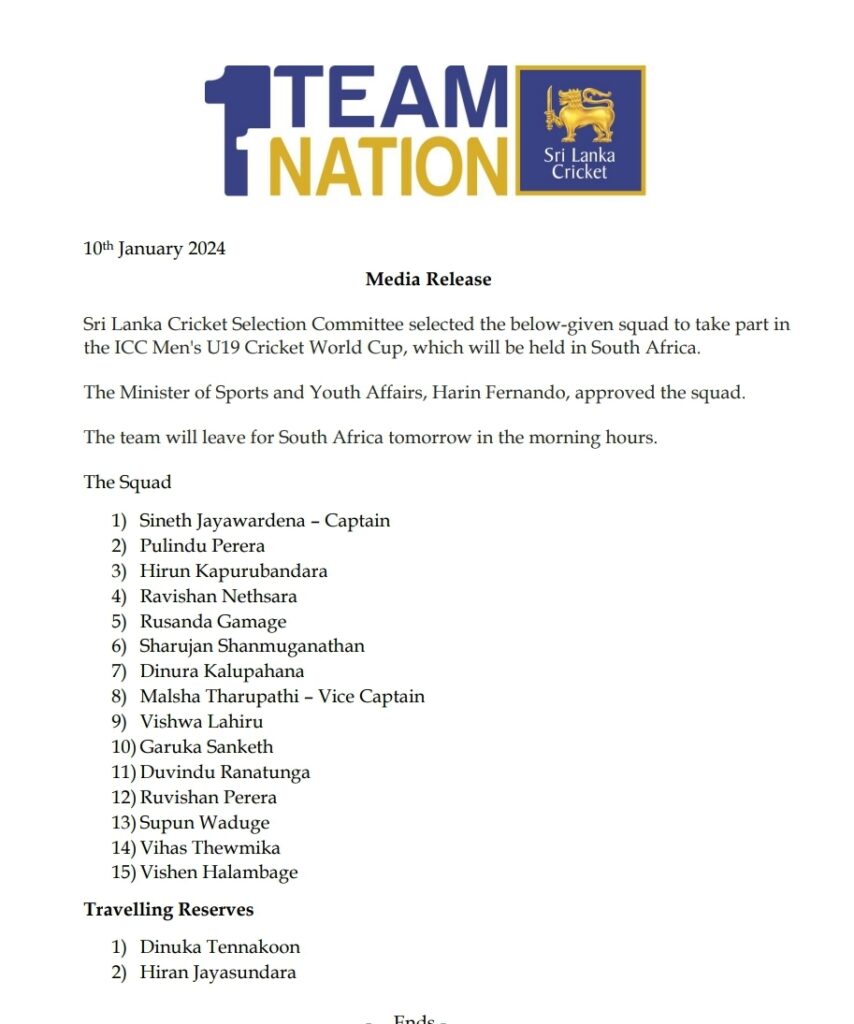
January 11, Colombo (LNW): The Sri Lanka Cricket Selection Committee has finalised the squad that will represent the country in the upcoming ICC Men’s U19 Cricket World Cup in South Africa.
The selected squad has received approval from Sports and Youth Affairs Minister Harin Fernando.
The youth team is set to depart for South Africa in the morning hours tomorrow (12), ready to compete in the prestigious tournament.