Colombo (LNW): Sri Lanka’s enterprising farmers have embraced the challenge of growing strawberries in the tropical climate of the island nation with the aim of entering into foreign export markets. Agriculture ministry revealed.
Since there is a high demand for strawberries in the world market, the Agriculture Ministry has approved a project to grow strawberries for export.
The average strawberry export price stood at US$8,638 per ton in 2022, surging by 1.8% against the previous year.
The export value of Sri Lanka strawberries was US$ 510.73K, and the export volume was 49.50 metric ton in 2022
The approval for this project was granted by Agriculture Minister Mahinda Amaraweera after a proposal was presented by a group of local investors for the implementation of the project as soon as possible.
To adapt to the warmth of Sri Lanka, farmers typically opt for strawberry varieties known for their heat tolerance.
Varieties such as “Chandler” and “Sweet Charlie” have become popular choices due to their ability to withstand higher temperatures.
“There is still a minimal demand for strawberries grown in our country since they are not cultivated using modern technology.
Sri Lanka is ranked 57th among strawberry-exporting countries. Strawberry has a rapidly increasing annual market and as a soft fruit it is extremely popular,” Minister Amaraweeera said.
During the meeting at the Ministry, it was agreed to provide one hectare of land in Nuwara Eliya belonging to the Ministry, as a pilot project under the first phase.
Depending on the success of this project, up to 10 hectares can be given for strawberry cultivation if needed, the Minister assured.
If strawberries are cultivated with the use of new technology, it is possible to earn an income of around USD 117,600 per year from one hectare.
It is also possible to get a yield of 120,000 kg from a single hectare. Also, the amount invested to cultivate one hectare is Rs. 250 million, the investors have pointed out.
Strawberry cultivation in Sri Lanka may seem like a formidable challenge due to the tropical climate, but enterprising farmers have shown that it’s possible with the right location, strawberry varieties, and cultivation practices.
The red delight of strawberries can indeed flourish amidst the lush greenery of the island nation.
As these efforts continue to bear fruit, the unique story of strawberry cultivation in Sri Lanka adds a fresh, vibrant chapter to the country’s agricultural landscape, offering a glimpse into the resilience and innovation of its farming community.
Social activist Oshala Herath has filed an appeal with the Supreme Court challenging the dismissal of his petition against State Minister Diana Gamage’s parliamentary seat. Herath’s appeal comes two weeks after the Appeals Court rejected his initial petition.
In his appeal naming State Minister Gamage and others as respondents, Herath reiterated his previous claim that Gamage, due to holding British citizenship, is ineligible to hold a parliamentary seat in Sri Lanka.
The Appeals Court, in a split 3-2 decision on October 31, dismissed Herath’s petition, albeit subject to a fee. Dissatisfied with this ruling, Herath now seeks a Supreme Court order asserting the unlawfulness of the Appeals Court decision and affirming that State Minister Gamage is not qualified for parliamentary membership.
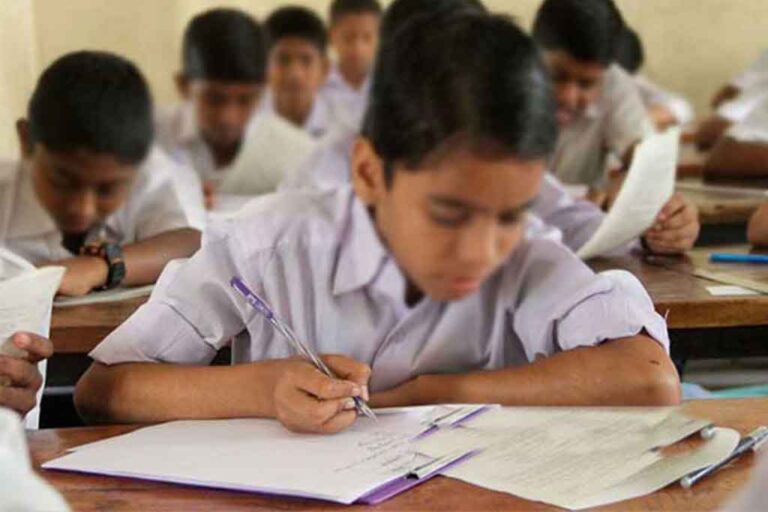
The Department of Examinations has announced that the eagerly anticipated results of the Gr. 5 Scholarship Examination 2023 are scheduled for release in the upcoming week. With the evaluation process now in its concluding phase, the department gears up to unveil the outcomes of this crucial examination.
A staggering 337,591 candidates participated in the Gr. 5 Scholarship Examination 2023, demonstrating the widespread engagement and significance of this academic milestone. The examination was conducted across 2,888 centers spanning the length and breadth of Sri Lanka.
Showers or thundershowers will occur at several places elsewhere after 02.00 p.m.
Fairly heavy showers above 50mm are likely at some places in Northern, North-central, North-western and Eastern provinces.
Showers will occur in coastal areas of Western and Southern provinces during the morning too.
The general public is kindly requested to take adequate precautions to minimize damages caused by temporary localized strong winds and lightning during thundershowers.
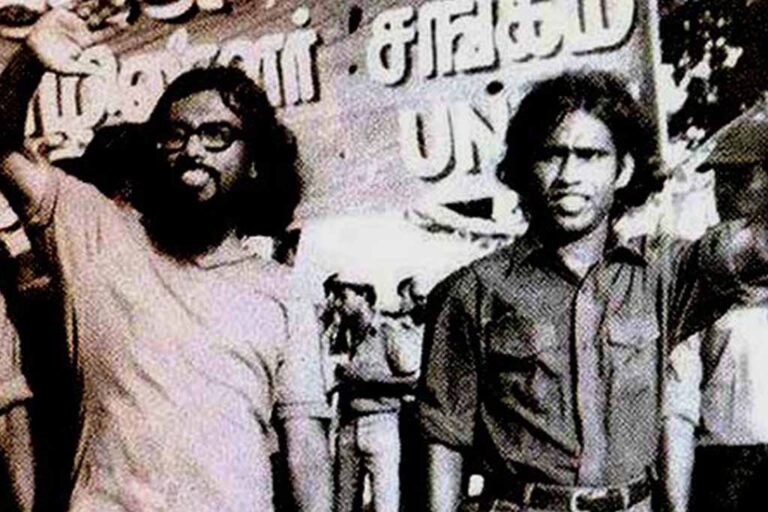
It has been 34 years since comrade Rohana Wijeweera was assassinated in November 1989. Following his death, the vacuum left by his absence prompted state terror squads, led by Janaka Perera, to pursue individuals who could potentially fill the void. This period marked a dark chapter in Sri Lanka’s history, with both state and JVP terror squads engaging in the torture and killing of thousands of political, militant, and civilian opponents. Personally, immediately prior to this tumultuous time, I served as the General Manager of Sarvodaya Economic Enterprises Development Services (SEEDS), and due to threats from both sides of the conflict, my family and I were forced to flee into hiding and eventually into exile.
As we observe the anniversary of Rohana’s death, it is essential to move beyond the romanticising of his life and instead critically examine the historical experiences of that era. By doing so, we can better prepare for the challenges posed by contemporary political developments.
In analysing any organization, the influence of its leader’s personality on its culture cannot be ignored. While this aspect is extensively studied in business and public administration, political entities often lack such scrutiny. Certain personality flaws in political leaders can significantly impact the quality and execution of organisational strategies. Leaders may become overly excited or fearful, compromising their ability to make clear, strategic decisions. This deviation from a long-term political vision often stems from deeply ingrained personality weaknesses, casting a shadow on the organisation’s success in political strategy.
To delve into the responses provided twenty years ago in 2003 to questions posed by Line magazine, let us revisit and critically examine the narrative. This retrospective analysis can enhance the awareness of the political landscape in Sri Lanka during that time, providing valuable insights for future generations.
The 1971 insurrection was the first major insurrection of the Sinhala youth against the State since the rebellions of 1818 and 1848 against the British. The 1971 uprising also showed the notion, “a revolutionary social transformation cannot be achieved in a Buddhist country”, was a myth. A large portion of youth had become totally alienated with the social establishment to such an extent, as I previously pointed out (see my response to Question 1), that they were willing to dedicate and even sacrifice their lives to effect revolutionary social changes. This broke down the popular belief that the average Sinhalese would be more than willing to undergo suffering and difficulties and still remain in silence.
I would characterise the JVP as a semi-proletarian movement of the rural youth, landless peasants, the unemployed and other oppressed sections of the Sri Lankan society. The main aim of the JVP was achieving social justice for the oppressed and equitable resource and income distributions. In the 1960s and 1970s social polarization and alienation was increasing than ever before. The JVP strongly believed that the ruling classes and dominant social groups never wanted to share their economic, social, and political power, and saw the solution to this problem lay in the transformation of the entire social framework for the better. The JVP activists did not engage in political work to gain personal benefits such as employment, personal promotions etc. If that was the aim, then to join the UNP or the SLFP was a better option for them. The ruling class and dominant social groups including those of the traditional left seemed to have believed that the youth movement was misguided, abnormal and power hungry. The bureaucracy and the intelligence sources looked at the JVP only from a comparative point of view with their own background.
I will now briefly outline the different phases of the progress of the JVP.
Formation of the ‘movement’ [The JVP was known as “movement” at its early stage]
Nine individuals led by Rohana Wijeweera formed the movement in May 1965. By the time Rohana alias Loku Mahaththya was expelled from the CP (Peking wing) he had laid a strong foundation for building the new movement. To finance the movement, it had established two agricultural farms in Hambantota and Anuradhapura. The movement was of the view that it should arm itself to confront the potential threat of a neo-colonial dictatorial regime that could have been established by the pro-US elements of the then UNP government. The movement was able to establish some contacts within the armed forces. In 1969, it started holding educational camps based in the famous five lectures [The five classes were capitalist economic crisis, Indian expansionism, Independence, Left movement and Path of the Lankan revolution].
At the end of 1969, the ‘group twenty-one’, the first central committee of the movement, met. The Mao Youth Front [This Group had established close links with the UF government, when expelled from the movement] led by GID Dharmasekera was expelled from the movement in 1970. In May 1970 Rohana and several other activists were arrested, but they were released following the May 1970 general elections, which brought the United Front (UF) government to power. The first public event of the JVP was held at Vidyodaya University in July 1970 and the news organ of the JVP, ‘Janatha Vimukthi’ came into circulation in August 1970. Since then, the JVP started publishing ‘Rathu Balaya’ island-wide, ‘Rathu Lanka’ for the working class, and ‘Rathu Kekulu’ for children. The first public rally was held in Hyde Park in August 1970 and the newspapers of the day carried a statement issued by the secretaries of the SLFP, the CP and the LSSP ‘urging’ the people to fight the rightwing reactionary force. The Secretary to the Ministry of Defence declared that the JVP was public enemy No. 1 and that it had to be eradicated.
Pre 1971
In September 1970, in an act of self-defence, the JVP again decided to arm itself with whatever weapons they could get hold of. The massive propaganda campaign the JVP launched in late 1970s, which comprised of island-wide poster campaigns, selling 50,000 copies of the central party organ ‘Vimukthi’, large public gatherings and political lectures, led to its rapid expansion, except in areas where Tamils, Muslims and Christians were predominant. The leadership of the JVP consisted mainly of individuals born to rural Sinhala Buddhist families. The nationalist militant movements in Tamil areas were in the offing but the JVP did not have the capability to do its propaganda work in either Tamil or English. The JVP interpretation of the class forces leading the socialist revolution would also have made the Tamil activists hesitant to join the JVP ranks.
By early 1971, the government of the SLFP, LSSP saw the JVP as an imminent threat and designed plans to eliminate it. The army and police commenced setting up the ‘Counter-Insurgency Units’ to co-ordinate anti-JVP work, of which Pieter Keuneman, a leader of the CP, had played a major role. The intelligence of the JVP indicated that the Attorney General was drafting special legislation to achieve that end. The law enforcement agencies, in the name of protecting ‘law and order’ were violating the rights of the youth movement to conduct their legal democratic political activities. As a result, holding public meetings, selling party newspapers and engaging in political propaganda work were disrupted.
The Mao Youth Front killed a police officer during a demonstration outside the US Embassy on 6 March 1971. The JVP immediately declared that it had nothing to do with this incident. The JVP had come to know the political links between the leaders of the demonstration and the UF government. In early March 1971, the JVP was proscribed, and Rohana Wijeweera was detained. On 16 March, the UF government declared that they have discovered a JVP ‘plot’ to overthrow the government. The leadership of the UF government used the US Embassy killing as a pretext to declare State of Emergency. It imposed a dusk-to dawn curfew, provided the security forces with full powers of arbitrary arrest. In March, it carried out the first act of war by implementing the third part of the emergency regulations empowering the security forces to dispose of dead bodies without post-mortem examinations or informing the relatives. The JVP undoubtedly took this step as the launch of their ‘search and destroy’ strategy. By the end of March, thousands of JVP cadres had been in custody. This created the explosive situation of April 1971.
Pre-1971 period of the JVP was also full of factionalism and splits. Many groups had moved away from the JVP due to political differences. The group led by Dharmasekera was prominent in this regard. In addition, some left the organisation due to personal reasons. Also, there were factions that by remaining within the organisation wanted to capture it through internal power struggle. Factionalism brought disastrous consequences for the JVP. At the end of 1970 factionalism had at its core personal matters that led to serious implications during the period of insurrection. Despite working together due to government repression at the end of March, the mistrust between the two factions was so vast that each faction was taking life and death precautionary steps to protect their own factions.
1971 Insurrection
It is still debatable whether the 1971 April insurrection was a short-term plan to capture state power or not. It was an action plan to defend our rights for political existence. In fact, the two factions within the JVP apparently adopted two different lines of action. One faction proposed that going into immediate offensive was the best defence, which had been the ideological position of the JVP. The other faction was concentrating more on getting Rohana Wijeweera out of detention using all available means. At the same time, I accept the fact that if capturing state power was not the long-term goal of the JVP then there was no strategic reason for its existence. However, in hindsight I believe, the reaction and opposition to the inhuman state plan to search and destroy the JVP could have taken other forms, which could have led to mass agitations and protests against the government repression. Its original decision to arm itself, in self-defence, generated an ascending vicious spiral of violence. Some intellectuals continue to interpret the insurrection as an occasion of misconduct of misled youth and quick to condemn them. These pundits have intentionally kept a blind eye from the major societal causes for the violence and have become apologetics for the corrupt, family bandyist regimes, and the social layers that have been passive in terms of social change.
During the insurrection, the CP and the LSSP set up home guards to protect police stations and to search and destroy JVPers. The UF government introduced repressive labour laws banning the distribution of handbills and posters within the workplaces without employer permission and arresting all those who did not report to work. While carrying out a systematic purge of the workplaces, the government decreed that in recruitment to the armed forces, anyone under the age of 35 should be totally excluded from forming the National Service Regiment. Hundreds of JVP cadres sacrificed their lives in combat and non-combat situations, and thousands were arrested and destroyed by security personnel trained and motivated in cold-war political ideology. After capture, some were burnt alive, buried alive and some were cut to pieces using chain saws. Even some of those who surrendered following the call of the then Prime Minister Mrs Bandaranaike were killed.
The following statements vividly summarise the political ideology of the armed forces: Sandhurst trained Lt. Col. Cyril Ranatunga, military coordinator of Kegalle district during the insurgency and later appointed as a diplomat, was quoted as saying: ‘We have learnt too many lessons from Vietnam and Malaysia. We must destroy them completely.’ [International Herald Tribune, 20 April 1971]. Another officer was quoted as saying: ‘Once we are convinced prisoners are insurgents, we take them to cemetery and dispose of them.’ Despite subsequent denials, in later weeks, hundreds of bodies of young men and women were seen floating down the Kelani river near Colombo, where they were collected and burnt by soldiers. Many were found to have been shot in the back [The 1971 Ceylonese Insurrection by Fred Halliday]. Thousands, who believed in and showed their commitment to immediate social change became frustrated, disappointed and disillusioned. Some compromised their positions, reconciled with the power circles, and incorporated themselves in the ruling political establishment.
1971-1983
The pre-1971 period dominated by ultra-left adventurist tendencies of the JVP was replaced, after 1972, with a more balanced approach. The period of 1971 to 1972 was a period of reflection on the past policies and practices of the JVP. Prison life with all its turbulence was an oven in which different political thoughts and currents melted into forming the new thinking of the JVP. Dropping the entire political lecture on Indian expansionism, revision of the political lecture on ‘the path of the Lankan revolution’ with less emphasis on military aspects, complete moving away from the sectarian political influences, development of policy frameworks in the form of a policy declaration, study of the national question and bringing it to the fore in political agenda, emphasis on organization of the urban and rural proletariat were some changes that worth mentioning.
The second wave of public rebuilding of the JVP began in 1976 and after November 1977 when all political prisoners sentenced under the Criminal Justice Commissions (CJC) Act were released with the then UNP government repealing the Act. The JVP gradually moved towards limiting itself to parliamentary forms of struggle. The party structure significantly changed with extending electoral organizations. Anyone could become a member of an electoral organisation simply by filling in an application and paying a fee. The principles of democratic centralism in the party organisation received less emphasis. When an individual or an organization within the JVP had disciplinary problems, there were many occasions when the party acted in a bureaucratic manner. In the party’s Politburo and Central Committee severe disagreements developed when solutions to these problems were discussed.
Between 1971 and 1983 the JVP recognized, in principle, the right of nations to self-determination accepting it as based on Leninism. However, it continuously rejected agitating for the rights of non-Sinhala people. In the face of discrimination and repression against the Tamil people the Central Committee remained deadly silent. Following the 1982 presidential elections, in which the JVP received less than satisfactory results, the JVP turned its back on the recognition of the right to self-determination and stated that even Lenin rejected its validity under a socialist governance. The JVP refused to accept that the country’s specific social and historical conditions have brought the national question to the forefront as one of the primary conditions for the survival of capitalism, while at the same time the national question has created an irreversible crisis for capitalism. The signs of the JVP becoming servile to Sinhala nationalism were eminent. At the beginning of 1983 there was no difference between what the JVP was advocating and what an orthodox parliamentary party would have been advocating on the national question.
The JVP also rejected to establish dialogue with any of the Tamil militant organizations. Even if certain militant Tamil organizations had originally engaged in terrorist activities, if they were prepared to take a progressive path, how could the JVP have refused to engage in dialogue with them with the aim of bringing them under the umbrella of socialism? What advantage the JVP, the country, or the socialist revolution would have gained by saying that the JVP would be subjected to repression if it enters into a dialogue with Tamil militants. In 1983, even without such a dialogue, the JVP was accused of having ties with the Tamil militancy! I feel that the JVP could only have expected to rally the Tamil people around the banner of revolution if and only if the JVP identified with the problems of the Tamil people in parallel with the problems of the Sinhala and other peoples and agitated forcefully demanding solutions to their problems. The JVP could not have expected this to happen by separating itself from the problems of the non-Sinhala people.
Initially, in 1977, there was general agreement to take united action, forming alliances on specific issues and working on a united action program with other left parties. However, by 1983 this tendency had become minimal. The educational program of the JVP did not entertain the possibility of tactical alliances with anti-UNP capitalist parties and the traditional left. Even when the need for such an alliance had arisen, the opposition that sprang from within and the leadership fear that this would create divisions within the party had resulted in abandoning such efforts halfway through. The JVP needed the support and solidarity of other organizations only when it had been faced with repression or other difficulties. Due to this sectarian nature, the leadership of other organizations was able to build up in their membership an amount of distrust and wariness towards the JVP.
1984-1990
In July 1983 by hatching a conspiracy, the UNP government proscribed the JVP and drove it underground. The real reason for the proscription was that the JVP had grown to be a strong national political force that posed a threat to the UNP government. JR Jayawardena would not have come to this conclusion without false inputs provided by the government intelligence sources. For instance, the UNP propaganda, concocted against the JVP, stated that there had been May Day posters that ‘the JVP will come back in three months’. This was nothing but sheer fabrication, and everybody knew that the JVP May Day rally did not carry such silly slogans. However, I had expressed concerns that a militant May Day demonstration in 1983 may make the government over-assess the JVP strengths.
While the old left kept silent, several civilian organizations and breakaway left parties and groups demanded lifting of the proscription of the JVP. In spite of mounting evidence that the JVP had no involvement whatsoever in the riots, this did not move JR Jayawardena to lift the proscription of the JVP. In December 1983, the JVP leadership rejected my request to come to the open pledging that, if required, I would arrange a group of imminent persons to accompany Rohana. In 1985, the JVP decided to build an underground organisation and to use the national problem to its advantage.
Instead of relying on people power, in late 1985, they had based their hopes on their armed strength. The vicious cycle had just begun. Daya Pathirana, leader of the Colombo University independent student union movement was assassinated at the end of 1986. The security forces, its paramilitary units, and vigilante groups such as green tigers, PRAA, Black cats, Yellow cats and Ukussa (Eagle) had commenced assassinating the JVPers. Many JVPers and civilians disappeared after their arrest. The JVP, in 1987, had established its military wing ‘Deshapremi Janatha Vyaparaya’ (DJV) which had carried concentrated attacks out on selected security targets. The UNP and the JVP vowed to destroy each other. The JVP terror campaign in earnest appeared to have begun in 1987, with the DJV decision to declare curfew and kill civilians who do not abide by its orders.
Meanwhile the July riots which the government created had exacerbated the Tamil militancy in the north-east. In mid-1987 India air dropped supplies over the northeast. They had just deferred a full-scale invasion. Indian involvement in training Tamil militants had come to light. 1986 saw the formation of ‘Mavubima Surekeeme Vyaparaya’ led by the JVP, denoting a major shift towards anti-Indian rhetoric.
The Signing of Indo-Sri Lanka Accord in July 1987 had been used by the JVP and chauvinist forces to make rural Sinhala youth indignant against the government and to arouse anti-Indian sentiments. Apparently, the five lectures had been redrafted to reflect the new thinking of the JVP [The new lectures were Indian Invasion, Independence, Economic Crisis, Patriotism, Socialism]. The lecture, Indian expansionism had been revived giving it a new lease of life. The JVP had proposed a national liberation government under a national liberation united front. The new JVP slogans carried anti-Accord and an anti-Indian twist. Accusing JR Jayawardena of betraying the motherland, the JVP had started appealing to nationalist sentiments to liberate the motherland and accused everybody else being agents of “Indian imperialism”. Selling and buying Indian goods, wearing Indian sarees, and consuming Bombay onions, Masoor [Though imported mainly from Turkey, the mistaken general assumption was that it was imported from Mysore, India] dhal etc. had been banned.
The JVP had started assassinating not only the UNPers, but also the SLFPers and the supporters of the United Socialist Alliance. Vijaya Kumaratunga was killed in early 1988. Government politicians-maintained torture chambers island wide with the assistance and involvement of the top brass of the security forces. Thousands had been taken to these chambers, tortured, maimed, and killed. With the LTTE withdrawing from the Accord, the IPKF guns were aimed at the LTTE. India formed Tamil National Army (TNA) to fight against the LTTE. By 1988, the massacre of Sinhala civilians by the LTTE became advantageous to the JVP. By late 1988, people in the south were under the dual power of the UNP government and the JVP mini government. The rate of killings by both sides had reached a daily figure of a hundred, at the time the highest in the globe.
In December 1988 at the presidential elections, instead of appealing to people to express their will by voting at the provincial council elections against the repressive regime, the JVP used violence to prevent people from casting their votes. The JVP election strategy overlapped with the election strategy of the repressive regime. Having come to power President R Premadasa lifted the emergency, freed detainees and asked the JVP to engage in mainstream politics. It was too late. The state repression, police death threats and fear psychology would have prevented the JVP leaders from coming to the open. The JVP who drew immense popular support in rural areas shifted its slogans, in July 1989, giving emphasis to driving the Indians out. However, the JVP activities, such as curfews, transport strikes, lack of opportunities to get health care, food and children’s education started affecting the ordinary working people rather than the rich. People were forced to take strike action under death threats.
Subjected to unmentionable torture, captured JVPers had provided information on the whereabouts of the JVP leadership. Rohana had been taken into custody in November 1989 and assassinated the same evening. The UNP gained military victory by killing about 80,000 people [Refer Amnesty International reports on this carnage.]. The capitalist class was able to drown those who opposed the system in rivers of blood.
My belief is that the JVP should have negotiated with the government between 1984 and 1987. The JVP violence provided the government with justification for its massive terror campaign. In a way this may be interpreted as a return to pre-1971 politics. Nevertheless, there were major differences. Similarities were that they used Indian expansionism as the ideological front to fight the regime. They fell into a similar trap of relying on arms rather than on people. The differences are that in 1971 the JVP was demanding the UF government to implement the election pledges of the UF government and to carry out our economic reforms that benefited working people. However, in 1988-89 the demand was for the government not to implement a proposed bourgeois democratic solution to the national problem, which the UNP had pledged in its 1977 election.
This is a complex and hard question. Having paid only short visits to Sri Lanka in recent years, it is difficult for me to grasp ground political realities there, in particular, of diverse parties and formations.
Broadly thinking, a democratic and inclusive alliance needs to tackle in its framework policy responses to the socio-economic, political, and cultural problems prevalent in its society. My view is that these problems are marked by four major contradictions – the contradictions:
between imperialism and the sovereignty of Sri Lanka;
between the finance capital and the oppressed people, the working class in particular;
between various sections of the ruling classes; and
between feudal remnants and the peoples.
While these contradictions are separately identifiable, imperialism, finance capital and feudal remnants are, in reality, aligned with each other and are mutually dependent. A democratic and inclusive alliance can become successful by evolving a policy framework addressing the issues posed by the contradiction between imperialism, finance capital, and feudal remnants and the working and oppressed people of Sri Lanka.
The primary aim of a socialist movement is to abolish all bondages of wage slavery and imperialism. Society, however, encompasses in its fold feudal remnants and the concomitant autocratic and bureaucratic distortions. It is important that this alliance uses its policy framework to tackle the unfinished business of bourgeois democratic tasks such as feudal remnants. Abolition of feudal remnants needs to include measures such as development of constitutional arrangements to address the national problem in a proactive manner, development of infrastructure providing prominence to e-communication and transportation, large scale industrialization of the economy, free education combined with provision of skills matching the requirements of economic development, adopting and implementing legislation to manage discrimination, corruption and bribery, establishing essential and sufficient administrative mechanisms for ensuring equality of opportunity and equity of access within an anti-discriminatory constitutional framework.
This grand framework needs large-scale foreign investments and managing debt services with an emphasis on protecting the national interests of Sri Lanka. Establishment of grass roots level democracy and consistent safeguarding of democratic and human rights of working people should become major features of this policy framework. All those who agree with such a minimum program, though the immediate aim may not be socialism, should be able to work in an inclusive environment, in a participative environment, within the agreed minimum framework.
Managing conflicts, in particular, at the leadership level, will be a huge burden. In this I may greatly differ from the established thinking of left movements the world over. I am aware that most socialist movements reject offhand the use of modern management techniques. From my point of view, humanity in the process of its development has made fantastic cultural achievements in many fields including arts, science, technology, and management. The problem is that these achievements have been used so as to benefit only certain social classes, not society as a whole. However, with time, such achievements have been used by the dispossessed classes in a broad manner for their benefit. For example, e-communication, which had been originally developed for capitalist military gains, is used by a vast number of people to communicate among them. Still the multi-nationals control such technology. At decisive moments, they shut them down so that the vast majority of people do not have access to timely and accurate information. This makes people unable to make timely decisions. This is what we witnessed recently in Iraq, with regard to its occupation by invading forces. Multinational news corporations use psychological war tactics to manage news bulletins daily and manipulate news to their advantage. However, there are enough loopholes being used to distribute information that would have been unavailable otherwise.
Management tools are not different. Maximizing profits is the main use of such tools by sacking working people in the name of business improvement, quality management, or re-engineering. At the same time, we need not forget that the same process has generated techniques of improving efficiency, quality, transparency, and accountability. Many organizations use such tools only for window-dressing purposes, just to show that they are doing the right thing but adhere to the same old traditional methods of management. I strongly believe that working class organizations can also use these tools to their advantage. My experiences with many organizations show that they are run autocratically, inefficiently, without accountability and transparency. I do not say for a moment, even the best management techniques could prevent all conflicts and divisions, fractures, corruption and so on. What I can say is that employing such tools will reduce and control the negative effects.
Marx’s communist society is an ideal perfect classless system with extraordinary advancements of science and technology used for the benefit of humanity. Humanity is not perfect. It is idealistic to say that under socialism, there will be no corruption, no discrimination, and no rights violations but there would be perfect social justice. This is our vision, full of good intentions. We need to go towards it but may not reach that perfect goal at all. However, we can develop frameworks to control, manage, and minimize evil effects generated by the class-based society. We need to start with ourselves.
Coming back to the point, it is regrettable that I am not in a position to highlight this or that organisation or this or that individual that would inspire a more democratic and inclusive path for the future. However, I know that there are thousands and thousands who are stranded like me without knowing where to start, where to go and whom to believe, scattered all around Sri Lanka and elsewhere. They have learnt ample lessons from their past experiences both within and without the JVP. There are many who, having formed diverse political groups and formations, have not at all succeeded in moving forward. In fact, they have disintegrated and marginalized themselves by their own approaches. The JVP with its deviations seems to have moved a long way.
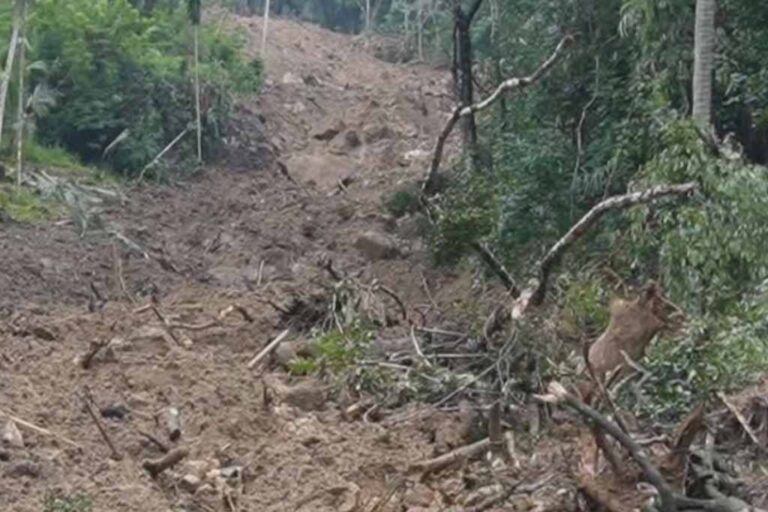
Colombo (LNW): The bodies of a family of four, previously reported missing after a landslide in Balangoda, were recovered this (14) afternoon.
The search operation, conducted with the help of disaster management officials, Sri Lanka Army personnel, and residents, led to the discovery of the bodies.
The family, comprising a married couple and their two daughters, went missing when a landslide buried their house in the Gavaranhena area.
Police investigations were initiated to determine their whereabouts.
The landslide damaged two houses, prompting the evacuation of other residents to safer locations.
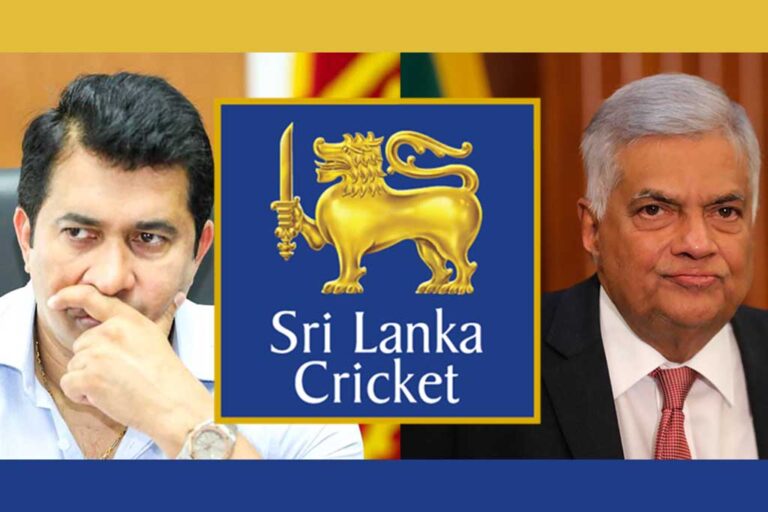
Colombo (LNW): In the midst of the recent disagreement between President Ranil Wickremesinghe and Sports Minister Roshan Ranasinghe regarding the appointment of an interim committee for Sri Lanka Cricket (SLC), the Cabinet has taken a decisive step by mandating that any forthcoming appointments of interim committees for SLC must obtain prior Cabinet approval.
Previously, the Sports Minister unilaterally appointed an interim committee, headed by former cricketer Arjuna Ranathunga, for SLC.
However, the President expressed his dissatisfaction at not being consulted before the appointment, instructing the Sports Minister to annul the gazette issued for the interim committee.
Simultaneously, the President’s Media Division (PMD) announced that Wickremesinghe has delegated authority to the Ministerial Sub-Committee, led by Foreign Minister Ali Sabry, to make decisions regarding the suspension of Sri Lanka Cricket’s membership in the International Cricket Council (ICC).
In response to the developments, last week, the Cabinet decided to establish a four-member Cabinet sub-committee tasked with scrutinising the gazette issued by the Sports Minister.
The gazette had not only appointed an Interim Committee for SLC but also suspended the previous board and future activities of SLC.
Sri Lanka’s ICC membership has been suspended as of November 10, citing government interference in the administration of Sri Lanka Cricket.
Ranasinghe denied the the PMD report, stressing that there were no discussions or Cabinet directives regarding future appointments to interim committees.
Colombo (LNW): The Ceylon Electricity Board (CEB) is discontinuing printed paper bills and introducing the CEB e-billing system in various areas, including Dehiwala, Kelaniya, Sri Jayewardenepura, Matara, and Ambalangoda.
Consumers in these regions will exclusively receive digital bills via SMS or email.
The CEB encourages nationwide customer registration for this service, as printed bills will gradually be phased out.
Registration can be done via SMS or online.
Consumers can register by typing the following send sending it to 1987:
Type REG<space>your CEB Account number.
The e-billing system aims to save about 100 million sheets of paper annually, with the CEB urging customers to embrace this eco-friendly digital transformation.
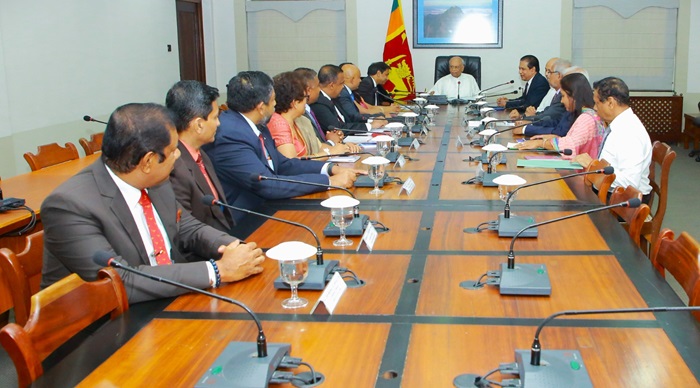
Colombo (LNW): Premier Dinesh Gunawardena addressing a meeting at Temple Trees yesterday (13) urged the ten newly appointed Sri Lankan envoys to prioritise economic diplomacy as a key element in the country’s path to rapid economic progress.
Emphasising the need for cooperation with other nations, the Prime Minister encouraged envoys to showcase Sri Lanka’s global interaction capabilities and take innovative measures to attract investments and foster joint ventures.
The Prime Minister outlined a strategic focus on increasing trade and investments, urging envoys to promote Sri Lanka as not only a tourist destination but also a favorable hub for investment and trade.
Gunawardena highlighted the potential for rapid economic growth by closely engaging with other nations, particularly in response to the shift in the world economy towards Asia, including the economic rise of China, India, and ASEAN.
In addition to engaging host governments and business entities, the Prime Minister advised the envoys to build networks with Sri Lankan expatriate organisations in host countries and cultivate ties with important friends of Sri Lanka.
He specifically emphasised the importance of strengthening connections with the Spanish-speaking world, particularly in Latin American countries through accredited ambassadors.
The ten newly appointed Heads of Mission include Admiral Ravindra Wijegunaratne (Pakistan), Air Marshal Sudarshana Pathirana (Nepal), former Foreign Secretary Kshenuka Senewiratne (India), Admiral Nishantha Ulugetenne (Cuba), Satyajit Rodrigo (Italy), Madurika Weninger (Egypt), Dharamapala Weerakkody (Bangladesh), Senerath Dissanayake (Singapore), and Chandana Weerasena (Belgium and the European Union). The new High Commissioner to the UK, Rohitha Bogollagama, was unable to attend due to a prior engagement. MP Yadamini Gunawardena, Secretary to the President Anura Dissanayake, Advisor Sugeeswara Senadhira, Additional Secretary of Foreign Ministry Mohammad Jauhar, and Director General Wijayanthi Edirisinghe were also present at the meeting.
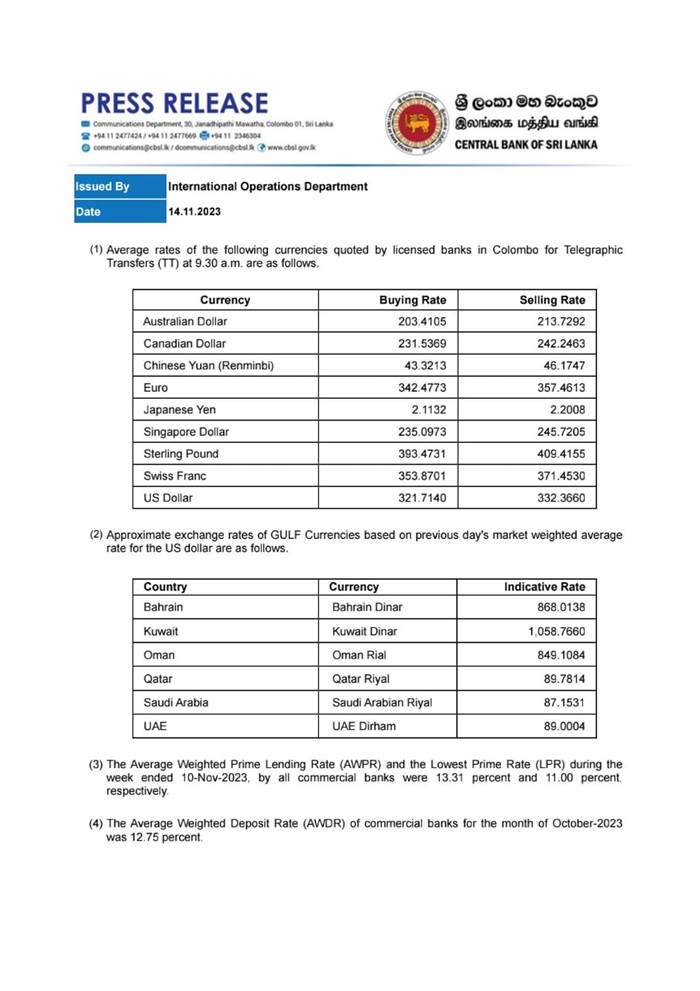
Colombo (LNW): The Sri Lankan Rupee (LKR) indicates further appreciation against the US Dollar today (14) in comparison to yesterday, as per the official exchange rates list issued by the Central Bank of Sri Lanka (CBSL).
Accordingly, the buying price of the US Dollar has dropped to Rs. 321.71 from Rs. 322.12, and the selling price to Rs. 332.36 from Rs. 332.47.
The Sri Lanka Rupee, meanwhile, indicates fluctuation against several other foreign currencies, including Gulf currencies.