Colombo (LNW): President Ranil Wickremesinghe’s announcement of selling a 20 per cent stake in People’s Bank and Bank of Ceylon injected vitality into the stock market during a lackluster day, analysts pointed out.
The government aims to sell the stake to strategic investors or the public to enhance capital and support future growth, reducing taxpayer burden.
The 2024 budget proposes stringent measures, including legal action against non-filers and mandatory submission of Taxpayer Identification Number certificates for certain transactions.
Despite these challenges, the stock indices rose, with the All-Share Price Index up by 10 points and the S&P SL20 increasing by 7.6 points.
The turnover reached Rs 559 million without any crossings, and notable contributors were Capital Alliance, JKH, and Ceylon Grain Elevators.
In the retail market, 19.2 million shares changed hands in 8570 transactions. The day saw the rupee opening flat against the US dollar at Rs 327.00/40.
Bond activity was subdued as investors adopted a cautious stance before the budget reading.
Colombo (LNW): DFCC Bank has reported a strong performance for the third quarter of 2023, recording an Operating Profit Before Taxes on Financial Services of Rs. 10,693 million, Profit Before Income Tax (PBT) of Rs. 8,305 million, and a Profit After Tax (PAT) of Rs. 5,498 million.
This marks a significant improvement from the third quarter of 2022. The Bank’s Return on Equity (ROE) increased to 11.66 per cent, and Return on Assets (ROA) before tax for the period ended September 2023 is 1.76 per cent, compared to 0.46 per cent for the year ended December 2022.
The Net Interest Income (NII) increased by 26 per cent, reaching Rs. 23,655 million, and fee and commission income rose by 40 per cent to Rs. 2,848 million.
The impaired loan ratio increased to 6.13 per cent, and the Bank made impairment provisions to address additional risks in the economic environment.
Operating expenses increased to Rs. 8,370 million, primarily due to inflation. Other comprehensive income includes fair value gains on equity securities and fixed-income securities.
The Bank remains committed to providing high-quality, customer-centric banking services amid unprecedented challenges in the banking industry.
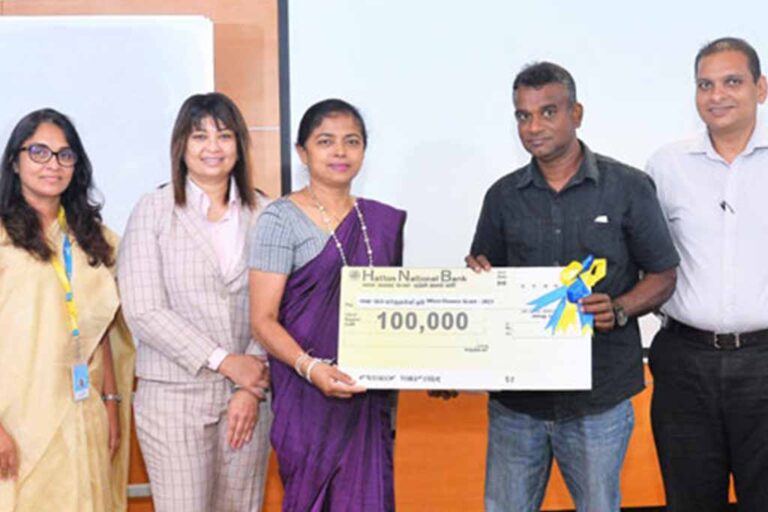
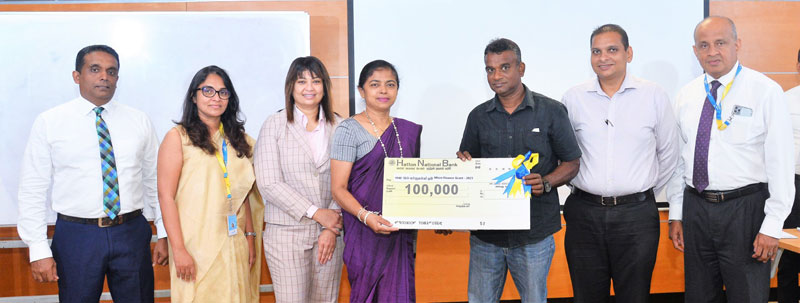
Colombo (LNW): Sri Lanka’s leading private sector bank, HNB PLC, is directing efforts to revive the grassroots economy by allocating Rs. 10 million as a grant fund for 100 microfinance entrepreneurs under its ‘Oba Venuwen Api’ initiative.
Established by the HNB Sustainability Foundation, the grant aims to provide financial assistance of up to Rs. 100,000 to selected microfinance customers, enabling them to strengthen and rebuild their businesses, ultimately working towards achieving SME status.
The initiative, focused on providing support during challenging times, has disbursed Rs. 30 million to 300 microfinance customers across the island since its inception in 2020, with 70 per cent of the grant fund going to entrepreneurs in agriculture, manufacturing, and other industries.
HNB envisions long-term growth and resilience for customers through this initiative, fostering sustainable entrepreneurship and community empowerment.
“In a year marked by extraordinary challenges, this initiative is essential for businesses seeking capital to re-establish their operations. With our decades-long commitment to microfinance and the SME sector, we recognise the importance of scaling up our support, providing financial assistance and enhancing financial literacy to uplift grassroots entrepreneurs. We expect our customers will make optimal use of this grant, whether for working capital, recapitalising their business, or getting back on their feet,” HNB MD/CEO Jonathan Alles said.
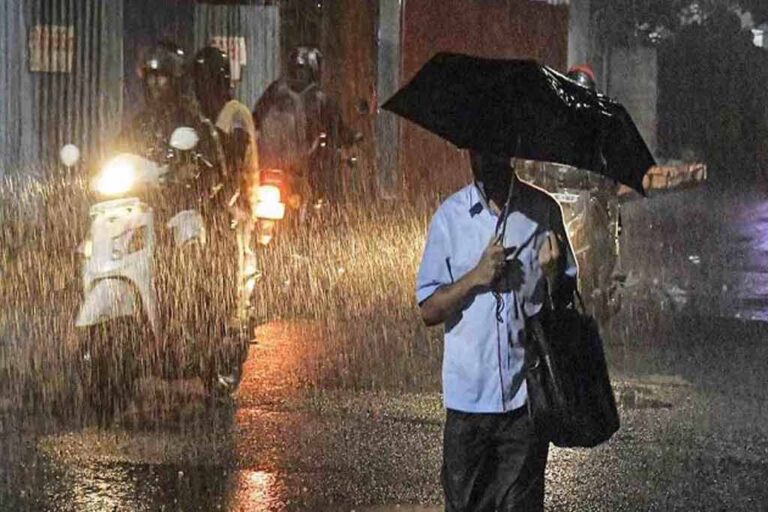
Colombo (LNW): The low-level atmospheric disturbance over the island still persists, and therefore, showers or thundershowers will occur at times over the coastal areas of Northern, North-Western, Western and Southern provinces, the Department of Meteorology said in its daily weather forecast today (14).
Showers or thundershowers will occur at several places in other provinces of the island after 02.00 p.m, the statement added.
Fairly heavy showers above 75mm are likely at some places in Western, Central, Sabaragamuwa, North-central and Northern provinces and in Galle and Matara districts.
The general public is kindly requested to take adequate precautions to minimise damages caused by temporary localised strong winds and lightning during thundershowers.
Marine Weather:
Condition of Rain:
Showers or thundershowers will occur at several places in the sea areas around the Island.
Winds:
Winds will be North-easterly or variable in direction and wind speed will be (20-30) kmph. Wind speed can increase up to (50-55) kmph at times in the sea areas off the coast extending from Trincomalee to Pottuvil via Kankasanthurai, Puttalam, Colombo, Galle and Hambantota.
State of Sea:
The sea areas off the coast extending from Trincomalee to Pottuvil via Kankasanthurai, Puttalam, Colombo, Galle and Hambantota can be rough at times. The other sea areas around the island will be slight. Temporarily strong gusty winds and very rough seas can be expected during thundershowers.
Colombo (LNW): In a notable Cabinet reshuffle in the United Kingdom Monday (13), the country’s Prime Minister Rishi Sunak has appointed former PM David Cameron as the new Foreign Secretary.
Cameron, recently involved in promoting the Colombo Port City on behalf of the Sri Lankan government, takes over from James Cleverly, who now assumes the role of Home Secretary, succeeding Suella Braverman.
Braverman faced dismissal after days of speculation surrounding her criticism of police actions during pro-Palestinian protests in the UK.
Additionally, Under-Secretary of State for Primary Care and Public Health Neil O’Brien and Schools Minister Nick Gibb have announced their intentions to step down for reasons unrelated to the Cabinet reshuffle.
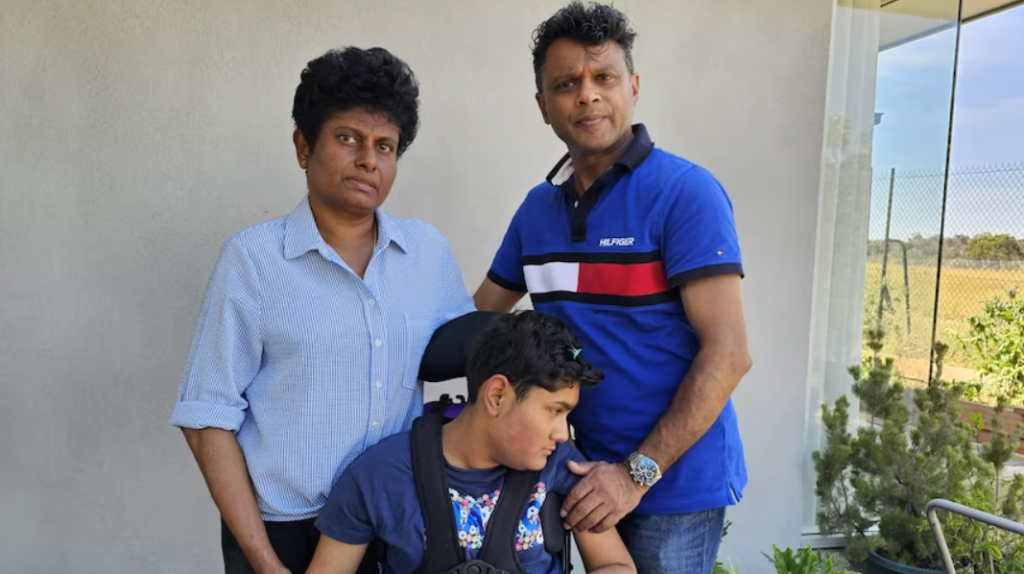
Colombo (LNW): A Sri Lankan father, visiting Ballarat, Australia, with his differently-abled daughter, faced assault and racial abuse, prompting him to reconsider returning to the city, Australian Broadcasting Corporation (ABC) reported in a staggering revelation.
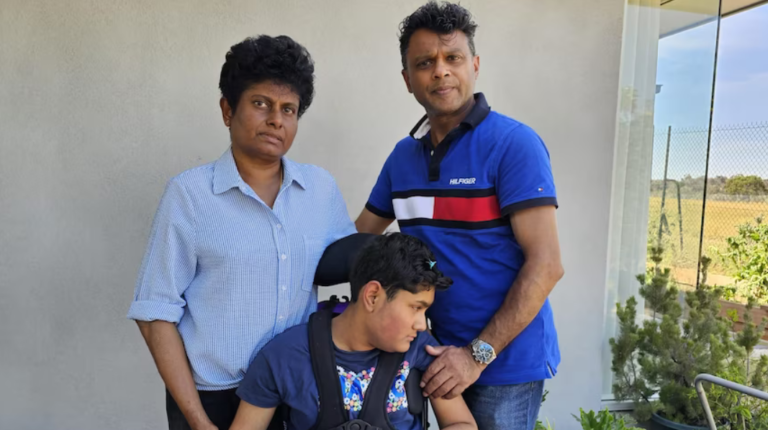
The Nugagahakumbura family, navigating challenges due to 12-year-old Anuli’s cerebral palsy, blindness, and wheelchair use, encountered an unsettling incident, according to ABC report.
After a day of sightseeing, a group of boys subjected the family to verbal abuse and threw a metal chain at Anuli’s face as they were returning to their car.
Full Report:
A father who was assaulted and racially abused while visiting Ballarat with his young daughter, who lives with a disability, says he may never return to the regional Victorian city.
The Nugagahakumbura family’s trip from Melbourne was not easy to plan; 12-year-old Anuli lives with cerebral palsy, uses a wheelchair, is blind and needed to be accompanied by a carer.
Thusitha Nugagahakumbura said he, his wife Neelanthi Munasinghe, Anuli and her carer were heading back to their car after a day of sightseeing when a group of boys started shouting at them, and a metal chain was hurled at the girl’s face.
“I asked, ‘What’s wrong with you?'” Mr Nugagahakumbura said.
“He then just came in, without telling [me] anything, and started to punch me.”
Mr Nugagahakumbura said he was forced to defend himself while trying to get his family into the car as he called triple-0.
“By the time that I was getting onto Ballarat police, the boy stopped punching me,” he said.
“The group got into a bus … and left.
“I was shocked.”
Mr Nugagahakumbura, whose family has lived in Melbourne since they came to Australia a decade ago, said Anuli’s carer heard the group shouting racial slurs during the attack, which occurred in early October.
Like ‘a pack of hyenas’
Kate Skinner, who raced to intervene when the assault occurred, told ABC Statewide Drive the area near Coles on Peel Street was a known trouble spot.
“My daughter said … ‘Mum, that family is in danger … they’re hitting that family,'” she said.
“So we just took off and started sprinting over.”
Ms Skinner said there were “seven to nine” boys surrounding the terrified family.
“They were absolutely traumatised,” she said.
“My daughter stepped up to the kids, which was so brave, but she just knew that if she didn’t, those kids were not leaving.
“It was like they were a pack of hyenas.”
Ms Skinner said one of the boys was using a small chain as a weapon and that the mother of a child in the group was also shouting at the family.
“It was disgusting,” she said.
Police station 400m away
Ballarat police station is only a few minutes’ walk from where the incident occurred, but officers did not attend the scene.
Mr Nugagahakumbura was told by police to file a report at the station because the offenders had by then left the area.
“I’m not much familiar with Ballarat, right — this is the second time in the last 10 years that I’ve visited Ballarat,” he said.
Police told Mr Nugagahakumbura there was no CCTV footage of the attack, despite the centrality of the location.
“We are not living in [the] 18th or 19th century,” Mr Nugagahakumbura said.
“If someone needs to find someone, there are so many ways of doing that.”
Ms Skinner said she saw three “horrible-looking men” filming the assault.
“Someone’s got the phone, someone’s got the video,” she said.
In a statement, Victoria Police told the ABC an investigation into the incident was continuing.
“Police units in Ballarat were attending another incident at the time,” the statement said.
“The victim was requested to attend the police station so written statements could be obtained and an investigation could be commenced as a priority.”
‘Disgusting and deplorable’
Ballarat Mayor Des Hudson said the incident was “absolutely horrendous”.
“Disgusting and deplorable behaviour on the part of every person who played a part to traumatise the family that was here visiting,” he said.
“They just shouldn’t have had to endure that particular type of behaviour.
“This is not usual Ballarat behaviour.”
Cr Hudson acknowledged that the transport interchange on Little Bridge Street had been a problem for “a long, long time” and said that recently, some of the seating and shelters had been removed to try to address antisocial behaviour in the area.
He also said the lack of surveillance footage concerned him, and that the area would receive a CCTV upgrade when improvements to Bridge Mall were made.
Cr Hudson said he hoped the family would return to the city, but Mr Nugagahakumbura has his doubts.
“I don’t think we’ll come back to Ballarat because it will give us a lot of mental stress,” he said.
“Even visiting some other places … we haven’t thought of that, but it would be really hard.”
Colombo (LNW): Sri Lanka and Sweden held their inaugural round of virtual bilateral political consultations at the senior official level on November 9, 2023.
This meeting occurred on the eve of the forthcoming 75th anniversary of diplomatic relations between the two nations, set to be commemorated in 2024.
The discussions centred on fortifying the existing multifaceted partnership and exploring new avenues for enhanced cooperation.
Key areas of focus included reinforcing the bilateral partnership in ICT, Science and Technology, Climate Change & Environment, and economic collaboration.
The two sides also engaged in dialogue regarding cooperation in multilateral forums.
The Sri Lankan delegation expressed a keen interest in investigating potential institutional collaborations and capacity-building initiatives in Research and Development (R&D), ICT, and the education sector.
Furthermore, discussions included the possibility of high-level visits from Sweden to mark the 75th anniversary of diplomatic relations in 2024.
Co-chaired by Yasoja Gunasekera, Additional Secretary/Bilateral Affairs (West) of the Ministry of Foreign Affairs of Sri Lanka, and Oscar Schlyter, Head of the Department for Asia, the Pacific region, and Latin America of the Ministry for Foreign Affairs of Sweden, these consultations signified a strategic step towards strengthening bilateral ties and fostering collaborative initiatives.
Colombo (LNW): Expatriate workers demonstrated their unwavering support for the nation by sending a robust US $517.4 million in remittances in October alone.
Since Minister of Labour and Foreign Employment Manusha Nanayakkara assumed office last May, a staggering US $7.6 billion has flowed into the country as foreign workers’ remittances.
The noteworthy surge continues to gain momentum, with October’s remittance figure marking a compelling 45.63 per cent increase compared to the US $355.4 million received in the same month last year.
The resilience of this trend is further emphasised by the cumulative foreign remittances for the first ten months of this year, which stand impressively at US $4.86 billion.
Comparatively, the figures from the same period last year reveal a remarkable growth, with US $2,929.4 million received as foreign remittances.
This substantiates an exceptional 66 per cent increase in foreign remittances during the initial ten months of this year, underscoring the sustained commitment of expatriate workers to contributing significantly to the country’s economic vitality.
Colombo (LNW): The report stemming from the inquiry into the altercation involving State Minister Diana Gamage and Samagi Jana Balawegaya (SJB) MPs Rohana Bandara and Sujith Sanjay Perera on the Parliament premises will be submitted to the Parliament Privileges Committee tomorrow (14).
Subsequent actions will be determined based on the findings of the committee’s investigation.
Deputy Speaker Ajith Rajapakse led the committee, with members including MPs Chamal Rajapaksa, Ramesh Pathirana, Gayantha Karunathilake, and Imtiaz Bakir.
The report will shed light on the incident and serve as the basis for any further actions or decisions by the Parliament Privileges Committee.
Colombo (LNW): Leader of the Opposition MP Sajith Premadasa blatantly criticised the Budget Appropriation Bill for the fiscal year 2024 presented in Parliament by President Ranil Wickremesinghe in his capacity as the Finance Minister, in what he described it as a ‘deceptive ploy’ aimed at the nation’s people.
Speaking to reporters outside the Chambers hours after the President unravelled the Budget for 2024, Premadasa contended that it is a compromise due to unmet income targets from the International Monetary Fund (IMF) agreement, preventing the acquisition of the second IMF tranche.
He emphasised the need to evaluate the implementation status of proposals from the 2022 budget before discussing new programs for the working people’s well-being, and asserted that the current regime has fallen short in implementing numerous promises outlined in the Budget 2022.
Commenting on the 2024 Budget Appropriation Bill, Opposition MP Dr. Harsha de Silva raised concerns about the high risks associated with it, and highlighted potential issues such as the proposed increase in Value Added Tax (VAT) from 15 per cent to 18 per cent, removing exemptions and adversely affecting Small and Medium Scale enterprises. Additionally, he noted a reduction in the threshold for the Social Security Levy.
The MP raised questions about the impact of the proposed increase in the loan borrowing limit and the source of these loans, expressing worries about potential effects on interest rates. Silva criticised Wickremesinghe for not addressing these concerns in the budget speech, suggesting that the details might only emerge with the issuance of relevant Gazette notifications. Furthermore, the opposition MP hinted at the President delivering the budget speech in anticipation of an upcoming election next year.
Meanwhile, Leader of the National Peoples Power (NPP) and the Janatha Vimukthi Peramuna (JVP) MP Anura Kumara Dissanayake said the President’s presentation of the Appropriation Bill for the fiscal year 2024 is a stark portrayal of a strategy reliant on ‘acquiring loans’ and ‘selling state assets’.
Speaking to reporters outside Parliament on the President’s newly presented Budget for 2024, Dissanayake strongly asserted that the government’s budget proposal for 2024 is driving the nation further into crisis.
He accused the government of exacerbating the situation by increasing the loan borrowing limit by an additional Rs. 3,400 billion beyond the initial proposal. He further contended that rather than presenting new and effective solutions to the ongoing crisis in the country, the President and his government are recycling old and failed measures.
The emphasis on loans and asset sales raises serious concerns about the economic trajectory and sustainability of the proposed budget, Dissanayake highlighted.