Home Blog Page 1425

Economy to recover faster than expected in second half: Central Bank Governor

0

By: Isuru Parakrama

Colombo (LNW): With borrowing costs easing, inflation cooling and foreign exchange inflows coming again into play, the Central Bank expects the economy to recover faster than expected in the second half of the year, potentially revising the mild recessionary projections made earlier.

While the Central Bank forecasts the economy to contract by 2.0 percent in 2023 as the second half growth is offsetting much of the contraction seen in the first half, multilateral lenders including the International Monetary Fund (IMF), project contractions by between 3.0 to 4.0 percent for the year.

Sri Lankan economy contracted by a sharp 11.5 percent in the first quarter and the expectation was it to have contracted modestly in the second quarter, wrapping up what was the worst and deepest recession the country was ever to have gone through since its independence. 

But now all eyes are on recovery prospects although much more needs to be done to restore and uplift the economic wellbeing of the people which hit rock bottom levels last year.

“Based on the information we have, we think we can have a higher than anticipated growth in the second half. But it is still premature to estimate what that would be. We think we would be able to revisit our growth projection after the second quarter output is out,” Central Bank Governor Dr. Nandalal Weerasinghe said. 

Sri Lanka’s economy is getting a breather as the foreign currency inflows which fizzled out are now starting to flow back despite some temporary weakness in the export proceeds due to the softening global demand. 

Also, the global commodities prices have moderated due to both supply and demand conditions coming into parity after a sharp imbalance seen during the pandemic and at the beginning of the Russia-Ukraine war. As a result the inflation is softening globally.   

The foreign debt standstill and the weaker domestic consumption are also helping the authorities to regain some policy space.  This helped authorities to change tack and ease policies to cut borrowing cost and take more imports into the country which will directly help to stimulate production and consumption starting from the second half.

To this end, the Central Bank has already cut policy rates by as much as 450 basis points within five weeks to ensure credit flows into the real economy and is dialing back much of the policy tightening that was done since the second quarter last year.

Sri Lankan monetary policy – Inflation buster or money printing bureaucracy?

0

This article sheds some light on the monetary myth of inflation control power of the monetary policy pursued at present in Sri Lanka and how it helps business of government and money dealers.

The present CB Governor blames the previous regime for historically high inflation in 2022 as a result of printing of Rs. 250 bn for refinance credit by following modern monetary theory and home grown economic model. However, he also has been effectively pursuing same modern monetary theory, but with a foreign grown economic model prescribed by the IMF.

This article shows that the monetary policy model presently pursued in Sri Lanka has got no inflation control power in the real economy. Instead, the CB uses it for monetary financing of the government and money dealers without any trace over its impact on prices. However, the CB like a parrot talks on price stability and control of inflation at mid-single digit in the medium to long-term.

At the beginning, the CB Governor claimed that inflation would be controlled by shrinking the economy first through higher interest rates and the economy would then be rebuilt with the price stability. This is a highly undemocratic hypothesis that aims to push the people to the poverty trap.

Present Sri Lankan monetary policy model – Key instrumentsThe two key instruments followed at present are given below.

  • Policy rates corridor as the target for overnight inter-bank interest rates

Policy rates are the standing deposit facility rate (SDRF) and standing lending facility rate (SLFR). These are the CB’s overnight interest rates applied on its transactions with banks and primary dealers. SDFR is the interest rate paid on overnight deposits held with the CB. SLFR is the interest rate charged on overnight borrowing from the CB against the collateral of government securities. As a result, call money rates or inter-bank overnight interest rates are expected to remain within the policy rates corridor (see Chart 1 below). 

For this purpose, the CB should stand ready to lend or accept deposits at policy rates without limits. Therefore, this is not different from the maximum price and floor price imposed on certain goods. Accordingly, policy rates set the target for the inter-bank interest rates volatility. 

As such, the primary monetary policy decision taken from time to time is the setting of policy interest rates, i.e., hike or cut or unchanged. At preset, SDFR and SLFR are 11% and 12%, respectively, from 6 July, 2023.

The CB claims that policy interest rates are pursued for controlling the inflation at a target of 4%-6%, which is rhetorically called as flexible inflation targeting monetary policy framework.

  • Statutory reserve ratio (SRR)

This is the portion of deposit liabilities of commercial banks that should be kept with the CB. At present, it is 4%. This is intended to limit lending of banks and the CB does not pay any interest on these deposits whereas a penal rate of 36.5% is charged on the amount in the short of SRR. However, SRR is not an active monetary policy instrument.

Is this monetary policy model credible? No

This model is flawed in controlling inflation or maintaining the price stability due to several lapses. Six of them are presented blow.1. No link is established between policy rates, inter-bank overnight interest rates and determination or movements of prices of goods and services.

Central bank economists believe a transmission mechanism of policy interest rates to affect prices through bank credit/financing conditions and demand for goods and services over a period of 12-18 months to control inflation as they wish. 

Further, their direct impact on the supply side through the cost of production and investments is well known to have counter effects on monetary policy goals although central banks are ignorant of such effects on theoretical grounds.

However, despite modern economic research, nobody has any acceptable research findings on this transmission and its roots and lags except talking. Modern economies are not static systems to find such monetary transmissions to demand, prices and inflation.

However, all text books teach students that inflation is a monetary phenomenon that can be controlled only by central banks through the monetary policy/interest rates. Political leaders for their political benefits tell the public that inflation is a matter for the central bank who is independent to do that. However, the public punishes the political leaders for unbearable inflation as they are not aware of central banks’ inflation control story.

2. New OMO rule has invalidated the monetary policy principle.The corridor-based monetary policy principle is the unlimited access to finance at policy interest rates. However, the CB has restricted SDFR and SLFR windows effective from 16 January 2023, i.e., SDFR only five days a month and SLFR only up to 90% of the SRR at any date for a bank. This is no different from rationing imposed at controlled prices. In general economics, the rationing should lead to the black money market. Therefore, the CB’s present monetary policy model has collapsed in its principle concept.

As banks are reluctant to lend their excess funds in the inter-bank due to current stability concerns and acute shortage of liquidity together with black market developments, overnight inter-bank interest rates tend to move beyond the SLFR. Therefore, the CB has commenced injecting new liquidity lavishly through reverse repo auctions on a daily basis in order to neutralize the cap on SLFR access. In most cases, banks receive reverse repo funds at interest rates lower than SLFR and, therefore, they are now better off at costs to public funds.

From January 2023, the total injection through reverse repo auctions until the end of the last week is Rs. 3,490 bn as against the auctioned amount of Rs. 4,715 bn. In addition, multi-billions are offered for during-the day-settlement free of interest (intra-day liquidity facility).3. Inflation target is an annual statistical exercise not practical for measurement of price stability.

Central bank economists use the year-on-year percentage change of the consumer price index (CPI) as the inflation indicator for the monetary policy. This is the percentage increase of the current month’s CPI over the same month’s CPI in the last year. Therefore, this is a statistical estimate driven by the base effect, i.e., the level of the last year’s CPI as the denominator. The inflation number rising so fast in 2022 up to September and falling so fast from May 2023 are largely a base effect phenomenon as the current CPI marginally rises or remains unchanged.

As such, inflation in Sri Lanka is like to fall to zero towards the end of 2023 and possibly negative in early 2024 if prices of basic food items are to fall.

Therefore, the CB has commenced cutting policy interest rates by celebrating the victory of the return of the statistical annual inflation towards their target of 4%-6%. However, this is a meaningless policy as the general public continues to suffer from prices that rose or more than doubled in 2022. I do not understand why internationally trained CB’s economists do not grasp this simple fact on prices understood by any man on the road.
4. Inflation is the phenomenon of rising prices over a period affecting the cost of living and real income of the general public.

To the general public, inflation is a phenomenon of rising prices over a longer period, not a 12-month period. Prices and CPI in Sri Lanka commenced rising since early 2020 due to a composite of factors. Accordingly, the general price level represented by the CPI basket in June 2023 is roughly 86% higher than that at the end of 2019. Therefore, prices of consumer essentials confronted by the general public at present are almost twice to thrice the prices that prevailed prior to the present inflation waive. 

However, the CB who believes statistical annual inflation has so far cut policy interest rates twice in total of 4.5% by celebrating the inflation rate fallen to 12% in June 2023 from its peak of 69.8% in September 2022 together with a forecast of falling it further to mid-single digit at the end of 2023 than anticipated.

Therefore, the CB pursues its monetary policy on a myth of inflation and price stability that does not serve the general public.5. Policy rates cannot resolve supply side bottlenecks and costs that have caused the inflation.

The present waive of inflation in Sri Lanka as well as in the globe is a phenomenon connected with supply side bottlenecks and cost push. In Sri Lanka, its major was the grave market uncertainties caused by political and social instability seen in 2022. 

However, central banks attempt to control rising prices by raising interest rates to suppress the demand side of the economy in line with tribal monetary concepts. Therefore, policy interest rates cannot resolve present inflation problem. That is why even after 18 months of consecutive hikes of policy interest rates by 10-20 times, central banks even in developed market economies still continue to raise interest rates as inflation is not tamed sustainably.6. Setting policy interest rates is highly arbitrary and not economically justifiable.

The CB like all other central banks moves policy interest rates here and there without any justification for the specific level or change. However, they talk about various sectoral economic statistics to pretend that policy rates have been determined macroeconomically on both domestic and global fronts.

The CB raised policy interest rates by 7% to 13.5% – 14.5% in April when the annual inflation rose to 18.7% in March by predicting of an inflation of around 30% in the near future. Further, policy rates were raised by another 1% in July 2022 (14.5% – 15.5%) when inflation was rising towards 70%. However, it raised interest rates by 1% in March 2023 (to 15.5% – 16.5%) when inflation was falling to 50% after peaking at 69.8% in September 2022. 

In contrast, the economic rationale for policy rate cuts of 2.5% in May 2023 when the inflation was 25.2% and of 2% in July 2023 (to present 11% – 12% level) when inflation was drastically fallen to 12% with a forecast of mid-single digit at the end of the year cannot be established (see Chart 2 below). Inflation forecasts have been consistently false and the CB itself does not accept its forecasts.

Therefore, the policy rates are merely arbitrary exercises that cannot be established in statistics or in macroeconomics.

Concluding Remarks

  • Some political leaders and economists think that policy interest rates-based monetary policy is a God-given formula to control inflation at levels they wish. Central banks think that changes in policy rates work like a rocket science to affect prices as they wish to keep inflation at targets. However, above points shows that all these are tribal misconceptions.
  • If those beliefs are correct, the world from the beginning of 2022 would not have confronted the present four-decades-high inflationary pressures in front of inflation controlling central banks. Further, they have been trying to control inflationary pressures by raising policy interest rates in a range of 10 to 20 times, but even annual statistical inflation does not seem to be turning back towards the targets in a sustainable manner.
  • Raising policy rates in countries like Sri Lanka caught by a foreign currency and debt crisis consequent to flawed monetary policies pursued in the past two decades in old fashion demand management concept is unjustifiable. It will push these countries to decades of economic crises and a new round of poverty and social unrest.
  • In fact, what the CB has been engaged in is the implementation of the same modern monetary theory although the CB Governor blames the past regime. This is revealed from the excessive money printing for monetary financing through the direct purchase of Treasury bills by the CB. At present, CB’s Treasury bill holding is Rs. 2,539 bn at face value which is an increase of Rs. 689 bn or 37.2% since his appointment on 7 April 2022. Accordingly, nearly 70.4% of the CB’s assets now are lending to the government. Therefore, CB’s new monetary operations are nothing but modern monetary theory. If so, the present monetary policy also will not be able to resolve inflationary pressures underlying the economy although the CB celebrates the unexpected fall of annual or year-on-year inflation towards the mid-single digit.
  • As such what the CB is actually and actively engaged in by talking of inflation control and stabilization of the economy is a day-to-day printing of money to fund the government and dealers to help their liquidity management which is good during normal times but not in crisis times.
  • Therefore, I feel sorry for the general public whose tax money was spent for providing education to those monetary and fiscal policy bureaucrats who have no new ideas except going after the tribal concepts and IMF model like parrots to rescue the country from the present crisis created by themselves. That is because they have secured academic qualifications by memorizing theories and have got no common sense in business activities.
  • At least, political leaders must force the CB to bring the price stability back to the pre-crisis level in terms of the CPI so that the general public regains the living standards and real incomes. Talking about economic numbers, models and concepts is useless without it.
  • Otherwise, political leaders will cause another economic catastrophe if they wait till the CB like the God stabilizes the economy by moving its flawed policy interest rates here and there arbitrarily as highlighted above.
  • Therefore, it is the public duty of political leaders representative of the public to distant them from tribal economic concepts such as monetary theory and demand management and to implement a fiscal and monetary package capable of driving the supply and demand sides of the economy on sectoral basis towards higher livings standards of the general public if they are interested in the economic welfare of the general public.

(This article is released in the interest of participating in the professional dialogue to find out solutions to present economic crisis confronted by the general public consequent to the global Corona pandemic, subsequent economic disruptions and shocks both local and global and policy failures.)

P Samarasiri

Former Deputy Governor, Central Bank of Sri Lanka

(Former Director of Bank Supervision, Assistant Governor, Secretary to the Monetary Board and Compliance Officer of the Central Bank, Former Chairman of the Sri Lanka Accounting and Auditing Standards Board and Credit Information Bureau, Former Chairman and Vice Chairman of the Institute of Bankers of Sri Lanka, Former Member of the Securities and Exchange Commission and Insurance Regulatory Commission and the Author of 10 Economics and Banking Books and a large number of articles published. 

The author holds BA Hons in Economics from University of Colombo, MA in Economics from University of Kansas, USA, and international training exposures in economic management and financial system regulation)

Source: Economy Forward

Tax authorities to crack down on evaders as SL misses revenue targets

0

By: Staff Writer

Colombo (LNW): Sri Lanka’s Inland Revenue Department is considering action against those who do not pay their tax dues despite being eligible after the latest tax reforms, a top official said.

Ranjith Hapuarachchi, the Commissioner General of IRD said the number of tax files have not increased in line with the latest tax reforms.

Sri Lanka has met all interim targets agreed with the International Monetary Fund (IMF) in return for the Extended Fund Facility (EFF) secured in March this year except for the revenue targets which are still falling behind, according to Central Bank officials.

Sri Lanka had to accede to a slew of steep targets which covered fiscal and monetary sides, external sector, state-owned enterprises (SOEs), independence of the Central Bank and take measures to reduce corruption vulnerabilities to get the IMF officials to unlock the much-needed US$ 3 billion facility.

But the government is lagging behind in terms of revenue targets despite the massive hike in taxes and the market pricing of electricity and fuel to strip the state-run utilities from relying on the Treasury for funds.

This in fact sparked a debate during last week surrounding additional revenue measures which could well become one of the main discussion points with the IMF when they come down for the programme’s first review scheduled for September.

More taxes in whatever the form will further suffocate the economy, which is still struggling to find some footing.

What is required instead is a targeted stimulus to revive the new and old enterprises which will generate new jobs and restore lost ones from which the government will be able to rake in more taxes from increased business and consumer spending.

Failure by the government to take appropriate action would result in the consolidation of power among large corporations, leading to the formation of oligopolies.

Simultaneously, this would push small businesses out of the market, causing an imbalance in the economy. Such a scenario is detrimental to both consumers and the spirit of entrepreneurship.

If officials continue to push through the IMF prescription premised predominantly on the revenue based fiscal consolidation, the economy will continue to remain undermined and will never realise its full potential.

The still disappointing tax revenue compared to the target is why the Central Bank has recommended the Treasury to relax the remaining controls on imports which have long been a strong source of tax revenues.

The Central Bank a fortnight ago said that the country now has the capacity to stretch its import bill to around US$ 1.6 -1.7 billion a month from the current US$ 1.4 billion.

In addition, tax authorities have intensified their efforts to crack down on tax evaders, especially in light of recent tax increases, including income tax.

However, these tax hikes have not resulted in the expected influx of new taxpayers into the system. Last week, tax authorities expressed surprise over the fact that the number of tax files remained largely unchanged despite the implementation of these measures.

SL Tourism attracts over 55,000 tourists in July targeting 1.5 million in 2023

0

By: Staff Writer

Colombo (LNW): Sri Lanka hopes to double tourist arrivals to 1.5 million next year and bring in US $ 5 billion in vital foreign exchange the tourism minister said as the country seeks ways and means to tackle its worst economic crisis in seven decades.

Sri Lanka would likely end this calendar year with 750,000 tourist arrivals and about $2 billion in earnings, Fernando said, adding his ministry would be targetting high end tourists and introducing new products in 2023.  

Sri Lanka’s tourism industry is experiencing a notable surge in tourist arrivals, with the first 13 days of July welcoming a total of 55,566 tourists, whilst pushing the cumulative number of visitors to 680,440.

Leading the influx of tourists for the month so far is India, with 8,169 arrivals accounting for 18% of the total, followed by the United Kingdom with 4,474 visitors (10%), while China has made significant progress by securing the third spot with 2,893 tourists (6%). Germany and Russia also contribute to the tourist traffic, with 2,824 (6%) and 2,599 (5%) arrivals, respectively.

China’s rapid ascent to the top three source markets is noteworthy, attributed to the resumption of operations by its national carrier, Air China, with three weekly flights. In 2018, before the Easter Sunday terror attacks,

China had been the second-largest source of tourists for Sri Lanka, with 265,965 arrivals. However, this figure dropped to 167,863 in 2019 due to the aftermath of the attacks.

Post-COVID pandemic, China included Sri Lanka in a pilot program to resume outbound tourism, and on 1 March, the first batch of Chinese tourists arrived after a hiatus of three years.

Encouraged by the positive trend in arrivals, Sri Lanka Tourism has set an ambitious target of welcoming 137,594 tourists for the entire month of July.

According to the provincial data released by the Sri Lanka Tourism Development Authority (SLTDA), tourists from other countries like the Maldives, France, Australia, Canada and the United States have also contributed to the recent influx.

Analysing the year-to-date figures, India remains the dominant source market, accounting for 126,187 arrivals (19%). Russia closely follows with 112,993 arrivals (17%), while the United Kingdom, Germany, and France contribute 56,439, 48,541, and 30,318 arrivals, respectively.

In a recent statement, Sri Lanka Tourism Promotion Bureau Chairman, Chalaka Gajabahu, identified India and China as primary source markets for the foreseeable future, citing Europe’s ongoing economic recession as a contributing factor to this strategic decision.

Building on the positive momentum, Sri Lanka Tourism has expressed confidence in the industry’s potential to welcome two million arrivals and generate $ 3.7 billion in income this year. Looking ahead, the country has set ambitious goals of increasing arrivals to 5 million and generating an impressive $ 21.6 billion in revenue by 2030.

The rise in tourist arrivals is not only a positive sign for Sri Lanka’s tourism industry but also signifies the country’s growing appeal as a travel destination.

With its rich cultural heritage, scenic landscapes, and warm hospitality, Sri Lanka aims to solidify its position as a top choice for global travellers in the coming years.

Progress of the government in fulfilling IMF commitments slowed down

0

By: Staff Writer

Colombo (LNW): Sri Lanka has already met 33 of the around 100 commitments of the International Monetary Fund (IMF) programme at present and it has fulfilled all prior actions to obtain EFF and fulfilled follow up actions that should be completed before September this year, a former finance ministry secretary who was involved in previous IMF negotiations said.

He added that the government is determined to strictly adhere to this IMF economic reforms program or bypassing economy to save the dying economy at present.

One commitment, the establishment of an online fiscal transparency platform, was still to be met.

Another unmet commitment was parliamentary approval of the new Central Bank Act, prepared in consultation with IMF staff. Even though a bill was published on 7 March, an amendment to the act has not been made.

“IMF welcomes the authorities’ ongoing efforts in meeting key commitments under the Fund-supported program. Performance under the program will be formally assessed in the context of the first review of the Extended Fund Facility arrangement, which is expected to be undertaken in September 2023”, IMF sources said.

Sri Lanka had verifiably met 33 of the trackable program commitments of the International Monetary Fund (IMF) program as at the end of June 2023 but had failed eight, according to the ‘IMF Tracker’, an online tool launched by Verité Research.

Growing number of failed commitments, the number of unfulfilled commitments doubled from four (including one partially met) in May, to eight in June 2023.

These include, obtaining Cabinet approval for the restructuring plan of key State-Owned Enterprises (SOEs), enacting new anti-corruption legislation, publishing the annual reports of all 52 major SOEs for 2022, and preparing a plan to gradually eliminate import restrictions.

Sri Lanka is mostly failing in two areas: the passage of legislation, and information dissemination. Between March and June, the country committed to enact three significant laws: a revision of betting and gaming levies, enactment of the Central Bank of Sri Lanka Act, and a new Anti-Corruption Act. Drafts of these Bills were published on the website of the Printing Department on 4 April, 7 March, and 27 April 2023, respectively. However, these drafts are still pending Parliamentary approval and enactment.

On the information dissemination front, three primary commitments remain unfulfilled. The first is the establishment of a fiscal transparency platform, to semi-annually publish significant public procurement contracts, a list of firms receiving tax exemptions through the Board of Investment, and a list of individuals and firms receiving tax exemptions on luxury vehicle imports. This remains undone.

The second commitment pertains to the publication of annual reports for all 52 major SOEs up to 2022. A recent infographic by publicfinance.lk revealed that only 11 out of the 52 key SOEs have published their annual reports up to 2022. This lack of information dissemination can also be seen in the non-publication of a plan to phase out import restrictions.

Lack of Information is also a concern. As at end June, the commitments classified as “unknown”, where the information required to make an assessment was not available, had risen to 14%, more than double the percentage of the previous month (6%).

President’s visit to India: Sampanthan writes to Modi urging fulfillment of commitments with regard to sharing powers of governance

0

By: Isuru Parakrama

Colombo (LNW): Leader of the Tamil National Alliance (TNA) MP R. Sampanthan urged Indian Prime Minister Narendra Modi to fulfill the commitments made to India with regard to sharing powers of governance in the North-East provinces in Sri Lanka, subsequent to Sri Lankan President Ranil Wickremesinghe’s pending arrival in New Delhi on July 21, 2023.

In a letter dated 17.07.2023, Sampanthan wrote that they firmly believe that the Tamil people’s safety, security, identity and existence as a Nation is inseparable from the national security of India, especially in its southern neighbourhood. Sadly, the twin purposes for which the Indo-Lanka Accord was signed, namely, the safety and security of the Tamil people and the security of India, remain elusive even after the lapse of 36 years, the TNA Leader emphasised.

“The Thirteen Amendment to the Sri Lankan Constitution was introduced after the Indo-Lanka Accord, establishing a provincial council system that envisaged devolution of powers to the provinces. But the Amendment was introduced into a Unitary Constitution making the exercise one of decentralisation instead of devolution, to which I along with my leaders, Messrs,” Sampanthan wrote.

In total disregard of the pious promises and repeated assurances on its part, the Sri Lankan State has not only failed to fulfill its commitments, but has also attempted to abort the implementation of the Thirteenth Amendment to the Constitution by resisting brazenly the continuous demands for the devolution of land and police powers and by misappropriating powers already enjoyed by the provinces by legislative manipulations, he pointed out.

Accordingly, Sampanthan urged the Indian Prime Minister to prevail upon the President of Sri Lanka when he arrives in New Delhi on July 21, to fulfill the commitments made to India with regard to sharing powers of governance with the Tamil people of the North-East in Sri Lanka without any further delay.

Expert Committee appointed to probe incidents at Peradeniya and Kandy hospitals

0

Colombo (LNW): An Expert Committee has been appointed to probe the recent events at the Peradeniya Teaching Hospital and Kandy National Hospital where several patients experienced allergic reactions after they were administered with antibiotics.

The Committee chaired by Dr. Chandima Jeewandara, Head of the Allergy Immunology and Cell Biology Unit at the University of Sri Jayawardenapura will probe into the root cause of the said events and prepare a report on the matter, according to Health Minister Keheliya Rambukwella.

Meanwhile, many concerned parties are pressuring the government to improve the government health service, whilst others demand that the Health Minister should step down from his position.
 

Sri Lanka meets 33 IMF commitments by end-June, fails to meet 08: Verité Research

0

Sri Lanka had verifiably met 33 of the trackable program commitments of the International Monetary Fund (IMF) program as at the end of June 2023 but had failed eight, according to the ‘IMF Tracker’, an online tool launched by Verité Research.

Growing number of failed commitments, the number of unfulfilled commitments doubled from four (including one partially met) in May, to eight in June 2023. These include, obtaining Cabinet approval for the restructuring plan of key State-Owned Enterprises (SOEs), enacting new anti-corruption legislation, publishing the annual reports of all 52 major SOEs for 2022, and preparing a plan to gradually eliminate import restrictions.

Sri Lanka is mostly failing in two areas: the passage of legislation, and information dissemination. Between March and June, the country committed to enact three significant laws: a revision of betting and gaming levies, enactment of the Central Bank of Sri Lanka Act, and a new Anti-Corruption Act. Drafts of these Bills were published on the website of the Printing Department on 4 April, 7 March, and 27 April 2023, respectively. However, these drafts are still pending Parliamentary approval and enactment.

On the information dissemination front, three primary commitments remain unfulfilled. The first is the establishment of a fiscal transparency platform, to semi-annually publish significant public procurement contracts, a list of firms receiving tax exemptions through the Board of Investment, and a list of individuals and firms receiving tax exemptions on luxury vehicle imports. This remains undone.

The second commitment pertains to the publication of annual reports for all 52 major SOEs up to 2022. A recent infographic by publicfinance.lk revealed that only 11 out of the 52 key SOEs have published their annual reports up to 2022. This lack of information dissemination can also be seen in the non-publication of a plan to phase out import restrictions.

Lack of Information is also a concern. As at end June, the commitments classified as “unknown”, where the information required to make an assessment was not available, had risen to 14%, more than double the percentage of the previous month (6%).

Verité Research notes that timely progress on the IMF program has two benefits. First, there are the material benefits that can result from many (not all) of the actions. Second, it can improve confidence in Sri Lanka’s governance, which then helps negotiations to restructure the burden of past debt and speed up the path to future economic recovery.

‘The IMF Tracker’ is currently tracking 100 identified commitments recorded along with Sri Lanka’s Letter of Intent to the IMF on the program approved on 20 March 2023. The platform will assist the Government and people of Sri Lanka, as well as the IMF, to better understand and track Sri Lanka’s progress and timeliness on meeting these commitments.

The IMF Tracker is now available to the public on manthri.lk – an online platform run by Verité Research – tracking the actions and performance of Sri Lanka’s Parliament. For more information, please visit: https://manthri.lk/en/imf_tracker

Source: DailyFT

Activists and concerned individuals demand improved Health Service (PHOTOS)

0

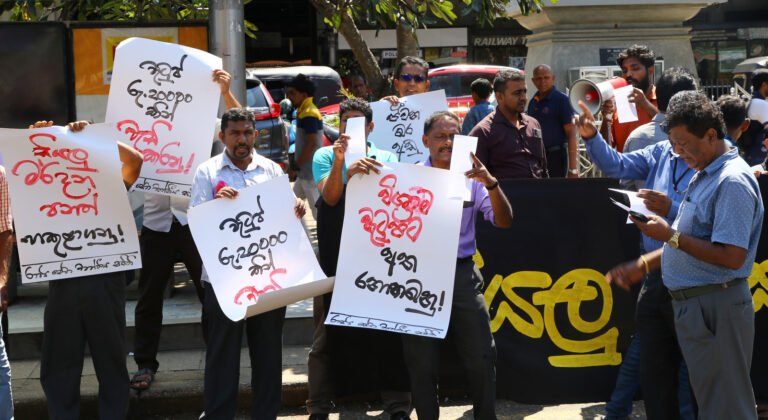
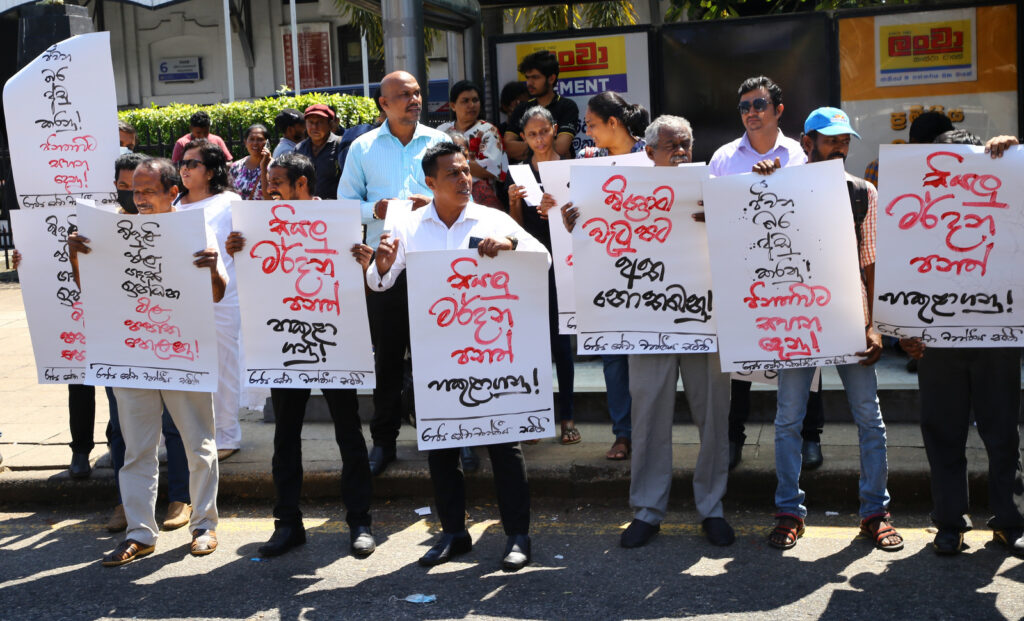
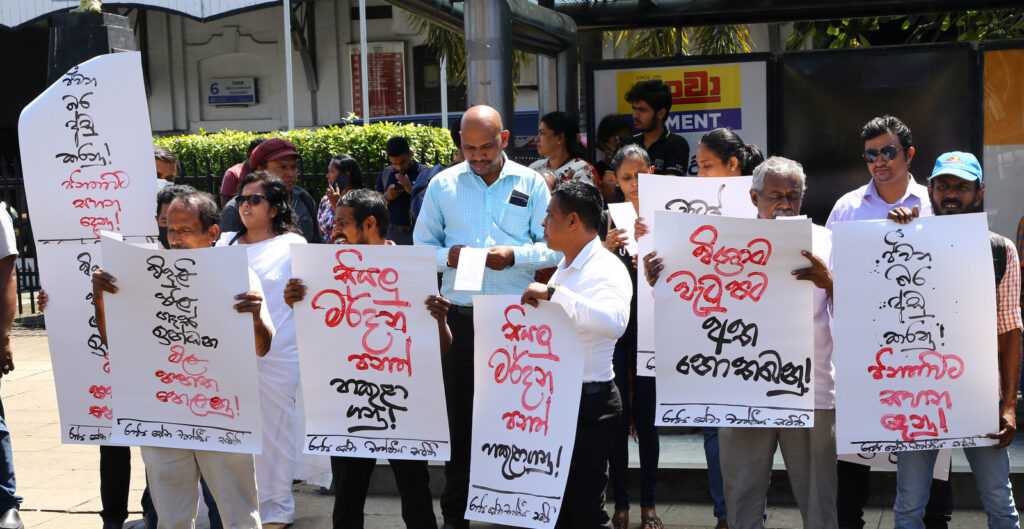
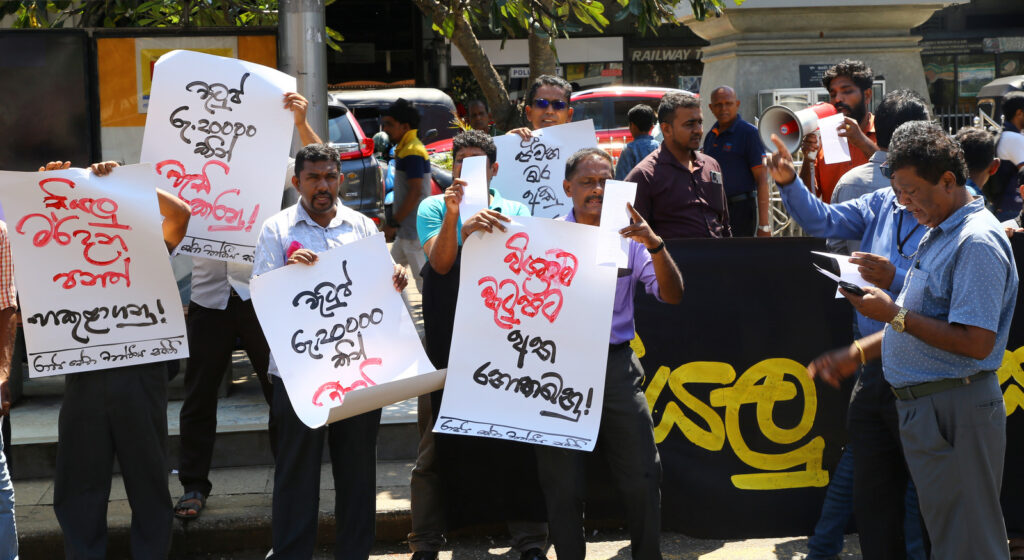
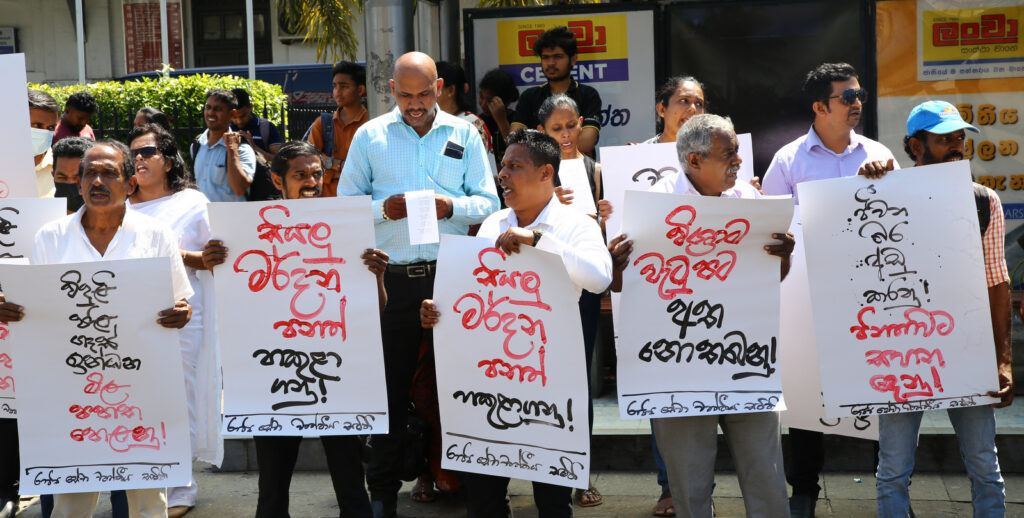
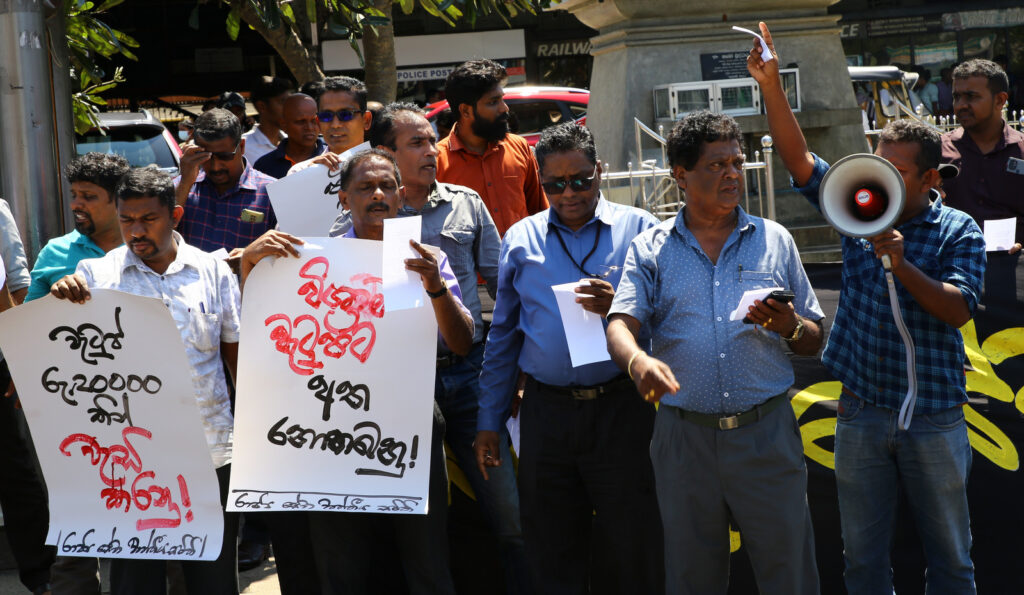
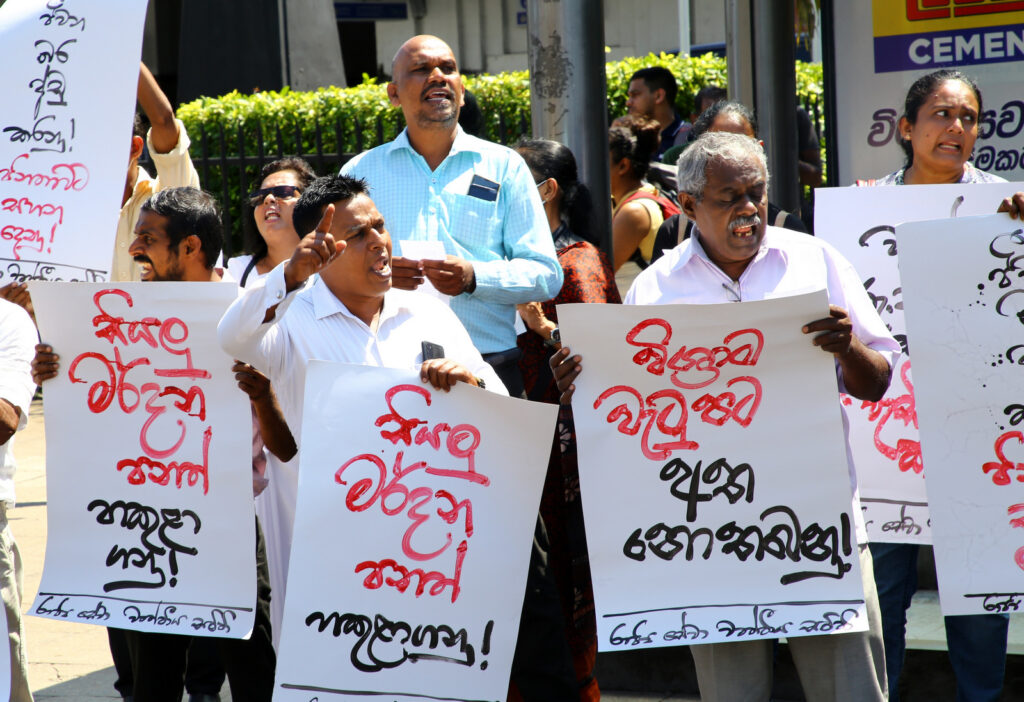
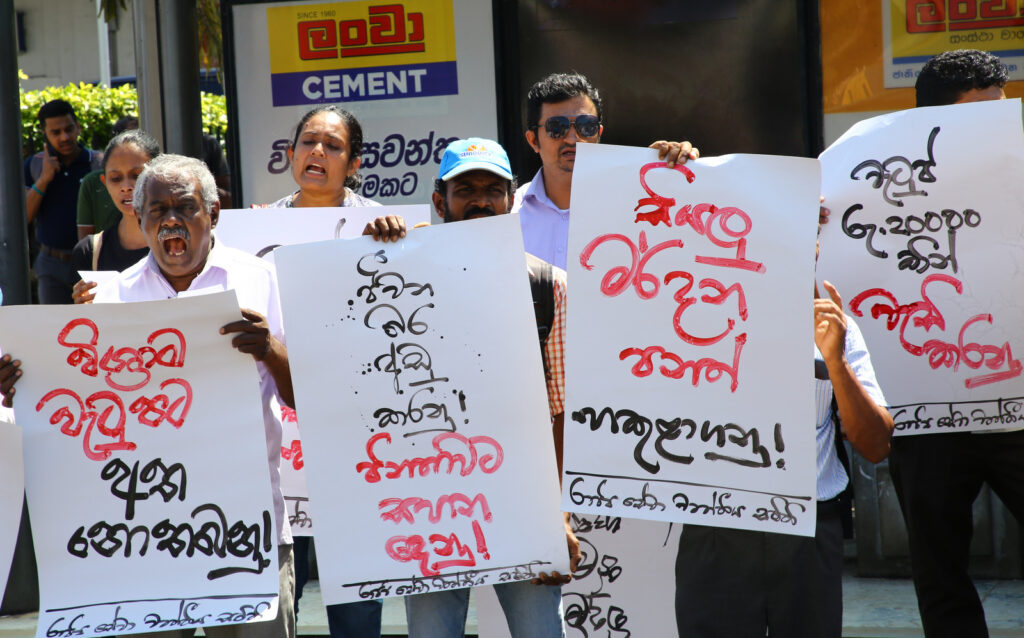
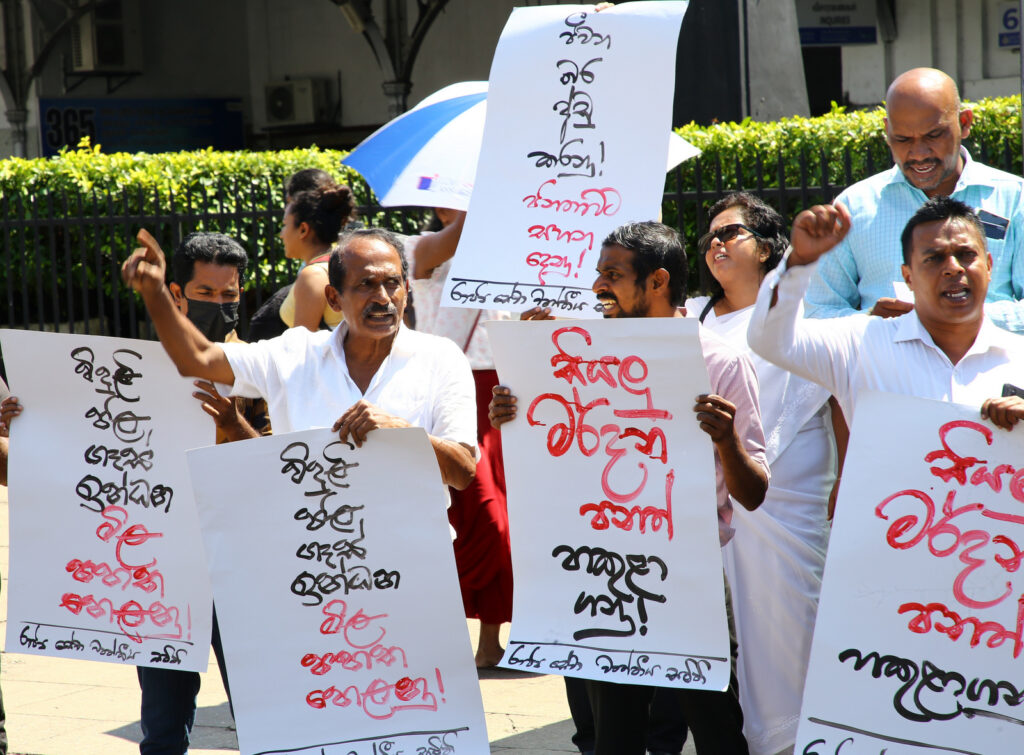
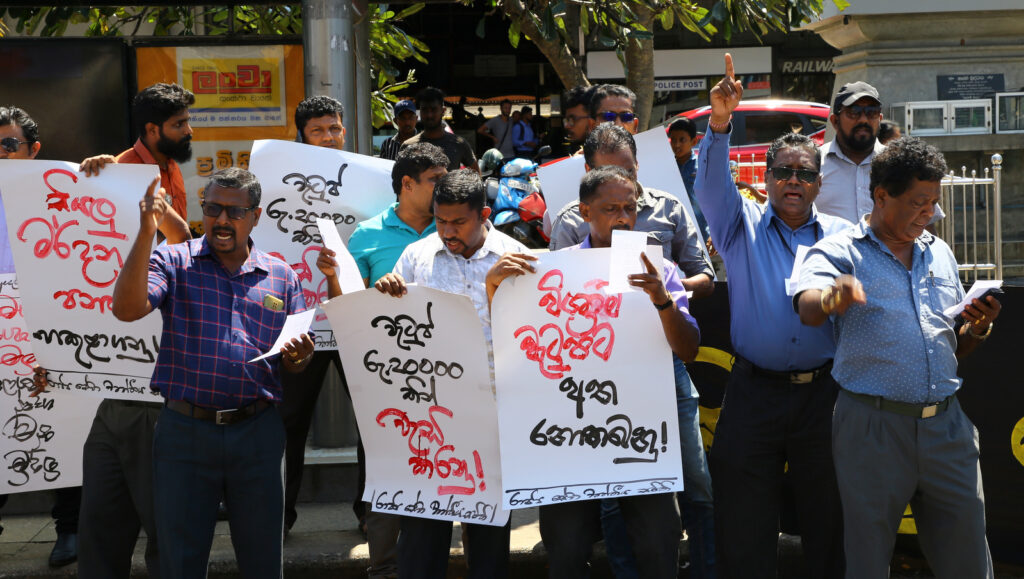
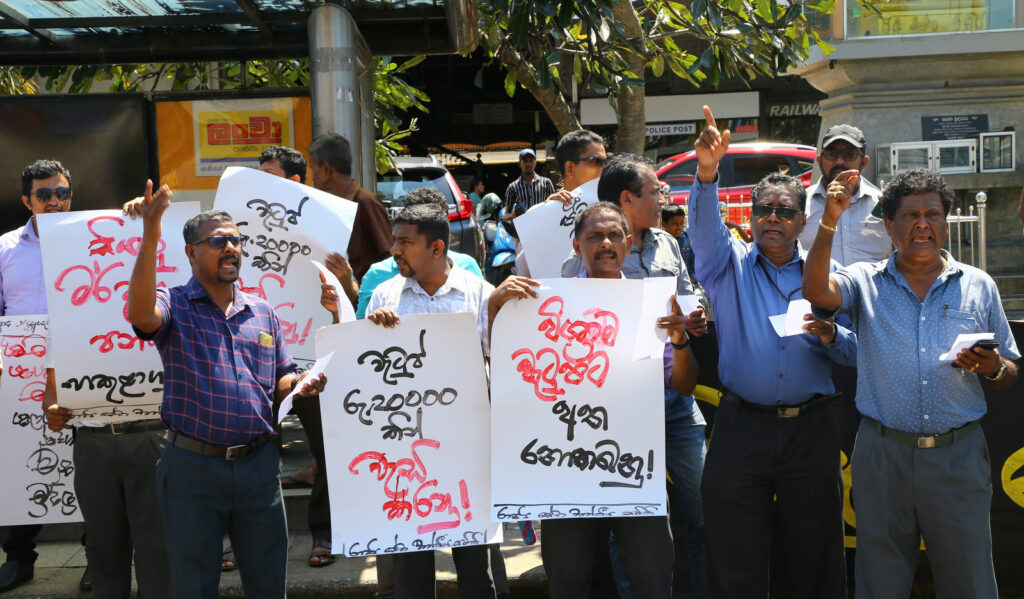
Colombo (LNW): Activists and concerned individuals staged a protest in front of the Ministry of Health in Colombo this (17) afternoon, demanding an improved Health Service, in response to recent events, including a number of fatalities induced by substandard medicines, at the Sector surrounding controversy.

The protesters demanded that the prices of medicines be slashed, the shortcoming of drugs and medical equipment be solved, and the ‘murderous regime resorting to substandard medicines’ be sent home.

The demonstration was organised in a joint effort by many trade unions, civil movements, multi-people organisations, activists and other concerned individuals.

Photo Courtesy: Ajith Senevirathne

To view full photos, visit READPHOTOS.

Pakistan’s PM thanks SL President for support over IMF deal

0

Prime Minister Shehbaz Sharif on Monday expressed his gratitude to Sri Lanka for supporting and helping Pakistan in reaching an agreement with the International Monetary Fund (IMF).

During a telephonic conversation with Sri Lankan President Ranil Wickremesinghe, PM Shehbaz acknowledged the role played by Sri Lanka as a friend and well-wisher of Pakistan.

The PM said both Islamabad and Colombo are close and reliable friends and commended the island nation’s role in regional peace and prosperity.

PM Shehbaz also expressed confidence that the two nations will soon come out of the vortex of current economic difficulties.

Reciprocating the PM’s sentiments of goodwill, the Sri Lankan president said Pakistan is a close friend and helping friends is friendship.

Wickremesinghe appreciated Shehbaz’s efforts in steering the country out of a difficult situation and felicitated him on reaching an agreement with the IMF.

On the occasion of PM Shehbaz’s meeting with Managing Director IMF Kristalina Georgieva, the Sri Lankan President stressed that the IMF should help Pakistan.

The Sri Lankan president had informed the MD IMF about the problems faced by his country due to default and stressed that Pakistan should be saved from this situation.

With sky-high inflation and foreign exchange reserves barely enough to cover one month of controlled imports, analysts had warned that Pakistan’s economic crisis could have spiralled into a debt default in the absence of an IMF deal.

The IMF said that Pakistan’s new SBA-supported programme would provide a policy anchor for addressing domestic and external imbalances and a framework for financial support from multilateral and bilateral partners.

The programme would focus on the implementation of the fiscal 2023-24 budget to facilitate Pakistan’s needed fiscal adjustment and ensure debt sustainability, while protecting critical social spending, the IMF added.

Notably, after receiving another $3 billion in the next nine months under the standby arrangement, Pakistan is set to become the fourth-largest IMF borrower in the world.

On the other hand, the IMF board has conveyed its concerns about Pakistan’s past poor record and advised it to complete the new programme to reduce the trust deficit.

Last week, the premier had also held a telephonic conversation with IMF Managing Director Kristalina Georgieva and assured her that Islamabad was serious this time to bridge the trust deficit.

Source: Tribune