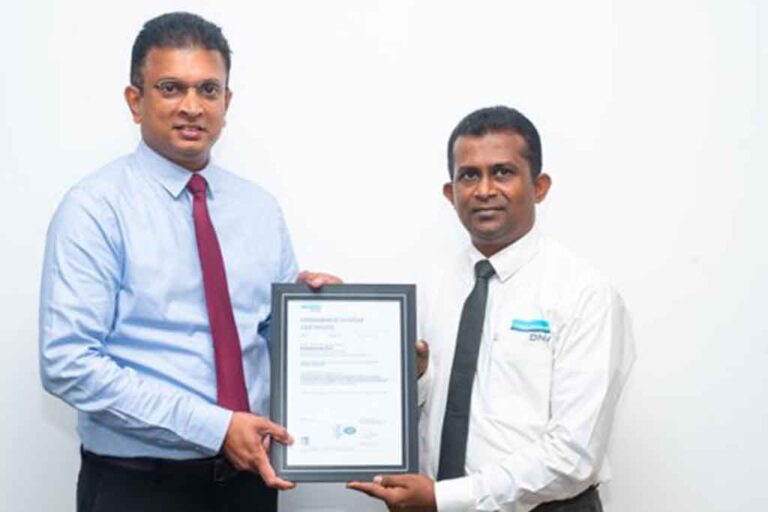
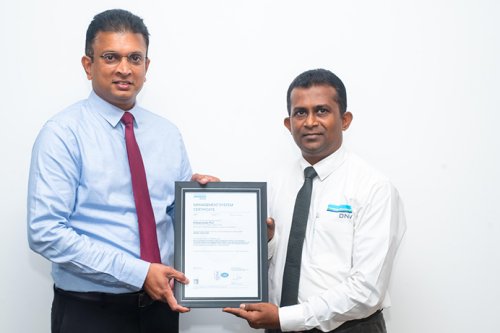
Colombo (LNW): Dialog Axiata PLC recently achieved a notable milestone by becoming the first telecoms provider in the country, and among a select group in South Asia, to receive the ISO 27701 certification, the international standard for Privacy Information Management Systems.
An extension of the ISO 27001 accreditation, ISO 27701 offers additional controls on data privacy and guidance on establishing, implementing, maintaining, and enhancing an organisation’s Privacy Information Management System.
The ISO 27701 standard provides a comprehensive framework for Privacy Information Management Systems (PIMS), allowing organisations to hone their data privacy practices and adapt to changing privacy threats and regulatory demands.
This approach is deeply rooted in stringent risk management and compliance principles, emphasising progress measurement and promoting continuous enhancement.
“Receiving this certification underscores our steadfast dedication to data security and privacy. The ISO 27701 certification is testament to our commitment to maintaining the trust of over 17 million Sri Lankans and Enterprises,” commented Supun Weerasinghe, Group Chief Executive of Dialog Axiata PLC.
ISO 27701, the first global standard for Privacy Information Management Systems, serves as a crucial tool for Dialog, ensuring the company’s consistent adherence to all relevant regulations in Sri Lanka.
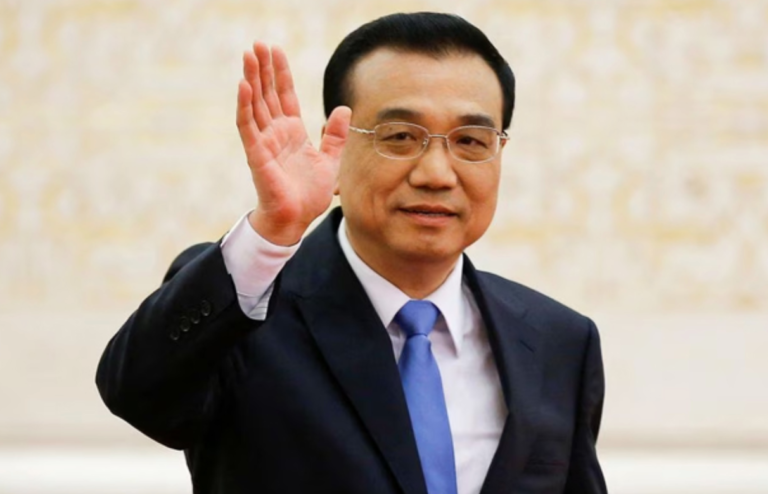
China’s former Premier, Li Keqiang, passed away from a heart attack at the age of 68, just 10 months after retiring from a decade in office. During his time in leadership, Li’s reputation as a reformist dimmed, as he was sidelined by President Xi Jinping, who consolidated power and shifted China’s economy toward greater state control.
Li, once considered a top contender for leadership within the Communist Party, had advocated for a more open market economy and supply-side reforms, often referred to as “Likonomics.” However, these reforms were never fully realized, as President Xi’s preference for state control gained prominence. Xi installed his own allies in powerful positions, diminishing Li’s influence.
State broadcaster CCTV reported Li’s sudden heart attack, which occurred while he was in Shanghai. The news prompted an outpouring of grief and shock on Chinese social media, with some government websites adopting a black-and-white theme as an official sign of mourning. The Weibo microblogging platform replaced its “like” button with a “mourn” icon shaped like a chrysanthemum flower.
Li served as premier and head of China’s cabinet under Xi for a decade before stepping down from all political positions in March. In August 2022, he made a notable speech at a statue of Deng Xiaoping, the leader who introduced transformative economic reforms to China. In that speech, Li pledged to continue reform and opening up, a statement widely interpreted as a coded criticism of Xi’s policies.
Li’s legacy also includes sparking discussions on poverty and income inequality in China in 2020 when he noted that 600 million people in the country earned less than the equivalent of $140 per month.
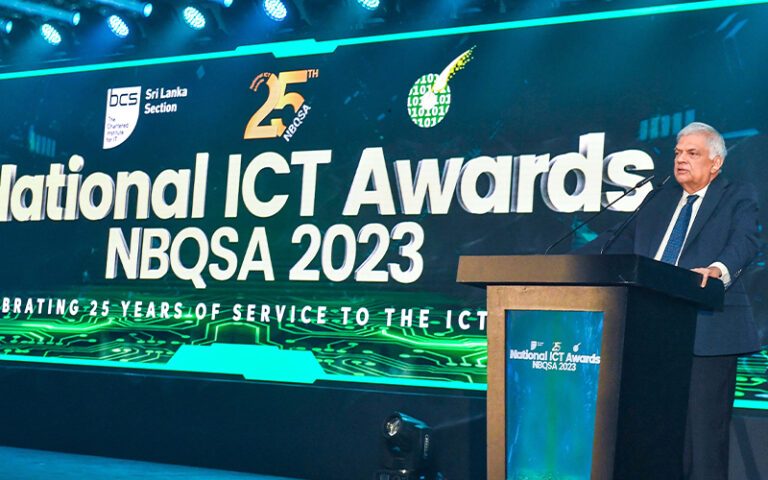
PMD: President Ranil Wickremesinghe addressing the National ICT Awards NBQSA 2023, held in Colombo, yesterday (25), organised by the British Computer Society the Chartered Institute for IT – Sri Lanka Section, emphasized the paramount significance of digital transformation in securing Sri Lanka’s economic prosperity. Drawing from his extensive background in information technology, dating back to the 1980s, President Wickremesinghe stressed that embracing IT is no longer a choice but a necessity.
Using this occasion to convey an essential message, President Wickremesinghe urged all to recognize the significance of the future. He emphasized that the future lies within the hands of each individual and their accomplishments are intrinsically tied to the nation’s prosperity. He expressed his well wishes for the path ahead, stating, “The future is in your hand and your success is the country’s success.”
The President also outlined a definitive vision for Sri Lanka’s future, marking a pivotal shift towards collective responsibility and progress. As the nation looks forward to the upcoming year, the President stressed the importance of united efforts, underlining that success is contingent on collaboration between the government and its citizens.
Reflecting on his earlier efforts as the Minister of Education to introduce IT in Sri Lanka, the President acknowledged the missed opportunities and economic setbacks resulting from underutilizing the global IT wave. However, he underlined that it is time to move beyond past failures, with the present representing Sri Lanka’s final opportunity to partake in the digital revolution.
The President outlined a comprehensive vision for Sri Lanka’s digital future, centred on competitiveness, green transformation and digital transformation. He acknowledged that this journey is not devoid of challenges and necessitates not only favourable laws and regulations but also substantial investment in digital infrastructure and human capital development.
In building a highly competitive and contemporary economy, I’ve highlighted two additional crucial components. First is the promotion of a green economy, leveraging our renewable energy resources and embracing the global trend towards sustainability, recognizing the on-going global “green transformation.”
In the upcoming budget speech scheduled for next month, the initial phases of this reinvigorated economic vision will be delineated. Simultaneously, we will introduce legislation to facilitate this transition. It’s worth noting that our economic history witnessed a pivotal shift in 1977 when laws governing a state-controlled socialist economy were repealed, ushering in a market-oriented economic model.
President Wickremesinghe encouraged collaborative efforts between the private sector and the government to foster IT human capital across all levels, from postgraduates to skilled workers, recognizing that government initiatives alone may prove inadequate.
President Wickremesinghe emphasized the need for a well-defined roadmap and adequate funding to materialize this digital transformation. He also noted the potential requirement for foreign investments to expedite the process, given the rapid pace of technological advancements.
President Wickremesinghe called on the ICT industry to accept the challenge, drawing parallels with the transformative journey undertaken by the apparel industry in the past. He expressed optimism regarding the industry’s potential and underscored the urgency of advancing Sri Lanka’s progression towards a digital future.
In recognition of outstanding commitment toward the development of ICT products and services, several IT institutions received awards from President Ranil Wickremesinghe. Appreciating the presence of President Ranil Wickremesinghe Chairman of the British Computer Society (BCS) the Chartered Institute for IT – Sri Lanka Section Mr. Alanzo Doll presented a memento to the President. Furthermore, President Ranil Wickremesinghe posed for a group photograph with the officials of the BCS.
State Minister for Technology, Mr. Kanaka Herath, Executive Committee members, past Chairmen and other officials of the BCS Chartered Institute for IT – Sri Lanka Section, attended the event while Mr. Rashik Parmar, the Group Chief Executive Officer of BCS, The Chartered Institute for IT, addressed the gathering via an online platform from the United Kingdom.
A new office dedicated to combating smuggling, human trafficking, and maritime crimes in the Mannar district’s maritime areas was inaugurated on Thursday, the 26th. This office, constructed with a grant of 150 million Rupees from the Australian Police, is a significant step in controlling human smuggling and trafficking activities centered around the seas off the Mannar district.
The opening ceremony featured Senior Officer of the Australian Federal Police Colombo Post Detective Superintendent Robert Wilson as the Chief Guest, emphasizing the collaborative efforts to prevent individuals from embarking on risky journeys to Australia, where the chances of success are negligible.
Detective Superintendent Robert Wilson stated, “The main aim here is to stop people from getting on boats to travel to Australia, as there is zero chance of getting there. Working with the Sri Lankan Police and other agencies within Sri Lanka means that we try to prevent people from losing their money to people smugglers through scams and other frauds and cheats. Or if they do get on a boat, risking their lives. The boats they get on are not seaworthy, and there’s little chance of getting to Australia. If they do get the chance of getting near Australia, they’ll be turned back and returned to Sri Lanka.”
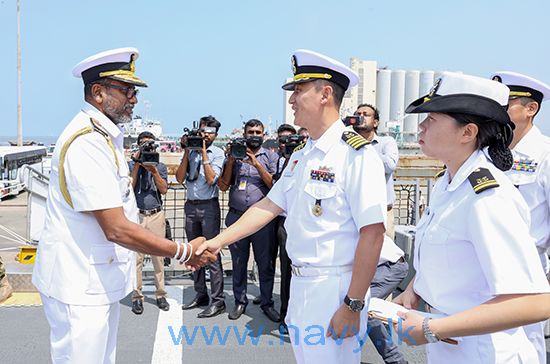
Colombo (LNW): The Sri Lanka Navy extended a traditional welcome to the South Korean Navy vessel, ROKS ‘Gwanggaeto the Great’, which docked in the Colombo port yesterday (26) morning.
The ROKS ‘Gwanggaeto the Great’, a 135-metre destroyer, is manned by a crew of 249 and is under the command of Captain Kim Hyoung Churl.
A meeting was held onboard between Minister of Ports, Shipping and Aviation, Nimal Siripala De Silva, and several other dignitaries.
Chief of Defence Staff, General Shavendra Silva, and Navy Commander Vice Admiral Priyantha Perera also joined the discussions.
The crew of ROKS ‘Gwanggaeto the Great’ will be touring various Sri Lankan tourist sites during their stay. The vessel is set to leave the island on October 28.
Sri Lanka thrash England by 8 wickets in the ICC Cricket World Cup 2023 Group level match: England – 156 all out (33.2): Lahiru Kumara – 35/3: Sri Lanka – 160/2 (25.4): Pathum Nissanka – 77, Sadeera Samarawickrama – 65: SL climbs to the 5th position in the Points table after all teams have completed 5 matches each.
Govt Medical Officers Assn announces a series of trade union action in protest of the Govt’s failure to take steps to retain doctors who are going abroad: also decides to withdraw from mobile ambulance services for VIP health security operations from Nov 1 until further notice.
Newly-appointed Environment Minister Keheliya Rambukwella says a new Environmental Act that better suits the needs of the country should be introduced, replacing the current National Environment Act.
Education Minister Dr Sushil Premajayanth apologises to teachers and principals over the recent incident in Pelawatte, where a group of protesting teachers were dispersed by using water cannons & tear gas.
Colombo Stock Exchange launches Regulated Short Selling through Stock Borrowing & Lending with effect from 6th November’23: the market has been on a “bear-run” over the past few months, and steadily losing value.
SLPP MP & strong President-backer Nimal Lansa challenges SLPP MPs Namal Rajapaksa & Sagara Kariyawasam to vote against the budget & defeat the Govt and go for a Parliamentary election.
US Ambassador Julie Chung who is at the centre of many controversies, proclaims that “equal & equitable treatment for all creditors of SL is essential in the debt restructuring process”: advises CB Governor Nandalal Weerasinghe that “transparency from every party involved is crucial”: analysts point out that US-influenced IMF, ADB & WB are however not agreeing to any restructure of their loans by referring to themselves as “senior creditors”.
Principal scientist of the National Aquatic Resources Research & Development Agency K Arulananthan says NARA is awaiting to carry out “collaborative research with the Chinese vessel Shi Yang 6 subject to approval by the Foreign Ministry”: also says it has agreed for an “air-sea interaction survey with a focus on the water column of the Indian Ocean but not on the sea bottom given security sensitivity involved”.
Minister of Agriculture Mahinda Amaraweera announces an increase in the fine for cattle theft to Rs.1mn with a 1-year Rigorous Imprisonment: laments that a rare cow in the Anuradhapura region, that was known for its high milk yield of about 26 litres per day was recently stolen & slaughtered.
SL’s Para Athletes have so far clinched 6 medals ( 2 Gold, 2 Silver & 2 Bronze) at the Asian Paralympic Games currently underway in China: SL presently placed at the 15th position in the Medal standings.
Colombo (LNW): In a bid to boost Sri Lanka’s domestic economy, the government is focusing on enlarging supply capabilities and diversifying market access, revealed the President’s Office yesterday (26).
This robust growth strategy intends to drive the country’s economic resurgence. The President’s Media Division highlighted Sri Lanka’s intentions to not only reinforce relationships with its primary traditional export markets, such as the USA and the EU/UK, but also to deepen connections with South Asia, South East Asia, and East Asia.
Sri Lanka is actively pursuing bilateral trade deals. Existing agreements include the India Sri Lanka Free Trade Agreement (ISLFTA) and the Pakistan Sri Lanka Free Trade Agreement (PSFTA).
Moreover, regional trading agreements, like the South Asian Free Trade Area (SAFTA) and the SAARC Preferential Trading Arrangement (SAPTA), provide the country with increased market access.
Trade talks with Bangladesh, initiated in June 2021, are particularly significant. These discussions aim to expand the already positive trade balance between the two nations.
Furthermore, Sri Lanka is progressing in negotiations regarding the Economic and Technology Cooperation Agreement (ETCA) with India, symbolising strengthening economic bonds.
Engagements with ASEAN countries are also escalating through Free Trade Agreements, including an already effective deal with Singapore. Negotiations with other ASEAN nations, like Thailand and Indonesia, are underway.
Talks with China about a potential FTA are in progress, aiming to secure specific market access for Sri Lankan products.
Additionally, Sri Lanka is pushing for integration with ASEAN, Oceania, and East Asia by expressing intentions to join the vast “Regional Comprehensive Economic Partnership (RCEP)” Agreement.
The National Trade Negotiation Committee (NTNC), overseen by the Cabinet, manages these trade negotiations. The committee, spearheaded by the Chief Negotiator of the Office of International Trade under the Presidential Secretariat, is comprised of senior officers from different governmental sectors.
These extensive trade strategies align with Sri Lanka’s ambition to evolve into a developed nation by 2048, reflecting the government’s broader economic objectives.
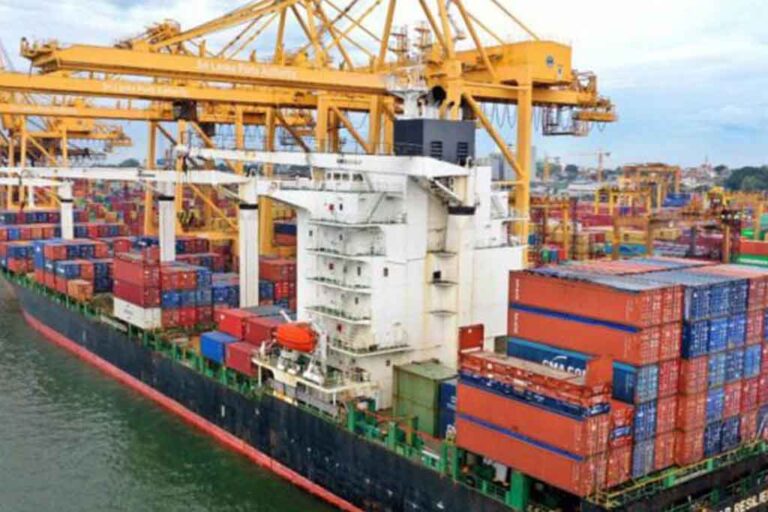
The Colombo Port City Economic Commission has announced its authorization of two cryptocurrency exchange centers to operate within the Colombo Port City.
This decision was conveyed to the Committee on Public Finance during their recent meeting. Subsequently, the Committee on Public Finance has recommended seeking the input of the Central Bank of Sri Lanka regarding this development.
In the same meeting, the Committee on Public Finance also granted approval for orders formulated under the Colombo Port City Economic Commission Act.
Additionally, it was suggested that the Attorney General’s opinion be sought within four weeks concerning contractual agreements with existing companies operating within the Colombo Port City.
PMD: State Minister for Urban Development and Housing, Mr. Arundika Fernando, announced the commencement of five housing projects in the Colombo city aimed at benefiting the low and middle-class population.
He further highlighted that President Ranil Wickremesinghe has recently secured an agreement with the Chinese Government. Fernando also emphasized that housing projects initiated by the Housing Development Authority, currently on hold, will be reinitiated as part of the new budget for the year 2024.
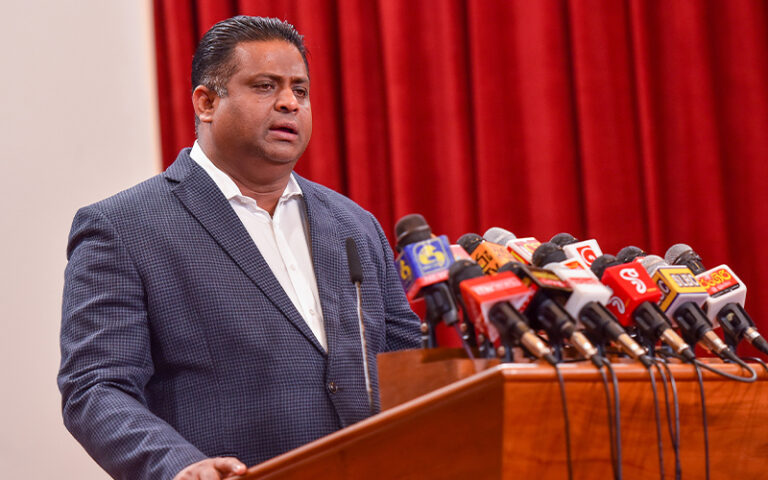
These developments were disclosed by State Minister of Urban Development and Housing, Mr. Arundika Fernando, during a news conference held at the Presidential Media Centre today (26), under the theme ‘Collective Path to a Stable Country.’
Expressing his views further he said;
“Our nation is a stunning island that boasts diverse topography, various climate zones and an abundance of natural resources. Notably, our country is rich in valuable mineral resources and is among the regions with the lowest occurrence of natural disasters globally.
Land stands as our most precious resource and its value escalates with the growing population. Even in suburban areas, land values continue to rise. The Urban Development Authority manages a substantial amount of land, but the available information about these lands is currently insufficient. Consequently, the ministry is actively working to enhance data on land ownership.
Moreover, the Urban Development Authority has acquired lands for various government projects, encompassing activities like urban planning and city expansion. We also possess land suitable for both domestic and foreign investments, providing opportunities for interested parties to utilize government-owned land. Once the Urban Development Authority’s data is fully digitized, anyone can access information about the lands owned by the authority.
A strong emphasis has been placed on utilizing our land resources for economic gain, exemplified by valuable plots like those on McCallum Road. These principles apply not only to Colombo but to all cities, including Kandy, Bogambara Prison and Nuwara Eliya.
Additionally, there are plans to create new investment opportunities cantered around the Bogambara prison land.
Thanks to the effective financial management under President Ranil Wickremesinghe’s leadership, there’s potential to revive halted projects initiated by the Housing Development Authority. We anticipate resuming these activities with the new budget for 2024.
Furthermore, instances of fraud and corruption have marred certain projects. The ministry is actively taking measures to rectify these errors.
In addition, there are plans to initiate five housing projects in Colombo, targeting individuals with low and moderate incomes. This substantial undertaking is estimated to cost 350 million dollars, with a significant commitment from the Chinese Government, secured through President Ranil Wickremesinghe. To date, 200 million US dollars have already been received for this ambitious project, which aims to construct 2,500 houses.
Simultaneously, the Lowland Development Authority is playing a significant role in flood control efforts within Colombo. Initiatives are also underway to safeguard mangroves and wetlands.
Unfortunately, some individuals who had their lands requisitioned for flood control purposes have faced challenges, including inadequate compensation. Our aim is to rectify this situation and acquire these lands in a more systematic manner within Colombo city.
As a ministry, we stand prepared to make the utmost contribution to President Ranil Wickremesinghe’s mission for the country’s development.”
Except for Northern, Northcentral and Eastern provinces, showers or thundershowers will occur at several places in the other areas of the island after 02.00 p.m.
Fairly heavy showers above 50 mm are likely at some places in Western, Sabaragamuwa province and in Galle and Matara districts.
Misty conditions can be expected at some places in Central, Sabaragamuwa and Uva provinces during the morning.
The general public is kindly requested to take adequate precautions to minimize damages caused by temporary localized strong winds and lightning during thundershowers.