Home Blog Page 1472

Foreign Ministry responds to claims over Minister’s expenditure on overseas visit

0

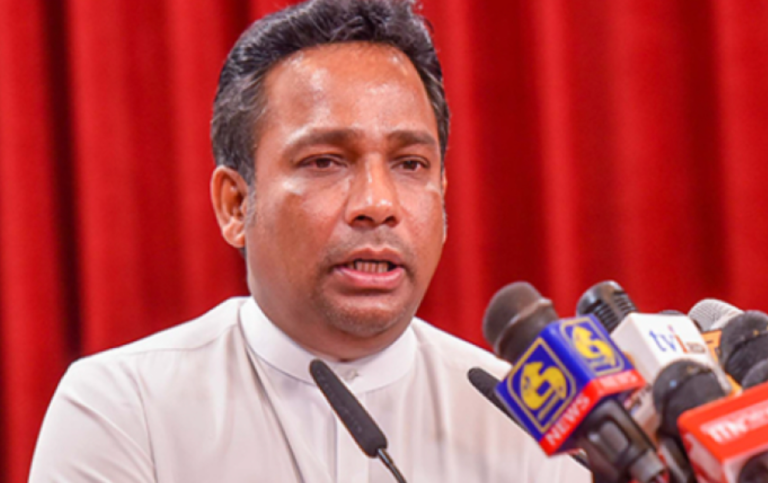
The attention of the Ministry of Foreign Affairs has been drawn to misleading information circulating in the public domain that Minister of Foreign Affairs M.U.M. Ali Sabry has spent a substantial amount of public funds while undertaking official visits overseas in the recent past.

The Ministry wishes to clarify that

i.  the Minister of Foreign Affairs undertakes official visits to represent Sri Lanka at important multilateral, regional and bilateral engagements overseas, as and when required;

ii.  these meetings/conferences/engagements should be attended by the Foreign Minister himself, considering their importance and also the expected level of participation;

iii.  it is the practice and essential for substantive reasons that senior officials of the Ministry and other line agencies accompany the Foreign Minster to these meetings/conferences/engagements as appropriate, considering the requirement of the expertise of such officials in discussions/deliberations;

iv.  the Foreign Ministry curtails expenses to the maximum extent possible and only essential expenses are authorized in keeping with the new Treasury circulars and guidelines.

Therefore, the Ministry of Foreign Affairs wishes to emphasize that the Foreign Minister by virtue of his appointment/high office is required to undertake foreign travel for official purposes in the context of the Foreign Ministry’s and the government’s engagement with its international partners, and to represent Sri Lanka in fulfilling the country’s domestic and international obligations.

As clearly evidenced in the recent past, many immediate and long-term advantages accrue to Sri Lanka from these high-level person-to-person discussions with the Foreign Minister’s counterparts and other foreign dignitaries.

Ministry of Foreign Affairs

Colombo

20 June 2023

Schaffter’s death: Court calls for reports

0

Colombo (LNW): The Colombo Magistrate Court today (20) ordered the Criminal Investigation Department (CID) to take measures to expedite the probe into the mysterious death of renowned businessman Dinesh Schaffter.

This was when the case on the businessman’s death was taken up before Colombo Additional Magistrate Rajindra Jayasuriya today.

The Additional Magistrate ordered the CID to obtain all relevant reports from the government analyst pertaining to the samples sent for testing, in response to the delay in receiving reports on blood samples and other materials of the investigation.

Additional Magistrate Jayasuriya stated that measures must be taken to obtain these evidence and that the government analyst may also be summoned before Court, if necessary.

The case was adjourned till June 28.

On December 15, 2022, Schaffter, Director of the Janashakthi PLC Group, was found tied up in his vehicle near the Borella General Cemetery, and later was pronounced dead.

‘Parliamentary Budget Office’ bill passed with amendments

0

Colombo (LNW): The Parliamentary Budget Office Bill tabled for establishment of a Parliament Budget Office was passed today (20) with amendments.

The said bill was passed in the Chambers without a vote, and the debate on the second reading of the bill also took place this afternoon.

Qatar Airways announces increased flight frequency to Colombo in June

0

By: Isuru Parakrama

Colombo (LNW): Qatar’s national flag carrier ‘Qatar Airways’ will increase its flight frequency to Colombo, Sri Lanka in June, the airline said in a statement.

Accordingly, Qatar Airways will launch its fifth daily frequency to / from Colombo, effective from June 22, 2023.

The additional frequency will offer connectivity to over 160 destinations worldwide.

At present, Qatar Airways handles approximately 21,000 passengers per week at Bandaranaike International Airport (BIA).

Airport and Aviation Services (Sri Lanka) (Pvt) Ltd said it is happy to facilitate the increase in frequencies of Qatar’s flag carrier, which contributes to the development of the country.

DMT issues notice on temporary driving licence

0

Colombo (LNW): The Department of Motor Traffic (DMT) has reportedly decided to extend the validity of temporary driving licences to two years, in a move to address the bulking up of temporary driving licences amidst the shortage of printing cards.

Accordingly, temporary driving licences issued from next Monday (26) will be eligible for the said extended validity period.

A gazette declaration will also be issued in this regard.

Today’s official exchange rates

0

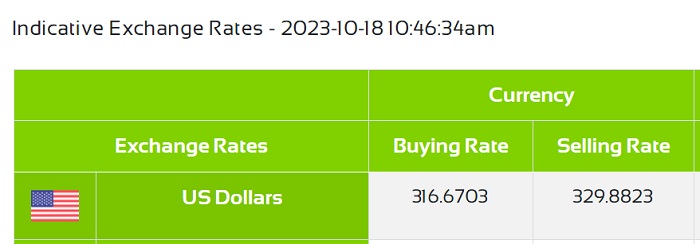
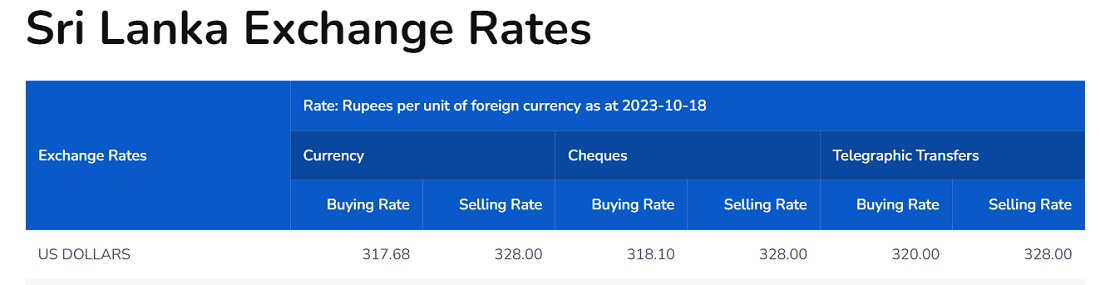
Colombo (LNW): The official exchange rates list issued by the Central Bank of Sri Lanka (CBSL) today (20) reveals further appreciation of the Sri Lanka Rupee against the US Dollar.

Accordingly, the buying price of the US Dollar has dropped to Rs. 297.28 from Rs. 297.53, and the selling price to Rs. 314.28 from Rs. 315.12.

The Sri Lanka Rupee has also appreciated against other foreign currencies, including Gulf currencies.

Who is Hamish Harding? British adventurer missing on Titanic sub

0

British adventurer Hamish Harding is among those missing on a submersible that was diving to the wreck of Titanic, his family have said.

Mr Harding, 58, chairman of aircraft firm Action Aviation, is a renowned explorer who has flown to space and holds three Guinness World Records.

His stepson Brian Szasz said in a now-deleted post on Facebook: He “has gone missing on (the) submarine.”

Submersible operator OceanGate said its “entire focus” is on the crew’s return.

It added that it was “exploring and mobilizing all options to bring the crew back safely”.

Over the weekend, Mr Harding said on social media that a ship had set off from the city of St John’s, in Newfoundland, Canada, for the destination of the Titanic wreck.

From there, he and the crew were planning to start diving operations in the submersible down to the wreck at around 04:00 local time (08:00 GMT) on Sunday morning.

He wrote on Facebook that he was “proud to finally announce” that he would be aboard the mission to the wreck of the Titanic.

Due to the “worst winter in Newfoundland in 40 years,” he said “this mission is likely to be the first and only manned mission to the Titanic in 2023”.

He continued: “A weather window has just opened up and we are going to attempt a dive tomorrow.”

Action Aviation said on Sunday that the sub had had a successful launch and Mr Harding was “currently diving“.

Boston’s coastguard said an operation to find five people on the submersible was under way, after contact was lost on Sunday morning – about one hour and 45 minutes into its dive.

A highly-sophisticated P-8 Poseidon aircraft with underwater detection capabilities has been deployed, said Rear Adm John W Mauger from the US Coast Guard.

He added that teams were conducting their searches 900 miles (1450km) east of Cape Cod, and that the Canadian armed forces and commercial vessels were in the area.

“It is a remote area and a challenge (…) but we are deploying all available assets to make sure we can locate the craft and rescue the people onboard,” he told a press conference.

He said planes had been dropping sonar buoys to listen for underwater noise and scan the ocean in case the submersible had surfaced.

A spokesperson from the UK’s Foreign Office said it was “in contact with the family of a British man following reports of a missing submarine off the coast of North America.”

The eight-day trip to the wreck of the Titanic – run by OceanGate Expeditions – costs $250,000 (£195,600) per person and starts in St John’s.

Participants travel some 370 miles (595km) on a larger ship to the area above the wreck site, then do an eight-hour dive to the Titanic on a truck-sized submersible known as Titan.

The Titan is designed to carry five people and has “life support” for 96 hours for the crew, according to the firm’s website.

For Mr Harding, a private jet dealer, the trip to Titanic’s wreckage was the latest in a string of adventures that has seen him visit the South Pole multiple times, fly into space in 2022 on board Blue Origin’s fifth human-crewed flight, and set three world records – including the longest time spent at full ocean depth during a dive to the deepest part of the Mariana Trench.

The Titanic sits 3,800m (12,500ft) beneath the surface at the bottom of the Atlantic. It is about 600km (370 miles) off the coast of Newfoundland.

The passenger liner, which was the largest ship of its time, hit an iceberg on its maiden voyage from Southampton to New York in 1912. Of the 2,200 passengers and crew onboard, more than 1,500 died.

Map shows the location of the Titanic wreck

BBC

Seeking the support of Parliament staff to overcome challenging times: Parliament Secretary General

0

Secretary General of Parliament, Mrs. Kushani Rohanadeera, said recently that she expects the maximum support from all the staff to carry out the duties of Parliament, with maximum efficiency in the midst of various challenges.

She stated this recently (Jun. 13) while addressing the parliamentary staff for the first time after assuming office.

She pointed out the need to provide maximum service by managing the situations that arise, especially since a large number of experienced staff members are going to retire in the next few years.

Also, the Secretary General emphasized that there is no truth in the news that Administrative Service officers are being recruited for the parliamentary staff.


Sri Lanka chamber outlines alternative financing mechanisms

0

ECONOMYNEXT – Sri Lanka’s Ceylon Chambers of Commerce has suggested alternative finance options for the island nation that as it emerges from a currency crisis and default.

The report by the Ceylon Chamber’s Economic Intelligence Unit (EIU) is reproduced below:

Alternative Financing Options

The Government of Sri Lanka has currently embarked on capacity development programmes for the adoption of alternative financing mechanisms such as green bonds. The Securities and Exchange Commission (SEC) too has developed a policy and regulatory framework governing green bonds and in April 2023, the SEC approved rules for issuing green bonds for listed companies and statutory entities.

This was subsequent to the publication of the green finance taxonomy by the Central Bank of Sri Lanka (CBSL), which provided clarity on economic activities that are environmentally sustainable. Therefore, the landscape for adopting alternative financing mechanisms is being created, enabling a favorable environment for the use of alternative financing mechanisms in the future.

An array of solutions can be considered for Sri Lanka, some of which are more appropriate than others in the country context and government priorities. Debt-for-climate or debt-for-sustainability swaps have proven to be a successful debt alleviation tool globally while promoting investment in green and sustainable projects. Carbon credits too can be a feasible and innovative way to address debt overhang and climate change simultaneously but requires more research on the impacts and scalability.

Concessional and blended finance models too can provide favourable results while linking these to development objectives of Sri Lanka. In the long term, thematic bonds are also a tool that can be used to mobilise domestic and foreign capital. However, prior to a thematic bond issuance, access to the international finance markets should be established. This is expected to be facilitated by the completion of the IMF programme.

Debt-for-Climate or Debt-for-Sustainability Swaps

This is a financial instrument where the country would swap a promise (repayments on debt) with another promise (such as funding SDGs). Recently, in the aftermath of Sri Lanka’s default, a global financial firm too expressed interest in restructuring USD 1 billion of debt for environmental purposes.

Under a bilateral debt swap a debtor country and a creditor involve the cancellation or reduction of a portion of the debt in exchange for the debtor’s commitment to invest in sustainability projects. For example, Sri Lanka could look to negotiate with China (one of its largest bilateral creditors), to swap some of its debt for investments in protecting its forests, wetlands and coral reefs, which are rich in biodiversity and provide valuable ecosystem services. This would reduce Sri Lanka’s debt burden and free up fiscal space for other development priorities, while also enhancing its resilience. (Refer the full report for more details and tripartite agreements).

Other Country Experience
In 2021, Belize swapped USD 553 million (total external commercial debt) through a blue bond arranged by The Nature Conservancy (TNC) to the Belize government to finance a bond-for-cash exchange at 55 cents per dollar. This was in exchange for a 20-year commitment to expand and strengthen its marine protected area. The US Development Finance Corporation (DFC) provided political risk insurance for the blue bond.
In 2022, Barbados swapped USD 150 million of sovereign debt with guarantees from the Inter-American Development Bank (IDB) and TNC to protect 30 per cent of the waters surrounding the island following a similar model of Belize.
In 2023, Ecuador swapped USD 1.6 billion of the country’s debt for conservation in the Galápagos Islands. To date, this is the largest debt-for-nature swap completed in the world. It consisted of an USD 85 million IDB guarantee and an USD 656 million DFC political-risk insurance.

Carbon Credits

Carbon credits are certificates that represent a reduction or avoidance of greenhouse gas emissions. It allows countries or entities that reduce their emissions below a certain level to sell their surplus emission reductions (or carbon credits) to countries or entities that need to comply with their emission targets or voluntarily offset their emissions. This can lower the cost of compliance for buyers and generate additional income for sellers.

The Paris Agreement has introduced a new mechanism for international cooperation on climate action, known as Article 6. This mechanism allows countries to cooperate in achieving their Nationally Determined Contributions (NDCs) through various approaches, such as bilateral or multilateral agreements, or carbon pricing instruments.

Sri Lanka can also benefit from Article 6 by engaging in arrangements with other countries or entities that are interested in purchasing its emission reductions. For example, Sri Lanka can enter into bilateral agreements with countries that have higher emission targets than Sri Lanka, such as Norway, and sell its emission reductions from sectors that are not covered by NDCs, such as agriculture or tourism, or from forestry sequestration.

In current carbon markets, the price of one carbon credit can vary from USD 15 to 20 per metric ton of CO2 emissions (mtCO2e) for afforestation or reforestation projects (Refer the full report for more details).

However, there is a need for further analysis on the feasibility, viability and sustainability of carbon credits, as well as for more stakeholder engagement and participation in the design and implementation of carbon credit projects. If done properly, using carbon credits could be a game-changer for climate finance and a catalyst for a green recovery from the crisis.

Blended Financing

This is a financing mode that combines concessional public finance with non-concessional private finance and, expertise from both the public and private sectors is gathered for this process. For example, Sri Lanka could partner with multilateral development banks, or bilateral donors to co-finance projects that have high development impact but low commercial viability or high risks. The concessional funds could be used to provide guarantees, subsidies, grants or technical assistance to reduce the risks or costs for private investors. This would mobilise more resources for Sri Lanka’s development and catalyse private sector participation.

The Renewable Energy (RE) resource potential in Sri Lanka is substantial and estimated at 133 GW. This potential can be supported by blended financing mechanisms, which can help diversify the electricity generation mix in Sri Lanka by adding more RE such as solar and wind to the national grid. Thereby, minimising the vulnerability to vagaries in rainfall in electricity generation, the continuous strain on the import bill and global fossil fuel prices. The government is working on addressing the debt overhang in the RE sector. Fast tracking this, can allow more financing tools to be leveraged by the sector.

Thematic Bonds

Thematic bonds are debt instruments that are issued by a borrower (usually a government or a corporation) to raise funds for specific projects or activities that have a positive environmental or social impact. For example, Sri Lanka could issue green bonds to finance projects that support renewable energy, green transport, waste management, etc. Alternatively, it could issue social bonds to finance projects that support health care, education, social housing or gender equality. These bonds could attract investors who are looking for both financial returns and social or environmental benefits, such as impact investors, ethical funds or socially responsible individuals. This would diversify Sri Lanka’s investor base and lower its borrowing costs.

Other Country Experience
In 2017, Seychelles issued the world’s first sovereign blue bond, which raised USD 15 million to support marine sustainability. This was partially guaranteed by the World Bank and the Global Environment Facility, and offered a lower interest rate than conventional bonds. The proceeds of the bond were used to repay part of Seychelles’ debt to its Paris Club creditors, who agreed to cancel 20 per cent of the debt in exchange for the country’s commitment to protect 30 per cent of its marine areas.
Another example is Nigeria, which issued Africa’s first sovereign green bond in 2017, raising USD 26 million to fund renewable energy and afforestation projects. The green bond was certified by Climate Bonds Initiative, an international organisation that sets standards for green bonds, and was oversubscribed by local investors.

These examples show how thematic bonds can be a useful tool for countries to address their debt overhang while also pursuing their environmental or social goals. However, issuing thematic bonds also requires a high level of transparency and accountability from the issuers, as they need to demonstrate that the funds are used for the intended purposes and that they generate measurable impacts. To ensure this, issuers can follow internationally recognised frameworks and principles for thematic bonds.
Thematic bonds are not a panacea for solving the debt overhang problem, but they can be a valuable complement to other debt relief measures, such as debt restructuring, debt swaps, or debt cancellation.

By issuing thematic bonds, countries can not only reduce their debt burden, but also mobilise additional resources for sustainable development and signal their commitment to addressing global challenges.

Conclusion

By adopting these alternative financing mechanisms, Sri Lanka can not only address the debt overhang but also achieve its economic development goals while also building resilience to avert any future crises.

However, while adopting alternative financing mechanisms have risen in popularity, they lead to some limitations and challenges that need to be carefully considered and managed. The implementation of these mechanisms requires strong institutional and legal frameworks, governance systems, monitoring and evaluation mechanisms, and technical expertise to ensure transparency, accountability, effectiveness and efficiency. In Sri Lanka, some of these have already begun and are ongoing. It should also not create new forms of debt dependency or conditionality that could undermine its fiscal sustainability or development autonomy.

In conclusion, alternative financing mechanisms can offer tremendous opportunities for Sri Lanka to overcome its economic and debt crisis while also pursuing its environmental and social objectives. However, these mechanisms are not silver bullets that can solve all of Sri Lanka’s problems. They need to be carefully designed, implemented and monitored to ensure that they deliver the intended benefits.

Bakery owners slash prices of bakery products

0

By: Isuru Parakrama

Colombo (LNW): The Bakery Owners’ Association has decided to slash the price of a 450g loaf of bread and other bakery products by Rs. 10 each.

Accordingly, the price slash will come into effect at midnight today (20).

Trade Minister Nalin Fernando on a previous occasion had asserted that the prices of bakery products will be slashed consequent to the announcing of wheat flour as an ‘essential commodity’.

A kilo a wheat flour, which was sold for Rs. 430, is now sold at Rs. 160 – 170, and the prices of bakery products can also be slashed on the assurance that wheat flour prices will not soar again, he added.