Home Blog Page 148

Cyclone Impact “Moderate”? Data Reveals Deeper Economic Fault Lines

0

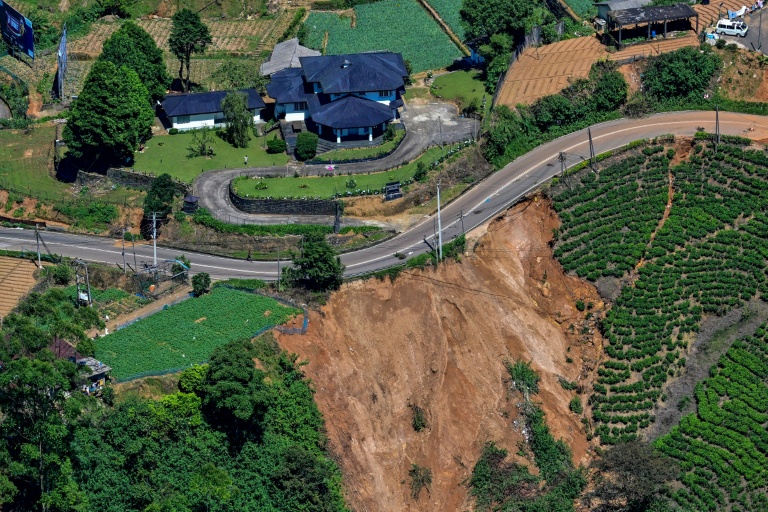
Sri Lanka’s corporate leadership has sought to reassure investors following the recent cyclone, with Ceylon Chamber of Commerce Chairman and John Keells Holdings Chairman Krishan Balendra insisting that the economic impact has been “moderate” and largely contained. However, a closer examination of official assessments and sector-level data suggests a more complex and uneven economic reality.

Speaking at the Asia Securities Investor Conference, Balendra pointed to post-disaster assessments indicating that only about 10% of cultivated agricultural land was fully damaged, with another 5% partially affected. He noted that agricultural operations resumed quickly and argued that fears of prolonged food inflation had not materialised. While retail food prices initially surged by around 40%, particularly in urban supermarkets, supply chains stabilised within weeks.

Yet, macro-level estimates paint a starker picture. A World Bank rapid assessment places total cyclone-related damage at approximately US$4.1 billion, equivalent to 4% of Sri Lanka’s GDP. This figure far exceeds early private-sector estimates and underscores the scale of losses to infrastructure, livelihoods, and public assets costs that are not immediately visible in supermarket shelves or short-term consumption data.

Balendra also downplayed financial sector risks, stating that banks estimate only about 1% of total loan portfolios were affected. However, analysts note that such averages mask stress among smallholder farmers, informal enterprises, and regional borrowers, where repayment capacity has weakened despite system-wide stability.

In tourism, Balendra cited resilience, noting infrastructure damage of roughly Rs. 500 million and a rapid rebound in arrivals. Tourist numbers in the first 25 days of January reportedly exceeded last year’s record levels by 10%. While this reflects strong demand, economists caution that headline arrival figures do not capture revenue losses from discounted pricing, shortened stays, or postponed investments in affected regions.

Consumption indicators, including supermarket volumes, have indeed recovered. However, critics argue that consumption alone is an incomplete measure of economic health, especially in a post-disaster context where households may be drawing down savings or increasing debt.

Balendra’s optimism on 2026 growth driven by tourism, construction, ICT, and consumption—aligns with broader forecasts. Yet reconstruction spending, while stimulative, also increases fiscal pressure at a time when public finances remain fragile.

In sum, while the cyclone did not derail Sri Lanka’s short-term recovery narrative, independent assessments suggest its economic footprint is far larger than “moderate.” The challenge lies not in denying resilience, but in acknowledging hidden vulnerabilities that could resurface without targeted policy support.

University Towns Emerge as Sri Lanka’s Next Investment Engine

0

Sri Lanka is increasingly positioning higher education not merely as a public service, but as a strategic economic asset. With literacy rates among the highest in South Asia and a long-established education framework inherited from the British system, policymakers now see education-led urban development as a new frontier for investment, exports, and skilled employment growth.

The Board of Investment’s push to develop University Towns in Keragala and Sooriyawewa reflects this shift. Globally, education hubs generate strong multiplier effects driving demand for housing, transport, healthcare, retail, and professional services.

 For Sri Lanka, still recovering from its economic crisis, such projects offer a rare combination of foreign exchange inflows, private capital mobilisation, and long-term human capital development.

The proposed Keragala University Town, located in the Gampaha District already the country’s largest student catchment has been structured as a 125-acre, master-planned campus hosting five universities.

With shared facilities and proximity to industrial zones, the model aims to integrate academic learning with industrial training. The BOI estimates investment needs of USD 370 million, with projected returns of 15–18% and a 6–7 year payback, figures that compare favourably with regional education developments.

The Sooriyawewa University Town in Hambantota is even more ambitious. Spread across 250 acres, it is designed as an integrated education and innovation ecosystem, combining higher education, vocational institutes, research centres, startup incubators, and digital learning platforms.

With projected investments of USD 640 million, the project targets global education providers seeking scale, lower operating costs, and access to South Asian markets.

The economic impact extends well beyond tuition revenues. International students bring foreign currency, while research and innovation hubs support higher productivity and technology transfer. Countries such as Malaysia and the UAE have demonstrated how education cities can generate billions annually while upgrading domestic skills.

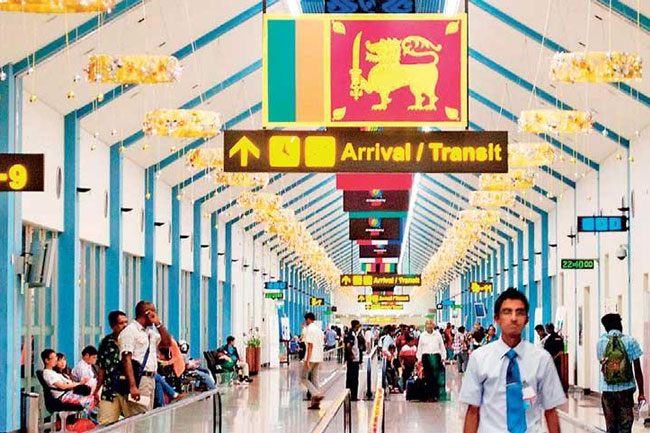
 Sri Lanka’s advantage lies in cost competitiveness, English-language instruction, and geographic proximity to South Asia, the Middle East, and East Africa. Improved connectivity to airports and business districts further strengthens the investment case.

If executed effectively, University Towns could diversify Sri Lanka’s services exports, reduce brain drain by retaining local talent, and position the country as a regional education destination turning classrooms into catalysts for long-term economic resilience.

Tourism Leakages Drain Over $1 bn from Sri Lanka Annually

0

Sri Lanka’s tourism sector is losing an estimated $ 1.13 billion every year through economic leakages, despite generating more than $ 3 billion in annual earnings, according to the country’s first Rapid Assessment of Economic Leakages released yesterday. The findings have raised concerns over the quality and sustainability of tourism growth, particularly as the sector struggles to attract higher-spending visitors.

The assessment, conducted by the Sri Lanka Tourism Development Authority (SLTDA) with technical assistance from UN Tourism, examined three key areas: accommodation providers, inbound tour operators, and the wellness and Ayurveda segment. The report estimates tourism earnings at $ 3.17 billion in 2024 and approximately $ 3.2 billion in 2025, yet nearly one-third of that income flows out of the domestic economy.

Speaking at a stakeholder workshop held to unveil the findings, SLTDA Chairman Buddhika Hewawasam described the scale of leakage as “alarming,” while stressing that much of it is preventable. He said at least $ 1.13 billion is lost annually through both internal and external leakages, noting that while some level of leakage is inherent in tourism, a significant portion could be reduced through targeted reforms.

A major contributor to the outflow is import-dependent procurement. Hewawasam said imports linked to tourism operations exceed $ 800 million annually, driven by heavy reliance on foreign food and beverages, furniture, equipment, and energy. In addition, widespread informality within the sector results in an estimated $ 84.8 million in lost government revenue each year due to tax non-compliance.

The report also highlighted particularly high leakage rates in the wellness and Ayurveda segment, exceeding 50%. Hewawasam said this raises serious questions about sourcing practices and local value retention in a segment that should, in principle, be rooted in domestic resources and expertise.

Tourism Deputy Minister Prof. Ruwan Ranasinghe said the findings underscore the limitations of focusing solely on arrival numbers and headline revenue figures. He noted that roughly one-third of every tourism dollar earned leaves the country, reducing the sector’s contribution to local income, employment and fiscal stability.

While acknowledging that certain imports are unavoidable, Prof. Ranasinghe said the study identifies clear opportunities to strengthen domestic supply chains and retain a greater share of tourism-generated income within Sri Lanka.

UN Tourism Development Economist Prof. Frederic Thomas said the assessment was intended to shift the conversation from diagnosis to practical solutions. He noted that while some leakages are structural, others are avoidable and can be addressed through policy measures. Imports of goods and services, he said, account for the largest share of losses.

Discussions at the workshop focused on formalisation, licensing, digital payments, stronger local value chains and sustainability standards. The outcomes are expected to shape a three-year implementation roadmap led by the SLTDA, with a strategic shift from maximising visitor numbers to increasing value retention.

 Despite welcoming a record 2.36 million tourists in 2025, tourism income rose by only 1.6%, reflecting declining per-day spending. The SLTDA recently revised average daily tourist spending down to $ 148 from $ 171 estimated a decade ago, intensifying concerns over the sector’s long-term value creation.

Tri-Forces Food Tender Sparks Fresh Controversy

0

Serious concerns have emerged over the procurement process for supplying dry and fresh food items to Sri Lanka’s Tri-Forces for 2026, following allegations that a tender was ultimately awarded to higher-priced bidders despite an earlier decision in favour of the lowest offer. The development has raised questions about transparency, adherence to procurement guidelines, and a potential financial loss to the State estimated at over Rs. 100 million.

The tender, called by the Ministry of Defence to procure food supplies for the Army, Navy and Air Force, was advertised in a state newspaper on 20 June 2025 under Contract Identification Number SCA/S & T/03 Dry Ration/Fresh Ration/2026 (26). Several private companies responded, submitting bids for a wide range of dry and fresh food items required by military camps across the country.

 According to procurement documents, Beston Enterprises (Private) Limited emerged as the successful bidder for supplying dry rations and related food items after quoting the lowest prices for 36 out of 105 items. These included staples such as dried chillies, turmeric, pepper, salt, spices, dried fish, noodles and papadums, intended for Army camps in Panagoda, Kilinochchi, Ratmalana, Hingurakgoda and Anuradhapura.

This decision was formally communicated to the company in a letter dated 13 November 2025, signed by the Secretary to the Ministry of Defence, Air Vice Marshal (Retd.) Sampath Thuyacontha. The letter stated that the tender had been awarded in line with recommendations of the Bid Evaluation Committee and the Standing High-Level Procurement Committee, in accordance with prevailing procurement guidelines.

However, the process took a dramatic turn after twelve appeals were lodged with the Procurement Appeals Board by competing bidders. The appeals challenged the award, citing alleged inconsistencies in how documentation requirements were applied and claiming that shortcomings of the successful bidder were not assessed on the same basis as those of other companies.

The Procurement Appeals Board, referencing provisions of the 2024 Procurement Guidelines, noted that complaints from bidders must be properly acknowledged and addressed during evaluations. Despite earlier reviews by the Bid Evaluation Committee and the High-Level Standing Procurement Committee, it is alleged that the Presidential Appeals Board subsequently removed Beston Enterprises from the process and allowed former contractors to secure the tender at higher prices.

As a result, contracts were reportedly awarded at significantly increased rates for key items such as spices, dried fish and other essentials. Critics argue that this reversal has led to a projected loss of around Rs. 100 million to the government, compared to the savings that would have been achieved under the original award.

Further allegations suggest that entrenched commercial relationships and profit motives may have influenced the outcome, prompting questions about whether certain suppliers continue to dominate Tri-Forces tenders due to longstanding connections. Beston Enterprises, despite being described in appeals as a “new” supplier, has reportedly operated since 1985 and already supplies dry rations to public institutions, with some existing military suppliers sourcing goods from it.

The total estimated allocation for Tri-Forces food supplies for 2026 stands at Rs. 41.8 billion Rs. 29 billion for the Army, Rs. 10.3 billion for the Navy and Rs. 2.5 billion for the Air Forceheightening the significance of any procurement inefficiencies.

Efforts by this newspaper to obtain clarifications from senior officials, including the Chairperson of the Standing High-Level Procurement Committee, officials of the Ministry of Defence and legal advisers, were unsuccessful. However, Bid Evaluation Committee Chairman L. D. N. Kumarasiri maintained that the tender was initially awarded to Beston Enterprises in full compliance with procurement regulations and denied any irregularities.

With public funds at stake, the controversy has underscored the need for greater scrutiny and accountability in large-scale government procurement processes.

IMF Programme May Be Tweaked After Cyclone Impact Review

0

 Central Bank Governor Dr. Nandalal Weerasinghe yesterday indicated that changes to Sri Lanka’s ongoing International Monetary Fund (IMF) Extended Fund Facility (EFF) cannot be ruled out, as the country assesses emerging economic needs following the impact of Cyclone Ditwah.

Speaking at the post-Monetary Policy announcement press conference, Dr. Weerasinghe said IMF staff are currently evaluating the economic fallout from the cyclone ahead of the delayed fifth review under the EFF. The review, originally scheduled for mid-December, was postponed due to the disaster, with Sri Lanka instead receiving $ 206 million in emergency assistance through the IMF’s Rapid Financing Instrument.

“The IMF team is here to assess the impact of the cyclone. Following that, there will be a staff review mission to examine programme targets and determine whether any revisions are necessary,” the Governor said, adding that discussions would continue until consensus is reached to complete the fifth review.

Dr. Weerasinghe stressed that steady progress under the IMF-supported programme remains crucial for sustaining Sri Lanka’s recovery and improving sovereign credit ratings. He said further ratings upgrades would be especially important in strengthening investor confidence and attracting foreign capital, even as the economy increasingly relies on its own foreign exchange earnings.

“At present, we are depending more on foreign exchange inflows generated through the economy rather than capital inflows,” he said. “However, ratings improvements are essential. We are hopeful of another upgrade this year, which would significantly boost investor trust and confidence.”

 The Governor noted that higher sovereign ratings would help unlock foreign direct investment and other forms of external financing. He also pointed to signs of improving domestic confidence, citing credit growth and stronger activity in the stock market as indicators that local investment is picking up.

“There is clear evidence of domestic investment taking place. Confidence is improving locally,” he said. “For foreign investment, we need continued stability, and that comes from sustained improvements in macroeconomic fundamentals.”

Dr. Weerasinghe emphasised that rebuilding economic buffers remains central to safeguarding Sri Lanka against future shocks. He highlighted the importance of maintaining adequate foreign exchange reserves, fiscal cash buffers and monetary policy space, noting that the absence of such buffers had amplified the severity of the 2022 crisis.

On the external front, he said Sri Lanka has recorded current account surpluses over the past two years, driven by stronger inflows from tourism, worker remittances and exports. “This shows that the country is now earning more foreign exchange than it is spending, which is a critical shift,” he said.

Addressing monetary conditions, the Governor explained that recent short-term volatility in interbank interest rates was due to temporary liquidity tightness in certain banks and had corrected without Central Bank intervention. He said rates have since realigned with the Overnight Policy Rate, with the adjustment expected to pass through to Treasury Bills, Bonds and prime lending rates.

Looking ahead, Dr. Weerasinghe said Cyclone Ditwah is likely to have only a temporary impact on economic growth, with some moderation expected in the fourth quarter of 2025, followed by a rebound supported by higher fiscal spending in 2026.

Colombo Inflation Rises to 2.3% in January

0

Inflation in Colombo increased to 2.3 percent in January, up from 2.1 percent in December, according to data released by the Department of Census and Statistics (DCS).

The rise was recorded on a year-on-year basis, as measured by the Colombo Consumer Price Index (CCPI).

The DCS reported that year-on-year inflation in the food category rose to 3.3 percent in January, compared to 3.0 percent in December, indicating an acceleration in food prices.

Meanwhile, inflation in the non-food category remained unchanged at 1.8 percent, maintaining the same level recorded in the previous month.

Government Reaffirms Commitment to Repeal PTA, Says Public Input Will Shape New Anti-Terror Law

0

The Government has reaffirmed its firm commitment to abolish the Prevention of Terrorism Act (PTA), a long-standing election pledge, while assuring that public consultation will play a decisive role in shaping its replacement, Justice and National Integration Minister Harshana Nanayakkara said.

Addressing concerns over the proposed anti-terrorism legislation, the Minister emphasised that the draft law currently open for public review is not final and remains subject to significant changes based on public feedback.

“In December last year, the Ministry of Justice commenced the process of repealing the PTA and introducing a new legal framework for the prevention of terrorism,” Minister Nanayakkara said. “The draft was prepared following extensive deliberations by a committee chaired by President’s Counsel Rienzie Arsecularatne, which met on 33 occasions.”

The proposed legislation, titled the Protection of the State from Terrorism Bill (PSTB), also referred to as the Anti-Terrorism Bill (ATB), is intended to replace the PTA of 1979. The existing law has faced decades of criticism from civil society organisations, legal experts and international bodies over its impact on fundamental rights.

The Minister noted that, unlike previous legislative processes, the Government has deliberately allowed an extended period for public consultation, recognising the sensitive and controversial nature of the PTA.

“Normally, public consultation on draft legislation is limited beyond the two-week period during which Bills may be referred to the Supreme Court,” he said. “However, given the deep sensitivities associated with the PTA, the Government decided to provide a much longer period for public engagement.”

Accordingly, the draft Bill was published in all three languages in December and opened for public submissions until February 28, 2026, allowing individuals, civil society groups and international organisations to submit their views.

Minister Nanayakkara stressed that the draft does not reflect the Government’s final position.

“This is not a final law. It is a draft placed before the public to gather views, criticisms and proposals,” he said. “After February 28, the committee will reconvene to review all submissions and introduce amendments where necessary. If required, even the title of the legislation can be changed. That is the purpose of public consultation.”

He revealed that a substantial number of submissions have already been received by the Ministry of Justice and National Integration, including from civil society organisations, the United Nations office in Sri Lanka and members of the public. Submissions have been made via email as well as through formal written representations addressed to the Ministry Secretary.

“All these views are being carefully reviewed,” the Minister said, adding that no further steps will be taken until a comprehensive assessment of public feedback is completed. He also expressed appreciation to commentators, newspaper columnists and others who have engaged critically with the draft.

“We are grateful to everyone who has shared their views, whether through written submissions or public commentary. These critiques are being considered in a constructive manner,” he said.

Reiterating the Government’s political stance, Minister Nanayakkara underscored that repealing the PTA remains non-negotiable.

“The Government is fully committed to honouring its election promise to abolish the PTA and replace it with legislation that safeguards national security while upholding democratic values, fundamental rights and the rule of law,” he said.

With one month remaining before the consultation deadline, the Minister urged the public to continue submitting recommendations and proposals to the Justice Ministry.

LB Finance Secures $45 million Global Impact Funding Boost

0

LB Finance PLC has strengthened its growth trajectory by securing $ 45 million in long-term foreign currency funding from two Switzerland-based impact investors response Ability Investments AG and Blue Orchard Finance Ltd in a move that reinforces international confidence in the company and Sri Lanka’s broader economic recovery.

The funding consists of a $ 20 million senior debt facility from response Ability Investments AG and a $ 25 million facility from Blue Orchard-managed funds. LB Finance said the partnership reflects a strong alignment between its strategic priorities and the investors’ shared commitment to promoting financial inclusion and sustainable growth in emerging markets.

The long-term facilities are expected to enhance LB Finance’s balance sheet and liquidity position, enabling the company to expand lending to under-served segments of the economy, with a particular focus on micro, small and medium-sized enterprises (MSMEs). The MSME sector remains a critical driver of employment, entrepreneurship, and economic activity in Sri Lanka, yet continues to face constraints in accessing affordable credit.

Commenting on the development, LB Finance Managing Director Niroshan Udage said the funding marks an important step in the company’s journey. He noted that the support from respons Ability and Blue Orchard will strengthen LB Finance’s ability to channel much-needed growth capital to MSMEs, helping to stimulate job creation and economic progress. Udage added that the confidence shown by globally recognised impact investors reaffirms the robustness of LB Finance’s strategy and its commitment to responsible and inclusive lending.

Access to stable foreign currency funding has become increasingly important as Sri Lanka navigates a gradual economic recovery and demand for credit rises across productive sectors. LB Finance said the new funding will allow it to accelerate the expansion of its lending portfolio while maintaining prudent risk management and financial discipline.

Executive Director Ravi Yatawara said securing significant foreign currency funding in the current global environment underscores the strength of LB Finance’s fundamentals and its track record of sound financial stewardship. He added that the resources will enable the company to deepen its reach among underserved businesses, particularly those supporting employment generation and export-oriented growth. Yatawara also expressed appreciation for the trust placed in LB Finance by both investors.

 The partnership was formalised at AFIFORUM 2026 in Bangkok, a regional forum that brings together development finance institutions and impact investors. Both responsAbility and BlueOrchard bring extensive global experience in financing inclusive growth initiatives across emerging and frontier markets.

BlueOrchard Finance Ltd., a member of the Schroders Group, is the world’s first commercial manager of microfinance debt investments and has deployed more than $ 10 billion across over 100 emerging markets since its inception in 2001. responsAbility Investments AG is a leading Swiss impact asset manager specialising in financial inclusion, climate finance, and sustainable food systems. Aligned with the UN Sustainable Development Goals, responsAbility has deployed $ 17.6 billion in impact investments and manages $ 5.8 billion in assets across 330 portfolio companies in 70 countries. Since 2022, it has been part of M&G PLC.

The latest funding builds on LB Finance’s legacy as one of Sri Lanka’s leading non-bank financial institutions, supported by more than five decades of operations and a national long-term rating of A-(lka) with a Stable Outlook from Fitch Ratings.

WEATHER FORECAST FOR 31 JANUARY 2026

0

Showers will occur at times in Northern, North-Central, Eastern and Central provinces. Fairly heavy falls above 50 mm are likely at some places in Mullaittivu, Trincomalee, Polonnaruwa and Matale districts.

Several spells of shower will occur in Uva and North-western provinces.

Showers or thundershowers are likely at several places in other areas of the island after 2.00 p.m, and fairly heavy falls above 50 mm are likely at some places.

Misty conditions can be expected at some places in Western and Sabaragamuwa provinces and in Galle and Matara districts during the early hours of the morning.

The general public is kindly requested to take adequate precautions to minimize damages caused by temporary localized strong winds and lightning during thundershowers.

New Bone Marrow Transplant Unit and Upgraded Medical Facilities Planned for Kandy National Hospital

0

Deputy Health Minister Dr. Hansaka Wijemuni announced that a bone marrow transplant unit for Thalassemia patients will be established at Kandy National Hospital within this year.

Dr. Wijemuni highlighted that while the procedure costs around Rs. 10 million in India, the Government has already allocated the necessary funds to set up the specialised unit locally in Kandy. He also stated that hospital staff assigned to the bone marrow transplant unit will be sent to India for specialised training.

Speaking to the media in Kandy, the Deputy Minister drew attention to existing challenges at the hospital, noting that one of the two angiogram machines is currently out of service. He pledged that three new angiogram machines will be installed before the end of the year, which is expected to significantly reduce the waiting list for angiogram tests at the hospital’s cardiology unit.

Dr. Wijemuni further revealed that the Government will invest Rs. 2,000 million over the next three years to complete the development of the Kandy Cancer Hospital. An additional Rs. 1,500 million is expected to be spent on procuring the necessary medical equipment for the facility.

“These initiatives demonstrate the Government’s commitment to providing advanced medical care locally and reducing the burden on patients who would otherwise have to travel abroad,” Dr. Wijemuni added.