Home Blog Page 1498

WEATHER FORECAST FOR 25 August 2023

0

Showers or thundershowers will occur at a few places in Uva provinces and in Ampara, Batticaloa and Polonnaruwa districts during the evening or night.

A few showers may occur in Western province and in Rathnapura, Galle and Matara districts.

Mainly fair weather will prevail elsewhere over the Island.

General public is kindly requested to take adequate precautions to minimize damages caused by temporary localized strong winds and lightning during thundershowers.

Anyone man enough to take Mangala’s mantle

0

By Krishantha Prasad Cooray

Today, it is hard to open a newspaper or watch a newscast without cringing at how little has changed in our political psyche since the rout of Gotabaya Rajapaksa just over a year ago. Of course, with Rajapaksa himself out of power, Sri Lanka is no longer careening towards the edge of a cliff, but things could be so much better if only our political class learned any lessons from the Aragalaya.


Across both sides of the aisle, we see the same faces, giving the same stump speeches, making the same demands, and remaining obsessed with eking out more votes. To borrow a phrase from James Freeman Clarke, they are obsessed with the next election, and unconcerned about the plight of future generations.


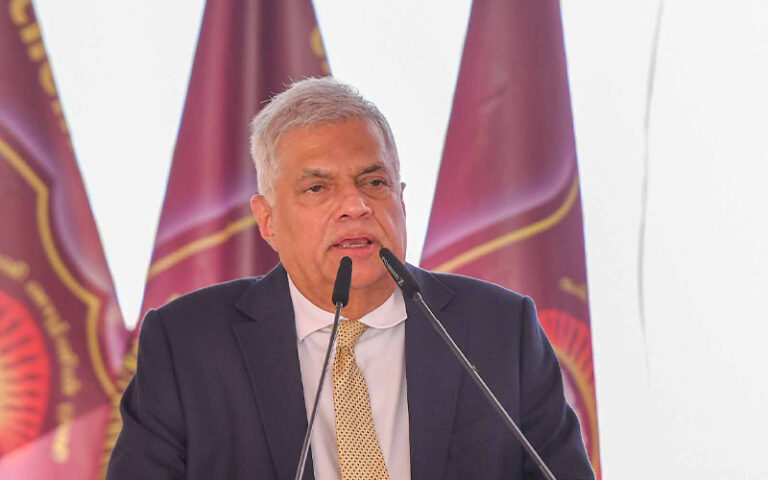
Nowhere is this clearer than the petulance with which most political parties have responded to President Ranil Wickremasinghe’s recent call to give serious consideration to the devolution of executive power to the provinces of Sri Lanka.
The nationalists are clutching their pearls at the very idea of power sharing. When they hear “provinces”, they think “Tamils and Muslims”. Some of them say “we” won “the war”, and so power can stay where it is. Others take the position that no matter how much a policy helps the Sinhalese, it should not be done if it could also help minority communities to thrive.
As boneheaded and myopic as the nationalist stances are, at least they have a stance.
Liberals, such as those in the SJB whose leader and party platform have consistently stood for a full implementation of the 13th amendment in writing, seem unable to rise to the moment and articulate a stand in support of their own policy, seeing instead an opportunity to undermine a President who stuck his neck out by taking a bold and perhaps unpopular position.
As the theatre continues, there is no one left to explain these concepts to ordinary Sri Lankans in simple words. To a population tired of hearing the same speeches over and over again, no one has broken out of the noise to articulate the potential strategies of power sharing and their associated risks and rewards.
It is in moments like these that Sri Lanka most misses Mangala Samaraweera, who died two years ago today. Mangala was a political visionary who saw what others did not, and who in his final years graduated from politics to statesmanship. In those years, his entire priority was always the next generation, and not the next election.
When today’s politicians discuss devolution, they harp on about the war, about India, the 13th amendment, Indo-Lanka Accord, colonialism or the LTTE. They are obsessed with history and frame our national conversation around the past, where if Mangala were here he would focus our attention squarely on the future.
By the time President Wickremasinghe decided to raise the spectre of devolution once again, he had no doubt steeled himself for the pantomime that would follow, but there was nothing he could do about it, because he has no Mangala to wake us up to reality. He would have spoken plainly and fearlessly, unbowed by the terror tactics of extremists and nationalists. If Mangala was here, he would ask us to forget about the past, and just think of our predicament today.
We have a central government that failed so catastrophically that its leader was ousted in the first successful revolution in Sri Lanka’s history. We have defaulted on our loans. We have shortages of food, medicine and almost everything else. Sri Lankans are giving up on their country, packing up and leaving in droves. However much things have improved since the Rajapaksas were shown the door, much more needs to be done to secure our future. It is no secret that the Rajapaksas don’t want the country to succeed when one of them is not at the helm. Their support of the President is nothing but a tactic to stall for time, to rebuild their brand and return to power.


Sri Lanka’s policies on any number of issues swing violently from one direction to another from election to election, and through it all, our core administrative infrastructure, from our schools to our hospitals to our justice system and utilities, all continue to stagnate as the world moves on. Potential investors who have visited Sri Lanka for decades hear the same ideas with the same zeal that they did 20 years ago, and still find that they can get nothing done without political patronage.


Mangala would challenge us to ask whether this path of decline is inevitable, or whether we could radically reimagine the way our country worked. Imagine, for example, if each of the nine provinces was indeed self-governing. Imagine for a moment that each province had its own executive and legislators, and its own set of policies around how to administer their schools, universities, hospitals, police forces or even agricultural policies.


Would crime and corruption still be rampant island-wide, or would at least one province take this problem seriously and elect a chief minister devoted to cleaning up that province’s public sector and making it the safest province in the country?


Would it still be impossible to seek justice in our court system without being able to both afford the services of a President’s Counsel and wait for years as your case was postponed for no apparent reason? Or would at least one province elect leaders who would adopt best practices from around the world to digitize magistrate’s courts, bar unnecessary delays and pride itself on hearing and concluding cases faster than anywhere else in the country? Might that same hypothetical province also suggest guidelines that encourage judges to rely on an increasingly large body of jurisprudence to avoid relitigating the same issues over and over again?


Is it possible that under a devolved government, Gotabaya Rajapaksa may not have been able to choke off the agriculture industry nationwide? Perhaps one brave governor and her provincial government may have negotiated directly with a benefactor to get its farmers the tools they needed to tend to their crops and avoid a rice shortage.


Could another province have decided that it would single-handedly stem our national brain drain by setting aside tracts of land and other incentives for cutting edge universities through public-private partnerships, perhaps to lead the world in research into generative artificial intelligence, while inviting the brightest minds in the world to live and work on their campuses as “digital nomads” under a tax-advantaged incentive scheme? Indeed, might that same province have decided that their primary and secondary schools would be the envy of Sri Lanka, from basic necessities like clean toilets to transparent and accountable admission systems?
Would there be anything to prevent yet another province from digitizing its land records, perhaps on a public and transparent blockchain that puts an end to title deed fraud and gives investors peace of mind that they will not be tied up in court for decades over scams that boggle the imagination?


When you imagine the possibilities of decentralized government, it becomes clear that the real risk of devolution is not to any majority or minority religion or ethnic group. The real risk is to the “cabinet minister” political class, the revolving array of “senior politicians” who take turns between the halls of power and opposition benches, sucking up all the oxygen in the room and leaving no opportunity for the next generation of politicians to try their hand at governance.


In practice, “non-cabinet ministers”, “state ministers”, “deputy ministers” or “monitoring MPs” have no real or practical power to make a difference and are just positions to build names and own isolated pet projects or initiatives that succeed or fail based on the patronage of their cabinet minister or president.


If we had serious provincial government, Mangala would encourage every promising young leader to become a chief minister or provincial minister instead of hovering around Colombo. He would push them to try new ideas and bold initiatives to solve problems that had not yet been solved elsewhere in the country. Just like he opened competition in the telecom sector in the 1990s, he would have opened up competition among the different provinces in Sri Lanka.


Mangala was always sympathetic to the plight of ethnic and religious minorities feeling like they were treated like second class citizens. But his political secret and superweapon was that he always saw and knew that the mechanisms that minority stakeholders sought were the very same mechanisms that could unleash the full economic potential of the south and propel Sri Lanka past communal thinking. Just as winning ideas in the private sector are emulated by the competition, provinces would borrow the best ideas from each other and thrive. Those that failed would be punished by their electorates.
The saddest thing about Mangala’s vision is that it was never a secret to his long-time political allies, including the leadership of the UNP and SJB. It is well known that Mangala broke away from the SJB because he feared the party would become a “Rajapaksa lite” and not a true liberal alternative force. Now the SJB, from its leader Sajith Premadasa down, have an opportunity to seize the moment, extend an authentic hand of support to the President, and put its own ideas before the people.


Especially for a party so full of promising young leaders, the SJB has nothing to lose and everything to gain from promoting a system that would allow its best and brightest to fan out across the country and drive real change and give people real hope. Ranil Wickremasinghe, the solitary liberal voice in his government, could not have held out a longer olive branch to the opposition, signalling his support for an unpopular policy direction that both he and the SJB leadership know would be the right thing to do.


They are sitting on a political masterstroke that would require little more than endorsing and standing up for ideas they themselves believe in. The SJB is a party that has sought credibility and relevance since its birth, and it finally has an opportunity for its senior leaders to shine. From Sajith Premadasa to Eran Wickremaratne to Harsha De Silva and the other liberal voices in the party, this is their chance to show that they are not afraid of the Weerawansas, Ratanas and Gnanasaras, and to channel their inner Mangalas to take an alternative view to the people and to take a stand against racism.


All his life, Mangala Samaraweera was never afraid to speak. Others were afraid to let him be heard. He was a strong, charismatic, articulate, and credible voice who lent his formidable stature to any leader he backed. If anyone proposed the correct policy, he would have endorsed it without a second thought. But today, there is no Mangala to hide behind. It is up to the few remaining statesmen to lead the way, inspire the people and work with whoever they must in order to make sure that the Rajapaksas never raise their head again.

Steps to recruit eight thousand teachers for government schools

0

The State Minister for Education Aravinda Kumar announced plans for the recruitment of eight thousand teachers for government schools in the near future. He indicated that this recruitment will include 5,500 graduate teachers and 2,500 teachers specializing in second language instruction. 

These statements were made by the State Minister of Education, Mr. Aravinda Kumar, during his participation in a press conference at the Presidential Media Centre (PMD) August (23) under the theme ‘Collective Path to a stable country’.

State Education Minister Aravinda Kumar further said;

Despite facing economic challenges in the past, the government has shown heightened dedication to matters within the Ministry of Education. President Ranil Wickremesinghe has played a pivotal role in making significant decisions aimed at advancing the educational prospects of the nation’s youth.

President Wickremesinghe consistently emphasizes the importance of nurturing the education of the country’s children and advocates for essential reforms in this domain. In alignment with this vision, the ministry is meticulously executing a well-structured approach to propel these initiatives forward, marked by a series of innovative reforms in the education sector.

Under the guidance of the Minister of Education, a comprehensive educational reform program has already been set in motion, encompassing updated curricula. Globally, the STEAM (Science, Technology, Engineering, Arts and Mathematics) education system has garnered remarkable success, and presently, the government is directing its focus toward implementing the STEAM education concept. STEAM integrates science, technology, engineering, arts, and mathematics, serving as a dynamic approach to modern education.

The government has also developed strategic plans to equip students with technological proficiency and to facilitate learning through cutting-edge technical methodologies. Moreover, recognizing the challenges posed by the ongoing pandemic, the Ministry of Education has made a thoughtful decision to provide vocational, technical, and English language training to students who are awaiting the outcomes of their General and Advanced Level examinations. This initiative covers 320 schools across the nation and is scheduled to commence in January of the upcoming year. This forward-looking endeavour will empower students to gain valuable insights into their prospective careers.

A total of 8,000 teachers have already been successfully recruited for schools. Moving forward, plans are in place to train and hire an additional 5,500 graduates as teachers, alongside the recruitment of 2,500 more educators specializing in second language instruction.

The vocational training program faced disruptions due to the recent outbreak of the Covid epidemic. However, I’m pleased to inform you that all vocational training centres across the island have resumed their regular activities.

Furthermore, concerted efforts have been undertaken to ensure that the results of the 2022 A-level examination are published before September 10th.

In today’s context, children from all corners of the country are showcasing remarkable examination results. Additionally, a substantial number of students are achieving university qualifications. These achievements collectively reflect the evident quality of the country’s education system.

COYLE rallies entrepreneurs under “Unite and Rebuild” banner

0

By: Staff Writer

Colombo (LNW): The Chamber of Young Lankan Entrepreneurs (COYLE) is rallying countywide businesses under the Alliance of Lankan Entrepreneurs Chamber “(ALEC) Unit and Rebuild” banner.

COYLE organized a special forum where entrepreneurs from all scales and backgrounds in Sri Lanka came together under ALEC.

The gathering focused on the strength of unity among entrepreneurs and the need for stable policies to foster business growth and economic expansion in the country. The Chief Guest at the event was Peoples Bank Chairman Sujeewa Rajapakse.

COYLE Chairman Rasith Wickramasinghe addressing the meeting highlighted the importance of stable policies.

He emphasized the detrimental effects of continual and often arbitrary fluctuations in policy making, stressing the responsibility of entrepreneurs to impart and disseminate knowledge for the welfare of their employees.

The organization advocates for service development and improvement, grounded in core values of empowerment and sustainable economic development.

Its efforts cover a range of sectors including textiles, IT, Construction, Manufacturing, Financial Services, Pharmaceuticals, Power and Energy, driven by its firm view that global business opportunities, in terms of imports and exports, remain heavily untapped by Sri Lanka.

ALEC President Nishan Wasalathanthree at the meeting shared the history and purpose of ALEC. Founded to represent Sri Lankan entrepreneurs,

ALEC aims to create one voice for all entrepreneurs to face, mitigate and eradicate obstacles standing in the way of progress.

Over the years COYLE has formalized agreements with various regional bodies facilitating networking, and the management of various industry related issues. COYLE, with the creation of ALEC presently includes 28 such bodies with the master plan of connecting members throughout all 9 districts.

ALEC Secretary Yasas Chandrasekara, stressed the significance of entrepreneurs in the economy, and the need for a robust amalgamated chamber like COYLE to voice their concerns to the Government. He pointed out that despite contributing to foreign exchange, Sri Lankan entrepreneurs face challenges due to the absence of coherent foreign exchange policies.

Chief Guest Sujeewa Rajapakse took the opportunity to discuss the crucial role of the banking system in stabilizing the nation’s economy. He addressed serious concerns laid out by the gathering in terms of the lack of support for the SME sector.

While the Central Bank has been reducing interest rates, state and private sector banks have not been able to transfer the benefits to customers.

He cited among others, the fundamental problem being high prevailing counter interest costs caused by the high fixed deposit rates offered during the previous year to attract monies inward.

The gathering urged the Peoples Bank chairman to share the concerns with his colleagues, particularly the detrimental state the economy is facing due to the lack of support, as well as the stagnation caused by the banking sector.

Progress Review Meeting on Climate Change held at Presidential Secretariat 

0

Emphasis on climate action and international collaboration

A progress review meeting on climate change initiatives was held at the Presidential Secretariat yesterday morning (23), underscoring Sri Lanka’s commitment to climate action and international collaboration. 

The meeting, presided over by President Ranil Wickremesinghe, brought together key advisors and experts to discuss strategies to strengthen the nation’s response to climate change.

Addressing the meeting, President Wickremesinghe stressed the importance of resilience on both local and global fronts. “We must be formidable in our actions, both domestically and internationally,” he declared, noting the critical role finance plays in supporting climate initiatives. He said that finance is the lifeblood of any endeavour, and the country needs to build substantial strength in this arena.

The President’s call for action was backed by his observation that while numerous climate change initiatives are proposed, limited attention is given to the vital matter of financing. He said Sri Lanka’s expertise in international economics, especially in climate financing linked to debt management, positions Sri Lanka uniquely.

President Wickremesinghe also proposed the establishment of a National Consultative Committee with the involvement of private and public sector agencies.

“There will be a national consultative committee that includes every agency involved in the public or private sector. This committee may consist of about 100 to 150 members. However, this committee should be the one consulted at least once every six months to discuss the progress being made. If you can establish a structure like this, it could be the desired outcome. I believe that all of you, especially foreign ministries, will need to collaborate with the environment ministry regarding international aspects. Additionally, I think we all need to contribute, including a focus on international finance. We could align this with our Institute of Economics and Trade, positioning Sri Lanka as a hub for global financial activities. Therefore, we will work on this to consolidate the concept.”

The President also highlighted alignment with international agendas, including those of the UN Secretary General and President Biden. He proposed the establishment of an International Climate Change University as a global research hub and a testament to Sri Lanka’s dedication.

Mr. Ruwan Wijewardane, Senior Advisor to the President on Climate Change, informed the President about discussions with prominent universities, including those in the US and Cambridge, regarding the establishment of the Climate Change University.

Key highlights for the upcoming COP28 were also revealed during the meeting, encompassing the Climate Justice Forum, International Climate Change University, Climate Prosperity Plan launch, and the Tropical Red initiative. The importance of showcasing Sri Lanka’s best practices through a pavilion and hosting discussions was also emphasized.

Advisor to the President on Environment, Climate, and Green Finance, Mr. Ananda Mallawatantri, presented a comprehensive proposal for collaborations with international universities, highlighting Georgetown’s agreement for collaboration and opportunities with Yale. He also detailed plans for collaborations with institutions in the EU, aiming to exchange expertise and promote sustainable practices.

In the realm of green finance, the President Appointed Green Financing Committee has been working on a roadmap for Sustainable Finance, with support from UN Economic and Social Commission for Asia and the Pacific (ESCAP), UNDP, and the Global Green Growth Institute (GGGI). The committee is actively engaging in initiatives like Debt for Nature Swaps and presenting a project on the Kelani River Basin.

The meeting’s outcomes echoed President Wickremesinghe’s vision of a sustainable future, marked by international collaboration, cutting-edge research, and strategic climate action. The commitment to environmental preservation alongside economic progress underpins Sri Lanka’s endeavours as it steps onto the global stage in addressing climate change.

The meeting was attended by Minister of Environment Naseer Ahamed, Mr. Ruwan Wijewardane, Senior Advisor to the President on Climate Change, President’s Senior Economic Adviser Dr. R.H.S. Samaratunga, Secretary to the Ministry of Finance Mr. K M Mahinda Siriwardana, Secretary to the Ministry of Environment Dr. Anil Jasinghe and other officials.  

BOI targets US $ 2 billion investments attracting 100 tech firms in 2023

0

By: Staff Writer

Colombo (LNW): Sri Lanka is targeting to get US $ 2 billion investments this year, an increase from only US $ 1 billion reported last year, said Chairman of the Board of Investment Dinesh Weerakkody.

“The BOI is looking at targeted initiatives to get from $ 1 billion in 2022 to $ 2 billion in 2023 by attracting 100 technology services companies with a new product, and a targeted programme to get 50 existing BOI companies to reinvest.

It will be setting up industry advisory councils for the four thrust sectors for leads, policy tweaking and promotion, digitalization of key investor services and aggressive promotion of the destination.

Key account management and modernization of existing zones to meet with international green standards were the other measures taken to increase foreign investment, he said. .

Also there is a large number of new sectors which are emerging, associated with digitalization and with the new economy.

Also the traditional sectors have new elements coming out as sub-sectors. However the sectors of the future will be the new sectors which are now emerging,” he said.

However the target set by the Board of Investments (BOI) for Foreign Direct Investments (FDI) for 2023 is 1.5 billion US dollars and BOI FDI realized in the First quarter of 2023 amounted to 211 million US dollars, State Minister of Investment Promotion Dilum Amunugama stated.

The BOI has approved investments of 682 million US dollars from January to July, he added.

Despite the ongoing economic crisis, the BOI has been able to attract Foreign Direct Investments of 1.75 billion US dollars exceeding the targeted amount of 1 billion US dollars for 2022, State Minister Dilum Amunugama mentioned.

State Minister of Investment Promotion Dilum Amunugama further commented; that it is necessary to update and modify Sri Lanka’s existing legislative framework in order to make the country an investment-friendly destination.

It is expected to introduce new investment laws by the end of 2023, without affecting other government entities’ current legal frameworks.

A seven-member committee consisting of Director Generals of government institutions has already been appointed to look into the existing laws that restrict investments.

The government intends to execute a program under concept of ‘One Village – One Product’ to empower entrepreneurs who produce export-level products in selected regional secretariats, involving them in the export process, and scale it up at the District and National levels.

A Central Export Center will be established for them and measures will be taken to strengthen the connection between the rural exporters and the Sri Lanka Export Development Board.

In line with the government’s proposal to cultivate cannabis for medicinal purposes, 200 project proposals have so far been submitted.

The Minister of Indigenous Medicine Promotion has undertaken the task of amending the relevant laws. The government intends to launch the Cannabis Pilot Project by the end of 2023 following the passage of these laws.

Mangala Samaraweera: Remembering a Cultural Pillar

0

Today marks two years since the departure of Mangala Samaraweera, and his absence continues to resonate as a profound loss to Sri Lanka’s cultural foundation.

With his passing, Sri Lanka mourns the absence of a resolute voice in politics—one unafraid to confront the complexities of religion, advocate for minority rights, champion gender equality, and uphold diverse viewpoints.

In a landscape where many tread carefully to safeguard votes, Mangala stood apart, unwaveringly advocating for his convictions regardless of potential electoral consequences or public approval.

Mangala embodied freedom in his very presence—an unwavering embodiment of unrestricted authenticity.

It’s a lamentable reality that the political realm now lacks figures with such steadfast cultural integrity.

Amid a sea of seemingly lifeless politicians, Mangala Samaraweera remains a living force even in his absence—a testament to a legacy that transcends mortal confines.

Discrepancies in Pay Grades and Teacher Absorption Discussed at Education Oversight Committee

0

Concerns were raised at the Sectoral Oversight Committee on Education stating that when those from the teacher service being absorbed into the In-Service Advisor service there is a disparity in the pay grade promised and the pay grade actually given. Thus, when being absorbed as an In-Service Advisor, the aggrieved parties stated that what they receive is below the Salary earned.

The said matters were taken into consideration at the Sectoral Oversight Committee on Education held recently (11) in Parliament Chaired by Hon. (Dr.) V. Radhakrishnan.

The Committee was of the view that appointments should be temporarily postponed until the matter is resolved because it is not just to be given a lesser amount than the Salary earned following years of service when being absorbed as an In-Service Advisor. Moreover, the The Hon. Sajith Premadasa, Leder of the Opposition who was present at the Committee meeting held inquired the officials what measures have been taken to fill the 1,982 vacancies existing in the In-Service Advisor positions. Moreover, the Leder of the Opposition inquired regarding the rising concern regarding the duties and scope of work of the positions of In-Service Advisor.

Accordingly, the Committee was of the view that while many issues are in existence, forcing teachers to accept being absorbed into the In-Service Advisor cannot be accepted and therefore need to be discussed further.

The Sectoral Oversight Committee on Education also took into discussion the suitable mechanism to monitor the Nursery Education and Nursery Schools in Sri Lanka. The official present stated that The National Policy for Pre-School Education was published on the website of the Ministry of Education for nearly a month for the purpose of obtaining public opinion. Accordingly, an Action Plan on the National Policy for Pre-School Education has so far been drafted with the participation of all relevant institutions and departments, the officials said.

The Committee was of the view that given that there are different policies operating provincially, bringing the Nursery Education and Nursery Schools under a national policy governed under one umbrella is required.

Moreover, in consideration of early childhood and nursery education, discussions were held regarding regulating private tuition classes during Sundays, public holidays etc. The Committee further highlighted that the contents of the syllabus need to be looked into as certain chapters even contain content which justify discrimination against women. The Committee thus recommended to consider these matters simultaneously along with the education reform programme.

The Committee also inquired about the progress of the Mid-day-Meal programme adopted at schools across the Country. The officials present stated that 1.8 million students are being given the lunch covering 7,926 schools.

Members of Parliament, the Hon. (Ms.) Rohini Kumari Wijerathna, the Hon. (Mrs.) Manjula Dissanayake and the Hon. (Prof.) Charitha Herath, were present, were present at the Committee while the Hon. Sajith Premadasa, Leder of the Opposition and the Hon. Chandima Weerakkody were present at the meeting by leave of the Chair of the Committee.

The Gem and Jewellery Authority Attains Peak Export Growth Rate

0

The State Minister for Primary Industries Chamara Sampath Dasanayake announced that the exports of gems and jewellery have generated an income of USD 315 million from January of this year until now.

He further highlighted that the gems and jewellery sector has demonstrated an impressive export growth rate of 34%, a fact corroborated by reports from the Central Bank.

Minister Dasanayake made these comments speaking at the news briefing held at the Presidential Media Center  yesterday (22), themed Collective Path to a stable country’.

The State Minister further said;

The National Gem and Jewellery Authority stands as a pivotal contributor to our nation’s foreign exchange reserves. We have undertaken numerous strategic decisions concerning the operations of this authority. In the previous year, we achieved a significant income of USD 230 million through gem exports. Notably, in the year (2023), our gem and jewellery exports have yielded a substantial revenue of USD 315 million.

Historically, concerns arose regarding the remittance of foreign exchange earned through gem exports. To address these issues, a novel customs clearance system was devised under the aegis of the new government. Presently, each exported gem is meticulously assessed to ensure the inflow of foreign exchange. In the past, our gems were auctioned abroad, but our country did not receive the appropriate remuneration.

The Central Bank’s reports confirm a remarkable 34% growth in export revenue for the Gems and Jewellery Authority. Steps have also been taken to resolve exporters’ challenges, with open lines of communication for exporters accessible at all times.

Last year, the authority’s revenue from licensing and assessment fees amounted to a modest Rs. 144 million. However, this year alone, the authority has recorded a substantial profit of Rs. 288 million. Consequently, we have devised strategies to enhance the authority’s profits by a remarkable 200% by year-end.

In the past, foreign exchange reserves were scarce in our nation. The Ministry of Primary Industries has spearheaded initiatives to alleviate this issue. Furthermore, it is worth noting that our employees are not reliant on government salaries. The Gems and Jewellery Authority, independently, contributes between Rs. 50 and 100 million to the Ministry of Finance, underscoring our commitment to the nation’s economic well-being.

Furthermore, it’s worth noting that a mere six months have elapsed since I assumed leadership of the Phosphate Institute. Originally falling under the jurisdiction of the Ministry of Industry after being transferred from the Ministry of Agriculture, the Phosphate Institute was subsequently placed under the umbrella of the Ministry of Primary Industries by the President’s decree. When I took the helm of this institution, it was saddled with a bank overdraft of Rs. 150 million, leading to a precarious situation where employee salaries couldn’t be met. Today, I am pleased to report that all these challenges have been successfully resolved.

The ongoing Russian-Ukrainian conflict has led to a surge in demand for our phosphates. Moreover, a protracted 23-year-old controversy surrounding phosphate trade within the country has been finally laid to rest. This legal matter had previously impeded our ability to export phosphates. However, its resolution has swiftly yielded a profit of Rs. 143 million in just a span of two weeks.

Furthermore, the BCC company experienced a period of dormancy before reactivating its operations using refurbished machinery. Consequently, BCC has managed to operate in a manner that doesn’t burden the government’s finances. Impressively, the BCC company alone has contributed around Rs. 25 million to the national treasury when required.

Additionally, the nation boasts the potential to accrue between USD 400 and 500 million through the various institutions aligned with the Ministry of Primary Industries. It’s important to acknowledge that these endeavours encounter diverse hindrances and challenges along the way. Nonetheless, in order for our country to thrive without the weight of debt, a collective effort is imperative.

Colombo district land value up 15.2% in first half of 2023

0

By: Staff Writer

Colombo (LNW): Land Values in Sri Lanka’s Colombo district went up 15 percent in the first half of 2023 from a year ago, according to an index compiled by the central bank.

Residential land values increased 17.2 percent, commercial land went up 15.1 percent and industrial 13.5 percent according to the Land Values Index (LVI).On a semi-annual basis the the index had gone up 4.9 percent.

“The highest contribution to this increase was from Residential LVI followed by Commercial and Industrial LVIs,” the CB statement said.

The Land Valuation Indicator (LVI) for the Colombo District has displayed robust growth in the first half of 2023 achieving a remarkable score of 215.3, according to its compiler, the Central Bank said.

The annual increase of 15.2% signifies a noteworthy expansion, reversing the declining trend observed in the LVI over the last two years.

The Central Bank said the rise in LVI has been attributed to consistent upticks across all sub-indicators; Residential, Commercial, and Industrial LVIs, each contributing significantly to the overall upward trend.

The respective annual increases in these sub-indicators were recorded at 17.2%, 15.1%, and 13.5%.

During the first half of 2023, LVI demonstrated an encouraging semi-annual growth rate of 4.9% in comparison to the second half of 2022.

The Central Bank said the highest contribution to this increase was from Residential LVI followed by Commercial and Industrial LVIs, each playing their part in shaping the overall positive trajectory.

However, while the LVI showcased commendable growth during the first half of the current year, there was a noticeable deceleration in the semi-annual growth rate.

This deceleration is indicative of a moderation in the pace of LVI’s expansion, signalling a potential stabilization in the market.

Analysts said the surge in LVI attests to the buoyancy of the real estate sector in the Colombo District, reflecting healthy demand across various property categories.

The substantial increase in all sub-indicators underscores the diverse nature of this growth, spanning from residential to commercial and industrial properties.

The Land Price Index (LPI) compiled from 1998 to 2008 on an annual basis and from 2009 to 2017 on a semi-annual basis, covering 5 DS divisions in the Colombo District.

Subsequently, from 2017 onwards, its geographical coverage was enhanced to represent all 13 DS divisions in the Colombo District and hence it was rebased considering 1st half of 2017 as the base period. From 2020 onwards LPI was renamed as Land Valuation Indicator (LVI) and continued to be released on a semi-annual basis.