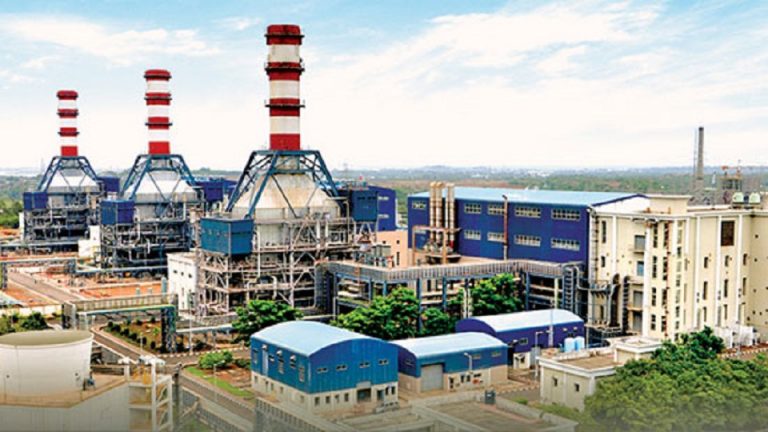
Colombo (LNW): Generator Two at the Norochcholai Coal Power Plant, which was recently shut down due to maintenance work, will be restored and reconnected to the national grid at 8 pm tonight (15).
The Generator Two at the Plant was shut down on August 08 due to an issue, and about 270 megawatts were lost from the national grid as a result, the Ceylon Electricity Board (CEB) said.
Meanwhile, the Unit Three of the Plant was also shut down for a period of 100 days from June 13, for a scheduled major overhaul maintenance work, the CEB added.
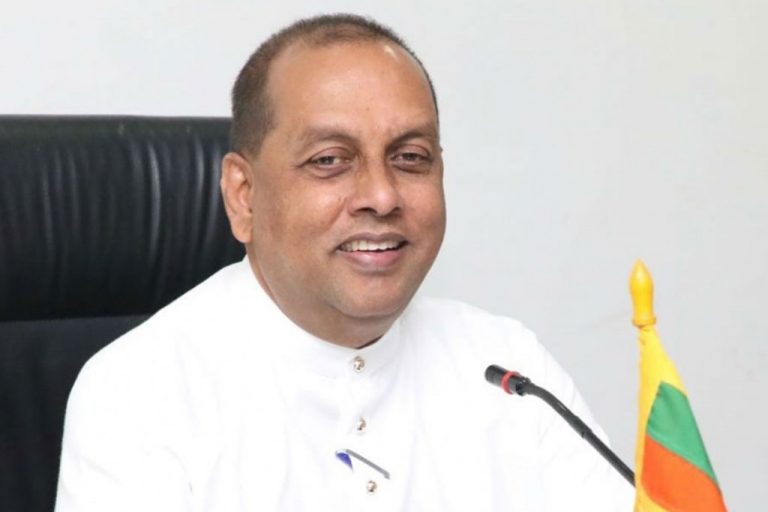
Colombo (LNW): A proposal seeking compensation for crop damages occurred due to the prevailing drought condition will be presented to the Cabinet of Ministers next week, revealed Agriculture Minister Mahinda Amaraweera.
The government of Sri Lanka intends to provide compensation for the cultivation lands which at the moment are entirely or partially damaged due to the drought situation, the Minister pointed out, adding that he verbally presented facts pertaining to the matter to the Cabinet yesterday (14).
Colombo (LNW): Sri Lanka Telecom has suffered a net loss of Rs. 2.1 billion at Group level in the second quarter of FY23 as against a profit of Rs. 1.96 billion a year ago.
At Company level the loss was Rs. 1 billion in comparison to a profit of Rs. 4.2 billion in 2Q of FY22.
For the first half, Group loss was Rs. 1.16 billion as against a profit of Rs. 4.6 billion. At Company level the loss was Rs. 401 million in comparison to a profit of Rs. 8.3 billion.
In a statement SLT said the 2Q loss was due to cost escalations and impairment of Long-Term Evolution (LTE) assets. SLT PLC staff costs account for 36.8% of Operating Costs.
The statement said while SLT PLC had 2.4% (Rs.400 million) revenue growth, Mobitel recorded 9.3% (Rs.1,066 million) de-growth during Q2 of FY23 compared to Q2 of FY22.
Group revenue, therefore, decreased by 2.8% (Rs.763 million) from Q2’22 to Q2 of FY23. SLT PLC revenue increase was driven by growth in Broadband, IPTV, and Enterprise revenue streams.
However, such increase was slowed down due to decrease in International Transit revenue (90.3%, Rs. 614 million) during Q2 of FY23,
SLT PLC revenue growth was primarily hindered due to delay in monetisation of fibre network and customer churn.
Revenue de-growth in Mobitel was due to significant decline in subscriber base. Subscriber base contracted by 1 million from June 2022 to June 2023.
Group Opex increased by 15.1% (Rs. 2,513 million) in Q2 of FY23 compared to corresponding quarter in previous year.
Group EBITDA dropped by 31.9% (Rs. 3,276 million) during Q2 of FY23 due to decrease in Mobitel EBITDA by 61.9% (Rs. 3,064 million).
Accordingly, Group Operating Profit, PBT and PAT were also decreased by 92.7% (Rs. 3,121 million), 161.3% (Rs. 6,039 million) and 208.0% (Rs. 4,076 million) respectively.
SLT Group’s revenue growth was stagnant for the 1st half of 2023 to record Rs. 52.7 million, a 0.4% degrowth compared to the same period last year. At a company level, SLT revenues grew by 6.4% to Rs. 34.6 billion for the 1st half of 2023.
Colombo (LNW): Former top Google executive Mo Gawdat is to visit Sri Lanka during which he will discuss the future of AI.
Cinnamon Hotels and Resorts will welcome Mo Gawdat, the former Chief Business Officer of Google [X], for a profound keynote discussion on the future of AI and organization happiness, at Cinnamon Lakeside Colombo on 28 August.
With his expertise in navigating Al and its journey, he will sit down for a meaningful conversation here in Sri Lanka, to explore the entity while questioning ‘what is the future of technology and human performance?’.
Thus, ‘Mindful solutions with Mo Gawdat’ will be a well-timed initiative by Cinnamon to set forth a thought-provoking discussion on the succession of AI and the necessity of steering the said bandwagon of AI to optimize its potential while simultaneously balancing its use in the evolving technological landscape, organizers of Ex Google executive’s visit said.
Additionally, he would be exploring organisational happiness, a discovery he pursued preceding a 30-year career in technology. Gawdat began a quest on the meaning of happiness, digging deep into its related literature and discussing the topic with those who can lead insights with regard. This led to his international best-selling book,
Solve for Happy: Engineer Your Path to Joy and later initiated the #OneBillionHappy campaign, a self-driven mission to make one billion people happy.
Three years ago, he launched his chart-topping podcast, Slo Mo: A Podcast with Mo Gawdat, a weekly series of extraordinary interviews that explores the profound questions and obstacles people all face in the pursuit of purpose and happiness in daily life.
In 2021, Mo published his second book, Scary Smart: The Future of Artificial Intelligence and How You Can Save Our World, a roadmap detailing how humanity can ensure a symbiotic coexistence with AI when it inevitably becomes a billion times smarter than humans.
While his latest book, That Little Voice in Your Head: Adjust the Code That Runs Your Brain (2022), counter compliments his previous book with a comprehensive user manual for optimally using the human brain to thrive and avoid suffering.
Cinnamon Hotels & Resorts Colombo Area Vice President Kamal Munasinghe said: That in the spirit of progress, Cinnamon recognises the importance of embracing AI discussions across all industries.
And as an emerging nation, it is crucial to grasp the full spectrum of AI’s impact, both positive and negative, and leveraging advanced tech tools and aim to foster meaningful conversations that pave the way for responsible AI adoption.
“Cinnamon Lakeside Colombo is thrilled to welcome Mo Gawdat, an internationally renowned business leader and keynote speaker, to Sri Lanka. By hosting such events, we demonstrate Sri Lanka’s potential as a leading destination and showcase our ability to embrace cutting-edge technology,” Munasinghe added.
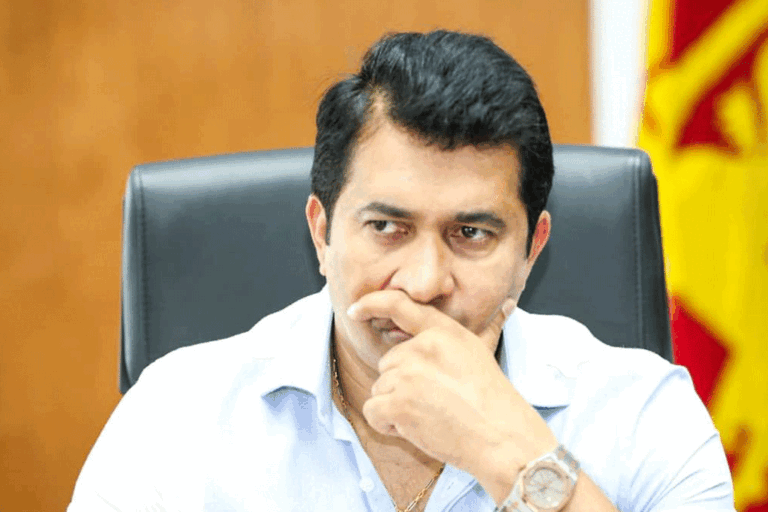
Colombo (LNW): While revealing that the total value of non-performing loans of all 30 banks functioning in Sri Lanka currently is Rs 1.4 trillion, the State Minister of Finance Ranjith Siyambalapitiya assured that steps would safeguard the economy.
“It is the banks that safeguard the country’s economy. More than 60 per cent of the total deposits in banks in Sri Lanka are less than Rs 5,000. Most of the deposits in banks are held by the poor people of the country. Therefore, the government will always safeguard them.” the State Minister told Parliament.
“Banks have recovered only a total of Rs 17 billion through Parate Execution during the past few years. Parate execution right is the rights given to banks to recover non-performing loans by auctioning assets which the borrowers had kept as collateral when obtaining loans.
Banks have the legal rights to perform Parate execution to recover loans more than Rs 5 million,” the State Minister said.
Sri Lanka’s banking sector is now saddled with additional pressure from the ever increasing non-performing loans given to covid-19 hit businesses and individuals under government’s relief scheme, finance ministry data underlined.
The coronavirus outbreak coupled with economic crisis and the resultant prolonged business disruptions have made it impossible for borrowers to repay their loans given under the scheme resulting bank’s credit profiles twisted to the down side, several general managers of leading banks disclosed.
Some of these banks are facing multiple challenges at present, including muted loan growth, margin declines amid lower interest rates, and rising loan-impairment charges due to asset-quality pressures, they claimed.
Asset quality in banks was deteriorating for the last 3 years. The construction sector, which the banks had the highest credit exposure to, often suffered liquidity shortages as a result of the delays in receivables from the state sector.
The banks experienced the construction-related non-performing loans (NPLs) rising. In addition, the tourism sector was impacted due to economic crisis.
There was a sharp increase in NPLs of banks with the expiration of the moratorium period,” general manager of a leading bank said.
According to latest Finance Ministry data, a massive sum of Rs. 1.6 trillion with accumulated interest as at March 31 2023 has to be repaid to the local banking sector by business enterprises, SMEs and individuals, hit by Covid -19 and subsequent economic crisis.
It has been indicated that non-settled loans obtained by affected business owners and persons under concessionary terms in five stages are now amounting to Rs1.6 trillion and it was 15.65 percent from the total debt stock.
Sri Lanka’s small and medium businesses are forced to default loans taken at a low interest of 7 percent at that time as the interest rates have been increased to 13 percent pushing them into in more trouble.
Colombo (LNW): Young Lankan Entrepreneurs has taken measures to boost bilateral trade ties between Sri Lanka and Egypt to an ambitious target of $ 40 million by 2024.
The Chamber of Young Lankan Entrepreneurs (COYLE) recently convened a special forum uniting key stakeholders to deliberate on strategies to boost bilateral trade ties between Sri Lanka and Egypt to achieve this ambitious target.
The focus of the forum held in July revolved around COYLE’s commitment to nurturing trade links with Egypt, highlighting the potential for mutual prosperity and underlining its dedication to nurturing robust commercial connections between the two countries.
Notable attendees included the Ambassador of the Arab Republic of Egypt to Sri Lanka Maged Mosleh, and Egyptian Assistant Foreign Minister for Asian Affairs Ayman Kamel.
Egyptian Ambassador Mosleh commended COYLE’s proactive approach to strengthening trade relations and emphasised Egypt’s keenness to expand trade and commercial partnerships with Sri Lanka. His sentiments aligned seamlessly with COYLE’s mission to promote mutual growth and facilitate robust economic cooperation between the two countries.
An integral point of discussion centred on revitalising the export of Ceylon Tea to Egypt. In the past, Ceylon Tea held a dominant position in Egypt’s market, but over time, it faced stiff competition from players representing other countries.
This combined with collective shortcomings on both sides unfortunately led to Ceylon Tea losing its market-leading position in Egypt. Thus, COYLE emphasised the need to regain Ceylon Tea’s market leadership and called for collaborative efforts between Sri Lanka and Egypt to accomplish this feat, a call that was enthusiastically supported by the Egyptian delegates.
According to the Export Development Board (EDB), Egypt stands as one of the top 50 destinations for Sri Lankan exports, amounting to $ 31.27 million in trade in 2022.
Concurrently, Sri Lanka imported goods worth $ 13.34 million from Egypt during the same period, solidifying Egypt’s position as a noteworthy import source for the country.
In 2022, Sri Lanka’s major exports to Egypt included desiccated coconut, tea, rubber tyres and tubes, knitted fabrics, woven fabrics, men’s outerwear, transport equipment, defatted coconut, and packaging materials, showcasing the diverse potential for collaboration between the two nations’ industries.
The forum acknowledged historical trade ties between the two nations while addressing recent challenges faced by Sri Lankan exporters trading with Egypt. Payment-related issues were a significant concern, particularly for the tea industry.
The lack of formal trade agreements was also highlighted, prompting discussions on expanding trade potential through new trade pacts and agreements.
In response to the hurdles encountered in exports to Egypt, the EDB reported a decline of 13.41% in Sri Lanka’s exports to Egypt compared to the previous year, with imports from Egypt experiencing a 69.44% decline due to import restrictions imposed during the 2022 financial crisis.
COYLE expressed determination to reverse this trend and promote consistent bilateral trade growth, and this was welcomed by the Egyptian delegation, and accompanied by pledges to support this goal.
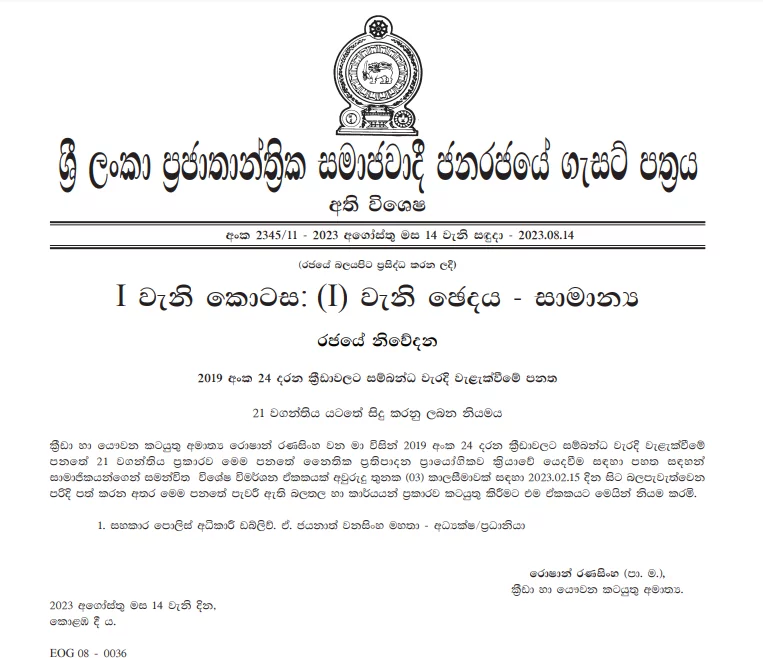
Colombo (LNW): Sports and Youth Affairs Minister Roshan Ranasinghe has issued an extraordinary gazette involving the appointment of a special investigation unit for the implementation of legal provisions of the Prevention of Offenses in Sports Act.
The appointment stands in effect for a period of three years.
Colombo (LNW): Three people were killed and eight others were injured following a fatal accident on A9 road.
The accident occurred in the Panichchakulam area along the A9 road, when a van plying from Colombo to Jaffna hit a truck early this (15) morning, Police said.
The truck collided with the van had rear-ended another truck parked in front of it, according to Police.
The deceased were identified as residents of Mulleriyawa, Wellampitiya, and Jaffna, aged 38, 46, and 58, according to Police.
Colombo (LNW): Train trips on the Main Line are experiencing delays due to an engine breakdown of a Colombo-bound train in Bulugahagoda area in Gamapaha, announced the Sri Lanka Railways.
Regrets are expressed over the inconvenience occurred to the public.
Colombo (LNW): Sri Lankan all-rounder Wanindu Hasaranga has announced that he will be retiring from Test Cricket, but expressed his continuous commitment to white ball formats.
Hasaranga has reportedly informed of his decision to the Sri Lanka Cricket (SLC), citing his desire to focus on limited overs Cricket and contribute his best to the National Team.
The Sri Lankan all-rounder is aiming to prolong his career as a specialist in limited overs formats and hopes to serve the nation to the best of his abilities, according to reports.