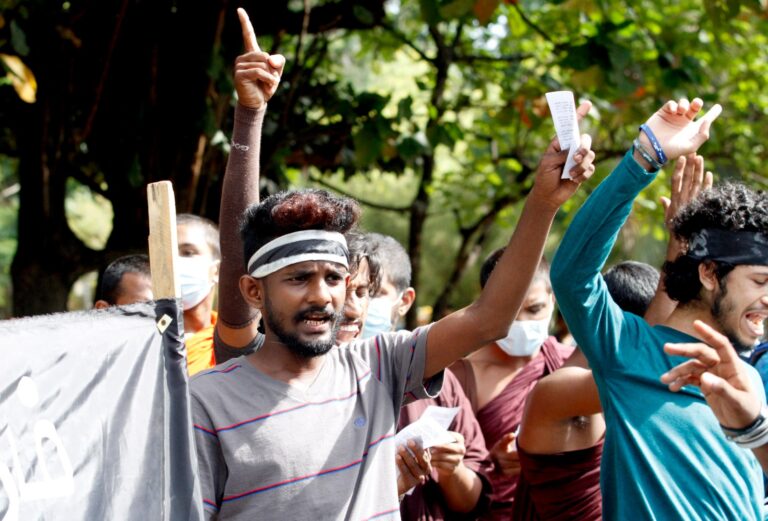
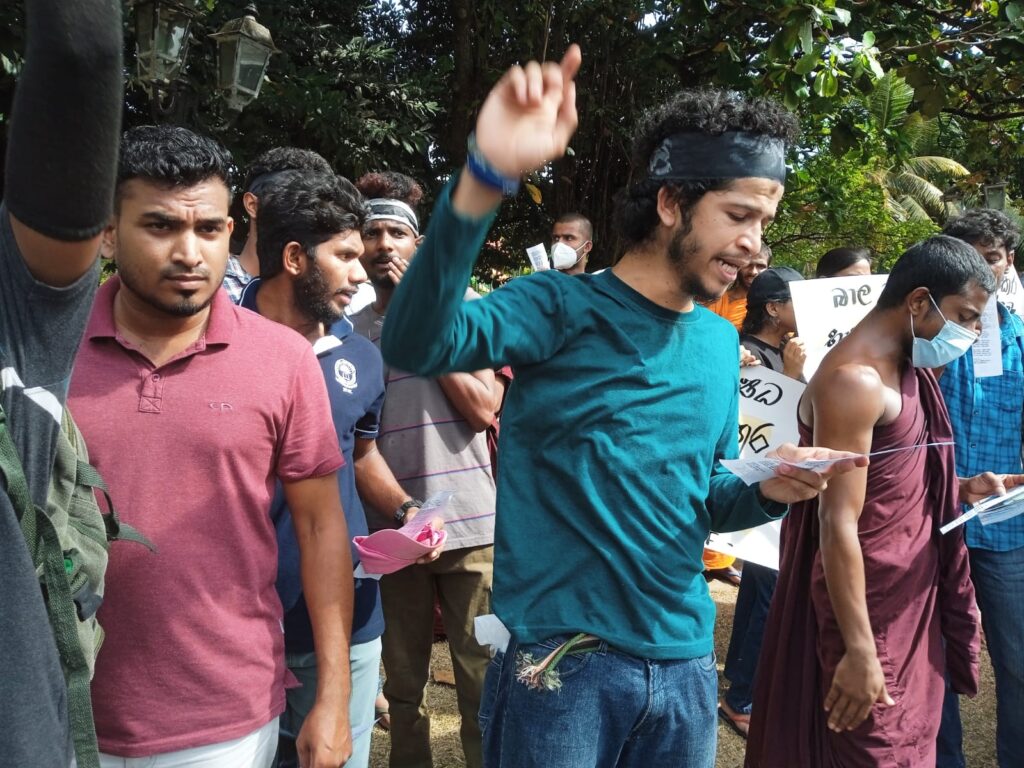
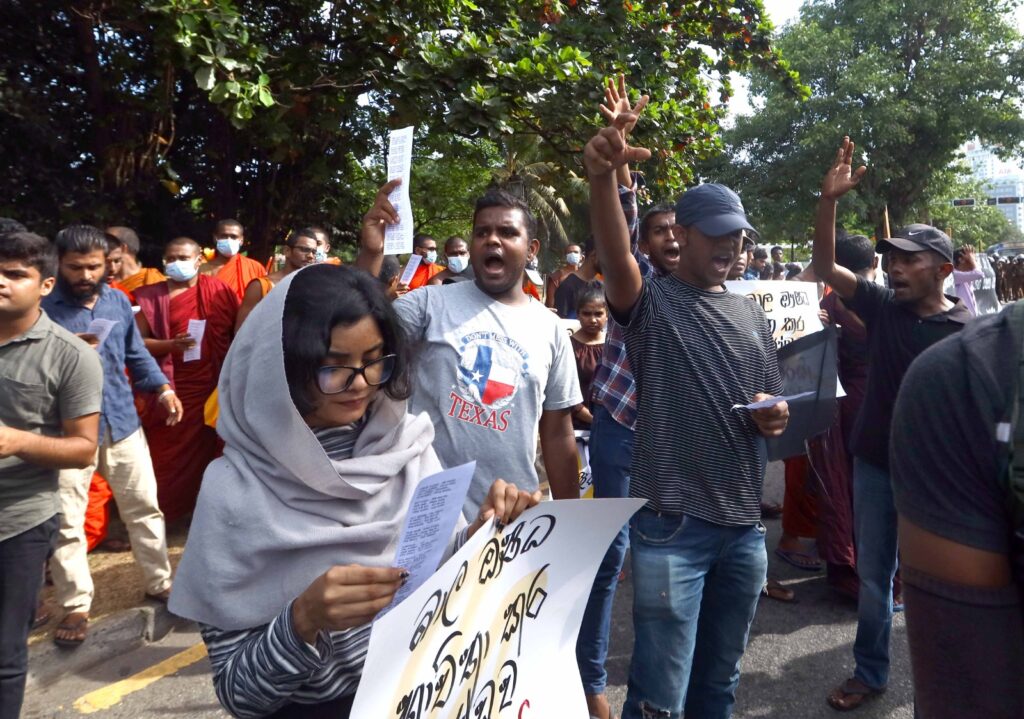
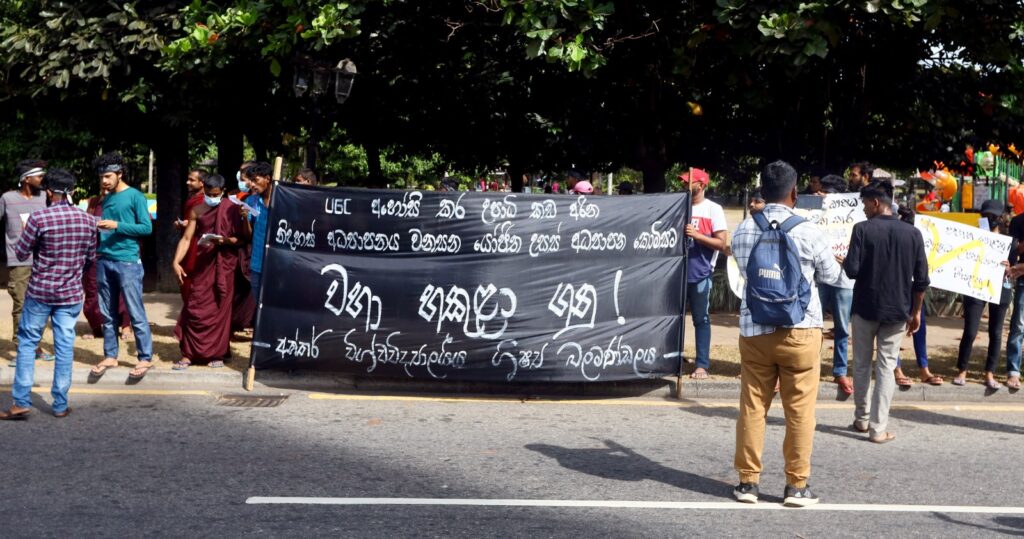
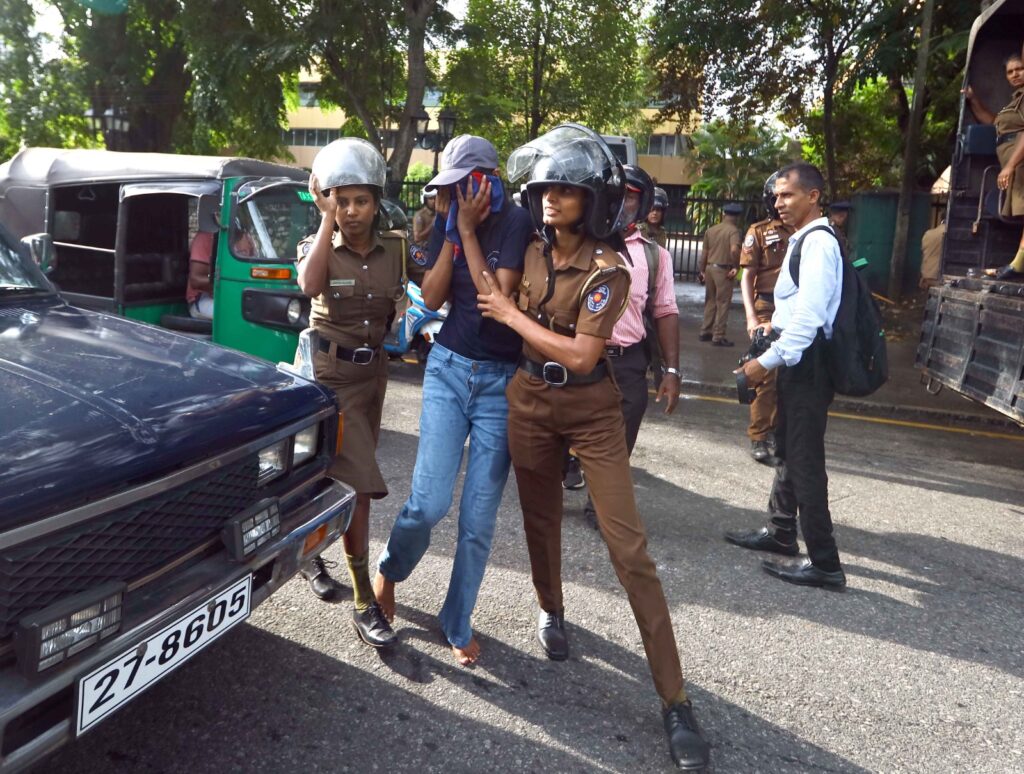
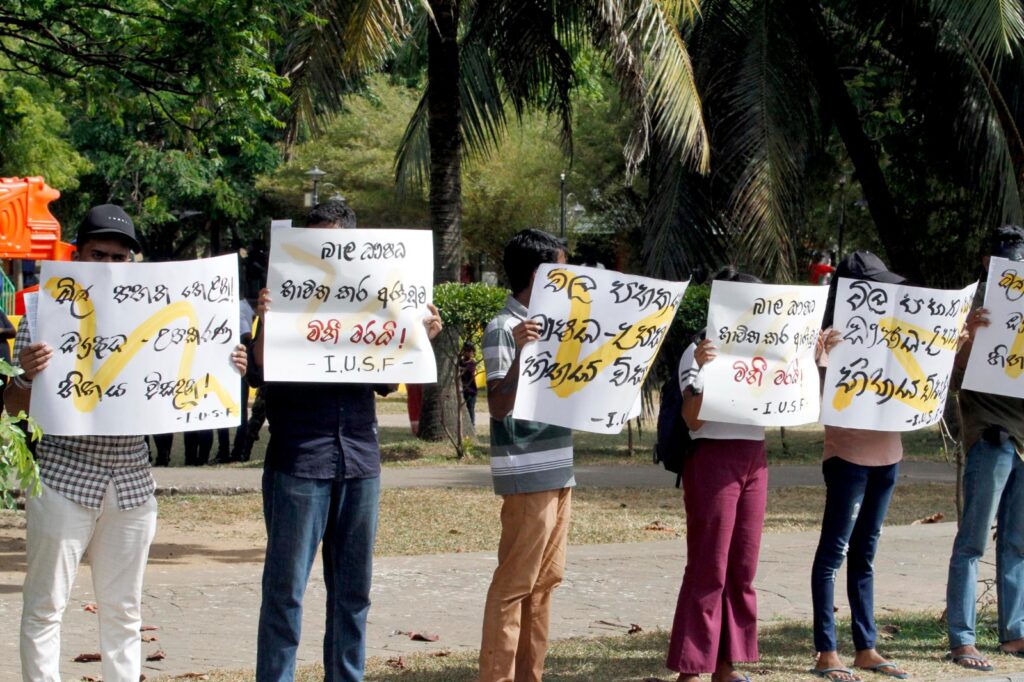
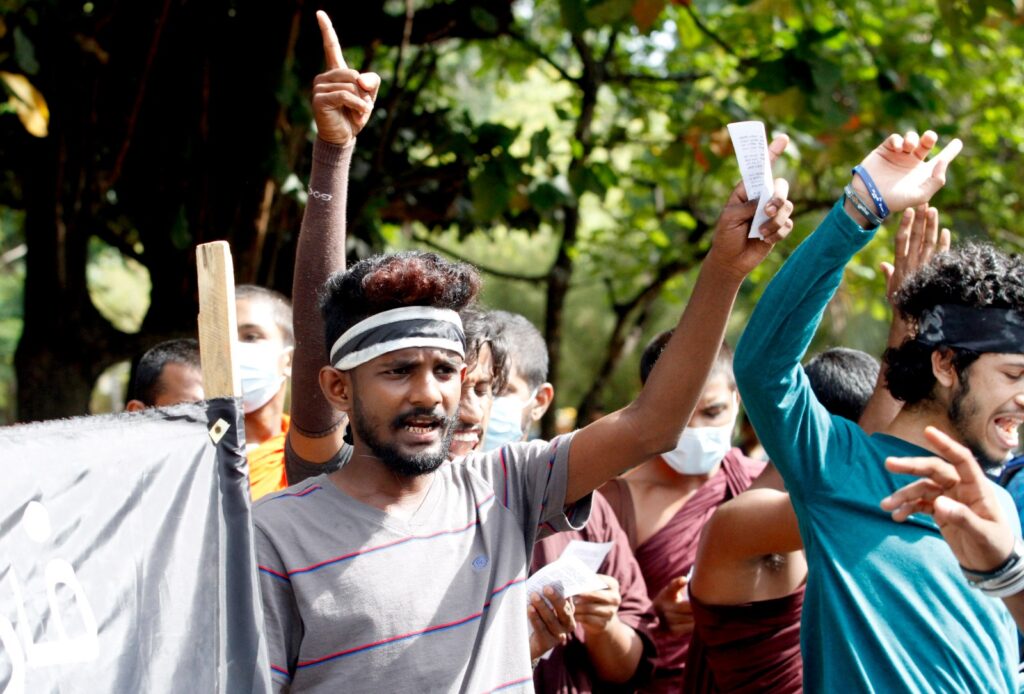
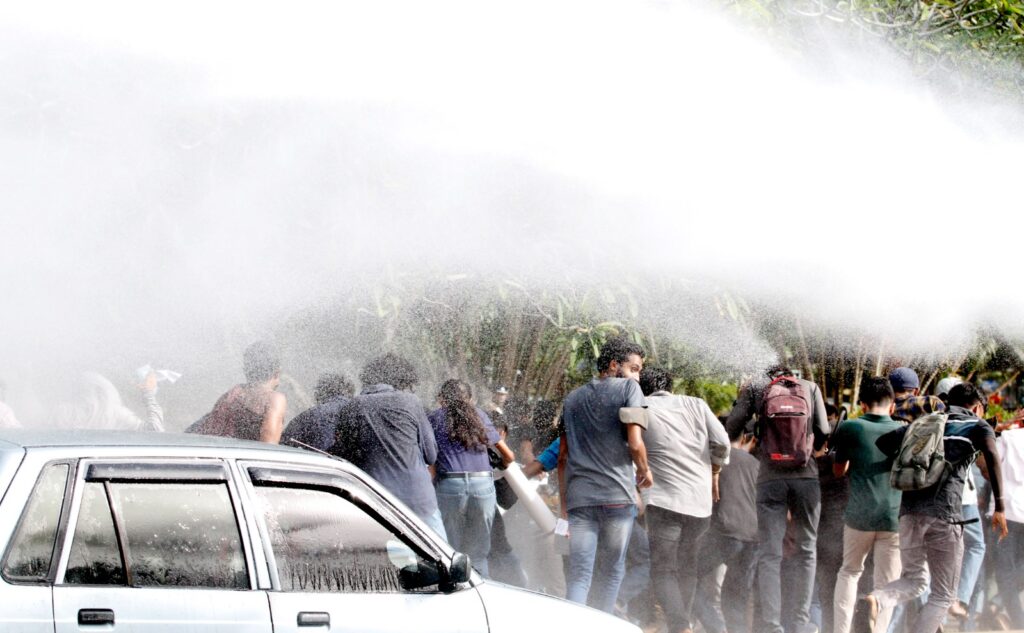
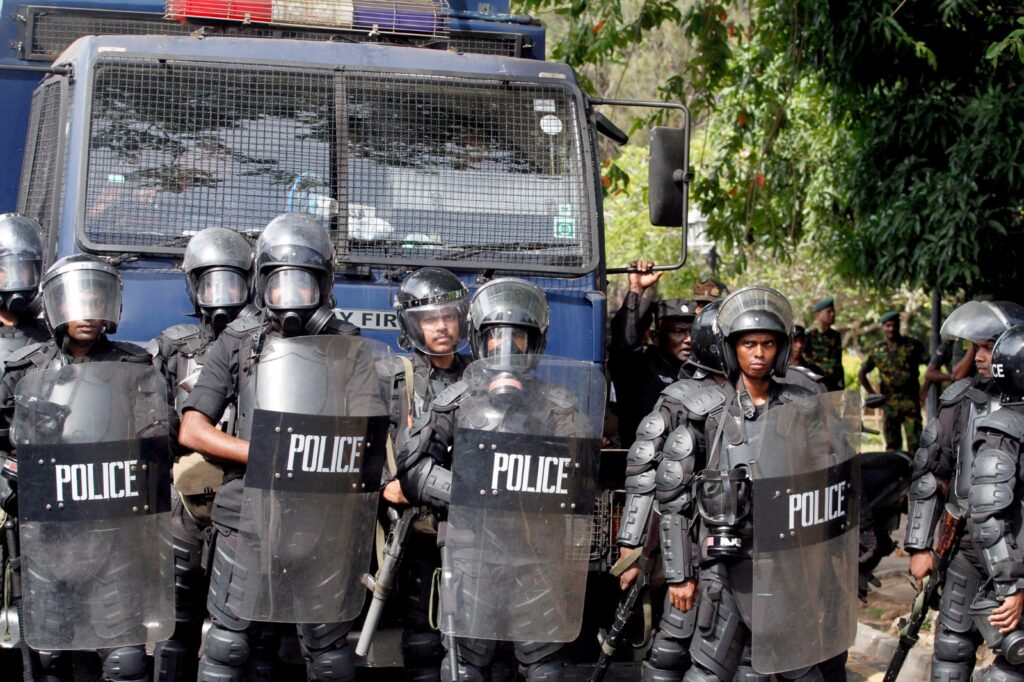
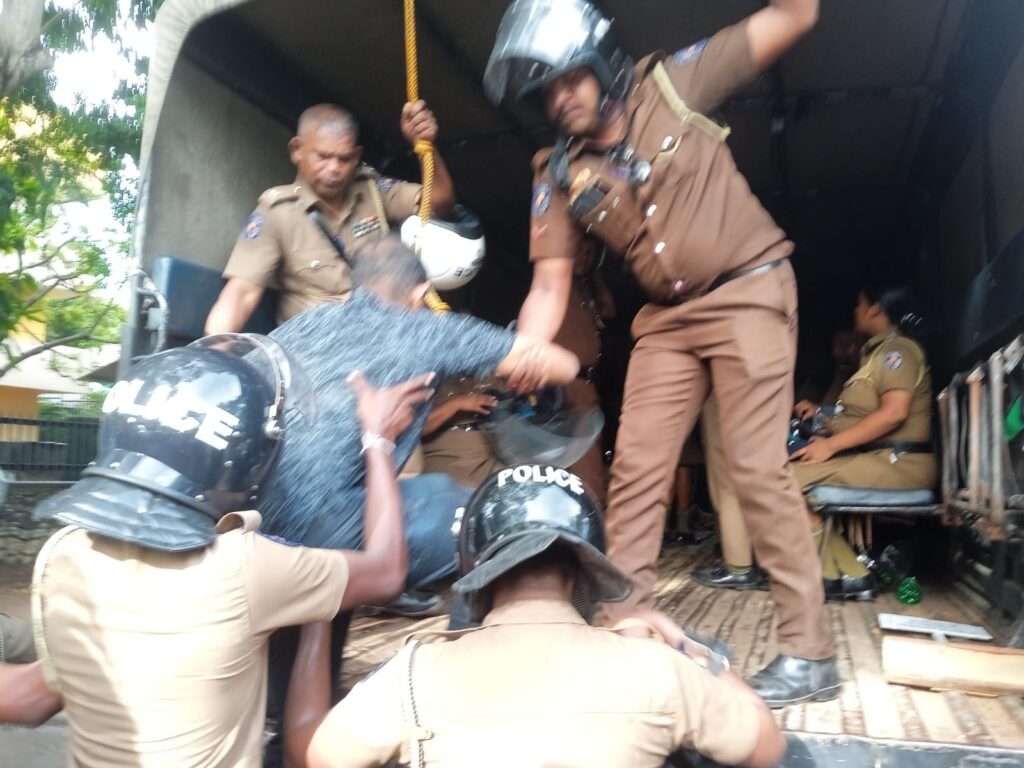
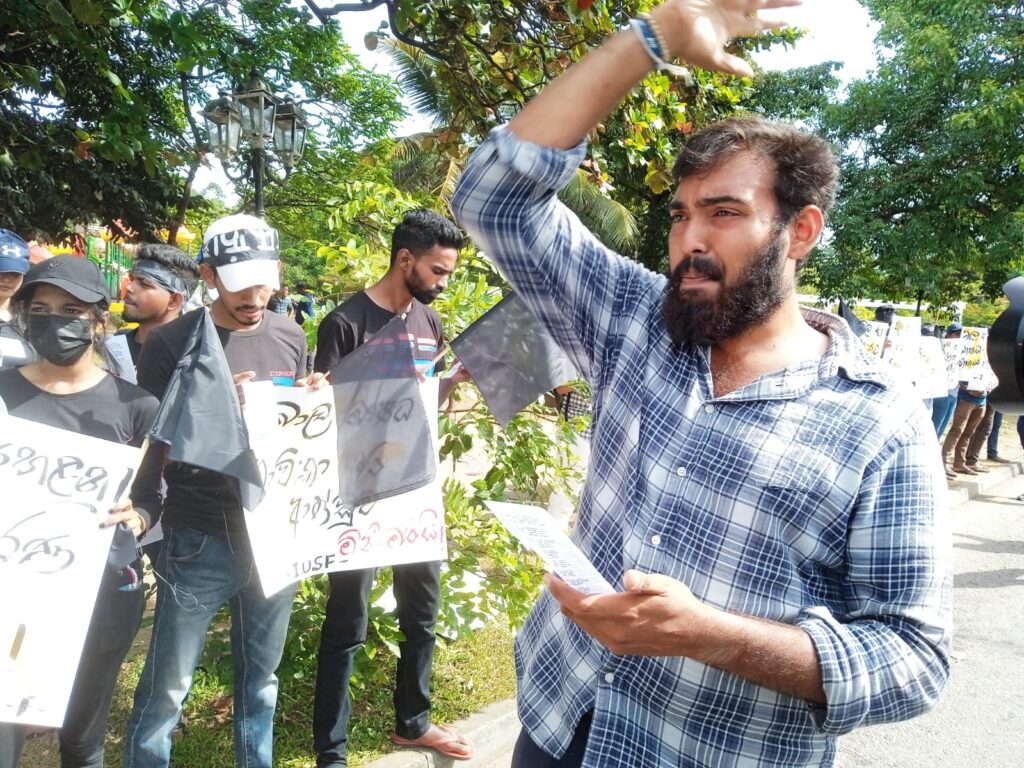
Colombo (LNW): The Police have fired water cannons to disperse a protest march organised by the Inter-University Students’ Federation (IUSF) in Colombo this (10) afternoon, and arrested several members of the Union.
The protest was organised in objection to the government’s attempt to privatise free education and grant medical degrees via three private universities, the proposed labour law and matters related to the Employees’ Provident Fund (EPF) and the International Monetary Fund’s proposals.
The Police dispersed the protest in Kirulapone ane Townhall areas, and arrested several members.
Earlier this morning, the Fort and Maligakanda Courts had issued orders barring the IUSF from entering several parts of Colombo.
PMD: President Ranil Wickremesinghe emphasized the importance of capital, particularly financial and human, for driving growth. He noted that Sri Lanka’s historical capital formation efforts had been disrupted over the years, leading to current financial struggles. He pointed out that while the country had accumulated capital up to 2019, subsequent events such as the COVID-19 pandemic and economic downturn had led to a decline in financial strength. He drew parallels with other nations, pointing out how capital influx had fuelled their growth, and called for a focus on reorganizing and restructuring the financial system.
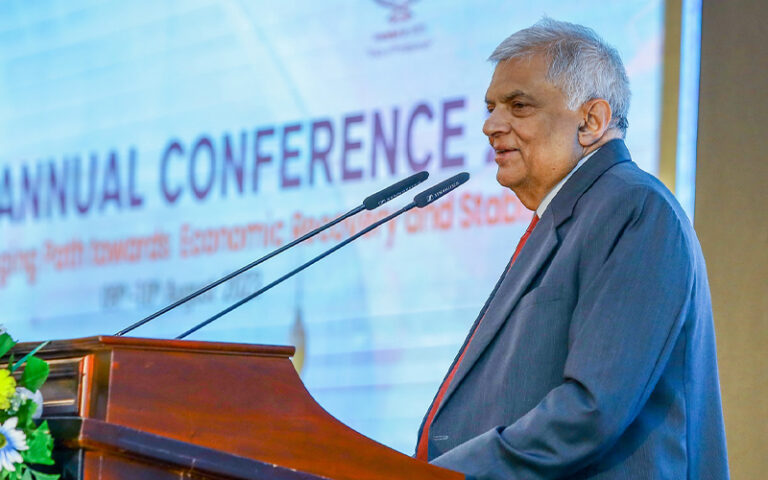
President Ranil Wickremesinghe addressed the 36th Annual Conference of the Organization of Professional Associations (OPA) of Sri Lanka yesterday (09) at the Kingsbury Hotel Colombo. He commended the nation’s collective efforts in navigating through challenging times, comparing the present to the previous year and acknowledging the reversal of gloomy circumstances. He asserted that the country now holds renewed hope and prospects for the future. The President also expressed his gratitude for the invitation and highlighted significant areas that will shape Sri Lanka’s future trajectory.
President Wickremesinghe also underscored the necessity of moving forward with confidence and determination. He highlighted the importance of constructive solutions over political distractions, cautioning against the detrimental effects of agitation without viable solutions, and mentioned the vacuum in political leadership that the nation experienced. He emphasized the need for consistent leadership to address pressing issues. However, the President praised those who stepped up to take on responsibilities and contribute to the country’s stabilization.
The President also highlighted his acceptance of leadership during the crisis and the subsequent efforts to stabilize Sri Lanka both politically and economically. He acknowledged the cooperation of various parties and individuals in these endeavours, emphasizing the critical role played by those who united for the nation’s betterment.
Turning to economic challenges, the President addressed the issue of domestic debt optimization and the potential sabotage of these efforts. He underscored the dire consequences if such endeavours were to fail, which would severely impact the nation’s banking sector and economy at large.
Addressing the issue of human capital, the President highlighted the significance of education and training. He noted the departure of skilled individuals from the country and expressed concern over the loss of professionals to other nations. He emphasized the urgent need for the establishment of vocational training centres and universities to address the skills gap and meet the demands of a competitive economy. He outlined plans to collaborate with the private sector and institutions to create a robust framework for education and training and stressed the importance of creating an environment that encourages professionals to remain in Sri Lanka.
While underscoring the importance of attracting investment, President Wickremesinghe highlighted the need for a competitive economy. He emphasized that Sri Lanka’s historical capital formation had faltered due to various reasons and underscored the importance of foreign investments and the Colombo financial zone to secure necessary funds. He stressed the role of a streamlined investment procedure and called for the development of a more appealing investment environment to compete with neighbouring countries.
President Wickremesinghe also discussed the legislative changes being proposed, including the devolution of powers to provincial councils and streamlined procedures for new universities. He mentioned plans for the establishment of multiple institutions to cater to the evolving demands of various fields. He emphasized the importance of human resource development, especially in universities, and urged the participation of organizations like the OPA to ensure the required human resources for future growth.
He emphasized that the key to Sri Lanka’s future success lies in the strategic management of financial and human capital in driving the country’s economic prosperity, marking them as pivotal factors for the nation’s future development to foster a thriving and competitive economy.
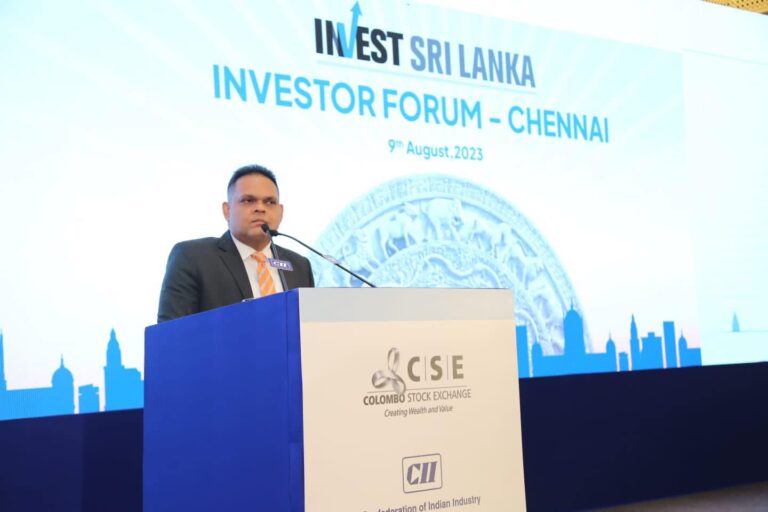
The “Invest Sri Lanka” forum was held in Chennai organised by the Colombo Stock Exchange (CSE) in partnership with Stakeholders to promote foreign portfolio investment into the Sri Lankan Stock Market by showcasing investment opportunities.
Finance State Minister Shehan Semasinghe wrote: “Pointed out that Sri Lanka will be strengthened by carrying out deep economic reforms to rectify the basic structural weaknesses of the economy and the reforms necessary to prevent the recurrence of the main causes of macroeconomic instability have been completed. By introducing new laws such as the Anti-Corruption Law, Parliamentary Budget office and the New Central Bank Act, the necessary independence, transparency and good governance in financial management have been already established.”
Further mentioned that by managing expenditure and increasing revenue a primary surplus has been achieved in the first quarter of 2023, surpassing the IMF forecasted target. This is a significant improvement from a primary deficit of 5.7% of the GDP in 2021 and the programme to achieve a primary surplus of 2.3% of the GDP from 2025 is being implemented.
Further pointed out that Sri Lanka is carrying out all necessary reforms to achieve debt sustainability and Sri Lanka is on the right path and thus it is the best time to invest to take first advantage of a market that is key to sustainable growth.
Colombo (LNW): The Police have fired water cannons to disperse a protest march organised by the Inter-University Students’ Federation (IUSF) in Colombo this (10) afternoon.
The protest was organised in objection to the government’s attempt to privatise free education and grant medical degrees via three private universities, the proposed labour law and matters related to the Employees’ Provident Fund (EPF) and the International Monetary Fund’s proposals.
The Police dispersed the protest in Kirulapone ane Townhall areas.
Earlier this morning, the Fort and Maligakanda Courts had issued orders barring the IUSF from entering several parts of Colombo.
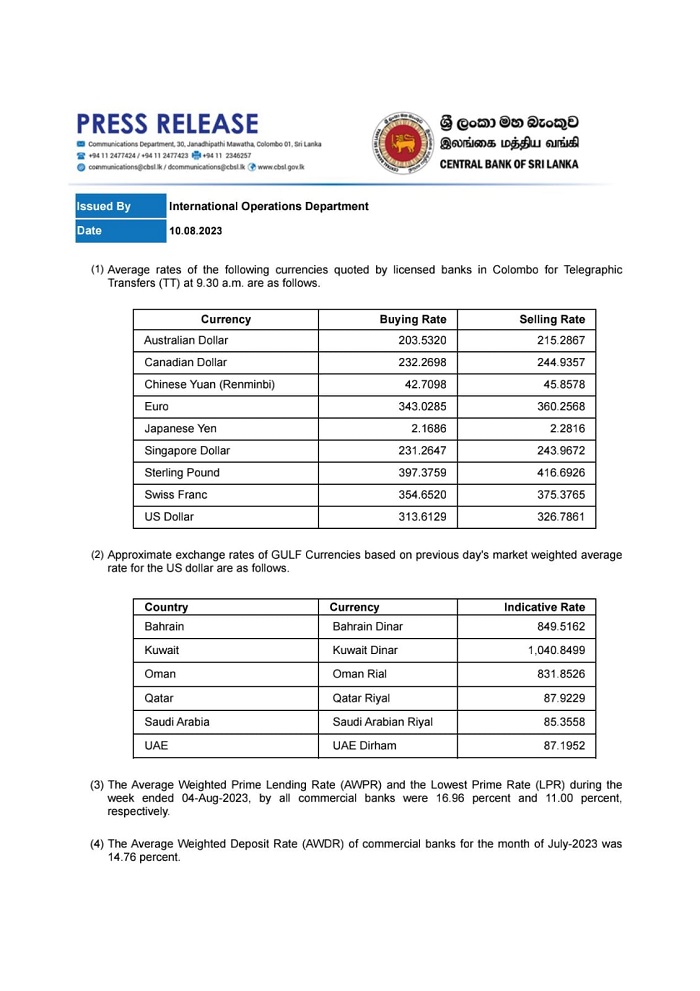
Colombo (LNW): The Sri Lankan Rupee has further appreciated against the US Dollar today (10) compared to yesterday, as revealed by the official exchange rates list issued by the Central Bank of Sri Lanka (CBSL).
Accordingly, the buying price of the US Dollar has dropped to Rs. 313.16 from Rs. 314.94, and the selling price to Rs. 326.78 from Rs. 327.52.
Meanwhile, the Sri Lankan Rupee has also appreciated against a number of other foreign currencies, including Gulf currencies.
Colombo (LNW): Ceylon Chocolates Limited, the manufacturer of Kandos chocolates, has responded to the recent allegations on Social Media involving one of its chocolate products.
The company has launched an investigation into the matter and expressed regret for the inconvenience caused to the public, and asserted the customers its ‘steadfast commitment to maintain the highest standards of quality in all its products.’
Controversy stormed in when photographs allegedly revealing a part of a human thumb inside a Kandos chocolate purchased in Mahiyanganaya area circulated on Social Media went viral, and the products of the same category were later withdrawn from supermarkets in the area.
6.3 million people, or over 30 percent of Sri Lanka’s population, are “food insecure” and require humanitarian assistance and of these, around 5.3 million people are either reducing meals or skipping meals, and at least 65,600 people are severely food insecure, revealed the joint FAO/WFP Crop and Food Security Assessment Mission (CFSAM) report 2022.
An overnight decision to transition from chemical fertiliser to organic fertiliser without an adequate alternative for farmers and stopping the fertiliser subsidies given by the government to the farmers left the agriculture sector in limbo, resulting two consecutive seasons of poor harvests in 2021-2022 leading to a nearly 40 percent drop in paddy production, posing a serious threat to food security in Sri Lanka.
To tackle the vulnerability of the food security system in the country under the above circumstances, the Food and Agriculture Organisation of the United Nations (FAO) together with the government of Sri Lanka, and with €4 million in funding from the European Union (EU) launched an innovative project – RiceUP.
FAO together with the Ministry of Agriculture and the Mahaweli Authority of Sri Lanka (MASL) implements the project “Responding to the Economic Crisis: Protecting smallholder farmer livelihoods through safe and efficient use of fertiliser and quality seed for better productivity in paddy farming” which aims to respond to the economic crisis in Sri Lanka by protecting smallholder farmer livelihoods through safe and efficient use of fertiliser and quality seed for better productivity in paddy farming.
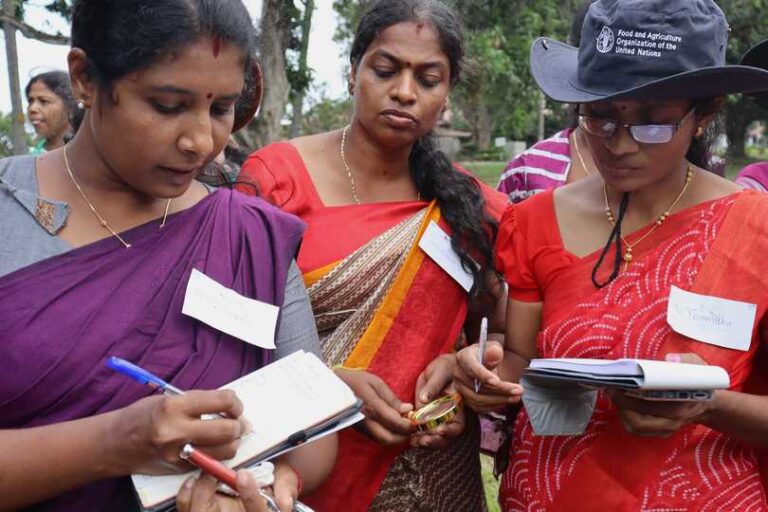
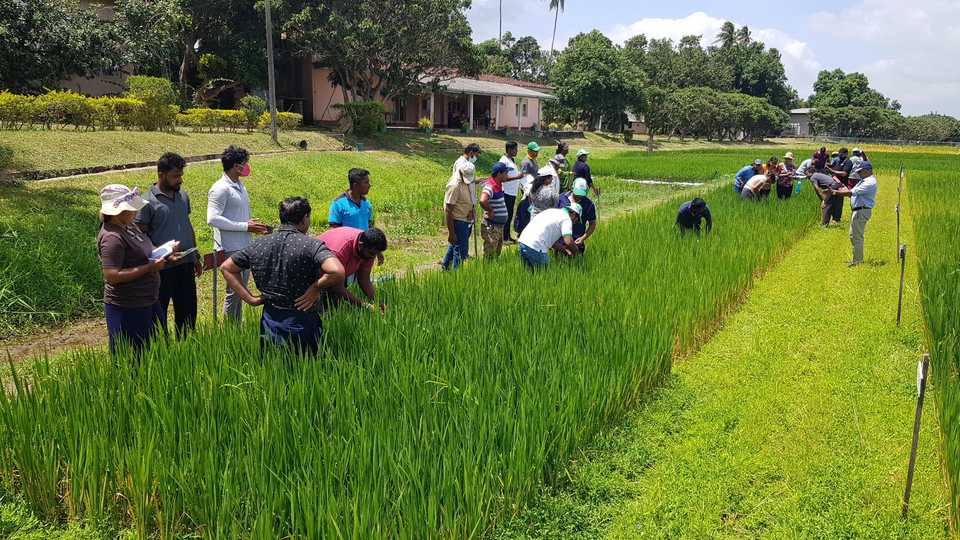
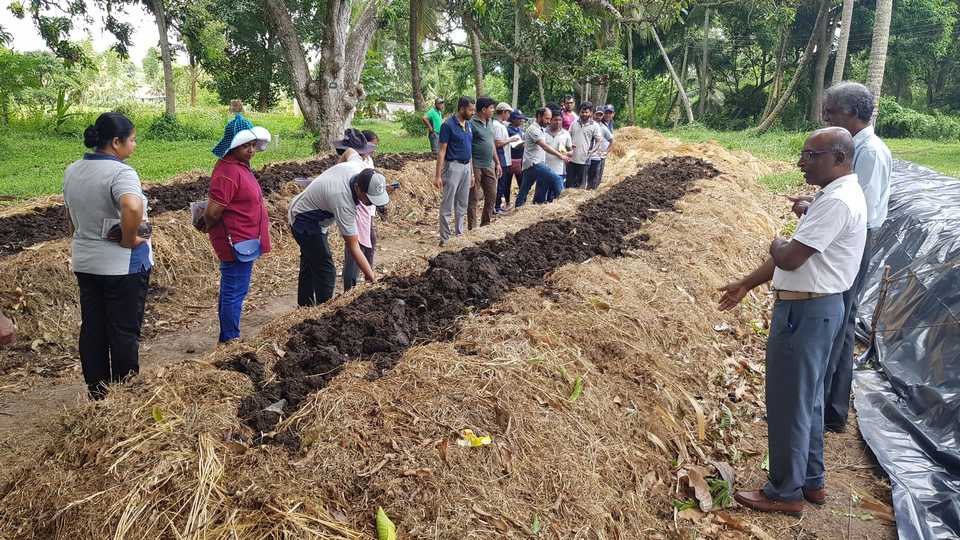
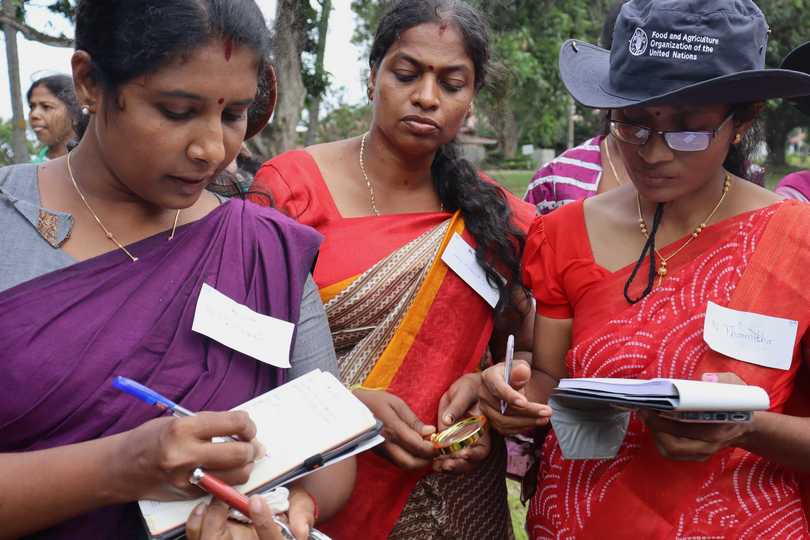
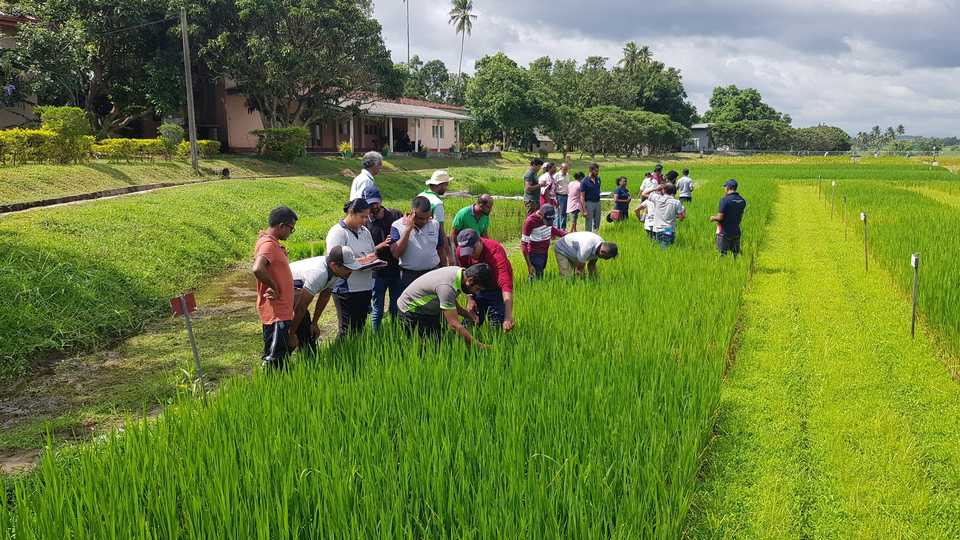
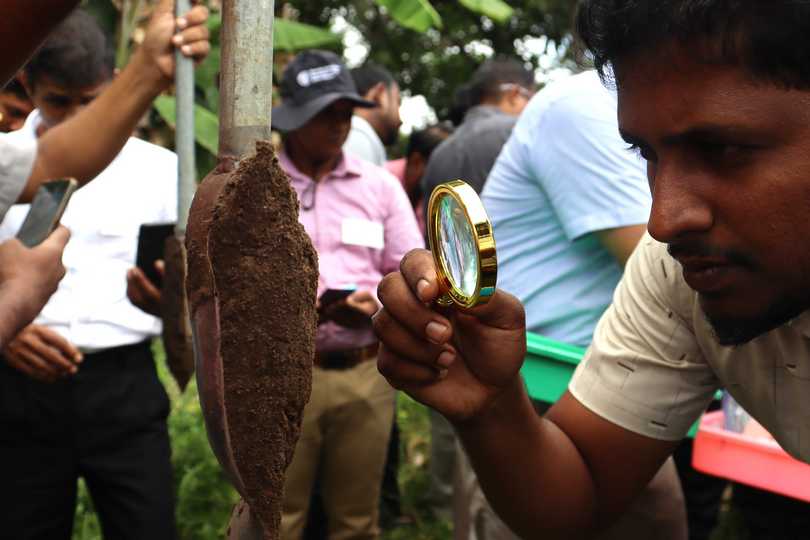
As a step in capacitating key stakeholders in the agriculture sector on best practices, FAO has embarked on a training programme for 300 Agriculture Extension Officers (AEOs) on Integrated Plant Nutrient Management (IPNM) across four key rice-growing districts in Sri Lanka namely: Ampara, Badulla, Hambantota, and Polonnaruwa. These AEOs will then act as facilitators for the Farmer Field Schools (FFS) where farmers will be trained to adopt good practices for sustainable rice cultivation. The training will equip the AEOs with the necessary skills and knowledge to guide paddy farmers on soil management and the optimal use of organic and chemical fertilisers to enhance crop yield while reducing chemical fertiliser dependency.
The Training of Facilitators (ToF) is being conducted at the Rice Research and Development Institute, Batalagoda from 19th July to 18th August 2023. 7,500 farmers are expected to directly benefit from the FFS facilitated by the trained AEOs. The Training Manual, outlining technical IPNM content and structured learning exercises has been developed collaboratively with international and national consultants of FAO, the Department of Agriculture, MASL, and the University of Peradeniya. This manual will be instrumental in guiding the implementation of both the ToF and the FFS.
IPNM is a sustainable land management practice that ensures soil quality, prevents degradation, and maximises crop productivity while safeguarding the environment. FAO’s induction to IPNM and the provision of urea fertiliser to smallholder farmers in selected districts, are a combined response to the challenges faced by farmers in accessing essential fertilisers and maintaining food security. By adopting IPNM and more efficient use of urea fertiliser, smallholder paddy farmers can reduce costs and improve productivity, leading to better profitability and resilience to future shocks.
The trained AEOs will be instrumental in facilitating the FFS in these four districts guiding and training the farmers on IPNM practices. FFS is an effective farmer training approach which was introduced to Sri Lanka in 1994. In Sri Lanka, FFS has been widely adopted to promote sustainable farming practices, increase agricultural productivity, and address various agricultural and environmental challenges. The FFS typically involves a group of 25 farmers who come together to learn, share experiences, and collectively experiment with new agricultural techniques and sustainable management of soil while increasing the fertiliser efficiency. FAO expects that the AEOs will facilitate this process in FFS in their respective districts motivating the paddy farmers to raise productivity while collectively finding solutions to the problems in paddy cultivation.
Through the implementation of sustainable farming practices, including the safe and efficient use of fertiliser and quality seeds, and promoting FFS to be adapted among the AEOs to promote IPNM strategy, RiceUP aims to enhance productivity, food security, and livelihoods in Sri Lanka’s paddy farming sector. Together with its partners, FAO remains dedicated to ensuring the long-term sustainability and resilience of Sri Lanka’s agriculture sector.
PMD: President Ranil Wickremesinghe revealed that Sri Lanka’s intention to join the Regional Comprehensive Economic Partnership (RCEP) is poised to materialize following the conclusion of credit optimization initiatives. Additionally, the President announced plans to initiate negotiations for the establishment of free trade agreements with corresponding ASEAN member countries.
President Wickremesinghe’s statement underscores the country’s determination to bolster its economic connectivity within the broader Asian region. The President affirmed his alignment with the future vision of ASEAN for the Indo-Pacific area, pledging full support for the advancement of this strategic perspective.
These proposed collaborations highlight Sri Lanka’s commitment to fostering economic cooperation and trade linkages, which are poised to open new avenues for growth and development. The President’s statements reaffirm the nation’s readiness to engage actively in regional economic partnerships to realize its economic ambitions.
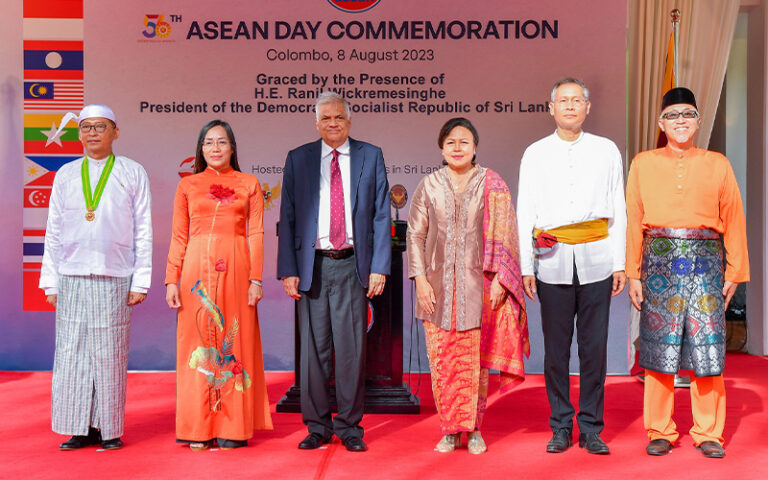
President Ranil Wickremesinghe made these remarks while addressing the 56th anniversary of the Association of South East Asian Nations (ASEAN), Tuesday (08) at the Embassy of the Republic of Indonesia, Colombo.
The President reflected on Sri Lanka’s economic history and the decisions that had impacted the nation’s progress. He acknowledged the efforts of former President J. R. Jayawardena, his father and other influential figures who advocated for opening up the economy and joining ASEAN during its founding years as well as the Shenoy reforms for liberalization of the economy and to ensure the welfare program stayed within the needs. The President remarked that turning down the opportunity to join ASEAN led to a period of socialist economic policies and limited capital formations, hindering the country’s growth potential.
The President further explained the circumstance that converted a source of profound regret. He said subsequently, over a span of three years, Sri Lanka transitioned into a socialist economic model, leading to the fragmentation of the capital formations, and has continued to progress in this trajectory. “However, we find ourselves not entirely emancipated from the constraints imposed by that economic paradigm. At present, despite being positioned as one of the world’s major economies, poised to potentially ascend to the ranks of the fifth or fourth largest expanding economies, we now confront the disheartening reality of shaking on the brink of bankruptcy after 55 years of existence.”
President Ranil Wickremesinghe praised the association’s remarkable growth and success as one of the world’s largest economic blocks. The President also expressed regret that Sri Lanka had declined an invitation to join ASEAN in its early years, citing missed opportunities for economic prosperity. However, he highlighted a new policy approach to collaborate closely with ASEAN to enhance Sri Lanka’s position in the global arena.
In light of Sri Lanka’s recent financial challenges and the need for rejuvenation, President Wickremesinghe expressed a renewed commitment to pursue closer ties with ASEAN. He acknowledged the strong cultural and historical connections between Southeast Asia and Sri Lanka, underscoring the importance of building on these relations to drive economic and political cooperation.
Amid the looming threat of bankruptcy, Sri Lanka has embraced the challenge head-on, aiming to move forward with inspiration drawn from proactive problem-solving approaches. This involves looking to the accomplishments of the ASEAN and enhancing collaboration with the organization. This strategic approach is firmly rooted in the government’s policies. This approach, championed by the current administration, is expected to resonate with other governments as well. The nation’s enduring connections with Southeast Asia stand as evidence of its strong regional ties, perhaps only second to its affiliations with India and Maldives. Cultural bonds are exemplified through shared practices like Mahavihara Buddhism in countries such as Myanmar, Thailand, Cambodia, and Laos, and historical links like that between the Srivijaya Empire and Sri Lanka and Anuradhapura further reinforce these ties.
Numerous historical interconnections further validate these relationships, including interactions with Malays and historical associations with the Srivijaya Empire. Even shared colonial history, notably during the Dutch Empire’s reign in places like Batavia (present-day Jakarta, Indonesia), adds another layer of commonality. This collective historical backdrop lays the groundwork for nurturing cultural, economic, and political relations.
Consequently, as Sri Lanka faces impending financial challenges, it is actively strengthening its bonds with ASEAN nations. These alliances are poised to facilitate the pursuit of shared interests and the fostering of regional cooperation. In the pursuit of progress, Sri Lanka seeks not only to capitalize on its robust ties with Southeast Asia but also to build upon them for a mutually prosperous future.
One of the key aspects of the new policy is the initiation of free trade agreements with ASEAN countries. President Wickremesinghe revealed that Sri Lanka has already forged a crucial trade agreement with Singapore and is actively negotiating with Thailand. The President also announced that Sri Lanka has applied to join the Regional Comprehensive Economic Partnership (RCEP), recognizing the potential of this vast trade block comprising major economies like China, Japan, and Korea. He emphasized that Sri Lanka’s economic focus should now turn towards the east, given the rapid development in that region.
President Wickremesinghe has urged the Minister of Foreign Affairs to facilitate regular ministerial-level meetings with ASEAN countries to address mutual concerns and discuss the way forward. He stressed the importance of upholding the ASEAN outlook on the Indo-Pacific and supporting Indonesia’s maritime fulcrum concept.
The President emphasized the need for unity and cooperation, especially in the face of challenges like climate change. Recognizing the urgency of the climate crisis, President Wickremesinghe called for joint efforts between ASEAN countries and Sri Lanka to combat climate change and explore the potential of the blue economy.
President Ranil Wickremesinghe expressed gratitude for the invitation to the ASEAN anniversary event and reaffirmed Sri Lanka’s commitment to fostering closer ties with ASEAN and reiterated that collaboration and friendship among nations would be the driving force for shared progress and prosperity in the region.
Meanwhile the Indonesian Ambassador, Dewi Gustina Tobing, highlighted the significance of the ASEAN viewing Sri Lanka as a vital partner for regional cooperation. With a collective population exceeding 670 million, roughly 8.8% of the global populace, ASEAN represents the world’s third-largest market.
The Ambassador emphasized the importance of fostering stronger ties between ASEAN and Sri Lanka. The aim is to promote people-to-people connections and create a closer link between the two regions.
Ambassador Tobing reiterated ASEAN’s aspiration for a peaceful, stable, and prosperous Indo-Pacific region. The organization seeks to establish an inclusive regional architecture that ensures the safety and security of all member nations.
The envoy expressed ASEAN’s openness to engaging with countries interested in strengthening their presence in the Indo-Pacific. The organization is committed to collaborating with Sri Lanka to ensure the nation benefits from ASEAN’s development. Dynamic and multifaceted partnerships are recognized as pivotal in this pursuit.
Ambassador Tobing emphasized that shared values, principles, and interests form the bedrock of ASEAN’s relations with countries worldwide. These include bolstering a rule-based international order to tackle common challenges spanning economic, security, health, environmental, cultural, and climate change aspects.
In light of the 57th year of ASEAN’s existence, the envoy reaffirmed solidarity among member nations to collectively address challenges and create more opportunities for growth. The partnership between ASEAN and Sri Lanka is poised to flourish, evolving positively over the years and decades to come.
Speaker Mahinda Yapa Abeywardena, Ministers Bandula Gunawardena, Keheliya Rambukwella, Vidura Wickramanayake, Nasir Ahmed, Jeevan Thondaman, Nalin Fernando, State Minister Taraka Balasuriya and other officials including Malaysian High Commissioner Badli Hisham Adam. , Ambassador of Thailand Poj Harnpol, Ambassador of Vietnam Ho Thi Thanh Truc, Ambassador of Myanmar Mr. U Han Thu, Mr. Sagala Ratnayake, Senior Adviser to the President on National Security and Chief of Presidential Staff and many dignitaries including the commanders of the three armed forces attended the event.
Colombo (LNW): The Fort Magistrate Court today (10) issued an order barring the a protest organised by the Inter-University Students’ Federation (IUSF) from entering several areas in Colombo.
The protest has been organised against the government’s attempt on privatising free education in Sri Lanka, and to be commenced at 12.30 pm noon from Lipton Circus.
Colombo (LNW): The Parliamentary Business Committee is set to take a decision pertaining to the debate on the no-confidence motion against Health Minister Keheliya Rambukwella.
The Parliamentary Business Committee is scheduled to meet on Friday (11) at 10.30 am, according to reports.
The no-confidence motion against Rambukwella over the allegation of irresponsible importation of ‘substandard’ medicines and surgical equipment leading to a weakened health sector in the country was handed over to Speaker Mahinda Yapa Abeywardena by Secretary General of the Samagi Jana Balawegaya (SJB) Ranjith Madduma Banndara and MP Kavinda Jayaeardena last month, with the signatures of 45 MPs.
The recent events in the Sri Lankan Health Sector have revealed complications among patients and even deaths, due to what it was speculated by the Opposition, civil unions and a number of concerned parties as ‘substandard’ medicines and surgical equipment.