Home Blog Page 171

Prof. E. A. Weerasinghe, Founding Vice Chancellor of NSBM Green University, Honored as Most Visionary Leader – 2025 at the Sri Lankan Entrepreneur of the Year (SLEOTY) Awards

0

Prof. E. A. Weerasinghe, the Founding Vice Chancellor of NSBM Green University, was honored with the prestigious Most Visionary Leader Award – 2025 at the Sri Lankan Entrepreneur of the Year (SLEOTY) Awards 2025 by the Federation of Chambers of Commerce and Industry of Sri Lanka (FCCISL).

Prof. Weerasinghe was also conferred two Gold Awards for NSBM Green University: Gold Award in the National Extra-Large Category and Gold Award in the Western Province Extra-Large Category.

These recognitions were conferred at the Sri Lankan Entrepreneur of the Year (SLEOTY) Awards 2025, held on 29th August at Cinnamon Life. Organized annually by FCCISL, SLEOTY is regarded as Sri Lanka’s most prestigious national-level recognition for leaders who demonstrate entrepreneurial excellence in productivity, innovation, financial strength, management, employment generation, technological advancement, competitiveness, and sustainability.

Prof. Weerasinghe’s recognition as Most Visionary Leader Award – 2025 stands as a powerful tribute to his visionary leadership in bridging the critical gap in higher education opportunities in Sri Lanka. Through the establishment of NSBM Green University, he pioneered a transformative educational model that has reshaped the nation’s higher education landscape and continues to make a profound contribution to Sri Lanka’s education sector and economy.

Banks Warn of Phishing Scams as Lending Sentiment Rises amid Recovery

0

Sri Lankan banks have raised fresh red flags over the growing threat of phishing scams targeting online banking users, even as a new Central Bank report shows that lending sentiment in the financial sector remains at its strongest in over a year.

In notices issued this week, several commercial banks cautioned customers about fraudulent emails and text messages containing links to counterfeit websites designed to steal personal and financial data. These fake portals, often mimicking official bank sites, use slight spelling variations or unusual characters to mislead unsuspecting users.

Banks have urged customers to remain vigilant by avoiding suspicious links, directly typing official web addresses into their browsers, and verifying URLs carefully before entering login credentials. They also stressed the importance of reporting any suspicious activity immediately.

While online security remains a pressing concern, the banking industry is experiencing renewed optimism on the lending front. According to the Central Bank of Sri Lanka’s (CBSL) latest Credit Supply Survey, the sector’s Willingness to Lend Index climbed to 59.6 in the second quarter (Q2) of 2025, the highest level in five quarters, reflecting strong economic and financial stability.

The index, a gauge of banks’ confidence in extending credit, has been supported by lower interest rates, stable liquidity positions, and rising consumer confidence. Loan demand in Q2 expanded on the back of higher wages, resumed vehicle imports, and improved business activity. Private sector borrowing surged by Rs. 221.5 billion in June alone, pushing the outstanding stock above Rs. 8.85 trillion.

Government borrowing, by contrast, was more modest at Rs. 98 billion, while credit to public corporations fell slightly. Economists say this pattern indicates that the recovery is being driven primarily by private sector demand rather than state-led borrowing.

Non-performing loans (NPLs) also eased in Q2, supported by lower interest rates, stronger collections, and flexible repayment schemes. Defaults fell across corporate and SME sectors, though retail borrowers showed slight stress due to higher living costs. CBSL expects the declining trend in NPLs to continue into Q3 as financial conditions remain favourable. Loan rejections, too, fell in Q2 as borrower quality improved, and are expected to ease further.

Despite this upbeat picture, the Central Bank cautioned that the Willingness to Lend Index may dip to 41.4 in Q3, reflecting a moderation after the recent surge. Lending to Small and Medium Enterprises (SMEs) also remains constrained. Although Government-backed concessional loan schemes and guarantees are in place, disbursement has been minimal. Officials have criticised banks for being overly cautious in extending risk capital to smaller firms, leaving them on the margins of the recovery.

The CBSL has emphasized that this cycle of credit growth is structurally different from past recoveries. Unlike earlier periods when excess liquidity was created by money printing to finance state deficits—fueling inflation and currency instability—the current surplus stems from foreign exchange purchases that boosted reserves to $6 billion by June.

Analysts say this shift, coupled with fiscal reforms and stronger central bank independence, could mark a turning point for Sri Lanka’s financial sector. However, with phishing scams on the rise and SME financing lagging, banks face a dual challenge: protecting customer trust while ensuring credit reaches all corners of the economy.

Sri Lanka Risks Blue Economy Future as Government Fixates on Politics

0

Sri Lanka lost a rare opportunity to gain vital scientific knowledge on its dwindling marine resources after the UN Food and Agriculture Organization’s (FAO) research vessel 

Dr Fridtjof Nansen was denied permission to conduct a fisheries survey in Sri Lankan waters due to bureaucratic delays. The vessel, operated by Norway’s Institute of Marine Research (IMR), later proceeded to Bangladesh for its scheduled research work.

Ole Arve Misund, IMR’s Special Advisor on Sustainable Development, in an interview, stressed that Sri Lanka had missed out on crucial scientific data needed to understand the current state of its fish stocks. Since 2015,

Sri Lanka’s annual marine catch has dropped from 450,000 tonnes to around 300,000 tonnes, reflecting clear signs of overexploitation. Misund noted that such surveys are essential for building sustainable management strategies in a sector where contribution to GDP has already slipped from two percent to just one percent.

Despite this setback, Norway remains open to future cooperation, with discussions underway to bring the research vessel back to Sri Lanka by late 2026 or early 2027 through diplomatic and FAO channels.

Misund also welcomed Sri Lanka’s move to develop Standard Operating Procedures (SOPs) for foreign research vessels, noting that in the current geopolitical climate, countries must have clear and transparent frameworks to manage international cooperation in their waters.

The Norwegian expert further highlighted that Sri Lanka’s “blue economy” – spanning fisheries, aquaculture, shipping, and potential offshore resources  could play a transformative role in national development if properly managed. He pointed to Sri Lanka’s strategic location along major global shipping lanes and its potential in aquaculture, particularly shrimp farming, as key growth drivers.

However, analysts argue that Sri Lanka’s Marxist-oriented government, instead of focusing on critical economic opportunities such as fisheries and maritime resource management, has been disproportionately consumed with targeting opposition politicians and scoring political points.

This preoccupation, critics say, risks sidelining long-term policies that could secure food security, foreign investment, and sustainable livelihoods for coastal communities.

On pressing regional challenges, such as poaching by Indian fishermen, Misund suggested that Sri Lanka could strengthen its joint commission mechanism with India to manage disputes—similar to how Norway and Russia have maintained fisheries cooperation despite political differences.

While Norway’s own prosperity was built on oil exploration, Misund cautioned that Sri Lanka should carefully balance petroleum ambitions with investment in renewable energy, citing the accelerating impact of climate change. Solar power, he noted, represents a particularly strong opportunity for Sri Lanka.

Ultimately, the interview underscores a painful reality: Sri Lanka risks falling behind in harnessing its blue economy potential if governance remains mired in political theatrics instead of policy execution. The question is whether the government will continue chasing political opponents or seize the chance to rebuild the nation’s marine future.

Tariffs on Indian Goods Open Rare Opportunity For Sri Lanka

0

The United States’ decision to impose a steep 50% tariff on most imports from India – covering garments, seafood, jewelry, and carpets  has shaken South Asian trade. India, which exports around USD 86 billion annually to the U.S., faces a major setback.

But for Sri Lanka, this disruption presents both a challenge and a rare opening to strengthen its export foothold in the world’s largest consumer market.

Former ambassador to Kenya, Kana Kananathan, told reporters that “Sri Lanka sees both peril and promise” in this new trade reality. With Indian goods suddenly far more expensive, U.S. buyers will inevitably seek alternative suppliers. Sri Lanka’s apparel, seafood, gems, tea, and even IT services could become attractive substitutes, provided the country positions itself strategically.

“American firms are already scouting for new supply chains in the region. If we move quickly, Sri Lanka can capture market share and even attract fresh U.S. investment into export industries,” Kananathan said.

However, the opportunity is not without risk. Sri Lanka’s export industries are still constrained by high production costs, limited capacity, and heavy dependence on imported raw materials. Without immediate reforms and incentives, competitors such as Vietnam and Bangladesh could outpace Sri Lanka in capitalising on India’s tariff-hit.

Adding to the challenge is the political climate at home. The newly elected government has yet to announce any coherent trade or tariff policy. Instead, its early days have been dominated by high-profile corruption investigations targeting former ministers and even a past president.

Analysts warn that while accountability is important, failure to focus on urgent economic policy risks letting this trade opportunity slip away.

Kananathan stressed that Colombo must act with urgency. “This is the right time to roll out targeted incentives tax breaks, concessional loans, simplified export approvals, and dedicated export-ready zones.

At the same time, the government should launch a global promotion drive to position Sri Lanka as the natural alternative to India for U.S. buyers.”

 Trade diplomacy will also be critical. Securing stronger ties with Washington, while carefully managing relations with India, Russia, and China, will determine whether Sri Lanka can sustain these gains.

“The door has opened  but it won’t stay open forever,” Kananathan warned. “If Sri Lanka mobilises investment and scales up production quickly, this could be a game-changing moment. If not, others will step in, and Sri Lanka will lose yet another opportunity.”

Commercial Bank Crosses USD 1 Billion Market Capitalisation Milestone

0

The Commercial Bank of Ceylon PLC has become the first Sri Lankan bank to achieve a market capitalisation exceeding USD 1 billion, a milestone celebrated with the ceremonial ringing of the bell at the Colombo Stock Exchange (CSE) yesterday.

Commercial Bank Chairman Sharhan Muhseen, Managing Director/CEO Sanath Manatunge, members of the board, and senior management joined CSE officials at the event, marking what the Bank described as a defining moment in its growth journey.

The bank’s market capitalisation crossed the USD 1 billion threshold on 19 August 2025, when its share price rose to Rs.196.75, compared to Rs.144.75 at end-December 2024. This achievement positions Commercial Bank as the third listed Sri Lankan company to reach billion-dollar territory.

“This milestone transitions us into the league of large-cap companies, strengthening our visibility in global capital markets and paving the way for inclusion in institutional portfolios and index funds,” Chairman Muhseen said. “It enhances our access to capital and credit markets, enabling us to pursue innovation, expand opportunities, and create greater shareholder value.”

CSE Chairman Dimuthu Abeyesekera hailed the achievement as a boost to both the market and the country. “Commercial Bank now joins just two other companies on the CSE to cross this threshold. Every billion-dollar company strengthens market credibility, widens investment appeal, and places Sri Lanka more prominently on the global investment map,” he noted.

CEO Sanath Manatunge highlighted that the bank’s success reflected investor confidence and the resilience of its business model. “We have always aimed for equitable growth—balancing national priorities, customer aspirations, and shareholder value creation. This recognition is the outcome of our long-term commitment to delivering sustainable results,” he said.

Commercial Bank’s rise comes on the back of strong financial performance. In the second quarter of 2025, it became the first private sector bank in Sri Lanka to surpass Rs.3 trillion in assets, supported by an 8.88% Group-level and 8.66% Bank-level growth in the first half of the year.

The bank has also been ranked the second most valuable brand across all Sri Lankan sectors, and the most valuable private sector bank brand in 2025, by global brand valuation agency Brand Finance.

Commercial Bank holds a series of “firsts” in the sector: it was the first local bank to be listed among the world’s Top 1000 banks, is the largest private sector lender and SME financier, and is Sri Lanka’s first 100% carbon-neutral bank. It also operates the widest international footprint among local banks, with operations in Bangladesh, the Maldives, Myanmar, and Dubai, alongside its islandwide network of branches and digital platforms.

Exhibition on Godawaya Shipwreck to Open in Colombo

0

The U.S. Embassy in Sri Lanka, together with the Central Cultural Fund’s Maritime Archaeology Unit, will host an exhibition and symposium from September 3 to 5 at the BMICH Cinema Lounge, Colombo, showcasing the documentation and preservation of artifacts from the Godawaya Shipwreck — one of Sri Lanka’s most significant maritime heritage sites.

The initiative also underscores the Indo-Pacific’s crucial role in maintaining peace and security, while safeguarding sovereign rights — a shared priority for both the United States and Sri Lanka.

The exhibition will open to the public at 11 a.m. on September 3, and will remain open from 10 a.m. to 5 p.m. on September 4 and 5.

Sri Lankan Parliamentary Delegation Concludes Visit to India

0

A Parliamentary delegation from Sri Lanka, led by Health and Mass Media Minister and President of the Sri Lanka–India Parliamentary Friendship Association, Dr. Nalinda Jayatissa, visited India from August 26 to 30 at the invitation of the High Commission of India in Colombo.

The delegation comprised Plantation and Community Infrastructure Deputy Minister Sundaralingam Pradeep, MPs Rauff Hakeem, Ravi Karunanayake, G.G. Ponnambalam, Sivagnanam Shritharan, J.C. Alawathuwala, Dr. Kavinda Heshan Jayawardhana, Thanura Dissanayake, Ruwanthilaka Jayakody, Sunil Biyanwila, Riyas Farook, Hiruni Wijesinghe, Ambika Samivel, Dewananda Suraweera, Chandima Hettiaratchi, Champika Hettiarachchi, Sudath Balagalla, Gayan Janaka and Hansa Abeyrathne, along with senior Parliamentary officials.

The programme included engagements with the Lok Sabha and Rajya Sabha, visits to the Chambers and Parliament Library, and discussions on areas such as the role of media in India, the Parliamentary committee system, higher education, public health, and Parliamentary privileges and ethics. The delegation also visited the Centre for Excellence in Health and held discussions with officials of the Federation of Indian Chambers of Commerce and Industry (FICCI).

A key highlight was a meeting with Speaker of the Lok Sabha Om Birla, who stressed that such exchanges would further strengthen bilateral relations between India and Sri Lanka, particularly in the fields of Parliamentary cooperation, health, media, and education.

Minister Jayatissa expressed gratitude for the warm hospitality extended by the Parliament of India and reaffirmed Sri Lanka’s commitment to enhancing Parliamentary diplomacy and fostering stronger people-to-people ties between the two nations.

President Stresses Strategic Approach for 2026 Tourism Pre-Budget

0

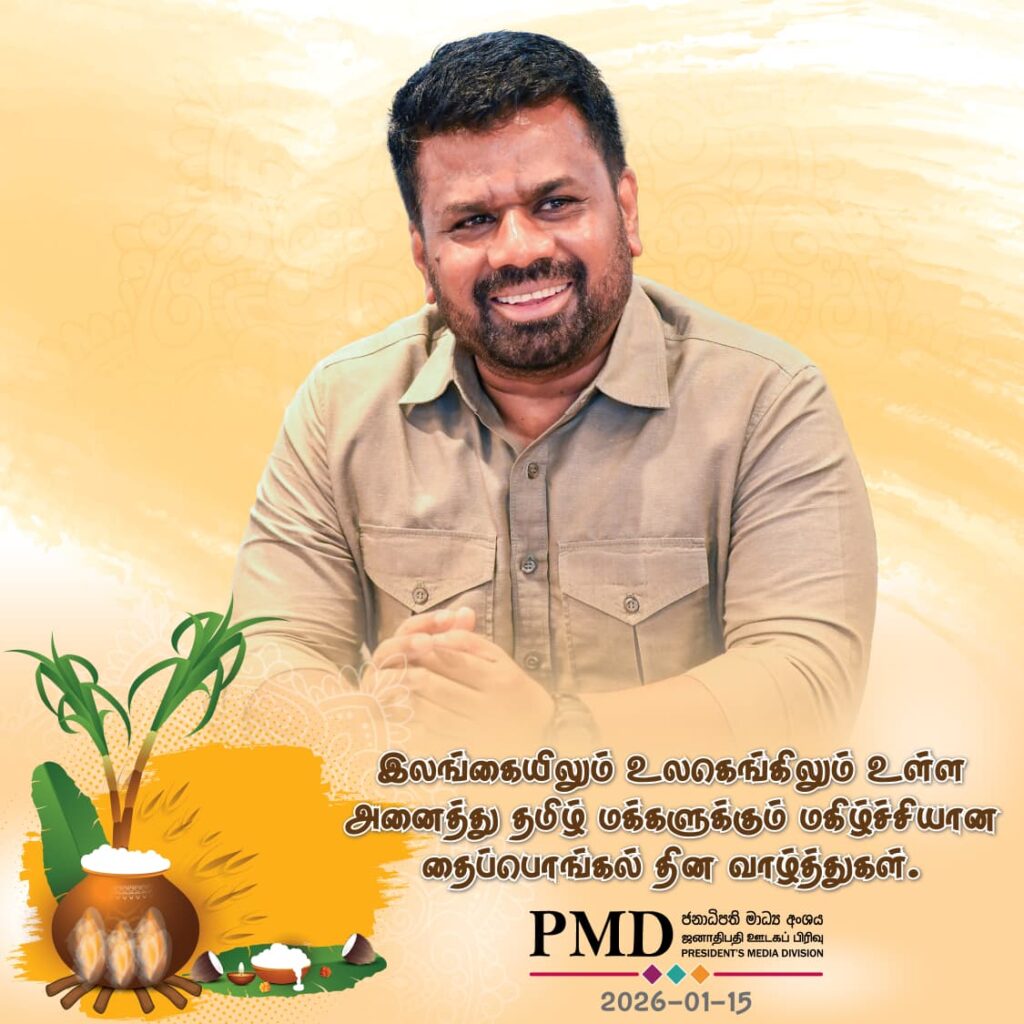
A discussion on the 2026 Pre-Budget for the tourism sector with private sector stakeholders was held yesterday (29) at the Presidential Secretariat, under the patronage of President Anura Kumara Dissanayake.

The President noted that promotional programmes alone would not be sufficient to achieve the sector’s 2026 targets, stressing the need for a new strategic programme jointly implemented by both the public and private sectors.

He invited entrepreneurs to invest in converting President’s Houses and Ministers’ official residences in locations such as Nuwara-Eliya, Anuradhapura, Mahiyanganaya and Kataragama into comfortable holiday resorts targeting foreign tourists. A formal programme to facilitate this initiative is to be launched in the near future.

During the meeting, business leaders pointed out existing challenges and shortcomings in the tourism industry, while the President urged entrepreneurs to submit proposals for advancing the sector.

Among those present were Secretary to the Ministry of Finance Dr. Harshana Suriyapperuma, Senior Economic Adviser to the President Duminda Hulugamuwa, Senior Additional Secretary to the President Russell Aponso, Chairman of the Sri Lanka Tourism Development Authority Buddhika Hewawasam, Chairman of the Export Development Board Mangala Wijesinghe, and several private sector stakeholders and business representatives.

Seat Belts Made Mandatory for Expressway Bus Passengers from August 31

0

A gazette notification making it compulsory for passengers travelling in passenger buses on expressways to wear seat belts will be issued on August 31, Transport, Highways, Ports and Civil Aviation Minister Bimal Rathnayake announced.

The Minister revealed this during a recent meeting of the Ministerial Consultative Committee on Transport, Highways, Ports and Civil Aviation, held in Parliament under his chairmanship.

He said the regulation is being introduced as part of the “Clean Sri Lanka” programme and noted that a three-month grace period will be given for the installation of seat belts in school transport buses, office transport services, leisure tour buses, and other passenger buses operating on expressways.

Minister Rathnayake highlighted concerns over the rising cost of seat belts, which had increased from Rs. 2,000 to between Rs. 5,000 and Rs. 7,000. He stressed that the Consumer Affairs Authority must monitor the price hike.

He added that public opinion had also been sought on extending the regulation to long-distance buses, with the majority of respondents expressing support. The survey, carried out by Citra Innovation Lab among 2,100 individuals including passengers, drivers, and bus owners, has already been submitted to the government, paving the way for a future extension of the regulation.

The Minister further announced that new legal provisions will soon be introduced to inspect and rate the quality of vehicle spare parts before vehicles are allowed onto expressways. Vehicles with substandard tires will not be permitted to operate, he said.

Additionally, he revealed that arrangements have been finalised to establish a welfare fund for private transport drivers, including three-wheeler and van operators, with a draft bill to be presented in Parliament shortly.

The committee also discussed the introduction of a proper mechanism for parking expressway and long-distance buses, while appointing two sub-committees to present proposals on upgrading railway services and port infrastructure.

The construction of the Kadawatha–Meerigama expressway section, scheduled to begin in September, was also reviewed during the meeting, with preparatory work reported as complete.

CBSL Governor Highlights Importance of Central Bank Independence

0

Central Bank Governor Dr. Nandalal Weerasinghe said the Central Bank of Sri Lanka (CBSL) gained formal independence with the enactment of the Central Bank of Sri Lanka Act, No.16 of 2023, which came into effect in September last year, replacing the 73-year-old Monetary Law Act (MLA).

He noted that the new Act prohibits monetary financing and places strong emphasis on financial system stability and accountability.

“The replacement of the MLA with the new CBA has incorporated greater independence and accountability in the new legislation,” Dr. Weerasinghe said, delivering the 75th Anniversary Oration of the Central Bank of Sri Lanka in Colombo, titled “Why Central Bank Independence Matters – in Crisis, in Recovery, and Beyond.”

However, the Governor pointed out that since the CBA was only enacted in September 2023, many of the stabilization measures had to be carried out under the old MLA. “This underscores an important truth: even under the MLA, stability can be achieved when the Central Bank exercises its existing independence in strong coordination with the monetary authorities,” he added.

Dr. Weerasinghe stressed that stability has provided a solid foundation for people to rebuild their lives, which were severely impacted by past economic shocks and rate cuts.

He further underscored the importance of exchange rate stability, noting that the Sri Lanka Rupee must remain a reliable store of value and a standard of deferred payments, both domestically and internationally. “This was a quality the rupee held for almost a century until 1978, similar to other currencies that maintained stability for centuries, even as anchors shifted from silver to gold, and later to the US dollar,” he said.