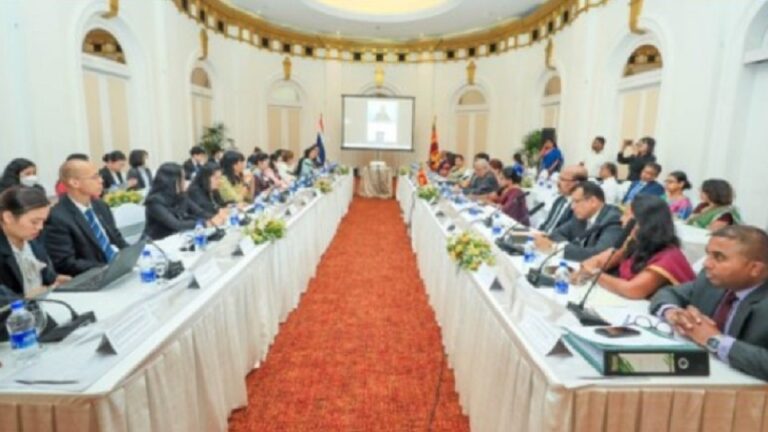
The 5th Round of Sri Lanka-Thailand Free Trade Agreement (SLTFTA) negotiations commenced in Colombo June (26), aligning with President Ranil Wickremesinghe’s vision of strengthening economic ties with major and emerging economies, with a particular focus on ASEAN countries.
K.J. Weerasinghe, the Chief Negotiator, International Trade Office (Leader of SL delegation), expressed satisfaction with the progress of the Free Trade Agreement discussions, which are proceeding according to the agreed-upon timeline. The next round of negotiations is scheduled to take place in Thailand from August 21st to 23rd, 2023. Three additional rounds are planned to conclude the Agreement by February 2024, with the signing expected to occur in March 2024.
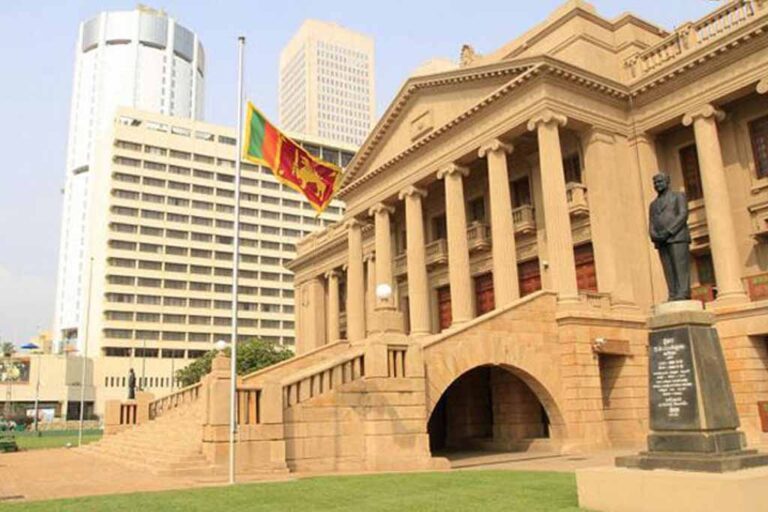
During the opening session at the Taj Samudra Hotel in Colombo, Weerasinghe welcomed the SLTFTA delegation and emphasised the Sri Lankan Government’s objective of integrating into the global economy. Sri Lanka aims to expand its economic reach first within South Asia and then extend further eastward to become a part of the Regional Comprehensive Economic Partnership (RCEP). Sri Lanka will formally request the member countries of RCEP to support its application. Given Thailand’s active participation in both ASEAN and RCEP, Sri Lanka will seek Thailand’s support in joining RCEP.
The Director General of the Department of Trade Negotiations and Chief Negotiator of Thailand, Arumon Supthaweethum, participated in the negotiations virtually. The Thai delegation, including Ambassador of Thailand in Sri Lanka Poj Harnpol, and the Sri Lankan delegation, including Kshenuka Seneviratne Senior Advisor to President on International Media, Chandani Wijayawardana Senior Additional Secretary to the President, K.J.Weerasinghe Chief Negotiator, International Trade Office (Leader of SL delegation), S.W.C. Jayamini Additional Secretary to the President (Deputy Chief Negotiator) also attended the event. The 5th round of discussions is scheduled to conclude on Wednesday (28).
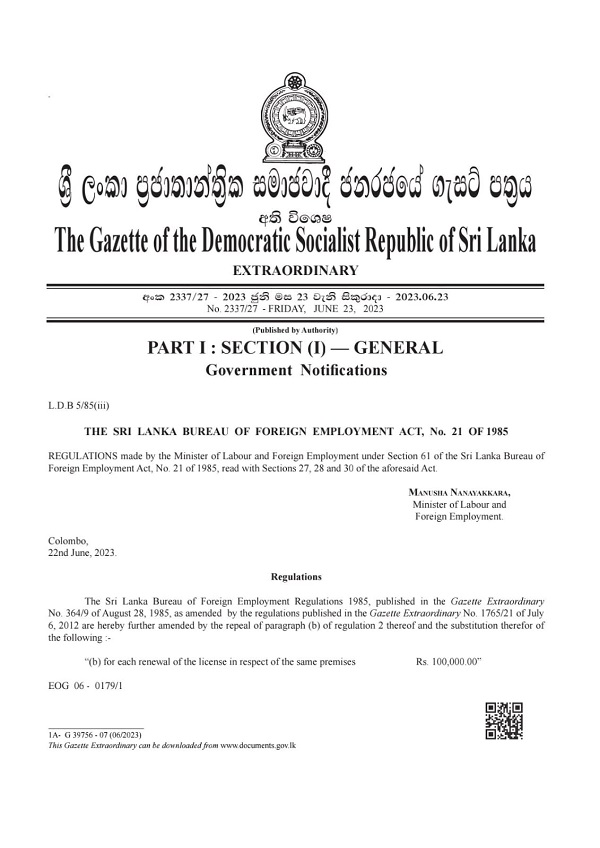
Colombo (LNW): A gazette declaration has been made by Labour and Foreign Employment Minister Manusha Nanayakkara, increasing the renewal licence fee of foreign employment agencies.
The gazette has been declared under Section 51 of the Sri Lanka Bureau of Foreign Employment Act of No. 21 of 1985.
The amendments, accordingly, will take place as follows;
The renewal fee of the licence in respect of the same premises will increase to Rs. 100,000 from Rs. 50,000.
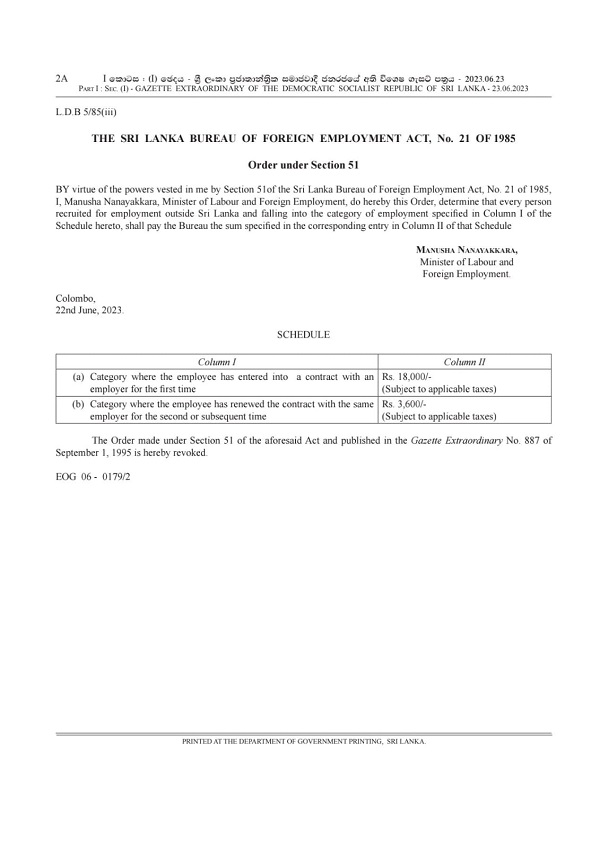
A fee of Rs. 18,000 (subject to applicable taxes) shall be paid under the category in which an employee has entered into a contract with an employer for the first time.
A fee of Rs. 3,600 (subject to applicable taxes) shall be paid under the category in which an employee has renewed the contract with the same employer for the second, or subsequent time.
COLOMBO, June 27 (Reuters) – Sri Lanka will enter into an agreement with the World Bank for $500 million in budgetary support after the cabinet approved it on Tuesday, the biggest funding tranche for the crisis-hit nation since an International Monetary Fund deal in March.
The island nation of 22 million is emerging out of its worst economic crisis in seven decades and its economy is expected to shrink 2% this year before returning to growth next year, following last year’s record contraction of 7.8%.
Reuters reported last week that the World Bank is likely to approve $700 million in budgetary and welfare support for Sri Lanka at its board meeting on June 28, out of which $200 million will be for welfare programmes.
The government said on Tuesday that funding from the lender will come in two tranches.
Colombo (LNW): Sri Lanka is set to receive a much-needed boost to its tourism industry with a hybrid grant scheme of Rs. 41 billion (USD 135 million) backed by world-renowned re-insurer, world-leading re-insurance Lloyds insurance of London and HSBC. The grant is aimed at reviving the country’s tourism industry, which has been hit hard by Easter bombings, COVID-19 pandemic and the recent economic crisis. The GOVSL or the citizens of Sri Lanka do not have to pay out of their pockets.
The initiative comes at a time when Sri Lanka is looking to exceed 4,000,000 visitors by the year 2030 and increase its foreign currency income. In 2022, Sri Lanka had just 720,000 visitors, a far cry from the over 2,300,000 tourists in 2018, before the terrorist attacks and COVID-19 pandemic. The majority of visitors to Sri Lanka come from neighbouring countries, and unfortunately, most of these visitors are uninsured. In case of medical need, these uninsured tourists receive medical services from the public medical system, which is financed by the country’s treasury. Essentially, Sri Lanka pays for these treatment costs.
This medical and travel insurance scheme for foreign visitors, allow Sri Lanka to join other countries which already implemented similar scheme such as: Thailand, Saudi Arabia, N. Cyprus, Russia, Botswana, Cameron, Dominican Republic, Egypt, Aruba, Jamika, Costa Rica, Panama. It’s also similar to the EU travel requirements. The insurance, will cover medical expenses, including all medical treatment, and repatriation if necessary. It will also cover other unforeseen events such as national catastrophe (tsunami, act of terror, pandemic and alike), flight cancellations and even lost passport.
The travel insurance scheme is expected to be a win-win situation for both tourists and the country. Tourists will have access to a comprehensive insurance scheme at a low cost, while the country will benefit from increased tourism revenue. The scheme will be funded through a premium of as low as $35, which will be included in the visitors’ flight ticket for a 30-day stay. This daily cost is less than a bottle of water in a restaurant, and visitors will have access to world-class hospitals and medical services via this scheme.
The Hybrid grant of Rs. 41 billion will be used to develop the tourism industry further and recover the costs of the travel insurance scheme. The grant will be recovered within 10 years, and the government hopes that the initiative will help attract more tourists to the country and boost the economy.
The tourism industry is a vital partner in increasing the number of visitors to Sri Lanka. The industry has suffered from Easter bombing, COVID-19 pandemic and the recent financial crisis. The SMEs in the tourism industry are currently under a financial moratorium, which ended on 31/12/22. Ending this moratorium has hindered the much-needed support to increase the number of annual visitors. The SME sector is currently at a huge risk, and financial institutions are in the process of liquidating assets to recover prevailing loan balances.
The SME sector requires immediate attention to sustain the business and support the increasing arrivals of tourists to the country. 80% of the tourism service providers are from the SME sector. This includes Small and medium scale Hotels, Villas, Home Stays, Tour Operators, Tour Guides and Restaurants (food and beverage service providers). Such SME’s can apply for concessional loans under this scheme from their local banks. GOVSL will profit from that as well.
Overall, the introduction of the travel insurance scheme backed by leading re-insurer and the connected hybrid grant scheme is a positive step towards reviving the tourism industry in Sri Lanka. The initiative is a shining example of how governments can work with the private sector to develop innovative solutions to complex problems. It is believed that this initiative will help Sri Lanka exceed its target of 4,000,000 visitors by 2030 and increase its foreign currency income.
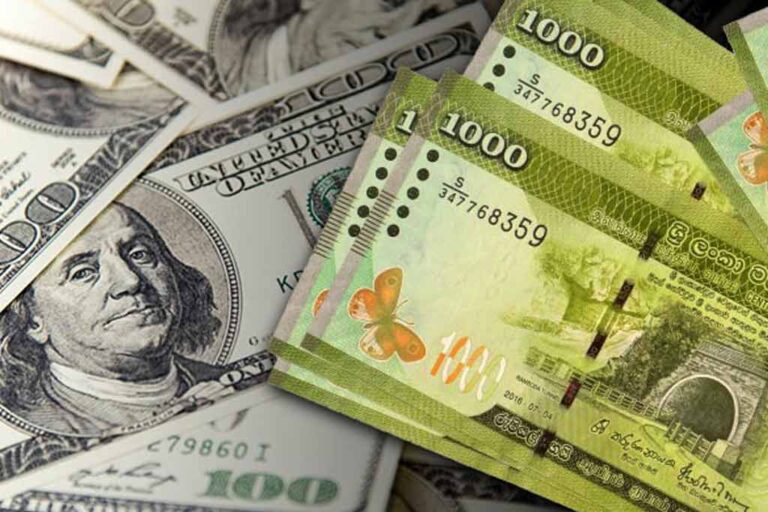
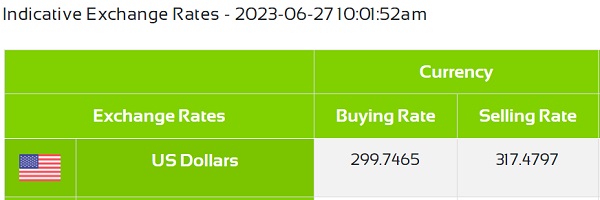
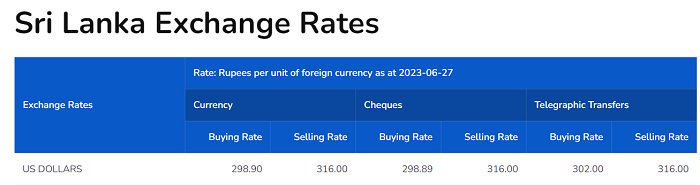
Colombo (LNW): The Sri Lankan Rupee remains steady against the US Dollar as revealed by leading commercial banks in Sri Lanka today (27), in comparison to the depreciation indicated yesterday.
At People’s Bank, the buying and selling prices of the US Dollar remains unchanged at Rs. 299.74 and Rs. 317.47 respectively.
At Commercial Bank, the buying price of the US Dollar has increased to Rs. 298.90 from Rs. 297.68, and the selling price remains unchanged at Rs. 316.
At Sampath Bank, the buying and selling prices of the US Dollar remain unchanged at Rs. 300 and Rs. 315, respectively.
JVP trade unionist Wasantha Samarasinghe & 6 others file a Fundamental Rights Petition before the Supreme Court seeking the prevention of the Govt writing off T-Bill and Bond loans obtained from EPF & ETF funds, when carrying out the intended domestic debt restructuring process: says CB Governor Nandalal Weerasinghe is hoodwinking the people by repeatedly assuring that there would not be any impact on their deposits as a result of the domestic debt restructuring.
President Ranil Wickremesinghe says Sri Lanka’s domestic debt restructuring programme will be taken up for debate in Parliament on Saturday & Sunday (1 & 2 July): a special Cabinet meeting convened for 28 June to “discuss” the domestic debt restructuring process.
Court of Appeal quashes letter issued by the Attorney General naming Senior DIG Western Province Deshabandu Thennakoon as a suspect over the attacks on “Gota-Go-Gama” on 9 May 2022: also quashes summons issued on the DIG by Colombo Fort Magistrate to appear as a suspect over the Rs.17.8mn cash found at the President’s House when protestors stormed the building.
SLPP MP Namal Rajapaksa says it’s time to restart people-to-people relationships between Sri Lanka and China to strengthen the bilateral relationship: recalls that China stood by Sri Lanka during difficult times and Sri Lanka had always adhered to the One-China policy: also says that over the last 2 decades, Sri Lanka has been a victim of geopolitics.
Police SSP Nihal Thalduwa confirms that Interpol has not been informed nor been involved in the arrest of self-styled Prophet Jerome Fernando: also confirms that an arrest warrant has been locally issued for Jerome Fernando.
Police arrest Social Media activist Piyath Nikeshala over the live-streaming of the incident of setting fire to President Ranil Wickremesinghe’s home allegedly by protesters on 9 July 2022.
Wildlife Department gives an undertaking to the Court of Appeal that steps will not be taken to export Toque Macaque monkeys from Sri Lanka to China.
Shares close at a 2-month high, with the banking and financial sectors driving the market up: analysts say fears on domestic debt optimization have eased: ASPI up 0.34% or 31 points at 9,339, which is the highest since 22 March 2023.
New Eastern Province Governor Senthil Thondaman initiates a survey to assess the deer population in the Trincomalee City.
Sri Lanka Tourism expresses confidence in the industry’s potential to welcome 2 mn arrivals and generate USD 3.7 bn in income this year: sets its sights on increasing arrivals to 5 mn and earning an impressive USD 21.6 bn by 2030: also hopes to increase the average spending per visitor to USD 4,000, with 2.5 mn of them spending over USD 500 per day, by 2030.
Colombo (LNW): Showers or thundershowers will occur at times in Western and Sabaragamuwa provinces and in Kandy, Nuwara-Eliya, Galle and Matara districts, announced the Department of Meteorology in its daily weather forecast today (27).
Several spells of showers will occur in North-western province, and showers or thundershowers may occur at a few places in Uva province and in Ampara and Batticaloa districts during the evening or night, the statement added.
Fairly strong winds about (40-45) kmph can be expected at times in Western slopes of the central hills, Northern and North-central provinces and in Puttalam, Hambantota and Trincomalee districts.
General public is kindly requested to take adequate precautions to minimise damages caused by temporary localised strong winds and lightning during thundershower.
Marine Weather:
Condition of Rain:
Showers or thundershowers will occur at several places in the sea areas off the coast extending from Puttalam to Matara via Colombo and Galle.
Winds:
Winds will be south-westerly and speed will be (25-35) kmph. Wind speed may increase up to (50-60) kmph at times in the sea areas off the coast extending from Hambantota to Pottuvil and from Kankasanthurai to Puttalam via Mannar. Wind speed may increase up to (40-50) kmph at times in the sea areas off the coast extending from Puttalam to Hambantota via Colombo and Galle and from Trincomalee to Kankasanthurai via Mullaitivu.
State of Sea:
The sea areas off the coast extending from Hambantota to Pottuvil and from Kankasanthurai to Puttalam via Mannar will be rough at times. The sea areas off the coast extending Puttalam to Hambantota via Colombo and Galle, and from Trincomalee to Kankasanthurai via Mullaitivu will be fairly rough at times. Temporarily strong gusty winds and very rough seas can be expected during thundershowers.
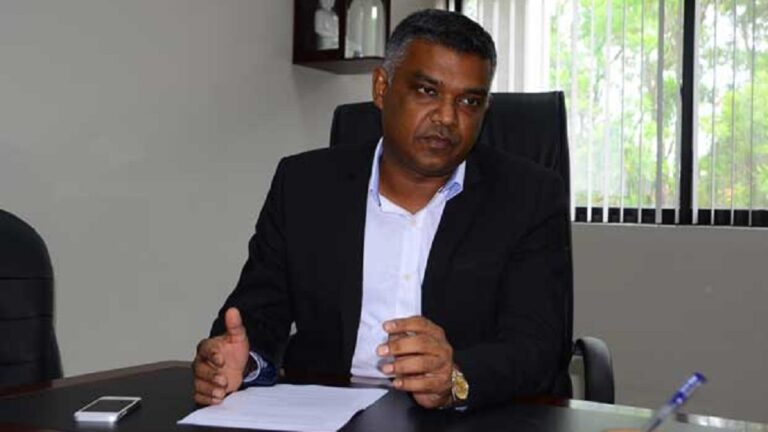
Colombo (LNW): Dr. Sayuru Samarasundara, former Chairman of the State Pharmaceutical Manufacturing Corporation (SPMC), has been brutally assaulted this (26) evening.
The assault was allegedly carried out by the brother of Minister of Sports and Youth Affairs and Minister of Irrigation Roshan Ranasinghe.
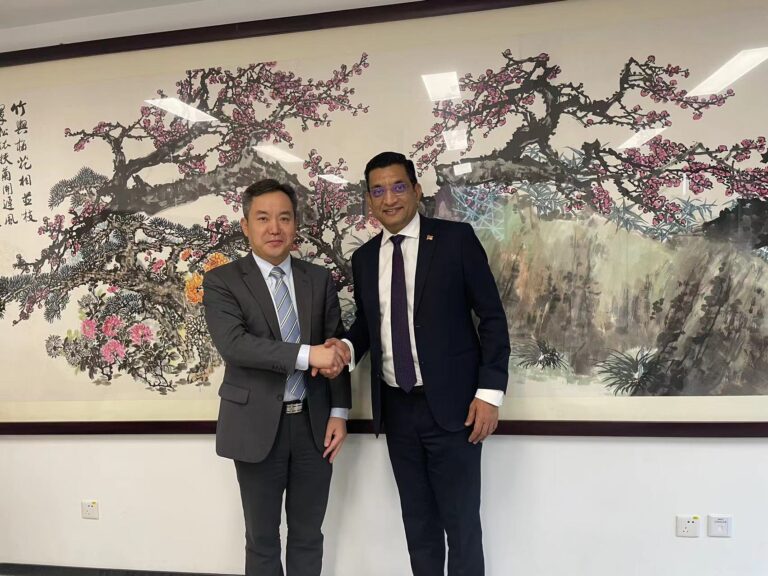
Colombo (LNW): The China Harbour Engineering Company (CHEC) will invest US $1.2 billion in the Colombo Port City, starting with the International Financial Centre, confirmed CHEC President Bai Yinzhan, during a meeting with Sri Lankan Foreign Minister Mohammed Ali Sabry held at their Head Office in Beijing today (26).
The CHEC Port City Colombo (Pvt.) Ltd. is run through the China Harbour Engineering Company (CHEC) and is part of China Communications Construction Company Limited (CCCC).
The Sri Lankan Foreign Minister is currently in China to attend the World Economic Forum, which is being held in Tianjin from June 27 to June 29.
Sabry also met with the Chairman of the Export-Import Bank of China (EXIM) in Beijing today, and discussed the way forward with Sri Lanka’s ongoing debt restructuring programme.
The Sri Lankan Foreign Minister said he was assured that China will support the island nation’s economic recovery and growth.
Foreign Minister Ali Sabry met with President Bai Yinzhan, of the China Harbour Engineering Cooperation at their head office in Beijing. President Bai confirmed that CHEC will invest USD 1.2 b in the ColomboPort City, starting with the International Financial Centre.#DiplomacyLKpic.twitter.com/IP66cSlOCi
— Sri Lanka Embassy in China (@SLembassycn) June 26, 2023
Had a constructive meeting with the Chairman of the #EXIM Bank of #China Mr. Wu Fulin. We discussed the way forward with #SriLanka’s ongoing debt restructuring process. I was assured China will support SL’s economic recovery and growth. @ChinaEmbSL@MFA_SriLankapic.twitter.com/FuMJCFDWUj