By: Staff Writer
January 12, Colombo (LNW): More than a month after Cyclone Ditwah tore through Sri Lanka’s northern and eastern provinces, the gap between rebuilding needs and available resources is becoming increasingly visible. While the government moved swiftly to establish the Rebuilding Sri Lanka Fund, the overall financial response so far remains modest compared to the scale of devastation.
According to official disclosures, the Rebuilding Sri Lanka Fund has collected just over Rs. 4.2 billion, roughly USD 11–12 million, mainly from domestic private-sector donors and state-linked institutions. Large corporate entities such as John Keells Holdings (Rs. 400 million), Seylan Bank (Rs. 50 million), and several mid-sized companies form the backbone of these contributions. While this reflects strong local participation, it represents only a fraction of estimated reconstruction needs, which government sources place between USD 6–7 billion.
Foreign assistance, meanwhile, has arrived largely outside the Fund’s framework. The IMF approved USD 206 million in emergency financing, while India pledged assistance valued at approximately USD 350 million, including grants and concessional support aimed at housing, infrastructure, agriculture, and health. Other countries including China, the United States, Australia, Canada, Norway, and EU members have contributed smaller but meaningful sums, mostly channelled through humanitarian agencies rather than the Sri Lankan government directly.
Despite these pledges, much of the aid remains sector-specific or humanitarian, not yet converted into long-term reconstruction financing. This distinction matters. Emergency relief stabilises lives, but rebuilding livelihoods, homes, roads, and irrigation systems requires sustained, coordinated investment.
The government initially announced an international donor conference scheduled for January, intended to consolidate global support and convert goodwill into firm financial commitments. However, as of now, no such conference has taken place, and there is no confirmed date. Local media reports suggest the idea has been quietly shelved, raising questions about strategic planning and donor engagement.
In place of the conference, the President’s Office has indicated plans to launch an online public portal detailing cyclone damage and listing reconstruction projects open for sponsorship by local and foreign donors. If implemented effectively, this could improve transparency and allow targeted funding but it cannot substitute for large-scale multilateral financing.
The current picture is therefore mixed: early institutional responses, meaningful but limited funding inflows, and ambitious rebuilding needs still waiting for structured financial backing. The coming weeks will determine whether Sri Lanka can convert sympathy into sustained international commitment or whether post-cyclone recovery risks slowing under financial constraints.
Rebuilding Sri Lanka after Cyclone: Funds, Promises and Reality
Inmates Across Sri Lanka Give Up Meals to Support Cyclone Victims
January 12, Colombo (LNW): In a gesture of solidarity following the devastation caused by Cyclone Ditwah, inmates at ten prisons around the country have chosen to forgo their meals so that food could be redirected to families displaced by the disaster.
The Department of Prisons said the initiative was undertaken voluntarily by prisoners housed at facilities including New Magazine, Welikada, Bogambara, Matara, Mahara, Kuruwita, Jaffna, Monaragala, Angunakolapelessa and Batticaloa.
The meals saved through this effort are being channelled towards emergency relief for communities hardest hit by the cyclone.
Officials noted that the contribution represents a significant value in kind, reflecting a collective act of compassion from within the prison system. The estimated worth of the donated food varied from prison to prison, with Angunakolapelessa recording the highest contribution at more than Rs. 540,000. New Magazine and Welikada prisons followed closely, each contributing meals valued at over Rs. 450,000, while Bogambara and Mahara also made substantial donations.
Other institutions, including Jaffna, Kuruwita and Batticaloa, added further support, while Matara and Monaragala prisons contributed smaller but meaningful amounts.
Concessional Credit Scheme Announced to Boost MSMEs
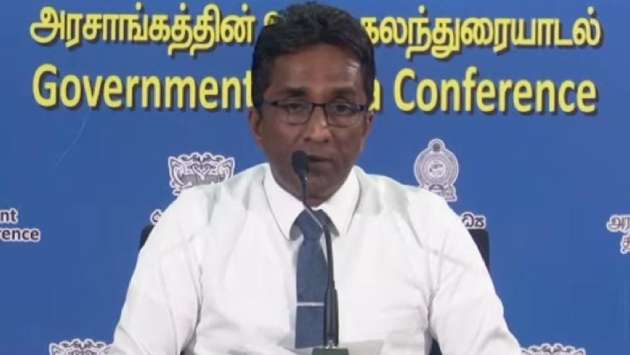
January 12, Colombo (LNW): The Development Finance Department is preparing to roll out a new low-interest loan programme aimed at strengthening micro, small and medium-sized enterprises, in line with policy directions issued by the government, Director General Manjula Hettiarachchi disclosed.
Addressing a briefing, Hettiarachchi underscored the pivotal role played by entrepreneurs in driving national economic growth. He revealed that Rs. 95 billion has been earmarked this year to support concessional lending, noting that smaller businesses are central to the country’s ambition of raising export earnings to around 36 billion US dollars by 2026.
The facility, to be implemented in partnership with the banking sector, includes a dedicated component known as “RE-MSME – Disaster Relief”. This scheme is intended to assist business owners who have been affected by Cyclone Ditwah as well as those still struggling with the broader economic downturn.
Around 130,000 entrepreneurs are expected to benefit, with loans offered at a highly subsidised interest rate of 3 per cent per annum.
Under the proposed structure, micro-level enterprises will be able to borrow up to Rs. 250,000, while small and medium-scale businesses may access financing of up to Rs. 1 million. Repayment will be spread over a three-year period, with a six-month grace window built in to allow businesses time to recover and regain stability.
Eligibility will be limited to enterprises that are formally registered or maintain recognised business records. Applications can be submitted through participating state and development banks, including the People’s Bank, Bank of Ceylon and the Regional Development Bank, with further financial institutions expected to join the scheme.
Government to Launch ‘Rebuilding Sri Lanka’ Drive Under Presidential Patronage
January 12, Colombo (LNW): Sri Lanka is set to formally launch a nationwide recovery initiative titled Rebuilding Sri Lanka with an inaugural ceremony scheduled for Tuesday (13), at the Lotus Hall of the Bandaranaike Memorial International Conference Hall in Colombo.
The event will take place under the patronage of President Anura Kumara Dissanayake.
According to official sources, the programme has been introduced to bring structure and direction to the country’s post-disaster rebuilding efforts, following the widespread destruction caused by Cyclone Ditwah.
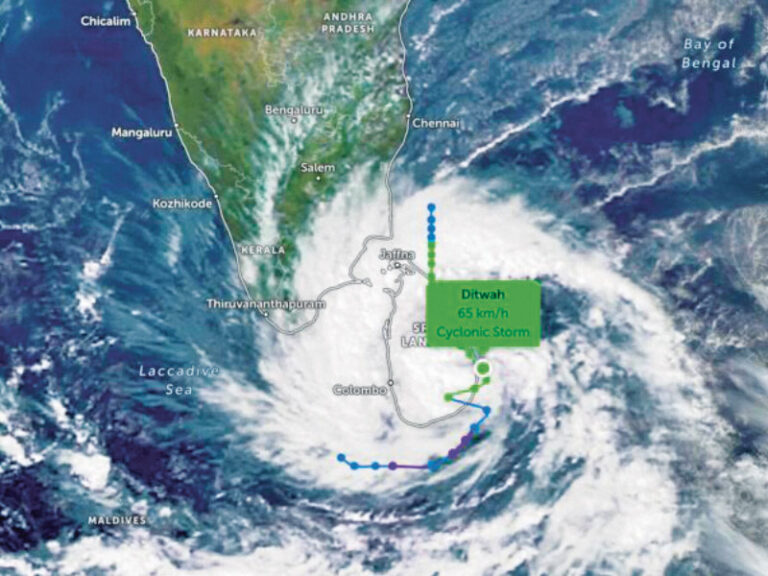
The cyclone left a trail of devastation across the island, claiming lives and inflicting extensive damage on homes, infrastructure and public facilities, prompting the need for a unified national response.
The rebuilding initiative is being financed through a multi-pronged strategy. Existing development projects are being reassessed and redirected to meet urgent recovery needs, while additional public funds are to be channelled in line with the Public Finance Management Act.
As part of this process, a supplementary estimate amounting to Rs. 500 billion is expected to be prepared for 2026. Alongside state funding, the programme also seeks to attract support from local and international donors, as well as private sector contributors, through a dedicated Rebuilding Sri Lanka Fund.
To ensure effective leadership and coordination, a Presidential Task Force comprising 25 members has been established. The body includes Cabinet Ministers and senior state officials and is chaired by Prime Minister Dr Harini Amarasuriya. The task force is expected to provide strategic oversight, streamline decision-making and ensure accountability as the country embarks on one of its most ambitious recovery efforts in recent years.
China and Sri Lanka Hold Brief High-Level Talks on Post-Cyclone Recovery
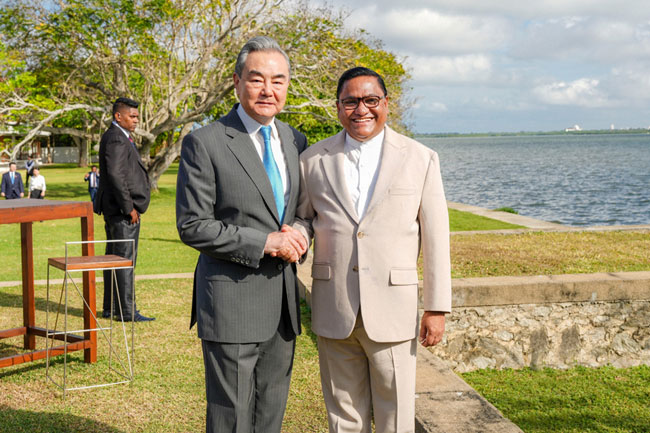
January 12, Colombo (LNW): China’s Foreign Minister Wang Yi held discussions with Sri Lanka’s Foreign Affairs Minister Vijitha Herath earlier today (12), marking a short but significant diplomatic engagement between the two countries.
The meeting centred on Sri Lanka’s ongoing recovery work following Cyclone Ditwah, with particular attention given to rebuilding priorities and immediate needs on the ground.
During the talks, the Chinese side formally outlined support measures and assistance to be extended by Beijing as part of its cooperation with Sri Lanka’s reconstruction efforts.
Minister Wang was accompanied by a 17-member delegation from China’s Ministry of Foreign Affairs. The group arrived in Colombo in the early hours of the morning while transiting back to China after completing an official visit to South Africa.
Following the discussions, the delegation wrapped up its stopover and departed Sri Lanka at around 10.30 a.m., bringing the brief diplomatic visit to a close.
Tourism Signals Strong Start to the Year: Over 67,000 New Arrivals Recorded
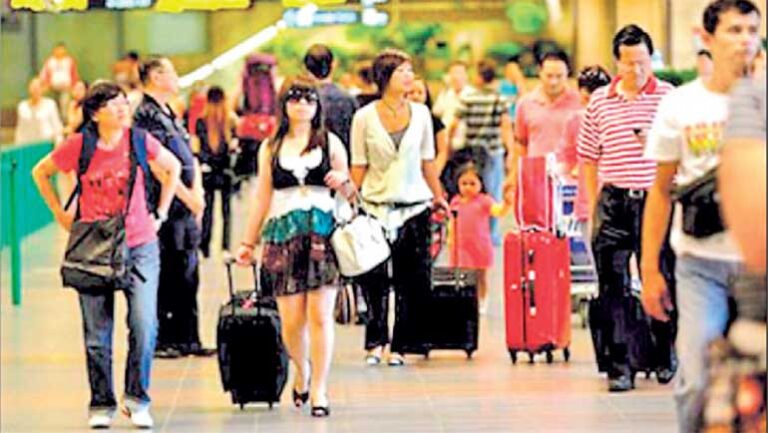
January 12, Colombo (LNW): Sri Lanka’s tourism sector has opened the new year on an upbeat note, with official figures showing a steady stream of visitors during the opening days of January.
Statistics from the Sri Lanka Tourism Development Authority indicate that nearly 68,000 travellers entered the country within the first eight days alone.
India emerged as the leading source market, contributing just over 11,000 visitors and accounting for around 17 per cent of arrivals during this period. Russia followed, with more than 8,000 tourists, while the United Kingdom and Germany also featured prominently among the top contributors. Australia, too, continued to show consistent interest, sending several thousand holidaymakers to the island in the early days of the year.
The positive momentum builds on a strong performance earlier this year, with January 2025 recording more than 250,000 arrivals overall. Tourism officials view this as an encouraging sign of sustained recovery and growing confidence in Sri Lanka as a destination.
Last year proved to be a landmark period for the industry, as visitor numbers surpassed 2.36 million, the highest figure recorded in recent times. Authorities are hopeful that the current trend will continue, further boosting the economy and reinforcing the country’s position on the global travel map.
Sri Lanka’s First Animated Feature Steps on to the World Stage

January 12, Colombo (LNW): Mogo Studios has unveiled the first trailer for The Secret of the Moonstone, marking a milestone moment as Sri Lanka’s inaugural full-length animated film prepares for an international release.
Slated to reach global audiences in the near future, the film is set against the backdrop of a reimagined, futuristic Colombo. At its heart is Lucky, a curious young boy, and his close companion Taniya, whose search for truth draws them far beyond the city and deep into Sri Lanka’s enchanted wilderness.
Their quest centres on the legendary Book of Wisdom, once safeguarded by Lucky’s ancestor, the folk hero Maha Dena Muttha, and now watched over by a mysterious guardian known as Nila.
As the journey unfolds, the pair must outwit an old nemesis, Chandi, while navigating a richly imagined world where cutting-edge technology exists alongside ancient myths. Along the way, they gather unexpected allies and rediscover values of courage, loyalty and shared heritage.
Behind the project is Mogo Studios, widely recognised as the country’s leading animation house. The studio has earned a reputation for award-winning storytelling and technical innovation, including its use of advanced real-time animation pipelines and a world-class Vicon motion capture system.
With this release, Mogo aims to place Sri Lankan animation firmly on the global map.
The newly released trailer offers audiences their first glimpse into this ambitious cinematic adventure.
Court Curbs Protest Outside Education Ministry Amid Exam Period

January 12, Colombo (LNW): A magistrate’s court has stepped in to regulate a demonstration held outside the Ministry of Education in Battaramulla, placing restrictions on a group of activists who began a sit-in protest there on Wednesday morning.
The Kaduwela Magistrate issued an injunction directed at several civil organisation figures, among them National Freedom Front leader Wimal Weerawansa, after concerns were raised about disruption in the vicinity of the Isurupaya complex.
Under the order, demonstrators are barred from blocking nearby roads and are prohibited from using loudspeakers or other sound equipment while the GCE Advanced Level examinations are under way.
Despite the legal limitations, the group continued their symbolic “Satyagraha” protest in front of the ministry, maintaining a constant presence from the early hours of the day. Participants said their action was intended to draw attention to what they describe as serious flaws in the government’s proposed education reforms.
Those gathered also called for Prime Minister Dr Harini Amarasuriya to relinquish her role as Education Minister, arguing that a change in leadership is needed to protect students and the wider education system. Police were seen monitoring the area as candidates made their way to examination centres nearby.
Complaint Filed with CID Over Alleged Alteration of Sri Lanka’s State Emblem on Ministry Website
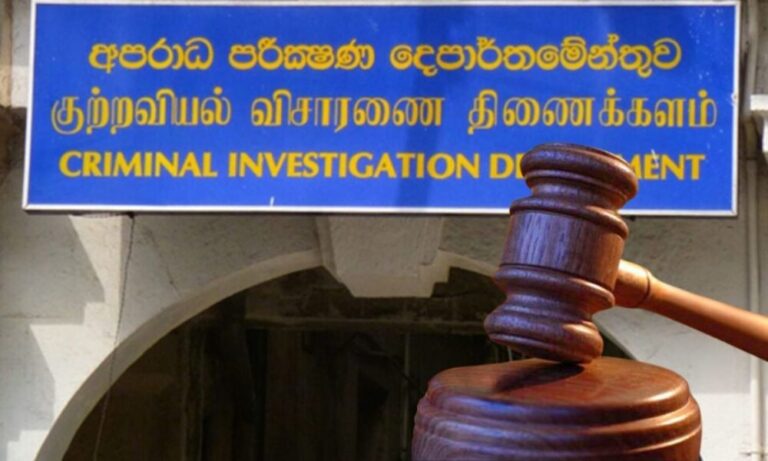
January 12, LNW (Colombo): The Chairman of the Doctors’ Trade Union Alliance for Medical and Civil Rights, Specialist Dr. Chamal Sanjeewa, has lodged a complaint with the Criminal Investigation Department (CID) regarding the alleged alteration of Sri Lanka’s State Emblem on the official website of the Ministry of Public Security.
In his complaint, Dr. Sanjeewa stated that modifying the State Emblem in a manner that brings disrepute to the country constitutes a serious offence. He urged authorities to conduct a comprehensive and independent investigation and to take legal action against those responsible.
Addressing the media after submitting the complaint, Dr. Sanjeewa said the emblem displayed on the ministry’s website differed from the version approved by Parliament. He explained that the officially recognised State Emblem traditionally features the lion, the Dharma wheel, bo leaves, the full moon, as well as the sun and moon, and alleged that the altered version presents a distorted image of the national symbol.
He emphasised that such a change could not be dismissed as an act of ignorance, noting that even individuals with basic knowledge would be aware of the official design of the State Emblem. Dr. Sanjeewa described the alteration as a serious insult to the Ministry of Defence and to the Sri Lankan state.
Furthermore, he warned that the ability to modify the State Emblem—whether by someone within the ministry or by an external party—poses a grave threat to national security and the country’s reputation. He also criticised what he described as the failure of authorities to carry out thorough investigations into previous distortions found on government websites.
Dr. Sanjeewa added that at a time when the country is grappling with major challenges such as education reforms and changes in the health sector, the alteration of the State Emblem should not be treated as an isolated or minor incident.
Fatal Accident in Mundalama Leaves Three Dead

January 12, LNW (Colombo): Three people lost their lives in a road accident that occurred early this morning (12) in the Navadankulama area of Mundalama along the Puttalam–Colombo main road, according to police.
The accident happened when a car collided with a van, police said. Two women and a man who were travelling in the car died at the scene due to the impact of the collision.
Meanwhile, one injured person has been admitted to the Chilaw Hospital for treatment. Police are conducting further investigations into the incident.