Home Blog Page 1787

Sri Lanka’s IMF Agreement Will Not Alter the Trajectory of a Collapsing Economy

0

Without a major course correction in its economic trajectory and a significant “haircut” on its external debt, the country will likely be knocking on the door for another IMF pact. It could face another default in a few years.

Ahilan Kadirgamar, Devaka Gunawardena and Sinthuja Sritharan

The International Monetary Fund (IMF) executive board’s approval of loans is being celebrated in the elite quarters of Sri Lanka. The IMF’s recommendations have been implemented for close to a year, however, they have exacerbated the island nation’s economic depression.

The reality is that the IMF agreement and the limited funds that will be released in instalments will not alter the trajectory of a collapsing economy.

Given Sri Lanka’s default on its external debt in April 2022, the debt restructuring process, which is aimed at reducing its unsustainable debt levels, is likely to drag on for months, if not years.

Indeed, without a major course correction in Sri Lanka’s economic trajectory and a significant “haircut” –  reduction of outstanding interest payments or a portion of a bond payable that will not be repaid – on its external debt, it will likely be knocking on the door for another IMF agreement. It could face another default in a few years.

The agreement is based on the same assumptions and projections rooted in the free market regime. But Sri Lanka’s challenge is not to return to the deep waters of a turbulent global economy. Instead, the country must identify avenues to increase domestic production of essential goods which its people need for survival. This includes strengthening the food system through local agricultural production.

Sri Lanka may find itself drowning in the dead weight of external debt if the process of achieving debt sustainability is predicated on integrating back into the global economy through more loans and hypothetical opportunities in the distant export markets.

Economic and political scenarios

At the heart of the problem is the conflation of the country’s two deficits: 1) the primary budget deficit, which consists of the government’s revenues versus expenditure, and 2) the current account deficit, which is the country’s foreign earnings versus expenditure.

The effects of the IMF-recommended austerity measures to meet a primary budget surplus target for 2024 can already be seen in the tremendous contraction of the economy in 2022.

Sri Lanka’s gross domestic product (GDP) contracted by 12.4% in the fourth quarter of 2022 alone. However, during the same quarter, the external balance had a surplus of $ 154 million. This happened mainly due to the prioritisation of imports, which for years the nation’s governments had avoided, because of the ideological “straitjacket of free trade.

Going forward, a focus on domestic investment and production, while managing the external sector, should be the strategy for reviving the country’s economy. But due to the IMF’s emphasis on a primary surplus and a free market regime, the opposite policies are being pursued. This strategy is inflicting tremendous suffering on the people.

The “straitjacket” approach of free trade attracts foreign capital, which includes a return to borrowings in the international capital markets. But wasn’t that one of the central causes of Sri Lanka’s economic crisis in the first place?

Sri Lanka’s high-interest loans and debt-financed capital inflows were repaid with the hard-earned foreign exchange of its working people. And that debt was invested in unproductive infrastructure and luxury real estate.
Therefore, there is little room for alternatives if Sri Lanka continues with the traditional crisis-fighting approach.

Furthermore, how will the state obtain taxes amid drastically declining real incomes? How can an already unpopular government politically afford to tax a shrinking pie?

The current approach to fiscal consolidation will inevitably hit a roadblock. In fact, the hidden agenda of the ruling elite seems to be a fire sale of public assets and tremendous wage repression. Significantly, the real incomes of people have drastically declined and millions have slipped into poverty. In addition, the privatisation of state assets to foreign entities will both fill the coffers of the treasury as well as bring in foreign capital that can be used to pay back external debt. However, this twinned strategy is bound to provoke a massive political backlash.

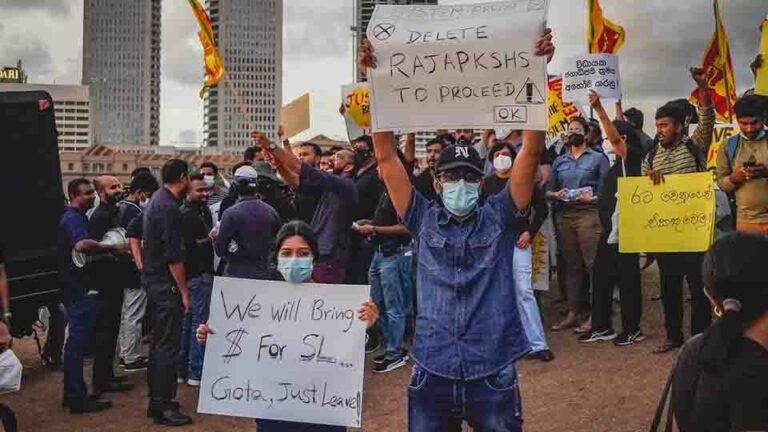
Sri Lanka has already witnessed the consequences of a destabilising economy last year. The country’s economic crisis, coupled with tremendous shortages of essential goods and price hikes, led to the overthrowing of President Gotabaya Rajapaksa. The current government led by Ranil Wickremesinghe has none of the advantages of its predecessor, in terms of a popular support base.

Wickremesinghe, and the elites he represents, however, appear content with repeating the process.

Worse, they refuse to even hold elections, in which they are bound to be hammered. They are instead pinning their hopes on more promises of external aid and investment, believing that such pronouncements would placate the citizenry.

Also read: Can Sri Lanka Implement Unpopular Decisions to Secure an IMF Bailout Package?

Wealth taxes, haircuts, and redistribution

The path laid out above is no doubt a recipe for disaster, but identifying alternatives requires understanding Sri Lanka in its historical and global setting.

When Sri Lanka defaulted on debt for the first time in its history last year, many analysts had spoken about drawing lessons for debt restructuring from other countries.

For instance, the case of the Latin American debt crisis of the 1980s. It may appear that Sri Lanka could bear the same process of structural adjustment. But the Latin American countries experiencing debt distress were incorporated into the expansion of global trade with the decade of hyper-globalisation in the early 1990s, albeit at great social cost and with long-term ramifications for inequality in their own societies.

However, Sri Lanka’s economic crisis has happened at a time when global growth has been slowing.

While there was a temporary recovery of trade in the aftermath of the COVID-19 pandemic, the long-term trend of slowing trade growth continues, aggravated by geopolitical tensions. Therefore, factoring in export-oriented growth opportunities, along with solutions for debt sustainability, must be looked at as per the prevailing global situation.

The Wickremesinghe-Rajapaksa government argue that the tax cuts by the then government in 2019 led to the economic crisis in the country. They further argue that this must be rescinded.

Amid declining income flows, the government is hiking taxes.

The problem, however, is that it is hard to generate revenues from a contracting economy with declining wages. Therefore, only a wealth tax on the stock of existing property and assets is realistic.

Of course, a wealth tax would also encounter fierce resistance from the elites who benefited from Sri Lanka’s neoliberal economic model. Indeed, they have long enjoyed the conspicuous consumption that drained the country’s external finances. There needs to be a redistributive approach focused on stabilising public finances by taxing the property and assets that the elite accumulated over the many decades since economic liberalisation began in the late 1970s.

In addition, amid tremendous price hikes and price volatility, there needs to be a public distribution system that prioritises the essential needs of the people who are on the brink of starvation.

Meanwhile, the lion’s share of Sri Lanka’s external debt is commercial borrowings, particularly international sovereign bonds. These bonds have high interest rates.

Sri Lanka’s bond holders earned high returns over the last decade. Their returns almost equalled their capital, particularly for the 10-year term sovereign bond. On the other hand, its own people have been paying these loans off for years now, by earning the country’s foreign exchange in sectors with little to no social protection. Meanwhile, the state cut back on social welfare spending and productive investment.

Also read: Debt Default Now Hangs Over Pakistan Like the Sword of Damocles

Future of development financing

So what is the way forward? The debt restructuring process will likely take time.

The existing debt restructuring frameworks – such as the G20 Common Framework and the Debt Service Suspension Initiative (DSSI), which was agreed upon by Western countries as well as China and India to handle the debt distress of lower-income countries – have proven to be slow and limited.

Moreover, Sri Lanka’s profile is complicated by its categorisation as a “lower middle-income” country. It also has much higher level of foreign commercial borrowings than other countries that have obtained debt relief through similar initiatives.

A just mechanism must be developed for resolving sovereign debt crises, especially for the countries in the Global South.

A new and fairer global regime of trade and investment is necessary. There is a need to build on the work of the Sri Lankan economist Gamani Corea and many others, who, for example, came up with the proposal for the New International Economic Order in the 1970s, which the major powers led by the US refused to consider.

Countries, such as Sri Lanka, that have sunk into an economic crisis cannot wait for a new global financial architecture. Instead, this is the moment when alternative development financing arrangements must be considered, even as hegemonic powers are challenged to move away from demanding austerity measures for developing countries.

Moreover, for countries such as Sri Lanka, their long-term prospects lie in eventual engagement through new forms of South-South cooperation. However, the existing political alignments within regional powers and the nature of their elites, who continue to benefit from and are committed to free markets, block this path. Overcoming these obstacles and building solidarity within the Global South will take time.

Currently, there is a growing international focus on the ongoing wave of debt distress affecting over 50 countries and the absence of a credible mechanism to solve these issues. The discussions on these issues by progressive thinkers, trying to tackle the emerging debt crisis in their own countries, provide a glimmer of hope.

Can we do without the dogmatic economic ideologies that have been part of the capital’s strategy of economic repression and dispossession in the Global South?

This week, for example, a three-day consultation on debt restructuring in Colombo, mainly for economists from the Global South, will be organised by the International Development Economics Associates and the Law and Society Trust. This is one such initiative that is taking up the challenge of conceiving alternatives to the current austerity framework of debt restructuring, and the ongoing devastation it is causing.

If Sri Lanka cannot expect the same growth rates, and if it must make do with a much smaller economic pie, then the question of redistribution becomes even more urgent to ensure that its people can survive, and avoid any danger of starvation.

In addition, policies guiding investment into critical sectors such as agricultural production and the food system may not yield high returns, but they can help ensure survival.

There is an opportunity for a critical shift towards lower but sustainable growth, along with the resistance needed to push back against the dogmas of free trade and capital account convertibility.

By pursuing such a strategy, Sri Lanka can hopefully bring its current account deficit under control and avoid the market fluctuations and repeated crises that have been the hallmark of the neoliberal project around the world. In addition, Sri Lanka must sustain enough public expenditure to prevent its economy from going into a tailspin. That will require considerable redistribution, including measures like a wealth tax.

For Sri Lanka’s elites, along with its international partners, who continue to push the same failed neoliberal growth model, these ideas may seem too radical, or a step too far.

However, for those concerned with a just resolution of a widespread debt crisis and dispossession in the Global South, considering the paths taken and not taken in Sri Lanka may offer a preview of alternatives. That includes reconfiguring the basis on which debt restructuring occurs, along with the possibility of different arrangements for development financing. As the Global South faces another period of great turmoil, its progressive intellectuals should begin debating and promoting these alternatives.

Ahilan Kadirgamar is a political economist and a senior lecturer at the University of Jaffna. Devaka Gunawardena is a political economist and an independent researcher. Sinthuja Sritharan is an economist and an independent researcher.
High Commissioner Moragoda meets Finance Minister Sitharaman to discuss the way forward in bilateral economic cooperation

0

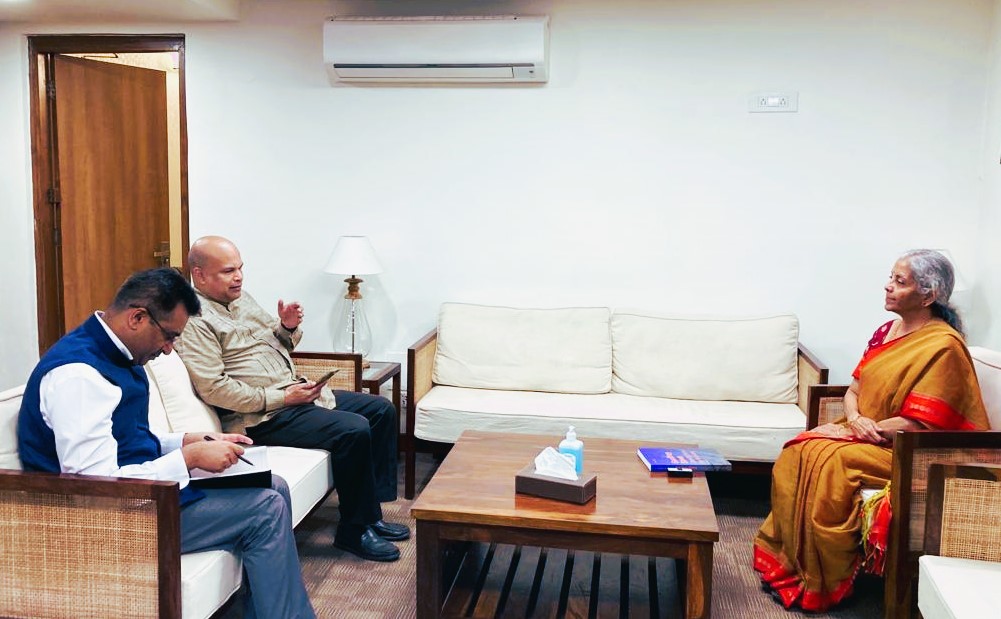
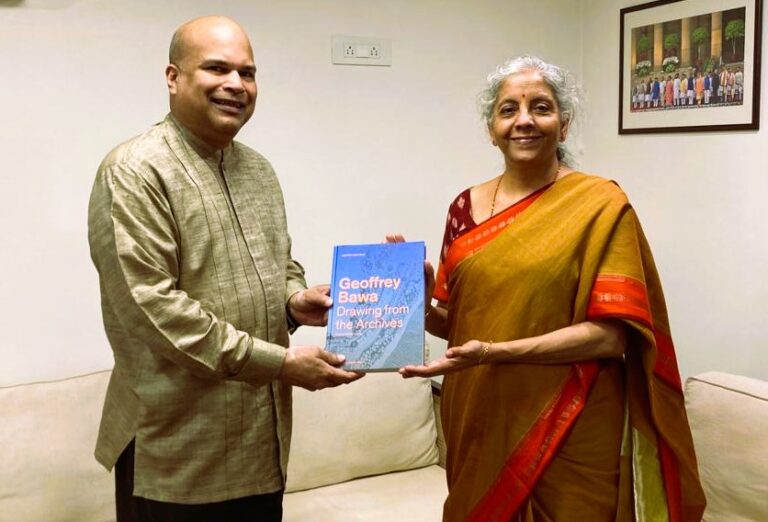
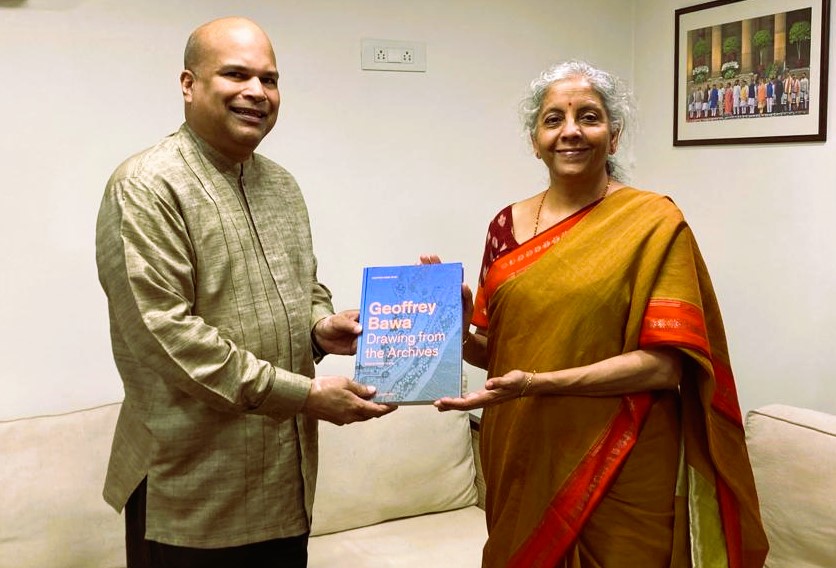
Sri Lanka’s High Commissioner to India Milinda Moragoda met with the Minister of Finance and Corporate Affairs of India Smt. Nirmala Sitharaman in New Delhi on 22 March 2023.

This was the latest of a series of meetings High Commissioner Moragoda has had with Minister Sitharaman since November 2021 on Indian economic cooperation and assistance to Sri Lanka in the context of the present economic crisis.

At the outset, High Commissioner Moragoda thanked Minister Sitharaman for the leadership that the government of India took towards the realization of the International Monetary Fund’s Extended Fund Facility (EFF) Arrangement for Sri Lanka. He particularly thanked Minister Sitharaman for her personal involvement in taking up Sri Lanka’s case with bilateral development partners as well as multilateral financial agencies including the IMF in this context.

Minister Sitharaman and High Commissioner Moragoda also discussed the way forward in bilateral economic cooperation. The ways and means to attract Indian investments to Sri Lanka, enhance bilateral trade particularly through Indian Rupee trade expansion and increasing the inflow of Indian tourists to Sri Lanka were explored and discussed. The Minister and the High Commissioner agreed that these measures could form part of Sri Lanka’s economic recovery.

High Commissioner Moragoda also presented Minister Sitharaman with a copy of the publication “Geoffrey Bawa; Drawing from the Archives”, which contains the drawings of Sri Lanka’s iconic architect the late Geoffrey Bawa. The publication was presented to her as a memento to mark the opening of the two month- long exhibition “Geoffrey Bawa: It Is Essential To Be There” which was inaugurated by the External Affairs Minister of India Dr. S. Jaishankar on 17 March 2023 at the National Gallery of Modern Art in New Delhi.

High Commission of Sri Lanka

New Delhi

22 March 2023

Presentation of Letters of Credence – Australia

0

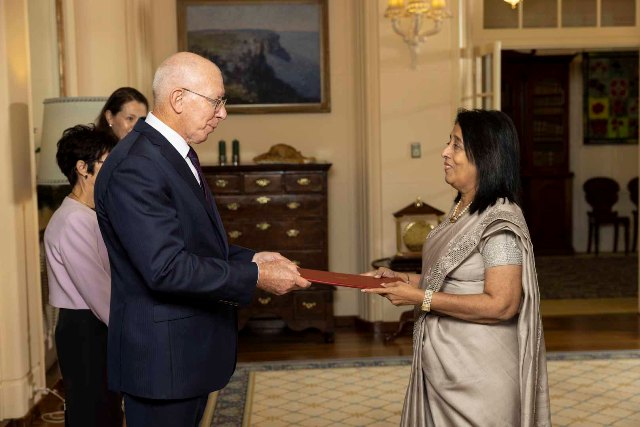
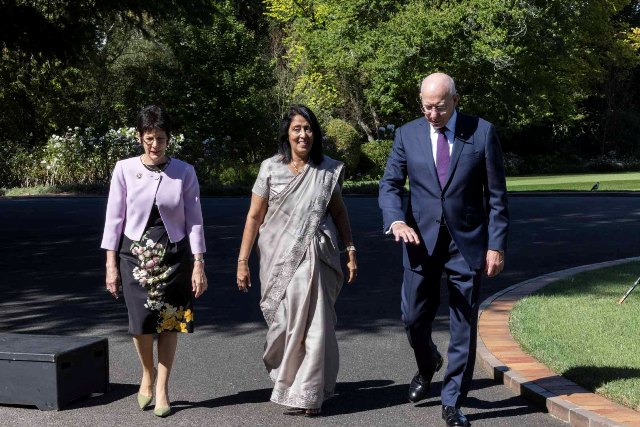
The High Commissioner to the Commonwealth of Australia, Chitranganee Wagiswara presented her Letters of Credence to the Governor General AC DSC (Retd.) David Hurley on 16 March 2023 at the Government House, Canberra.


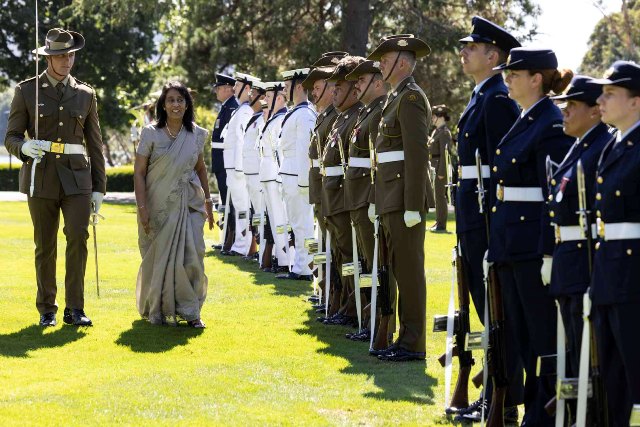
The formal ceremony included a guard of honour and a luncheon hosted by the Governor General to the three High Commissioners/Ambassadors who presented credential on that day.


The High Commissioner had a separate audience with the Governor General joined by the First Assistant Secretary of the Department of Foreign Affairs & Trade of Australia and the Senior Representative of the Government House.

During the discussion the High Commissioner conveyed the greetings of the Sri Lanka President, Ranil Wicremesinghe to the Governor General.  While expressing his good wishes to the Sri Lanka President, he congratulated the High Commissioner on her appointment and conveyed his best wishes for a successful tenure in Australia.


The High Commissioner spoke briefly on the political, economic and social developments in Sri Lanka and the challenges and priorities of the government.  In this context, the High Commissioner thanked the Australian Government for the assistance granted to Sri Lanka in the form of medicine and food to tide over the difficult period last year.

It was noted that Sri Lanka and Australia have maintained close and cordial bilateral ties over the years and both sides were of the view that the friendship and cooperation that  exists between the two counties could achieve greater heights in the years to come.

The High Commissioner was accompanied by Deputy High Commissioner Chamari Rodrigo, Minister U.G.C Abeyrathna, and Counsellor (Defence) Capt. Sanjeewa Kathriarachchi.

High Commission of Sri Lanka

Canberra

20 March 2023

Let us stand against suppression against ‘Siyata’ media network and harassing Journalist Lal Hemanta Mavalage: FMETU

0

The Federation of Media Employees Trade Unions strongly condemns the ongoing attempts to abuse parliamentary privileges to suppress the popular TV program ‘Televakiya’ and to intimidate its editor Lal Hemantha Mawalage, a veteran journalist attached to the Siyata Media Network. The Televakiya is a current affairs program that has become massively popular among TV audiences in recent times for its unafraid stance in criticizing the wrongdoings of the government. In return, the government is now trying to make use of the provisions in the Parliament Powers and Privileges Act to muzzle the media by summoning the journalists before Parliament Privileges Committee to question and institute legal actions against them. This highhanded action amounts to a serious threat against the freedom of expression.

Lal Hemantha Mawalage is a senior journalist who started his career in broadcasting at the Sri Lanka Rupavahini Corporation. Since his inception there on Dec 28, 2008 he worked hard to stand against unjust and corruption. Because of his work, he had once come under a brutal attack from Mervyn Silva, a cabinet minister of the Mahinda Rajapaksa government. Mawalage had to flee the country to save his life in that instance. Up until now, there is no formal investigation into this to bring the culprits before justice.

We urge President Ranil Wickremesinghe to stop immediately the suppression of the media and journalists and remind him and his government that it is their duty to bring justice to the journalists who had been killed, maimed and became victims of enforced disappearances in the recent years. We, the Federation of Media Employees Trade Unions, emphasize that freedom of speech is a foundation of a democratic society, is a powerful value to social, economic, and political freedom.

The FMETU is a member organization of the International Federation of Journalists is the world’s most powerful media organization with a membership of more than 600,000 journalists from 146 countries, and 167 media organizations, and we jointly urge the government to stop immediately the attempts to make use of powers to parliament to gag journalists. We also call on people’s representatives in Parliament to oppose the government’s plans to punish the Siyata Televakiya, which stands for the traditional characteristics of Public Service Journalism.

Dharmasiri Lankapeli
General Secretary
Federation of Media Employees’ Trade Unions

Foreign Minister visits the United Kingdom for Commonwealth Foreign Affairs Ministers’ Meeting 

0

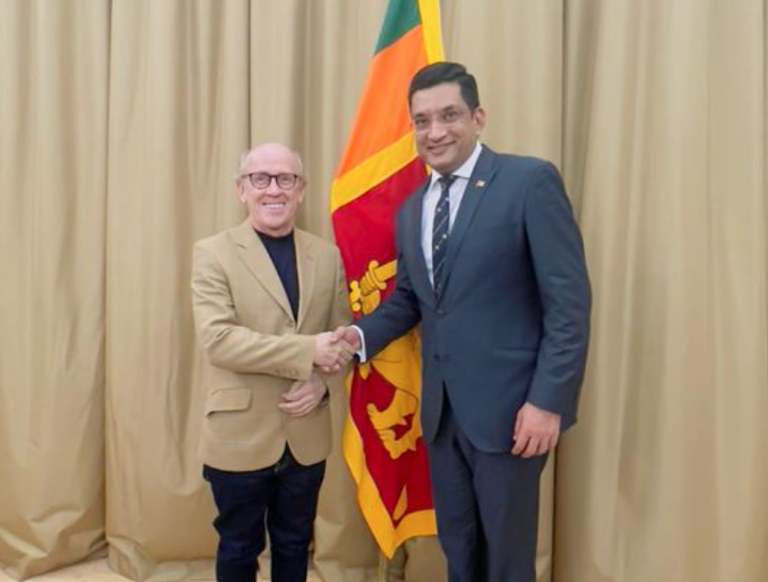
Minister of Foreign Affairs Ali Sabry participated in the 22nd Commonwealth Foreign Affairs Ministers Meeting (CFAMM) in London on 15 March 2023.  During the visit, he also attended the Commonwealth Day ceremonies celebrating 10 years of signing the Commonwealth Charter by Her Majesty the late Queen symbolizing the shared values and principles of member nations.

Addressing the CFAMM at Commonwealth headquarters, Minister Sabry reaffirmed Sri Lanka’s active engagement and spoke on the themes of climate financing for environmental sustainability; the need to leverage intra commonwealth trade for food & energy security and support the twin transition to a digital and greener future; and building resilient societies through democracy.  He articulated the need for setting up a central body to enable regulations on digitization & digital assets expressing that Commonwealth can play an important role.  He also drew attention to setting up of a climate change university in Sri Lanka, which was first mooted by President Ranil Wickremasinghe.  In his meeting with Commonwealth Secretary General, Patricia Scotland KC, both sides discussed engaging the Commonwealth to accelerate Sri Lanka’s sustainable development.

Minister Sabry during this visit, attended a series of events to mark the Commonwealth Day on 13 March, including a wreath – laying ceremony in memory of fallen Commonwealth servicemen and women, followed by a special service at Westminster Abbey in celebrating the diversity of cultures which featured a performance by Sri Lankan youth. The Commonwealth Flag for Peace was raised along with members’ flags to recognize 2023, as Commonwealth Year of Peace.  The events concluded with a reception for visiting dignitaries hosted at Buckingham Palace by King Charles III, addressing the Commonwealth as its Head for the first time.  

On the sidelines of the Commonwealth events, Minister Sabry met with Anne-Marie Trevelyan, the Minister of State for Indo – Pacific at the Foreign Commonwealth Development Office of the UK. Lord Mervyn Davies of Abersoch, UK Prime Minister’s Trade Envoy to Sri Lanka had a meeting with Foreign Minister Sabry, particularly concentrating on the economy and developing further the trade and investment links between the two countries.    

At both these meetings, Minister Sabry apprised the UK side of the advanced stages in the debt restructuring process and thanked the bilateral creditors and Paris Club members for the support and cooperation extended towards Sri Lanka in accelerating the process. 

In addition, on the margins of CFAMM, Minister Sabry met with James Cleverly, Secretary of Foreign, Commonwealth and Development Office of the UK and with Foreign Ministers of Malaysia, Rwanda and the State Minister of Foreign Affairs of Pakistan.  

Minister Sabry, had an interactive session in the UK Parliament with a cross-section of the British Parliamentarians over ‘Ceylon Tea’ which was organized by the High Commission of Sri Lanka in London together with Sri Lanka Tea Board.  The session included remarks by the Foreign Minister and UK’s Minister of State for International Trade, Nigel Huddleston.  

The visit concluded with a discussion the Foreign Minister had with the British – Sri Lankan community on ways and means of contributing to Sri Lanka’s development process. 

Ministry of Foreign Affairs

Colombo

20 March 2023

Our gratitude to the President for his excellent leadership in bringing the agreement with the IMF- Minister Jeevan Thondaman

0

Jeevan Thondaman, general secretary of the Ceylon Workers’ Congress and minister, expressed his gratitude to the President for his excellent leadership in bringing the agreement with the IMF to a successful conclusion despite the concerns and criticism of the political opposition.

He made this statement in response to the International Monetary Fund Executive Committee’s acceptance of the provision of loan facilities to Sri Lanka.

He added the following in this regard:

“Within days after entering bankruptcy, our nation had no choice but to turn to the International Monetary Fund for assistance. Economic reforms were also made for this reason.

16 times, Sri Lanka has requested assistance from the International Monetary Fund. The promises, however, were not kept. This made it extremely difficult to this time receive loan approval. International financial organizations also placed Sri Lanka lower on the data list than other countries.

In light of this, the President has successfully negotiated diplomatically with India, China, Japan, the Paris Club, and other nations to secure approval for a loan from the International Monetary Fund.Now Sri Lanka can sustain itself and move forward, Institutions of finance will also loosen their limits on Sri Lanka..

In that regard, I would like to express my gratitude to the President, the IMF chiefs, and the nations, including India, for their cooperation.

G.Krishanthan – 0779166581, 0779775719

Media Secretary

Ministry of Water Supply and Estate Infrastructure Development

Sri Lanka to start next round of talks with creditors in April

0

COLOMBO, March 22 (Reuters) – Sri Lanka will kick off the next round of talks with creditors in the third week of April, President Ranil Wickremesinghe said on Wednesday, adding that the debt-stricken nation has started to receive funds from the International Monetary Fund.

The IMF has released the first tranche of about $330 million, part of a nearly $3 billion bailout approved by it on Monday, Wickremesinghe told parliament.

“This will create opportunities for low-interest credit, restore foreign investors’ confidence and lay the foundation for a strong new economy,” he sa

The IMF bailout is expected to catalyse additional support to the tune of $3.75 billion from the likes of the World Bank, the Asian Development Bank and other lenders. It also clears the way for Sri Lanka to restructure a substantial part of its $84 billion worth total public debt.

Reuters Graphics Reuters Graphics

Sri Lankan officials will start the next round of talks with bondholders and bilateral creditors in the third week of April, Wickremesinghe said, adding that a fully transparent process will be followed.

Sri Lanka also aims to reduce inflation to a single digit by mid-2023 and later to 4%-6%, Wickremesinghe said. The country’s National Consumer Price Index (LKNCPI=ECI) rose an annual 53.6% in February.

This was the 17th IMF bailout for Sri Lanka and the third since the country’s decades-long civil war ended in 2009.

Economic mismanagement coupled with the impact of the COVID-19 pandemic left Sri Lanka severely short of dollars for essential imports at the beginning of last year, tipping the island nation into its worst financial crisis in seven decades.

Unlike previous bailouts, which were mainly used to bolster foreign exchange reserves, the funds from the current programme can also be used for government spending, senior IMF official Masahiro Nozaki said on Tuesday.

Jaya Container Terminals Ltd gains phenomenal growth and turnover

0

Jaya Container Terminals Limited (JCT Limited), a fully owned subsidiary of the Sri Lanka Ports Authority (SLPA), has seen phenomenal growth and turnover in the recent past, despite the fuel crisis that prevailed in Sri Lanka.

This is largely due to the fact that JCT was able to provide Marine Gas Oil (MGO) to various segments of the private sector that required fuel for their daily operations. This included the garment industry, the tourism industry and much more.

The provision of MGO to these sectors was an additional service provided by JCT that resulted in an exponential increase in revenue and profit.

Another significant contributor to the company’s forward march was its ability to transform from High Sulphur Fuel to Low Sulphur Fuel.

This occurred in 2020, due to a requirement from the International Maritime Organization (IMO), to accommodate only LSFO. However, JCT was able to accommodate High Sulphur Fuel also if required. This also added significantly to the income that was reflected in the year 2022.

Since 2008, JCT’s primary business has been to store marine fuel, including Low Sulphur Fuel (LSF) and Marine Gas Oil (MGO) for seagoing vessels. The facility spans over 9 acres and initially consisted of 13 fuel tanks with the capability to store a capacity of 35,000 MT of marine fuel.

JCT’s reached unprecedented heights as it accumulated a 275% increase in profits in 2022. This was due to an unprecedented earning of Rs. 608 million in revenue for 2022, which is a 104% increase from the year 2021 and a 180% increase from 2020. The fluctuating currency exchange rates also played a role in the increase of the profits, adding 40% to it.

This revenue has a significant impact on the country’s economy, as the Colombo Port plays a direct and integral role in it. A plethora of JCT’s clientele also play a significant role in the provision of fuel for the ships that visit the port, which is in turn a vital service for the Colombo Port.

The company is now in the process of enhancing its storage capacity in order to facilitate larger volumes of fuel at a lower cost. This will also allow JCT’s customers to distribute fuel at a lower cost, which in turn is an advantage to the Port of Colombo as it can provide competitive prices for those who require marine fuel.

By the end of 2021, the JCT had constructed an additional 3200 MT capacity tank, which was opened in 2022. There are plans that have been set in motion to install even more tanks in the future. Additionally, a brand-new fire safety system was also introduced as a safety measure.

Sri Lanka to receive the first tranche of US$2.9 billion IMF EFF in 2 days

0

Sri Lanka is expected to receive the first tranche of funds from the International Monetary Fund (IMF) in 2 days, Peter Breuer, Chief of the Debt Capital Markets Division, Monetary and Capital Market Department at the IMF said.

He said Sri Lanka has incorporated a number of measures to commence the reforms process, as agreed upon with the IMF.

Breuer also said that steps are being taken to make the Central Bank of Sri Lanka more independent.

The IMF also said that the disbursement of the funds under the agreement with Sri Lanka, will be tied to reviews of Sri Lanka’s economic policies, which will take place every 6 months.

The IMF Executive Board approved a 48-month extended arrangement under the Extended Fund Facility (EFF) of SDR 2.286 billion (about US$3 billion) to support Sri Lanka’s economic policies and reforms.

Sri Lanka has been facing a severe economic crisis as a result of past policy missteps and economic shocks. We have been deeply concerned about the impact of the crisis on the Sri Lankan people, particularly the poor and vulnerable groups, and about the economic costs of the delay in the country’s access to external financing.

The Board approval marks an important step towards the resolution of the crisis—Sri Lanka will immediately receive an initial disbursement of about US$330 million from the EFF arrangement, which is expected to catalyze new external financing including from the Asian Development Bank and the World Bank.

Commendably, Sri Lanka has already started implementing these challenging policy actions. It is now essential to continue the reform momentum under strong ownership by the authorities and the Sri Lankan people more broadly.

The authorities have committed to fundamentally improve public financial management and strengthen the anti-corruption legal framework in line with the United Nations Convention against Corruption.

The economic impact of the reforms on the poor and vulnerable needs to be mitigated with appropriate measures. In this regard, we welcome the authorities’ firm commitment to strengthen social safety nets, including through a minimum spending floor, well-targeted spending through a new Social Registry, and establishment of objective eligibility criteria.

Tax reforms under the program are designed to be progressive, that is, ensuring greater contributions from high-income earners. Efforts to increase tax revenues should be pursued in a growth-friendly manner while protecting the poor and most vulnerable.

Sri Lanka’s public debt, at 128 percent of GDP as of end-2022, is unsustainable. The country is in arrears to all its external creditors.

IMF Board approval of assistance to Sri Lanka required assurances from official bilateral creditors that they will provide debt relief and/or financing to restore debt sustainability consistent with the program, as well as an assessment that the authorities are making good faith efforts to reach a collaborative agreement with private creditors.

It is now important for the Sri Lankan authorities and creditors to closely coordinate and make swift progress towards a debt treatment that restores debt sustainability under the EFF-supported program.

The President’s recent open letter to official bilateral creditors includes commitments to transparency and comparability of treatment for all external creditors, which should help facilitate this process. IMF staff will continue to assist the authorities with creditor coordination in line with the IMF’s policies.

Dilan Perera appointed as Chair of the Sectoral Oversight Committee on Reconciliation and National Unity

0

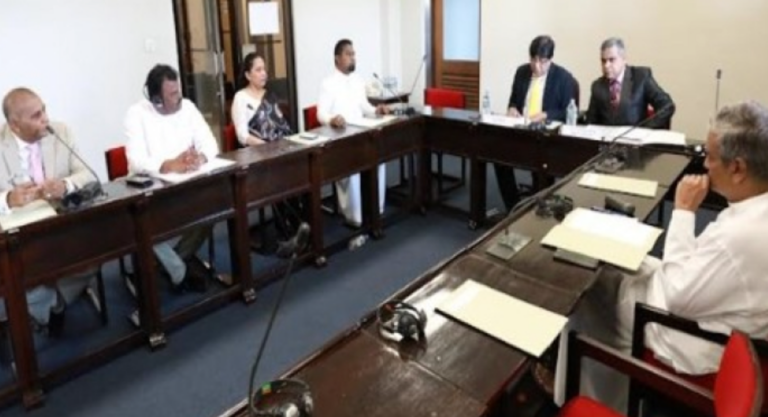
Hon. Dilan Perera has been appointed as Chair of the Sectoral Oversight Committee on Reconciliation and National Unity (21) at the Committee meeting held in Parliament.

Accordingly, Hon. Mayadunna Chinthaka Amal proposed the name of Hon. Dilan Perera whilst Hon. Gevindu Cumaratunga seconded it.


The Chair addressing the Committee stated that as the Chair of the Sectoral Oversight Committee on Reconciliation and National Unity, he is happy that his name was proposed by a Member of the Government where as a member representing the Opposition seconded it with no Member opposing it.

Furthermore, the Chair stated that institutions such as Ministry of Justice, Prison Affairs and Constitutional Reforms, Office for National Unity & Reconciliation, Office on Missing Persons, Office for Reparations, Department of Community Based Corrections, Official Language Commission etc.. are scheduled to be brought before the Committee to discuss the way forward.

Members of Parliament Hon. A. L. M. Athaullah, Hon. Kulasingam Dhileeban, Hon. Mayadunna Chinthaka Amal, Hon. Gevindu Cumaratunga, Hon. (Ms.) Rajika Wickramasinghe, Hon. M. A. Sumanthiran and Hon. Hon. Isuru Dodangoda were present at the Committee meeting held.