- LKR starts to depreciate again: USD buying rate depreciates 1.37% from Rs.307.36 to Rs 311.62: selling rate depreciates 1.03% from Rs.325.52 to Rs.328.90: as per IMF internal Debt Sustainability analysis calculations, the LKR expected to depreciate to 400 this year and 500 next year.
- Well-known local economists (former CB Deputy Governor W A Wijewardena and Peradeniya University Economics Professors Ananda Jayawickrama & W L Prasanna Perera) insist the appreciation of the LKR that has taken place over the last few days, is temporary.
- State Finance Minister Shehan Semasinghe requests Deputy Speaker to advise relevant authorities not to take any action on the interim order given by the Supreme Court with regard to the LG election, until the Parliamentary Committee on Ethics and Privileges concludes its hearing on the privilege issue raised by MP Premanath C Dolawatte.
- Sri Lanka’s Global Perception plunges: ranking in the Brand Finance “Global Soft Power Index” falls from 73 to 115 position in the annual ranking: this Index is the world’s most comprehensive research study on perceptions of a country, surveying opinions of over 100,000 people across over 120 countries.
- CB says Tourism industry earnings were USD 331.7 mn in the first 2 months of 2023: earnings in corresponding period of 2022 was USD 321.1 mn: increase of just 3.3%.
- Minister of Power and Energy Kanchana Wijesekera says CPC and CEB will be removed from the Collective Agreement which specifies a 25% salary increment every 3-years: also asserts the CEB will definitely be restructured.
- Report done by the Centre for Society and Religion states the use of tear gas in Sri Lanka reveals that Police has not conducted any laboratory tests over the contents of tear gas munitions: also claims Police used “expired” tear gas munitions to disperse protests in 2022, and some of those munitions were produced in 2000.
- SLPP rebel MP Vasudeva Nanayakkara says the IMF has now become a public enemy after destroying the livelihoods of nearly 3.5 mn families: ridicules the President’s recent comments that the economy is recovering.
- Education Minister Susil Premajayantha says the release of the results of the GCE A/L Examination will be delayed by at least 2 weeks due to the strike by University academics: also says University academics should not be confused between tax issues and the paper-marking process.
- Trainee Full Stack Developer Course offered by the Uni of Moratuwa, on its online learning platform in collaboration with DP Education awarded 1st place at the 8th e-learning Excellence Award 2022 by the European Conference on e-Learning.
Sri Lanka Original Narrative Summary: 11/03

Legislative Standing Committee agrees on 25% of youth representation under the proposed Local Authorities Elections Bill
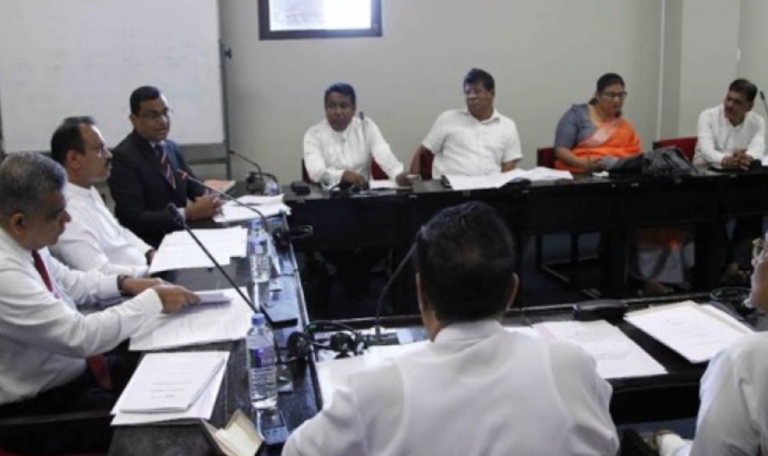
The Local Government Elections (Amendment) Bill presented by the Member of Parliament Hon. Premnath C. Dolawatta and Hon. Imthiaz Bakeer Markar as Private Members’ Bills along with Ministerial reports were considered by the Legislative Standing Committee recently (28) in Parliament.
The Legislative Standing Committee which took into discussion the said Bill was chaired by Hon. Ajith Rajapakse, Deputy Speaker of Parliament.
Standing Orders 53(4) dictates that "No clause that is not in accordance with the basic desire of the Honorable Member presenting a Bill shall be allowed to be included in a Bill." Accordingly, the committee directed to re-draft the Bill 126 considering the youth representation.
The Committee also instructed the officials of Attorney-General’s Department and Legal Draftsman Department to re draft the Bill No. 160, by deleting the Principal Enactment which includes with Women Representation by substituting it with Total Youth Representation with the concurrence of the sponsoring Member of Parliament.
Given that, the Committee was of the view that 25% of the youth from the aggregate should be represented in the first and second nomination lists of the local government elections. Accordingly, The Committee directed the officials representing the Legal Draftsmen and the Attorney General’s Departments to re submit the amended draft of the said Bill before the Committee.
Ministers Hon. Nimal Siripala de Silva, Hon. M.U. M. Ali Sabry, State Ministers Hon. Janaka Wakkumbura, Hon. Sisira Jayakody, Hon. (Dr.) Rajitha Senarathne, Hon. (Prof.) Channa Jayasumana, Hon. Ajith Mannapperuma, Hon. Sarathi Dushmantha, Hon. (Ms.) Kokila Gunawardena, Hon. Milan Jayathilaka, Hon. (Major) Sudarshana Denipitiya, Hon. Premnath C. Dolawatte, Hon. M. W. D. Sahan Pradeep Withana, Hon. Madhura Withanage, Hon. Sagara Kariyawasam, Hon. (Ms.) Manjula Dissanayake were present at the Committee meeting held.
Four new chairs appointed for Sectoral Oversight Committees
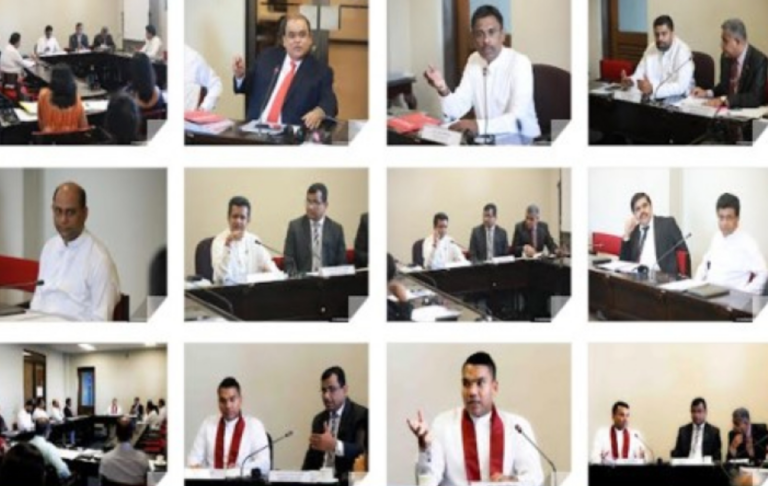
The appointment of new chairpersons into four other Sectoral Oversight Committees took place yesterday (09) in Parliament.
Accordingly, Hon. Namal Rajapaksa was appointed as the chair to the Sectorial Oversight Committee on International Relations. His name was proposed by Hon. Akila Ellawala and was seconded by Hon. S. M. M. Muszhaaraff.
Hon. Buddhika Pathirana was appointed as Sectorial Oversight Committee on Increasing Export of Goods & Services. His name was proposed by Hon. Udaya Gammanpila and was seconded by Hon. Karunadasa Kodithuwakku.
Moreover, Hon. Nalaka Bandara Kottegoda was appointed as the chair to the Sectorial Oversight Committee on Energy & Transport and his name was proposed by Hon. Gamini Lokuge and was seconded by Hon. Yadamini Gunawardena.
Hon. Gamini Waleboda was appointed as the chair to the Sectorial Oversight Committee on Alleviating the Impact of the Economic Crisis. His name was proposed Hon. M. W. D. Sahan Pradeep and was seconded by Hon. Dhammika Perera.
Mr. Tikiri K. Jayathilake Assistant Secretary-General (Legislative Services) and H.E. Janakantha Silva, Director of Legislative Services and Director of Communications (Acting) of Parliament participated in these meetings.
CPC fuel sales gone down during the last year
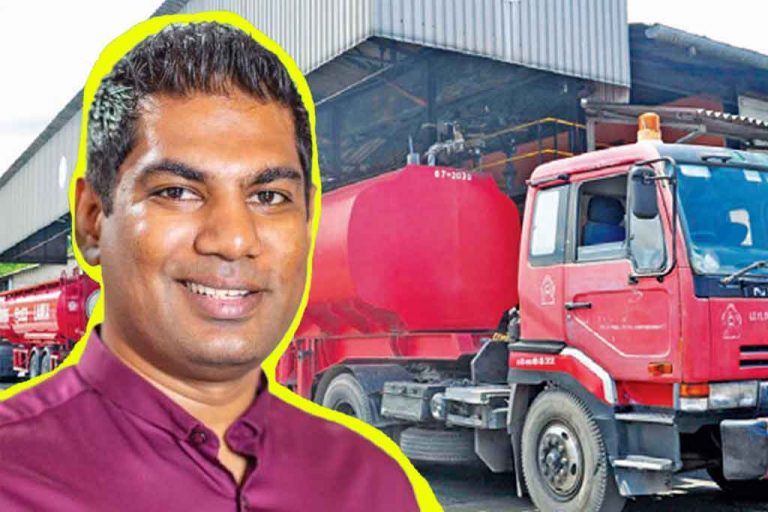
The Minister of Power and Energy Kanchana Wijesekera has pointed out in a tweet that the fuel sales of the Ceylon Petroleum Corporation have decreased in the last 13 months.
It shows that Lanka Auto diesel sales have decreased by 50%, petrol sales by 30% and kerosene sales by 70% when comparing January 2022 sales with January 2023 sales.
The court rejects the interim injunction requested by Channa Jayasumana against LNW!
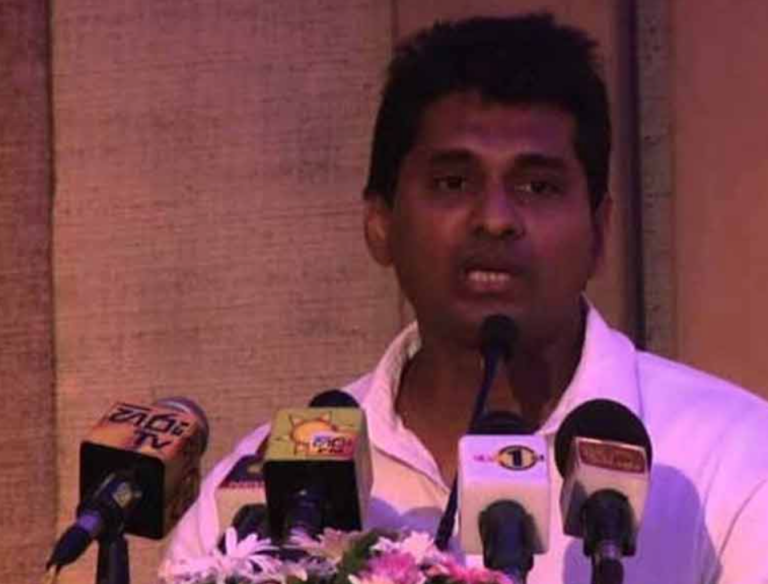
The case filed by former minister Channa Jayasumana claiming that he has been defamed by a story published on the Lanka News website was called before the Nugegoda District Court today (10).
During that case, Channa Jayasumana had also requested the court to issue an interim restraining order against Lanka News Web to refrain from publishing any news against him and the lawyers representing Lanka News Web had filed their written objections against that request.
Accordingly, the Judge of the Nugegoda District Court refused to issue the said interim order after hearing the request.
The case was adjourned to August 11 for the verdict.
Advocate V Choksi appeared for Channa Jayasumana and Senior Advocate Panduka Keerthinanda appeared for the respondent Lanka News Web on the instructions of Ranga De Silva.
LKR starts to depreciate again against the USD
The value of the Sri Lankan rupee against the US dollar has fallen today (10).
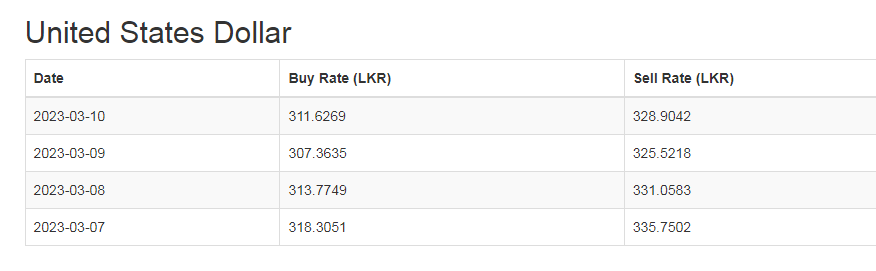
Accordingly, according to the Central Bank of Sri Lanka’s exchange rate chart, the buying price of one dollar was 311.62 rupees and the selling price was 328.90 rupees.
During the past week, the price of the dollar changed as follows.
Namal Rajapaksa appointed as the Chairman of the Sectoral Monitoring Committee on International Relations of the Parliament
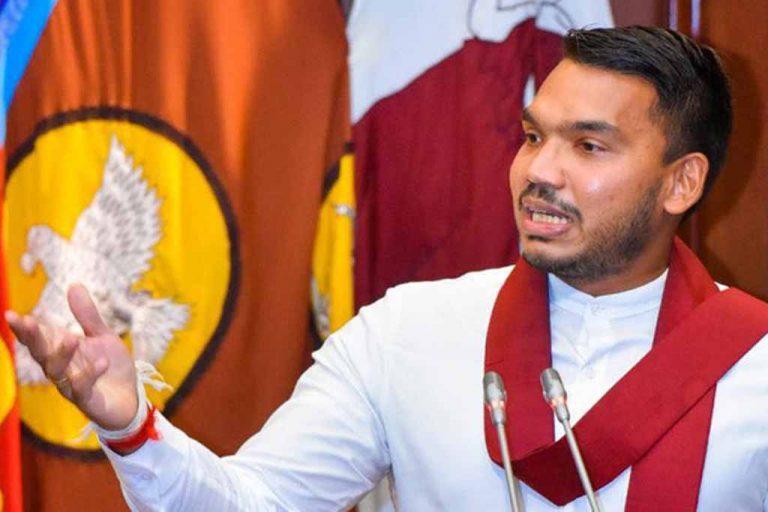
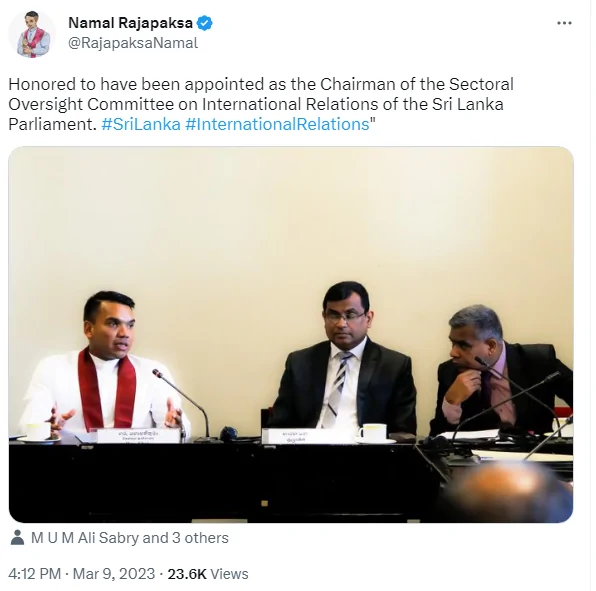
Sri Lanka Podujana Peramuna Member of Parliament Namal Rajapaksa has been appointed as the Chairman of the Sectoral Monitoring Committee on International Relations of the Parliament.
He says in a tweet that it is an honor for him to be appointed to this position.
Govt incurs massive man hour and economic loss in strikes and protests
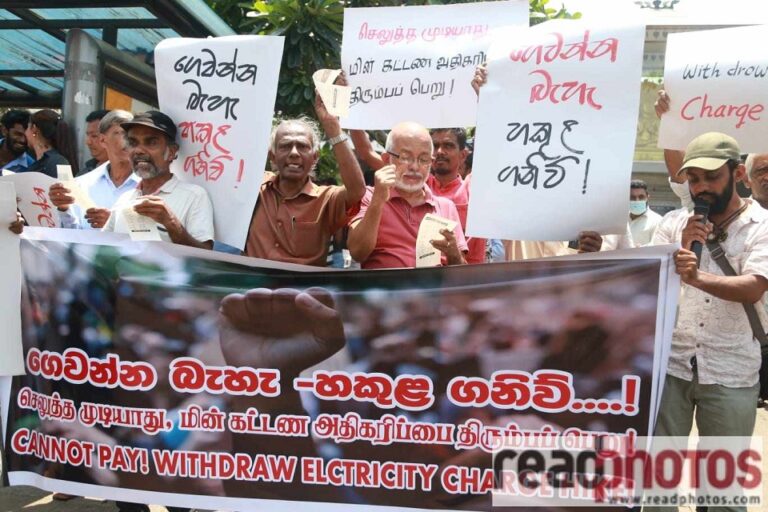
Colombo (LNW): Sri Lanka has undergone massive economic and man hour loss along with unprecedented social and economic activity disruption hindering the government’s economy building initiatives following the protest demonstrations, strikes and picketing campaigns of trade unions and university students.
They were demanding the reversal of the government revenue enhancing measures, cost of living and unavoidable price hike.
Half a million workers from across Sri Lanka’s public and private sectors joined strikes and protests recently in opposition to the International Monetary Fund measures being imposed by the government.
The measures include a pay as you earn (PAYE) tax on workers’ salaries, increased interest rates on bank loans, cuts in overtime payments, privatisations and tens of thousands of state-sector job cuts.
As a result of these protest campaigns the country has incurred a massive economic loss of billions of rupees and it has lost over 8 million man hours in two days of strike and protest demonstrations.
The damage caused to the public property by demonstrators is still to be assessed, official sources claimed.
According to a government survey, 44,540 public servants out of 148,451 in Sri Lanka’s six provinces walked out on strike on Wednesday.
This included 36 percent in the northwest, 40 percent in north central, 49 percent in the south, 25 percent in central, 21 percent in the east, and 19 percent in Uva.
The survey also revealed widespread participation by government doctors across all provinces.
This included 914 out of 1,322 in the northwest, 434 out of 690 in north central, 1,547 out of 2,472 in the central province, 942 out of 1,339 in the south, 454 out of 1,338 in the east, and 730 out of 918 in Uva.
Those participating included workers from the petroleum, electricity, water supply, port, banking, health care, postal, railway, school and university sectors.
The industrial action, in defiance of President Ranil Wickremesinghe’s strike-breaking Essential Public Services Act, included full- and half-day strikes, sick-leave campaigns, “go slows,” lunch-time pickets and other protests.
In the wake of Sri Lankans about to see a light at the end of the dark tunnel following first sign of purported economic recovery as a result of the unlocking of US $2.9 billion International Monetary Fund (IMF) bailout loan by March 20, the country’s progress is to be disrupted by ongoing strikes and protest campaigns, authorities alleged.
Trade unions and university student unions along with Buddhist priests have intensified their protest campaigns and strikes at work places, soon to be calling in a total ‘lockdown’.
As of March 9-10, labour unions plan to launch a series of strikes in the coming days to protest against the IMF-backed tax regime and other government revenue collection initiatives, in what the authorities claim as “a disruption against the country’s recovery from economic abyss.”
Members of the Federation of University Teachers Association initiated an indefinite strike on March 9. Additional unions will join the action in the coming days till March16, organisers announced.
Widespread disruptions are likely in the impacted sectors from March 13. The impact of the strikes will likely escalate from March 15.
While activists have not announced any plans for demonstrations, strike participants may hold protests in the coming days.
Authorities will likely deploy additional security in and around potential protest sites, including prominent government buildings, public squares, and roadways. Police may disperse crowds if gatherings are interpreted to be ‘disruptive.’
Sri Lanka tourism adopts new ways to cater to Middle East visitors

Sri Lanka’s tourism is trying to cater more to visitors from the Middle East countries, with special initiatives already underway, officials and industry players said on Thursday, as they seek to revive the crisis-hit country’s hospitality sector.
Tourism has traditionally been one of the key sources of Sri Lanka’s foreign reserves and in 2018 earned $4.4 billion, contributing 5.6 percent to the gross domestic product. But this dropped to just 0.8 percent in 2020, as the country received a major blow when the outbreak of COVID-19 halted global travel.
To rebound from the pandemic, Sri Lanka declared 2022 the “Visit Sri Lanka Year” to prioritize the tourism industry in general, but as the country sank deeper into its worst economic crisis in history, it began to realign its strategies and identified the Middle East among its top potential markets, pinning hopes on Gulf Cooperation Council countries, and especially Saudi Arabia.
“The Arabian market is a key market segment in Sri Lanka tourism,” Madubhani Perera, marketing director at the Sri Lanka Tourism Promotion Bureau, told Arab News.
She said it was of paramount importance now to build up confidence among visitors from the region so that they would feel culturally comfortable in Sri Lanka and, as industry players are trying to tap into the market, all future promotion campaigns should focus on “safety and respect for their culture.”
Saudi Arabia’s Ambassador to Colombo Khalid Hamoud Nasser Al-Dasan Al-Qahtani has also recognized Sri Lanka’s potential in appealing to Arab visitors, provided their comfort in traveling is taken care of.
“Sri Lanka is an ideal destination for tourists from the Kingdom…To make it more attractive, there must be an Arab-friendly environment,” he added.
One such initiative to boost the country’s popularity among travelers from the Gulf is now spearheaded by Sri Lankan hospitality veteran Fazal Mohammed, CEO of Al-Araf Hotels and Resorts, who has worked for 30 years in the Saudi hospitality sector, serving in managerial positions in brands such as Fairmont and Raffles in Makkah and Al-Faisaliah Hotel — one of the finest five-star hotels in Riyadh.
Mohammed’s most recent project is Horton Heights, a super luxury hotel located in the scenic hill city of Nuwara Eliya in Sri Lanka’s Central Province, which is expected to open its doors to guests this winter.
“The project is designed for high-end tourists and looks to cater to leisure travelers from the Middle East region,” Mohammed told Arab News, adding that it is designed to appeal to leisure travelers from the Middle East, with staff proficient in the Arabic language, high levels of privacy and fine dining experiences.
“Emphasis is also taken to allow the Middle Eastern traveler to enjoy his or her holiday in the island nation and ensure his daily lifestyle and habits are not disrupted,” he said. This means that “rooms and facilities will be made available to carry on daily prayers,” and halal food options will be available.
IMF bailout to help Sri Lanka revive US$1.6 billion Japan projects
The International Monetary Fund’s (IMF) eivident endorsement of Sri Lanka’s reforms and debt restructuring program is set to unlock funding of about 220 billion yen (US $1.6 billion) for projects suspended by Japan, official sources said
This was an immediate response to Prime Minister Dinesh Gunawardena’s appeal to Japan International Cooperation Agency (JAICA) to recommence all the ongoing projects that are temporarily halted due to fiscal issues.
According to the Prime Minister’s Office, he made this request when JAICA Director General for South Asia, Ito Teruyuki called on him recently
Teruyuki has assured the Prime Minister that JAICA projects would be resumed no sooner after the debt restructuring programme is finalised with the IMF, the PM’s office stated.
US$ 2.5 billion worth of 12 JAICA projects have been temporarily halted due to the fiscal crisis. JAICA delegation expressed satisfaction over the progress in debt restructuring plans, in which Japan also played a major role.
The Prime Minister thanked JAICA Director General for the continuous assistance provided to Sri Lanka for several decades for water treatment, sewerage, sanitation and solid waste treatment projects in several cities and towns.
He also requested JAICA to provide assistance in new areas such as renewable energy and electrification of public transport and railways.
Prime Minister Gunawardena also briefed the JAICA delegation about the steps taken to improve transparency and accountability in project implementation by enacting required legislation as recommended by the Committee appointed by the President.
He added that a Budget Act would be passed to ensure the continuation of nationally important projects and policies despite changes of governments in power.
IMF board approval, when it arrives, should help convince the Japanese government to restart several projects that are in different stages of completion, officials said
The projects involve a 74 billion yen upgrade to the South Asian island’s main international airport, and others including energy, water supply, rural infrastructure and waste management, they added.
Cabinet spokesman Bandula Gunawardana told reporters in Colombo Wednesday that Sri Lanka is expecting a restart of suspended loans, including from JICA. A spokesperson for JICA in Tokyo confirmed the importance of IMF decisions, while declining to elaborate on their effects on Japanese projects in Sri Lanka.
Resumption of JICA funding will help bolster development financing for the crisis-ridden nation that is looking to turn a corner from its worst economic crisis.
While countries such as India continued financing big infrastructure projects despite Sri Lanka defaulting on its overseas debt last year, Japan halted funding, and provided only humanitarian support.
The IMF said this week that its board will vote on the $2.9 billion bailout on March 20. The approval could also pave the way for financing from other creditors, including the Japan International Cooperation Agency, World Bank and the Asian Development Bank.
Sri Lanka in Talks With ADB, World Bank for Post-IMF Financing.Sri Lanka may have to sign new agreements, with revised timelines for the loans, officials said, without giving further details.