Home Blog Page 181

Opposition Leaders’ Statement on Arrest of Ex-President RW

0

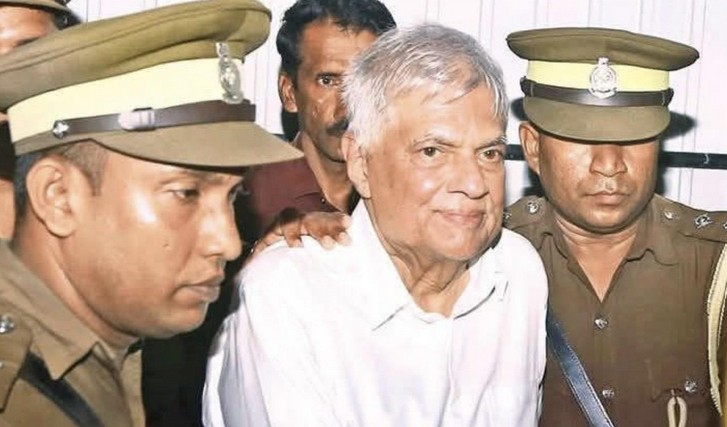
August 25, Colombo (LNW): A collective of opposition party leaders has voiced deep concern over the recent arrest of former President Ranil Wickremesinghe by the Criminal Investigation Department (CID), describing the move as an alarming departure from democratic principles and a sign of growing authoritarian tendencies within the state apparatus.

In a strongly worded statement, the opposition condemned the decision to detain the former Head of State on non-bailable charges, labelling it a serious encroachment upon the foundations of Sri Lanka’s multiparty democracy. The group warned that the unfolding situation signals a deliberate erosion of democratic norms and urged the public to remain vigilant in defence of the country’s constitutional values.

The statement draws attention to what the signatories call an increasingly aggressive use of legal mechanisms to target political opponents. In particular, it questions the legitimacy of remanding a former president over allegations that remain under investigation, pointing out the inherent difficulty in neatly separating the official and personal expenditures of a Head of State. Such actions, they argue, create a dangerous precedent where political rivalry may masquerade as legal accountability.

The opposition leaders further contend that the charges levelled against Wickremesinghe appear to be driven less by legal merit and more by political motivations, with the law being selectively interpreted to serve partisan ends. They also raised concerns about what they perceive as creeping politicisation within the Attorney General’s Department—warning that if these patterns are allowed to continue unchecked, they could lead to the dismantling of institutional independence.

The statement concluded with a call to citizens across the country to oppose what was described as a “clear drift toward authoritarianism,” urging them to make full use of peaceful and democratic means to resist the dismantling of civil liberties. The signatories stressed that the country’s hard-won freedoms and democratic traditions must be preserved—not just for the present, but for the generations to come.

Ukrainian President Thanks Sri Lanka for Independence Day Wishes, Highlights Bilateral Ties

0

August 25, Colombo (LNW): Ukrainian President Volodymyr Zelenskyy has expressed his appreciation to President Anura Kumara Dissanayake of Sri Lanka for his warm greetings on the occasion of Ukraine’s Independence Day.

Taking to social media platform ‘X’, President Zelenskyy acknowledged the gesture, stating that Ukraine values its friendly relations and cooperation with Sri Lanka—relations grounded in mutual respect and a shared commitment to peace and prosperity.

He further noted the potential for deeper bilateral engagement, saying, “We are confident that our relations hold potential for further development, bringing benefits to both nations.”

President Dissanayake, in a formal message to mark the 33rd anniversary of Ukraine’s independence from the Soviet Union, reaffirmed Sri Lanka’s goodwill towards the Ukrainian people. He expressed hope that the longstanding ties between the two countries would continue to flourish in the spirit of friendship and mutual understanding.

In his letter, the Sri Lankan President also extended his solidarity with Ukraine during its ongoing challenges, stating, “It is my earnest hope that the challenges and hardships presently confronted by Ukraine would be resolved soon, restoring peace, harmony and stability of the country.”

Long-Distance Buses to Operate Under Unified Timetable from Midnight Tonight

0

August 25, Colombo (LNW): The National Transport Commission (NTC) has announced a significant overhaul in long-distance passenger transport, with both Sri Lanka Transport Board (SLTB) and privately operated buses set to run under a single, unified timetable from midnight today (25).

This new schedule will apply to a wide range of routes connecting Colombo with key destinations across the island, including:

Colombo to Chilaw, Puttalam, Anamaduwa, Eluwankulama, Kalpitiya, Mannar, Talaimannar, Kuliyapitiya, Nikaweratiya, Anuradhapura, Vavuniya, Kilinochchi, Jaffna, Kankesanturai, Karainagar, and Thunukkai. The route from Negombo to Kalpitiya is also included in the unified system.

NTC Chairman, Eng. P.A. Chandrapala, stated that operations will be launched from the Bastiyan Mawatha Private Bus Stand in Colombo, with the first services departing at midnight. He emphasised that the coordinated timetable is intended to streamline services, reduce passenger waiting times, and eliminate route duplication between public and private operators.

As part of the new system, bus drivers will be provided with designated rest periods, including a break after every four and a half hours of driving, to promote road safety and driver wellbeing.

In addition, Chairman Chandrapala confirmed that the NTC will implement continuous monitoring to ensure that passengers have access to clean and hygienic food facilities along their journey.

Government to Launch Major Development Drive in North Starting September

0

August 25, Colombo (LNW): The government will roll out a series of large-scale development initiatives beginning next month, with a particular focus on the Northern Province, according to Minister Bimal Ratnayake.

Speaking to the media, the Minister confirmed that the first phase of this national development campaign will be launched in Jaffna in early September, under the leadership of President Anura Kumara Dissanayake.

Amongst the headline initiatives is the creation of a new “Coconut Triangle” in the Northern Province, with operations centred in Mullaitivu, part of the wider Vanni region. Development activities linked to this agricultural initiative are set to begin on September 02, aiming to revitalise local economies through increased cultivation and investment in supporting infrastructure.

Minister Ratnayake also highlighted plans to open an international-standard sports complex in the Mandaitivu area of Jaffna, marking a major investment in the region’s sports and recreational infrastructure. The complex is expected to serve as a hub for athletic development and regional events.

In a bid to improve public services, particularly for residents in the North, the Minister announced that a digital platform will be introduced to streamline the process of obtaining passports through the Jaffna District Secretariat. This measure is intended to resolve a longstanding grievance among locals, who have faced persistent difficulties with access to such services.

Additional development projects, spanning various sectors, are also scheduled to be launched in the coming weeks, although specific details have yet to be disclosed.

The government has indicated that these efforts are part of its strategy to deliver equitable development across all provinces, with particular emphasis on areas historically under-served.

Magistrate Questions Premature Submission of Case File in Forged Property Deed Probe

0

August 25, Colombo (LNW): Concerns have arisen within the judiciary after Mount Lavinia Magistrate Chathurika de Silva raised questions over procedural irregularities in an ongoing investigation concerning an allegedly forged property deed tied to a public institution.

The matter involves a two-storey building belonging to the National Workers Institute, reportedly leased out under questionable circumstances for Rs. 3.6 million. The property is at the centre of a legal battle that implicates several high-profile political figures, including Minister Wasantha Samarasinghe, Deputy Minister Mahinda Jayasinghe, and Kaduwela Mayor Ranjan Jayalal.

During proceedings held on August 22, Magistrate de Silva questioned why the case file had been submitted to the Attorney General’s Department before statements had been recorded from the named suspects.

In response, representatives of the Colombo Fraud Investigation Bureau (CFIB) were unable to provide a clear justification for the early handover of the file. They did, however, confirm that Minister Samarasinghe had since provided a statement, in which he claimed to have been involved in the property lease merely as a representative of a decision made by the executive committee of the National Workers Congress Trade Union.

Under a directive previously issued by the court, the three politicians in question were called to appear before the CFIB, and their statements have now been recorded and submitted.

Despite this development, concerns persist about the timeline of the investigation and the apparent reluctance of the police to carry out arrest orders issued earlier in the process.

Appearing on behalf of the complainant, President’s Counsel Maithri Gunaratne criticised the conduct of the police, accusing them of deliberately delaying the case under the pretext of awaiting direction from the Attorney General. He alleged that law enforcement had failed on two separate occasions to execute arrest warrants and had misrepresented the status of the investigation to the court.

The case has been adjourned until September 26, when it will resume under a new magistrate, as Chathurika de Silva has been reassigned to another court.

Prior to her departure, Magistrate de Silva clarified that her transfer was a routine decision made by the Judicial Service Commission and emphasised that no external influence had affected her handling of the matter.

Planned Nationwide Doctors’ Strike Halted Following Government Assurances

0

August 25, Colombo (LNW): A planned nationwide strike by government medical officers across Sri Lanka has been cancelled just hours before it was set to begin, after key representatives from the health sector secured written commitments from authorities.

The Government Medical Officers’ Association (GMOA), which had earlier announced an island-wide token strike to commence at 8:00 a.m. today (25), made the decision to withdraw the action following late-night talks with Minister of Health and Mass Media Dr Nalinda Jayatissa.

The meeting also included senior officials from the Ministry of Health.

According to Dr Prabath Sugathadasa, Secretary of the GMOA, the decision was taken in light of written assurances provided by the Health Minister to address their concerns, some of which have been building over months of frustration within the public healthcare system.

The strike had been initially proposed as a response to a series of long-standing grievances, including the deteriorating state of rural hospitals, government pressure on patients to procure medicines privately due to shortages, and systemic failures jeopardising the nation’s free healthcare services.

The Association warned of an imminent breakdown in the quality of care if urgent reforms were not enacted.

In particular, the GMOA has repeatedly raised alarm over what it describes as a “breakdown” in the process of deploying doctors to underserved areas, accusing the Ministry of Health of operating with opacity, inefficiency, and disregard for proper administrative procedure.


A few places to witness showers: Mainly fair weather to prevail elsewhere (Aug 25)

0

August 25, Colombo (LNW): Showers or thundershowers may occur at a few places in Uva and Eastern provinces and in Mullaittivu district after 2.00 p.m.

Mainly fair weather will prevail over elsewhere of the island.

The general public is kindly requested to take adequate precautions to minimise damages caused by temporary localised strong winds and lightning during thundershowers.

Marine Weather:

Condition of Rain:
Mainly fair weather will prevail in the sea areas around the island.

Winds:
Winds will be westerly to south-westerly and wind speed will be (25-35) kmph.

Wind speed can increase up to (50-55) kmph at times in the sea areas off the coast extending from Puttalam to Kankasanthurai via Mannar and from Matara to Pottuvil via Hambantota.

State of Sea:
The sea areas off the coast extending from Puttalam to Kankasanthurai via Mannar and from Matara to Pottuvil via Hambantota may be rough at times.


The ‘Rainbow’ that faded away four years ago

0


Four years ago, on a day like today, Mangala Samaraweera’s life journey came to an end. He was a politician, humanitarian, aesthete, and above all, my dearest friend. Four years ago, on a day like today, I received news of his passing. It was a message that pained me to the point that I could not put words to the extent of my sorrow. I still cannot. Four years have passed, but even now the shock reverberates through my heart, echoing with quiet grief.

How did Mangala become such an inseparable part of my life? This is a question that I have pondered off and on.

In politics, Mangala and I shared closely aligned ideologies. At times, there were differences of opinion on various matters, and yes, there were debates, sometimes heated arguments too, but in the end, we always had the ability to bring those disagreements to a place of mutual understanding.

What we shared went far beyond politics — it was a deep friendship built on warmth, loyalty, and trust. When political camaraderie and genuine personal friendship intertwine, it creates something rare and beautiful.

Even when our political views diverged, there was never even an iota of bitterness. What sustained us was that deep-rooted friendship, and the mutual respect we had for one another. That was the true foundation of our bond.

Mangala once wrote a note on my birthday: ‘I am yet to meet a friend as close to me as Krishantha is. I am yet to meet anyone who has had as many fights with me as Krishantha has. Perhaps because we are very close friends, he would get angry over the most trivial matter. He would shout in his deep voice and storm off. I would think “that’s it!” But his anger was like a bottle of soda that had just been opened. By morning, it’s gone. The inevitable SMS the following morning would tell me that the anger has been replaced by renewed and deeper friendship. We have had hundreds or even thousands of such fights over the years.’

That note he wrote about me is just as valid when spoken about him.

Mangala dreamt of a beautiful, diverse country and world — free from racism, religious extremism, or discrimination.

As a Minister, he made immense sacrifices to uplift Sri Lanka’s image on the international stage. The dark, dated portrayal of our country was reimagined by Mangala in full color. He helped the world see Sri Lanka
as a land of peace and reconciliation.

It was because of his diplomatic efforts that we saw record-breaking numbers of foreign visitors come to this country.

And at a pivotal moment in our nation’s history, when he was given the finance portfolio, he rose to the occasion with grace, even though that had never been his subject. The progressive budget Mangala introduced became a landmark moment in Sri Lankan history.

How did Mangala succeed so remarkably?

He had a unique vision — and more importantly, he knew how to empower capable people to bring that vision to life. He mastered the art of selecting the right individuals, trusting them, and giving them the
freedom to deliver. He truly understood the value of human talent, listened attentively, and treated people with respect.

Many politicians are surrounded by gatekeepers who build walls between them and the people. Mangala never tolerated such hollow characters. He made sure there were no curtains, between himself and professionals, friends, officials, or the public. Distance and division were not things that he tolerated, and he never allowed anyone close to him to create such things.

Mangala was a progressive, freedom-loving human being. He had a zest for life that was magnetic. He drew me in with his vision of a society that transcended nationalism and religious dogma. When flames of ethnic
tension threatened to spread in this country, Mangala stood, unconditionally, with the oppressed. What mattered to him was humanity and not someone’s race or colour. The vibrant world he dreamed of and
strived to create, there was space for everyone to live with dignity.

Mangala changed tradition. He never bowed down to power or wealth. That’s why people called him “Mangala, who never bowed his head.”

He was a political figure — but unlike many politicians, Mangala had no secret life. He lived openly and authentically. That made him different. That made him stand out. He acted in accordance with his conscience at all times, without exception. That conscience was his compass and no matter what the cost, he never betrayed it.

Mangala was a rare politician, also, in that he never responded to criticism or even virulent attacks with personal attacks. His responses were logical. He privileged reason over emotion. There was not a shred of
hatred in him, either in word or deed. He even smiled at those who unfairly judged him. It was as though he was amused or convinced that one day such people would realise they were wrong. Indeed, the more he
was criticized, the more honest and courageous he became.

It’s easy to see people drift away from politicians once their power fades. But no one who came close to Mangala ever left him.

Such was the vastness of his heart. With each passing day, there was more to learn, more to understand from him.

I believe Mangala was too great for this country. Or perhaps, this country never truly understood Mangala.
Maybe he carried some quiet disappointment about having to leave a land where many failed to grasp his worth.

But from the moment he passed away, people began to realize just how immense Mangala really was.
Some of the very words he was once criticized for are now being quoted as profound truths.
Tragically, it’s only after his passing that many are beginning to understand the truths Mangala spoke.
Mangala Samaraweera — a rare kind of politician — departed this life leaving behind a void, that cannot be filled.

The kind-hearted, loyal friend we knew as Mangala left us with a haunting thought in every critical moment:
“If only Mangala were here…”

I still remember how he once wished me for my birthday in 2020, saying:

“Take a break until this period of madness is over. The best days of the struggle are still ahead.”
That was when our motherland felt like forbidden ground for people like us.

But the friend who told me to wait until the right moment came, chose the eternal rest of life even before that moment arrived. The space he left behind, though, remains empty. Sadly.

Krishantha Prasad Cooray

UK–Sri Lanka Debt Deal: A Boost amid Authoritarian Turn in Governance

0

By: Staff Writer

August 25, Colombo (LNW): Sri Lanka and the United Kingdom formalised a US $90 million bilateral debt-restructuring agreement on 22 August 2025, marking a pivotal step toward economic stabilization.

Under the deal, Sri Lanka’s external obligation is restructured to include US $86,068,439.80 and JPY 582,940,944.31, providing much-needed fiscal relief

The accord was signed by Finance Ministry Secretary Dr. Harshana Suriyapperuma and British High Commissioner Andrew Patrick, underscoring the deepening bilateral relationship

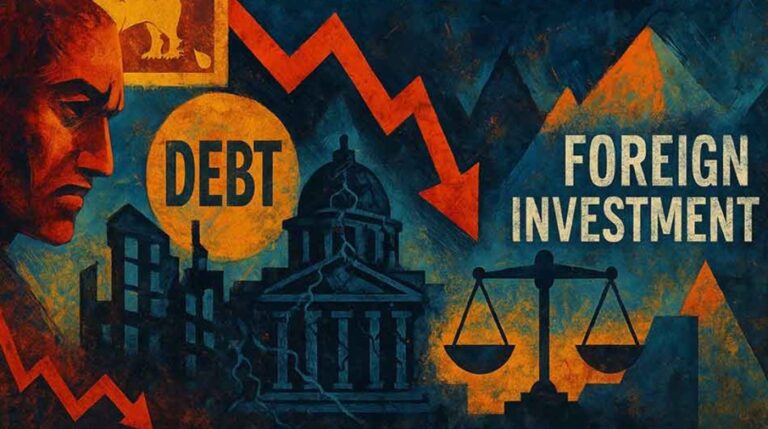
This agreement plays a critical role in Sri Lanka’s broader recovery strategy following its historic 2022 default amid soaring inflation and shortages of basic necessities.

Restructuring debt with bilateral creditors such as the UK is a prerequisite for sustaining the nearly US $3 billion IMF bailout program, which remains central to further fiscal reforms and economic stabilization

Economic Implications:

The restructuring helps lower debt servicing pressures, freeing resources for public investment, social welfare, and growth initiatives. Multilateral analyses suggest that pursuing robust fiscal governance and accountability reforms could boost Sri Lanka’s GDP by over 7 percent and reduce the debt-to-GDP ratio by more than 6 percentage points over the next decade

That said, the broader debt landscape—including previous agreements with China, Japan, and successful sovereign bond exchanges—remains complex and underscores the urgency of continued restructuring efforts

Authoritarian Governance Concerns:

While the financial deal brings relief, it coincides with growing alarm over Sri Lanka’s governance trajectory. Critics argue that the current administration is consolidating power, with decisions increasingly centralized and authoritarian in tone.

Although not official, domestic observers note a shrinking civic space, weakened checks and balances, and a tilt toward more autocratic leadership—raising concerns that debt-financed “recovery” could come at the cost of democratic erosion.

Governance-linked debt instruments, such as those previously issued in 2024, were intended to incentivise fiscal transparency through conditional interest rate reductions—but they also highlight the fragility of relying on complex financial mechanisms amid weak institutions

The bilateral debt restructuring with the UK represents a valuable lifeline for Sri Lanka’s hard-pressed economy and strengthens its IMF-backed path to stability.

Yet, realising its full benefit hinges on embracing genuine reforms, preserving democratic norms, and avoiding the specter of creeping authoritarianism—a balance vital for both economic recovery and long-term institutional resilience.

“The accusations are without merit. Even if they were true, they would not constitute any criminal or even unacceptable behaviour in Europe”- Eric Solheim

0

By: Isuru Parakrama

August 25, Colombo (LNW): Prominent global environmentalist and diplomat Eric Solheim has issued a strong call for the immediate release of Sri Lanka’s former President Ranil Wickremesinghe, expressing serious concern over his health during detention.

In a statement shared online, Solheim aligned himself with a growing number of leaders from Sri Lanka, South Asia, and the international community who are demanding Wickremesinghe’s release. He praised the former president for his leadership during Sri Lanka’s severe economic and political crisis in 2022, describing him as the figure who “stood up to save Sri Lanka when the nation reached rock bottom.”

Solheim also criticised the basis of the charges against Wickremesinghe, stating, “The accusations are without merit. Even if they were true, they would not constitute any criminal or even unacceptable behaviour in Europe.”

Whilst affirming his support for Sri Lanka’s anti-corruption efforts, Solheim urged authorities to direct their focus toward substantive issues. “Please focus on real issues,” he stated, highlighting what he views as a misdirection of justice.

Full Statement: