September 19 (Monday) has been declared as a special public holiday in memory of Her Majesty Queen Elizabeth the Second, the longest serving monarch in Britain, who passed away last week.
Her Majesty’s funeral is set to be held on September 19 and the date has also been declared as a national day of mourning.
The announcement was made by the Ministry of Public Administration and Home Affairs.
As Sri Lanka struggles with the ongoing economic crisis, the country’s trade balance recorded a surplus last July. While this surplus reflects the continued decline in import expenditure, it is also reflective of the contribution the apparel industry continues to make towards Sri Lanka’s economic recovery and growth.
Overall, Sri Lanka has attracted more than $228m in FDI during the first quarter of 2022, a 17% increase compared with the corresponding period.
Sri Lanka has set a target of US$6 billion for the apparel industry export revenue for the year 2022.
With seven months in to the 2022, As per the Export Development Board of Sri Lanka, by end of July 2022, total value of apparel exported stands at US$3.4 billion.
It includes, US$1.4 billion to USA, US$ 965 million to EU, US$455 million to UK and another US$485 million to other countries such as Middle East, Japan, and Australia.
This leaves US$2.7 billion to be made over the period from Augustto December this year as compared to year on year (YoY) figures, for the first seven months, apparel exports have increased to all the destinations. This is encouraging and needs to keep the trend going, industry sources said.
According to calculations made by the Joint Apparel Association Forum (JAAF), total apparel exports in July 2022 (USD 522.14 million) experienced a 22.4% increase in comparison to July 2021 apparel exports ($425.75million).
The exports to Sri Lanka’s major apparel export markets – the US, EU and the UK and other countries recorded an increase of 16.93%, 32.3%, 29.32%, and 15.77% respectively.
Apparel & Textile exports increased by 19.73% to US$ 2,967.39 Mn during the period of January to June 2022 compared to the same period of 2021.
Except Made-up Clothing Accessories (-8.7%), Yarn (-21.38%) and Textile Floor Coverings (-3.28%); exports of other sub categories of Apparel & Textiles sector increased.
Secretary General of JAAF, Yohan Lawrence highlighted that trade agreements are essential to sustaining the performance of Sri Lanka’s apparel exports.
Sri Lanka is to benefit from UK’s new Developing Countries Trading Scheme (DCTS) and the apparel industry has consistently highlighted the importance of retaining GSP+ post-December 2023.
The current schemes unfortunately only have a utilization of around 50% for apparel due to the restrictions on the Rules of Origin on fabric which mean that only fabric from a SAARC country are permitted for cumulation purposes.
JAAF has highlighted this constraint and has requested that this aspect be addressed in future iterations of the GSP scheme.
As per the Central Bank Annual Report 2021, of Sri Lanka’s industrial exports, textiles and garments amount to 43.5%. Textile and garments export value in the same year amounted to USD 5,435.1 million.
The resilience of the apparel industry, along with policy support received by the government amidst the prolonged crisis, has enabled the industry to continue this positive start to 2022, while aiding the country’s economy.
After a methodical review, the Government will soon overhaul the existing social welfare schemes and their benefits targeting delivery of subsidies to the poor and vulnerable communities.
The identification of needy recipients countrywide is to be made via a credible procedure while evaluating existing schemes without political differences or favouritism, Finance Ministry sources divulged.
The ministry is in the process of establishing transparent and objective criteria to identify recipients of welfare support to ensure that relief is received by the most deserving households, a senior official said.
The improved targeting will enable higher allocations to recipients and will be in the form of cash transfers directly to the bank account of the recipient. This scheme with a strong social safety network is expected to be implemented in the coming months, he disclosed.
The aim is to implement an adaptive social protection network system through use of the government’s and international financial agency funds which can quickly provide support to vulnerable groups and provide relief for communities affected by the economic crisis.
The assistance of the World Bank and the Asian Development Bank has been mobilized through its repurpose project funds for emergency spending on social protection needs of these two affected poorest of the poor sectors.
The Welfare Benefit Board will introduce a new QR code system under Finance Ministry criteria soon for the identification of those in actual need of financial assistance due to the current economic crisis, among the recipients of Samurdhi, Elders’ and the Physical Disability allowances.
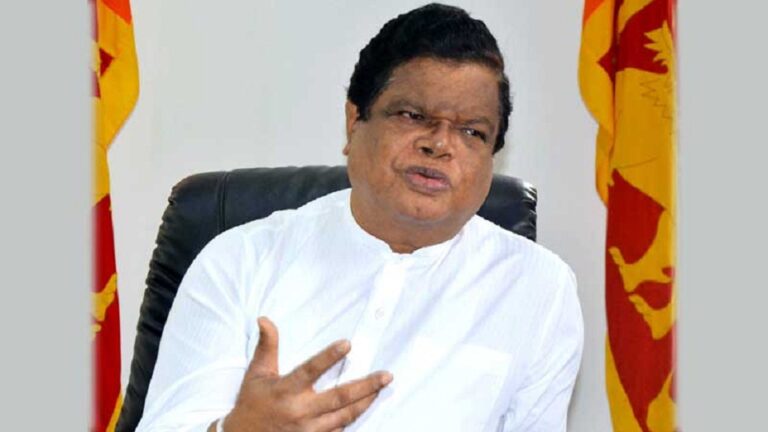
Chairman of the Welfare Benefit Board, B. Wijayarathne said it is estimated that nearly 3.9 million families will apply for this programme.
It will include the 1.75 million Samurdhi beneficiary families, around 416,000 elderly, about 72,000 disabled persons and about 49,000 other persons.
A data system is to facilitate the subsidy programme to the needy people in a targeted manner, he said adding that the aim is to evaluate the number of beneficiaries with all this data.
The exact amounts of cash subsidy for these vulnerable groups under this new scheme are yet to be decided, the official said.
Sri Lankans living in Zambia, via the Zambia Sri Lanka Friendship Association, recently donated 1150 Rabies Vaccines to the Ministry of Health, Sri Lanka. The donation was coordinated by the Honorary Consul of Sri Lanka to Zambia, Elmo Jayatileke with Mr. Ronnie Peiris while Dr. Anver Hamdani from the Ministry of Health, coordinated it from Sri Lanka.
According to the Honorary Consul, Sri Lankans in Zambia have also donated medicines valued at approximately USD 10,000 in their individual capacities.
In a bankrupt country like Sri Lanka why should the top two officials in the Central Bank and the Treasury be paid over Rs 2.5 Million a month. The man who justified the default as a soft default and ruined a nations credibility – Nandalal is paid according to activist Ravi Kumudesh Rs 2.5 Million a month , a pension and in addition gets one million from the IMF.
Where is the governance? Mahinda Siriwardana – The Secretary of the Ministry of Finance where even Dhammika Perera expressed utter disgust for delays, is paid Rs 2.5 Million a month with allowances.
The Governor also gets Rs 2 Million for a suit allowance annually and a house, medical and Benz Car. These officials are paid more than even the private sector Bosses.
But there contribution other than a few SJB MPs who know more economics than John Maynard Keynes, the English economist whose ideas fundamentally changed the theory and practice of macroeconomics and the economic policies of governments, have been disastrous from all fronts.
What is parliament (unfortunately majority has no O/Ls) doing to stop this excesses. The country cannot afford to pay incompetent officials like these two officials so much money when the majority can’t even get one meal day. The President must wake up before it is too late for the people. Today Sri Lanka’s credit ratings are in tatters because of the action of these officials. But they are the darlings of the opposition.
What is the Aragalaya doing with this abuse? Stop this abuse of power now.
The State Minister of Foreign Affairs, Tharaka Balasuriya, assumed duties at the Ministry of Foreign Affairs today, 9September, 2022 at a modest ceremony. The Foreign Secretary, Aruni Wijewardane and senior officials of the Ministry were present at the occasion.
Addressing the officials, State Minister Balasuriya stated that he is looking forward to supporting the Foreign Minister Ali Sabry in continuing the mandate of the Ministry of Foreign Affairs in an efficient manner in order to revitalize the economy of Sri Lanka during the current economic situation prevailing in the country.
First elected to Parliament in 2015, State Minister Balasuriya, held the State Ministerial portfolio of Social Security, following the establishment of the new Government in November 2019. Previously, he was a Member of the Sabaragamuwa Provincial Council, to which he was elected in the year 2012.
State Minister Tharaka Balasuriya earned a Bachelor of Arts degree, majoring in Mathematics and Economics from the University of Wisconsin, US and has a Master’s degree in Business Administration from the Cardiff Metropolitan University, UK. He had his primary education at the Colombo International School.
The public’s opinion will be build to defeat President at his own proposed referendum, said the Samagi Jana Balawegaya (SJB), addressing a briefing called in by the Party today (12).
MP Tissa Attanayake attending the briefing said instead of providing solutions to the basic problems of the people who are living amidst many challenges, the President and the government have resorted to electoral law reforms and constitutional amendments.
Pointing out that the country’s economic has completely collapsed, Attanayake stressed that there is a huge crisis involving Sri Lanka’s forex reserves and the obtainment of credit facilities.
Recalling President Wickremesinghe’s calling for a referendum over any obstacle in Parliament to electoral law reforms, Attanayake reminded that the people of this country do not wish for the holding of a referendum, but a general election. The current grotesque version of Parliament should be replaced with a Parliament that actually represents the public’s opinion in view of establishing a stable government, he emphasised.
The SJB MP added that if the President acts otherwise to continue with a referendum, the public’s opinion will be built to a point where his opinion is defeated.
US Ambassador to Sri Lanka Julie Chung on Friday (09) night visited new State Minister of Tourism Diana Gamage at her private residence in Thalawathugoda, Akuregoda.
The two met for dinner with a cordial discussion and the event was attended by the Second Officer of the US Embassy, Minister Susil Premjayantha, former Finance Minister Ravi Karunanayake, Dr. Senaka De Silva, who is Gamage’s husband, and some of the members of the State Minister’s private staff.
The two parties paid attention on the current economic crisis of the country and the measures that can be taken to promote tourism as a solution. Former Minister Karunanayake also contributed his ideas and suggestions in this regard, according to The Leader.
The manner in which the Sri Lankan government acted regarding the protesters at the people’s struggle triggered by the economic crisis cannot be accepted, said the acting High Commissioner for Human Rights addressing the 51st Session of the United Nations Human Rights Council, which commenced today (12) in Geneva, Switzerland.
The commencement of the Session was followed by a minute of silence in commemoration of Her Majesty Queen Elizabeth the Second of Britain, who passed away last week.
Her comments on Sri Lanka comes in following a report on the country presented on the first day of the Session itself. The High Commissioner also informed the member states about the suffering of the Sri Lankan people due to economic problems and the drained dollar reserves.
Sri Lankan Foreign Minister Mohammed Ali Sabry who led the local delegation at the Session told the member states that a number of measures are being taken to assure democracy, including the adaptation of the 22nd Amendment to the Constitution, adding that any arrest made during the people’s protest was in compliance with the country’s rule of law and that only those accused of committing violence were arrested and not any peaceful protesters.
Meanwhile, strong protests are being carried out in Geneva against the current Sri Lankan regime regarding a number of issues including the repression of activists. The event is endorsed by Sri Lankans living in European countries.
The disconnection of power supply to consumers who fail to pay their bills will be applied in an equal manner and no separate law will apply to the clergy, said Energy Minister Kanchana Wijesekara in a tweet yesterday (11).
The Minister made this observation in response to a statement made by Ven. Omalpe Sobhitha Thero, who confronted that many monasteries are not of capacity to pay the increased electricity tariffs.
The Thero added that despite the clergy being capable of paying the increased bills, the bills will not be paid and that a national movement will be launched in objection to the government’s decision to revise the electricity tariffs.
However, the Subject Minister is of the strong view that it is mandatory to pay the bill, if electricity is used.
Power supply will be disconnected to those who do not pay their bills continuously, Wijesekara went on, adding that the Thero’s comments are politically influenced.
MIAP
Statement made by Former Parliament Member & Former Leader of the Jathika Hela Urumaya, Ven Omalpe Sobhitha Thero👇🏾
Unfortunately The Ven Thero falls into the same category as the political category as stated below. Non payment of Electricity bills will result in disconnection. pic.twitter.com/X3AksXKdVu