
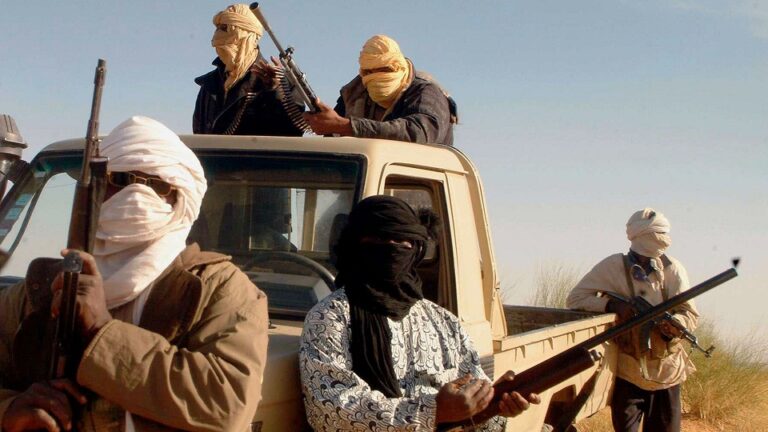
A Sri Lankan gemstone company that was key to sanctioned terrorist facilitator Ahmed Luqman Talib’s revenue generation in support of Al-Qaeda, continued doing business after Talib was sanctioned and arrested, a research and data analytics company said.
Talib and a gemstone business that he owned in Australia were sanctioned by the U.S. Department of the Treasury in October 2020, an action followed by his arrest by Australian police in 2021 and the designation of two of his relatives and business associates more recently by the U.S. government in November 2022
A gemstone trading company based in Sri Lanka, was a key partner in Talib’s revenue generation to support Al-Qaeda, an elite research and data analytics company, Kharon, said.
The trading company shares an address in the south-west coast of Sri Lanka with Mohammed Haris Nizar, who is one of Talib’s relatives and business partners most recently sanctioned by the U.S. government on November 9.
In the fall of 2020, the gemstone trading company based in Sri Lanka shipped precious stones worth more than USD 100,000 to Talib and Sons Pty Ltd, the Australian gemstone company owned by Talib that was sanctioned in 2020, according to trade data reviewed by Kharon.
Talib’s and Nizar’s business dealings in Sri Lanka have generated nearly $200,000 per year in profit since 2018, and the majority of Talib’s income was derived from one-third of those proceeds, according to the Treasury.
Right Gems continued to ship products to customers in 2021 after Ahmed Talib and his company were sanctioned by the U.S. government.
The international trail of Talib’s Al-Qaeda facilitation network extends into South America. Al-Qaeda facilitator Ahmed Talib was also a managing partner of the Brazil-based company Ottoman Trade Caravan Importacao e Exportacao Ltda. in 2020, according to corporate data.
Another manager of Ottoman Trade Caravan is Kais Altabbaa, who simultaneously worked for Brazilian jewelry business Aisha Stones, which shares an address and telephone numbers with Ottoman Trade Caravan.
Altabbaa himself sold and shipped repeated small amounts of rough gemstones to Right Gems in December 2020, according to trade data reviewed by Kharon.
Sri Lanka Gemstone Company links with funding Al-Qaeda revealed.
Public servants’ salaries in crisis – SAMURDHI allowance delayed
The General Treasury has faced a financial crisis in 2023 worse than expected, President Ranil Wickremesinghe informed the Cabinet.
Commenting on the scenario at today’s (10) Cabinet briefing, Cabinet Spokesman Minister Bandula Gunawardena said the settling of public servants’ salaries and SAMURDHI allowance may also face a delay by a week or two.
He noted that the amount of revenue that can be collected via taxes has greatly reduced at the beginning of 2023 due to the contraction of the economy in 2022, and that the General Treasury does not possess any sufficient income for the day-to-day running of public servants’ salaries, retirement payments, interest paid for government loans, and other welfare expenses.
In the backdrop, the payment of government employees’ salaries at the end of every month has become a problem, he revealed.
Accordingly, the Cabinet has been informed to slash five per cent of the budget allocated for each ministry, Gunawardena went on, adding that the President has informed the Cabinet that payment of SAMURDHI allowance may be dragged in by a short period of time due to the difficulties faced in January for salary settlements.
MIAP
Changing The Role Of The Opposition – A Truth Omitted By Many
In a country where the Political Opposition so conveniently is typical in its resorting to criticism over whatever the move made by the Government and seizing of power in the first successful attempt, it would be an undeniable fact that Sri Lanka’s Opposition’s role has taken an all-new course when Mr. Sajith Premadasa took office as the Leader of the Opposition. His work during the last three years has proven it on an overwhelming scale, dragging away the image of the Opposition from the so called double-games and ‘mansion-conspiracies.’
The Office of the Leader of the Opposition at No 30, Marcus Fernando Road, Colombo, a building known for the longest time for holding political deals, commissions, a safehouse and a getaway point for the Opposition and the Ruling Party alike inside its walls, which political leaders like Wickremesinghe and Rajapaksa are witnesses to, had a major setting change, when Premadasa took office.
The common phrase chanted by the Opposition political parties in Sri Lanka over and over again demanding power claims that they are the ‘best’ in solving the problems facing the country and therefore, should be elected. In other words, they imply that they should be given the authority to regulate our tax money and that they need them to save themselves while saving us some. Power in their perspective is seen as a wand that can conjure magic, hence the endless promises made during public rallies.
However, state power is not a mandatory requirement to serve the people, nor is it impossible to serve them in your best capacity despite being the Opposition. Are your operations being handled with transparency and accuracy, and of goodwill, allocating funds for your purpose will not be difficult either.
This is something Sajith Premadasa has proven over the preceding three years.
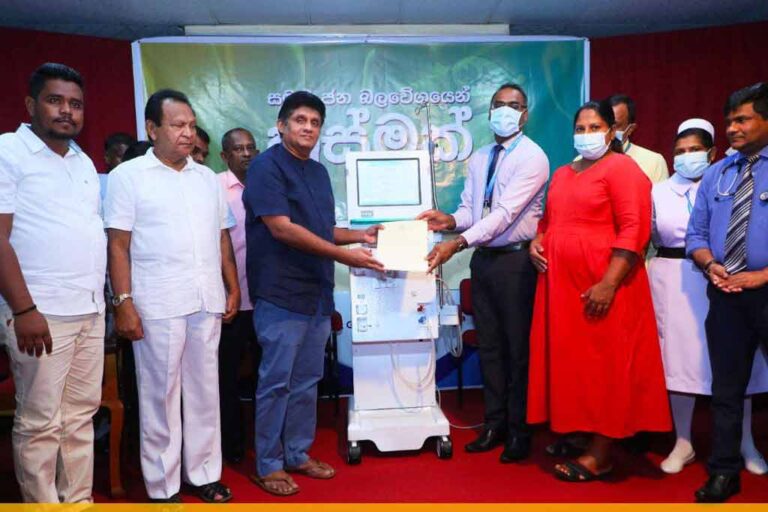
Premadasa introduced the ‘Samagi Balawegayen Husmak’ initiative at a time when the citizens of Sri Lanka were vulnerable amidst the Covid-19 Pandemic. Arrangements were made to provide a large amount of medical equipment to government hospitals in a number of areas. His initiative continued post Covid, and among the medical equipment he had donated were blood filtering machines required by many hospitals in areas where renal diseases are common. Needless to say, that his initiative may have contributed to saving thousands of lives.
Then he initiated ‘Sakwala,’ a programme to eliminate the disparities in the Sri Lankan School System, where the schools are largely divided as ‘popular’ schools and ‘difficult’ schools, by speed-running a comprehensive digital classroom facility across many schools, at a cost of about Rs. 850,000 each. His programme then branched itself to donating buses to schools for the transportation needs of school children, which is currently underway, at a cost of about Rs. 05 million each. So far, buses have been donated to 67 schools in different parts of the island.
The willingness to serve the people as demonstrated by Premadasa over the years has changed the course of the Opposition, regardless of criticism along the way. The political strategies and ideologies may differ from one another, but the political parties in the Opposition have to understand that ‘power’ is no longer a necessity to accomplish a goal that benefits the public. Having Premadasa’s example already in motion, any future Opposition may simply not be able to brag about their ‘goodwill to serve’, because now the people know that anyone with willingness to step in will step in anyway. Because Sajith could, why cannot others? People will soon question.
Being ridiculed, Premadasa still managed to change the history of Sri Lanka by altering the Role of the Opposition. Sajith Premadasa, on all accounts, is the political leader who gave the Opposition a meaning..
*Adapted from original Sinhala article “විපක්ෂ නායක භූමිකාව වෙනස් කළ සජිත් ප්රේමදාස …” by Darshana Weerasinghe published on 10/01/2023
SL’s trade deficit contracts in Nov. 2022 despite decline in export earnings
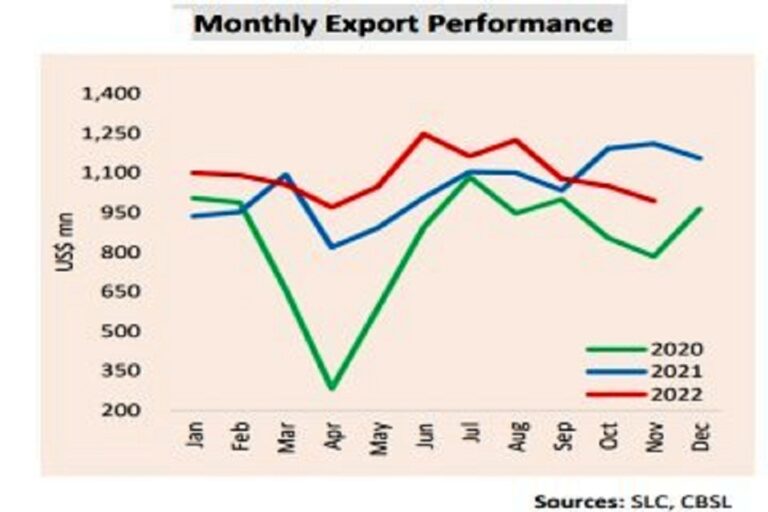
Sri Lanka’s trade deficit shrank to US$ 450 million in November 2022 from $553 million in the corresponding month of the previous year, Central Bank’s external sector performance report revealed.
However, the merchandise trade deficit has shown a tendency to widen on a month-on-month basis since recording a surplus in June 2022.
The cumulative deficit in the trade account during January November 2022 recorded at US $ 4,839 million, a decline from $ 7,054 million recorded over the same period in 2021.
Earnings from merchandise exports declined by 17.9 per cent in November 2022, over November 2021, to $ 994 million, recording a slight decline for the third consecutive month, on a month-on-month basis.
While declines in earnings were observed across all main categories, industrial exports mainly contributed to the contraction in earnings.
However, cumulative export earnings during January-November 2022 increased by 6.0 per cent over the same period in the last year to $ 12,026 million, which was mainly driven by a 9.4 per cent improvement in industrial exports amidst a decline in agricultural and mineral exports
Expenditure on merchandise imports declined by 18.1 per cent in November 2022 to $1,445 million, compared to $ 1,765 million in November 2021.
The decline in expenditure on investment goods mainly contributed to the decline in import expenditure in November 2022.
However, merchandise imports in November 2022 increased for the second consecutive month, on a month-on-month basis, indicating the impact of recent measures to relax some import restriction measures and seasonal demand for imports.
Meanwhile, cumulative import expenditure from January to November 2022 amounted to $16,865 million, compared to $ 18,396 million recorded in the corresponding period in 2021.
Sri Lanka has high levels of imports and a trade deficit mostly due to inflows from government borrowings and in times of crisis when the central bank prints money (sterilizes interventions) after using reserves for imports.
In Sri Lanka, there is a strong belief that foreign reserves can be used for imports so that mainly the private sector can ‘live beyond its means’ on the reserves, with credit driven by sterilized interventions.
Sri Lanka has high levels of imports and a trade deficit mostly due to inflows from government borrowings and in times of crisis when the central bank prints money (sterilizes interventions) after using reserves for imports.
In Sri Lanka, there is a strong belief that foreign reserves can be used for imports so that mainly the private sector can ‘live beyond its means’ on the reserves, with credit driven by sterilized interventions.
Importing fuel on credit is another method used by policymakers and mercantilists to boost imports and widen the current account deficit (a type of so-called ‘bridging finance’, another living beyond the means tactic) after money printing creates forex shortages.
Sri Lanka defaulted on its debt in April 2022 and is now set to negotiate with creditors.
Sri Lanka’s central bank has allowed rates to go up and the economic activity has been smashed to resurrect a flexible exchange rate, which lost credibility and collapsed after two years of money printing and surrender.
Government allay public fears of unbearable electricity tariff hike
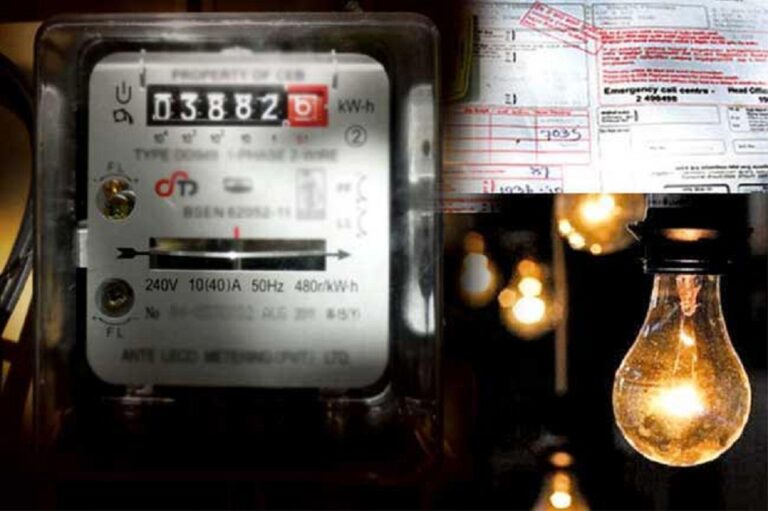
Following the Indo-Lanka plan of setting up a power transmission link between the two neighbours and, the government is to go all out to implement a cost -reflective Electricity Tariff Formula based on which the tariff will be increased or decreased.
The opposition outcry and the Public Utilities Commission of Sri Lanka (PUCSL) pre warnings of blocking any new traffic increase had become empty words as a result of the Cabinet approval to an electricity tariff formula one of the needs at present.
Minister of Power and Energy Kanchana Wijesekera confirmed that Cabinet approval was granted to amend the general policy guidelines for the electricity industry and to implement a cost reflective electricity tariff to be implemented from January 2023.
In the wake of this move, India and Sri Lanka plan bilateral talks at the “highest level” for setting up a power transmission link between the two neighbours, official sources said.
Public sector transmission major Power Grid Corporation of India has already prepared a preliminary report for the proposed project, they said.
Meanwhile the sixth shipment of 60,000 metric tons of coal out of 19 shipments ordered from South Africa arrived in the country last Friday making the third power plant of the Norochcholai power station operational
This has negated the pre-warning of the engineers’ union of the Ceylon Electricity Board warned of further power cuts of up to 10 hours a day in January.
According to the subject minister Kanchana Wijesekera, the Ceylon Electricity Board (CEB) estimates a cost of Rs. 56.90 per unit of electricity if consumers are to experience an uninterrupted power supply. However, the current average tariff is at Rs.29.14 and the deficit is estimated at Rs. 423.5 billion.
The power demand estimated by CEB is 14920 GwH and is marginally lower than 2021 (15,200 GwH). But after the electricity tariff hike there has been a drop in demand during the last three months.
According to Global assumptions a 100 percent increase in tariff will lead to a 8-10 percent reduction in consumption.
Industrial energy use has dropped by 15 percent and this is unhealthy for the economy as it is leading to an economic contraction. The next tariff hike will further depress the demand, several energy experts opined.
An overly large tariff increase can further depress the economy by contracting purchasing power of people and businesses, making exports uncompetitive and driving businesses to closure.
It has also been noted that the recent tariff increase of approximately 75 percent has resulted in approximately 7% drop in the demand.
The 2023 tariff increase will also reduce consumption, but since elasticity is not 100 percent, the demand will be at a lower rate.
The CEB has shown that electricity demand reduces during contractions of the Sri Lankan economy. But according to the IMF and the World Bank, the economy is expected to contract to over 4 percent in 2023.
The tax increase in 2023 will also reduce the disposable income of a large number of Sri Lankans, forcing a reduction in the demand.
Police say no breakthrough into Dinesh Schaffter’s death yet
The death of businessman Dinesh Schaffter has neither been ruled nor reported as suicide, Police said.
Police Spokesman Nihal Thalduwa stressed that further investigations are underway and no breakthrough has been made yet.
As of now, statements have been recorded from about 175 persons and about 14 items taken as evidence have been forwarded to the Government Analyst, he added.
In addition, phone analyses, bank records and documents pending obtainment are being collected and investigations are being conducted via other data as well, Thalduwa said.
The Police Spokesman noted that probes are being carried out to locate direct evidence and no ruling has been made whether this was a suicide, a homicide or something else, adding that no suspect has been identified so far.
MIAP
Five persons including a Police OIC arrested over ATM scam

Five persons including an Officer-in-Charge (OIC) of Police and two foreigners have been arrested in connection with an ATM fraud of over Rs. 10 million.
Among the arrestees are two Bulgarian nationals, one of whom is of Canadian citizenship, and the OIC of Meegahathenna Police Control Division.
The two foreign nationals were seized at a luxury apartment in Colombo and the Police OIC, in Amugoda, Pitigala.
The Computer Crimes Division of the Criminal Investigation Department (CID) is conducting further investigations into the case.
MIAP
Energy Minister says Cabinet approval granted to increase electricity tariffs
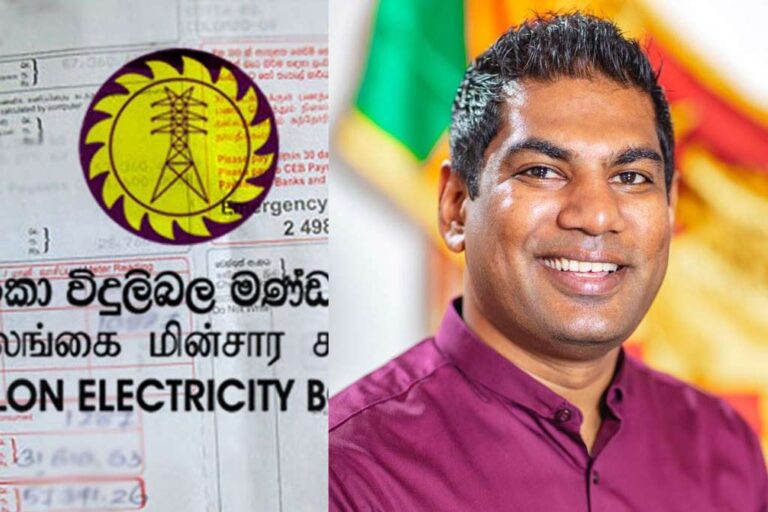
The Cabinet of Ministers has granted the approval to amend the general policy guidelines pertaining to an electricity tariff hike, said Energy Minister Kanchana Wijesekara.
The Cabinet approval granted to amend the general policy guidelines for the electricity industry and to implement a cost reflective electricity tariff to be implemented from January, 2023, the Minister wrote on Twitter.
A final decision in this regard would be made after having discussions with the Public Utilities Commission of Sri Lanka (PUCSL), according to sources.
MIAP
Sri Lanka Original Narrative Summary: 10/01

- Industries Minister Dr Ramesh Pathirana states the gem industry will aim to achieve USD 1 bn in exports in 2023: promises to facilitate value-addition of gems by enabling all technology and equipment related to value-addition to be duty-free: assures the establishment of a pension plan for gem miners: at present, gem exports are about USD 250 mn.
- Central Bank says exports contracted by a massive 17.9% (USD 217 mn) in Nov’22 to USD 994 mn, hit by Govt import bans and controls: exports declined in Oct’22 as well, by 11.8% (USD 141 mn) to USD 1,051 mn: apparel factory owners say there has been significant reductions in orders in recent times.
- TNA MP M.A. Sumanthiran appeals to the Govt of India to “exercise its authority” to achieve the objectives of the Indo-Lanka Accord and support the legitimate political objectives of the Tamil people in Sri Lanka.
- JVP leader Anura Kumara Dissanayake says the SJB has gone into a state of panic, ahead of up-coming Local Govt elections: says it is evident through the recent statements made by the SJB Leader, General Secretary and National Organiser.
- Head of Lotus Tower Management Prasad Samarasinghe says the landmark Tower has received half a million visitors so far: also says over Rs.268 mn in revenue has been collected.
- President Ranil Wickremasinghe says the IMF has not made “an immediate reduction in the defence expenditure of the Govt”, a pre-condition for the provision of the long awaited and much-touted approval of the USD 2.9 billion Facility to be disbursed over 48 months: admits however that the IMF is looking for the reduction of military expenditure in stages.
- Agriculture Minister Mahinda Amaraweera requests Govt to provide the necessary funds for paddy purchasing before spending funds on elections scheduled for Mar’22: says elections can be held at a later date.
- Cabinet approves the implementation of a cost-reflective Electricity Tariff Formula based on which the tariff will be increased, but does not specify the time-frame for its implementation.
- SLFP General Secretary Dayasiri Jayasekara says, if as alleged by former President Ms Chandrika Kumaratunga the present SLFP leader and former President Maithripala Sirisena should be held responsible for the 2019 Easter Sunday terror attacks, in the same way, she should be held responsible for the LTTE attacks.
- State Finance Minister Ranjith Siyambalapitiya says the payment of PAYE Tax of State & Semi-Govt sector employees from funds of the respective institutions, will be prohibited.
President says he’s deeply concerned on violence in Brazil
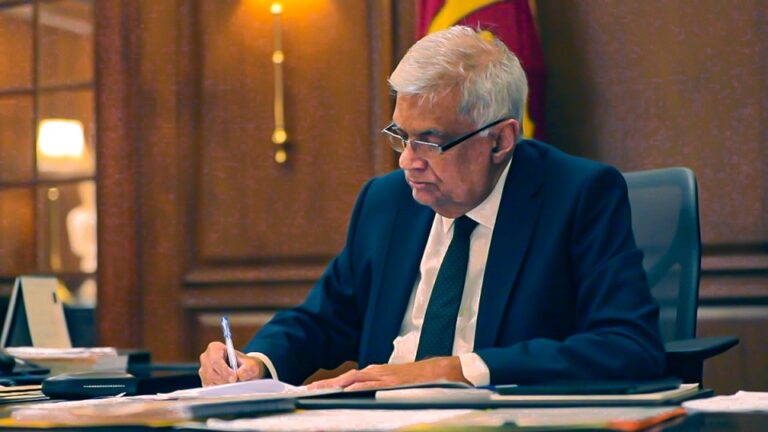
President Ranil Wickremesinghe said he is deeply concerned about the recent tense situation that erupted in Brasilia.
In a statement, the President emphasised that Sri Lanka not long ago experienced similar attempts by groups to overthrow democratic structures through unconstitutional means.
“Such hostilities are condemned, and we stand in solidarity with the President, Government and people of Brazil in this hour of confrontation,” the President wrote.
He added that it is imperative that democracy and its institutions are universally respected by all citizens.
MIAP