Home Blog Page 1909

IUSF Convener Mudalige to be detained under PTA!

0

Convener of the Inter-University Students Federation (IUSF) Wasantha Mudalige will be questioned being subjugated to a 90-day detention period under the controversial Prevention of Terrorism Act (PTA) as ordered by the Defence Ministry.

Mudalige was arrested by the Police based on a protest march held in Colombo on August 18 and the Police informed the Court that the IUSF Convener will be detained and questioned on the protests held in the country since April 09, 2022.

MIAP

Meeting between Opposition Leader and US Ambassador (VIDEO)

0

A meeting between US Ambassador to Sri Lanka Julie Chung and Leader of the Opposition Sajith Premadasa was held at the Opposition Leader’s Office in Colombo yesterday (19).

Many bilaterally important matters were discussed during the meeting and the current situation in Sri Lanka was also discussed.

Opposition Leader Premadasa recalled the long standing ties between the two countries and requested the United States to extend its hand of friendship and support for the development of Sri Lanka.

Chung the US Ambassador noted that the support of the United States is available for a country where democracy is strengthened and human rights are assured.

MIAP

Indian foreign minister outlines “extremely difficult phase of Indo-Lanka relations

0

External Affairs Minister of India, Dr. S. Jaishankar says that the relationship between India and China was going through an “extremely difficult phase” after what Beijing had done at the border and emphasised that the Asian Century would not happen if the two neighbours could not join hands.

He made the remarks while responding to a series of questions after delivering a lecture on ‘India’s Vision of the Indo-Pacific’ at the prestigious Chulalongkorn University recently .

Responding to a question, Mr. Jaishankar said that the Asian Century would happen when China and India come together but it would be difficult to happen if India and China could not come together.

“At the moment [the India-China] relationship is going through an extremely difficult phase after what China did at the border,” he said.

Chinese and Indian troops are engaged in a prolonged standoff in eastern Ladakh. The two sides have so far held 16 rounds of Corps Commander Level talks to resolve the standoff which erupted on May 5, 2020, following a violent clash in the Pangong Lake areas.

“I think if India and China have to come together, there are many reasons to do so, not necessarily only Sri Lanka,” he said, adding that it was in the own interest of India and China to join hands.

“We very much hope that wisdom dawns on the Chinese side,” the External Affairs Minister said while replying to another question from the audience.

Mr. Jaishankar said India had done the best of its abilities to assist Sri Lanka. This year alone India had extended $3.8 billion of support to Sri Lanka, including line of credits and swap arrangements, he said.

“Any help we can give to Sri Lanka at the IMF [International Monetary Fund] that we will naturally do,” Mr. Jaishankar said.

On the issue of Rohingya refugees, he said the issue had been discussed with Bangladesh. “What matters for them is repatriation. We have been supportive of Bangladesh,” he said.

Currently, Bangladesh is hosting more than 1 million Rohingya refugees, who fled Myanmar following a military operation against them a few years ago.

Responding to another question, the External Affairs Minister dismissed criticism for importing discounted Russian oil, saying India was not the only oil importing country.

The U.S. and European nations have imposed heavy sanctions on Russia since Moscow sent troops into Ukraine on February 24.

India has raised oil imports from Russia after the Ukraine war despite criticism from the West and continues to engage with Moscow for business.

Mr. Jaishankar, who co-chaired the 9th India-Thailand Joint Commission Meeting with his Thai counterpart and Deputy Prime Minister Don Pramudwinai on Wednesday during which they discussed advancing bilateral contacts in political, economic, security and defence, connectivity and health domains

Price of eggs slashed via extraordinary gazette

0

The Consumer Affairs Authority (CAA) has issued an extraordinary gazette designating a maximum retail price for eggs.

Accordingly, the maximum retail price of a white egg is Rs. 43 and the maximum retail price of a brown/red egg is Rs. 45.

However, many retail stores sell eggs for prices on or above Rs. 60.

MIAP

Plantation sector urges Govt to save the export crop industry soon via viable policy

0

Sri Lanka plantation sector stakeholders are demanding the government to rescue the main three export crop industry specialty tea devastated by the previous regimes“100% organic agriculture”,the most unscientific experiment ever attempted in local history.

As a result of this overnig stupid and arrogant decision of former president Gotabya Rajapaksa ousted by the people,Agricultural productivity in Export crops has dropped by 20%.

While export values of tea and rubber have increased, volumes have plummeted by 20% and 30% respectively. Had the country been able to maintain production at pre-fertilizer ban levels, an additional export earnings of US$240 Million could have been saved from plantation-related exports.

Moving forward, the present administration needs to appoint a Sectoral Task force – made up of credible industry experts, whom the Government must consult, particularly when formulating policy decisions that have the potential to impact the entire agriculture sector, Dr. Roshan Rajadurai ormer Chairman of the Planters’ Association of Ceylon said

Failure to do so even at this late juncture will risk even further irreversible damage being done to our industry and the millions of lives that are impacted by it, he added. .

This means that the Government in particular needs to commit to a strict regime of evidence-based policy at all times.

If drastic policy adjustments are required, the Government has to take a consultative approach, seek out balanced and credible opinions, and obtain broad approval from stakeholders, he claimed. .

With this common agreement in place, the plantation sector stakeholders can finally begin to bring together the best minds in respective export crop industries and work in partnership towards developing a viable roadmap for a sustainable path to a true Sri Lankan economic renaissance.

As Sri Lanka’s first true export industry, the stakeholders believe the Sri Lankan plantation industry should be the first to take up this challenge, he pointed out.

For over a decade, the plantation industry has painstakingly sought to articulate what the plantation sector requires to move forward. At present, the consensus is that reforms, investment, and knowledge sharing are most needed in the industry are in the areas of:

Sustainable, progressive productivity-linked wages that benefit workers and companies
Agricultural and operational best practices
Research and development towards greater local value addition
Factory, and supply chain modernization
Implementation of a consistent, science-based national agriculture policy framework

SEC and CSE complete third phase of Digitalization of stock market

0

special market opening ceremony was organized by the Securities and Exchange Commission of Sri Lanka (SEC) and the Colombo Stock Exchange (CSE) under the patronage of Mr. Viraj Dayaratne, President’s Counsel, Chairman of the SEC, to mark the third phase of digitalization of the Sri Lankan Capital Market .

A joint committee was formed by the Chairman of the SEC, Mr. Viraj Dayaratne, with the objective of identifying measures and mechanisms required for the Colombo Stock Market to conduct its core activities digitally.

The committee comprised representatives from the SEC and the CSE and has worked towards converting paper-based statements to electronic forms.

The committee launched a transformative digital offering through the CSE Mobile App, an end-to-end digital onboarding and online account opening feature. In the third phase, the committee explored avenues to bring in investments from retail investors living outside of Sri Lanka.

It has developed infrastructure to offer convenient registration and investment opportunities to these foreign investors. Fourteen new features were also introduced as part of the third phase of Digitalization.

CSE Chairman, Dilshan Wirasekara, while welcoming all those presented said that the CSE is looking forward to its journey ahead, in terms of broadening the organization and truly living up to its vision of creating wealth and value and stressed that the CSE would not just develop the market but also work as a partner to develop the country in the face of the existing economic crisis.

Chairman SEC/CSE Joint Committee for Digitalization Naresh Abeysekera, said, “Today this digital interface is not only operating the capital market but has changed the entire digital landscape of the capital market industry. It’s a remarkable feat we achieved”.

Stating the Committee’s achievement with pride, he also mentioned, today 220,000+ CSE Mobile Apps have been downloaded by users, and it’s a great platform for potential investors.

“We created a new potential age group; 18-40 years old, and 18-40-year olds make up 92 percent of this entire new base. Previously, it was more towards 50 plus. Thus, with regard to market sustenance, asset sustenance, and market growth, it’s a new base and a note on more investors coming into the market. “

Mentioning the developments of a Central Counter Party System (CCP), CSE CEO, Rajeeva Bandaranaike, said that to continue to broad base the capital market, it is needed to ensure that the overall systematic risk in the market is managed, and to do that, we need to manage and minimise the risk of default by buyers and sellers, and a CCP is the mechanism to do this effectively.

SEC Chairman, Mr. Viraj Dayaratne PC stated that “The market could not be opened for trading with the onset of the Covid pandemic in 2020, since not every function of the market could be carried out without a physical presence.

He added that the need to digitalize end-to-end operations of the market was badly felt and as a result a joint committee of the SEC and CSE was appointed to carry out the digitalization initiative.”

Mattala International Airport to rescue from the white elephant status

0

Loss making Mattala International Airport will undergo management transformation in accordance with the new restructuring program with the formation of public private joint venture involving foreign aviation partner,

Mattala International Airport is set to restructure its managed operations with foreigboration as it is currently losing Rs. 10 million monthly ,Ports Shipping and Aviation Minister Nimal Siripala de Silva revealed.

He said since according to international air travel criteria Sri Lanka needs a second international airport for emergency landings, alternative sources of income should be found while minimising costs of maintaining the airport.

The Minister emphasised that steps should be taken to minimise the loss and maintain the Mattala International Airport as a productive airport with a minimum number of employees.

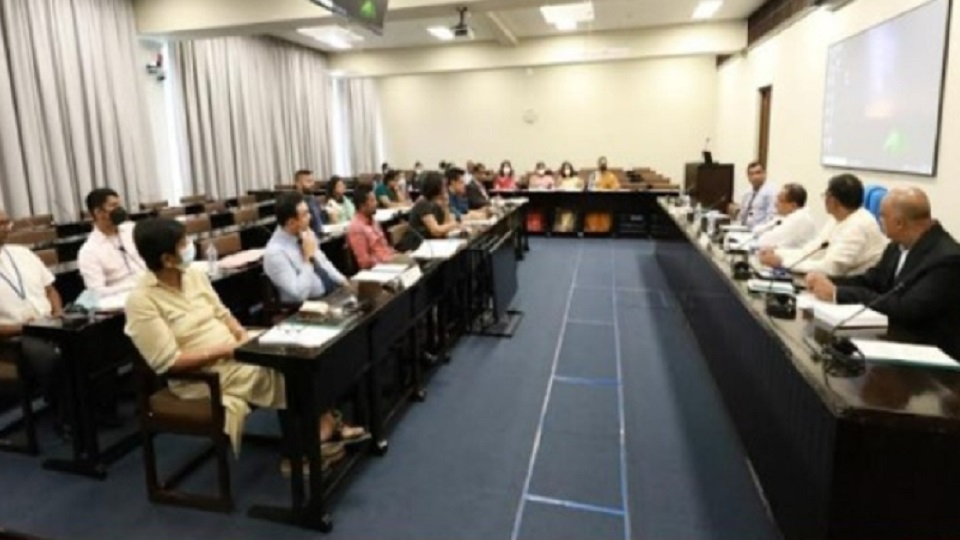
He made this observation while participating in an inspection tour and a staff meeting at the Mattala International Airport recently pointing out that there are many problems and issues inherent in this airport.


Responding to a question raised by journalists, the Minister said that the Mattala Airport would never be sold.

He said if a good investor comes, the government intends to enter into a collective agreement with the investor as a joint venture to turn Mattala Airport into a profitable airport restructuring the airport administration.

“Today, the Mattala Airport is being maintained with the money earned by Katunayake Bandaranaike International Airport (BIA) and the loan of $ 210 million obtained from China for the construction of this airport is to be repaid in instalments,” the Minister said.

Therefore, alternative proposals are being considered to increase the revenue of the Mattala Airport, the Minister said.

He said airlines have been invited to use the airport as a parking space and aircraft maintenance yard, but due to the current social situation in the country and the fuel and dollar crisis, investors and airlines are reluctant to do so.

Minister said it is not easy to attract investors, but the chairman of the Airport and Aviation Services, retired Major General G. A. Chandrasiri is making a great effort.

In addition, the Minister asked the officials to submit to him within two weeks the project proposals related to the use of the roof of the Mattala Airport for solar power generation.

It was revealed that 545 employees have been deployed at this airport where no flights arrive and some of these employees use a daily bus to transport them from Colombo to Mattala.

The Minister warned that if employees do not act with dedication and commitment at this juncture, unless tough management and management decisions are taken, the Mattala Airport is likely to collapse.

Therefore, the Minister asked the officials to submit a report on the salaries and allowances of the top management and the staff management and restructuring plan within a month.

After considering the points made by the employees and the trade union officials, the Minister instructed the officials to construct a building on the premises of the airport within two months to accommodate about 200 employees essential to the operation of the airport.

The Minister also hoped that if a good image of the country is built and foreign tourist arrivals increase, it will be able to recover the airport from this loss-making situation.

“The airport is built on an elephant habitat. Therefore, the measures taken so far to prevent the frequent elephant entrances and attacks on the airport premises have failed,” he said.

The Minister instructed the officials to discuss the measures proposed by the Minister of Wildlife to cultivate elephant repelling sesame and hemp in the area between the airstrip security fence and the forest conservation boundary under the patronage of Minister Amaraweera within the next two weeks and take immediate steps to implement those measures

Central Bank Governor expresses optimism on repairing the damaged economy

0

Sri Lanka’s central bank held rates steady on Thursday and the governor sounded a note of cautious optimism about the damaged economy, saying foreign exchange reserves were on the mend and runaway inflation could peak as early as September.

Still, the economy is likely to contract 8% this year and growth is not likely until the second half of 2023, Nandalal Weerasinghe said at a news conference.

“The monetary board looked at lower global prices, a slower pace of inflation and moderating growth as key reasons for keeping rates unchanged,” the central bank chief said.

“We are also looking forward to fresh policies in the interim budget and confidence that will come from an IMF programme to assist with stability over the next few months.”

The country is due to restart bailout talks with the International Monetary Fund (IMF) in August in the hope of securing $3 billion in funding.

The central bank kept the Standing Lending Facility ) rate at 15.50% while the Standing Deposit Facility Rate remained at 14.50% as predicted.

The central bank has raised rates by a record 950 basis points so far this year to battle inflation in Sri Lanka, which has been hit by its worst economic crisis since independence in 1948.

A foreign exchange shortage had left the government struggling to pay for essential imports but Weerasinghe said the country now had adequate reserves for importing food, fuel and medicine.

Inflation hit 60.8% year-on-year in July and food costs expanded by a searing 90.9%, according to latest government data, although the rate of the increase is falling.

Weerasinghe said inflation was projected to peak in September “at 60%-65% and then start to trend down.”

A central bank statement said the measures taken by it and the government so far would help contain aggregate demand pressures while an anticipated decline in global commodity prices would pass through to domestic prices.

Colombo’s main stock index ended flat on Thursday after earlier rising as much as 1.2% during the session. The index is up 15.3% in August on optimism that the worst of the crisis is over, but is still down 27% on the year.

Eco Spindles converts plastic waste to bring dollars to the country

0

Against the backdrop of ever increasing plastic waste dumping into sea, the sustainable move has been made by Eco Spindles (Private) Limited to manufacture monofilaments and yarn, exclusively from recycled Polyethylene-terephthalate (PET) flakes.

This effort of the company was highly welcomed and appreciated by Board of Investment (BOI) Director General Renuka M Weerakone during a recent inspection tour made to the factory located at the BOI Horana Export Processing Zone.

Sri Lankans are responsible for releasing over 1.59 million metric tons of plastic into the ocean each year. The number is huge and so is the repercussion.

The reckless disposal of polythene and plastics has resulted in this unending issue in the country. As per the data, polythene and plastic comprise more than 5.9% of the country’s urban solid waste, which exceeds 400,000 kgs daily.

A wholly-owned subsidiary of BPPL Holdings PLC, Eco Spindles has a workforce of 900 people and is only one of two plants globally with the capability to create yarn directly from flakes circumventing the polymerization process.

It also manufactures a comprehensive range of monofilament and other plastic materials to produce filaments for brushware requirements and for other global brush manufacturers.

Its products cater to several international markets including the USA, Europe and India while it supplies yarn to world-renowned brands like Nike and Decathlon.

According to the Eco Spindles, over ten million PET bottles are monthly collected from various locations including beaches and lagoons through regional suppliers, which are sorted, segregated and converted to produce destined products, almost all of which are exported.

The production processt is driven by the state-of-the-art production technology.

Commenting on the project, BOI Director General Renuka M Weerakone said “Eco Spindles can be showcased as benchmarking reduction of plastic pollution in Sri Lanka, is a classic example of fully utilizing the minimum input to attain an optimal result, which is evident with their monthly revenue amounting to USD 2 million”

“The company’s recent efforts have also won them several accolades, such as from Forbes Asia, ranking them amongst the top 200 companies, which is a monumental achievement as they progress,” the Director General highlighted.

“This initiative also increases the productive use of waste plastic while reducing the environmental damage caused by plastics ending up in landfills or water bodies. Significantly, they bring a substantial amount of dollars to the country, which is the need of the hour” she outlined.

Ms Weerakone proceeded to point out the importance of raising awareness among the stakeholders and people about this initiative so that they also can join hands with Eco Spindles.

Meanwhile, expressing his sentiments, Chief Executive Officer of Eco Spindles Manoj Udawatta stated “Over 300,000 individuals are already helping us in collecting PET bottles on a monthly basis, for which they get an income in return.

Thus, we invite everyone to contribute to saving the environment by discarding waste plastic into our Material Recovery Facilities or collection bins,” Mr Udawatta urged.

Australia provides extra US $25 million emergency aid to Sri Lanka

0

The Australian government will lift emergency aid to Sri Lanka to AU$75 million as the south Asian island grapples with an economic crisis that has triggered a new surge of people fleeing on boats for Australia.

Sri Lanka’s worst financial meltdown has led to skyrocketing prices and crippling shortages of food, fuel and other necessities over the past three months and year-on-year inflation has climbed beyond 60 per cent.

The deterioration of living conditions has resulted in a renewal of attempted boat arrivals in Australia from Sri Lanka, with five vessels being intercepted by Australian Border Force with a total of 137 people on board and 15 more, carrying 701 passengers all up, being stopped in Sri Lankan waters.

Boat arrivals also became a key focus on the day of May’s federal election after the Liberal Party texted voters in marginal seats about the interception of an asylum seeker boat that morning.

In the past week, China, a key creditor of the bankrupt island nation, has also flexed its muscles by insisting on docking a giant scientific research ship at southern Sri Lanka’s Hambantota port despite concerns raised by India.

In the midst of Sri Lanka’s freefall, Australia committed AU$50 million in June in urgent humanitarian backing. On Friday, it will announce a further AU$25 million to fast-track food and health supplies to those in most need in the former British colony.

“Australia stands with the people of Sri Lanka, especially those experiencing severe hardship,” Foreign Minister Penny Wong said.

“It is in Australia’s national interest to strengthen Sri Lanka’s economic resilience and accelerate its recovery.”

The beefed-up support package comes a fortnight after an unprecedented move when the Australian Border Force used its own patrol vessel to return 46 men to Colombo that it had intercepted at sea rather than taking them back by air.

In a deliberate message aimed at discouraging people from paying people smugglers and boarding boats towards Australia, the 110-metre Ocean Shield was given a publicised welcoming ceremony by the Sri Lanka Navy after pulling into the port in the capital city.

Lately, it has been another ship that has been the centre of attention as Beijing has demonstrated its influence there.

The Sri Lankan government asked China to delay the arrival of the Yuan Wang 5 tracking vessel for a reported refueling and replenishment at Hambantota, a port built with Chinese loans and since leased to Chinese state-owned companies for 99 years as a debt swap.

There were fears that the “spy ship”, as it was labelled in the Indian media, could conduct surveillance in the region. Sri Lanka ultimately give it the go-ahead to dock on Tuesday, saying it would not carry out research activities while it was in Sri Lankan waters.

The saga illustrated the fine balancing act an ailing Sri Lanka is having to perform with the two Asian powers. India, another creditor, has been the major source of foreign assistance for the island, kicking in more than $US4 billion during the crisis.

But China’s agreement to restructure infrastructure loans to Sri Lanka is vital for the country to reach a bailout program with the International Monetary Fund