
- Cabinet spokesman Minister Bandula Gunawardena says Sri Lanka needs to boost its foreign reserves by selling some of its assets: also says if reserves are not increased to USD 3.00 bn, international companies won’t accept LCs of Sri Lankan banks: Sri Lanka announced bankruptcy on 12th April, when it’s forex reserves were USD 1.92 bn, and imminent inflows from China and India amounted to USD 4.50 bn.
- Former CB Governor Ajith Nivard Cabraal says the Govt and CB won’t be able to provide an assurance that domestic debt will not be restructured, as it will be the IMF that will have the final say on the domestic debt of Sri Lanka: also points out the present Monetary Board has “fixed” the exchange rate for a longer period than his Monetary Board.
- Additional Secretary, Health Ministry Dr R Ratnayake says the hospital system is currently short of only 22 essential drugs out of 683: assures situation would be rectified over the next 2-3 weeks: Govt Medical Officers Union General Secretary Dr Haritha Aluthge says the current drugs shortage is acute and 160 are in short supply.
- SLPP “independent” MP Dullas Alahapperuma says President Ranil Wickremesinghe used the political instability and economic depression in the country to become President: likens situation to Adolf Hitler coming into power with the Nazi Party in Germany in the 1930s.
- Energy Minister Kanchana Wijesekara discusses steps to reduce costs at CEB with CEB DGMs and AGMs: orders deferment of on-going construction work of CEB new headquarters: already over 40 Forex funded large scale construction contracts stopped after debt default, resulting in massive economic contraction and job losses
- Urban Development and Housing Minister Prasanna Ranatunga instructs officials to set up a Land Bank setting out details of all lands belonging to the UDA.
- Gross Official Reserve increases from USD 1,705 mn at end-October to USD 1,804 mn at end-November 2022: however, coal purchases still not paid for, oil purchases limited to USD 200 mn per month, and forex debt not paid: GOR was USD 1,917 at end-March, with about USD 500 mn per month being paid for oil, debt paid, and coal paid for upfront upto end-October.
- Sri Lanka Transport Board Chairman Kingsley Ranawaka directly flouts Transport Minister Bandula Gunawardena’s demand last week to quit immediately.
- UNICEF’s recent report claims 2 in 5 households in Sri Lanka spend more than 75% of expenditure on purchasing food, leaving little to spend on health and education: predicts situation will deteriorate between October 2022 and February 2023.
- Thico Group owner Thilini Priyamali, who is presently remanded over financial fraud, files complaint with the Human Rights Commission, alleging she was strip searched inside prison, violating protocol for prisoners.
SRI LANKA ORIGINAL NARRATIVE: 08/12
Sri Lanka’s strategic location should be made use of to enhance the country’s economic prospect – President
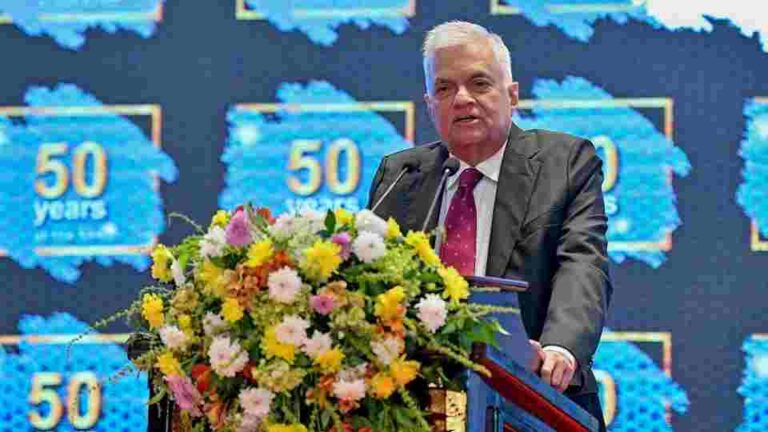
President Ranil Wickremesinghe said that the government is looking at removing the para-tariffs and the tariffs over five years, with a trade adjustment programme to help industries and manufacturers meet competition, adding that from the government side discussions have been initiated with the World Bank and the Asian Development Bank (ADB). He said that now it is up to the private sector to decide how they are going to relate to it. He said that the private sector would have to decide whether they are going to put up the red flag of protection and take the government on or if they are going to open up.
The President said this addressing the Post Budget Forum 2023, ‘Hurdling towards Opportunities- beyond Challenges’ organized by the Colombo University MBA Alumni Association which was held at the Shangri La Hotel in Colombo today (18).
The President, as a Colombo University Alumni, was the first to present a budget. He said that Sri Lanka’s strategic location should be made use of to enhance the country’s economic prospects. He called for the completion of the East terminal to promote the country as a logistics centre that can be expanded up to the North Port, which will be from Mutwal up to Ja-Ela.
He added that if the country is to be brought out of the current predicament, not only the government, but the private sector and the people also have a big role to play. He said that the government should handle the task of providing for the people and focusing on the health, education, housing and welfare sectors. Running businesses, he said, should be handled by the private sector. President Wickremesinghe noted that the government cannot get involved in running businesses.
Following is the full speech delivered by President Ranil Wickremesinghe at the Post Budget Forum 2023:
“The president of the Colombo University MBA Alumni Association, the Governor of the Central Bank, the Secretary to the Ministry of Finance, the Editor of the Financial Times, distinguished guests and friends. As a Colombo University Alumni, the first one to present a budget, it gives me great pleasure to be amongst the Colombo University Alumni in this discussion, you have organised for the 2023 budget. This is not a budget in the normal sense such as looking at proposals in which you have increased the price of cigarettes where they have reduced the price of something else and a few other statements of what they will do. If you look at it as such a budget, then you’re going on the wrong route.
Unfortunately, many members of parliament and many outside have made that mistake. We are in the middle. As your opening statement said, we are in the middle of an unprecedented financial crisis, which many countries in the world have not faced. We went into this because we followed the wrong policies. We were thinking of policies not of practical results. When I took over as Minister of Finance, my first task was to stabilise the economy. The measures necessary have been contained in the August budget.
The legislative process will also start. In addition to this, while we commit to a staff-level agreement, now we have to negotiate with our main bilateral creditors. We are again unique in that two of our creditors are not members of the Paris Club. We are negotiating at the moment both with India and with China. Once those negotiations are completed, and I believe it will be done successfully, then we have to talk to the private creditors and go back to the board. So that process is known and we are carrying it out.
The results of the measures we took in August will be known in the first half of next year. We had to look beyond that. We had to then look at recovery. What is our economic recovery? What is the plan? What is the structure? What is the framework? We must have that in mind. 2023 is not only a year of stabilisation but also a start of the recovery programme. The stabilisation measures will be a four-year one, ending in 2026. By that time hopefully, our GDP will be back to what we were in 2019. I still don’t know what will happen. However, how do we go beyond that? Are we satisfied with the system? Can we start borrowing again and getting into the same crisis in another ten years’ time? The only difference is that we may go to the IMF before the crisis hits us.
Are you going to be Asia’s version of Argentina? Are we going to make it, and this time succeed? My view was that we had to make it and we must succeed. What is the way to go? Many other systems that we have talked of have failed. Many articles are today being written in the newspapers about the old system. In the end of it, we failed. I looked at another example, which we did not follow from the institution that was there before the University of Colombo, the University College.
The professor of economics was Professor M.J. Shenon, an Indian. In 1965, when we had a similar crisis, Mr Dudley Senanayake wanted him to give a report. It was a report on opening out, which, if we had implemented it, would have put us ahead of Singapore. But we didn’t. To look at the success stories, Prof. Erhard who opened up the German economy at its worst stage, and Lee Kuan Yew opened up the Singapore economy. Then Deng Xiaoping opened up the Chinese economy. So, let’s go ahead. We can’t be frightened. If you are frightened of competition, you’re not going to win. In this world, you must compete to win. If you don’t compete, you can’t win. And that’s what you have to remember. And what is there in my budget, all is contained in seven paragraphs. It runs through three pages.
Paragraph 3.21- I would like to define the new economy we will build as a social market economy or an open economic system with social protection. 3.22- In this new economy, we will focus on the three main aspects of an export-oriented competitive economy and an environmentally friendly green and blue economy. A digital economy. Creating such a new economic foundation is a challenging task. Such a new economy cannot be created merely by making changes in the tax system. New sources of revenue need to be found. New areas of economic activity must be identified. Extending o economic reform and restructuring need to be carried out. 3.24 – The creation of which will be twofold. 3.25 – The first will be economic reform, and reorganisation, while the second will focus on modernisation.
Then Paragraph 3.29, we expect to achieve the following goals through the social market economy or the social security open economy we are creating.
Economic growth of 7 to 8%. Increasing international trade as a percentage of GDP by more than 100%.
Annual growth of USD 3 billion from new export from 2023 to 2032. Foreign Direct Investment of more than 3 billion USD in the next ten years. Creating an internationally competitive workforce with high skills in the next ten years.
And the last comes in paragraph 3.37. The macro-fiscal framework. Our fiscal stabilisation programme envisages government revenue increasing to around 15% of GDP by 2025 from 8.3% of GDP by the end of 2021. The Government is targeting a primary surplus of more than 2% of GDP in 2025 and expects to improve from this level thereafter.
We aim to reduce public sector debt from 110% of GDP at the end of 2021 to not more than 100% of GDP in the medium term. It is expected that inflation will be brought back under control in line with this. Interest rates are also expected to gradually reach a moderate level. Once macroeconomic confidence is re-established and foreign exchange reserves are replenished through foreign finances, the adverse pressure on the exchange rate is also expected to abate.
With the implementation of a series of growth-enhancing structural reforms, the medium-term economic growth is expected to return towards 5% in the medium term and accelerate to a high level thereafter. This is all this economy is about, this is the framework. How are we going to implement it? We have made some proposals. We can all comment on it, good, and bad amendments. But the proposals by themselves are not sufficient. So this is not a normal economy.
Look at the first proposal. A combined investment export agency. We’ll create that. But if you don’t remove any of the other laws, if you don’t do a fundamental restructuring of the economy, it will be as empty as I think today. And it’ll be another real estate agency, nothing more. So all these proposals are linked to it. Just that in light of what we are going to do. But first, study the framework. We have to make it in this world. There’s no other option. The Indian Ocean is becoming the geopolitical centre in the next two, three, or four decades. Only the countries that have strong economies will survive.
Others can’t. This is not only a military conflict or a military competition, it’s also an economic competition. The whole world that was created in the 18 and 19th and 20th centuries, the European domination and Western domination is again shifting back to Asia. And you’re finding the rise of Asian countries China, India, and Japan. It is no secret. It’s how the US economy and the US will correlate to China, the Chinese economy and thirdly, the rest of us.
So that is the political background, geopolitical background. We are not going to have nuclear bombs, but strong economies will survive.
However, our strategic location is also a means of enhancing our economic prospects. Firstly our location says we should be a logistics centre with three good harbours and a small one in Kankasanthurai. We are not talking about it. We are just thinking about it. Last time when I was Prime Minister, I wanted to push it forward. We had an agreement on the East Terminal with Japan and India. We cancelled it. It is still lying there. The port is unable to run. We haven’t the money. As you know, our shipping trade is under threat. However, let us open up there and let’s go all out. Finish the East Terminal and promote ourselves as a logistics centre that we can expand next from there to the North Port, which will be from Mutwal up to Ja-Ela.
We can then be the feeder port for Pakistan, India, and Bangladesh. We had the Hambantota port. When the Belt and Road are complete, the Hambantota Port will link to several Chinese ports, which have been built by Chinese companies in Africa and some of the other ports. Look at the opportunities we have. And now we are looking at the Trincomalee Port to work with India, which will service the Bay of Bengal. Those are new opportunities. We have to realise that the population of these regions will increase just from Pakistan onwards to Indonesia by about 400 or 500 million by 2050. Asia, the Middle East and Africa will have an even larger growth.
So we should use our ports. That’s the best asset we had from the time of the Anuradhapura Kingdom. From Manthai to Trincomalee, these are the ports we had. Then the Galle Port, the Colombo Port. We have forgotten all about it. We looked inward and we forgot our ports. When a port comes up to Ja-Ela just four miles across and you link up to Katunayake and you have an air-sea hub there is immense potential in what we do.
But that’s one area. Secondly, modernise your agriculture. We have neglected our agriculture. Its subsistence agriculture. Our tea which was the best in the world is now being overtaken by others. A completely modernised agriculture is easier said than done. We have to ensure the security of the land. So, therefore, we bring legislation where people who are given land will have the security of tenure. It cannot be taken away just by the government. There will have to be a process to be followed and a remedy in court, which is a guarantee you have for any land in Sri Lanka. It will be equal to any freehold land that you have. The government’s land acquisition law has to be changed. Those we will do. Then we had to build up a new system, not merely for large-scale agriculture, but also the smallholders.
Everyone must own freehold land, and we will go ahead and do it. That is essential. If you don’t modernise your agriculture, where do you feed such a large number of people in the region and a large middle class? Modernise it and let’s see how we go ahead. But as the world develops, population changes are going to have an impact. The population in Europe will reduce. There would be more money.
But the markets will be smaller. The population will drop in China, Japan, and South Korea, and the next one will be in Africa. So let’s think of the future. So these are two of them, but there are so many other areas that we can develop. We are looking at tourism. Why are we spending? Why are we reaching out to those who only spend $100 or $150? Why can’t we average $500 a night or $750? By looking at a new programme to attract 2 million high-end tourists, it will be a completely new tourist industry. Go for them. We have to learn the lesson from the Maldives. We have to rescue the tourist industry, but that alone won’t do. Of the main areas that I discussed is maritime tourism, you have all the opportunities of yachting around the Jaffna islands.
But more than that, we want to start from here and we have already discussed this with Singapore. We want to start cruises in the Bay of Bengal, which goes from Trincomalee or Colombo to the Andaman islands which can go across to Myanmar and Thailand, Andaman Sea, across to Malaysia and ends up in Singapore. Just imagine the immense potential. A large middle class from China, India, Pakistan, Bangladesh and Southeast Asia. Well, that has to be tapped. We have to move out. So we are now looking at new types of industries, nano-technology, and even manufacturing. As far as manufacturing is concerned, we have to remember manufacturing is relocated to India, which is still a low-wage economy. We will not be a low-wage economy if these principles are followed, we will be a high-middle-income or a high-income economy.
Our population profile suggests there will be more older people and fewer young people. Why don’t we start now with being semi-automated? Then go on to automation, to robotics. We might as well encourage it, for which we need a completely new system of education. I am criticised for not giving enough money for education this year. The fact is with COVID, the Education Ministry is still trying to recover from its impact. Even if you give more money, they will not be in a position to spend that money effectively. It’s much better to plan and give them more money from next year onwards. So we have got to think forward. The whole green economy. We are thinking of renewable energy, but beyond that, green hydrogen. That is possible. But if you look at it, you’ll find opportunities. This is something that the government is looking at.
There is much more for you all. If it’s foreign employment, high-end, highly skilled persons should go out. Can we make the country a health centre? Regional Centre for Health Services. How do we develop the Port City as an offshore centre? So these are the issues you must look at and then see whether these proposals help. We’ve already started discussions with the World Bank. I’ve also discussed this with the ADB in Manilla. There would be other countries such as the US, China, and India, all are interested. From the government side, we are engaged in discussions. Now, how is the private sector going to relate to it? Are you putting up the flag of protection and taking the government on, or are you opening up?
We are looking at removing the para-tariffs and the tariffs over five years, with a trade adjustment programme, to help industries and manufacturers meet that competition. But beyond that, the Singapore FTA will be in operation by early 2023. Then the FTA with India, Thailand, and China. But the long-term goal is by next year or the year after, to agree with the Regional Comprehensive Economic Partnership. That brings you to Southeast Asia and East Asia. And that’s not the end. Finally, we should look at being able to join the high standards that are set out in the comprehensive and progressive Trans-Pacific Partnership that raises the level of our economy in the next 10-12 years. That’s the only way that we can go. There’s no other way. And I know as the economy grows, the private sector will grow. We are handing over most other functions to the private sector. The government can’t get involved in running businesses. We got involved in running businesses and billions and trillions of rupees have been wasted which would have been better spent on education, health or housing. So we have to spend on education, we have to spend on health, we have to spend on housing. We have to spend on social welfare which has been neglected. We need money for those. As far as businesses are concerned, we should be able to give that to the private sector, both local and foreign. So that is the thinking behind it. They still ask, why are you selling profit-making enterprises, look at the SLT It’s making profits. If you ask the secretary of the Treasury, he will tell you what profits are made and how much more money we are to pump into the future. The money we haven’t got.
We have to decide whether we want to strengthen the people or whether we want to take public money and strengthen the Insurance Corporation, Sri Lankan and Telecom. My priority is to look at the people and not these companies and buildings. All of you who want to know why we are selling it, we are selling it so that we can put this money into the foreign exchange reserve and strengthen the rupee. I will tell you one thing. If I can sell more and put 7 billion back, I will do it. And tomorrow we will be back to normal.
I don’t know if we have 7 billion, but if I can get 7 billion, I will do it. I have no hesitation about that. I want the people of this country to have a good life. And then it’s for the private sector now to deliver. Now we are putting the whole challenge on to the private sector and we have a big task which we are discussing.
What do we do with the debt that the banks are carrying? The tourism sector, the construction sector, and more than that, the small and medium enterprise sector. We are giving our attention to it and we have to go ahead. We have over-relied on the construction sector of our economy. That doesn’t mean that we should abandon it. We should get it back. Some people want to know why we spend even this much on roads. But the simple reason we have to keep the people employed, minimise job losses. Secondly, we are not spending on all the roads. We are spending on things like the Central Expressway. When you finish the Central Expressway, look at the economic benefit. We’ve taken too long on it and should finish it. So this is part of the programme we have. I am not discussing the proposals, you can discuss them about the framework, whether it’s sufficient or insufficient. There would be more proposals coming next year. But first, look at the seven paragraphs which lay out the framework of the economy. How do we go there? You want to ask the question, can we make it? But how do we go there? So, I am open to the house and would like to listen to your proposals. And again, my thanks for inviting me.”
Secretary to the Ministry of Finance Mr. Mahinda Siriwardhena, Central Bank Governor, Nandalal Weerasinghe, World Bank Country Director for Maldives, Nepal and Sri Lanka Mr Faris Hadad-Zervos, Country Director ADB Dr Chen Chen, Executive Director of the Institute of Policy Studies of Sri Lanka Dr Dushni Weerakoon, Chief Executive Officer of Standard Chartered Bank Mr Bingumal Thewarathanthri, Chairman of the Ceylon Chamber of Commerce Vish Govindasamy and the Colombo University MBA Alumni Association President Chandima Samarasinghe were among the other panellists.
IMF technical team to engage with CB on macroeconomic modeling
International Monetary Fund’s (IMF) technical team is in Colombo soon to work with the Central Bank on macroeconomic modeling and forecasting relating Sri Lanka’s economic programme supported by them, IMF sources disclosed.
In this context, a special meeting was convened at the Central Bank by IMF Country Representative with a group of selected journalists to seek their inputs on the most effective way to communicate complex economic policy-making issues.
However no specific policies were discussed at this meeting IMF sources said.
Responding to Business Times query on IMF board approval timing Peter Breuer, Senior IMF Mission Chief for Sri Lanka noted that the initial disbursement under the Extended Fund Facility (EFF) is available at board approval, which is contingent on the implementation of prior actions by the authorities and the progress with discussions with creditors on restoring debt sustainability.
It specifically requires receiving assurances from Sri Lanka’s official creditors to restore debt sustainability and the authorities making a good faith effort to reach a collaborative agreement with private creditors, he added.
Central Bank Governor Nandalal Weerasinghe told a recent media conference if Sri Lanka misses the board approval in December it plans to appear before the IMF Board in January 2023 and is optimistic that it would shortly receive assurance from bilateral creditors.
When asked to comment on CB Governor’s assertion, Masahiro Nozaki, IMF Mission Chief for Sri Lanka pointed out that It is difficult to predict the timeline for the board approval, as the process of debt discussions takes time.
All parties who are involved in the process should move expeditiously, so that Sri Lanka can emerge from the crisis as quickly as possible., he said adding that Sri Lanka’s soonest return to sustainable growth would help to mitigate the worsening humanitarian crisis and also help restore the country’s repayment capacity
he International Monetary Fund will provide Sri Lanka $2.9 billion over four years to help salvage the country from its worst economic crisis under a preliminary agreement the agency announced
The arrangement will work to restore financial and macroeconomic stability and debt sustainability as well as unlock the country’s growth potential, the IMF team visiting Sri Lanka said in a statement.
The package is contingent on approval from the IMF management and executive board, as well as on receiving assurances from Sri Lanka’s creditors, which include countries like China, India and Japan, that debt sustainability will be restored.
BBC 100 Women 2022: Who is on the list this year?
BBC
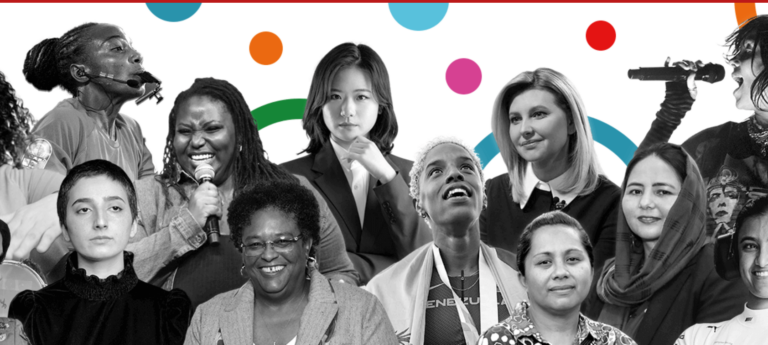
The BBC has revealed its list of 100 inspiring and influential women from around the world for 2022.
Among them are global music phenomenon Billie Eilish, Ukraine’s First Lady Olena Zelenska, actresses Priyanka Chopra Jonas and Selma Blair, the ‘tsarina of Russian pop’ Alla Pugacheva, Iranian climber Elnaz Rekabi, record-breaking triple jump athlete Yulimar Rojas, and Ghanaian author Nana Darkoa Sekyiamah.
This is the 10th season of 100 Women, so we are taking the opportunity to explore what progress has been made over the last decade. While there have been huge steps forward for women’s rights – from the number of female leaders to the MeToo movement – for women in many corners of the world it still feels like there is a long way to go.
The list also reflects the role of women at the heart of conflict around the world in 2022 – from the protesters bravely demanding change in Iran, to the female faces of conflict and resistance in Ukraine and Russia. For the first time this year, we have also asked previous 100 Women to nominate others who they felt deserved a place on the 2022 list.
Total women: 100

Lina Abu Akleh, Palestinian Territories
Human rights campaigner
Palestinian-Armenian human rights advocate Lina Abu Akleh is the niece of Palestinian-American journalist Shireen Abu Akleh, an Al Jazeera correspondent who was killed in May while covering a raid by Israeli forces in the occupied West Bank. The Israeli military has said there is a “high probability” one of its soldiers killed her “by mistake”.
Lina has now become the face of a campaign for justice and accountability for her aunt’s killing. She holds a master’s in international studies focusing on human rights. She was named as one of the 2022 TIME100 Next emerging leaders for her advocacy.
We need to pick up where my aunt Shireen Abu Akleh left off and continue to amplify women’s perspectives so we can ensure that the stories we’re telling and the information we’re gathering is equitable, accurate and whole – without women, that’s not possible.
Lina Abu Akleh

Dima Aktaa, Syria
Runner
In 2012, Dima Aktaa’s home in Syria was bombed. She lost her leg and the ability to do one of her favourite things – run. Approximately 28% of Syrians have a disability, nearly double the global average, according to UN data. Ten years later, Aktaa is in the UK, training to compete in the 2024 Paralympics.
After raising money for refugees during the pandemic, she was recognised as a member of England’s alternative football squad, the Lionhearts. Her story recently featured in pop star Anne-Marie’s music video Beautiful, and she continues to raise awareness of the strength of people with disabilities.
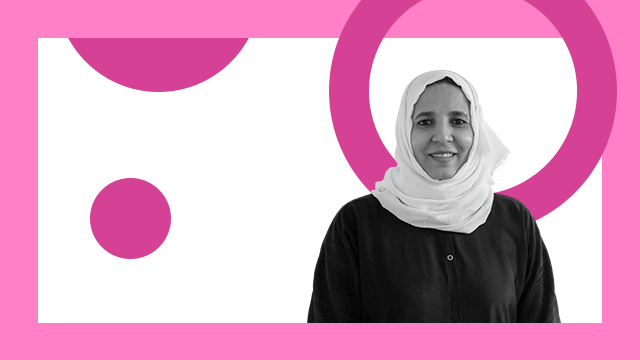
Maeen Al-Obaidi, Yemen
Lawyer
As the civil war in Yemen has grown more violent this year, lawyer Maeen Al-Obaidi continues to be focused on peace building in the besieged city of Taiz. She has taken on the role of a mediator, facilitating prisoner exchanges between conflicting groups. While she is not always successful getting fighters back to their families alive, she tries to make sure the bodies of those deceased are returned.
She has volunteered for the Yemen Women Union, where she defended imprisoned women. She was also the first woman promoted to the Lawyers Syndicate Council, overseeing the human rights and freedoms committee.
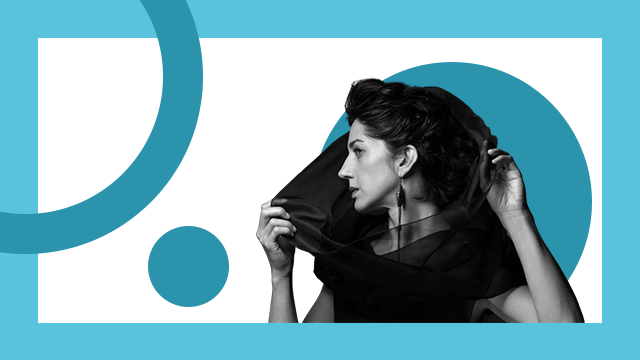
Zar Amir-Ebrahimi, Iran
Actress
This year, award-winning actress and filmmaker Zar Amir-Ebrahimi became the first Iranian to win Best Actress at Cannes for her performance in Holy Spider, a film based on the true story of a serial killer who targeted sex workers.
Amir-Ebrahimi had to leave Iran to avoid persecution and prosecution, when an intimate video of her was leaked and she was subjected to a smear campaign about her past love life. In 2008 she moved to Paris, founded her production company Alambic Production, and has continued to build an impressive career both in front of and behind the camera.

Fatima Amiri, Afghanistan
Student
Afghan teenager, Fatima Amiri is one of the survivors of a suicide attack at a tuition centre in Kabul that killed more than 50 people, most of them female students. She sustained serious injuries, including the loss of an eye and severe damage to her jaw and ear.
Whilst recovering, she studied for her university entrance exams and sat them in October, scoring more than 85%. Her dream is now to study computer science at Kabul University and says that losing her eye in the attack has only made her stronger and more determined.

Aye Nyein Thu, Myanmar
Medical doctor
Aye Nyein Thu is a front-line volunteer in crisis areas of Myanmar, focusing on the remote and poor Chin State. She built a makeshift hospital with a small operating theatre in November 2021 and has since been treating sick and injured people.
In her spare time, she travels to other regions where medical treatment is mostly unavailable, to support local patients including internally displaced persons. In the course of her work, she has had charges of ‘causing incitement to violence’ brought against her by the Myanmar military, who accused her of supporting local anti-government militia groups known as People’s Defence Forces.
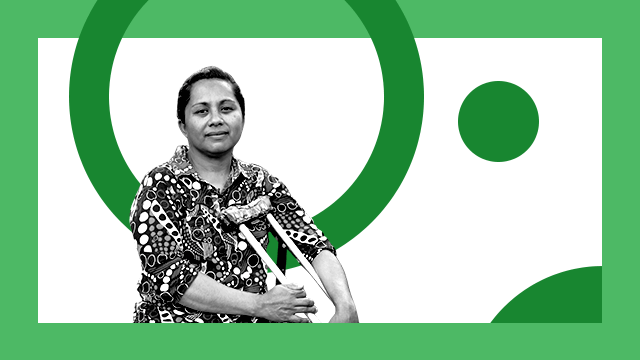
Velmariri Bambari, Indonesia
Activist
Working in a remote area of Indonesia, Velmariri Bambari has been fighting for victims of sexual violence in Central Sulawesi. She has persuaded members of the local council to break with customary law and not impose fines on survivors of sexual abuse.
In customary law, the sanction of “washing the village” establishes that perpetrators who are thought to have polluted traditional values should pay a fine. This rule is also applied to victims. Because of her campaigning, Bambari is often the first person contacted by the police when sexual violence is reported. She has dealt with several cases this year.
Even though I am physically disabled I want to devote all the energy I have to empower women in my surroundings, by creating opportunities that allow them to have financial independence.
Velmariri Bambari
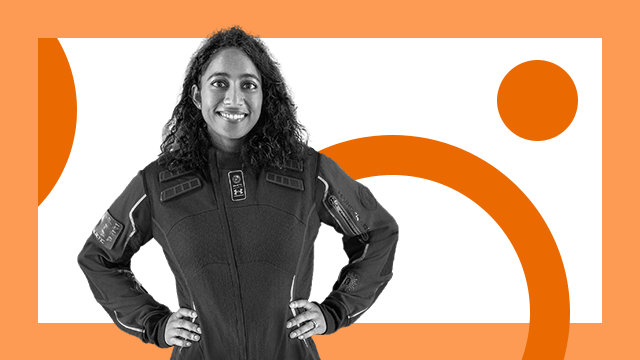
Sirisha Bandla, India
Aeronautical engineer
Sirisha Bandla went to the edge of space as part of the historic 2021 Unity 22 mission, Virgin Galactic’s first fully crewed sub-orbital spaceflight – making her the second woman born in India to go to space.
Developing an interest in space at an early age, Bandla went on to study aeronautical engineering in the US. She is now Vice President of Government Affairs and Research Operations for Virgin Galactic, a role that includes working with research customers to fly science and technology experiments on board VG’s SpaceShip.

Nominated by 2016 100 Women laureate, actress Sunny Leone
“In a male-dominated industry, for Sirisha to overcome everything and push through based on just her hard work and dedication makes her an inspiration to me and, more importantly, to all young girls out there with similar dreams.”

Victoria Baptiste, US
Nurse and vaccine educator
A nurse in the US state of Maryland, Victoria Baptiste educates people about vaccines. She understands why the black community might be suspicious of medical interventions: Baptiste is a descendant of Henrietta Lacks, a black woman who died of cervical cancer in 1951 whose cells, taken without her consent, were the first to be grown in a lab.
Known as HeLa cells, they have been used in medical research ever since, but the family did not know for decades. Now part of the Henrietta Lacks Foundation, Baptiste is also a WHO Goodwill Ambassador for cervical cancer elimination.
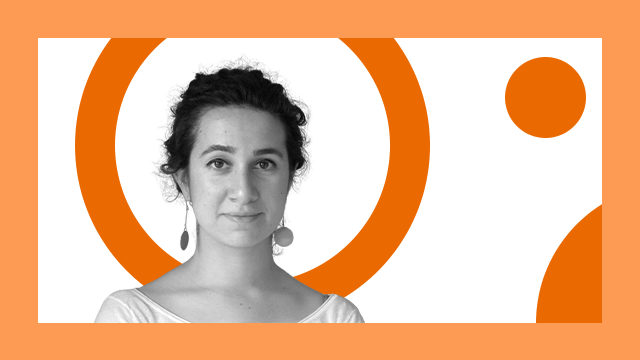
Niloufar Bayani, Iran
Ecologist
Conservationist Niloufar Bayani was one of several environmentalists detained in Iran in 2018 after using cameras to track endangered species. They were accused of collecting classified information about strategically sensitive areas, and Bayani was sentenced to 10 years in prison.
Bayani was the programme manager of the Persian Wildlife Heritage Foundation, dedicated to saving the Asiatic cheetah and other species. In a document obtained by BBC Persian, she said Iran’s Islamic Revolutionary Guards Corps subjected her to “the most severe mental, emotional and physical torture and sexual threats for at least 1,200 hours”. The Iranian authorities deny these allegations.

Nathalie Becquart, Vatican
Nun
Her appointment by Pope Francis as an undersecretary of the Synod of Bishops made her the first woman to ever hold this position. In the role, she is one of a number of leaders advising the pope on matters important to the Catholic Church, as well as being the only woman with voting rights. The body’s secretary-general said in 2021 that her appointment showed that “a door has opened” for women.
Previously, the French nun of the Congregation of Xavières served as the first female director of the National Service for the Evangelisation of Young People and Vocations in France.
As Pope Francis states, ‘it is a duty of justice to fight against all discrimination and violence’ on women… Together, we need to support in any way to involve more women in leadership positions at all levels.
Nathalie Becquart

Taisia Bekbulatova, Russia
Journalist
A renowned Russian journalist, Taisia Bekbulatova founded the independent media outlet Holod in 2019. The organisation has reported extensively on the war in Ukraine, as well as publishing stories about inequality, violence, and women’s rights. The website was blocked in Russia by authorities in April, during a crackdown on independent media.
Despite this, Bekbulatova and her team have vowed to continue their work, and have seen their readership increase. Bekbulatova, who left Russia in 2021 after being labelled a “foreign agent”, has travelled to Ukraine herself to report on the war from the front line.
I don’t believe in inevitable progress. Modern civilisation has always seemed fragile and easy to destroy. And women’s rights are usually the first to vanish.
Taisia Bekbulatova

Kristina Berdynskykh, Ukraine
Journalist
During the war in Ukraine, award-winning journalist Kristina Berdynskykh has travelled around her country, reporting from regions that had been under Russian shelling. Some of her work has focused particularly on the details of daily life in a city in conflict.
Born in Kherson, Berdynskykh has worked as a political journalist for 14 years in Kyiv, including at NV magazine and various TV and radio projects. She created e-People, a social media project about participants in Ukraine’s Euromaidan Revolution that later became a book.

Selma Blair, US
Actress
Known for her roles in pop-culture classics Cruel Intentions, Legally Blonde and the Hellboy franchise, Selma Blair is an American film and television actress.
She was diagnosed with multiple sclerosis in 2018 and has been praised for raising awareness of the condition, talking candidly about her health journey and the challenges she faces. This year, she released her memoir Mean Baby, and teamed up with an ability-inclusive make-up brand, with the goal of making ergonomic cosmetics that are easier to use and apply for everyone.
I’m a woman that has had a hard past, that could be judged for a lot of things and could have my power dismantled very easily, but it has been through the support of other women that I am here.
Selma Blair

Tarana Burke, US
Activist
The #MeToo hashtag went viral five years ago, when millions of people around the world shared their experiences of sexual harassment. But the movement was started by survivor and activist Tarana Burke back in 2006. She coined the phrase to raise awareness of abuse and violence against women.
When a 2017 tweet by actress Alyssa Milano amplified #MeToo, it sparked a global conversation about how women are treated, and gave survivors a powerful voice. Burke remains committed to advocating for survivors of abuse as she continues to fight for cultural and structural change.

Sandy Cabrera Arteaga, Honduras
Reproductive rights advocate
Philosophy student, writer and feminist activist, Sandy Cabrera Arteaga is a defender of sexual and reproductive rights. She teaches workshops about the morning-after pill and is a spokesperson for ‘Hablemos lo que es’ (Let’s talk about what it is) – an educational campaign and digital platform about emergency contraception.
She also works for Acción Joven (Youth Action) which focuses on young people’s human, sexual and reproductive rights. She is fluent in Honduran sign language and, as the only daughter of a single mother who is deaf, she is proud of her inclusive upbringing.

Ona Carbonell, Spain
Swimmer
Spanish artistic swimmer Ona Carbonell campaigns to normalise perceptions of being both a mother and an elite athlete. A three-time Olympian, she has collected more than 30 major medals, including Olympic silver and bronze.
In 2020, she gave birth to her first child and began training to be able to reach the Tokyo Olympics. She voiced her disappointment over rules that meant she couldn’t breastfeed her son at the event. This year, she became a mother for the second time. She told her story in a documentary to show other female athletes that motherhood can be compatible with sport.

María Fernanda Castro Maya, Mexico
Disability activist
As a woman with an intellectual disability, Fernanda Castro is fighting for others like her to be able to participate in politics. She is part of a group of disability rights advocates, supported by Human Rights Watch, asking all political parties in Mexico to include people with intellectual and learning disabilities in their policies.
Her work covers language accessibility in documents concerning political decisions, and inclusion in political parties and electoral events. Castro was part of a Mexican delegation to the United Nations which presented a report into disability rights, and is a representative for the global network Inclusion International.
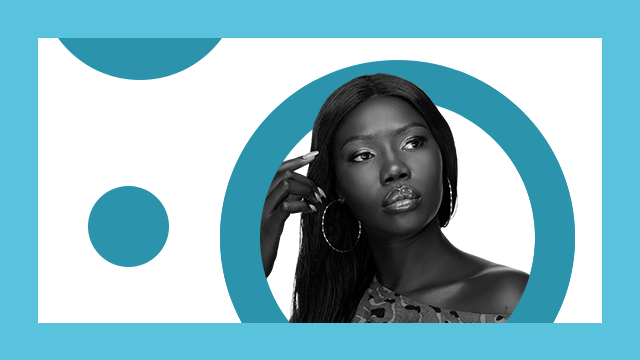
Sarah Chan, South Sudan
NBA scouter
Former professional basketball player Sarah Chan is now mentoring teenagers and teaching them the sport in South Sudan and Kenya. She is also the first female manager of scouting in Africa for the NBA’s Toronto Raptors basketball team.
After fleeing war in Khartoum, Sudan, she and her family moved to Kenya, where Chan’s basketball career began. She secured a basketball scholarship at Union University in Jackson, Tennessee, and played professionally in Africa and Europe. Chan founded Home At Home/Apediet Foundation, an NGO that combats early-age marriages, advocates for education, and uses sports to educate young people.
You are what you believe about yourself, so believe in a future worthy of all your dreams and aspirations.
Sarah Chan

Priyanka Chopra Jonas, India
Actress and producer
With more than 60 films to her name, Priyanka Chopra Jonas is one of Bollywood’s biggest film stars. After her movie debut in 2002, the former Miss World’s breakthrough in Hollywood came as she made history as the first South Asian actress to lead an American network drama series (Quantico, 2015).
Her Hollywood acting credits include Isn’t It Romantic and The Matrix Resurrections. She has established her own production company, making films in India. Chopra is also a Unicef Goodwill Ambassador, campaigning for children’s rights and education for girls.
The MeToo movement and subsequent voices of collective women coming together, protecting each other, and standing by each other – there’s something very powerful in togetherness.
Priyanka Chopra Jonas

Sanjida Islam Choya, Bangladesh
Student
Bangladesh has one of the highest rates of child marriage in the world, but Sanjida Islam Choya is trying to change that. Her own mother was married at a young age, but after Choya was inspired by a school presentation on the effects of child marriage, she decided to act.
She and her friends, teachers and collaborators call themselves Ghashforing (Grasshoppers) and report incidents of child marriage to the police. Now at university, Choya’s work with Ghashforing hasn’t stopped and she mentors new members of the group. So far they have reportedly prevented 50 child marriages.

Chanel Contos, Australia
Sexual consent activist
Founder of a movement dubbed ‘Teach Us Consent’ that lobbies for holistic consent and sexuality education, in 2021 Chanel Contos posted a story on Instagram, asking her followers if they or someone they knew had been sexually assaulted at school. Within 24 hours more than 200 people had replied “yes”.
She launched a petition calling for earlier consent education in Australia. Thanks to her campaign, consent education will be mandatory in all schools from kindergarten until year 10 from 2023. Now she is educating people about non-consensual condom removal, or stealthing, as well as campaigning to criminalise the act.

Eva Copa, Bolivia
Politician
A former student leader of Aymara descent, Eva Copa is shaking up politics in Bolivia. After failing to win her party’s nomination to be mayor of El Alto, the country’s second-largest city, she stood against their candidate and won with 69% of the vote. She recently announced the city’s plan for women, which will aim to strengthen women’s rights through policy and investment.
Copa is not new to politics, having served as a senator between 2015 and 2020. Her split with the ruling party is seen by many as a shift towards a more diversified political landscape in Bolivia.
We need more women leaders: women always on their feet, never on their knees.
Eva Copa

Heidi Crowter, UK
Disability campaigner
Heidi Crowter has campaigned to change perceptions of people with Down’s syndrome. She took the UK government to court over legislation allowing foetuses with the condition to be aborted up until birth, saying it was discriminatory. The High Court ruled against her challenge and said the law aims to strike a balance between the rights of the unborn child and of women. In November, Crowter lost her appeal, but said she and her team plan to “keep fighting” and take the case to the Supreme Court.
She is a patron of Positive About Down and founding officer of the National Down Syndrome Policy Group. Her book, I’m Just Heidi, was published in August.
I want pregnant women to have the right information about Down syndrome. I want people to keep up with the times and see us for who we really are!
Heidi Crowter
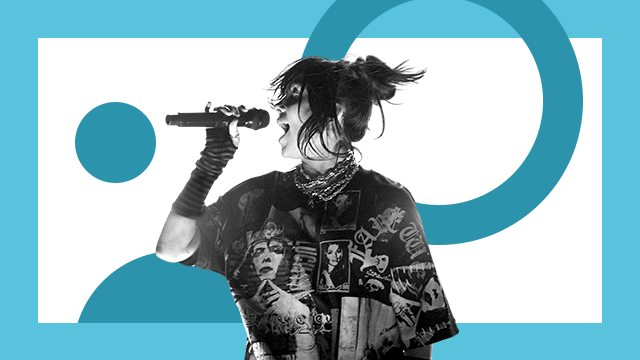
Billie Eilish, US
Singer and songwriter
Grammy Award-winning and record-breaking superstar Billie Eilish is known for pushing boundaries with her music – from her single Your Power, which calls out abusers who exploit underage girls, to All The Good Girls Go To Hell, a song about climate change.
She made history this year by becoming the youngest Glastonbury headliner ever, using her set to protest against the US Supreme Court’s decision to end the constitutional right to abortion. She has spoken openly about body image, her periods of depression and living with Tourette’s syndrome.
I’m in awe of the time we’re in right now. Women are at the top. There was a specific period of time where I was in this pit of hopelessness because I didn’t have girls like me being taken seriously.
Billie Eilish
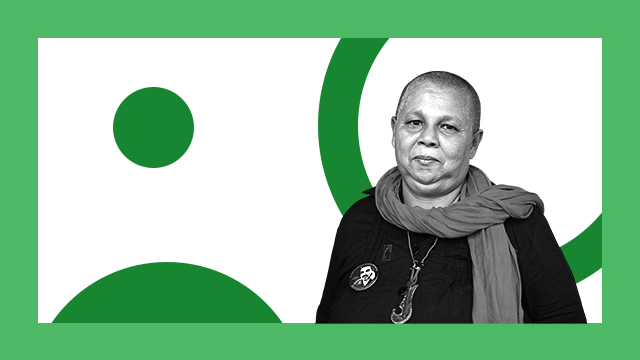
Sandya Eknaligoda, Sri Lanka
Human rights activist
A human rights activist and campaigner, Sandya Eknaligoda is helping thousands of mothers and wives who lost loved ones during Sri Lanka’s civil war. Her husband, Prageeth Eknaligoda, a prominent investigative journalist and cartoonist, went missing in January 2010. He was a strong critic of the government and investigated alleged abuses against Tamil Tiger separatists.
Since his disappearance, the mother of two has been seeking justice. She accuses the supporters of Mahinda Rajapaksa, the former president of Sri Lanka, of being responsible for her husband’s abduction. While suspects have been identified, they have all been acquitted.
I am a woman who fights on behalf of others at every opportunity, engages in creative struggle, and overcomes challenges amidst insults and slander, through dedication and sacrifice.
Sandya Eknaligoda
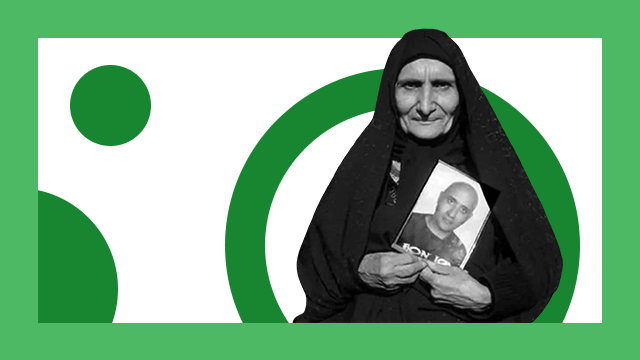
Gohar Eshghi, Iran
Civil activist
Gohar Eshghi has become a symbol of endurance and persistence in Iran. Her son, Sattar Beheshti, was a blogger who died in custody a decade ago and Eshghi has been calling for justice ever since, accusing Iranian authorities of torture and murder.
She is one of the Iranian Complainant Mothers, a group seeking justice for their children’s killings. Holding Ayatollah Ali Khamenei, Iran’s Supreme Leader, personally responsible for her son’s death, she was one of the signatories of a letter in 2019, calling for his resignation. During this year’s protests, following the death of Mahsa Amini, Eshghi removed her headscarf in solidarity with protesters.
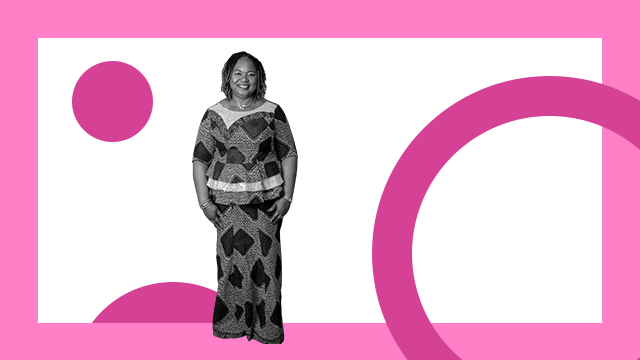
Joy Ngozi Ezeilo, Nigeria
Law professor
As emeritus dean of law at the University of Nigeria and former United Nations Special Rapporteur on Trafficking in Persons, Joy Ezeilo is a leading authority in the field of international human rights.
She is a founding director of the Women Aid Collective (WACOL), which in the last 25 years has provided free legal aid and shelter to 60,000 vulnerable women in Nigeria. She also founded the Tamar Sexual Assault Referral Centre, to provide a rapid response to victims and survivors of abuse.

Nominated by 2021 100 Women laureate, writer Chimamanda Ngozi Adichie
“Professor Ezeilo has impacted many lives through the provision of free legal aid to the poor, especially to women and girls whose human rights have been violated.”

Ibijoke Faborode, Nigeria
Founder of ElectHER
Through ElectHER, Ibijoke Faborode is disrupting the women’s political movement in Nigeria. Her organisation works to bridge inequality gaps in political representation and has engaged more than 2,000 women in politics across Africa. With the #Agender35 campaign, her organisation is directly backing 35 women running for local or federal office in the 2023 general election, providing human and financial resources.
She is also behind the first African feminist mobile app for election data analysis. Faborode currently serves in the Leadership Council of The Democracy and Culture Foundation, which identifies new ways to improve democratic processes.

Samrawit Fikru, Ethiopia
Tech entrepreneur
Although she hadn’t ever used a computer until she was 17, programmer Samrawit Fikru is a founder of Hybrid Designs, one of the companies behind Ethiopia’s taxi app RIDE.
Her own experience feeling unsafe taking taxis after work and having to haggle with drivers who wanted to charge her extra led her to create the app, which she started with less than $2,000 (around £1,700). Her company went on to employ a majority female staff. There are few women in Ethiopia’s tech industry and Fikru wants to inspire the next generation of young female entrepreneurs.
Women-owned business are growing in number; now we need more young girls to access the finances to make their creative ideas happen.
Samrawit Fikru

Ceci Flores, Mexico
Activist
Armed men took Ceci Flores’ 21-year-old son Alejandro in 2015. Four years later, another of her sons, Marco Antonio, 31, was kidnapped by a criminal group. Flores says her activism is driven by the fear of dying without finding out what happened to her children, victims of forced disappearances in Mexico.
This year, the country hit a grim milestone, with 100,000 people now listed as missing in what the UN has called “a tragedy of enormous proportions”. Under Flores’ leadership, the Madres Buscadoras de Sonora collective (Sonora’s Searching Mothers) have helped locate more than 1,000 disappeared persons in clandestine graves.

Geraldina Guerra Garcés, Ecuador
Femicide activist
A defender of women’s rights for over 17 years, Geraldina Guerra Garcés works to protect female victims of violence in Ecuador. She specialises in gathering information to increase the visibility of femicides – the murder of women because of their gender.
She is behind the Cartographies of Memory initiative, which seeks to create “life maps” of victims of femicide, keeping their memory alive to help spark a cultural shift in attitudes. Guerra tracks and maps cases for the Feminist Alliance and the Latin American Network Against Gender Violence. She also represents the Aldea Foundation and the country’s network of women’s shelters.
If there is no strong action to prevent femicides, there will be no progress for anyone. Despite new legislation coming into effect, we are still being killed, and that has to change.
Geraldina Guerra Garcés

Wegahta Gebreyohannes Abera, Tigray, Ethiopia
Humanitarian aid worker
A humanitarian aid worker, Wegahta Gebreyohannes Abera is also the founder of Hdrina, a non-profit organisation that aims to eradicate malnutrition caused by the war in Tigray. Hdrina has a number of projects to help war-affected women and children, including an emergency feeding programme in a camp for internally displaced people (IDP) and an urban gardening project.
The organisation also runs a female empowerment project for survivors of conflict-related sexual violence and women who, as a result of poverty caused by the war, have turned to commercial sex work.

Moud Goba, UK
LGBTQ+ activist
As a refugee herself, Moud Goba has worked for almost two decades with grassroots organisations that promote the integration of refugees. She is currently a national manager for Micro Rainbow, which provides safe shelter to LGBTQ+ asylum seekers and refugees. She leads their housing project, which provides 25,000 bed-nights a year to the homeless, and is also involved in their employability programme.
Recently Goba has managed the integration process of LGBTQ+ people who arrived in the UK from Afghanistan. She is one of the founding members of UK Black Pride and current chair of their board of trustees.

Dilek Gürsoy, Germany
Heart surgeon
Born in Germany to Turkish migrant parents, Dr Dilek Gürsoy is a leading heart surgeon and artificial heart specialist. She made the cover of Forbes magazine in Germany, which lauded her for being the first female surgeon in Europe to implant an artificial heart.
She has been at the forefront of artificial heart research for more than a decade, working on the development of an alternative to heart transplantation given the low rates of organ donation, with a special focus on female anatomy. She has written an autobiography and is now in the process of starting her own heart clinic.
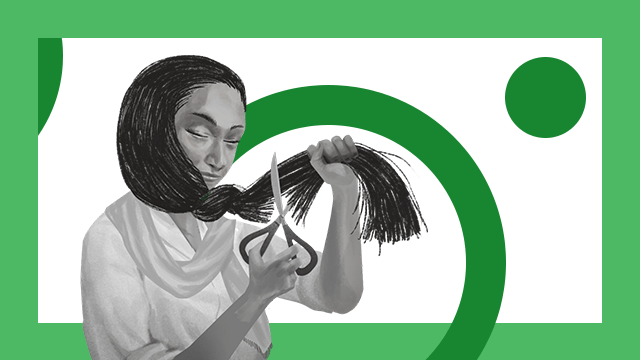
Woman cutting her hair, Iran
Protester
Widespread protests erupted in Iran this year, following the death of Mahsa Amini, a 22-year-old Kurdish woman arrested by morality police in Tehran on 13 September for allegedly violating Iran’s strict rules requiring women to cover their hair with a hijab, or headscarf.
This year we wanted to recognise the role women have played in the protests, fighting for their freedoms and against the compulsory hijab.
Haircutting has become one of the symbols of a movement that has spread to celebrities, politicians and campaigners across the world. It is seen by some communities in Iran as a traditional sign of mourning.

Gehad Hamdy, Egypt
Dentist and humanitarian
Dentist Gehad Hamdy is also the founder and manager of Speak Up, an Egyptian feminist initiative that uses its social media platform to shine a spotlight on the perpetrators of gender-based violence and sexual harassment. There has been a series of violent crimes against women across Egypt in 2022, bringing the issue into focus.
The organisation encourages women to speak out about abuse, while also providing legal and emotional support and putting pressure on authorities to act. Hamdy’s campaign has been recognised on numerous occasions, including winning the equal rights and non-discrimination award at the World Justice Forum 2022.
There’s a long way to go; we’re nowhere near the end. In fact, we’ve barely begun.
Gehad Hamdy
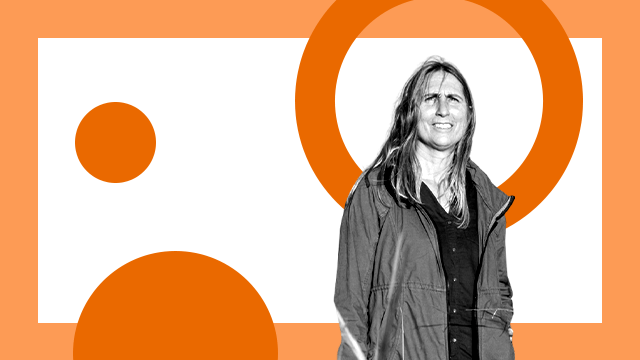
Sofía Heinonen, Argentina
Conservationist
Committed to protecting biodiversity, biologist Sofía Heinonen led the first efforts to reverse the extinction crisis in South America, with the rewilding of the Esteros del Iberá, the main wetland ecosystem in Argentina and one of the world’s largest. She has spent more than 30 years contributing to the creation of protected areas.
Under her leadership, the Rewilding Argentina project is active in four main ecoregions, including the Patagonian steppe, under a model that looks at turning private land into protected national parks and reintroducing native species to restore ecosystems and build sustainable ecotourism.

Judith Heumann, US
Disability rights advocate
Judith Heumann has dedicated her life to fighting for the rights of disabled people. After contracting polio as a child, she became the first wheelchair user to work as a teacher in New York City.
She is an internationally recognised leader of the disability rights movement, and her activism – including her involvement in the longest ever US federal building sit-in – has seen her play a significant role in the implementation of major legislation. Heumann served in both the Clinton and Obama administrations, and has 20 years of non-profit experience.

Nominated by 2020 100 Women laureate, disability activist Shani Dhanda
“I’ve been genuinely inspired by Judith, who, for more than 30 years, has worked to advance the human rights of disabled people globally. She remains a tireless advocate and has been part of pivotal moments in the disability rights movement.”

Erika Hilton, Brazil
Politician
The first black trans woman ever elected to a seat in the National Congress of Brazil. Erika Hilton is an activist who campaigns against racism, and for LGBTQ+ and human rights.
As a teenager, she was expelled from a conservative family home and lived on the streets, before going to university. With a background in student politics, Hilton moved to São Paulo and joined the left-wing PSOL party. In 2020 she was elected to the city’s council and went on to author the law that introduced a municipal fund against hunger in Brazil’s largest city.
Our fight is to achieve equal rights, equal wages and the end of gender-based violence, whether we’re black, Latin, white, poor, rich, cis or transgender.
Erika Hilton
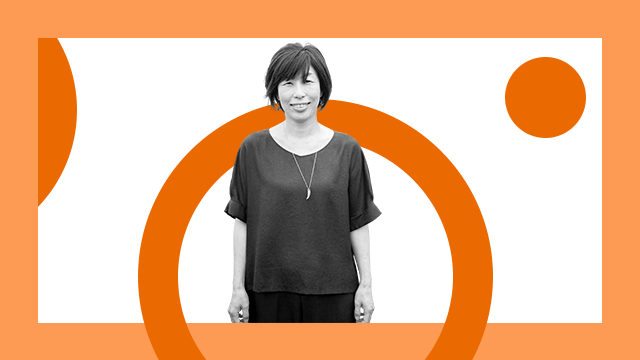
Kimiko Hirata, Japan
Climate campaigner
A fierce opponent of coal power, Kimiko Hirata has spent nearly half her life fighting to wean Japan off its dependence on fossil fuels – by far the largest contributors to climate change. Her grassroots campaign resulted in the cancellation of 17 planned coal power plants. She is the first Japanese woman to win the Goldman Environmental Prize.
Hirata quit her job at a publishing house to become a climate activist in the 1990s after reading Al Gore’s book Earth in the Balance. She’s now executive director of the independent organisation Climate Integrate, established in January 2022, which is tackling decarbonisation.

Jebina Yasmin Islam, UK
Campaigner
The sister of primary school teacher Sabina Nessa, who was murdered in a London park in September 2021, Jebina Yasmin Islam has become an outspoken advocate for women’s street safety in the UK. She has campaigned for changes to the law, so defendants need to appear in court for sentencing.
After her sister’s killing, Islam criticised the British government’s lack of support, saying it was indicative of how little importance was placed on male violence. She also spoke out about racial discrimination – they would have received better treatment, she said, if their family had been a “normal British white family”. Islam describes her sister as an “amazing role model” who was “powerful, fearless, and bright”.
“Love yourself more than anyone on the planet.”
Sabina Nessa
A message from Sabina Nessa’s journal, shared by her sister Jebina

Ons Jabeur, Tunisia
Tennis player
After a historic run at the 2022 Wimbledon Championships, Tunisian tennis star Ons Jabeur became the first Arab or African woman to reach a Grand Slam final in the Open era. Just months later, she reached the final of the US Open.
The 28-year-old, who started playing tennis when she was just three, made it to number two in the Women’s Tennis Association (WTA) ranking – the highest position ever held by an African or Arab, whether male or female. Jabeur has won three career singles titles, and has been credited with inspiring a new generation of players.
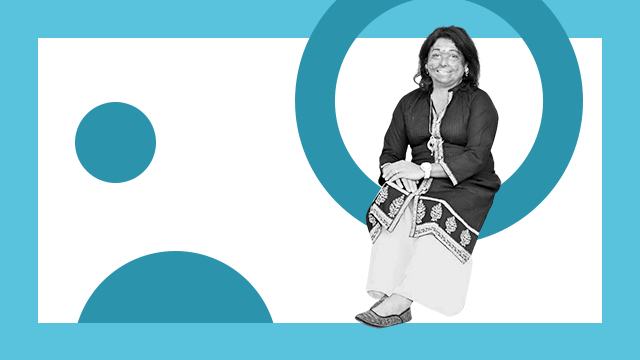
Sneha Jawale, India
Social worker
When her parents couldn’t fulfil a demand for more dowry in December 2000, Sneha Jawale’s husband set her on fire with kerosene. The family didn’t file a police complaint. After her husband left with their son, she became determined to rebuild her life, as a tarot card reader and scriptwriter – jobs where people didn’t have to see her face.
Jawale, now a social worker, was asked to star in a theatre play, Nirbhaya, named after the 2012 Delhi gang-rape victim and based on the experiences of survivors of violence. Performing to audiences around the world helped her overcome her fears.
Over the last 10 years, society’s attitudes towards burn and acid survivors have changed. I don’t consider myself any less than a Miss World or Miss Universe. I say I am beautiful, so I am.
Sneha Jawale

Park Ji-hyun, South Korea
Political reformer
As a university student, Park Ji-hyun anonymously helped bust one of South Korea’s biggest online sex-crime rings, known as the Nth rooms. This year she went public with her experience and went into politics, reaching out to young female voters.
When the Democratic Party lost the presidential race, they named her co-interim leader. She was also on the women’s committee, which focused on tackling digital sex crimes. In June, the party faced further losses and she resigned. While she may not have an official role at the moment, she is still committed to pushing for gender equality in politics.
Globally, digital sex crimes threaten women’s rights and we need to solve this problem in solidarity.
Park Ji-hyun
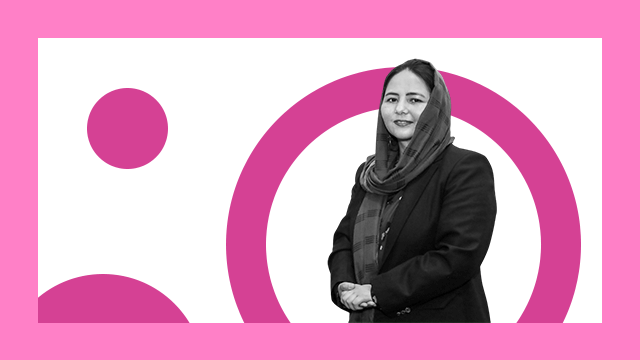
Zahra Joya, Afghanistan
Journalist
For six years under Taliban rule, Zahra Joya became ‘Mohammad’ and dressed as a boy to attend school. When US-led forces toppled the Taliban in 2001 she returned to school as Zahra. She started working as a journalist in 2011 and was often the only female reporter in the newsroom.
She is the founder of Rukhshana Media, Afghanistan’s only feminist news agency, named after a 19-year-old who was stoned to death by the Taliban. Joya was evacuated from Afghanistan in 2021 and now runs Rukhshana Media from exile in the UK. She won the Gates Foundation’s 2022 Changemaker Award.
I believe in the soft power of words and we must speak about injustices against women.
Zahra Joya

Reema Juffali, Saudi Arabia
Racing driver
In 2018, Reema Juffali made history by becoming Saudi Arabia’s first ever female professional racing driver. This year, she founded her very own team, Theeba Motorsport, to compete in the International GT Open and improve Saudi Arabian access to and participation in motor racing. Through the team, the professional driver is creating a variety of educational opportunities and programmes to improve diversity in the sport.
A role model for other female racing drivers around the world, Juffali hopes to achieve another first – contesting the prestigious Le Mans 24-hour race with Theeba Motorsport.
Many stereotypes remain for women in society. Support needs to come from the home, as well as from society, for meaningful and lasting change to happen.
Reema Juffali
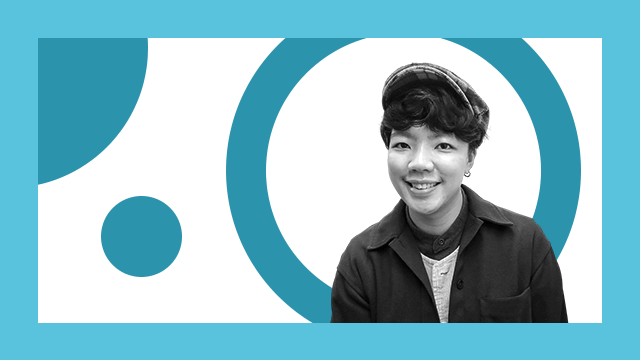
Kadri Keung, Hong Kong
Fashion designer
Designing aesthetically pleasing garments for the elderly and for differently abled bodies is a passion for Kadri Keung. She started adaptive fashion brand RHYS with her mother Ophelia Keung in 2018, inspired by caring for Kadri’s grandmother and realising that garments for the elderly often lack style and functionality.
As a clothing design graduate, Keung combines her knowledge with the needs of the customer, whether that be velcro fastenings or a bag to hold a catheter. Her brand employed and trained 90 underprivileged women, including some with disabilities. In 2022, Keung started Boundless, an inclusive brand promoting fashionable functional items.

Judy Kihumba, Kenya
Sign language interpreter
As an advocate of maternal mental health and wellness of deaf nursing mums, Judy Kihumba intervened to make healthcare information available to all women when she realised that some hospitals in Kenya didn’t have sign language interpreters.
She is the founder of Talking Hands, Listening Eyes on Postpartum Depression (THLEP) and helps women with impaired hearing in the journey of motherhood. Kihumba created the organisation after experiencing postpartum depression herself in 2019. This year they organised the first group baby shower, which brought together 78 deaf mothers with healthcare practitioners and counsellors.

Marie Christina Kolo, Madagascar
Climate entrepreneur
Green social entrepreneur and ecofeminist, Marie Christina Kolo was part of Madagascar’s official delegation to COP27. She advocates on the human rights and gender aspects of climate change, as her country endures consecutive droughts that challenge access to food for millions. The UN has called it the world’s first climate change-induced famine.
Kolo is regional director of the NGO People Power Inclusion, which aims to fight poverty through the green economy. Her social enterprise, Green’N’Kool, is a leading national platform for climate justice. As a survivor of gender-based violence, she founded the movement Women Break the Silence, which fights against rape culture.
We don’t want to be seen only as poor victims of climate impact, patriarchy and violence. I feel so optimistic and proud when I see that we women can be resilient, despite all the difficulties.
Marie Christina Kolo

Iryna Kondratova, Ukraine
Paediatrician
Despite coming under heavy shelling, Dr Iryna Kondratova and her team continued to care tirelessly for pregnant women, newborns and mothers at the Kharkiv Regional Perinatal Centre. They set up a labour ward in the basement of the hospital, and risked their lives to stay with intensive care babies who couldn’t be moved, even as air raid sirens sounded.
As head of the centre, Dr Kondratova took over David Beckham’s Instagram in March, to highlight the challenges they face. Her team has provided medical and psychological support to more than 3,000 women from Luhansk and Donetsk since 2014.
Destroyed are our homes, roads, power stations, hospitals – and lives. But our dreams, our hopes and our faith are alive and stronger than ever.
Iryna Kondratova

Asonele Kotu, South Africa
Tech entrepreneur
The idea for her business was born after Asonele Kotu wanted her own contraceptive implant removed, but couldn’t find anyone to help her. She then founded FemConnect, a start-up that provides technology solutions to alleviate period poverty and reduce teenage pregnancies.
The platform allows users to access sexual and reproductive telemedicine with no stigma or discrimination, as well as feminine hygiene products and contraceptives – and all the same way you would order food online. Kotu is passionate about eradicating period poverty and improving access to quality healthcare, especially for at-risk youth and those in marginalised and underserved communities.
It has been beautiful to watch the determination of young people to create solutions to problems, to ensure that the next generation does not experience the same struggles our parents did.
Asonele Kotu

Layli, Iran
Protester
One of the iconic images of the current protests in Iran was of a young woman, filmed from behind, putting her hair in a ponytail, and preparing to continue protesting on the streets. Her photo became a symbol of the bravery of protesters, but her identity was mistaken for Hadis Najafi, a 22-year-old woman killed during the ongoing demonstrations.
Speaking to BBC Persian, Layli (not her real name) said she would “fight for people like Hadis Najafi and Mahsa Amini”. The Iranian regime, she said, “do not scare us with the threat of death. We have hope for Iran’s freedom.”
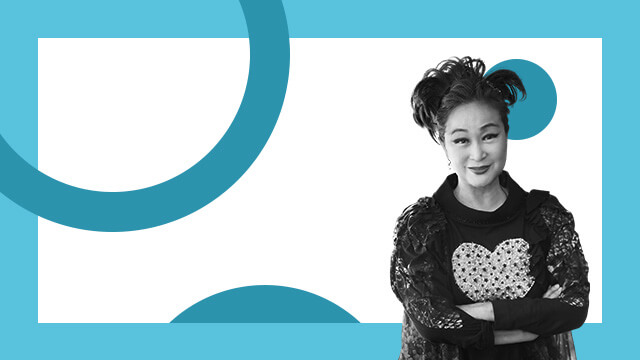
Mie Kyung (Miky) Lee, South Korea
Producer
As a passionate supporter of the arts, Miky Lee is leading a Korean cultural wave. She is a driving force behind K-pop’s global success and an architect of the music festival KCON. She is also an executive producer of Parasite, the first foreign-language film to win an Oscar for best picture.
Lee is vice chair of South Korea’s entertainment conglomerate CJ ENM – a powerful film and TV studio, cable operator and music production company.

Nominated by 2021 100 Women laureate, actress Rebel Wilson
“She is total GIRL POWER, and a role model to me. She has represented and promoted her culture to the world and is all class.”

Ursula von der Leyen, Germany
President of the European Commission
The first female president of the European Commission, Ursula von der Leyen is a German politician. She served in Angela Merkel’s cabinet and was the first female defence minister ever appointed in Germany.
Born in Brussels, she studied economics and medicine before going into politics. She took the EU’s top job in 2019, and has since then led the bloc through Brexit, the Covid-19 pandemic, and the war in Ukraine. She was a driving force behind an EU law requiring gender balance on company boards that was adopted this year.

Nominated by 2020 100 Women laureate, Finland’s Prime Minister Sanna Marin
“As Europe has been faced by one crisis after another, Ursula von der Leyen has shown incredible resolve in helping the European Union get through these challenges together. Her leadership has been unfaltering. The times are tough, but she is even tougher.”

Erika Liriano, Dominican Republic
Cocoa entrepreneur
Aiming to reimagine the cocoa supply chain, Erika Liriano runs a profit-sharing export start-up in the Dominican Republic. Liriano co-founded INARU with her sister, Janett, with the aim of making the production and distribution of cocoa fairer and more sustainable. This year, their start-up got seed funding.
Historically, the cocoa industry has been exploitative for smallholder farmers but their company ensures ethical sourcing and fair wages for Dominican producers. Born in New York, the sisters come from a family of farmers and entrepreneurs in the Dominican Republic. They now partner with women-run farms, co-operatives and suppliers across the country.
The power to determine your own path is something that all humans should have the right to, and that includes a woman’s power to choose what type of life she wants for herself.
Erika Liriano

Naomi Long, Northern Ireland
Politician
Former Justice Minister Naomi Long brought in legislation to tackle a number of new sexual offences in Northern Ireland this year, including downblousing, cyber-flashing and abolishing the ‘rough sex’ defence. Having received death threats herself, Long has also sought to raise awareness of the harassment of female politicians.
A civil engineer by profession, she joined the Alliance Party in 1995. After serving as Lord Mayor of Belfast, she became the first Alliance MP elected to Westminster in 2010, knocking former first minister Peter Robinson out of the Westminster seat he had held for more than 30 years.
We need to tackle the attitudes that create an environment in which abuse remains commonplace. That means all of us directly and consistently challenging the culture of male entitlement, sexism, and misogyny.
Naomi Long
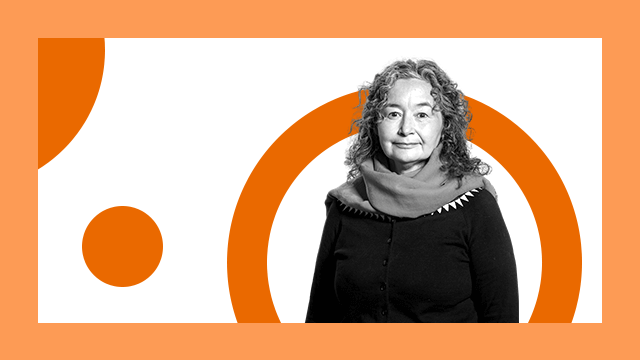
Naja Lyberth, Greenland
Psychologist
Trauma therapist Naja Lyberth was only 13 when she was involuntarily fitted with an intrauterine device (IUD), commonly known as a coil, as part of a birth control campaign carried out on Inuit Greenlanders by Danish doctors during the 1960s and 70s. This year Denmark and Greenland formally agreed to launch an investigation into these practices, which may have affected around 4,500 women and girls.
Lyberth campaigns to help these women, including those who suspect the coil is to blame for their fertility issues. She has set up a Facebook group for women to connect and support each other.
More and more women who are survivors are becoming role models for other women. Speaking out often makes the fear disappear, when you discover that you will not be judged. We cannot be controlled by our fears.
Naja Lyberth

Ayesha Malik, Pakistan
Judge
Appointed this year as the first female judge of the Supreme Court of Pakistan, Justice Ayesha A. Malik has authored judgements protecting the rights of women. This includes her landmark judgement which banned the so-called two-finger test of rape victims. These ‘virginity tests’ used to be performed during the examinations of sexual assault cases until they were outlawed in 2021.
Alongside her role on the Supreme Court, Malik also conducts training for judges around the world and has inaugurated conferences for women judges in Pakistan, encouraging the debate around including the gender perspective in the justice system.
Women must build a new narrative – one that includes their perspective, shares their experience, and includes their stories.
Ayesha Malik
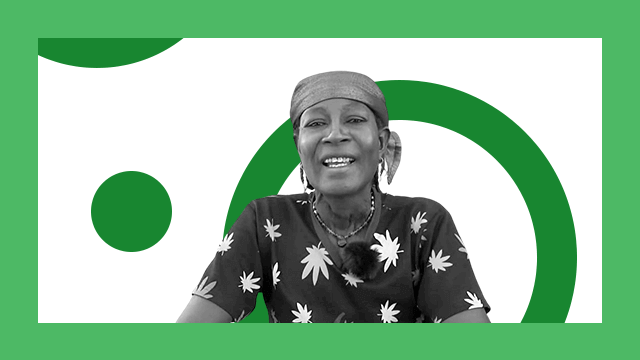
Hadizatou Mani, Niger
Anti-slavery campaigner
Sold off to become a ‘fifth wife’ aged 12, Hadizatou Mani was enslaved under the wahaya practice, which involves an influential man taking an unofficial wife to serve his four legal wives. After being legally freed in 2005, Mani remarried, but her former master accused her of bigamy and sued her. She was found guilty and sentenced to six months in prison.
Mani challenged the ruling and Niger’s Supreme Court overturned her conviction in 2019, banning the wahaya practice as a result. She is now an anti-slavery advocate and uses her platform to help other women to escape.

Nigar Marf, Iraq
Nurse
As head nurse in the main burns unit in Iraqi Kurdistan, Nigar Marf’s work includes treating women who have self-immolated, the act of setting oneself on fire. This practice is still common among young women in the region, as a form of protest.
Marf has worked in hospitals for around 25 years, both in paediatric burns and intensive care. In her ward she also treats patients who have sustained accidental burns. Many of the women she treats suffered mental and physical abuse before setting themselves on fire; some of them were as young as 16.

Oleksandra Matviichuk, Ukraine
Human rights lawyer
For 15 years, Oleksandra Matviichuk has led the Center for Civil Liberties (CCL), which was jointly awarded the 2022 Nobel Peace Prize for its work in documenting Russian war crimes after the invasion of Ukraine.
The CCL is carrying the legacy of the Ukrainian dissidents of the 1960s, focusing on human rights. In 2014, the Center was the first human rights organisation to go to Crimea, Luhansk, and Donetsk to document war crimes. Now they are calling for an international tribunal to investigate Russia over alleged violations of human rights committed in Chechnya, Moldova, Georgia, Syria, Mali, and Ukraine.
Bravery has no gender.
Oleksandra Matviichuk
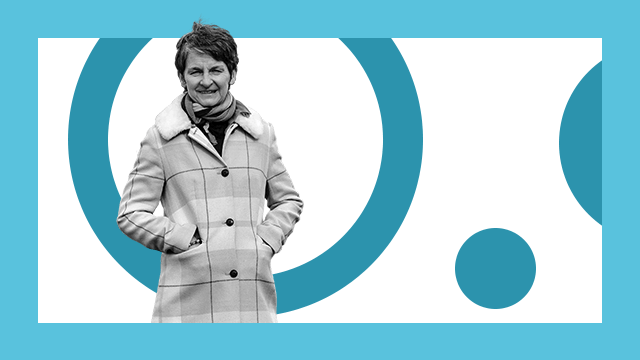
Laura McAllister, Wales
Professor and former footballer
Former captain of the Wales women’s football team, Laura McAllister has held several senior roles in sports governance. She is currently Deputy Chair of Uefa’s Women’s Football Committee and stood for election as Uefa representative on the Fifa Council in April 2021. She is a board director at the Football Association of Wales Trust.
Currently a professor at Cardiff University, McAllister is an expert on Welsh politics. This year, she was chosen by Wales as an LGBTQ+ sports ambassador to attend the World Cup in Qatar. She was asked to remove her ‘rainbow wall’ bucket hat that showed support for the LGBTQ+ community as she entered the stadium.

Milli, Thailand
Rap artist
Artist and songwriter Danupha Khanatheerakul, better known by her stage name Milli, uses controversial lyrics to address issues such as unrealistic beauty standards and sexual consent. She raps in multiple languages and dialects, also incorporating slang from Thailand’s transgender community. She recently announced her first debut album called BABB BUM BUM.
She became a viral sensation at Coachella festival this year by challenging Thai stereotypes and the government, as well as eating mango sticky rice onstage, a traditional Thai dessert. Last year she faced defamation charges for criticising the Thai government’s Covid-19 response. As a result, the hashtag #SaveMilli trended.
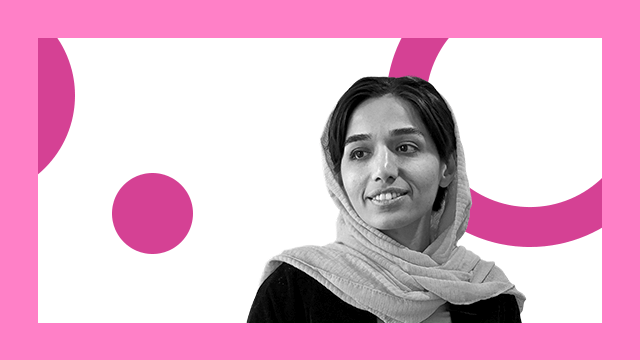
Zara Mohammadi, Iran
Educator
As one of the founders of the Nojin Socio-Cultural Association, Zara Mohammadi has dedicated more than a decade to teaching the Kurdish language in her hometown of Sanandaj.
The Iranian constitution says that use of regional and ethnic languages is freely permitted in educational settings, but lawyers and activists say this is not the case in practice, so children cannot learn their mother tongue at school. The Iranian government accused Mohammadi of “forming groups and societies with the aim of disrupting national security” and she was sentenced to five years in prison. She has been in jail since January 2022.
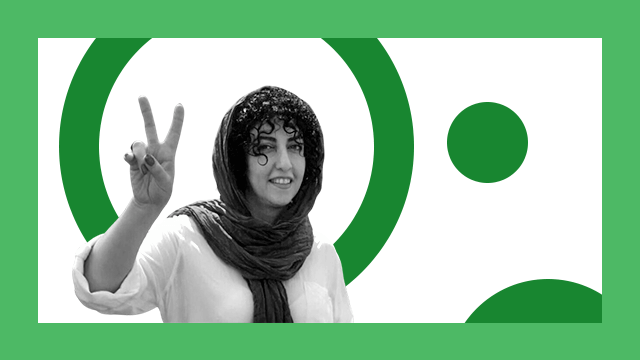
Narges Mohammadi, Iran
Human rights campaigner
Journalist and Nobel Peace Prize nominee Narges Mohammadi is vice-president of the Defenders of Human Rights Center in Iran and has tirelessly campaigned for the abolition of the death penalty. During the most recent demonstrations in Iran, she sent a letter from Evin Prison, asking the UN to stop the Iranian government from issuing the death penalty to protesters.
In 2010 Mohammadi was sentenced to 11 years in prison – later increased to 16 years after she gave a speech, while on bail, criticising the treatment of inmates at Evin. Her documentary White Torture examines solitary confinement, based on interviews with 16 former prisoners. Her two children live in exile with her husband, political activist Taghi Rahmani.
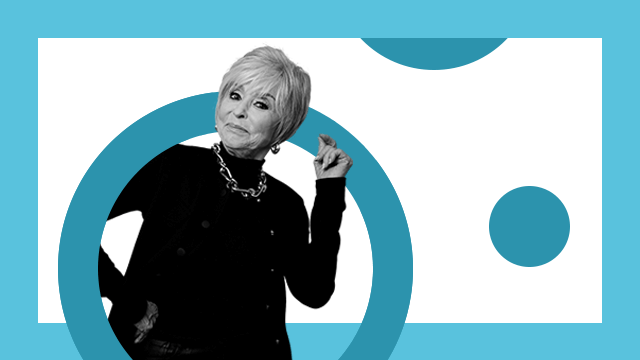
Rita Moreno, Puerto Rico/US
Actress
Very few performers gain EGOT status – a term for the superlative achievement of winning an Emmy, Grammy, Oscar, and Tony Award – but Rita Moreno is one of them. The Puerto Rican actress, singer and dancer made her Broadway debut aged 13 and has had an illustrious career spanning seven decades.
She appeared in Singin’ in the Rain and The King and I, but it was her Anita in the original West Side Story that made her the first Latina to ever win an Oscar. Steven Spielberg had an entirely new character written into his acclaimed remake especially for Moreno, now in her 90s.

Mia Mottley, Barbados
Prime Minister
As the first female prime minister of Barbados, Mia Mottley won a second term in office after a landslide victory, in January. She has led the Barbados Labour Party since 2008. She guided the Caribbean island as it cut ties with the British royal family, removing the monarch as head of state and becoming the world’s newest republic.
Mottley is known for being outspoken about climate change. At COP27 she criticised wealthy nations for failing to tackle the climate crisis, warning there could be a billion climate refugees by 2050 if no action is taken.
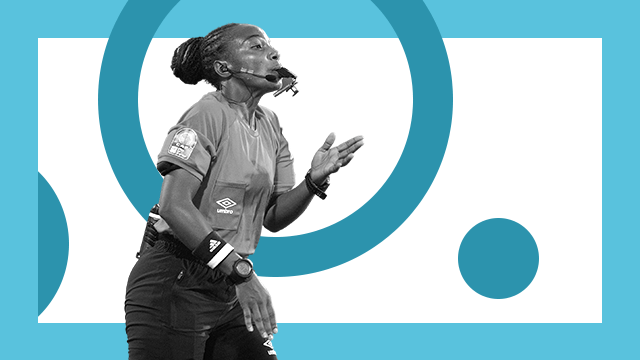
Salima Rhadia Mukansanga, Rwanda
Referee
In a historic moment for international football, Salima Rhadia Mukansanga was picked by Fifa as one of the first three women referees to officiate at a men’s World Cup, in Qatar 2022 – the first time the tournament had women in the role in its 92 years.
Last January, she became the first woman to referee a match at the men’s Africa Cup of Nations, and she also officiated at the Olympic Games in Tokyo. She has already presided over games at the highest level in international women’s football. Before working in sport, she trained as a midwife.
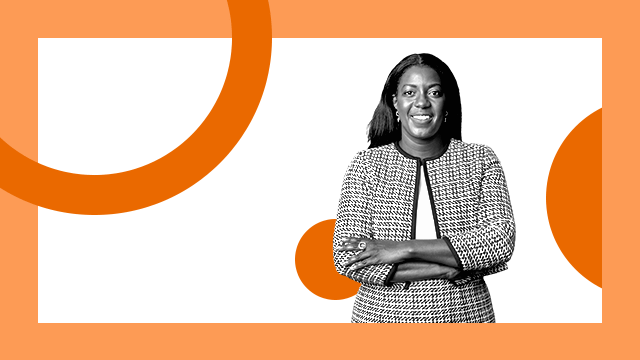
Monica Musonda, Zambia
Businesswoman
A corporate lawyer-turned-entrepreneur, Monica Musonda is the founder and CEO of Java Foods, a Zambian-based food processing company and instant noodle manufacturer in the southern African region. Her vision is to produce affordable food products by taking advantage of Zambia’s strong wheat yields, as well as the demand for more convenience foods and changing consumption patterns.
Musonda, who is a nutrition advocate, mentors several other female entrepreneurs and speaks out on issues affecting women in business. She has won numerous awards, and has been recognised for her work to strengthen Africa’s agricultural and food systems.
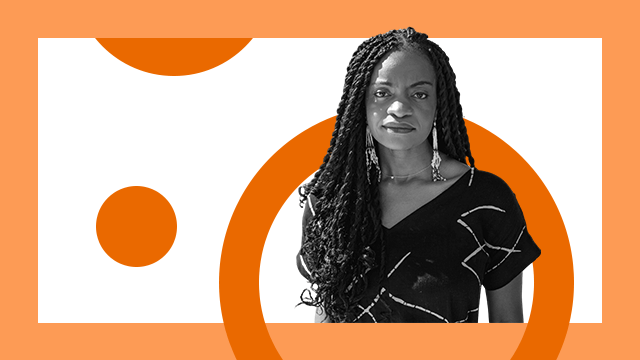
Ifeoma Ozoma, US
Public policy and tech specialist
After breaching her own non-disclosure agreement (NDA) to accuse her former employer Pinterest of gender and race discrimination, Ifeoma Ozoma is determined to help employees fight mistreatment at work. She became the co-sponsor of the Silenced No More Act, which allows every worker in California to share information about discrimination or harassment regardless of signing an NDA. Pinterest carried out a workplace review following Ozoma’s allegations and said it supports the legislation.
Ozoma also created The Tech Worker Handbook, a collection of resources to help employees speak out, and founded Earthseed, which advises organisations on equity in the tech industry.
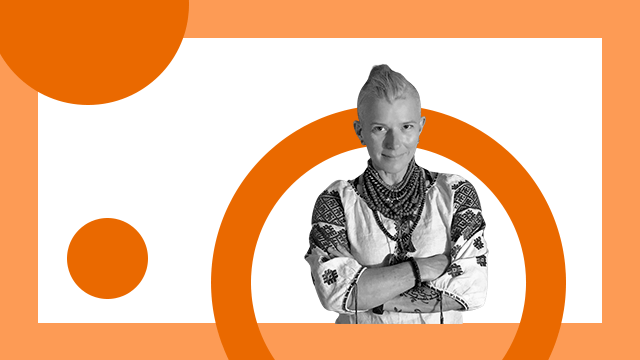
Yuliia Paievska, Ukraine
Paramedic
A decorated Ukrainian civilian paramedic, and founder of Taira’s Angels, a volunteer medical unit credited with saving hundreds of wounded civilians and military personnel. Yuliia Paievska, better known as Taira, was captured by Russian forces in March while helping to evacuate civilians from Mariupol.
She had been using a body camera to document her team’s work in the besieged city, and the footage was given to the media. Upon her release three months later, Paievska spoke about the harsh conditions and brutal treatment she faced while in captivity, describing her detention as “hell”.

Tamana Zaryab Paryani, Afghanistan
Activist
Days after taking part in a January rally calling for the right to education and work, Tamana Zaryab Paryani and her sisters were seen being forcibly taken from their home by armed men. Amid international condemnation and calls for their release, the Taliban denied involvement.
She managed to film her reactions to the arrest and posted it online. Paryani’s viral video brought attention to female activists who were disappearing. She spent three weeks in custody before being set free. She is now living in Germany and, in solidarity with the women of Iran, she burnt her headscarf, a move that was seen as controversial by many Afghan women.
Whilst the women of the world are progressing, the women of Afghanistan have been pushed back 20 years. Twenty years of women’s achievements have been taken away from them.
Tamana Zaryab Paryani

Alice Pataxó, Brazil
Indigenous activist
Climate campaigner, journalist and influencer, Alice Pataxó aims to raise awareness about how the Brazilian government’s recent environmental and agricultural policies threaten indigenous land rights. As a voice for the Pataxó people, she wants to challenge colonial views about indigenous communities and shed light on the murders of environmental activists.
She is a journalist for Colabora and creates content for her YouTube channel Nuhé, a term referring to the resilience of indigenous people in Brazil.
Nominated by 100 Women 2021 laureate, education activist Malala Yousafzai
“I’m so proud to nominate Alice Pataxó for this year’s BBC 100 Women list. Alice’s unwavering commitment to fighting for climate action, gender equality, and indigenous rights give me hope that a sustainable and more equal world is within reach.”

Roya Piraei, Iran
Activist
In September, an image of Roya Piraei went viral. Her mother, 62-year-old Minoo Majidi, had been protesting in Kermanshah, the largest Kurdish-speaking city in Iran, when she was shot and killed by security forces. Piraei stood at her mother’s graveside with her head shaven, holding her cut hair in her hands and staring defiantly at the camera.
She has become one of the faces that made headlines internationally after anti-government protests spread in Iran, following the death of Mahsa Amini, a 22-year-old Kurdish woman. Piraei has since met French President Emmanuel Macron to get international support for the ongoing protests.
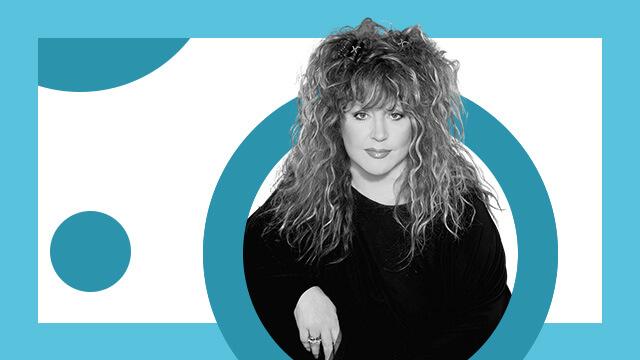
Alla Pugacheva, Russia
Musician
Performer and composer Alla Pugacheva has sold more than 250 million records. With a repertoire of over 500 songs and 100 albums, the ‘tsarina of Russian pop’ is a cultural icon, well-known for her clear mezzo-soprano voice, even though she has now retired from performing.
She has been repeatedly honoured by Russia for her music, yet Pugacheva has spoken out against the government on a number of occasions. She recently posted a message to her 3.6 million followers on Instagram denouncing the war in Ukraine, with reactions ranging from praise to accusations of treason.
The world has seen significant progress in the fight for women’s access to education and financial independence. However, domestic violence is still a big issue in many countries.
Alla Pugacheva

Sepideh Qoliyan, Iran
Political campaigner
Law student Sepideh Qoliyan was sentenced to five years in prison for supporting workers’ rights in Khuzestan province, in south-west Iran. She has spent the past four years in four different Iranian prisons, including Evin, the primary site for the housing of political prisoners.
Even from prison, she continues her work, having sent out an audio tape describing the “inhumane” treatment she has faced. She also acts as a voice for female inmates and, while on bail, wrote a book about the “torture” and “injustice” that women experience in Iran’s prisons.
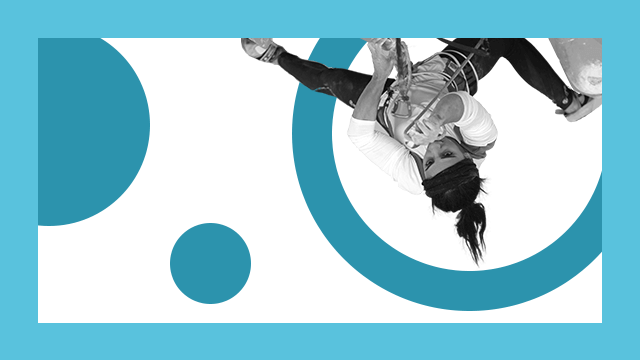
Elnaz Rekabi, Iran
Climber
At the Asian Championships that took place in South Korea in October, Iranian climber Elnaz Rekabi competed without a headscarf, amid protests against the mandatory hijab in her home country. She came fourth in the championships, but gained popularity among Iranian protesters. Many people greeted her at a Tehran airport when she returned home, and she was praised on social media.
A post on her Instagram page later said her hijab fell off “inadvertently” and she apologised to the Iranian people in a State TV interview for the “confusion and concerns”. However, a source told BBC Persian that her interview was a forced confession.
Jane Rigby, US
Astronomer and astrophysicist
Nasa astrophysicist Dr Jane Rigby studies how galaxies evolve over cosmic time. She was one of the key scientists in the international team that launched and deployed the James Webb, the world’s largest space telescope. In July, the first full-colour pictures taken by the Webb became the most detailed infrared view of the Universe to date.
Rigby has published more than 100 peer-reviewed scientific papers and has won multiple awards for her research. She is also an advocate for equity and inclusion in STEM (Science, Technology, Engineering and Mathematics).
When I was a student, I wasn’t aware of any LGBTQ role models. I hope I’m part of the last generation who grew up without queer role models to follow.
Jane Rigby
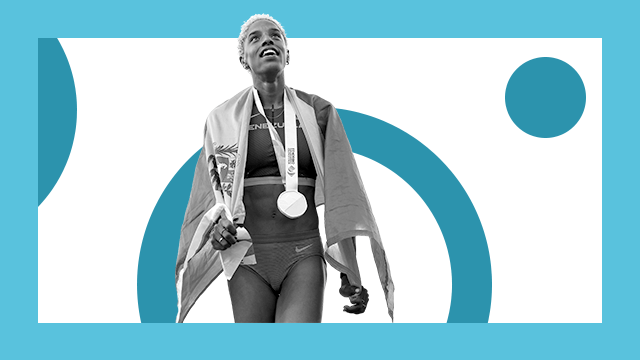
Yulimar Rojas, Venezuela
Athlete
An Olympic medallist (gold and silver) and three-time world champion, Yulimar Rojas became the world record holder in the women’s triple jump when she recorded 15.74m at the World Athletics Indoor Championships in March. She has now set her sights on an even bigger achievement – jumping 16m.
Born in Caracas, Venezuela, and raised in a poor area on the Caribbean coast, she has credited her humble beginnings with helping her to succeed. Currently part of the Barcelona FC athletics team, Rojas has achieved hero status in her country. She is openly lesbian and a vocal advocate for LGBTQ+ issues.
We women must not be intimidated. There are no impossibles for us, it is already clear that we can be underestimated but we have already shown with great pride what we are capable of.
Yulimar Rojas

Yuliia Sachuk, Ukraine
Disability leader
Ukrainian human rights defender Yuliia Sachuk is head of Fight for Right, an organisation led by women with disabilities. She launched an emergency response to Russia’s invasion of Ukraine, working around the clock to coordinate evacuation plans with international organisations to save the lives of thousands of Ukrainians with disabilities.
Sachuk is passionate about empowering girls and women with disabilities to participate in decision making. She participates in the Obama Foundation’s Leader Europe program, was laureate of the National Human Rights Award 2020, and is a candidate for Ukraine on the UN Committee on the Rights of Persons with Disabilities.

Ainura Sagyn, Kyrgyzstan
Engineer
As a computer engineer, ecofeminist, and CEO of a start-up, Ainura Sagyn has been applying her skills to build technology-based solutions to environmental problems. She founded Tazar, an app which connects waste producers – everyone from households and individuals to restaurants, factories and construction sites – with recyclers. The app aims to reduce the waste that winds up in landfills and eventually tackle the problem of sustainability in Central Asian countries.
She has also led workshops in coding and STEM (Science, Technology, Engineering and Mathematics) for over 2,000 schoolgirls in different regions of Kyrgyzstan.
Without women’s leadership and participation in climate responses today, it is unlikely that solutions for a sustainable planet and a gender-equal tomorrow will be realised.
Ainura Sagyn
Roza Salih, Scotland
Politician
In May 2022, Roza Salih became the first refugee to be elected to Glasgow City Council, having arrived in Scotland as a young girl when her family was forced to flee Iraq. Now the SNP councillor for the Greater Pollok ward, Salih has campaigned for refugee rights since she was a teenager and she and her school friends came together to protest the detention of a friend.
Their campaign, the Glasgow Girls, drew national attention to the treatment of asylum seekers. Salih has gone on to co-found Scottish Solidarity with Kurdistan, visiting Kurdish regions in Turkey as a human rights activist.
Sally Scales, Australia
Artist
In 2022, art consultant Sally Scales was appointed to the group working with the Australian government ahead of a referendum known as ‘Voice to Parliament’ – a historic consultation which, if successful, would see indigenous people permanently represented in parliamentary processes.
A respected cultural leader and artist, Scales is a Pitjantjatjara woman from Pipalyatjara in the far west of the Anangu Pitjantjatjara Yankunytjatjara (APY) Lands, in remote South Australia. She is the second woman to hold the position of APY chairperson, and is a spokesperson for the APY Art Centre Collective, a group of indigenous-owned cultural enterprises.
Nominated by 2018 100 Women laureate, former politician Julia Gillard
“Sally is a creator of both wonderful art and human understanding. By enlightening and enthusing others, she catalyses the many changes needed to end the pernicious combination of racism and sexism.”
Nana Darkoa Sekyiamah, Ghana
Author
Her book The Sex Lives of African Women has been described as “an astonishing report on the quest for sexual liberation”, in a dazzling review by Publishers Weekly. It was listed by The Economist as one of the best books of the year, reflecting a diverse range of voices from across the continent and global diaspora.
Writer and feminist activist Nana Darkoa Sekyiamah is also co-founder of Adventures from the Bedrooms of African Women – a website, podcast and festival that creates content to recount the experiences of African women around sex, sexualities, and pleasure.
Feminists have succeeded in creating space for all women to be themselves. But we are facing a backlash, which is the result of our gains – and this backlash particularly affects gender diverse and gender non-conforming people.
Nana Darkoa Sekyiamah
Suvada Selimović, Bosnia and Herzegovina
Peace campaigner
It is 30 years since war devastated Bosnia and Herzegovina, and Suvada Selimović now lives in a village which she helped to rebuild, together with other displaced women who returned home. A widow and mother to small children, Selimovic founded Anima, an organisation for peace activism and female empowerment.
After her husband’s remains were found in a mass grave in 2008, she testified at the war crimes court and encouraged other women to do the same. Today, Anima hosts workshops for women dealing with war trauma, and sets up opportunities for them to sell products they make.
Geetanjali Shree, India
Author
Novelist and writer Geetanjali Shree made history this year when she became the first Hindi writer to win the International Booker Prize for Tomb of the Sand, the English translation of her novel Ret Samadhi. The French translation of the book was also shortlisted for the Emile Guimet Prize.
Shree writes fiction in Hindi and non-fiction in Hindi and English. Marked by innovative use of language and structure, her works have been translated into many Indian and foreign languages. She also works on theatrical scripts in collaboration with the theatre group Vivadi, of which she is a founding member.
Women have always negotiated their spaces. There has been marked progress for them in all spheres of life, even if unevenly across cultures and classes.
Geetanjali Shree

Monica Simpson, US
Reproductive justice activist
As executive director of SisterSong, a women-of-colour collective working for reproductive justice in the southern US states, Monica Simpson focuses on fighting for sexual and reproductive freedom. The issue returned to the spotlight this year after the US Supreme Court overturned the Roe v Wade ruling that made access to legal abortion a right throughout the country.
Simpson is also a singer and spoken word artist, fusing her activism with her art. She is a certified doula and founding board member of the Black Mamas Matter Alliance, working to advance black maternal health.
Alexandra Skochilenko, Russia
Artist
St Petersburg artist Alexandra Skochilenko was detained for replacing supermarket price tags with messages about the war in Ukraine, including information on the potential number of casualties in the Mariupol theatre airstrike carried out by Russian forces. After being reported by another shopper, she was charged under a law banning ‘disinformation’ about Russia’s armed forces.
Currently in a pre-trial detention centre awaiting sentencing, she considers herself a prisoner of conscience and faces up to 10 years in prison.
Skochilenko has written comic books focusing on mental health, including Notes on Depression and What Is Mania? Her girlfriend has reported concerns for Skochilenko’s health in detention.

Simone Tebet, Brazil
Member of the Brazilian Federal Senate
Seen by many as a figure to temper the country’s deepening polarisation, centrist Brazilian Senator Simone Tebet finished third in this year’s presidential race. She was elected state representative in 2002 and mayor of her hometown Três Lagoas in 2004 and 2008. In 2014, she was elected to the Senate with over 52% of the valid votes.
She was the first woman to chair the Constitution and Justice Committee of the Senate, considered the chamber’s most important panel. A professor of law for over a decade, Tebet also chaired the Joint Committee to Combat Violence against Women.
Everyone should know that the future is female, and a woman’s place is wherever she wants.
Simone Tebet

Kisanet Tedros, Eritrea
Educational entrepreneur
Beles Bubu is a YouTube channel which teaches Eritrean children their language and culture, founded by content creator and entrepreneur Kisanet Tedros. Born and raised in Ethiopia, from a young age she appreciated the importance of understanding language to feel connected to one’s roots.
Her production team brings together self-taught voice and digital artists from Eritrea, Uganda and the Democratic Republic of Congo to create digital content. The videos are accessed by Tigrinya-speaking parents and their children from Eritrea and Ethiopia. Tedros also organised the first Beles Bubu Kids Festival for refugees in Kampala, Uganda.
Efrat Tilma, Israel
Volunteer
As the first transgender volunteer in the Israeli Police, activist Efrat Tilma answers emergency calls and works to improve the relationship between police forces and the LGBTQ+ community. Tilma fled Israel as a teenager and moved to Europe – after being rejected by her family and experiencing police harassment. She underwent gender reassignment surgery in 1969 in Casablanca, when the procedure was largely banned in Europe.
She went on to be a flight attendant in Berlin and got married. She returned to Israel in 2005, after her divorce, and found it a more welcoming place for sexual minorities, which encouraged her to volunteer with the police.

Maryna Viazovska, Ukraine
Mathematician
The Ukrainian mathematician who earlier this year became only the second woman in history to win the prestigious Fields Medal – often described as the Nobel Prize of mathematics and given out every four years. Maryna Viazovska won the award for her work on a 400-year-old puzzle, solving the problem of how to pack spheres in the most efficient way into a space with eight dimensions.
Based at the Swiss Federal Institute of Technology in Lausanne (EPFL), Viazovska is a professor and Chair of Number Theory at the Institute of Mathematics.

Velia Vidal, Colombia
Writer
A storyteller and promoter of culture from Colombia’s El Chocó region, Velia Vidal is a lover of shared readings. She is the founder of Motete, an organisation that promotes reading and literacy, as well as Chocó’s unique culture. She also organises the Chocó reading and writing festival, seeing literature as a tool to fight inequality and racism in one of Colombia’s most deprived region.
Her recent book, Aguas de Estuario, was the first winner of a publication grant for Afro-Colombian authors from the Colombian Ministry of Culture. She is a researcher for the Afluentes project, a joint initiative with the British Museum.
We are now more aware of the historical oppression of women and the need to remedy it, but we fail to recognise how racism deepens these oppressions on Afro and indigenous people.
Velia Vidal

Esraa Warda, Algeria/US
Dancer
A child of the Algerian diaspora, Esraa Warda is a cultural warrior who has taken traditional Algerian dance from the living room to the classroom. She advocates for the preservation of North African women-led dance traditions, with a particular focus on raï, a grassroots genre historically associated with social protest.
She is a mentee of Cheikha Rabia, one of few female masters of traditional raï in the diaspora. Warda is a touring artist and educator and her performances and workshops have made their way around the world, from Washington DC to London.

Zhou Xiaoxuan, China
Feminist activist
As the face of China’s MeToo movement, Zhou Xiaoxuan’s case was followed by feminists in China and audiences globally. In 2018, she sued Zhu Jun, a star presenter at the state-owned CCTV broadcaster, accusing him of groping and forcibly kissing her during a 2014 internship. He denied the charges and sued her for defamation.
Her case was dismissed for insufficient evidence and this year her appeal was rejected in what some foreign media called a blow to China’s MeToo movement. Zhou Xiaoxuan now supports women who have been sexually harassed and is involved in highlighting feminist issues in China.
Cheng Yen, Taiwan
Buddhist philanthropist
Dharma Master Cheng Yen is seen as one of the most influential figures in the development of modern Taiwanese Buddhism. Founder of the humanitarian Tzu Chi Foundation, she is sometimes referred to as ‘the Mother Teresa of Asia’.
She started the organisation in 1966, with just 30 housewives saving money to help families in need. It has since grown to have millions of followers globally, providing international relief and medical aid, and running schools and hospitals. Now in her late 80s, her followers continue their philanthropic campaigns and most recently provided financial and material aid to refugees from war-torn Ukraine.
Nazanin Zaghari-Ratcliffe, UK/Iran
Charity worker
“The world should unite to make sure that there is no-one held either hostage or in prison for something they haven’t done” were British-Iranian Nazanin Zaghari-Ratcliffe’s words after she was freed by Iranian authorities in March, after a long-running campaign by her husband Richard pushing the British government to secure her release and resolve a historic debt dispute with Iran.
Zaghari-Ratcliffe was arbitrarily detained in Iran while on holiday with her daughter in 2016, and subsequently as diplomatic pawn was held hostage by the Iranian authorities to put pressure on the British government. She was held for six years – initially convicted by the Revolutionary Court of attempting to overthrow the Iranian regime. When her first sentence concluded in 2021, she was given a second sentence, and held in Iran until a diplomatic settlement was reached. Zaghari-Ratcliffe has strongly refuted all allegations, and is writing a memoir with her husband.

Olena Zelenska, Ukraine
First Lady
A successful TV scriptwriter used to working behind the scenes, Olena Zelenska was thrust onto the world stage when her husband, Volodymyr Zelenskyy, became president of Ukraine in 2019. As First Lady she has worked to improve women’s rights and promote Ukrainian culture.
After the Russian invasion, she used her platform to highlight the suffering of the Ukrainian people, becoming the first spouse of a foreign president to address US Congress. She is now focused on delivering mental health support for children and families traumatised by the war.
Women have taken on even more responsibilities than in peacetime… A woman who has experienced this (war) will never take a step back. And I am sure that our inner confidence will grow.
Olena Zelenska
Yana Zinkevych, Ukraine
Politician and front-line medical volunteer
Saving lives on the front line of the war, the Hospitallers is a volunteer paramedic organisation. Led by Yana Zinkevych, they work to evacuate people from the battlefield. Zinkevych became a medical volunteer after leaving school, and founded the battalion in 2014 at the start of the hostilities in Ukraine.
She has personally carried 200 wounded soldiers to safety. Her team continues to provide first aid to injured soldiers and civilians, conducts medical training, and has performed around 6,000 evacuations. The 27-year-old is also one of the youngest members of the Ukrainian parliament and is head of the military medicine subcommittee.
China calls for joint efforts of foreign donors to ease SL’s debt burden
China hopes relevant countries and international financial institutions will work with China to play a positive role in helping Sri Lanka overcome the current difficulties.
Chinese foreign ministry spokesperson Mao Ning made the remarks when asked to comment on media reports that an International Monetary Fund (IMF) team will travel to China this week to discuss faster progress on debt restructuring for countries including Sri Lanka, which is trying to get an assistance package from the IMF.
Mao said China has long-standing sound cooperation with the IMF and other international economic and financial institutions.
Concerning Sri Lanka’s debt issue, Mao said China attaches high importance to Sri Lanka’s difficulties and challenges.
“We support the financial institutions in working out ways with Sri Lanka to properly solve the issue,” she said.
We also hope relevant countries and international financial institutions will work with China and continue to play a constructive role in helping Sri Lanka overcome the current difficulties, ease its debt burden and realize sustainable development, she added.
Sri Lanka won’t be able to resolve its debt restructuring problems without help from China as the country teeters on the brink of economic collapse, according to analysts.
China may become the key factor in deciding the timing of the International Monetary Fund (IMF)’s loan disbursement for Sri Lanka to ease the ongoing unprecedented economic crisis, local and international analysts say.
China has agreed to help Sri Lanka in facing the economic crisis, but so far has not committed for any debt restructuring plan, government officials who are dealing with the debt structuring said
The completion of debt restructuring – either through a haircut or rescheduling the debts – is mandatory for the approval for the IMF loan from the global lender’s Executive Board.
China has, instead, proposed a refinancing strategy: more lending by China to Sri Lanka in order to repay Beijing’s own debts in the past.
Sri Lanka has defaulted on its debt, plunging the island nation into its worst financial crisis since independence in 1948. In addition to fuel shortage, the country also faces the prospect of running out of food, staples and medicines.
Public frustration over the deepening economic crisis has spilled over to raging street protests in recent months. President Gotabaya Rajapaksa, who has been blamed for the economic mismanagement, was forced to resign and fled overseas last week as anger toward his government spiraled.
China’s willingness to provide substantial debt relief to Sri Lanka will be vital to accelerate the debt restructuring and in helping the country get out of its current situation, said an economic expert.
Central Bank Independence for whom?
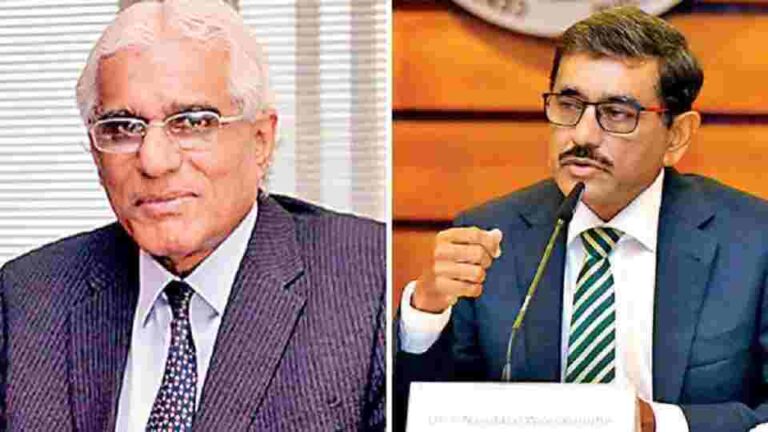
IMF must accelerate the Board approval to release the first tranche of $500 million without pushing for CBSL independence. Other than Nandalal Weerasinghe no one else wants greater independence given to CBSL. Seriously look at the knowledge of state officials on international trade and exports and impact of it. Everyone blames politicians only. As Dr Harsha recently pointed out the data available in this country is not correct in any sector and they do not do data analytics at all. For example CBSL Governor without the approval parliament made the country to default . The consequences of that decision is far worse than LTTE dropping bombshells in Colombo and destroying the Airport. So he says he does not have independence? He is doing as he pleases with no consequences ably supported by Coomraswamy, and even the executive President is watching in silence as the man does what ever he wants with no consequences and accountability . So the IMF wants to give him more independence? Unfortunately IMF thinks we are a bunch of idiots because we acted like idiots during the GotabayaR Regime?
CBSL Independence
Inflation is not the problem we have today. To raise interest rates by 100% and destroy the private sector. When history is written it will be said that this is the stupidest decision we took next to the soft default ? What kind of business can you run by borrowing at 32% , only a brothel or undertakers. What is our real problem. We have run out of Dollars. Why did we run out of dollars? Why do we have huge rupee and dollar debt ? Why did we continuously borrow? Even after the default, why are we going behind lenders and begging for more loans ? Because we are a nation of consumers, not a nation of producers! We are a population of 22 million consuming more than we are generating ( or producing ) . Obviously, if you spend more than you earn, you end up borrowing!
Inflation will get rid of this anomaly. Inflation will push people to be productive to survive. Inflation will adjust the prices of goods and services and will demand consumers to pay the cost of their consumption, by themselves. Inflation will ensure that by running a three wheeler, wayside boutique shop, or small salon/spa, an individual cannot maintain a family. In short, inflation will demand you be more productive, or perish! Inflation shall be addressed by productivity and not by adjusting the policy rates. CBSL’s usage of CCPI as a the main indicator is incorrect because it includes food and fuel, whereas the Core CPI used by the Fed excludes these two. Also CCPI is a lagging indicator – if it has come down in October and November – it is showing the ground situation as at July. Unless CBSL starts reducing rates, we will end up in a severe recession and defaulting on Rupees..What we must implement is more productivity focused economic policies and not consumer based policies.
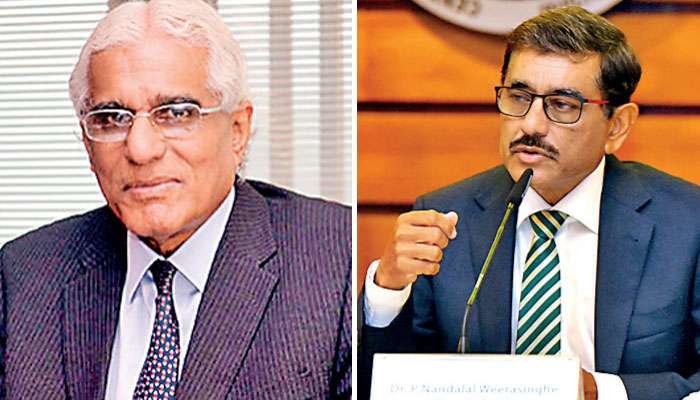
No friendly country or lending institution shall lend money to Sri Lanka to re-implement or maintain this unproductive, subsidized society. Because if they do, these lenders will also not get their money back and the country will declare bankruptcy again in a few more years! Lenders including IMF must insist that no imported goods , including fertilizer and fuel shall ever be subsidized. They must insist that the dolling out of money by way of various other subsidy schemes be stoped. They must insist that retirement age of all government employees must be at 60 years and not 65! Lenders must demand that loss making government business ventures be shut down or to privatized. Don’t lend us to defend our currency artificially. “ also we need to prosecute the plunderers.
We need to wake up, not only to chase these political vultures and incompetent bureaucrats away, but also to change ourselves, our attitudes, and our society. With electricity tariffs going up by 100% , taxes doubling and interest rates not getting reduced because of the adamance of Weerasinghe the President could soon have a serious Aragalaya on his hands fueled by hunger and a desperate power hungry opposition . 2023 is certainly not looking good for Sri Lanka, and all what CBSL wants is independence. Well and good if people are held accountable for their actions!
Adolf
Foreign donor agencies agree on coordinated aid program for Sri Lanka
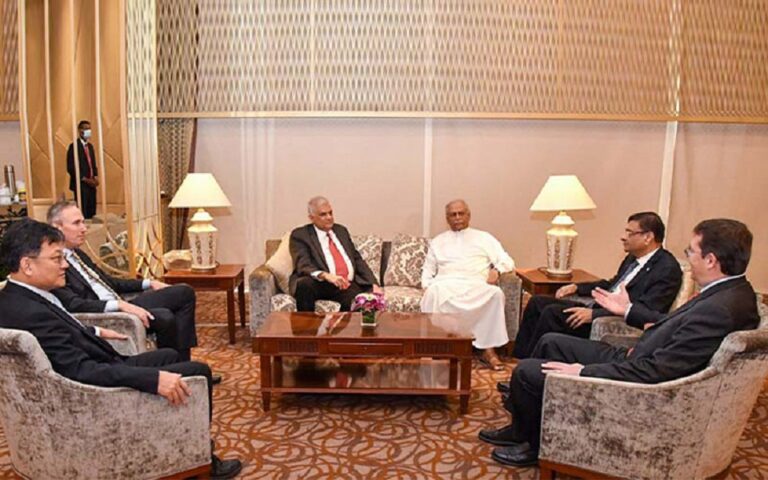
World Bank (WB), Asian Development Bank (ADB), International Monetary Fund (IMF) and Asian Infrastructure Investment Bank (AIIB) representatives decided that a coordinated assistance program supported by the multilateral financial institutions is required for Sri Lanka to recover from the economic crisis the country is currently facing.
They reached the agreement following a lengthy round table discussion held yesterday (06) with President Ranil Wickremesinghe in Colombo where the latter presented Sri Lanka’s development program associated with the economic recovery and growth along with the vision for long term development.
The President presented the program at the round table discussion in his capacity as the Minister of Finance, Economic Stabilization and National Policies.
The round table discussion was held with Vice President of the World Bank Mr. Martin Raiser, Vice President of the Asian Development Bank Mr.Shixin Chen, IMF’s Senior Mission Chief Mr.Peter Breuer and Dr.Urjit Patel of the Asian Infrastructure Investment Bank along with the senior officials of those institutions, who are currently in Sri Lanka.
Following the detailed discussion, it was agreed that a coordinated assistance program supported by the multilateral financial institutions is vital for Sri Lanka to recover from the present economic difficulties.
In the interim, the government is expected to set the contours of Sri Lanka’s economic reform programme—tax hikes, spending cuts, and rationalizing state-owned enterprises—to reassure international creditors that the country is on an adjustment path.
Sri Lanka’s economic crisis is deepening with unsustainable debt and a severe balance of payment crisis on top of lingering scars of the COVID-19 pandemic.
Debt restructuring and the implementation of a deep reform program are critical for Sri Lanka’s economic stabilization,SL development program highlighted. .
Plunged into its worst-ever economic crisis, Sri Lanka’s real GDP is expected to fall by 9.2 percent this year and a further 4.2 percent in 2023.
High commodity prices also worsened Pakistan’s external imbalances, bringing down its reserves. After devastating climate-change-fueled floods submerged one-third of the country this year, its outlook remains subject to significant uncertainty.
Sri Lanka money printing galore leads to economic collapse
Despite tightening of monetary policy and curtailing money printing, the Central Bank is compelled to increase the reserve money base as a result of the finance ministry’s proposal to raise the government borrowing ceiling to over Rs. 4.5 trillion from present Rs 3.84 trillion.
State Finance Minister Ranjith Siyambalapitiya has presented the proposal to raise the sate credit ceiling by Rs 663 billion to Rs 4.51 trillion claiming that the money printing has dropped by 7.8 percent compared to last year and bills were printed to meet essential recurrent expenditure.
In addition, a proposal was also tabled to raise the limit for Treasury Bills from Rs. 4 trillion to Rs.5 trillion.
The Central Bank has no option other than the raising of reserve money to Rs 2.4 trillion from the present level of Rs.1.4 trillion ,a high ranking treasury official said.
This will result in massive monetary expansion in 2 -3 years’ time unless corrective measures to taken to raise revenue and increase foreign reserves by implementing economic reforms in accordance with commitments made to the IMF, he warned.
This was confirmed by an eminent economist who is familiar with the monetary affairs adding that the Central Bank has to accommodate fiscal deficits by purchasing Treasury bills and bonds and providing temporary advances to the Government.
It will end up Net Credit to the Government (NCG) on the asset side of CB’s balance sheet causing a rise in the reserve money exerting pressure on the aggregate money supply and the overall liquidity level of the economy, he explained.
According to Central Bank Governor Nandalal Weerasinghe who clarified the money printing status, it has printed money to the tune of Rs. 341 billion in 2021 and it has dropped to Rs. 47 billion from January to October this year.
The reserve money base has gone up to Rs. 1.38 trillion during the first 11 months from Rs. 1.31 trillion by the end of 2021.
This will increase money supply slightly in another 1 and ½ years to 2 years high official of the ministry divulged.
The government’s daily revenue is set to increase to Rs9.5 billion in 2023 from Rs.6.53 billion in 2022 while the expenditure is expected rise to Rs.21.60 billion next year from Rs.17.05 billion this year, finance ministry estimates showed.
As per the budget 2023 revenue and expenditure estimates volume 01 , the government’s expenditure is estimated at Rs.5.82 trillion but the sum of Rs.3.80 trillion worth Treasury bills that should be repaid next year has not been included under the expenditure heading.
Therefore the actual expenditure is expected to be Rs.9.62 trillion .The International Monetary fund (IMF) will definitely consider this treasury bill amount when they consider the country’s debt structure next year.
The government is expected to collect Rs 3.42 trillion out of which Rs.915 billion would be from income tax and the balance Rs.2.50 trillion from other taxes. Raising such a massive amount from taxes is unrealistic under the present economic crisis, several economic experts and tax consultants said
SRI LANKA ORIGINAL NARRATIVE: 07/12
- President Ranil Wickremesinghe says steps being taken to introduce a “strong new economic system that can face 2050 without implementing economic reforms that offer no solutions to the current economic crisis”.
- President Ranil Wickremesinghe says Sri Lanka has offered the East Container Terminal of the Colombo Port to Japan: Colombo Port’s West Terminal has been given to India’s Adani Group to develop as a joint venture after the Govt of previous President cancelled the ECT deal with India and Japan.
- World Bank approves Sri Lanka’s request to access concessional financing from the International Development Association: move said to enable Govt to implement reform programme “to stabilize the economy and protect the livelihood of millions of people facing poverty and hunger”.
- NFF Leader and MP Wimal Weerawansa says Central Bank is unable to take legal action against exporters who have not repatriated their forex earnings into the country, as the Foreign Exchange Act of 2017 removed the ability of the authorities to take any action against such practices.
- Chinese Embassy in Sri Lanka says essential medicines and medical supplies worth Rs.2 bn donated by China to the Sri Lankan people has arrived in a shipment weighing over 255 MT: says China has donated Rs.5 bn worth medicines to Sri Lanka since June.
- Energy Minister Kanchana Wijesekara says there could be power cuts between 6 – 8 hours daily from next year if the proposed electricity tariff amendments are not implemented.
- Former Fisheries State Minister and SJB MP Dilip Wedaarachchi asks the
President for a fuel and kerosene subsidy for the fishing community: says the main reason behind the collapse of the fishing industry is the high fuel prices. - Justice Minister Dr. Wijeyadasa Rajapakshe says Govt will formulate new laws to compel the repatriation of billions of US Dollars which have been deposited in foreign countries by exporters: also says the country won’t have to face a forex crisis if that money could be got back.
- Representatives of WB, ADB, IMF and AIIB meet President Wickremesinghe: agree and assert that Sri Lanka needs a co-ordinated assistance programme supported by multi-lateral financial institutions.
- Report by the Office for the Coordination of Humanitarian Affairs for Asia & Pacific reveals that Sri Lanka continues to face a multi-dimensional crisis compounded by food insecurity, threatened livelihoods, shortages of vital and essential medicines, as well as rising protection concerns.
World Bank approves Sri Lanka’s request for IDA concessional financing
The World Bank has approved Sri Lanka’s Eligibility to access concessional financing from the International Development Association (IDA).
This type of financing, which is offered at low interest rates, will enable the country to implement its government-led reform program to stabilize the economy and protect the livelihood of millions of people facing poverty and hunger, said the World Bank on Tuesday (6).
The request is the result of Sri Lanka’s sustained deterioration in economic and social conditions, which have reduced income levels, reversed poverty gains, and affected its access to financial markets. This approval means Sri Lanka now becomes an IDA country.
“We are committed to helping the Sri Lankan people at this time of dire need so their country turns around and restores its economic well-being,” said Akihiko Nishio, World Bank Vice President for Development Finance.
“The World Bank is ready to support Sri Lanka as it implements reforms that will reduce poverty and rebuild the economy, creating the foundation for sustainable growth.”
Through IDA support, the World Bank will provide concessional financing, technical assistance, and policy advice as Sri Lanka implements reforms to drive recovery and enhance the country’s economic prospects, especially measures directed towards the poor.
With this approval Sri Lanka secured a US$ 300 million annual commitment from the World Bank’s International Development Association (IDA) following a meeting of its deputies in Washington recently.
As a member of the World Bank, the IDA is the financial institution that offers concessional loans to developing countries.
At Thursday’s meeting, the IDA reviewed Sri Lanka’s request for a temporary downgrade to lower-income-country (LIC) status from a middle-income-country (MIC) status.
The request was for a reverse classification to allow IDA concessional financing as, after the default in April, Sri Lanka was not credit-worthy for loans from the World Bank’s IBRD (International Bank for Reconstruction and Development). Sri Lanka was eligible for US$ 500 million annually from the IBRD until the default.
Access to IDA’s concessional financing would also alleviate existing debt service pressures given the more favorable terms IDA financing carries. As an IDA country, Sri Lanka will also be subject to IDA operational policies.
The reverse graduation to IDA will enable Sri Lanka to access resources to help sustain institutions to become more resilient and responsive to the needs of the people of Sri Lanka
Access to IDA’s concessional financing would also alleviate existing debt service pressures given the more favourable terms IDA financing carries. As an IDA country, Sri Lanka will also be subject to IDA operational policies, according to the World Bank.
Since 2017, when it first graduated from IDA, Sri Lanka has been creditworthy for lending from the World Bank’s International Bank for Reconstruction and Development (IBRD).