The Poisons, Opium, and Dangerous Drugs (Amendment) Bill passed in Parliament on October 19th, 2022 shall come into effect as the Poisons, Opium and Dangerous Drugs (Amendment) Act No. 41 of 2022 from November 23rd, following Speaker Mahinda Yapa Abeywardena endorsing the certificate on the Bill.
The Minister of Justice, Prisons Affairs and Constitutional Reforms submitted the bill to Parliament to amend the Poisonous Opium and Dangerous Drugs Ordinance.
The Poisonous Opium and Dangerous Drugs Ordinance amends the law relating to Poisonous Opium and Dangerous Drugs. The amendment of this Act is expected to update and strengthen the existing law based on the needs arising from the time regarding the possession and use of the importation of drugs.
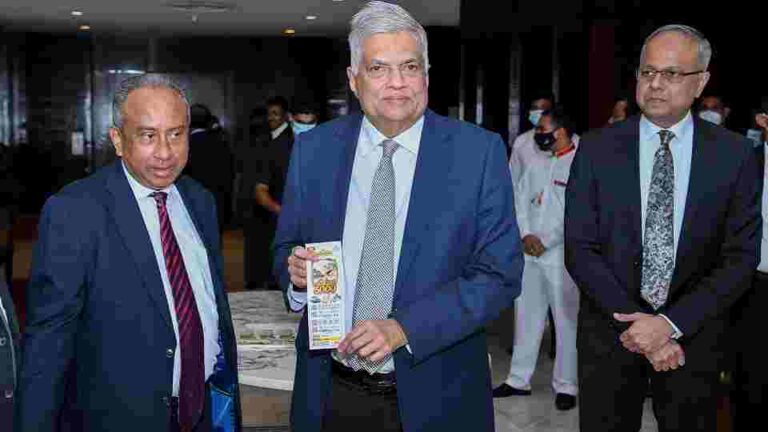
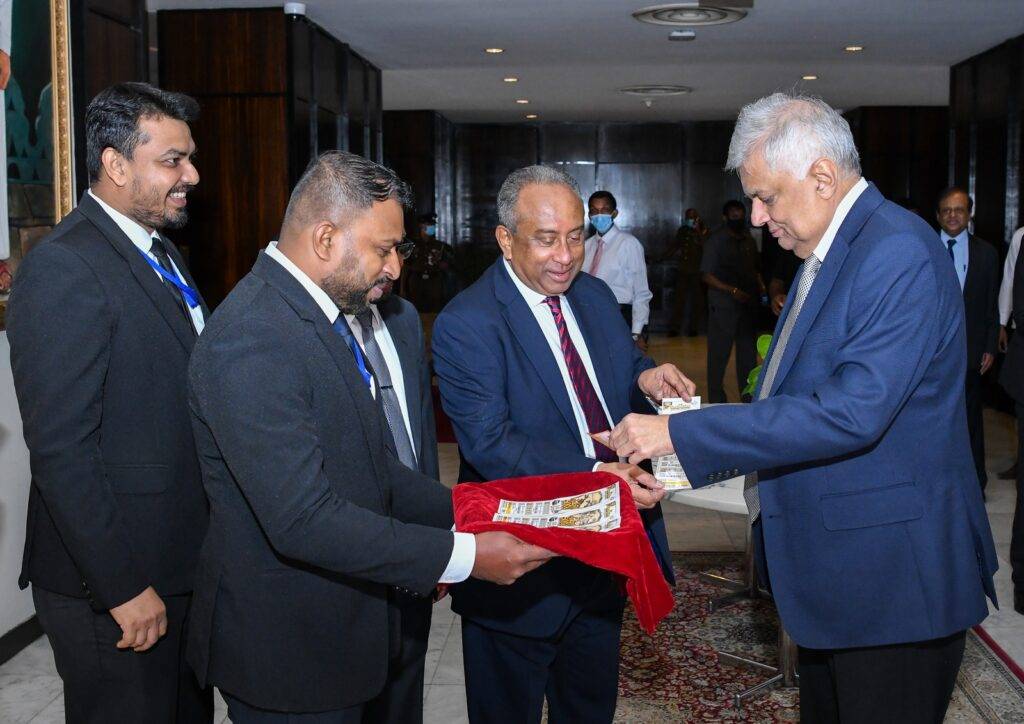
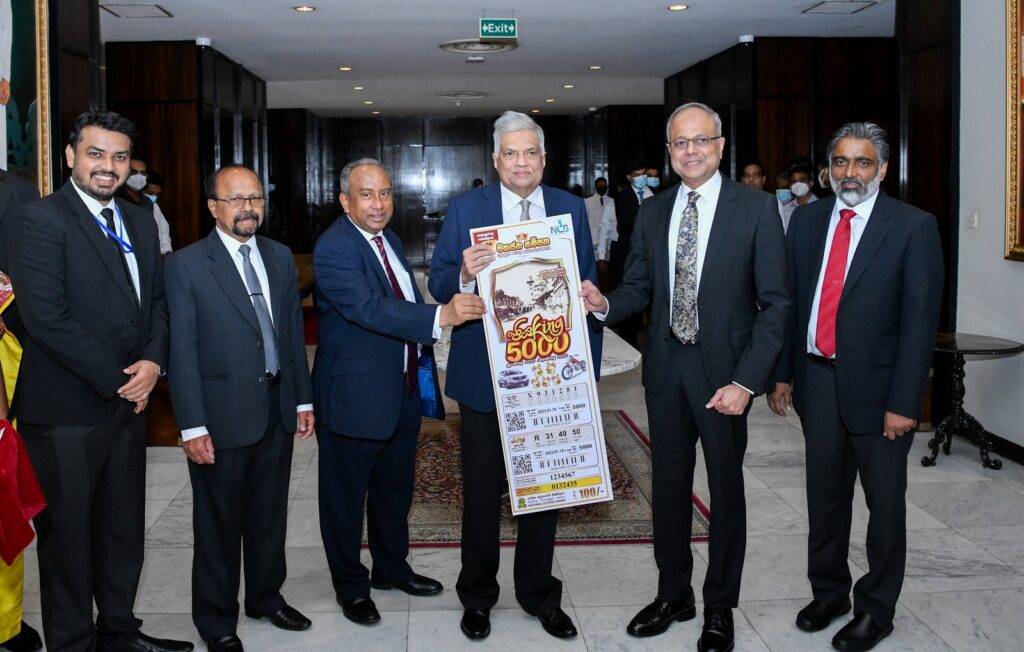
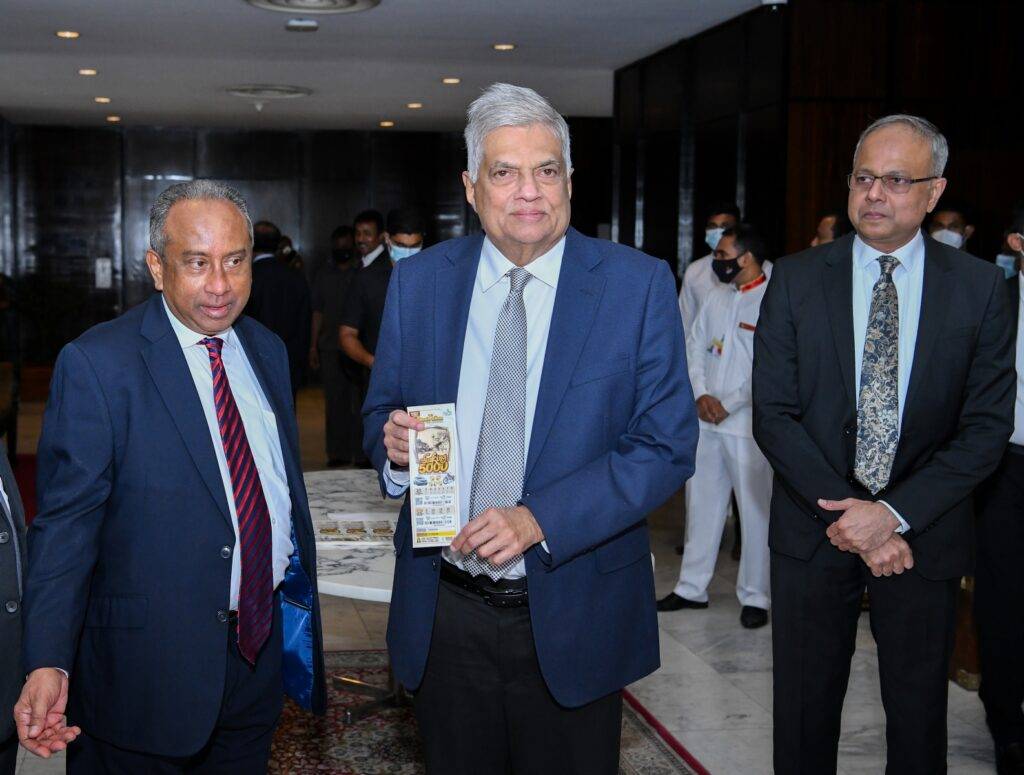
The sale of the first ticket of the 5,000th lottery draw of the ‘Mahajana Sampatha’ was presented to President Ranil Wickremesinghe this morning (24). The ‘Mahajana Sampatha’ lottery Draw took place at the Parliament premises.
Acting Chairman of the National Lotteries Board, President’s Counsel Mr. Ronald C. Perera presented the ticket to the President.
Senior Advisor to the President on National Security and Chief of Staff to the President Sagala Ratnayake, Adviser to the President on Parliamentary Affairs Professor Ashu Marasinghe, General Manager of the National Lotteries Board Attorney Hashini Jayasekara, Board members D.D. Jayasiri, Attorney –at – Law Asanka Randeniya, Assistant General Manager (Sales) Menura Chaturanga, Assistant General Manager (Procurement) Suneth Jayawardena and others were present on this occasion.
“It is quite honestly a disgrace, that he (Ranil) of all people should poke fun at a young man who I think is very serious. He is serious because he’s putting his life in jeopardy. The stakes are high in this. The fact that Wasantha Mudalige and Siridhamma Galwewa thero are being targeted in this way, shows how serious leaders they are. And they are being deliberately punished for no crimes at all. Because if they had committed crimes, they’ll be evidence. Every time the Supreme Court asked, as well as now the Magistrates Court have asked, there has been no evidence given. And they’re not indicted. And now once the Detention Order lapsed, because it came under such heavy criticism, new cases are being created, so that they can somehow be incarcerated. So question is why is this targeting taking place?
….when the people and youth are willing to stand up and call into question and hold those leaders accountable to the mandate that they gave, that they must be crushed. And for that reason you need the PTA. You can tell your international partners that you’re not going to use it. That you’re going to repeal it. But you’re using it to the hilt. Because we all know, with the PTA, there is no justice. There is no law. There is no order. It is completely to be used at the whims and fancies of those who are ruling the police and the military. The Tamils more than anybody else knows that. And that is why we stand in solidarity with those youth. With the people who are struggling.
They were struggling in a non violent way. Why don’t you say that also? When Ranil Wickremesinghe became Prime Minister, he invited people to continue to struggle. Probably because he wanted to oust the President….at that time it wasn’t terrorism. But when did that struggle turn violent? Who created the violence first? Members of this House. It is members of this House that instigated the violence. But that part of it is completely forgotten. But the counter violence….you have destroyed their economy, you’ve destroyed their livelihood. Today they can only afford one meal a day. That is not destruction of the people’s way of life. That’s fine. All that is allowed. But, we in this House, particularly those opposite, must be protected. So you use the PTA.” – MP TNPF News Gajendrakumar Ponnambalam –
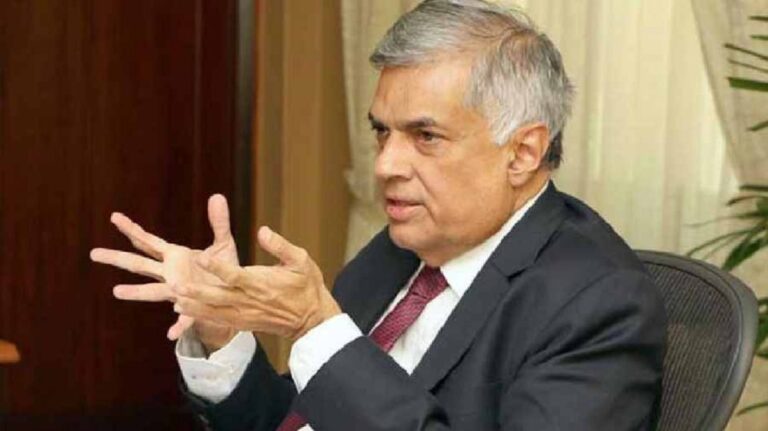
President Ranil Wickremesinghe’s statements are exaggerated by many people, but the Janata Vimukti Peramuna does not take them into account, and the hatred he has for the people’s uprisings that occurred in the past is being shown through the statements made by the gatekeeper who is drunk with the inconsistent power he has received. Janata Vimukti Peramuna General Secretary Tilvin Silva said that because the people’s uprising has become a challenge to his class.
He said this while expressing the position of the Janata Vimukti Peramuna regarding the controversial statement made by the President in the Parliament regarding the holding of people’s protests on November 23.
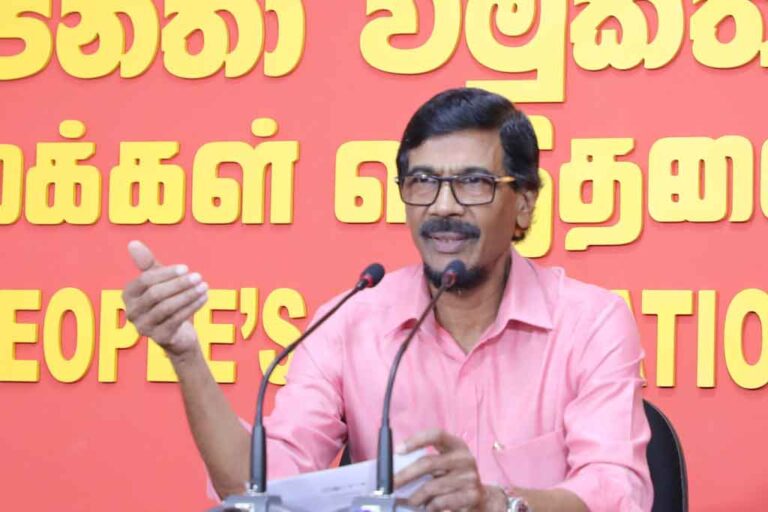
Addressing a press conference called by JVP yesterday (24), Tilvin Silva emphasized that Ranil Wickramasinghe, who did not receive any mandate even in the last election, was the only one that his party received from the national list to fill the vacancy of former President Gotabhaya Rajapaksa, who fled due to the recent popular struggles. He should have understood that he came to parliament from the position of MP and the extent of the presidency that he got from that MP position.
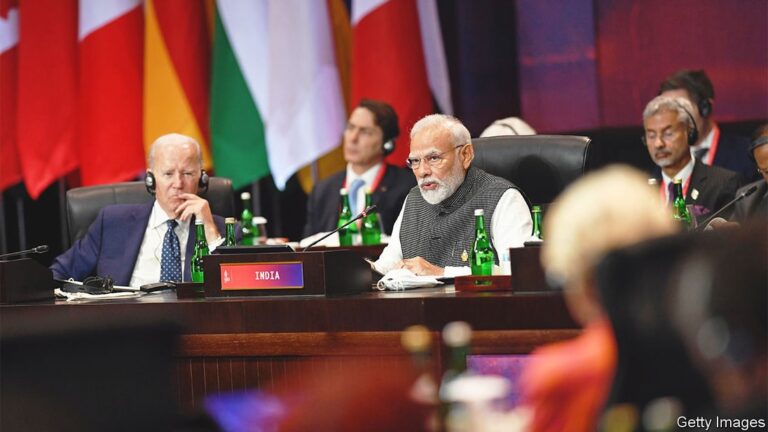
When india formally takes the helm of the g20 on December 1st, it will do so as a prominent, sought-after actor on the world stage. Having refused to condemn Russia’s invasion of Ukraine, it was praised this month for its contribution to a joint declaration of leaders in Bali that did so implicitly. It then helped create a fund at the un climate talks in Egypt to compensate developing countries for climate-related damage. This week Jon Finer, America’s deputy national security adviser, described India as “very high” on America’s list of partners that “can truly help move forward a global agenda”.
Supporters of Prime Minister Narendra Modi and his Bharatiya Janata Party often attribute India’s growing stature to a more assertive foreign policy that dispenses with the deference and dithering which, they say, characterised the approach of previous governments. Mr Modi, a charismatic Hindu nationalist who claims to want to be the “world’s guru”, is said to epitomise that change. “In India’s case, nationalism has in fact led to greater internationalism,” said the foreign minister, Subrahmanyam Jaishankar, in a landmark speech on the evolution of Indian foreign policy. Yet setting aside its nationalist rhetoric, the Modi government’s approach and objectives abroad are remarkably similar to its predecessors’.
Ever since India won independence in 1947 its foreign policy has prioritised developing its economy, defending its territory and maintaining influence and stability in its neighbourhood. And it has done so imbued with a profound fear of being dominated by a more powerful country as it was for so long. It was this sentiment that drove India and other newly independent countries to pursue their interests without joining either of the two Cold War blocs, in what became known as non-alignment. “We do not intend to be a plaything of others,” declared Jawaharlal Nehru, who would become India’s first prime minister.
Closening ties with America, which since the 1990s has viewed India as an important potential counterweight to China, are often said to have put paid to non-alignment. Indian officials in 2013 formally adopted a new guiding principle, strategic autonomy (without spelling out quite what had changed). In 2016 Mr Modi became the first Indian prime minister since 1979 not to attend the annual summit of the 120-country Non-Aligned Movement, which Nehru helped found. Under Mr Modi the closening with America has accelerated. India has expanded defence co-operation with it and sought more American investment. It has joined America, Japan and Australia in forming the Quad, a diplomatic network that seeks to promote, in tacit resistance to China’s growing influence in the region, “a free and open Indo-Pacific”. Mr Modi has described America and India as “natural allies”, a heretical term for non-alignment traditionalists.
Yet that has not stopped his government maintaining all sorts of policies that America dislikes, especially concerning Russia, India’s biggest arms supplier for decades. This was highlighted by India’s 11 abstentions at the un on motions to criticise Vladimir Putin’s invasion of Ukraine. And also by the alacrity with which it has been stocking up on cut-price Russian oil and fertiliser. Some Indian commentators say Mr Modi has reembraced non-alignment. Indeed the prime minister started attending the non-aligned movement’s annual shindig again during the covid-19 pandemic. Perhaps America’s failures against the virus, including its unwillingness to lift export controls on vaccines while covid-19 raged in India, made him reevaluate his pro-Americanism?
In reality, India’s commitment to non-alignment was never as pure as the traditionalists suppose. As needs arose, it has always got into bed with one power or another. During its border war with China in 1962 it turned to America for arms. After America grew close to Pakistan it veered so far towards the Soviet Union, whose ideology the Nehruvian elite adored, that non-alignment became a euphemism for anti-Americanism. India’s ties to America are not markedly tighter now than its Soviet ties were then.
Its relations with America might indeed be more opportunistic than its ties to the Soviets were, contrary to what some pro-India American policymakers believe. “India is today an aligned state—but based on issues,” the then foreign secretary, Vijay Gokhale, said in 2019. Its accommodation with America, therefore, “is not ideological. That gives us the capacity…to maintain our decisional autonomy.” Underlining the point, Mr Jaishankar has suggested that America’s fading supremacy, of which its anxiety over China’s rise and eager outreach to India are symptomatic, gives India both reason and opportunity to hedge its bets. “India needs to follow an approach of working with multiple partners on different agendas,” he said. The country has pursued that course unusually vigorously under Mr Modi; hence, its recent hyperactivity in world affairs. But the approach is nonetheless squarely consistent with the realism and wariness of encumbrance that, setting aside its pro-Soviet blip, have always guided Indian foreign policy.
But if its policy has changed less than advertised, how it is received abroad has changed enormously. India’s increased wealth and power mean that multiple partners are keen to work with it. This has helped Mr Modi look statesmanlike, guru-like even. And India’s many suitors are willing to excuse whatever in its behaviour they dislike. That was long true of Russia’s eagerness to sell India arms despite its friendliness with America. It is even more evident in the West’s careful response to its equivocation over the war in Ukraine.
Early in the war America’s State Department was reported to have recalled a stiffly worded missive to its diplomats instructing them to buttonhole their Indian counterparts over the war. “We know India has a relationship with Russia that is distinct from the relationship that we have with Russia,” the State Department’s spokesman said. This American reluctance to criticise India presented Mr Modi with opportunities both to maintain economic ties to Russia, and to win praise for chiding it even slightly.
Thus the plaudits he won after his gnomic semi-rebuke to Mr Putin—“today’s era is not an era of war”—was paraphrased in the Bali declaration. None of his predecessors would have been so praised for so pathetically little. No doubt Indian diplomacy has changed a bit over the past couple of decades. But the geopolitical context has changed more.
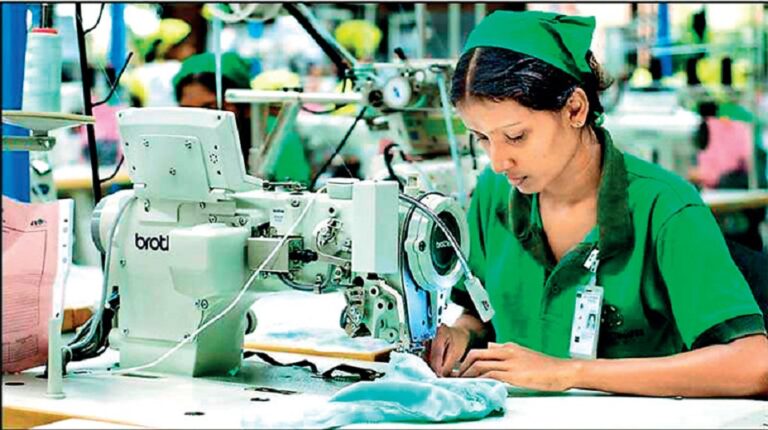
Sri Lanka Apparel Exporters Association’s (SLAEA) newly-elected Chairman Indika Liyanahewage noted that the apparel exporters are forecasting around 30 percent decline in orders during the November-December period.
Sri Lanka’s main apparel exporting markets, the United States (US) and European Union (EU), are currently facing economic recissions coupled with inflationary pressures stemming from Russia’s invasion of Ukraine.
Liyanahewage expects these global headwinds to impact Sri Lanka’s apparel exports in the coming six months.
In addition, he cautioned that the removal of the dual corporate tax rate structure, which is set to increase the corporate income taxes on exports to 30 percent, up from earlier 14 percent, also threatens the competitiveness of the country’s exports, in particular when competing with countries such as Bangladesh and Vietnam.
“We are willing to pay taxes. It’s not a problem. The problem is that how competitive we are in the global market. We need a level playing field in the world market,” he added.
Further, he feared that the proposed changes to the personal income tax structure could also fuel brain drain from the country, further impacting the industry.
“Our competitive advantage is knowledge and innovation. We are already struggling to retain our skilled workforce under the current economic environment. We are a very efficient sector. We work hard and earn. If our tax money goes to pay someone who is not efficient, we are worried,” Liyanahewage said.
According to SLAEA immediate past Chairman Aroon Hirdaramani, the apparel exports are expected to reach US $ 5.5 billion at end of this year, up from US $ 5.4 billion recorded last year, however, below the industry forecast of US $ 6 billion.
Despite turbulence ahead, Hirdaramani outlined 2022 as a record year for Sri Lanka’s apparel exports
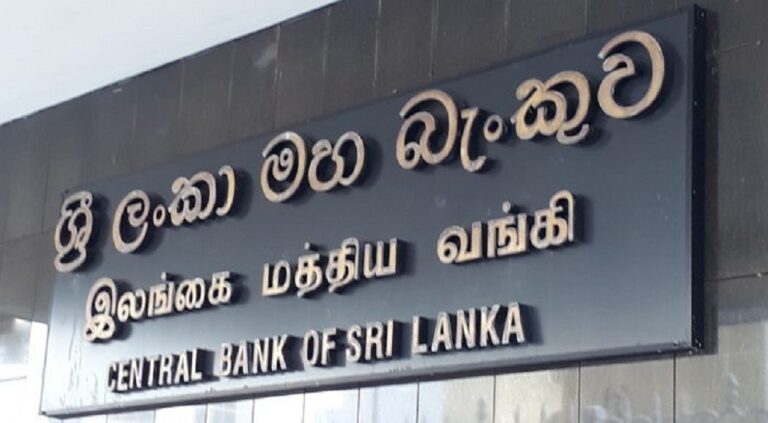
In a desperate move of using monetary tools to ease the liquidity conditions in banks, the Central Bank issued fresh directions allowing them to temporarily do away with the requirement to report the Statutory Liquid Assets Ratio (SLAR) separately for domestic and off-shore banking units and instead allowed reporting the ratio on a consolidated basis, effective from December.
The licensed commercial and specialized banks are required to maintain a minimum of 20 percent and a maximum of 40 percent of their adjusted liabilities in liquid assets, which typically are parked in Treasury bills and bonds.
However, in a Banking Act Direction issued recently, the Monetary Board has taken a decision to allow the licensed commercial banks “to maintain liquid assets of an amount not less than 20 percent of total adjusted liabilities, on a consolidated basis for the overall bank, until further notice”.
Hence, the circulars thus far in effect stipulating the requirement to maintain the SLAR separately for the Domestic Banking Unit and Off-Shore Banking Unit are temporarily deferred by the latest Direction issued.
The new instructions on the banks’ liquidity came just days after Central Bank Governor Dr. Nandalal Weerasinghe identified the shortfall in the rupee liquidity in the banking system as one of the reasons for the prevailing higher than desired level of short-term interest rates in the market.
Thus, he said he would intervene to ease the liquidity condition in the banking system. “In the next couple of weeks, we will try to address this situation in terms of liquidity as the first step of stabilizing the short-term interest rates,” he added.
The Central Bank is under tremendous pressure to ease the current elevated level of interest rates and specially Dr. Weerasinghe became a lightning rod, receiving severe criticism for suffocating the economy.
However, the Central Bank has made reining in runaway inflation as its top priority, as maintaining price stability is the primary mandate of any central bank.
While its actions have begun to generate results, with the country entering a possible disinflation path in October, after inflation peaking just under 70 percent in September, these levels of inflation do not support businesses and households to engage in their usual economic activities.
Hence, the Central Bank’s actions in bringing inflation down to an acceptable level of 4-6 percent take precedence over everything else to create conditions conducive to do business, create jobs and generate economic well-being by preserving household income.
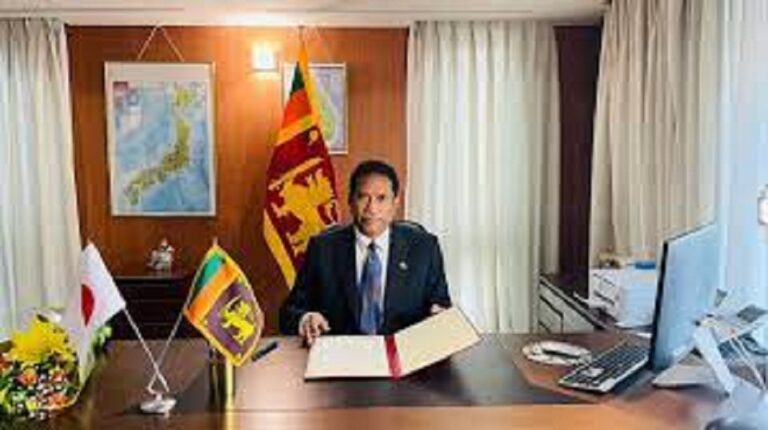
Sri Lanka is to increase engagement with all 47 prefectural governments in Japan to seek commonalities with Sri Lanka and understand competencies of each prefecture, the Ambassador of Sri Lanka to Japan, Rodney Perera said.
As means to promoting Sri Lanka throughout Japan, he proposed to increase engagement with all 47 prefectural governments to seek commonalities with Sri Lanka and understand competencies of each prefecture.
Image building of Sri Lanka in Japan and creating a fresh narrative about Sri Lanka was also elaborated.
Newly appointed Ambassador of Sri Lanka to Japan, E. Rodney M. Perera assumed duties at the Sri Lanka Embassy in Tokyo. He is the eighteenth Sri Lanka Ambassador to Japan during last 70 years of bilateral relations between the two countries.
Ambassador Perera addressed the gathering and invited the Sri Lankan community to engage Mission officials and expressed the benefit of working together as one team to support the efforts of the Embassy of Sri Lanka to further enhance bilateral relations with Japan.
He also explained that, as stated by the President of Sri Lanka during his recent visit to Japan, there is a vital need to rebuild the ties between the two countries to reach the full potential of this time-tested multifaceted mutually beneficial partnership.
He elaborated that Japan and Sri Lanka could jointly address some areas such as food security, energy security and maritime safety that have an impact on both countries.
He stressed on the need to capitalize on Sri Lanka’s strategic location, its access to South Asia and Southeast Asia through the use of trade agreements such as FTA’s to find innovative ways to increase country’s trade volumes and income to generate much needed foreign currency.
He noted the importance of product diversity and collaborations with established Japanese business enterprises to build investor confidence and the need to develop viable supply chains and increase investments particularly in IT and banking sectors.
Promoting Japanese travelers to visit Sri Lanka and making full use of the employment opportunities made available for Sri Lankans by Japan remain immediate priorities of the Embassy in Tokyo
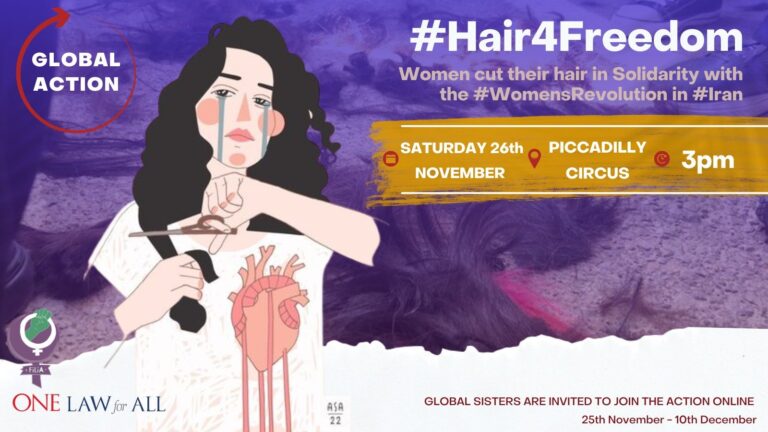
Maryam Namazie, spokesperson of One Law for All and Lisa-Marie Taylor, CEO of FiLiA are calling on women to join them in a mass hair cutting solidarity action with the Iranian women’s revolution.
Women can take part in this solidarity action in person and from home please see our joint statementHEREfor steps women can take to participate in the solidarity action.
Since the murder of Iranian Kurdish woman Mahsa Zhina Amini by the Islamic regime of Iran’s morality police for ‘improper’ veiling, there have been daily mass protests in Iran. These protests, led by brave Iranian women and girls, are being supported by men and attended by people in their tens of thousands every day across the country.
Maryam Namazie (spokesperson One Law for All) comments:
“The Islamic regime has stepped up its repression, sending tanks, machine guns and weapons of war to the streets of Kurdistan. There are numerous reports of rape and sexual abuse against women and girls who have been arrested, over 15,000 so far across Iran. And hundreds have been killed, many of them children and young people. The only way we can help stop these killings and show solidarity is by coming out in their defence. #Hair4Freedom is one way to support, strengthen and encourage the women’s revolution in Iran. If women don’t come out in full force for women in Iran, who else will?”
“FiLiA stands in solidarity with our Iranian Sisters as they continue the long and honourable tradition of female resistance against authoritarian rule in Iran. Part of a growing feminist revolution being witnessed worldwide; their determination and bravery is an example of what is possible when Women unite to fight for the liberation of us all,” says Lisa-Marie Taylor (FiLiA CEO).
JOIN #HAIR4FREEDOM
@maryamnamazie
@FiLiA_Charity
To join this solidarity action, here are the steps that women can take:
Join One Law for All and FiLiA in Piccadilly Circus, London on 26th November at 3pm for a mass hair-cutting.
You can cut as much or as little of your hair as you are comfortable with.
If you are taking part virtually please take a photo or video (10 seconds or less) of your hair-cutting solidarity action and post on social media during the 16 days of activism.
Remember to tag @maryamnamazie and @FiLiA_Charity and use hashtags #Hair4Freedom #MahsaAmini #16DaysofActivism.
Post your hair in a small freezer style bag, and a name label if you can (no later than 15 December) to:
Hair 4 Freedom, One Law for All BM 1919 London WC1N 3XX
We hope to deliver your hair to the British Foreign Office and The Embassy of the Islamic Republic of Iran in London during January 2023. More information will be added to the website once all the hair has been received.
Write to your MP about your involvement in this solidarity action (see below for a draft email you can use and to access a tool to help you find your MP’s email address). Remember to add your own comments if you can; personalised emails have more impact.
#Hair4Freedom is being organised during and as part of 16 days of activism. The Global 16 Days Campaign, launched by the Center for Women’s Global Leadership and feminists from around the world at the first Women’s Global Leadership Institute in 1991, is used worldwide to call for the elimination of sex-based violence. It is run annually from November 25 (International Day Against Violence Against Women) to December 10 (International Human Rights Day) #16DaysOfActivism.
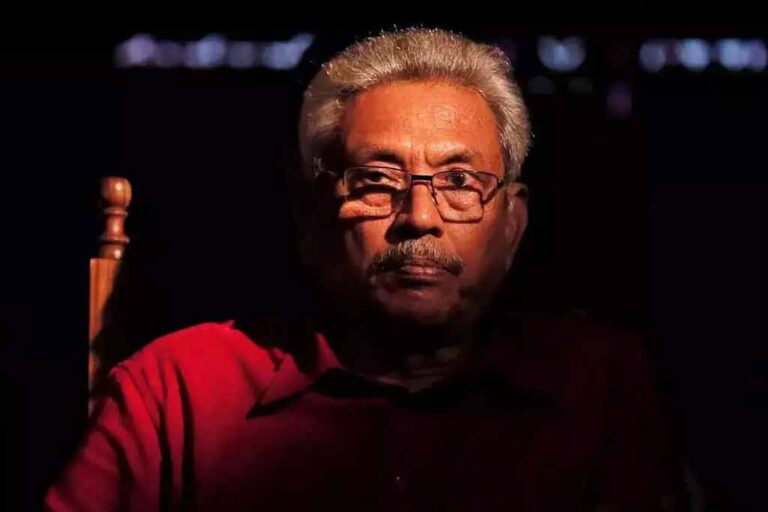
The Supreme Court today (24) ordered former President Gotabhaya Rajapaksa to appear before the Supreme Court on December 16.
That was when the petition filed against the release of the former Member of Parliament Duminda Silva on presidential pardon, who was sentenced to death, was called today.
The Supreme Court today ordered that the former president be named as a respondent in this petition.
The petition was considered before the bench of Supreme Court Judges Murudu Fernando and Yasanta Kodagoda.